Roasted Veggie & Chickpea Bowls with Maple Dijon Tahini Dressing: A Vibrant, Flavor-Packed Meal
Imagine a dinner that is as beautiful as it is delicious, a meal that brings together the sweet caramelization of roasted vegetables with the hearty comfort of chickpeas. These Roasted Veggie & Chickpea Bowls with Maple Dijon Tahini Dressing are exactly that. This recipe transforms simple, wholesome ingredients into a symphony of textures and flavors. Ultimately, it is a perfect weeknight solution that feels special enough for company.
The magic of this dish lies in its balance. Sweet potatoes and red onion roast until tender and slightly crisp. Meanwhile, broccoli and chickpeas become wonderfully savory. The true star, however, is the creamy Maple Dijon Tahini Dressing. This dressing ties everything together with its nutty, tangy, and subtly sweet profile. Consequently, every bite is a delightful experience. This meal is not just food; it is a colorful, nourishing celebration on a plate.
Furthermore, this recipe is incredibly versatile and forgiving. You can easily swap vegetables based on what is in season or hiding in your fridge. Additionally, the components store beautifully, making meal prep a breeze. Whether you are a seasoned cook or a kitchen novice, these bowls promise a satisfying and healthy result. They are a testament to how simple ingredients can create extraordinary meals.
Quick Recipe Highlights
- Flavor Profile: These bowls offer a complex harmony of savory roasted vegetables, earthy chickpeas, and a dressing that is tangy from Dijon, sweet from maple, and rich from tahini. The result is a perfectly balanced bite that is neither too heavy nor too light.
- Texture: You get a fantastic mix of creamy, crispy, and tender textures. The chickpeas roast to a delightful crispness, the sweet potatoes become soft inside with caramelized edges, and the creamy tahini dressing adds a luxurious, smooth mouthfeel.
- Aroma: As the vegetables roast, your kitchen fills with the warm, sweet scent of caramelizing sweet potatoes and onions, combined with the earthy, nutty fragrance of roasting chickpeas and broccoli. It is an aroma that promises a deeply satisfying meal.
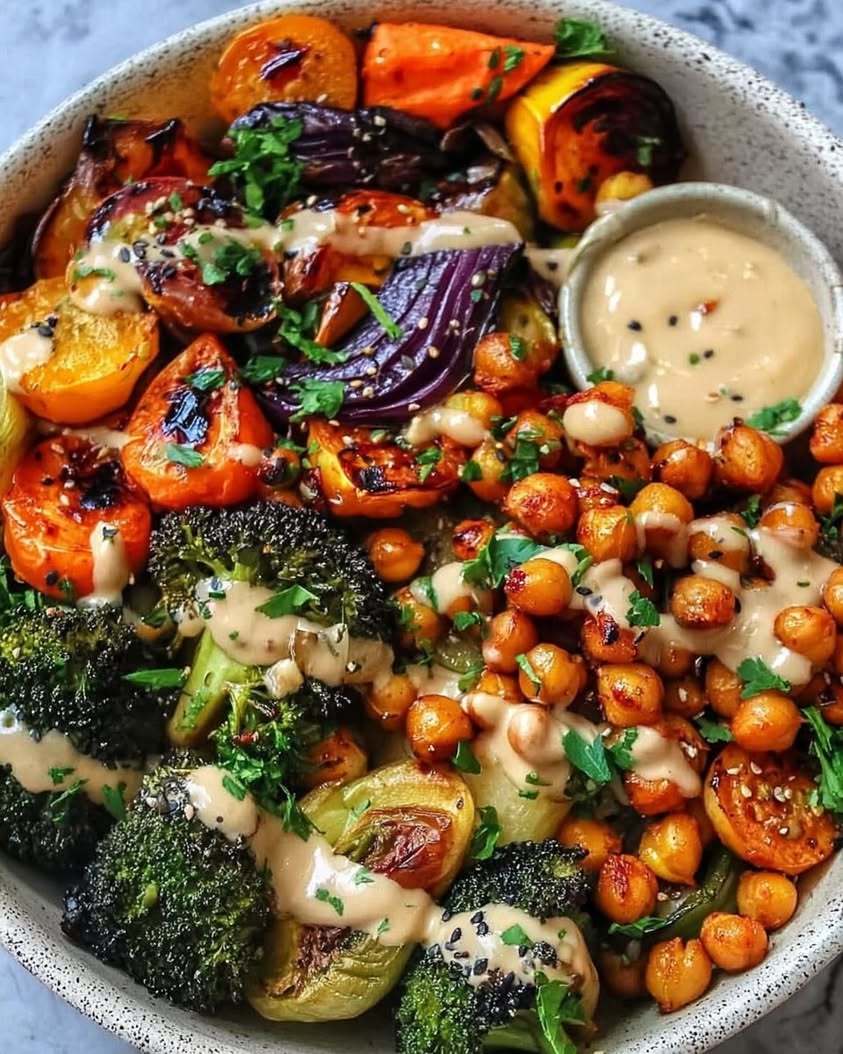
- Visual Appeal: The bowl is a vibrant mosaic of colors: bright orange sweet potatoes, deep green broccoli, purple-red onions, and golden-brown chickpeas, all drizzled with a pale, creamy sauce. It is a feast for the eyes that is incredibly Instagram-worthy.
- Skill Level Needed: This is a beginner-friendly recipe. The techniques involve simple chopping, tossing, and roasting. No advanced culinary skills are required, making it an excellent recipe for building kitchen confidence.
- Special Equipment: You need only a good baking sheet, a mixing bowl, and a small blender or whisk for the dressing. A high-quality sheet pan ensures even roasting and easy cleanup.
Recipe Overview
- Difficulty Level: We rate this recipe as easy because it involves straightforward, accessible techniques. You simply chop vegetables, toss them with oil and spices, and roast them. The dressing comes together in minutes with a quick whisk or blend. There is no fussy timing or complex steps, making it ideal for any night of the week.
- Category: This dish fits perfectly into several categories: it is a healthy lunch, a simple dinner, an excellent meal prep option, and a fantastic plant-based main. It is substantial enough to stand alone but also works as a hearty side.
- Cuisine: While not tied to one specific tradition, the bowl draws inspiration from Mediterranean and Middle Eastern flavors, particularly through the use of tahini and chickpeas. It is a modern, fusion-style dish that celebrates global, plant-forward eating.
- Cost: This is a very budget-friendly meal. The base ingredients like sweet potatoes, broccoli, and chickpeas are inexpensive, especially when bought in bulk or on sale. The dressing uses pantry staples like tahini, maple syrup, and mustard, which are cost-effective per serving.
- Season: This recipe shines in the fall and winter when root vegetables are at their peak, but it is truly adaptable year-round. In spring, you could use asparagus and radishes; in summer, try zucchini and bell peppers. It is a versatile blueprint.
- Occasion: These bowls are perfect for busy weeknights, casual weekend lunches, or even a healthy potluck contribution. They are also impressive enough to serve to guests for a relaxed, nourishing dinner party.
Why You’ll Love This Recipe
First and foremost, the taste and texture combination is utterly addictive. The natural sugars in the vegetables caramelize during roasting, creating a deep, savory-sweet flavor that is incredibly satisfying. Paired with the crispy, protein-packed chickpeas and the luxuriously creamy Maple Dijon Tahini Dressing, each forkful is a perfect balance. The dressing, with its tangy, nutty, and sweet notes, elevates the humble vegetables into something truly special. You will find yourself craving this harmonious blend of flavors regularly.
From a convenience standpoint, this recipe is a weeknight hero. The prep is minimal, involving mostly chopping and tossing. Once the ingredients are on the sheet pan, the oven does the majority of the work. This hands-off time allows you to prepare the dressing, set the table, or simply relax. Moreover, the entire meal comes together on one or two baking sheets, meaning cleanup is a breeze. For anyone juggling a busy schedule, this efficiency is a major win.
Nutritionally, these Roasted Veggie & Chickpea Bowls are a powerhouse. They are packed with fiber from the vegetables and chickpeas, which aids digestion and promotes lasting fullness. The chickpeas provide a solid source of plant-based protein, while the tahini in the dressing offers healthy fats and minerals like calcium and iron. This combination makes for a meal that is not only delicious but also deeply nourishing and energizing.
For entertaining, this dish is a fantastic choice. It is naturally vegan and gluten-free, easily accommodating various dietary needs without requiring separate meals. The colorful, build-your-own-bowl presentation is interactive and appealing to guests. You can even set out extra toppings like avocado, fresh herbs, or nuts to let everyone customize their creation. It is a stress-free way to host that feels both thoughtful and modern.
Finally, the cost-effectiveness and accessibility of this recipe cannot be overstated. It relies on affordable, shelf-stable, and seasonal ingredients. You can adapt it based on what is on sale or what you already have. This flexibility makes it a staple recipe that can reduce food waste and grocery bills. Ultimately, it proves that eating well does not have to be complicated or expensive.
Historical Background and Cultural Significance
The concept of a grain or vegetable bowl is ancient, with roots in many cultures that emphasize balanced, communal eating. However, the modern “bowl” trend, often called a “Buddha bowl” or “nourish bowl,” gained popularity in the 2010s alongside the rise of health-conscious and plant-based diets. These bowls are designed to be nutritionally complete, containing a grain, protein, vegetables, and a flavorful sauce. Our Roasted Veggie & Chickpea Bowl is a direct descendant of this contemporary movement, focusing on whole foods and vibrant presentation.
Culturally, the key components hail from different parts of the world. Chickpeas, also known as garbanzo beans, have been a staple in Middle Eastern, Mediterranean, and Indian cuisines for thousands of years. They are the base for iconic dishes like hummus and falafel. Tahini, a paste made from sesame seeds, is another cornerstone of Middle Eastern cooking. Incorporating these ingredients into a roasted vegetable bowl is a beautiful fusion of traditional staples with modern, health-focused assembly.
The recipe has evolved to meet contemporary tastes and lifestyles. The roasting technique, which intensifies vegetable flavors, has become a favorite home-cooking method. Meanwhile, the maple Dijon dressing reflects a North American influence, combining local sweeteners with European mustard. This evolution shows how recipes naturally adapt, borrowing the best elements from various culinary traditions to create something new and universally appealing.
Regional variations of this bowl are endless. In the Mediterranean, you might find it with olives, feta, and a lemon-oregano dressing. A Southwestern version could include black beans, corn, and a cilantro-lime crema. The basic formula is a global template. Our specific combination celebrates the earthy depth of tahini and the hearty satisfaction of roasted chickpeas, offering a version that is both familiar and excitingly new.
Ingredient Deep Dive
Sweet Potatoes: Native to Central and South America, sweet potatoes have been cultivated for over 5,000 years. They are a nutritional superstar, rich in beta-carotene (which converts to Vitamin A), fiber, and Vitamin C. When roasted, their natural sugars caramelize, creating a creamy interior and slightly crisp edges. Choose firm potatoes with smooth skin. Store them in a cool, dark, well-ventilated place—not the refrigerator. For a variation, try using cubed butternut squash or carrots.
Chickpeas (Garbanzo Beans): A cornerstone of diets across the Middle East and India for millennia, chickpeas are one of the earliest cultivated legumes. They are an excellent source of plant-based protein, fiber, and folate. For this recipe, canned chickpeas are perfectly convenient; just be sure to rinse and drain them thoroughly. Patting them dry with a towel helps them get extra crispy in the oven. If you prefer, you can substitute with canned white beans or lentils, though the texture will be different.
Tahini: Tahini is a paste made from ground, hulled sesame seeds and is essential in hummus and baba ganoush. It provides healthy fats, calcium, and phosphorus. A good tahini should be pourable and have a smooth, not bitter, taste. Stir the jar well before using, as the oil naturally separates. Store it in the refrigerator after opening. If you need a substitute, a thick, unsweetened almond or cashew butter can work in a pinch, though the flavor will change.
Maple Syrup: Pure maple syrup is the boiled-down sap of sugar maple trees, a tradition begun by Indigenous peoples of North America. It contains antioxidants and minerals like manganese and zinc. In the dressing, it balances the tanginess of the mustard and lemon. Always opt for “pure maple syrup” over pancake syrup, which is mostly corn syrup. For a vegan alternative without refined sugar, you can use agave nectar or date syrup in equal measure.
Dijon Mustard: Originating from the city of Dijon, France, this mustard is known for its sharp, clean, and slightly spicy flavor. It acts as an emulsifier in the dressing, helping to bind the oil and lemon juice with the tahini. Its acidity and complexity are key to the dressing’s character. A good-quality Dijon makes a difference. If unavailable, a whole-grain mustard or even a yellow mustard can be used, but the flavor profile will shift.
Common Mistakes to Avoid
- Overcrowding the Pan: Spreading the vegetables and chickpeas in a single, uncrowded layer is crucial. If the pan is too full, the ingredients will steam instead of roast. Consequently, you will miss out on the desirable caramelization and crispy texture. Use two pans if necessary.
- Using Wet Chickpeas: Forgetting to rinse, drain, and thoroughly pat dry the canned chickpeas is a common error. Excess moisture prevents them from crisping up properly in the oven. Take an extra minute to dry them with a clean kitchen towel for the best results.
- Neglecting to Preheat the Oven: A properly preheated oven is essential for immediate roasting. Putting vegetables into a cold oven leads to uneven cooking and soggy results. Always allow your oven to fully reach the specified temperature before adding your sheet pan.
- Underseasoning the Vegetables: Vegetables need ample seasoning to shine. Do not be shy with the salt, pepper, and garlic powder before roasting. Seasoning before cooking draws out moisture and allows the flavors to penetrate deeply, unlike adding salt only at the end.
- Blending the Dressing with Cold Ingredients: If your tahini is straight from the fridge and your lemon juice is cold, the dressing may seize up and become too thick. Using room temperature ingredients helps them emulsify smoothly into a creamy, pourable consistency.
- Not Tasting the Dressing: The balance of the Maple Dijon Tahini Dressing is personal. Always taste it after mixing and adjust. You may want more lemon for tang, more maple for sweetness, or a pinch of salt to enhance all the flavors.
- Skipping the Lemon Zest: The recipe calls for both lemon juice and zest. The zest contains potent aromatic oils that add a bright, fresh fragrance and flavor that the juice alone cannot provide. It lifts the entire dish, so do not omit it.
- Using Dark-Colored Baking Sheets: Dark pans absorb more heat and can cause the bottoms of your vegetables to burn before the tops are done. For even roasting, use light-colored aluminum or stainless steel sheet pans.
Essential Techniques
Uniform Chopping: Cutting your vegetables into similarly sized pieces is perhaps the most important technique for this recipe. Consistent size ensures that everything roasts at the same rate, preventing some pieces from being burnt while others are undercooked. Aim for ¾-inch to 1-inch cubes for the sweet potato and similar-sized florets for the broccoli. This attention to detail guarantees perfect doneness across the entire batch.
High-Heat Roasting: Roasting at a high temperature (425°F) is key to achieving caramelization. This process, called the Maillard reaction, creates complex, savory flavors and appealing browning. Do not be tempted to lower the temperature to avoid watching the oven. The high heat quickly cooks the vegetables while creating a deliciously crisp exterior. Just be sure to check and stir halfway through to promote even browning.
Emulsifying the Dressing: Creating a smooth, creamy dressing requires proper emulsification. Start by whisking the tahini and lemon juice together; initially, it will thicken and seize. This is normal. Then, slowly add the water and maple syrup while whisking vigorously. The mixture will thin out and become homogeneously creamy. This technique binds the water and oil-based ingredients into a stable, silky sauce.
Pro Tips for Perfect Roasted Veggie & Chickpea Bowls
For extra-crispy chickpeas, toss them in a separate, smaller bowl with a half teaspoon of cornstarch along with the oil and spices. The cornstarch draws out residual moisture and creates an incredibly crunchy coating during roasting.
Make a double batch of the Maple Dijon Tahini Dressing. It stores wonderfully in the fridge for up to a week and is fantastic on salads, grain bowls, or as a vegetable dip, maximizing your prep time.
Add the broccoli florets to the sheet pan during the last 15 minutes of roasting. Broccoli cooks faster than sweet potatoes and chickpeas; this staggered approach prevents it from becoming mushy or charred.
If your tahini dressing is too thick after refrigeration, simply whisk in a teaspoon of warm water at a time until it returns to a pourable consistency. The thickness can vary between tahini brands.
For a warm element to contrast the roasted veggies, serve your bowl over a bed of cooked quinoa, farro, or brown rice. The grain will soak up any extra dressing deliciously.
Finish your assembled bowls with a final flourish. A sprinkle of toasted sesame seeds, chopped fresh parsley, or a drizzle of good olive oil adds a professional touch and enhances flavor.
Variations and Adaptations
Regional Variations: Take your bowl on a world tour. For a Mediterranean twist, add kalamata olives, crumbled feta cheese, and a sprinkle of dried oregano. For a Mexican-inspired version, use chili powder on the veggies, swap in black beans, and top with avocado, salsa, and cilantro. The basic formula is a perfect canvas for global flavors.
Seasonal Adaptations: Embrace what is fresh. In spring, use asparagus tips and fresh peas. Summer bowls can feature zucchini, bell peppers, and cherry tomatoes. In fall, swap sweet potatoes for cubed butternut squash or beets. This keeps the recipe exciting and sustainable year-round.
Dietary Modifications: This bowl is naturally vegan and gluten-free. For a nut-free version, ensure your tahini is processed in a dedicated facility or substitute with sunflower seed butter. To increase protein, add a scoop of cooked lentils or a serving of baked tofu alongside the chickpeas.
Flavor Variations: Change up the spice profile. Toss your vegetables with smoked paprika, cumin, or curry powder before roasting. For the dressing, try using balsamic vinegar instead of lemon juice, or add a clove of roasted garlic for a deeper, sweeter flavor.
Serving and Presentation Guide
Plating is key to the experience. Start with a base, if using, such as a scoop of grains or a bed of fresh spinach. Then, artfully arrange the roasted vegetables and chickpeas in distinct piles or sections around the bowl, rather than dumping them in a heap. This showcases each beautiful component. Drizzle the Maple Dijon Tahini Dressing generously over the top just before serving.
Garnishes add the final layer of flavor and texture. Consider a handful of microgreens or fresh herbs like chopped parsley or cilantro. A sprinkle of toasted nuts or seeds (pine nuts, pepitas, sesame seeds) adds crunch. For a creamy element, a few slices of avocado or a dollop of vegan yogurt work beautifully.
For a family-style or entertaining approach, serve all the components in separate bowls on the table. Let everyone build their own creation. This interactive style is fun, accommodates individual preferences, and makes the meal feel more special and engaging for guests.
Wine and Beverage Pairing
The earthy, nutty flavors of the tahini and chickpeas pair wonderfully with a crisp, acidic white wine. A Sauvignon Blanc or a dry Riesling can cut through the richness of the dressing and complement the roasted vegetables. For a red option, choose a light-bodied, low-tannin wine like a Pinot Noir or Gamay, which will not overpower the dish’s flavors.
For non-alcoholic pairings, consider sparkling water with a twist of lemon or lime to cleanse the palate. A tart cherry juice or a cold-brewed hibiscus tea (agua de jamaica) offers a fruity, refreshing contrast. Even a simple glass of iced green tea with lemon can be a delightful accompaniment.
Storage and Shelf Life
Store the cooled roasted vegetables and chickpeas separately from the dressing in airtight containers in the refrigerator. They will keep well for 3-4 days. The dressing can be stored in a jar or sealed container for up to 1 week. Keeping them separate prevents the vegetables from becoming soggy.
Reheating is best done in the oven or toaster oven at 350°F for about 10 minutes to restore some crispness. You can also use a skillet over medium heat. Avoid the microwave if you want to maintain texture, as it will steam the ingredients and make them soft.
This recipe is not ideal for freezing after assembly, as the roasted vegetables will lose their texture upon thawing. However, you can freeze the cooked chickpeas separately on a tray before bagging them. The dressing may also separate when frozen and thawed, so it is best made fresh or refrigerated.
Make Ahead Strategies
You can achieve significant time savings with smart prep. Chop all your vegetables and store them in containers or bags in the refrigerator 1-2 days in advance. Rinse and drain the chickpeas, then pat them dry and keep them ready in a container. You can even mix the spice blend for roasting ahead of time.
The Maple Dijon Tahini Dressing is an excellent make-ahead component. Prepare it up to a week in advance and store it in the fridge. The flavors often meld and improve over a day. Just remember to give it a good stir or shake and let it sit at room temperature for 10 minutes before using to loosen it up.
For ultimate meal prep, roast the vegetables and chickpeas on a Sunday. Store them in divided containers without the dressing. Then, throughout the week, you can assemble a fresh-tasting bowl in minutes by simply reheating the roasted components and adding the cold dressing and any fresh garnishes.
Scaling Instructions
Halving this recipe for one or two people is straightforward. Simply divide all ingredient quantities by two. Use a standard baking sheet; the smaller quantity will roast even faster, so check for doneness a few minutes early. The dressing can be halved, but consider making a full batch as it keeps well and is useful for other meals.
Doubling or tripling for a crowd is easy. Use multiple baking sheets and rotate them between oven racks halfway through the cooking time to ensure even roasting. You may need to add a few extra minutes to the total cook time due to the increased volume. Make the dressing in a larger bowl or blender to accommodate the bigger batch.
Nutritional Deep Dive
This bowl is a macro-balanced meal. The chickpeas and tahini provide a solid foundation of plant-based protein and healthy fats, which are essential for muscle repair and satiety. The sweet potatoes and broccoli are excellent sources of complex carbohydrates and fiber, offering sustained energy and promoting digestive health. The dressing’s fats from tahini also help your body absorb the fat-soluble vitamins present in the vegetables.
Micronutrient-wise, this dish is a powerhouse. Sweet potatoes are loaded with beta-carotene (Vitamin A), crucial for vision and immunity. Broccoli provides Vitamin C, Vitamin K, and folate. Chickpeas contribute iron and B vitamins, while tahini is a surprising source of calcium and phosphorus. Together, they create a meal that supports overall wellness from multiple angles.
Dietary Adaptations
Gluten-Free: This recipe is naturally gluten-free as written. Simply ensure that any packaged ingredients like Dijon mustard are certified gluten-free, as some brands may contain trace amounts from vinegar sources or additives.
Dairy-Free & Vegan: The recipe contains no animal products, making it inherently dairy-free and vegan. The creamy texture comes entirely from plant-based tahini, a perfect substitute for dairy-based creams or yogurts in dressings.
Nut-Free: Tahini is made from sesame seeds, which are a seed, not a tree nut. However, cross-contamination can be a concern. If you have a severe allergy, check the tahini label for processing information or use a seed butter like sunflower seed butter as a direct substitute.
Low-Carb/Keto: For a lower-carb version, reduce or omit the sweet potato and increase the volume of low-carb vegetables like broccoli, cauliflower, and bell peppers. Replace the maple syrup in the dressing with a keto-friendly sweetener like monk fruit or erythritol, and use it sparingly.
Troubleshooting Guide
Soggy Vegetables: If your veggies are steaming instead of roasting, the pan is likely overcrowded. Spread them out more. Also, ensure your oven is fully preheated and that you are using the recommended temperature. Opening the oven door frequently can also lower the temperature and cause sogginess.
Dressing is Too Thick: A thick, pasty dressing means it needs more liquid. Simply whisk in additional warm water, one teaspoon at a time, until it reaches your desired creamy, pourable consistency. The thickness can vary greatly depending on your tahini brand.
Dressing is Too Thin: If your dressing is runny, you likely added too much water or lemon juice too quickly. To thicken it, whisk in an extra tablespoon of tahini. Alternatively, let it sit in the refrigerator for an hour; it will often thicken as it chills.
Chickpeas Not Crisping: The key is dry chickpeas. Make sure you pat them very dry after rinsing. Also, give them their own space on the pan. Tossing them with a tiny bit of cornstarch, as mentioned in the pro tips, is a foolproof solution for maximum crispness.
Recipe Success Stories
Readers consistently share how this recipe has become a weekly staple in their homes. Many love its adaptability, reporting successful swaps with everything from parsnips and carrots to adding halloumi cheese for a non-vegan version. The common thread is appreciation for a meal that is both healthy and deeply satisfying, breaking the stereotype that plant-based food is bland.
One home cook shared that doubling the recipe solved her family’s lunch problems for three days, with her kids eagerly assembling their own bowls. Another found that the Maple Dijon Tahini Dressing was so beloved that she now makes a jar weekly to use on everything from salads to baked potatoes. These stories highlight the recipe’s role as a versatile, foundational tool for healthy eating.
Frequently Asked Questions
Can I use a different vegetable oil? Absolutely. Avocado oil is a great high-heat alternative. Olive oil works perfectly, though if using extra virgin, its smoke point is lower, so watch for burning. For a neutral flavor, use grapeseed or refined coconut oil.
My tahini dressing is bitter. What went wrong? Some tahini brands, especially those made from unhulled sesame seeds, can be naturally more bitter. Try a different brand next time. For now, balance the bitterness by adding a bit more maple syrup or a pinch of salt to your current batch.
Can I make this without tahini? Yes, though the flavor profile will change. For a similar creamy, nutty base, substitute with an equal amount of unsweetened, runny almond butter or cashew butter. The result will be different but still delicious.
How do I know when the vegetables are done roasting? The vegetables should be tender enough to easily pierce with a fork and have caramelized, browned edges. The sweet potatoes will be soft, and the broccoli florets will be crisp-tender with some char on the tips.
Is this recipe good for meal prep? It is excellent for meal prep. Store the roasted components and dressing separately. Assemble bowls just before eating to maintain the best texture. The components will keep for 3-4 days in the fridge.
Can I add a grain to this bowl? Definitely. Serving these roasted veggies and chickpeas over a bed of quinoa, brown rice, farro, or couscous makes the meal even more hearty and filling. The grain will also absorb any extra dressing wonderfully.
What can I do with leftover dressing? The uses are endless! Use it as a salad dressing, a dip for raw vegetables or pita, a sauce for grilled chicken or fish, or a spread for sandwiches and wraps. Its versatility is a major bonus.
Can I roast the chickpeas and vegetables together? Yes, that is the standard method. Just ensure everything is in a single layer. Remember that broccoli cooks faster, so you may want to add it to the pan during the last 15 minutes to prevent overcooking.
Additional Resources
If you loved the flavors here, explore more recipes using tahini, like a classic creamy hummus or a roasted eggplant dip. For other sheet-pan dinners, try a lemon herb salmon with potatoes or a sausage and vegetable roast. Understanding the basics of high-heat roasting will transform your everyday vegetable cooking.
For ingredient sourcing, look for tahini in the international aisle of your grocery store, near other Middle Eastern products, or in natural food stores. Investing in a set of heavy-duty, rimmed baking sheets (half-sheet pans) will improve all your roasting endeavors. Finally, experiment with different global spice blends on your vegetables to keep your plant-based meals exciting and new.
PrintRoasted Veggie & Chickpea Bowls with Maple Dijon Tahini Dressing
- Total Time: 45 minutes
- Yield: 4
Description
A hearty and flavorful plant-based bowl featuring crispy roasted vegetables and chickpeas, topped with a creamy, tangy-sweet tahini dressing.
Ingredients
- 1 large sweet potato, peeled and cubed
- 1 head of broccoli, cut into florets
- 1 red bell pepper, sliced
- 1 can (15 oz) chickpeas, rinsed and drained
- 2 tablespoons olive oil
- 1 teaspoon smoked paprika
- 1/2 teaspoon garlic powder
- Salt and black pepper to taste
- 1/4 cup tahini
- 2 tablespoons maple syrup
- 1 tablespoon Dijon mustard
- 2 tablespoons lemon juice
- 2-3 tablespoons water, as needed
- Cooked quinoa or rice for serving
- Fresh parsley or cilantro for garnish
Instructions
- Preheat the oven to 400°F (200°C). Line a baking sheet with parchment paper.
- In a large bowl, toss the sweet potato, broccoli, bell pepper, and chickpeas with olive oil, smoked paprika, garlic powder, salt, and pepper until evenly coated.
- Spread the mixture in a single layer on the baking sheet. Roast for 25-30 minutes, stirring halfway, until vegetables are tender and chickpeas are crispy.
- While roasting, prepare the dressing: In a small bowl, whisk together tahini, maple syrup, Dijon mustard, and lemon juice until smooth. Gradually add water until desired consistency is reached.
- Assemble bowls by dividing cooked quinoa or rice among four bowls. Top with the roasted veggie and chickpea mixture.
- Drizzle with the maple Dijon tahini dressing and garnish with fresh herbs. Serve immediately.
Notes
You can customize the seasonings to taste.
- Prep Time: 15 minutes
- Cook Time: 30 minutes
- Method: Main
- Cuisine: American