Mediterranean Layered Beet, Sweet Potato & Feta Gratin with Walnuts: A Vibrant and Hearty Vegetable Bake
This Mediterranean Layered Beet, Sweet Potato & Feta Gratin with Walnuts is a stunning centerpiece dish that transforms humble root vegetables into a show-stopping meal. Moreover, it masterfully combines earthy beets, sweet potatoes, and tangy feta cheese into a comforting, layered bake. The result is a visually spectacular gratin with deep, complex flavors that will impress any guest. Ultimately, this recipe celebrates the vibrant colors and bold tastes of Mediterranean cooking in one beautiful, oven-to-table dish.
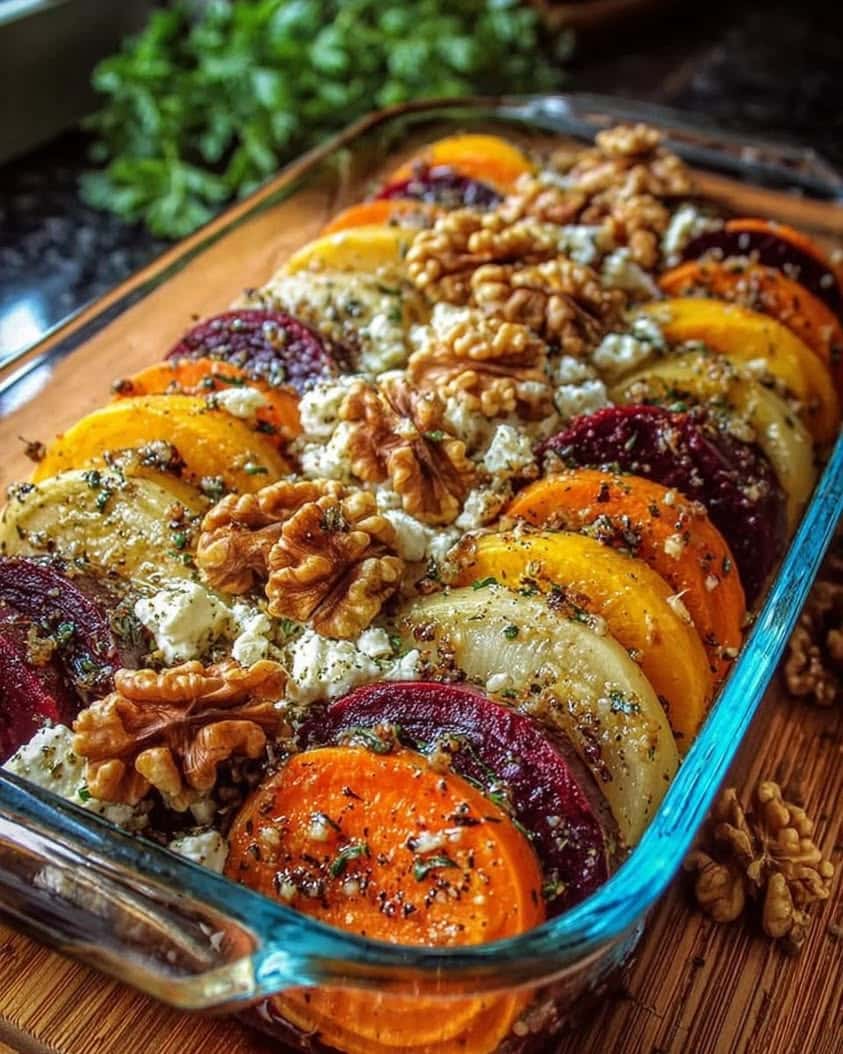
Imagine slicing into this gratin to reveal striking layers of ruby red and vibrant orange, perfectly tender and infused with aromatic herbs. Additionally, the salty crumble of feta and the crunchy, toasted walnuts on top create a delightful contrast in every bite. This dish is not just food; it’s an experience that engages all your senses. Consequently, it’s perfect for a cozy family dinner or a festive holiday gathering where you want to serve something both nourishing and extraordinary.
Furthermore, this Mediterranean beet and sweet potato gratin is surprisingly straightforward to prepare. While the oven does most of the work, you get to create a beautiful, edible mosaic. The process of thinly slicing and layering the vegetables is almost meditative. In the end, you are rewarded with a hearty, vegetarian main or side dish that is packed with nutrition and flavor. This gratin proves that healthy, vegetable-forward cooking can be the most exciting part of the meal.
Quick Recipe Highlights
- Flavor Profile: This gratin offers a beautiful balance of earthy sweetness from the roasted beets and sweet potatoes, contrasted sharply by the briny, tangy punch of feta cheese. Herbs like thyme and oregano add a fragrant, Mediterranean warmth that ties all the elements together perfectly.
- Texture: You will experience a wonderful interplay of textures. The vegetables become meltingly tender and almost creamy as they bake, while the walnut topping provides a crucial, satisfying crunch. The feta cheese offers little pockets of soft, crumbly saltiness throughout the layers.
- Aroma: As this gratin bakes, your kitchen will fill with the sweet, caramelizing scent of root vegetables and the earthy, pine-like fragrance of fresh thyme. The toasted walnuts release a deep, nutty aroma that signals the dish is ready to enjoy.
- Visual Appeal: The cross-section of this dish is truly breathtaking. The vibrant magenta of the beets and the bright orange of the sweet potatoes create stunning, alternating stripes. A golden-brown, crunchy walnut and breadcrumb topping makes the presentation complete and utterly inviting.
- Skill Level Needed: This recipe requires basic knife skills for slicing vegetables and simple assembly techniques. It is an excellent project for a confident beginner looking to expand their repertoire with a visually impressive, layered dish that is harder to mess up than it looks.
- Special Equipment: A mandoline slicer is highly recommended to achieve uniformly thin, even slices of beet and sweet potato, which ensures even cooking. Otherwise, you just need a sharp knife, a baking dish, and a mixing bowl for the topping.
Recipe Overview
- Difficulty Level: We rate this Mediterranean Layered Beet, Sweet Potato & Feta Gratin with Walnuts as a medium-difficulty recipe. The challenge lies primarily in the vegetable prep and careful layering. Using a mandoline makes the slicing safe and efficient. Otherwise, the steps are simple and mostly hands-off once the gratin goes into the oven.
- Category: This versatile dish comfortably fits into multiple categories. It shines as a spectacular vegetarian main course, a hearty side dish for roasted meats or fish, or a standout potluck contribution. It is substantial enough for a centerpiece but also complements other foods beautifully.
- Cuisine: The recipe draws direct inspiration from the sun-drenched flavors of the Mediterranean basin. Ingredients like feta cheese, olive oil, oregano, and walnuts are staples in Greek, Turkish, and Levantine cooking. This gratin is a modern, baked interpretation of those classic, vibrant flavor combinations.
- Cost: This is a very cost-effective dish, especially when root vegetables are in season. Beets, sweet potatoes, and onions are typically inexpensive. Feta cheese and walnuts are the premium ingredients, but a little goes a long way. Overall, you can feed a crowd for a fraction of the cost of a meat-centric main.
- Season: This gratin is perfect for fall and winter when beets and sweet potatoes are at their peak sweetness and most affordable. However, its bright flavors also make it a wonderful transitional dish for early spring. It brings warmth and color to the table during the cooler months.
- Occasion: It is ideal for holiday meals like Thanksgiving or Christmas, where its colors are festive. Furthermore, it is excellent for dinner parties, Sunday family suppers, or meal prep for healthy weekday lunches. This dish is special enough for celebrations but simple enough for regular rotation.
Why You’ll Love This Mediterranean Beet and Sweet Potato Gratin
First and foremost, the taste and texture of this gratin are utterly captivating. Each forkful delivers a complex harmony of sweet, earthy, salty, and crunchy elements. The slow roasting concentrates the vegetables’ natural sugars, making them incredibly flavorful. Meanwhile, the feta cheese melts slightly, creating creamy pockets, and the walnuts toast to a perfect crunch. This combination is deeply satisfying and keeps you coming back for another bite. It is a dish that feels indulgent yet is fundamentally wholesome and vegetable-based.
From a convenience standpoint, this Mediterranean Layered Beet, Sweet Potato & Feta Gratin with Walnuts is a dream. You can prepare the components ahead of time. For instance, slice the vegetables a day in advance and store them in water. Then, assembly is just a matter of layering. Once it’s in the oven, you have over an hour to prepare the rest of your meal or relax. Additionally, it is a one-dish wonder, meaning fewer pots and pans to clean. This makes it a strategic choice for entertaining or busy weeknights when you want maximum impact with minimal cleanup.
Nutritionally, this dish is a powerhouse. Beets are rich in folate, fiber, and beneficial nitrates. Sweet potatoes provide a huge dose of vitamin A, vitamin C, and fiber. Olive oil and walnuts contribute heart-healthy fats. Together, they create a meal that is high in antioxidants, vitamins, and minerals. This gratin supports gut health, reduces inflammation, and provides sustained energy. It is a delicious way to eat the rainbow and nourish your body with every colorful, flavorful layer.
For social gatherings, this gratin has immense entertaining value. Its stunning appearance is a guaranteed conversation starter. It caters beautifully to vegetarians and can be easily adapted for other dietary needs. Serving a beautiful, homemade bake shows care and effort. Moreover, it holds well, so you are not stuck in the kitchen while your guests arrive. You can present it straight from the oven, filling the room with an incredible aroma that promises a memorable meal.
Finally, this Mediterranean beet and sweet potato gratin is remarkably cost-effective and accessible. The main ingredients are pantry and produce aisle staples. You do not need rare or expensive items. Even the feta and walnuts, the pricier components, are used judiciously to maximize their impact. This recipe demonstrates how to create a restaurant-quality, impressive dish on a home cook’s budget. It turns everyday vegetables into an extraordinary eating experience that feels both luxurious and comforting.
Historical Background and Cultural Significance
The concept of a gratin, a baked dish with a browned topping, originates from French cuisine. Traditionally, it involved potatoes or other vegetables baked with cream and cheese. However, this Mediterranean Layered Beet, Sweet Potato & Feta Gratin with Walnuts represents a creative fusion. It takes the French technique and marries it with iconic ingredients from the Eastern Mediterranean. This cross-cultural recipe is a modern invention, reflecting today’s global pantry and the desire for vegetable-forward, visually striking dishes that do not rely on heavy creams.
Individually, the components hold deep cultural significance. Feta cheese, a Protected Designation of Origin (PDO) product, is intrinsically linked to Greece. Its sharp, salty flavor is a cornerstone of Greek salads, pastries, and baked dishes. Walnuts have been cultivated around the Mediterranean for millennia, symbolizing intellect and fertility in ancient cultures. Olive oil, the essential fat of the region, is more than an ingredient; it is a cultural treasure. This gratin respectfully weaves these timeless elements into a new, cohesive format.
The recipe’s evolution is a story of seasonal, home-style cooking. Cooks have always layered seasonal vegetables with what they had on hand. The addition of beets and sweet potatoes, while not traditional in a classic French gratin, follows a logical path. These sturdy root vegetables roast beautifully and hold their shape when sliced thinly. The innovation lies in the bold color contrast and the specific herb and cheese pairing. This gratin is a testament to how traditional techniques can be adapted to showcase different global flavors and modern dietary preferences.
Regional variations of this idea are endless. In Provence, a similar dish might use goat cheese and herbs de Provence. In Turkey, you might find layers of eggplant and tomatoes with a sprinkling of walnuts. A North African version could include spices like cumin and coriander. This particular recipe with beets, sweet potatoes, and feta sits beautifully within this spectrum of Mediterranean-inspired vegetable bakes. It encourages home cooks to experiment with their own local produce and favorite cheese and herb combinations.
Ingredient Deep Dive
Beets: Beets have a history dating back to ancient Roman times, where they were cultivated primarily for their greens. The root gained popularity later. They are nutritional powerhouses, packed with fiber, folate, manganese, and nitrates that can support blood pressure and athletic performance. When selecting beets, choose firm, smooth bulbs with vibrant greens attached if possible, indicating freshness. Store them unwashed in the refrigerator for up to two weeks. For a substitution, try golden beets for a less messy but equally sweet alternative, or use parsnips for a different earthy flavor.
Sweet Potatoes: Contrary to their name, sweet potatoes are only distantly related to regular potatoes and belong to the morning glory family. Originating in Central or South America, they are now a global staple. They are famously rich in beta-carotene, which the body converts to vitamin A, crucial for vision and immunity. Look for firm sweet potatoes without soft spots or cracks. Store them in a cool, dark, well-ventilated place—not the refrigerator, as cold temperatures can alter their texture and taste. Garnet yams can be used interchangeably, but true yams are a different tuber altogether.
Feta Cheese: Authentic Greek feta is made from at least 70% sheep’s milk, often blended with goat’s milk, and aged in brine. This process gives it its characteristic tangy, salty flavor and crumbly texture. It provides a good source of calcium and protein. For the best flavor, buy feta in a block stored in brine. Avoid pre-crumbled feta, which often contains anti-caking agents and dries out faster. Store leftover feta in its brine in the refrigerator. For a dairy-free version, a firm, brined tofu or a vegan feta alternative can work, though the flavor profile will change.
Walnuts: Walnuts are one of the oldest tree foods, revered in ancient Persia and the Mediterranean. They are an excellent source of plant-based omega-3 fatty acids (ALA), antioxidants, and minerals like manganese and copper. Their brain-like shape led to the ancient belief they benefited intellect. For the freshest taste, buy walnuts in the shell or from the refrigerated section, as their high fat content makes them prone to rancidity. Store them in an airtight container in the fridge or freezer. Pecans or pine nuts make suitable substitutes, offering a different but equally delicious crunch and buttery flavor.
Fresh Thyme & Oregano: These herbs are quintessential to Mediterranean cooking. Thyme, with its tiny, fragrant leaves, has been used since ancient Egypt for embalming and culinary purposes. Oregano, meaning “mountain joy” in Greek, was a symbol of happiness. Both herbs are rich in antioxidants and contain volatile oils with potential health benefits. Fresh herbs are superior for this recipe, providing a bright, aromatic quality. If you must substitute dried, use one-third the amount, as dried herbs are more concentrated. Rub dried herbs between your palms before adding to release their oils.
Common Mistakes to Avoid
- Uneven Vegetable Slices: Slicing beets and sweet potatoes to different thicknesses is a major mistake. Consequently, some pieces will be undercooked while others turn to mush. Always use a mandoline or a very sharp knife and take your time to ensure uniform, thin slices for even layering and cooking.
- Skipping the Oil and Seasoning Between Layers: Do not just season the top layer. Each layer of vegetables needs a light drizzle of olive oil, salt, and pepper. This step is crucial for building flavor throughout the entire gratin, not just on the surface.
- Using Pre-Crumbled Feta: Pre-crumbled feta is often drier and coated in anti-caking agents. It will not melt or integrate into the gratin as nicely. Instead, always buy a block of feta in brine and crumble it yourself for the best texture and flavor distribution.
- Overcrowding the Topping: Piling the walnut and breadcrumb mixture on too thickly can prevent it from crisping properly. It may steam and become soggy. Aim for a light, even scattering that allows heat to reach all parts for a perfectly golden, crunchy finish.
- Not Covering During Initial Baking: Failing to cover the dish with foil for the first part of baking is a common error. The cover traps steam, which is essential for tenderizing the dense root vegetables without drying them out or burning the topping prematurely.
- Cutting Immediately After Baking: This gratin needs a brief rest time, about 10-15 minutes, after coming out of the oven. Cutting into it too soon will cause the beautiful layers to slump and fall apart. Letting it set ensures clean, defined slices.
- Forgetting to Toast the Walnuts: Adding raw walnuts to the topping misses an opportunity for deep flavor. Toasting them first, either in the oven or a dry pan, unlocks their nutty aroma and makes the topping infinitely more flavorful and crisp.
- Using a Glass Dish Unadjusted: Glass baking dishes retain heat differently than metal. If using glass, you may need to reduce the oven temperature by 25°F to prevent the bottom from overcooking or burning. Always consider your bakeware material.
Essential Techniques
Mandoline Slicing: Using a mandoline is the single most important technique for this Mediterranean Layered Beet, Sweet Potato & Feta Gratin with Walnuts. It guarantees paper-thin, uniform slices that cook evenly and stack neatly. Always use the safety guard to protect your fingers. If you do not have a mandoline, a sharp chef’s knife and patience are required. The visual cue for success is a pile of slices that are all roughly the same thickness, allowing light to pass through them slightly.
Layering for Structure and Flavor: Proper layering is what transforms sliced vegetables into a cohesive gratin. Start with a thin base layer to prevent sticking. Then, shingle the slices slightly overlapping, like fallen dominoes. This creates structure. The critical step is seasoning each layer lightly with salt, pepper, and herbs. This builds seasoning from the bottom up. The visual cue is a neatly arranged, slightly sloping layer before you add the next. A well-layered gratin will hold its shape when served.
Blind Baking with a Cover: The two-stage baking process is essential. First, the covered bake allows steam to build up, gently cooking the vegetables until they are tender without any browning. This is the “braising” phase. Then, removing the foil and adding the topping allows for evaporation, browning, and crisping. The visual cue to move to stage two is when a knife inserted into the center meets little resistance from the vegetables.
Creating a Crisp Topping: The walnut and breadcrumb topping must be crisp to contrast the soft vegetables. The key is to combine fat (oil or butter) with the dry ingredients so they can brown and crisp. Toasting the walnuts first is non-negotiable for flavor. Sprinkling it on in the last 20-30 minutes of baking allows it to brown without burning. The visual cue for doneness is a uniform golden-brown color and a fragrant, nutty smell.
Pro Tips for Perfect Mediterranean Layered Gratin
First, wear disposable gloves when handling the beets to prevent your hands from turning pink for days. This simple trick makes prep much more pleasant.
Second, if you have time, briefly roast the whole, unpeeled beets before slicing. Wrap them in foil and bake at 400°F for 45-60 minutes until tender. This intensifies their sweetness and makes them easier to peel and slice.
Third, to prevent the sweet potatoes from oxidizing and turning brown while you work, keep the sliced pieces in a bowl of cold water with a squeeze of lemon juice.
Fourth, use a pastry brush to lightly oil the bottom and sides of your baking dish. This ensures easy release and adds a subtle layer of flavor from the very first bite.
Fifth, let all your ingredients come to room temperature before assembling. Cold vegetables straight from the fridge will significantly increase the baking time.
Sixth, for an extra flavor boost, infuse your olive oil with the thyme and oregano by warming them gently together for a few minutes before assembling the gratin.
Seventh, reserve a small handful of the feta cheese to sprinkle over the gratin in the last 5 minutes of baking. This creates delightful, slightly melted cheesy spots on the surface.
Eighth, always let the gratin rest for at least 10 minutes after baking. This allows the layers to set firmly, guaranteeing picture-perfect slices that hold their shape on the plate.
Variations and Adaptations
Regional Variations: For a French twist, substitute the feta for Gruyère or Comté and use herbes de Provence. A Middle Eastern version could include layers of sautéed spinach, use sumac in the seasoning, and swap walnuts for pistachios. An Italian-inspired gratin might use ricotta salata instead of feta and add a layer of sautéed mushrooms.
Seasonal Adaptations: In spring, incorporate thin slices of artichoke hearts or asparagus tips between the root vegetable layers. For summer, add layers of thinly sliced zucchini or eggplant. In deep winter, a layer of caramelized onions or roasted garlic puree between the beet and potato adds incredible depth.
Dietary Modifications: For a vegan Mediterranean beet and sweet potato gratin, replace the feta with a crumbled vegan cheese or a mixture of nutritional yeast, breadcrumbs, and chopped olives. Use a plant-based butter or oil for the topping. Ensure all other ingredients are plant-based.
Flavor Variations: Introduce warm spices like a pinch of cinnamon, cumin, or smoked paprika to the seasoning between layers. Add a drizzle of pomegranate molasses over the top before the final bake for a sweet-tart glaze. Incorporate chopped sun-dried tomatoes or Kalamata olives into the layers for a briny punch.
Texture Modifications: For a creamier texture, pour a half-cup of vegetable broth or a mix of broth and cream over the layers before the initial bake. For extra crunch, add a second topping layer of panko breadcrumbs mixed with Parmesan during the last 10 minutes of baking.
Presentation Alternatives: Instead of a large baking dish, assemble individual gratins in ramekins for a elegant, personalized presentation. You can also create a “deconstructed” gratin by roasting the vegetable slices separately on sheet pans, then stacking them on plates with the feta and walnut crumble.
Serving and Presentation Guide
Plating Techniques: Use a sharp, thin-bladed spatula or pie server to lift out clean portions. Wipe the blade clean between cuts for neat edges. For a restaurant-style presentation, place a slice slightly off-center on a warm plate. Alternatively, for a family-style meal, bring the entire baking dish to the table and let guests serve themselves, showcasing the beautiful layers.
Garnishing Ideas: Fresh herb sprigs like dill, parsley, or more thyme add a pop of green. A sprinkle of flaky sea salt like Maldon just before serving enhances texture and flavor. A drizzle of high-quality extra virgin olive oil or a balsamic reduction adds shine and acidity. For a festive touch, add pomegranate arils for color and a juicy burst.
Traditional Accompaniments: This gratin pairs classically with simply roasted or grilled chicken, lamb chops, or a firm white fish like halibut. A bright, lemony green salad with a simple vinaigrette is the perfect counterbalance to the gratin’s richness. Crusty bread is essential for soaking up any delicious juices.
Modern Serving Suggestions: Serve a wedge alongside a bowl of lemony lentil soup for a complete vegetarian meal. Top a portion with a fried or poached egg for a spectacular brunch dish. Crumble leftover gratin into a warm grain bowl with a tahini dressing for a next-day lunch transformation.
Temperature Considerations: This Mediterranean Layered Beet, Sweet Potato & Feta Gratin with Walnuts is best served warm, not piping hot. The resting time brings it to the perfect serving temperature. Leftovers are also delicious at room temperature, making it a great picnic or potluck option. Reheat portions gently in an oven or toaster oven to restore the topping’s crunch.
Portion Control Tips: As a main course, plan for one generous slice per person. As a side dish, a smaller slice is sufficient. Remember, the dish is nutrient-dense and satisfying. You can always cut the slices thinner if serving a larger crowd or alongside multiple other dishes.
Wine and Beverage Pairing
Wine Pairings: The earthy sweetness of the beets and sweet potatoes, combined with the salty feta, calls for wines with good acidity and minimal oak. A Greek Assyrtiko, with its crisp minerality, is a fantastic regional match. Alternatively, a dry Rosé from Provence has the acidity and berry notes to complement the dish. A light-bodied Pinot Noir with earthy undertones can also work beautifully if you prefer red wine.
Non-Alcoholic Alternatives: Sparkling water with a twist of lemon or lime cleanses the palate between bites. For something more special, try a tart pomegranate juice spritzer or a ginger beer with a squeeze of lime. Iced herbal tea, like mint or lemon verbena, is also a refreshing and complementary choice.
Coffee/Tea Pairings: After the meal, a cup of medium-roast coffee with low acidity would not clash with the vegetable’s sweetness. For tea, consider a smoky Lapsang Souchong, which can mirror the earthy notes, or a light, floral white tea as a pleasant contrast.
Temperature Considerations: Serve white wines and rosés well-chilled, around 45-50°F. Red wines like Pinot Noir should be slightly cool, around 55°F. Non-alcoholic spritzers should be ice-cold. This contrast between the cool drink and the warm gratin is part of the dining pleasure.
Serving Suggestions: Always offer water alongside any other beverage. When serving wine, pour a small taste first to ensure it pairs well with the gratin’s specific flavor profile on the day, as vegetable sweetness can vary. Encourage guests to take a bite, then a sip, to experience how the flavors interact.
Storage and Shelf Life
Storage Methods: Allow the gratin to cool completely to room temperature before storing. Do not leave it out for more than two hours. Transfer leftovers to an airtight container, or cover the baking dish tightly with plastic wrap or aluminum foil. You can store individual portions separately for easy grab-and-go lunches.
Temperature Requirements: This dish must be refrigerated. Store it in the main body of your refrigerator, not in the door, where temperatures fluctuate. The ideal fridge temperature is at or below 40°F (4°C) to prevent bacterial growth.
Container Recommendations: Glass containers with tight-fitting lids are ideal as they do not absorb odors and allow you to see the contents. If keeping it in the original baking dish, ensure the cover is very secure to prevent the gratin from drying out and absorbing other fridge smells.
Signs of Spoilage: Discard the gratin if you notice an off or sour smell, significant mold growth (often fuzzy and green or white), or if the texture becomes excessively slimy. A slight drying out of the edges is normal and not a sign of spoilage.
Reheating Instructions: To restore the crisp topping, reheat in an oven or toaster oven at 350°F until warmed through, about 15-20 minutes. Cover loosely with foil if the top is browning too quickly. Microwave reheating is possible but will soften the topping; use a lower power setting and reheat in short intervals.
Freezing Guidelines: This gratin can be frozen, though the texture of the vegetables may become slightly softer upon thawing. Freeze in airtight containers for up to 2 months. Thaw overnight in the refrigerator before reheating thoroughly in the oven. The walnut topping will lose its crispness, so you may want to add a fresh sprinkle after reheating.
Make Ahead Strategies
Prep Timeline: You can prep this Mediterranean Layered Beet, Sweet Potato & Feta Gratin with Walnuts up to 24 hours in advance. Slice all vegetables, storing beets and sweet potatoes separately in water in the fridge. Make the walnut topping and store it at room temperature in a sealed bag. Crumble the feta and keep it chilled. Assemble the entire gratin in the baking dish, cover tightly, and refrigerate until ready to bake.
Storage Between Steps: Keep sliced beets in one water-filled container and sweet potatoes in another, both with a squeeze of lemon juice to prevent browning. Drain and pat them very dry with clean kitchen towels or paper towels before assembling. This prevents a watery gratin.
Quality Impact Assessment: Make-ahead assembly has minimal negative impact. In fact, letting the seasoned vegetables sit layered in the fridge can allow the flavors to meld slightly. The main consideration is that a cold dish going into the oven will require an additional 10-15 minutes of covered baking time.
Assembly Tips: When assembling ahead, do not add the walnut topping. Add that just before baking to ensure maximum crispness. If the dish has been refrigerated, let it sit on the counter for 20-30 minutes to take the chill off before baking.
Reheating Guidelines: For a fully baked gratin reheated the next day, follow the standard reheating instructions in the oven. To serve it warm at a gathering, you can bake it completely, let it cool, then reheat covered at 325°F for 20-25 minutes until hot throughout.
Fresh Element Additions: If making ahead, always add fresh herbs as a garnish after reheating, not during the initial assembly before refrigeration. This preserves their bright color and flavor. A final drizzle of fresh olive oil upon serving also revives the dish beautifully.
Scaling Instructions
Halving the Recipe: Halving this Mediterranean beet and sweet potato gratin is straightforward. Simply divide all ingredient quantities by two. Use a smaller baking dish, like an 8×8 inch square or a 9-inch round pie dish. The baking time may be reduced by 10-15 minutes; start checking for doneness early. This is perfect for a smaller household or a trial run.
Doubling or Tripling: To feed a crowd, double or triple the ingredients. Use two separate baking dishes rather than one enormous one to ensure even cooking. You may need to rotate the dishes in the oven halfway through baking. Increase the covered baking time by 15-20 minutes for a doubled recipe, checking for vegetable tenderness with a knife.
Equipment Adjustments: Scaling up requires appropriate bakeware. Ensure your dishes are not overfilled; the gratin should come no higher than ¾ of the way up the sides to prevent bubbling over. If doubling, you might need to bake in batches if oven space is limited, keeping the unbaked dish refrigerated.
Timing Modifications: Larger volumes take longer to heat through. The rule of thumb is to add 15-20 minutes of covered baking time for each time you double the recipe. The uncovered browning time may only need a slight increase of 5-10 minutes. Always rely on the visual and textural cues (tender vegetables, golden topping) rather than strictly the clock.
Storage Considerations: A larger batch means more leftovers. Plan your storage containers in advance. Consider freezing portions if you have made a very large quantity. Label everything with the date so you can enjoy it at its best quality within the recommended time frames.
Nutritional Deep Dive
Macro Breakdown: This gratin is a balanced dish. The complex carbohydrates from the beets and sweet potatoes provide sustained energy. The olive oil and walnuts contribute healthy monounsaturated and polyunsaturated fats, including omega-3s. The feta cheese adds a moderate amount of protein and fat. It is naturally high in fiber, which aids digestion and promotes satiety, making it a fulfilling meal.
Micronutrient Analysis: This dish is a micronutrient powerhouse. Sweet potatoes deliver over 100% of your daily Vitamin A needs per serving. Beets are rich in folate, essential for cell function, and manganese. Walnuts provide copper and magnesium. Olive oil and herbs are loaded with antioxidants. Together, they support vision, heart health, cognitive function, and reduce inflammation.
Health Benefits: Regularly consuming dishes like this can contribute to better cardiovascular health due to the nitrates in beets and fats in olive oil and walnuts. The high fiber content supports gut health and stable blood sugar levels. The array of antioxidants helps combat oxidative stress. It is a delicious example of how food can be both medicine and a profound pleasure.
Dietary Considerations: This recipe is naturally vegetarian and can be made gluten-free by using certified gluten-free breadcrumbs or oats in the topping. It is high in sodium from the feta, so those on sodium-restricted diets can reduce the added salt or use a lower-sodium cheese. The dish is not inherently low-carb or keto due to the root vegetables.
Portion Analysis: One serving (1/6th of the recipe) is a substantial and satisfying portion. It provides a large volume of food for a moderate calorie count, thanks to the high water and fiber content of the vegetables. This makes it an excellent choice for volume eating or for those looking to manage their weight without feeling deprived.
Weight Management Tips: The fiber and protein in this gratin promote feelings of fullness, which can help prevent overeating. To make it even lighter, you can slightly reduce the amount of olive oil used between layers and increase the proportion of herbs for flavor. Pairing it with a large leafy green salad adds bulk with very few calories, creating a complete, satisfying meal.
Dietary Adaptations
Gluten-free: This Mediterranean Layered Beet, Sweet Potato & Feta Gratin with Walnuts is easily made gluten-free. Simply ensure the breadcrumbs in the topping are certified gluten-free. You can also substitute the breadcrumbs with gluten-free rolled oats pulsed in a food processor, or use crushed gluten-free crackers or almond flour for a different texture.
Dairy-free: For a dairy-free version, omit the feta cheese. Instead, create a savory crumble with nutritional yeast, chopped Kalamata olives, and capers to mimic the salty, tangy flavor. Use a vegan butter or more olive oil in the topping. The vegetables themselves provide plenty of flavor and creaminess when roasted.
Vegan: Follow the dairy-free guidelines and ensure all other ingredients are plant-based. A great vegan “feta” can be made by marinating crumbled firm tofu in lemon juice, apple cider vinegar, salt, and herbs. The walnut topping already is vegan if made with oil. This creates a completely plant-based, stunning centerpiece dish.
Low-carb/Keto: This gratin is not ideal for strict low-carb or keto diets due to the high carb content of beets and sweet potatoes. For a keto adaptation, replace them with layers of low-carb vegetables like zucchini, yellow squash, turnips, or radishes. Increase the fat content with more cheese (like halloumi) and a heavier hand with the olive oil.
Paleo: To make this Paleo-friendly, omit the breadcrumbs and cheese. For the topping, use only chopped toasted walnuts, perhaps mixed with a little almond flour and herbs. Ensure all ingredients are whole, unprocessed foods. The dish becomes a beautiful bake of seasoned vegetables with a nut crust.
Low-FODMAP: Beets are high in FODMAPs (fructans) in servings over 2 slices (20g). Sweet potatoes are only low Print
Mediterranean Layered Beet, Sweet Potato & Feta Gratin with Walnuts
- Total Time: 45 minutes
- Yield: 4
Description
A vibrant, savory gratin featuring layers of roasted beets and sweet potatoes, topped with creamy feta and crunchy walnuts for a Mediterranean-inspired side dish.
Ingredients
- 2 medium beets, peeled and thinly sliced
- 2 medium sweet potatoes, peeled and thinly sliced
- 1 cup crumbled feta cheese
- 1/2 cup chopped walnuts
- 1/4 cup olive oil
- 2 cloves garlic, minced
- 1 teaspoon dried oregano
- 1/2 teaspoon salt
- 1/4 teaspoon black pepper
- 1/4 cup fresh parsley, chopped
Instructions
- Preheat oven to 375°F (190°C). Grease a baking dish with olive oil.
- In a bowl, toss beet and sweet potato slices with olive oil, garlic, oregano, salt, and pepper until evenly coated.
- Layer the slices alternately in the baking dish, starting with beets, then sweet potatoes, repeating until all slices are used.
- Sprinkle crumbled feta cheese evenly over the top layer.
- Cover with foil and bake for 25 minutes. Remove foil, sprinkle walnuts on top, and bake uncovered for another 10-15 minutes until vegetables are tender and top is golden.
- Garnish with fresh parsley before serving.
Notes
You can customize the seasonings to taste.
- Prep Time: 15 minutes
- Cook Time: 30 minutes
- Method: Side
- Cuisine: Mediterranean