Creamy Burrata Stuffed Zucchini Rolls with Tomato Glaze: An Elegant Summer Appetizer
Imagine a dish that captures the essence of a sun-drenched Italian garden on a single plate. These Creamy Burrata Stuffed Zucchini Rolls with Tomato Glaze do exactly that. They transform humble summer vegetables into a stunning, restaurant-worthy presentation. The rolls feature delicate ribbons of zucchini wrapped around a luscious, herbed burrata filling, all nestled on a vibrant, sweet-tart tomato glaze. This recipe is a celebration of fresh, seasonal produce and creamy, indulgent cheese.
Consequently, this dish is perfect for anyone looking to impress guests with minimal fuss. The combination of flavors and textures is nothing short of magical. You get the tender, slightly sweet zucchini, the rich and tangy burrata, and the concentrated sweetness of the tomato glaze. Each bite is a harmonious blend of creamy, fresh, and savory notes. Ultimately, it is an appetizer that feels both luxurious and wholesome.
Furthermore, this recipe for Creamy Burrata Stuffed Zucchini Rolls with Tomato Glaze is surprisingly approachable. While it looks intricate, the steps are straightforward and forgiving. It is a fantastic way to use a bounty of summer zucchini from your garden or the farmer’s market. Moreover, it can be prepared partially in advance, making it a stress-free choice for entertaining. The final result is a visually stunning dish that will have everyone reaching for their cameras before their forks.
Quick Recipe Highlights
- Flavor Profile: These rolls offer a beautiful balance. The creamy, mild burrata is brightened with fresh basil and lemon zest. Meanwhile, the tomato glaze adds a layer of sweet, tangy, and slightly umami depth that ties everything together perfectly.
- Texture: Experience a delightful contrast. The zucchini ribbons are tender yet have a slight bite. The burrata filling is luxuriously creamy and smooth. Finally, the reduced tomato glaze provides a silky, jam-like base that complements the soft textures above.
- Aroma: The scent is unmistakably Mediterranean. As the rolls bake, the aroma of roasted zucchini and melted cheese fills the kitchen. Fresh basil and a hint of garlic from the filling add a fragrant, herbal note that is incredibly inviting.
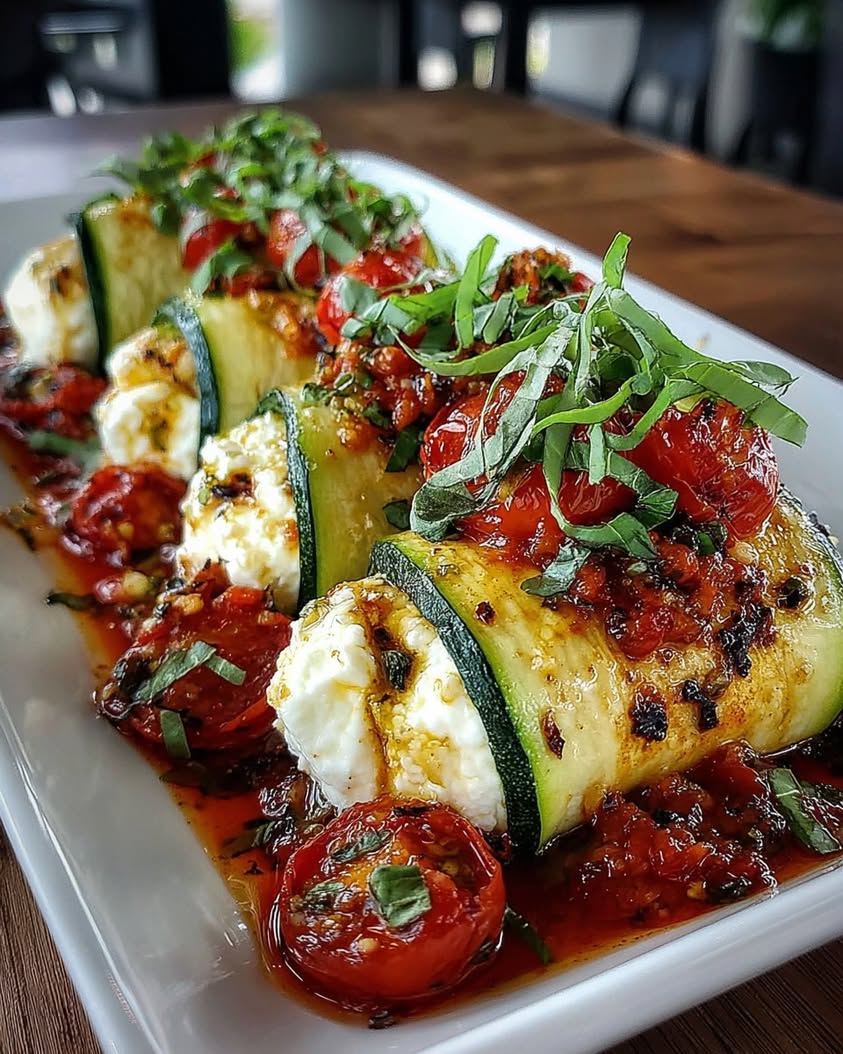
- Visual Appeal: This dish is a feast for the eyes. The vibrant green zucchini rolls, the white and creamy burrata peeking through, and the deep red tomato glaze create a stunning color palette. It is an elegant presentation that looks professional.
- Skill Level Needed: This is an intermediate-friendly recipe. It requires some basic knife skills for slicing the zucchini and a bit of patience for rolling. However, the techniques are simple to master, and the recipe is very forgiving of minor imperfections.
- Special Equipment: A mandoline slicer is highly recommended for achieving perfectly even, thin zucchini ribbons. Additionally, you will need a good non-stick skillet or baking sheet for cooking the zucchini and a small saucepan for reducing the tomato glaze.
Recipe Overview
- Difficulty Level: We rate this recipe as medium difficulty. The primary challenge lies in handling the delicate zucchini ribbons without tearing them. Additionally, achieving the perfect consistency for the tomato glaze requires careful reduction. However, each step is clearly explained and manageable for a confident home cook.
- Category: This dish fits beautifully into several categories. Primarily, it is an elegant appetizer or starter for a dinner party. Alternatively, it can serve as a light main course for a summer lunch, especially when paired with a simple green salad or crusty bread.
- Cuisine: The inspiration is firmly rooted in Italian cuisine, celebrating classic ingredients like zucchini, tomato, basil, and fresh cheese. The technique of making a vegetable “involtini” (roll) is a traditional Italian method. The use of burrata, a modern Italian cheese, gives it a contemporary twist.
- Cost: This is a moderately priced dish, largely dependent on the cost of burrata. Zucchini and tomatoes are typically inexpensive, especially in season. Fresh herbs and basic pantry staples round out the list. For a special occasion, the impressive result justifies the splurge on quality cheese.
- Season: This recipe shines in late summer. This is when zucchini and tomatoes are at their peak of flavor, sweetness, and affordability. The dish is light yet satisfying, making it ideal for warm-weather entertaining when you want something beautiful that does not require heavy cooking.
- Occasion: These rolls are perfect for any occasion where you want to make an impression. Think dinner parties, bridal or baby showers, holiday appetizers, or a romantic date night at home. They are also a wonderful way to elevate a simple family meal into something special.
Why You’ll Love This Recipe
First and foremost, the taste and texture are utterly captivating. Each component of these Creamy Burrata Stuffed Zucchini Rolls with Tomato Glaze plays a crucial role. The zucchini provides a fresh, neutral canvas. Meanwhile, the burrata filling is a dreamy cloud of richness cut by the brightness of lemon and basil. The tomato glaze acts as the ultimate flavor amplifier, adding a sweet and savory punch that makes every bite complex and satisfying. You will love the sophisticated layering of flavors that seems much more complicated than it actually is.
From a convenience standpoint, this recipe is a winner for entertaining. You can prepare the zucchini ribbons, make the filling, and even reduce the tomato glaze hours in advance. Then, assembly and baking take just minutes before serving. This make-ahead flexibility is a game-changer for hosts. Consequently, you can spend time with your guests instead of being stuck in the kitchen. The final bake also fills your home with an irresistible aroma that builds anticipation.
Nutritionally, this dish is a fantastic way to enjoy vegetables. Zucchini is low in calories but high in fiber, vitamins C and B6, and antioxidants. Using it as a wrap instead of pasta or dough significantly reduces carbohydrates and calories. Burrata provides protein and calcium, though it is higher in fat. By using a modest amount of this flavorful cheese, you get maximum impact without overdoing it. The tomato glaze is packed with lycopene, a powerful antioxidant. Overall, it is a dish that feels indulgent but is built on a foundation of wholesome ingredients.
The social and entertaining value of this recipe cannot be overstated. Visually, it is a showstopper that will garner compliments and spark conversation. It demonstrates care and skill, making guests feel special. Because it is served as individual rolls, it is elegant and easy for guests to eat. It is a versatile dish that fits into a multi-course Italian meal, a spread of appetizers, or a light al fresco lunch. It is the kind of recipe that becomes your “secret weapon” for impressing people.
Finally, considering cost-effectiveness and accessibility, this recipe is quite smart. While burrata can be a splurge, a single ball goes a long way in this preparation. The other ingredients are pantry staples or inexpensive seasonal produce. You do not need any exotic or hard-to-find items. If you have a vegetable peeler, you can even make the zucchini ribbons without a mandoline. This accessibility means anyone can recreate this beautiful dish without a special trip to a gourmet market.
Historical Background and Cultural Significance
The concept of vegetable rolls, or “involtini” in Italian, has deep roots in cucina povera, the “cooking of the poor.” This resourceful cuisine focused on transforming humble, abundant ingredients into satisfying meals. In regions like Sicily and Southern Italy, where eggplants and zucchini grew plentifully, cooks would slice them thin, grill or fry them, and roll them around a simple filling of breadcrumbs, cheese, and herbs. This method stretched expensive proteins and added substance and flavor to vegetables. The modern interpretation, like our Creamy Burrata Stuffed Zucchini Rolls, is a luxurious evolution of this thrifty, ingenious tradition.
Culturally, dishes like this speak to the Italian philosophy of “il bel cibo” – beautiful food. Presentation is nearly as important as taste. A beautifully plated involtini demonstrates respect for the ingredients and for the guests who will enjoy it. The use of fresh, sun-ripened tomatoes and basil is a direct homage to the Italian summer table, where meals are often built around the day’s harvest. This recipe captures that seasonal, celebratory spirit in a single, elegant appetizer.
The evolution of this specific recipe is tied to the global rise of burrata. Originally from the Puglia region, burrata was a lesser-known cheese outside Italy until the late 20th century. As it gained international fame for its decadent texture, creative cooks began incorporating it into classic dishes. Stuffing zucchini rolls with burrata instead of ricotta or mozzarella is a relatively modern twist. It elevates the dish by introducing an even creamier, more luxurious center that oozes delightfully when cut. The sweet tomato glaze is another contemporary touch, adding a chef-inspired finish that enhances both flavor and visual drama.
Regional variations of vegetable involtini are endless. In the north, you might find rolls made with Swiss chard and ricotta. In Rome, “involtini di zucchine” are often fried and served without a sauce. Some versions include a slice of prosciutto or salami inside the roll for a salty, meaty element. The tomato glaze in our recipe could be replaced with a simple marinara, a pesto drizzle, or a balsamic reduction. This adaptability is a testament to the format’s brilliance. Our version with Creamy Burrata Stuffed Zucchini Rolls with Tomato Glaze sits at the intersection of tradition and modern gourmet sensibility.
Ingredient Deep Dive
Zucchini: Also known as courgette, this summer squash originated in the Americas but was developed into its modern form in Italy. It is a culinary chameleon, valued for its mild flavor and tender texture when cooked. Nutritionally, it is very low in calories and carbohydrates but provides a good amount of vitamin C, manganese, and antioxidants like lutein. When selecting, choose firm, medium-sized zucchini with glossy, unblemished skin. Avoid overly large ones, as they can be seedy and watery. Store them unwashed in a plastic bag in the refrigerator’s crisper drawer for up to a week. For a variation, yellow summer squash can be used interchangeably.
Burrata Cheese: Burrata, meaning “buttered” in Italian, is a fresh cheese from Puglia. It consists of a mozzarella pouch filled with stracciatella (shreds of mozzarella) and cream, creating an incredibly rich, soft center. Its history dates back to the early 20th century as a way to use up the ritagli (clippings) from mozzarella production. It is a good source of protein and calcium but is high in saturated fat, so it is best enjoyed in moderation. Always seek out the freshest burrata possible, sold in liquid, and use it within a day or two of purchase. If unavailable, a combination of fresh mozzarella and a tablespoon of ricotta or mascarpone can mimic the creamy texture.
San Marzano Tomatoes (Canned): These plum tomatoes, grown in the volcanic soil near Mount Vesuvius, are considered the gold standard for cooking. They have a thicker flesh, fewer seeds, and a sweeter, less acidic flavor than standard plum tomatoes. Their DOP (Protected Designation of Origin) status guarantees their origin and quality. They are rich in lycopene, vitamin C, and potassium. For the glaze, their concentrated flavor is ideal. Look for “San Marzano” on the label and “DOP” if possible. Whole peeled tomatoes are preferable to crushed, as you can control the texture. In a pinch, high-quality canned crushed tomatoes or even tomato passata can be used, though the cooking time for the glaze may vary.
Fresh Basil: This aromatic herb is synonymous with Italian cuisine and summer. Its name derives from the Greek “basilikón phutón,” meaning “royal plant.” Basil contains antioxidants and essential oils like eugenol, which have anti-inflammatory properties. It is highly perishable. For the best flavor, buy vibrant green bunches without black spots. Store it like a bouquet of flowers: trim the stems and place them in a glass of water on the counter, loosely covered with a bag. For the filling, chiffonade (thinly sliced) basil is perfect. If you must substitute, fresh parsley or mint can offer a different but pleasant herbal note, though the classic Italian flavor will change.
Common Mistakes to Avoid
- Slicing Zucchini Too Thick: Using thick slices is the most common error. Thick ribbons will not roll easily and will remain too crunchy after baking. Always aim for 1/8-inch thick slices. A mandoline is the best tool for consistent, paper-thin slices that become pliable when cooked.
- Not Salting the Zucchini Ribbons: Skipping the salting step leads to watery rolls. Salting draws out excess moisture, which prevents a soggy filling and ensures the zucchini softens properly. After salting, pat them thoroughly dry with paper towels before brushing with oil.
- Overfilling the Rolls: It is tempting to add more of the delicious burrata filling. However, overfilling causes the rolls to burst open during baking, creating a messy presentation. Use a modest tablespoon-sized amount per ribbon for a secure, neat roll.
- Using Cold Burrata Straight from the Fridge: Cold burrata is stiff and difficult to mix smoothly with the herbs. Let it sit at room temperature for 20-30 minutes before preparing the filling. This allows it to become soft and spreadable, making assembly much easier.
- Under-Reducing the Tomato Glaze: A runny glaze will pool on the plate and not provide the intended flavor concentration. Cook the glaze until it is thick enough to coat the back of a spoon and leaves a clear trail when you drag a finger through it.
- Overbaking the Rolls: The goal is to warm the rolls through and melt the cheese slightly, not to cook them until they collapse. Zucchini has high water content; overbaking can make them mushy and cause the filling to leak out. Bake just until heated through and slightly golden.
- Skipping the Fresh Herb Finish: Adding fresh basil only to the filling and not as a garnish misses a key opportunity. The fresh herb added after baking provides a bright, aromatic pop that contrasts beautifully with the cooked flavors. Always garnish with a little extra fresh basil.
- Not Tasting the Filling Before Assembly: Seasoning is crucial. Before you start rolling, taste the burrata mixture. Adjust the salt, pepper, and lemon zest to your preference. Remember, the zucchini and glaze have salt, but the filling should be flavorful on its own.
Essential Techniques
Creating Perfect Zucchini Ribbons: This is the foundational technique for successful Creamy Burrata Stuffed Zucchini Rolls. First, trim the ends of the zucchini. Using a mandoline or a very sharp vegetable peeler, slice lengthwise into even 1/8-inch thick strips. Apply gentle, consistent pressure. Importantly, stop slicing when you reach the seedy core, as those ribbons are too weak to roll. Salting the ribbons is non-negotiable; it draws out water that would steam during baking and make the rolls soggy. After 10 minutes, pat them completely dry with paper towels. This step ensures they will roast rather than steam, becoming pliable for rolling.
Reducing the Tomato Glaze: A proper glaze is thick, shiny, and intensely flavorful. Start by sautéing garlic in olive oil just until fragrant to avoid bitterness. Then, add the crushed San Marzano tomatoes. The key is to simmer over medium-low heat, allowing the water to evaporate slowly. Stir occasionally to prevent scorching. You will know it is ready when the mixture has reduced by about half, thickens noticeably, and darkens to a deep red. It should coat the back of a spoon without sliding off immediately. This concentration transforms simple tomatoes into a sweet, umami-packed sauce that anchors the dish.
Stuffing and Rolling: This technique requires a gentle touch. Lay a dried zucchini ribbon on a clean surface. Place a tablespoon of the burrata filling about one inch from the end closest to you. Using your fingers, gently spread the filling into a thin, even log across the width of the ribbon. Then, carefully lift the end and fold it over the filling, tucking it snugly. Continue rolling away from you, keeping the roll tight but not so tight that the filling squeezes out the sides. The finished roll should be compact and able to sit on its seam without unraveling.
Pro Tips for Perfect Creamy Burrata Stuffed Zucchini Rolls
First, invest in a mandoline slicer with a safety guard. It guarantees uniformly thin zucchini ribbons, which is the single biggest factor in achieving pliable, easy-to-roll slices. Consistent thickness also ensures even cooking.
Second, do not discard the end pieces of zucchini after slicing. Instead, chop them finely and add them to the tomato glaze as it simmers. This adds extra vegetable flavor and reduces waste.
Third, for an extra flavor boost in the filling, add a teaspoon of finely grated Pecorino Romano or Parmesan cheese. Its salty, nutty character will deepen the overall taste of the burrata mixture beautifully.
Fourth, if your zucchini ribbons are slightly too short to roll securely, you can overlap two shorter ends by about half an inch to create a longer “sheet” before adding the filling.
Fifth, use a pastry brush to lightly coat the zucchini ribbons with oil before roasting. This promotes even browning and prevents sticking far better than drizzling, which can leave pools of oil.
Sixth, let the assembled rolls rest for 5 minutes after baking before serving. This allows the filling to set slightly, making them easier to transfer from dish to plate without falling apart.
Seventh, warm your serving plates slightly before plating. A warm plate keeps the rolls and glaze at the ideal temperature longer, enhancing the dining experience from the first bite.
Eighth, for a professional touch, use a squeeze bottle to apply the tomato glaze in a zigzag or circular pattern on the plate before placing the rolls. It creates a stunning visual base.
Variations and Adaptations
Regional Variations: Across Italy, the fillings and sauces change. For a Sicilian twist, add 2 tablespoons of toasted pine nuts and a handful of raisins (soaked in warm water and drained) to the burrata filling. Serve with a saffron-infused bechamel instead of tomato glaze. A Ligurian version might incorporate pesto directly into the cheese filling and use a walnut sauce for plating.
Seasonal Adaptations: In autumn, substitute the zucchini for thin slices of butternut squash or eggplant. The filling could include roasted pumpkin puree mixed with the burrata and a sage brown butter glaze. For spring, use asparagus spears as the roll’s core alongside the cheese and a light lemon-cream sauce.
Dietary Modifications: For a vegan version, replace burrata with a mixture of cashew ricotta (blended soaked cashews, lemon juice, nutritional yeast) and vegan mozzarella shreds. Use a high-quality vegan tomato sauce for the glaze. To make it gluten-free, ensure all ingredients are certified GF; this recipe is naturally gluten-free as written.
Flavor Variations: Infuse the olive oil for brushing the zucchini with crushed red pepper flakes or smoked paprika before applying. Add sun-dried tomatoes or chopped artichoke hearts to the burrata filling. For an herbal shift, use mint or dill instead of basil.
Texture Modifications: For a crunchier element, sprinkle toasted breadcrumbs or chopped walnuts over the plated glaze before adding the rolls. Alternatively, before baking, give the assembled rolls a very light brush of oil and a sprinkle of panko for a crispy top.
Presentation Alternatives: Instead of individual rolls on a plate, assemble them snugly in a baking dish, cover with the tomato glaze and a sprinkle of mozzarella, and bake until bubbly for a “zucchini roll bake.” Or, serve them deconstructed: a pile of zucchini ribbons, a dollop of burrata filling, and a drizzle of glaze for a rustic, interactive appetizer.
Serving and Presentation Guide
Plating Techniques: Presentation is key for these elegant rolls. Start by spooning or artfully smearing a pool of the room-temperature tomato glaze in the center of each plate. Alternatively, create a long swipe with the back of a spoon. Carefully place two or three warm zucchini rolls on top of the glaze, slightly overlapping. Ensure the seam side is down for a clean look.
Garnishing Ideas: Fresh basil is the classic and essential garnish. Scatter small whole leaves or a chiffonade over the rolls and around the plate. For color and flavor, add a few drops of high-quality extra virgin olive oil. A light sprinkle of flaky sea salt (like Maldon) and a crack of black pepper just before serving heightens everything. Microgreens or edible flowers add a restaurant-quality touch.
Traditional Accompaniments: In Italy, such a starter might be followed by a simple pasta course. Alongside the rolls themselves, offer slices of grilled or toasted ciabatta or focaccia to sop up the delicious tomato glaze and any escaped burrata. A simple, bitter green salad with a lemon vinaigrette provides a refreshing counterpoint to the richness.
Modern Serving Suggestions: For a cocktail party, make smaller rolls using a vegetable peeler for thinner ribbons and serve them as one-bite canapés on spoons with a dot of glaze. As a light main, pair with a quinoa salad or a chilled white bean and herb salad. For a brunch item, top with a poached egg.
Temperature Considerations: Serve the rolls warm, not piping hot. This allows the flavors of the burrata and basil to shine. The tomato glaze can be at room temperature or slightly warm. Avoid serving the rolls cold, as the burrata will firm up and lose its luxurious, creamy texture.
Portion Control Tips: As an appetizer, 2-3 rolls per person is standard. As a light main, 4-5 rolls are sufficient. If serving as part of a larger spread of small plates, one roll per person as a tasting portion is elegant. Remember, the dish is rich, so portions do not need to be large to satisfy.
Wine and Beverage Pairing
Wine Pairings: The creamy burrata and sweet tomato glaze call for wines with good acidity to cut through the richness. A classic Italian pairing is a Verdicchio dei Castelli di Jesi or a Gavi di Gavi—crisp, mineral-driven white wines that complement the herbs and zucchini. A dry Rosé from Provence or Puglia, with its red fruit notes and acidity, is another brilliant match. For red wine lovers, a light, low-tannin red like a Bardolino or a Frappato from Sicily won’t overpower the dish.
Non-Alcoholic Alternatives: Sparkling water with a twist of lemon or a cucumber ribbon is always refreshing. For something more crafted, a basil-infused lemonade or iced tea mirrors the herbal notes in the dish. A high-quality tomato juice cocktail (like a Virgin Mary) with extra basil garnish creates a fun, thematic link to the tomato glaze.
Coffee/Tea Pairings: While not a typical pairing for this course, if serving as a lunch item, a lightly roasted, bright Ethiopian or Kenyan coffee served after the meal would be lovely. An herbal tea like peppermint or lemon verbena served iced could be a delightful, digestif-style finish to a summer meal featuring these rolls.
Temperature Considerations: White and rosé wines should be well-chilled, around 45-50°F (7-10°C). This crisp temperature enhances their acidity and refreshment factor against the creamy cheese. Non-alcoholic beverages should also be served cold to provide a palate-cleansing effect.
Serving Suggestions: Pour wine into appropriate stemware to appreciate its aroma. For non-alcoholic infusions, use tall glasses with plenty of ice. Always offer water alongside any beverage pairing to cleanse the palate fully between bites of the flavorful Creamy Burrata Stuffed Zucchini Rolls with Tomato Glaze.
Storage and Shelf Life
Storage Methods: Store any leftover assembled rolls and glaze separately for best results. Place cooled rolls in a single layer in an airtight container. Pour the tomato glaze into a separate sealed container. This prevents the rolls from becoming soggy. They can be refrigerated for up to 2 days.
Temperature Requirements: All components must be refrigerated promptly at 40°F (4°C) or below. Do not leave the assembled dish at room temperature for more than two hours, as the dairy-based filling is perishable.
Container Recommendations: Use shallow containers for the rolls to avoid stacking and crushing. If you must stack them, place a layer of parchment paper between layers. Glass containers are ideal as they do not absorb odors and allow you to see the contents.
Signs of Spoilage: Discard the rolls if you notice an off or sour smell, significant liquid separation, or any mold growth. The burrata will darken slightly when exposed to air, but if it becomes gray or develops an ammonia-like odor, it has spoiled.
Reheating Instructions: Reheat rolls gently to avoid overcooking. Place them on a parchment-lined baking sheet and warm in a 300°F (150°C) oven for 8-12 minutes, or until just heated through. Avoid the microwave, as it will make the zucchini rubbery and can cause the filling to explode.
Freezing Guidelines: Freezing is not recommended for the fully assembled Creamy Burrata Stuffed Zucchini Rolls. The high water content in the zucchini causes it to become mushy and watery upon thawing. The tomato glaze, however, freezes very well for up to 3 months.
Make Ahead Strategies
Prep Timeline: You can prepare almost every component 1 day in advance. Slice and salt the zucchini ribbons, then store them patted dry and layered with paper towels in the fridge. Prepare the burrata filling and keep it sealed in its container. Make the tomato glaze and let it cool. This leaves only assembly and baking for the day of serving.
Storage Between Steps: Keep the dried zucchini ribbons wrapped in paper towels inside a sealed bag. The burrata filling should be pressed with plastic wrap directly onto its surface to prevent browning. The tomato glaze can be covered and left at room temperature if using within a few hours, otherwise refrigerated.
Quality Impact Assessment: Prepping ahead has minimal negative impact and can even improve flavor, as the tomato glaze benefits from resting. The zucchini may soften slightly more but will still roll perfectly. The key is ensuring all components are thoroughly dried and sealed to prevent moisture transfer.
Assembly Tips: Assemble the rolls on a baking sheet up to 2 hours before baking. Cover them loosely with plastic wrap and refrigerate. Remove the tray from the refrigerator about 20 minutes before baking to take the chill off, ensuring even cooking.
Reheating Guidelines: If you must reheat fully assembled rolls made ahead, follow the gentle oven method described in storage. However, for optimal texture, it is always best to bake them fresh just before serving.
Fresh Element Additions: Regardless of make-ahead steps, always add the final garnish of fresh basil and a drizzle of extra virgin olive oil just before serving. This ensures the aromatic and visual pop that defines the dish.
Scaling Instructions
Halving the Recipe: Halving is straightforward for a smaller yield. Use one medium zucchini, half a ball of burrata, and half a can of tomatoes. Keep all other seasoning amounts (salt, pepper, herbs, garlic) at about 60-70% of the original, as their impact does not scale linearly. Taste and adjust. Use a smaller skillet for the glaze to maintain the reduction rate.
Doubling or Tripling: For a crowd, you can easily double or triple. The most important adjustment is to use multiple baking sheets for the zucchini ribbons, ensuring they are in a single layer without overcrowding. Roast in batches if necessary. For the glaze, use a wider, heavy-bottomed pot to increase surface area and promote efficient evaporation.
Equipment Adjustments: Scaling up requires planning. Ensure you have enough baking sheets and oven space. A large food processor can help quickly crush the tomatoes for a big batch of glaze. Consider using a disposable piping bag to quickly and neatly portion the burrata filling onto many zucchini ribbons.
Timing Modifications: Prepping a double or triple batch will take more time, but the active cooking times remain similar. The tomato glaze may take slightly longer to reduce due to higher volume. Baking time may increase by a few minutes if the rolls are crowded on the tray, as steam will take longer to escape.
Storage Considerations: When making a large batch, the “make ahead” strategies become even more valuable. Component prep can be done the day before. However, avoid assembling more rolls than you plan to serve immediately, as leftover assembled rolls do not keep as well as the separate components.
Nutritional Deep Dive
Macro Breakdown: A serving of these Creamy Burrata Stuffed Zucchini Rolls (approximately 3 rolls) provides a balance of macronutrients. The primary source of fat is the olive oil and burrata, offering mostly monounsaturated and saturated fats. Protein comes from the cheese, contributing to satiety. Carbohydrates are relatively low and come mainly from the zucchini and tomatoes, with a small amount of natural sugars in the glaze. This makes it a suitable option for lower-carb eating plans when enjoyed in moderation.
Micronutrient Analysis: This dish is a micronutrient powerhouse. Zucchini contributes vitamin C, potassium, and manganese. Tomatoes are famously rich in lycopene, an antioxidant linked to heart health, and vitamin K. Basil provides vitamin K, vitamin A, and antioxidants like beta-carotene. Olive oil adds vitamin E. Together, they offer a wide spectrum of vitamins and minerals that support overall health.
Health Benefits: The combination of ingredients promotes several health benefits. The high antioxidant content (lycopene from tomatoes, vitamins C and E) helps combat oxidative stress. The fiber from zucchini aids digestion. The monounsaturated fats in olive oil are heart-healthy. Furthermore, using zucchini as a wrap increases vegetable intake significantly, aligning with dietary guidelines to “fill half your plate with fruits and vegetables.”
Dietary Considerations: This recipe is naturally gluten-free and vegetarian. It is not suitable for a strict vegan diet due to the dairy cheese. For those monitoring sodium, you can control the amount of added salt. While not low-fat due to the burrata and oil, the fats are primarily from wholesome sources. It is generally low in sugar.
Portion Analysis: As an appetizer, the portion size is naturally controlled, making it a great choice for mindful eating. The rolls are rich and flavorful, so a small serving satisfies. As a main course, pairing it with a large side salad adds volume and nutrients without excessive calories, creating a balanced meal.
Weight Management Tips: To make this dish even more weight-conscious, you can reduce the olive oil used for brushing the zucchini by using an oil spray. You could also use part-skim ricotta mixed with a smaller amount of burrata for the filling to lower the fat content while maintaining creaminess. The base of the dish—zucchini—is very low in calories, which is a great starting point.
Dietary Adaptations
Gluten-Free: This recipe is naturally gluten-free as written. Simply ensure that all packaged ingredients, like canned tomatoes, are certified gluten-free, as cross-contamination can sometimes occur in processing facilities.
Dairy-Free/Vegan: Replace burrata with a high-quality vegan mozzarella or a homemade cashew ricotta (blend soaked cashews with lemon juice, nutritional yeast, salt, and a touch of plant milk). Use a vegan tomato sauce for the glaze. The result will be different but still delicious and creamy.
Low-Carb/Keto: This dish is already relatively low in carbs. To make it strictly keto, ensure the tomato glaze is made with no added sugar and that the tomatoes used are not from a brand that adds sugar. The net carbs come primarily from the tomatoes and zucchini, so keep portions in check to stay within daily macros.
Paleo: The dairy is the main non-paleo component. Substitute the burrata with a dairy-free alternative as mentioned above, or use a simple filling of mashed avocado mixed with herbs and lemon juice. Ensure the canned tomatoes have no additives.
Low-FODMAP: Zucchini is low-FODMAP in servings of 1/3 cup or 65 grams. Stick to 1-2 rolls per serving. Replace garlic in the glaze with garlic-infused oil (strained) for flavor without the fructans. Ensure the burrata has no added high-FODMAP ingredients like onion or garlic powder.
Nut-Free: The standard recipe is nut-free. For vegan adaptations requiring cashew ricotta, substitute with a sunflower seed ricotta (soaked sunflower seeds blended with the same seasonings) to maintain a nut-free profile.
Troubleshooting Guide
Z
Print Thinly sliced zucchini rolled around a creamy burrata filling, baked until tender, and topped with a sweet and tangy tomato glaze for an elegant vegetarian dish. You can customize the seasonings to taste.Creamy Burrata Stuffed Zucchini Rolls with Tomato Glaze
Description
Ingredients
Instructions
Notes