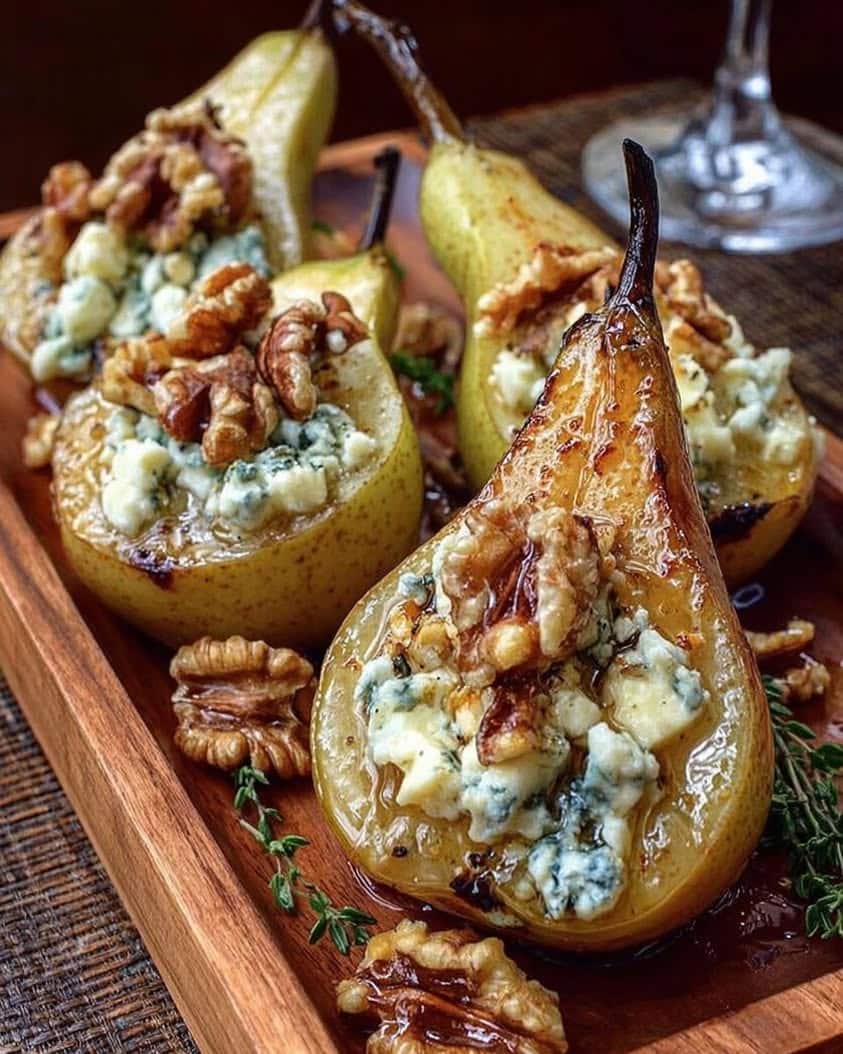
Elegant Roasted Pears with Blue Cheese and Walnuts Recipe: A Simple Gourmet Dessert
Imagine a dessert that feels both rustic and refined, a dish that transforms simple ingredients into something truly spectacular. This elegant roasted pears with blue cheese and walnuts recipe does exactly that. It combines the natural sweetness of ripe pears with the bold, tangy punch of blue cheese and the earthy crunch of toasted walnuts. Consequently, you get a perfect balance of flavors and textures in every single bite. This dish is a testament to the idea that the best recipes often have the shortest ingredient lists.
Furthermore, this recipe is incredibly versatile. You can serve it as a stunning finale to a dinner party, a sophisticated cheese course, or even a unique brunch item. The warm, caramelized pears become tender and juicy in the oven, their flavor deepening and intensifying. Meanwhile, the heat gently softens the blue cheese, allowing it to melt just enough to coat the pears in a creamy, savory blanket. Finally, the walnuts add a necessary textural contrast and a rich, nutty flavor that ties everything together beautifully.
Best of all, this elegant roasted pears with blue cheese and walnuts recipe requires minimal effort for maximum impact. You don’t need any fancy techniques or hard-to-find ingredients. In fact, you probably have most of the components in your kitchen right now. This is the kind of dessert that impresses guests without stressing the host. It’s a celebration of seasonal produce and bold flavor combinations, proving that gourmet taste can be wonderfully simple to achieve.
Quick Recipe Highlights
- Flavor Profile: This dish masterfully balances sweet, savory, tangy, and nutty notes. The natural sugar in the pears caramelizes during roasting, creating a deep, honey-like sweetness. This sweetness is perfectly cut by the sharp, salty tang of the blue cheese, while the walnuts contribute a toasty, bitter richness that completes the flavor symphony.
- Texture: You experience a delightful contrast of soft, yielding fruit against creamy, crumbly cheese and crunchy, toasted nuts. The roasting process makes the pear flesh incredibly tender, almost buttery. Meanwhile, the blue cheese offers a creamy yet crumbly mouthfeel, and the walnuts provide a satisfying, firm crunch that prevents the dish from feeling one-dimensional.
- Aroma: As the pears roast, your kitchen will fill with a warm, comforting scent of caramelizing fruit and cinnamon. The aroma of toasted walnuts adds a deep, nutty fragrance. When you add the blue cheese, it introduces a sharp, pungent note that makes the overall scent complex and incredibly appetizing.
- Visual Appeal: This dish is a feast for the eyes with its beautiful presentation. The halved pears roast to a golden-brown hue, cradling the melted, creamy blue cheese in their centers. The toasted walnuts scatter like edible jewels, adding color and texture. A final drizzle of honey adds a glossy sheen, making the plate look professionally crafted.
- Skill Level Needed: This is a beginner-friendly recipe ideal for novice cooks. The steps are straightforward: halve pears, scoop the core, roast, and top. There’s no intricate knife work or complex cooking methods. Essentially, if you can use a spoon and an oven, you can master this elegant roasted pears with blue cheese and walnuts recipe.
- Special Equipment: You only need very basic kitchen tools. A baking sheet, a small spoon or melon baller for coring, and a mixing bowl are sufficient. Parchment paper is helpful for easy cleanup but not mandatory. No special pans, blenders, or gadgets are required, making this recipe highly accessible.
Recipe Overview
- Difficulty Level: We rate this elegant roasted pears with blue cheese and walnuts recipe as “Easy” because it involves fundamental techniques accessible to all cooks. The primary actions are coring fruit and using an oven. There is no tricky timing or precision required. The roasting process is forgiving, and assembly is intuitive. Therefore, it’s a perfect confidence-builder for those new to cooking.
- Category: This versatile dish blurs the lines between categories delightfully. It functions perfectly as a dessert, a cheese course, or even a special side dish. Its balance of sweet and savory allows it to transition seamlessly from the main course to the end of the meal. Additionally, it can be a standout item on a brunch or holiday buffet table.
- Cuisine: While not tied to one specific tradition, this recipe draws inspiration from European and modern American farm-to-table cuisine. The combination of fruit, cheese, and nuts is classic in French and Italian dining. The simplicity and focus on quality ingredients reflect a contemporary, minimalist cooking philosophy that prioritizes flavor over fuss.
- Cost: This is a cost-effective gourmet dish. Pears and walnuts are relatively inexpensive, especially in season. Blue cheese can be a splurge, but a little goes a long way in terms of flavor impact. Overall, you can create an impressive dessert for four people for roughly the price of a single restaurant dessert, making it excellent value.
- Season: This elegant roasted pears with blue cheese and walnuts recipe shines brightest in the autumn and winter months. This is when pears are at their peak of flavor and sweetness. The warm, comforting nature of the roasted dish is ideal for cooler weather. However, with proper pear selection, you can enjoy it year-round as a special treat.
- Occasion: It’s perfect for intimate dinner parties, holiday meals like Thanksgiving or Christmas, or a romantic date night at home. Its elegant presentation makes it feel special, while its ease of preparation means you can enjoy the occasion rather than being stuck in the kitchen. It’s also a wonderful way to elevate a simple weeknight meal.
Why You’ll Love This Recipe
First and foremost, the taste and texture appeal is immediate and profound. Each forkful delivers a complex dance of flavors: the warm, caramelized sweetness of the pear, the sharp and salty creaminess of the cheese, and the earthy crunch of the nut. This combination is surprisingly addictive. Moreover, the contrast between the hot, soft fruit and the cool, crumbly cheese creates a dynamic eating experience that is far more interesting than a standard dessert. It satisfies a craving for something sweet without being cloying, thanks to the savory elements.
Next, consider the sheer convenience and preparation benefits. This elegant roasted pears with blue cheese and walnuts recipe comes together with about ten minutes of active prep work. You simply prepare the pears, mix a simple filling, and let the oven do the rest. There’s no need for creaming butter and sugar, rolling out dough, or worrying about delicate pastries. This makes it an ideal last-minute dessert option when guests are on their way. Furthermore, cleanup is a breeze, especially if you use parchment paper on your baking sheet.
From a nutritional standpoint, this dessert offers more balance than many traditional options. Pears provide dietary fiber and vitamin C, while walnuts are a fantastic source of healthy omega-3 fats and protein. Blue cheese offers calcium and protein, although it should be enjoyed in moderation due to its salt and fat content. Compared to a slice of cake or a bowl of ice cream, this dish provides more sustained energy and nutrients. It’s a dessert you can feel good about serving.
The social and entertaining value of this dish cannot be overstated. It looks incredibly impressive on the plate, giving the appearance of a chef-crafted restaurant dessert. Serving individual roasted pear halves makes for beautiful, personalized plating. This recipe encourages conversation, as guests often marvel at the clever and delicious combination. It’s a talking point that elevates the entire dining experience, making your meal feel more special and thoughtfully composed.
Finally, the cost-effectiveness and accessibility are major wins. You don’t need exotic or expensive ingredients. A few pears, a small wedge of blue cheese, and a handful of walnuts are the core components. You can often find these items on sale, especially during the fall. This means you can create a dessert that tastes luxurious without the luxury price tag. It democratizes gourmet cooking, proving that incredible flavor is about combination and technique, not just costly ingredients.
Historical Background and Cultural Significance
The practice of combining fruit with cheese is an ancient one, with roots stretching across many cultures. Historically, this pairing was a practical way to preserve the harvest and create balanced, sustaining meals. In Europe, particularly in France and Italy, ending a meal with cheese and fruit became a classic tradition. The specific combination of pears and blue cheese, however, is often cited as a classic French pairing. The sweetness of the pear is known to complement the bold salinity of blue cheeses like Roquefort or Stilton, making them frequent partners on cheese boards.
Culturally, this pairing represents a sophisticated understanding of flavor balance. It moves beyond simple sustenance into the realm of gastronomic pleasure. In many fine dining establishments, a cheese course featuring fruit and nuts serves as a palate cleanser between the main course and dessert or as the final savory note. Our elegant roasted pears with blue cheese and walnuts recipe takes this traditional cheese board concept and transforms it into a unified, warm dish. This evolution reflects a modern desire for composed plates that are as beautiful as they are delicious.
The evolution of the recipe from a cold platter to a warm, roasted dish is a relatively modern innovation. Roasting fruit intensifies its natural sugars and softens its texture, creating a more dessert-like experience. This technique gained popularity in home kitchens and restaurants as part of the broader “rustic gourmet” trend, which celebrates simple, high-quality ingredients prepared with care. Applying heat to the cheese slightly melts it, changing its texture and melding it with the pear in a way that a cold pairing cannot achieve. This simple act of roasting elevates the familiar into something new and exciting.
Regional variations of this concept abound, showcasing the adaptability of the core idea. In the American South, one might find a similar dish using pecans instead of walnuts. In regions with local cheese productions, a domestic blue cheese or even a strong goat cheese might be substituted. Some variations include a drizzle of balsamic glaze instead of honey, or a sprinkle of fresh thyme for an herbal note. These adaptations show how the elegant roasted pears with blue cheese and walnuts recipe serves as a fantastic template, inviting cooks to incorporate local flavors and personal preferences.
Ingredient Deep Dive
Pears (Bosc or Anjou): Bosc and Anjou pears are ideal for this elegant roasted pears with blue cheese and walnuts recipe because they hold their shape well during cooking. Unlike very juicy varieties, they become tender but not mushy. Pears have been cultivated for thousands of years, originating in Asia and spreading through Europe. They are a good source of dietary fiber and vitamin C. When selecting pears, choose ones that are firm but yield slightly to gentle pressure at the stem. Avoid any with significant bruising. Store unripe pears at room temperature and move them to the refrigerator once ripe to slow further ripening. For substitutions, firm apples like Honeycrisp or Braeburn can work in a pinch.
Blue Cheese: Blue cheese, with its distinctive veins of Penicillium mold, has a history dating back to the 7th century in Europe. Its strong, salty, and tangy flavor is the perfect counterpoint to sweet fruit. Nutritionally, it provides calcium, protein, and vitamins but is high in sodium and saturated fat, so moderation is key. For this recipe, choose a blue cheese that crumbles easily, such as a domestic Maytag blue, Danish blue, or a more premium Roquefort. Store it tightly wrapped in the refrigerator. If you’re not a fan of strong blue cheese, a milder Gorgonzola Dolce is a fantastic substitute, offering creaminess with less pungency.
Walnuts: Walnuts are one of the oldest tree foods, revered in ancient Persia and the Mediterranean. They are a nutritional powerhouse, packed with omega-3 fatty acids, antioxidants, and protein. Toasting walnuts is a non-negotiable step for this recipe, as it deepens their flavor and improves their crunch. Always buy walnuts in small quantities from a source with high turnover, as their high fat content makes them prone to rancidity. Store them in an airtight container in the refrigerator or freezer. For a variation, pecans or hazelnuts make excellent substitutes, each bringing their own unique toasted flavor profile to the dish.
Honey: Honey is used as a natural sweetener and finishing glaze in this recipe. Its floral notes complement the other ingredients beautifully. Historically, honey has been used as a sweetener for millennia, long before refined sugar. It contains trace enzymes, minerals, and antioxidants. For the best flavor, use a high-quality, locally-sourced honey if possible. The variety (like clover, wildflower, or orange blossom) will subtly influence the final taste. If you are vegan or prefer a different sweetener, pure maple syrup or a reduced balsamic glaze can be used as a substitute with delicious results.
Common Mistakes to Avoid
- Using Overripe or Underripe Pears: Overripe pears will turn to mush in the oven, losing their shape entirely. Underripe pears will be hard and lack sweetness even after roasting. The key is to use pears that are firm but give slightly when pressed near the stem. This ensures they soften perfectly and caramelize during roasting.
- Skipping the Toasting of the Walnuts: Raw walnuts can taste somewhat bitter and have a less satisfying, softer crunch. Toasting them in a dry pan or the oven for a few minutes wakes up their oils, deepens their nutty flavor, and gives them the necessary crisp texture that contrasts with the soft pear and cheese.
- Overcrowding the Baking Sheet: Placing the pear halves too close together on the pan causes them to steam rather than roast. Steaming prevents the beautiful caramelization on the cut surface. For the best results, ensure there is at least an inch of space between each pear half to allow hot air to circulate freely.
- Using the Wrong Type of Blue Cheese: A very soft, spreadable blue cheese may melt into a puddle and burn. Conversely, an extremely dry, aged blue might not soften enough. Aim for a blue cheese that is crumbly yet still slightly moist. It should hold its shape when crumbled but melt appealingly in the oven’s heat.
- Not Drizzling with Oil or Butter: A light coating of olive oil or melted butter on the cut side of the pear before roasting is crucial. This helps conduct heat, promotes even browning and caramelization, and prevents the pear from drying out. It’s a simple step that significantly improves texture and flavor.
- Forgetting to Core the Pears Thoroughly: The fibrous core and seeds in the center of the pear are unpleasant to eat. Use a small spoon or melon baller to scoop out not just the seeds, but the entire tough core from the bottom to the stem, creating a neat cavity for the cheese and walnut filling.
- Adding the Toppings Too Early: If you add the blue cheese and walnuts at the beginning of the roasting time, the cheese may burn and the nuts can become bitter. Instead, roast the prepared pears first until they are nearly tender. Then add the toppings for the last 5-7 minutes, just to warm the cheese and nuts through.
- Serving Straight from the Oven Without Resting: The pears and melted cheese will be extremely hot. Allowing the dish to rest for 5 minutes after removing it from the oven lets the flavors settle and the temperature become palatable. This short rest also allows any melted cheese to set slightly, making serving easier.
Essential Techniques
Coring and Halving Pears: This technique is fundamental for creating the vessel that holds the filling. First, slice the pear in half lengthwise. Then, using a small spoon or a melon baller, start at the wider bottom end and scoop inward and upward to remove the entire seed core and the stringy flesh leading to the stem. The goal is a smooth, clean cavity without breaking through the bottom or sides. A common pitfall is not removing enough, leaving tough fibers. Success is a neat, cup-like hollow in each half.
Toasting Nuts: Toasting is a dry-heat method that transforms nuts. Spread walnuts in a single layer on a dry baking sheet. Toast in a preheated 350°F oven for 5-8 minutes, shaking the pan once, until fragrant and slightly darkened. Alternatively, toast them in a dry skillet over medium heat, stirring constantly. The visual cue for success is a deepened color and a rich, nutty aroma. The pitfall is walking away, as they can burn in seconds. Properly toasted nuts are crisp and flavorful, not bitter.
Roasting Fruit: Roasting pears uses dry, indirect heat to concentrate their sugars and soften their texture. The key is even heat circulation, so don’t overcrowd the pan. The pears should be placed cut-side up on a prepared baking sheet. Roast until a paring knife inserts into the thickest part with little resistance, and the edges are golden brown. The pitfall is under-roasting, leaving the pears tough. The success cue is tender flesh and visible caramelization on the surface.
Pro Tips for Perfect Elegant Roasted Pears
First, always choose pears that are just ripe. They should be fragrant and yield slightly to gentle pressure at the neck. If your pears are rock hard, leave them in a paper bag at room temperature for a day or two to ripen. This ensures optimal sweetness and texture after roasting.
Second, don’t be shy with the black pepper. A few cracks of fresh black pepper over the pears before roasting adds a subtle, warm spice that beautifully complements the sweet and savory elements. It’s a small detail that makes a big difference in the complexity of the dish.
Third, consider adding a fresh herb garnish. After baking, a few small leaves of fresh thyme, rosemary, or even mint scattered over the top can add a wonderful aromatic layer. The herbal note cuts through the richness and makes the presentation even more vibrant and restaurant-worthy.
Fourth, experiment with your sweetener. While honey is classic, try using maple syrup for a deeper, autumnal flavor, or a aged balsamic reduction for a sweet-tart complexity. Each will put a unique spin on your elegant roasted pears with blue cheese and walnuts recipe.
Fifth, if serving for a party, do the prep work ahead. You can core the pears and toast the walnuts hours in advance. Store the pears in water with a squeeze of lemon to prevent browning, and keep the nuts in an airtight container. Then, simply assemble and roast before serving.
Sixth, for an extra layer of flavor, toss the walnuts with the honey and a pinch of salt before toasting them. This creates a sweet-and-salty candied nut topping that is absolutely irresistible and adds another dimension of texture and taste to the final dish.
Variations and Adaptations
Regional Variations: Across different locales, this recipe adapts to local ingredients. In the Pacific Northwest, try using hazelnuts and a local blue cheese. In the South, swap in pecans and a bourbon-infused honey. In Italy, one might use Gorgonzola and pine nuts, finishing with a drizzle of acacia honey. These regional tweaks honor local produce while keeping the spirit of the dish intact.
Seasonal Adaptations: While perfect for fall, this recipe can be modified year-round. In winter, add a pinch of warming spices like nutmeg or cardamom to the pears before roasting. For spring, use a milder cheese like goat cheese and top with edible flowers. In summer, serve the roasted pears at room temperature over a bed of peppery arugula for a savory salad.
Dietary Modifications: For a vegan version, use a plant-based blue cheese alternative (available in many specialty stores) or a crumbled, marinated tofu “feta,” and substitute maple syrup for honey. For a gluten-free diet, this recipe is naturally compliant—just ensure any pre-packaged ingredients like blue cheese are certified gluten-free, as some use wheat-based mold cultures.
Flavor Variations: The flavor profile is wonderfully adaptable. Add a teaspoon of orange zest to the cheese mixture for a citrus note. Incorporate a pinch of smoked paprika or chili flakes for a subtle heat. For a sweeter take, sprinkle the pears with a little brown sugar before roasting. A splash of brandy or port in the pear cavity before adding the cheese creates a luxurious, boozy version.
Texture Modifications: To play with texture, mix the blue cheese with a tablespoon of cream cheese or mascarpone for an ultra-creamy, spreadable filling. For more crunch, add a tablespoon of panko breadcrumbs to the walnut topping. For a smoother experience, you can blend the toasted walnuts into a coarse meal before sprinkling.
Presentation Alternatives: Instead of serving pear halves, slice the roasted pears and fan them on a plate, then top with the crumbled cheese and nuts. For individual servings, use small ramekins. For a family-style presentation, arrange all the roasted pear halves on a large platter and scatter the toppings over the top, creating a stunning centerpiece.
Serving and Presentation Guide
Plating Techniques: For individual servings, place one or two pear halves cut-side up in the center of a medium plate. Spoon any accumulated juices from the baking sheet over the top. Alternatively, for a more rustic look, use a shallow bowl. Ensure the plate has a neutral or dark color to make the golden pears, white cheese, and brown nuts visually pop.
Garnishing Ideas: Beyond the walnuts, fresh herbs are the perfect garnish. A small sprig of thyme, rosemary, or mint adds color and fragrance. A final light drizzle of honey or balsamic glaze in a zigzag pattern looks professional. A few delicate microgreens or a sprinkle of flaky sea salt just before serving enhances both look and taste.
Traditional Accompaniments: In a traditional cheese course context, these roasted pears can be served alongside other complementary items. A few slices of crusty baguette or walnut bread are perfect for scooping up any melted cheese. A small glass of port or a dessert wine served alongside completes the classic European experience.
Modern Serving Suggestions: For a contemporary twist, serve the elegant roasted pears with blue cheese and walnuts over a smear of Greek yogurt or mascarpone sweetened with a touch of honey. Alternatively, crumble them over a simple green salad with a vinaigrette for a lunch entrée. They also make a fantastic topping for vanilla ice cream or oatmeal for a decadent breakfast.
Temperature Considerations: This dish is best served warm, not piping hot. The five-minute rest after roasting allows the intense heat to dissipate, letting the flavors shine. The cheese should be softly melted but not liquid. Serving it warm ensures the textures are at their peak—the pear is tender, and the cheese is creamy.
Portion Control Tips: One pear half per person is a standard serving for a dessert or cheese course. For a more substantial dessert or a light main course (like with a salad), two halves are appropriate. Since the ingredients are rich, a little goes a long way in terms of satisfaction, making it easy to serve a crowd without breaking the bank.
Wine and Beverage Pairing
Wine Pairings: The sweet and savory nature of this dish calls for wines that can bridge that gap. A late-harvest Riesling or Gewürztraminer, with their inherent sweetness and floral notes, are magnificent matches. For red wine lovers, a lighter-style Zinfandel or a fruity Beaujolais works well. The ultimate pairing is often a Sauternes or other dessert wine, whose honeyed sweetness mirrors the pears and contrasts the blue cheese perfectly.
Non-Alcoholic Alternatives: Sparkling apple cider or pear cider provides festive bubbles and complementary fruit flavors. A ginger beer or spicy ginger ale can cut through the richness with its sharp bite. For a more refined option, try a chilled honey-ginger tea or a sparkling water infused with a slice of pear and a sprig of rosemary.
Coffee/Tea Pairings: A medium-roast coffee with notes of caramel or nut pairs beautifully, especially if served after the meal. For tea, consider a smoky Lapsang Souchong, which echoes the toasted walnuts, or a spiced chai tea whose warm spices complement the roasted fruit. A simple cup of Earl Grey with its bergamot citrus note can also be a lovely, cleansing finish.
Temperature Considerations: Serve white and dessert wines well-chilled, between 45-55°F. Red wines should be served slightly cooler than room temperature, around 60-65°F, to keep them refreshing. Non-alcoholic sparkling drinks should be very cold. Coffee and tea should be hot but not scalding, allowing you to taste their nuanced flavors alongside the dessert.
Serving Suggestions: Always offer the beverage in an appropriate glass to enhance the experience. Pour wine just before serving to preserve its aroma. For non-alcoholic options, consider a nice tumbler or a champagne flute for sparkling cider. Presenting the drink thoughtfully makes the entire course feel more special and cohesive.
Storage and Shelf Life
Storage Methods: Store any leftover elegant roasted pears with blue cheese and walnuts in an airtight container in the refrigerator. It’s best to keep the components separate if possible—store the roasted pears in one container and the cheese/nut topping in another. This prevents the nuts from becoming soggy and allows you to reheat the pears properly.
Temperature Requirements: This dish must be refrigerated if not consumed immediately. Do not leave it at room temperature for more than two hours due to the dairy content. The ideal refrigerator temperature is below 40°F to ensure food safety and slow the growth of any bacteria.
Container Recommendations: Use shallow airtight containers to allow for quick cooling and even refrigeration. Glass containers are ideal as they don’t absorb odors and allow you to see the contents. If storing assembled, place a piece of parchment paper over the top before sealing to help absorb minimal moisture.
Signs of Spoilage: Discard the dish if you notice any off smells, such as a sour or ammonia-like odor from the cheese. Visible mold growth (beyond the intended blue veins) is a definite sign of spoilage. If the pears develop an excessively slimy texture or the walnuts taste stale or rancid, it’s time to throw it out.
Reheating Instructions: To reheat, place the pear halves on a baking sheet and warm in a 300°F oven for 8-10 minutes until heated through. Avoid the microwave, as it will make the pears rubbery and the cheese will melt unevenly. Add the cold cheese and nut topping after reheating the pears, allowing the residual heat to slightly soften the cheese.
Freezing Guidelines: Freezing is not recommended for this assembled dish. The high water content in the pears will cause them to become mushy upon thawing. The cheese will separate and become grainy. The walnuts will lose their crunch. It is best enjoyed fresh or stored in the refrigerator for short-term consumption.
Make Ahead Strategies
Prep Timeline: You can prepare nearly every component of this elegant roasted pears with blue cheese and walnuts recipe a day in advance. The day before, core and halve the pears. Toast the walnuts and crumble the cheese. Store each element separately in the refrigerator. This advance prep cuts your active cooking time on the day of serving to just the 25-minute roast.
Storage Between Steps: To prevent the prepped pears from browning, submerge them in a bowl of cold water mixed with the juice of half a lemon. Cover and refrigerate. Drain and pat them very dry before roasting. Store the toasted walnuts in an airtight container at room temperature. Keep the crumbled blue cheese in a sealed container in the fridge.
Quality Impact Assessment: Prepping ahead has minimal negative impact on quality if done correctly. The lemon water prevents oxidation in the pears. Toasted nuts stored properly retain their crunch for days. The blue cheese’s flavor may even intensify slightly when crumbled ahead. The final roasted result will be virtually identical to a fully made-from-scratch version.
Assembly Tips: When ready to cook, simply remove the pears from the water, pat dry, and arrange on your baking sheet. Proceed with the recipe as written, adding the pre-crumbled cheese and pre-toasted nuts during the last few minutes of roasting. This streamlined process is perfect for stress-free entertaining.
Reheating Guidelines: If you must fully assemble and roast ahead, the reheating method is crucial. Reheat in a low oven (300°F) until warmed through, which may take 12-15 minutes. Cover loosely with foil to prevent excessive browning. The nuts will soften slightly, but the flavor will still be excellent.
Fresh Element Additions: For the absolute best presentation and texture, consider doing one fresh addition at the end. Even if you pre-toast the walnuts, give them a quick refresh in a dry pan for 30 seconds before serving. Or, have a small dish of extra fresh crumbled cheese to sprinkle on top after reheating for a burst of cool, tangy flavor.
Scaling Instructions
Halving the Recipe: Halving this elegant roasted pears with blue cheese and walnuts recipe is straightforward for a smaller serving. Use two pear halves, 1.5 ounces of blue cheese, and 2 tablespoons of walnuts. The roasting time may decrease by 3-5 minutes, so check for tenderness earlier. Use a smaller baking sheet or quarter sheet pan for better heat distribution around the smaller quantity.
Doubling or Tripling: Doubling or tripling is easy for a crowd. Simply multiply all ingredients by your desired factor. The key is to use multiple baking sheets and rotate them from top to bottom racks halfway through the cooking time to ensure even roasting. You may need to add 5-7 minutes to the total roasting time due to the increased volume in the oven.
Equipment Adjustments: When scaling up, ensure you have enough baking sheets that fit in your oven with space for air circulation. If baking in batches, keep the prepared, unbaked pears in the lemon water until their turn. Consider using disposable aluminum pans for easy cleanup at large gatherings. A large, rimmed sheet pan is your best friend for big batches.
Timing Modifications: Larger batches require slight timing adjustments. The oven temperature remains the same (400°F). The initial roasting time for the pears alone may need an extra 5-10 minutes if the pan is very crowded, as the steam created slows the browning process. Always rely on the visual and textural cues (golden brown, knife-tender) rather than the clock alone.
Storage Considerations: If making a large batch for an event, you can roast the pears in stages. Hold fully cooked pears (without toppings) in a warm oven (200°F) for up to 30 minutes. Add the cheese and nuts just before serving and return to a hot oven for 5 minutes to melt. This ensures every serving is hot and fresh-tasting.
Nutritional Deep Dive
Macro Breakdown: A serving of this elegant roasted pears with blue cheese and walnuts recipe provides a balance of macronutrients. The pears and honey contribute carbohydrates, primarily in the form of natural sugars and fiber. The blue cheese and walnuts provide a mix of protein and healthy fats. The walnuts are particularly rich in polyunsaturated fats, including omega-3s. This combination offers sustained energy rather than a simple sugar spike.
Micronutrient Analysis: This dish is a source of several important micronutrients. Pears offer vitamin C and potassium. Blue cheese provides calcium, phosphorus, and vitamin B12. Walnuts are an excellent source of manganese and copper, and also contain magnesium and vitamin E. Together, these nutrients support bone health, immune function, and antioxidant defense in the body.
Health Benefits: The fiber from the pears promotes digestive health and helps regulate blood sugar. The healthy fats from the walnuts support heart and brain health. The calcium from the cheese is crucial for bone strength. The antioxidants present in all the components help combat oxidative stress. As part of a balanced diet, this dish contributes to overall wellness.
Dietary Considerations: For those monitoring sodium, be aware that blue cheese is high in salt—use it sparingly or seek a lower-sodium variety. The dish contains dairy, so it’s not suitable for those with lactose intolerance or a milk allergy. The honey makes it non-vegan. However, the recipe is naturally gluten-free and can be adapted for other dietary needs as previously discussed.
Portion Analysis: One pear half with toppings is a satisfying portion that typically contains under 200 calories, making it a reasonable dessert choice. The protein and fat content promote satiety, helping to prevent overeating. Compared to many traditional desserts that are high in refined sugar and saturated fat, this option is more nutrient-dense and satisfying per calorie.
Weight Management Tips: To make this dish even more weight-conscious, you can reduce the amount of blue cheese by half and increase the walnut portion slightly for healthy fats. You can also omit the extra honey drizzle or use a zero-calorie sweetener like monk fruit syrup. Remember, the key is the flavorful combination, not the quantity of any single rich ingredient.
Dietary Adaptations
Gluten-Free: This elegant roasted pears with blue cheese and walnuts recipe Print
Roasted Pears with Blue Cheese and Walnuts
- Total Time: 45 minutes
- Yield: 4
Description
A sophisticated yet simple dessert or appetizer featuring warm, tender roasted pears topped with creamy blue cheese and crunchy toasted walnuts.
Ingredients
- 4 ripe but firm pears, halved and cored
- 2 tablespoons unsalted butter, melted
- 2 tablespoons honey
- 1/2 teaspoon ground cinnamon
- 1/4 cup crumbled blue cheese
- 1/4 cup chopped walnuts, toasted
- Fresh thyme sprigs for garnish (optional)
Instructions
- Preheat oven to 375°F (190°C). Arrange pear halves cut-side up in a baking dish.
- In a small bowl, mix melted butter, honey, and cinnamon. Brush generously over pears.
- Roast pears for 20-25 minutes until tender and lightly caramelized.
- Remove from oven and let cool slightly. Top each pear half with blue cheese and walnuts.
- Garnish with thyme if desired. Serve warm as an appetizer or dessert.
Notes
You can customize the seasonings to taste.
- Prep Time: 15 minutes
- Cook Time: 30 minutes
- Method: Dessert
- Cuisine: American