Sweet Potato Beet Stacks with Pesto and Burrata: An Elegant Appetizer
Imagine a dish that captures the essence of a gourmet restaurant but feels completely achievable in your own kitchen. These Sweet Potato Beet Stacks with Pesto and Burrata deliver exactly that experience. They combine earthy roasted vegetables with creamy cheese and crunchy nuts for a stunning presentation. Consequently, this recipe transforms simple, wholesome ingredients into a show-stopping appetizer or light meal. Every bite offers a beautiful harmony of flavors and textures that will impress any guest.
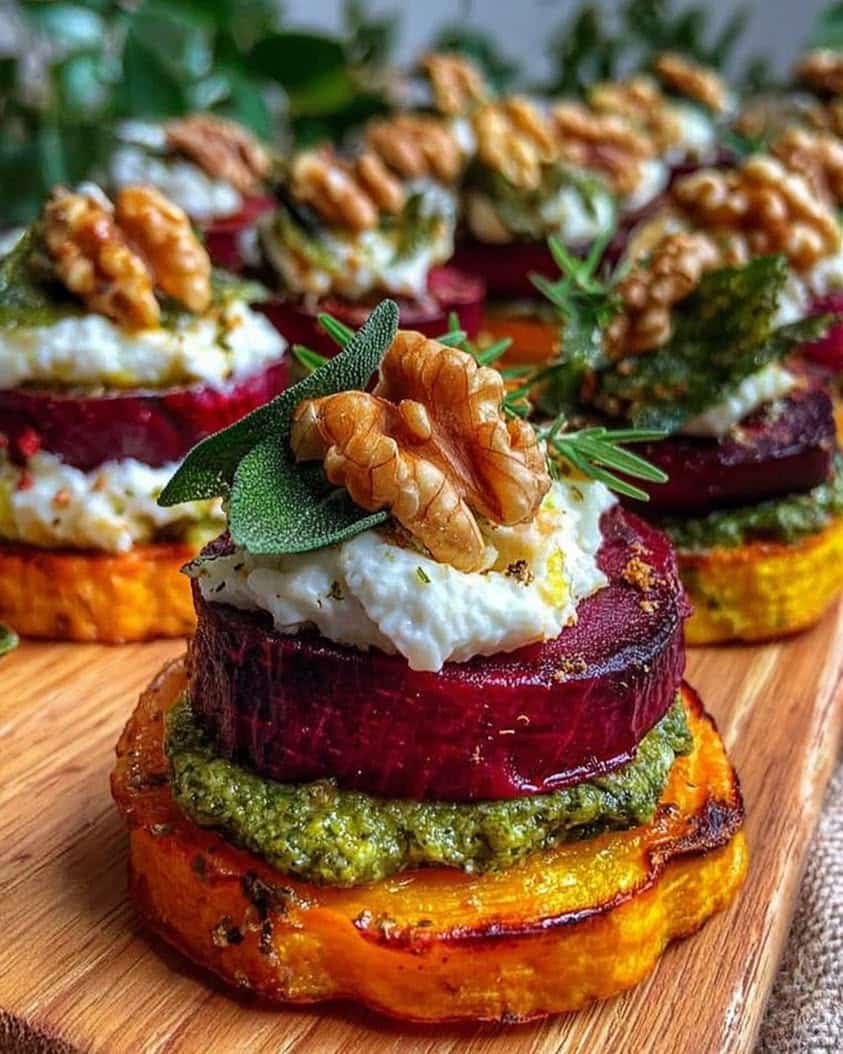
Furthermore, the vibrant colors of the sweet potatoes and beets create a visually stunning plate. The deep ruby red and bright orange slices look almost too beautiful to eat. When you layer them with snowy white burrata and emerald green pesto, you create an edible work of art. This dish proves that healthy food can be incredibly luxurious and satisfying. Ultimately, it is a celebration of seasonal produce and elegant, simple cooking.
Moreover, this recipe is surprisingly versatile. You can serve these stacks as a sophisticated starter for a dinner party. Alternatively, you can enjoy them as a hearty vegetarian main course for a special lunch. The components are easy to prepare ahead of time, making assembly a breeze when you are ready to serve. This flexibility makes the Sweet Potato Beet Stacks with Pesto and Burrata a reliable favorite for any occasion.
Quick Recipe Highlights
- Flavor Profile: Earthy roasted sweet potatoes and beets pair perfectly with the bright, herbal notes of fresh pesto. The rich, milky burrata adds a luxurious creaminess, while toasted walnuts contribute a nutty, slightly bitter finish that balances the sweetness.
- Texture: You get a fantastic contrast between the tender, caramelized vegetable slices and the creamy, soft burrata. The pesto adds a velvety richness, and the chopped walnuts provide a crucial element of satisfying crunch in every bite.
- Aroma: The scent of roasting root vegetables fills your kitchen with a warm, sweet fragrance. Meanwhile, the pesto releases fresh aromas of basil and garlic. Finally, toasting the walnuts adds a deep, toasty nuttiness to the air.
- Visual Appeal: The stacked presentation is elegant and modern. The vibrant red and orange vegetable rounds create stunning layers, beautifully offset by the white cheese and green pesto drizzle. It is a dish designed for social media.
- Skill Level Needed: This is an accessible recipe for most home cooks. The primary skills involve simple vegetable slicing, roasting, and assembly. No advanced techniques are required, making it perfect for cooks looking to elevate their presentation.
- Special Equipment: You only need a good sharp knife, a sturdy cutting board, and a baking sheet. A mandoline slicer can help achieve perfectly uniform vegetable rounds, but it is not essential. A small food processor or blender makes quick work of the pesto.
Recipe Overview
- Difficulty Level: We rate this recipe as easy because it breaks down into very manageable steps. You simply slice, roast, and assemble. There is no fussy dough or precise baking science involved. The most challenging part is achieving even slices, which a mandoline can simplify.
- Category: This dish fits beautifully into several categories. It works perfectly as an impressive appetizer or starter. Additionally, it can serve as a light vegetarian main course or a standout side dish for a holiday meal. It is versatile enough for any menu.
- Cuisine: While not tied to one specific tradition, the recipe draws inspiration from Italian and modern Californian cuisines. The use of burrata and pesto is classically Italian. However, the focus on roasted root vegetables and artistic plating reflects a contemporary, farm-to-table sensibility.
- Cost: This is a moderately priced dish that feels luxurious. Sweet potatoes and beets are very affordable, especially in season. Burrata is the splurge ingredient, but a little goes a long way. Homemade pesto using basil, nuts, and olive oil is cost-effective compared to store-bought versions.
- Season: This recipe shines in the fall and winter when root vegetables are at their peak sweetness and most abundant. However, you can find good-quality sweet potatoes and beets year-round. It is a wonderful way to bring vibrant color and warmth to a colder-weather table.
- Occasion: These stacks are ideal for dinner parties, holiday gatherings like Thanksgiving or Christmas, or a romantic date night at home. They offer a “wow” factor without requiring professional chef skills. They also make a special treat for a weekend lunch.
Why You’ll Love This Recipe
First, the taste and texture combination is absolutely irresistible. The natural sugars in the roasted sweet potato and beet caramelize beautifully, creating a deep, earthy sweetness. This contrasts with the fresh, garlicky punch of the pesto and the indulgent, creamy burst of the burrata. The toasted walnuts add the final textural note, ensuring every mouthful is interesting and satisfying. This symphony of flavors feels both wholesome and decadent at the same time.
Next, consider the convenience and preparation benefits. You can roast the vegetable slices ahead of time and store them in the refrigerator. Similarly, you can prepare the pesto a day or two in advance. When you are ready to serve, simply bring the components to room temperature and assemble the stacks in minutes. This make-ahead flexibility is a game-changer for entertaining, as it removes last-minute stress from the equation.
Furthermore, the nutritional advantages are significant. Sweet potatoes and beets are packed with vitamins, fiber, and antioxidants. They support digestive health and provide sustained energy. Walnuts add healthy fats and omega-3s, while the basil in the pesto offers anti-inflammatory benefits. This dish is a powerhouse of nutrients disguised as a gourmet treat. You can feel good about serving it to your family and friends.
Moreover, the social and entertaining value is incredibly high. These Sweet Potato Beet Stacks with Pesto and Burrata look like they came from a high-end restaurant. Presenting such a beautiful dish makes guests feel special and shows the care you put into the meal. It sparks conversation and becomes a memorable centerpiece of your gathering. The individual portions also make serving elegant and effortless.
Finally, the cost-effectiveness and accessibility are major perks. While burrata might be a splurge, the rest of the ingredients are pantry staples or inexpensive fresh produce. You likely already have olive oil, garlic, and nuts on hand. This recipe demonstrates how a few quality ingredients, treated with respect, can create something extraordinary without breaking the bank. It is an accessible way to cook like a pro.
Historical Background and Cultural Significance
The story of this dish is less about ancient tradition and more about modern culinary fusion. Chefs began exploring vegetable-centric plating in the late 20th and early 21st centuries, moving vegetables to the center of the plate. The concept of stacking food vertically for visual drama became popular in fine dining during the 1990s. This recipe borrows that presentation technique and applies it to humble, earthy ingredients, elevating them to star status.
Individually, the components have deep cultural roots. Burrata originated in the Apulia region of Italy in the early 1900s as a way to use up leftover mozzarella curds. Artisans created the creamy center, or “stracciatella,” and enveloped it in a fresh mozzarella shell. Pesto Genovese, from Liguria, Italy, dates back to Roman times, though the modern basil-based version solidified in the 19th century. Combining these Italian treasures with New World sweet potatoes creates a beautiful cross-cultural dialogue on a plate.
The evolution of this specific recipe mirrors broader food trends. As vegetarian and “flexitarian” diets gained popularity, chefs and home cooks sought ways to make plant-based meals feel celebratory and substantial. Roasting, a simple technique, became a favored method for intensifying vegetable flavors. This dish is a direct result of that movement, showcasing how vegetables can be the undisputed star without relying on meat substitutes.
Regional variations naturally emerge. In the Mediterranean, one might find similar stacks with grilled eggplant and zucchini, topped with local goat cheese and a sun-dried tomato pesto. In the American South, a version might feature candied sweet potatoes with pecans and a bourbon-infused sauce. The core idea—layered, roasted vegetables with cheese and sauce—is adaptable worldwide, reflecting local tastes and available produce. This global adaptability speaks to the universal appeal of combining simple, good ingredients.
Ingredient Deep Dive
Let us start with sweet potatoes. This vibrant tuber, native to Central and South America, has been cultivated for thousands of years. It is a nutritional powerhouse, exceptionally high in beta-carotene (which converts to Vitamin A), Vitamin C, and fiber. When selecting sweet potatoes, look for firm specimens with smooth, unblemished skin. Store them in a cool, dark, well-ventilated place—not the refrigerator. For a twist, you can substitute other orange-fleshed varieties like garnet yams or even try a purple sweet potato for dramatic color.
Next, consider the beet. Beets have a long history, with evidence of cultivation dating back to ancient civilizations in the Mediterranean. They are rich in folate, manganese, and beneficial compounds like betalains, which have antioxidant properties. Choose beets that are firm with smooth skin and vibrant greens attached, if possible. To store, separate the greens and keep the roots in a plastic bag in the refrigerator’s crisper drawer. Golden beets make a wonderful, less-staining alternative to red beets in this recipe.
Now, examine the burrata. This fresh Italian cheese is a relatively modern invention from the 1920s. “Burrata” means “buttered” in Italian, hinting at its rich, creamy interior. The outer shell is solid mozzarella, while the inside contains soft stracciatella and cream. For the best quality, seek out fresh burrata packed in water, and always check the expiration date. If unavailable, fresh mozzarella (mozzarella di bufala is excellent) or a creamy goat cheese log can serve as good substitutes, though the texture will differ.
Finally, focus on the pesto. Traditional pesto Genovese is a symphony of fresh basil, pine nuts, garlic, Parmesan cheese, and olive oil. Basil has been revered since ancient times for its aromatic and purported medicinal qualities. To make your pesto vibrant and prevent browning, blanch the basil leaves briefly before blending. While pine nuts are classic, walnuts are a more affordable and equally delicious alternative, as used in this recipe. For a dairy-free version, simply omit the Parmesan or use a nutritional yeast alternative.
Common Mistakes to Avoid
- Cutting Vegetables Too Thick or Uneven: Slices thicker than 1/4 inch will not cook evenly or stack neatly. They may remain hard in the center while the edges burn. Using a mandoline slicer ensures uniform thickness for perfect roasting and a stable structure.
- Overcrowding the Baking Sheet: Placing vegetable slices too close together causes them to steam instead of roast. You will miss out on the desirable caramelized edges and concentrated flavor. Always use two sheets or roast in batches if necessary.
- Using Cold Burrata Straight from the Fridge: Cold cheese mutes its flavor and creamy texture. Always let the burrata sit at room temperature for at least 20-30 minutes before serving. This allows its full, milky richness to shine through.
- Skipping the Walnut Toast: Raw walnuts can taste bitter and have a soft, sometimes chewy texture. Toasting them in a dry pan for a few minutes unlocks their nutty aroma, deepens their flavor, and provides a superior crunch.
- Blending Pesto Too Long or With a Blunt Blade: Over-processing pesto in a blender can heat it up and turn it brown. It also creates a smooth puree instead of a textured sauce. Pulse the ingredients briefly for the best color and consistency.
- Assembling Stacks While Vegetables Are Hot: If the roasted slices are too hot, they will melt the burrata on contact, creating a messy slide. Let the vegetables cool to just warm or room temperature so the cheese maintains its beautiful shape.
- Neglecting to Season Each Layer: Do not rely solely on the pesto for seasoning. Lightly season the roasted vegetable slices with salt and pepper as they come out of the oven. This builds layers of flavor throughout the entire stack.
- Drowning the Stacks in Pesto: Pesto is a potent sauce. A little drizzle goes a long way. Applying too much will overwhelm the delicate sweetness of the vegetables and the creaminess of the burrata. Use it as an accent, not a blanket.
Essential Techniques
Mastering the roast is crucial. Roasting at a high heat (400°F) is essential for caramelization. This process converts the natural sugars in the vegetables into complex, sweet, and deeply flavorful compounds. The key is to toss the slices in enough oil to coat them lightly, which promotes browning and prevents sticking. Arrange them in a single layer and do not disturb them too often. You will know they are ready when the edges are slightly crisp and the centers are tender when pierced with a fork.
Next, perfect your pesto. The technique of emulsification is central to a great pesto. Slowly drizzling the olive oil into the blender or food processor while it runs helps create a stable, creamy emulsion that binds the ingredients. For a vibrant green color, some chefs swear by blanching the basil leaves for just 5 seconds in boiling water, then shocking them in ice water before blending. This halts enzyme activity that causes browning. Always taste and adjust seasoning after blending.
Finally, focus on assembly. Building a stable stack requires a thoughtful approach. Start with the largest, sturdiest vegetable slice as your base. Add a small dollop of burrata, then another slice, pressing down gently. The pesto acts as “glue” between some layers if needed. Work on the serving plate to avoid having to move the finished stack. The goal is a tower that looks impressive but is still easy for a guest to eat with a fork and knife.
Pro Tips for Perfect Sweet Potato Beet Stacks with Pesto and Burrata
Use a mandoline slicer set to 1/4-inch for perfectly uniform rounds. This ensures even cooking and creates a professional, tidy stack. Always use the hand guard for safety.
Roast the sweet potatoes and beets on separate baking sheets or parchment-lined sections. Their cooking times are similar, but their juices can bleed, staining the sweet potatoes pink.
Let the roasted vegetables cool completely on the baking sheet. This stops the cooking process and allows them to firm up slightly, making them less fragile and easier to stack.
Toast your walnuts in a dry skillet over medium heat for 3-5 minutes, shaking often. You will smell their nutty aroma when they are ready. Immediately transfer them to a plate to cool and prevent burning.
Season the burrata. Just before serving, tear the burrata ball and sprinkle the creamy interior with a tiny pinch of flaky sea salt and a crack of black pepper. This elevates its flavor immensely.
Warm your serving plates slightly. A warm plate will take the chill off room-temperature components, making the first bite more cohesive and pleasant without melting the cheese.
Garnish with microgreens or small basil leaves. This adds a final touch of freshness, color, and a slight peppery note that complements the other flavors beautifully.
Drizzle the pesto and olive oil artistically. Use a spoon to create dots or swirls around the plate, not just on top of the stack. This creates a more dynamic and restaurant-style presentation.
Variations and Adaptations
For regional variations, imagine a Greek-inspired stack with roasted eggplant and zucchini, topped with whipped feta, Kalamata olives, and a lemon-oregano pesto. A Mexican twist could feature chipotle-roasted sweet potatoes, queso fresco, pumpkin seeds (pepitas), and a cilantro-lime crema. These adaptations show how the core concept travels beautifully across culinary borders.
Seasonal adaptations are simple. In spring, use thin slices of asparagus and new potatoes. For summer, try grilled zucchini and yellow squash with heirloom tomato slices and fresh mozzarella. The autumn version is the classic recipe, while winter welcomes the addition of roasted parsnips or turnips for deeper, earthier notes.
Dietary modifications are straightforward. For a vegan version, replace the burrata with a cashew-based “ricotta” or a thick, plain vegan yogurt. Use nutritional yeast in the pesto instead of Parmesan. For a nut-free option, substitute sunflower seeds or pepitas for the walnuts in both the pesto and the garnish.
Flavor variations can personalize the dish. Add a sprinkle of smoked paprika or cumin to the vegetables before roasting. Infuse the pesto with sun-dried tomatoes or a handful of arugula for a peppery kick. A balsamic glaze reduction drizzled over the finished stack adds a sweet-tart complexity that pairs wonderfully with the beets.
Serving and Presentation Guide
Plating is everything with this dish. Use a neutral-colored plate, like white or slate gray, to make the vibrant colors pop. Place the stack slightly off-center for a more modern, artistic look. You can create one large, impressive stack per person or several smaller, bite-sized stacks for a passed appetizer. Ensure you leave enough negative space on the plate for the pesto drizzle and garnish.
Garnishing adds the final professional touch. Beyond chopped walnuts, consider a sprinkle of pomegranate arils in the fall for a burst of tartness and jewel-like color. Fresh edible flowers, such as nasturtiums, add elegance. A light dusting of finely grated lemon zest over the top brings a bright, aromatic finish that cuts through the richness.
Consider traditional accompaniments. A simple arugula salad dressed with lemon vinaigrette makes a perfect side, as the peppery greens complement the sweet vegetables. For a heartier meal, serve alongside a warm lentil salad or a crusty baguette to soak up any extra pesto and creamy burrata on the plate.
Wine and Beverage Pairing
Choosing the right wine enhances the experience. A dry Rosé is a fantastic all-around choice. Its bright acidity and red fruit notes bridge the gap between the earthy vegetables and the creamy cheese. A light-bodied Pinot Noir with low tannins also works well, as its subtle earthiness mirrors the beets without overpowering the dish. For white wine lovers, an unoaked Chardonnay or a crisp Sauvignon Blanc provides a refreshing contrast.
Non-alcoholic alternatives can be just as thoughtful. A sparkling water with a twist of lemon or lime cleanses the palate between bites. For something more special, a ginger-based mocktail with a hint of honey complements the sweetness of the vegetables. Iced hibiscus tea offers a tart, cranberry-like flavor that pairs beautifully with the beets and cuts through the richness of the cheese.
Storage and Shelf Life
Store components separately for best results. Keep leftover roasted vegetable slices in an airtight container in the refrigerator for up to 4 days. Store pesto in a jar with a thin layer of olive oil on top to prevent oxidation; it will last 5-7 days. Burrata is best consumed immediately but can be kept in its original brine for 1-2 days after opening.
Assembled stacks do not store well, as the vegetables will release moisture and make the stack soggy. It is always best to assemble just before serving. If you have leftovers, deconstruct them: store the vegetables, cheese, and pesto separately and enjoy them as a deconstructed salad the next day.
Make Ahead Strategies
You can prepare almost everything in advance. Roast the sweet potato and beet slices up to two days ahead. Let them cool completely, then store them layered between parchment paper in an airtight container in the fridge. Make the pesto up to three days ahead; store it in the fridge with oil on top. Toast the walnuts and store them at room temperature. On the day of serving, bring everything to room temperature (except the burrata, which should come out 30 minutes before serving) and assemble.
Scaling Instructions
This recipe scales beautifully for a crowd. To double or triple, simply multiply the ingredient quantities. The key is to use multiple baking sheets and rotate them in the oven to ensure even roasting—you may need to roast in batches. For a smaller serving, halving is easy. Use a smaller baking sheet and keep a close eye on the roasting time, as it may decrease slightly with fewer vegetables on the pan.
Nutritional Deep Dive
This dish is a nutrient-dense choice. Sweet potatoes provide a massive dose of Vitamin A for eye and immune health, along with complex carbohydrates for energy. Beets are rich in nitrates, which can support blood flow and exercise performance. Walnuts contribute heart-healthy omega-3 fatty acids. The olive oil and nuts provide monounsaturated fats, while the burrata offers protein and calcium. Together, they create a balanced profile of macros: healthy fats from the oil, nuts, and cheese; complex carbs from the vegetables; and protein from the cheese and nuts.
Dietary Adaptations
For a gluten-free diet, this recipe is naturally perfect—no adaptations needed. For dairy-free, substitute the burrata with a thick, plain vegan yogurt or a cashew cheese. Make the pesto without Parmesan, using a tablespoon of nutritional yeast for a cheesy flavor. For a vegan version, combine both of these swaps. For a Paleo adaptation, omit the cheese and ensure your pesto is dairy-free; the dish becomes a delicious stack of roasted vegetables with pesto and nuts.
Troubleshooting Guide
If your stacks are falling over, your vegetable slices are likely too thick or uneven. Ensure they are uniformly 1/4-inch thick and cooled completely before stacking. Use a small amount of pesto as “mortar” between layers to help them stick. If the pesto is too thick, simply stir in a teaspoon of warm water or more olive oil until it reaches a drizzling consistency. If the vegetables are soggy, you likely overcrowded the pan or did not roast at a high enough temperature—always roast in a single layer with space between slices.
Recipe Success Stories
Readers love how this recipe impresses guests with minimal effort. One home cook reported serving these Sweet Potato Beet Stacks with Pesto and Burrata at her Thanksgiving as a vegetarian main, and they were the talk of the table. Another found that using golden beets prevented the vibrant pink staining, which her kids preferred. Many have successfully made the pesto with a mix of basil and spinach when basil was expensive, creating a delicious and cost-effective variation. The common thread is how this dish makes everyone feel like a gourmet chef.
Frequently Asked Questions
Can I use pre-cooked beets from the grocery store? Yes, you can. However, pre-cooked beets are often softer and may not hold their shape as well for stacking. Pat them very dry before using. The flavor will also be less concentrated than freshly roasted beets.
What can I use instead of burrata? Fresh mozzarella balls (bocconcini) are the closest substitute. A creamy goat cheese log, sliced into rounds, also works beautifully. For a vegan option, a firm tofu slice marinated in lemon or a thick cashew cream are great alternatives.
Can I make this recipe nut-free? Absolutely. For the pesto, use sunflower seeds or pumpkin seeds instead of walnuts. For the garnish, simply omit the chopped walnuts or use toasted sunflower seeds for a similar crunch.
How do I prevent the pesto from turning brown? Blanch your basil leaves for 5 seconds in boiling water, then shock in ice water before blending. Always store pesto with a thin layer of olive oil on top to block air exposure, which causes oxidation.
Can I assemble these stacks ahead of time? It is not recommended. The vegetables will release moisture and the stack can become unstable and soggy. Prepare all components ahead and assemble just before serving for the best texture and presentation.
Are sweet potatoes and yams the same thing? In most U.S. grocery stores, the orange-fleshed “yams” are actually a variety of sweet potato. True yams are starchier and less sweet. For this recipe, any orange-fleshed sweet potato will work perfectly.
My beet slices are sticking to the pan. What did I do wrong? You likely did not use enough oil or your baking sheet was not properly lined. Always toss vegetable slices generously with oil and use parchment paper or a silicone baking mat for easy release.
Is there a way to reduce the staining from red beets? Wear disposable gloves when handling raw red beets. Roast them on a separate part of the pan from the sweet potatoes. Using golden beets is the most effective way to avoid any staining altogether.
Can I freeze any part of this recipe? You can freeze the pesto for up to 3 months. Pour it into an ice cube tray for easy portioning. The roasted vegetables do not freeze well, as they become mushy upon thawing.
What’s the best way to reheat leftover roasted vegetables? Reheat them in a single layer on a baking sheet in a 350°F oven for 5-10 minutes, or until warmed through. This will help re-crisp them slightly. Avoid the microwave, as it will make them steam and become soft.
Additional Resources
If you loved these Sweet Potato Beet Stacks with Pesto and Burrata, explore other vegetable-centric dishes like a Roasted Vegetable Galette with Herbed Goat Cheese or a Warm Farro Salad with Roasted Squash and Pomegranate. To master your knife skills for perfect slices, look up basic tutorial videos on using a chef’s knife or mandoline safely. For more on seasonal produce, a farmer’s market guide can help you select the sweetest sweet potatoes and most vibrant beets throughout the year.
PrintSweet Potato & Beet Stacks with Pesto, Burrata & Walnuts
- Total Time: 45 minutes
- Yield: 4
Description
A vibrant, vegetarian dish featuring roasted sweet potato and beet slices layered with creamy burrata, homemade basil pesto, and crunchy walnuts, perfect as an elegant appetizer or light main.
Ingredients
- 2 medium sweet potatoes, peeled and sliced into 1/4-inch rounds
- 2 medium beets, peeled and sliced into 1/4-inch rounds
- 2 tablespoons olive oil
- Salt and black pepper to taste
- 1 cup fresh basil leaves
- 1/4 cup grated Parmesan cheese
- 1/4 cup walnuts, plus extra for garnish
- 1 garlic clove
- 1/4 cup extra virgin olive oil
- 8 ounces burrata cheese
- Fresh basil leaves for garnish
Instructions
- Preheat oven to 400°F (200°C). Toss sweet potato and beet slices with olive oil, salt, and pepper. Arrange in a single layer on baking sheets and roast for 20-25 minutes until tender and lightly browned.
- While vegetables roast, make pesto: In a food processor, combine basil, Parmesan, walnuts, and garlic. Pulse until finely chopped. With processor running, slowly drizzle in extra virgin olive oil until smooth. Season with salt and pepper.
- Assemble stacks: On serving plates, layer alternating slices of roasted sweet potato and beet, topping each stack with a spoonful of pesto and a piece of torn burrata. Garnish with extra walnuts and basil leaves. Serve warm.
Notes
You can customize the seasonings to taste.
- Prep Time: 15 minutes
- Cook Time: 30 minutes
- Method: Main
- Cuisine: American