Mediterranean Meatball Rice Bowls with Fresh Tzatziki & Veggies: A Flavor-Packed Weeknight Wonder
Imagine a meal that brings the sunny, vibrant flavors of the Mediterranean straight to your dinner table with minimal fuss. These Mediterranean Meatball Rice Bowls with Fresh Tzatziki & Veggies do exactly that. They are a complete, balanced, and utterly delicious answer to the question of what to make for dinner. Additionally, this recipe combines savory, herb-infused meatballs with fluffy rice, crisp vegetables, and a cool, creamy tzatziki sauce. Consequently, every bite is a perfect harmony of textures and tastes.
This dish is more than just a meal; it is a customizable experience. For instance, you can easily adjust the components to suit your family’s preferences or what you have in your fridge. Ultimately, the beauty of these Mediterranean Meatball Rice Bowls lies in their versatility and wholesome ingredients. They are a fantastic way to enjoy a restaurant-quality dinner at home without the hefty price tag or complicated techniques. Furthermore, the recipe is designed for efficiency, allowing you to prepare several components simultaneously.
Ultimately, the aroma of garlic, lemon, and herbs filling your kitchen is simply irresistible. This meal is a guaranteed crowd-pleaser, perfect for busy weeknights, casual weekend lunches, or even a simple meal prep solution. Let’s dive into creating these vibrant and satisfying Mediterranean Meatball Rice Bowls.
Quick Recipe Highlights
- Flavor Profile: These Mediterranean Meatball Rice Bowls deliver a bright and savory taste. The meatballs are packed with garlic, onion, and Mediterranean herbs like oregano and mint. Meanwhile, the fresh tzatziki sauce adds a tangy, cooling contrast with cucumber and dill. Finally, the lemon juice ties all the elements together with a refreshing zing.
- Texture: You will enjoy a wonderful mix of textures in every forkful. The meatballs are tender and juicy on the inside with a lightly browned exterior. The rice provides a soft, fluffy base. Conversely, the fresh veggies like cucumber and tomato add a satisfying crunch. The creamy tzatziki sauce brings everything together smoothly.
- Aroma: As the meatballs cook, they release an incredible fragrance of garlic, herbs, and savory meat. The scent of fresh lemon and dill from the tzatziki cuts through the richness. Altogether, these aromas create an inviting atmosphere that promises a delicious meal.
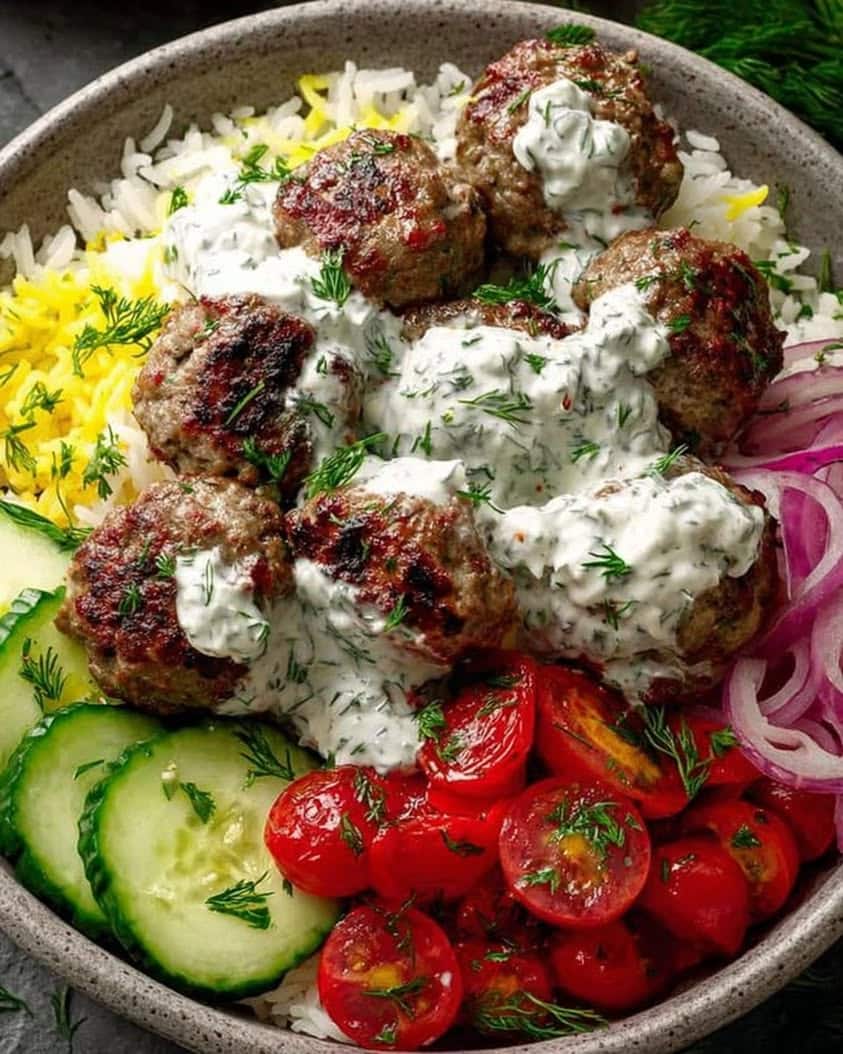
- Visual Appeal: These bowls are a feast for the eyes with their colorful composition. The golden-brown meatballs rest on a bed of white rice, surrounded by vibrant red tomatoes, green cucumbers, and purple onion. A generous drizzle of white tzatziki and a sprinkle of fresh herbs make the presentation stunning.
- Skill Level Needed: This recipe is perfect for beginner and intermediate cooks alike. The techniques involve simple mixing, shaping, and pan-frying. No advanced skills are required. However, managing multiple components at once is helpful for efficient cooking.
- Special Equipment: You need only basic kitchen tools. A large skillet for the meatballs, a pot for rice, and a mixing bowl for the tzatziki are essential. A box grater for the cucumber and a garlic press are useful but not mandatory.
Recipe Overview
- Difficulty Level: We rate this recipe as easy. The steps are straightforward and involve basic cooking methods like mixing, shaping, and pan-frying. Most of the work is simple prep. Consequently, even novice cooks can achieve excellent results with careful attention to the instructions.
- Category: This dish falls squarely into the main course category. It is a complete, one-bowl meal featuring protein, grains, and vegetables. It is also an excellent candidate for meal prep. You can easily pack the components separately for a healthy lunch.
- Cuisine: The recipe draws inspiration from the broader Mediterranean region, particularly Greek and Turkish culinary traditions. Key ingredients like oregano, mint, lemon, cucumber, and yogurt are hallmarks of this healthy cuisine. The bowl format, however, offers a modern, customizable twist on classic flavors.
- Cost: This is a very cost-effective meal, especially when compared to dining out. Ground turkey or chicken is often affordable, and rice is an inexpensive staple. Fresh vegetables and herbs can be bought in small quantities. Overall, you can expect to feed a family of four for less than the cost of two restaurant entrees.
- Season: These Mediterranean Meatball Rice Bowls are truly a year-round dish. They feel light and refreshing in the spring and summer with all the fresh produce. Conversely, they are also comforting and satisfying during the cooler fall and winter months. The recipe is highly adaptable to seasonal vegetable availability.
- Occasion: This dish is incredibly versatile for different occasions. It is quick enough for a Tuesday night dinner yet impressive enough for casual weekend entertaining. You can also scale it up for a potluck or pack it for a picnic. It is a reliable, healthy option for any event.
Why You’ll Love This Recipe
First and foremost, the taste and texture combination is absolutely unbeatable. Each component of these Mediterranean Meatball Rice Bowls serves a specific purpose. The savory, herby meatballs provide the hearty, protein-rich foundation. The fluffy rice soaks up all the delicious juices. Meanwhile, the crisp, fresh vegetables add a necessary crunch and brightness. Finally, the cool, tangy tzatziki sauce wraps every bite in creamy perfection. This symphony of flavors and textures keeps your palate interested from the first forkful to the last. You simply cannot get bored eating this meal.
Secondly, the convenience factor is a major win for any home cook. This recipe is designed with efficiency in mind. You can cook the rice while you prepare the meatball mixture. Simultaneously, you can whip up the quick tzatziki sauce. Then, while the meatballs are browning, you can chop your fresh veggies. This parallel prep work means you get a complete, from-scratch dinner on the table in under an hour. Moreover, the ingredients are common and easy to find at any standard grocery store. You will not need to make a special trip for obscure items.
From a nutritional standpoint, these bowls are a powerhouse of good-for-you ingredients. Lean ground turkey or chicken provides high-quality protein without excessive fat. Brown rice adds filling fiber and complex carbohydrates. The array of fresh vegetables delivers essential vitamins, minerals, and antioxidants. Additionally, the tzatziki, made with Greek yogurt, contributes probiotics for gut health and extra protein. This meal is balanced, satisfying, and will leave you feeling energized, not sluggish. It is a perfect example of how delicious healthy eating can be.
Furthermore, this recipe has tremendous social and entertaining value. The bowl format is inherently interactive and customizable, which guests love. You can set up a “bowl bar” with all the components laid out and let everyone build their own masterpiece. This takes the pressure off the host and creates a fun, engaging dining experience. The bright, colorful presentation is always impressive. Whether you are feeding your family or a group of friends, these Mediterranean Meatball Rice Bowls are guaranteed to receive rave reviews.
Finally, the cost-effectiveness and accessibility make this a recipe you will return to again and again. As mentioned, it is far cheaper than ordering similar bowls from a restaurant. You have complete control over the quality of ingredients. You can easily adapt it based on what is on sale or in your pantry. For example, swap the protein, use quinoa instead of rice, or change up the vegetable mix. This flexibility ensures the recipe never gets old and can always fit your budget. It is a practical, delicious, and reliable staple for your cooking repertoire.
Historical Background and Cultural Significance
The concept of the meatball, or “keftedes,” has deep roots in Mediterranean culinary history, particularly in Greece and Turkey. Historically, meatballs were a practical solution for stretching precious meat with breadcrumbs, herbs, and aromatics. This frugal ingenuity allowed families to create flavorful, satisfying meals from modest ingredients. The specific seasoning profile of oregano, mint, and garlic is classic to the region, reflecting the native herbs that grow abundantly in the sunny climate. These flavors are a cornerstone of the Mediterranean diet, which is celebrated worldwide for its health benefits and delicious simplicity.
Culturally, meals in the Mediterranean are often centered around sharing and variety. The “mezze” style of dining involves many small plates, allowing people to taste a little of everything. These Mediterranean Meatball Rice Bowls modernize that concept by bringing an array of flavors and textures into a single, convenient vessel. The tzatziki sauce itself is a staple condiment with ancient origins, believed to have been influenced by the Indian raita, which traveled via trade routes. In Greece, it is served with everything from grilled meats to fried vegetables, acting as a cooling counterpoint to rich and savory dishes.
The evolution of this recipe into a “bowl” format is a relatively recent trend, aligning with the global popularity of customizable, healthy fast-casual dining. However, the core components are timeless. The bowl simply presents the traditional elements—protein, grain, salad, and sauce—in a visually appealing and practical way. This evolution speaks to how classic cuisines adapt to modern lifestyles without losing their soul. The recipe honors tradition while embracing contemporary eating habits that value balance, convenience, and visual appeal.
Regional variations of this concept are endless. In Turkey, you might find “köfte” (spiced meatballs) served with bulgur pilaf and a side of “cacık” (a thinner version of tzatziki). In the Middle East, similar flavors appear in dishes like lamb kofta with rice and a tahini sauce. The specific combination in these Mediterranean Meatball Rice Bowls is a fusion that highlights the most beloved elements of the region’s cuisine. It is a celebration of fresh, bright, and wholesome ingredients that have nourished communities around the Mediterranean Sea for centuries.
Ingredient Deep Dive
Ground Turkey or Chicken: Using lean ground poultry is a healthier twist on traditional lamb or beef meatballs, common in many Mediterranean recipes. Turkey and chicken are excellent sources of lean protein, B vitamins, and selenium. They have a mild flavor that beautifully absorbs the herbs and spices. When selecting, look for a lean mix (93/7) to keep the meatballs moist without being greasy. For storage, use or freeze by the “use by” date. For a substitution, ground lamb or beef will provide a richer, more traditional flavor.
Fresh Herbs (Mint & Dill): Fresh mint and dill are non-negotiable for authentic flavor. Mint adds a bright, cooling note to the meatballs, while dill brings its distinctive grassy, anise-like flavor to the tzatziki. Historically, these herbs have been used in Mediterranean cooking for both their taste and digestive properties. Nutritionally, they are rich in antioxidants and vitamins. Select bunches with vibrant, perky leaves and no wilting. Store them stem-down in a glass of water in the fridge, covered with a bag. In a pinch, you can use dried herbs, but use one-third the amount as their flavor is more concentrated.
Greek Yogurt: The base of the tzatziki, thick Greek yogurt, is a staple in the Eastern Mediterranean. It is made by straining whey from regular yogurt, resulting in a creamy, protein-packed product with less sugar. It provides probiotics for gut health, calcium, and protein. Always choose plain, full-fat or 2% Greek yogurt for the best texture and flavor; non-fat varieties can be watery and tart. For a dairy-free version, a thick, plain coconut yogurt can work, though the flavor will change. Store it tightly sealed in the refrigerator.
Cucumber: The cucumber in the tzatziki provides crucial hydration and a refreshing crunch. It is important to grate and drain it thoroughly to prevent a watery sauce. Cucumbers are low in calories but high in beneficial nutrients, including vitamin K and potassium. Choose firm, dark green cucumbers without soft spots. English or Persian cucumbers have fewer seeds and thinner skins, making them ideal. If using a standard cucumber, you may want to peel it and scoop out the seeds. Store whole cucumbers in the fridge for up to a week.
Common Mistakes to Avoid
- Overmixing the Meatball Meat: When combining the meatball ingredients, mix just until everything is incorporated. Overworking the meat mixture will activate the proteins too much, resulting in tough, dense, rubbery meatballs. Use a gentle hand for tender results.
- Not Draining the Grated Cucumber: Skipping the step of squeezing liquid from the grated cucumber is a critical error. Excess water will dilute your tzatziki, making it runny and weakening the flavor. Take the time to wring it out in a clean kitchen towel for a thick, creamy sauce.
- Using Fine, Dry Breadcrumbs: The recipe calls for Panko breadcrumbs for a reason. Their larger, flakier texture helps keep the meatballs light and tender. Fine, dry breadcrumbs can absorb too much moisture and make the texture pasty. Stick with Panko for the best structure.
- Crowding the Pan: When browning the meatballs, give them plenty of space in the skillet. Crowding will cause them to steam instead of sear, preventing that beautiful golden-brown crust from forming. Cook in batches if necessary to ensure proper browning.
- Skipping the Resting Time for Tzatziki: The flavors of tzatziki need time to meld. Making it just before serving means the garlic will taste harsh and the flavors won’t be cohesive. Let it rest in the fridge for at least 30 minutes, or ideally an hour, before serving.
- Underseasoning the Meat Mixture: Do not be shy with salt and pepper in the meatball mix. The seasoning must penetrate the meat itself. Always do a small test fry of a teaspoon of the mixture to check for salt and adjust before shaping all the meatballs.
- Using Hot Rice Immediately: Building your bowl with piping hot rice can wilt the fresh vegetables and make the tzatziki melt and separate. Let the rice cool slightly, or even use it at room temperature, to preserve the integrity of all the cool, fresh components.
- Not Preheating the Skillet: A properly preheated skillet is essential for getting a good sear on the meatballs. If the pan is not hot enough, the meatballs will stick and release their juices, leading to a stewed texture instead of a caramelized exterior.
Essential Techniques
Proper Meatball Shaping: The key to evenly cooked meatballs is consistent size. Use a tablespoon or small cookie scoop to portion the mixture. Then, roll them gently between your palms to form smooth, round balls. Do not pack them tightly; a light touch ensures tenderness. If the mixture is too sticky, lightly dampen your hands with water or oil. Consistent size means they will all finish cooking at the same time, preventing some from being overdone while others are raw inside.
Pan-Searing for Flavor: Browning the meatballs in a skillet is not just about cooking them through; it is about building flavor through the Maillard reaction. This chemical process creates hundreds of new flavor compounds, resulting in a deep, savory, complex taste. Use a neutral oil with a high smoke point, like avocado or light olive oil. Let the meatballs sit undisturbed for a few minutes to develop a crust before turning. This technique locks in juices and provides a textural contrast to the tender interior.
Draining Vegetables for Sauces: Removing excess moisture from grated cucumber (and other watery veggies) is a fundamental technique for stable dips and sauces. After grating, sprinkle with a little salt to draw out water, then let it sit in a strainer for 10 minutes. Finally, gather the pulp in a clean kitchen towel or cheesecloth and squeeze firmly until no more liquid drips out. This step prevents a watery, disappointing tzatziki and is applicable to many recipes involving fresh vegetables in creamy bases.
Pro Tips for Perfect Mediterranean Meatball Rice Bowls
For the most flavorful meatballs, let the shaped balls rest in the refrigerator for 15-20 minutes before cooking. This chilling time helps them hold their shape better in the pan and allows the flavors to meld.
Toast your Panko breadcrumbs in a dry skillet with a drizzle of olive oil until golden before adding them to the meat mixture. This simple step adds a deeper, nuttier flavor to the meatballs.
When making tzatziki, rub the minced garlic into the salt called for in the recipe before mixing. This creates a garlic paste that distributes the flavor more evenly and mellows its raw bite.
Use a fork to fluff your cooked rice just before serving. This separates the grains and gives the rice a lighter, fluffier texture as a base for your bowls.
If you have time, marinate the red onion slices in a little lemon juice or red wine vinegar while you prepare the rest of the meal. This quick-pickling step tames the onion’s sharpness and adds a lovely tangy element.
Double the meatball recipe and freeze half. Cooked meatballs freeze beautifully and can be reheated directly from frozen in a sauce or oven for a future quick meal.
Warm your pita bread in a dry skillet for a minute on each side instead of microwaving. This gives it a slight char and delightful chewiness perfect for scooping up the bowl’s contents.
Add a final flourish of high-quality extra virgin olive oil and a sprinkle of sumac or smoked paprika over the assembled bowls. This adds a professional touch and an extra layer of flavor.
Variations and Adaptations
Regional Variations: To travel through flavors, try a Turkish twist by adding a pinch of cumin and red pepper flakes (pul biber) to the meatballs and serving with a drizzle of chili oil. For a Lebanese flair, add some allspice and cinnamon to the meat mixture and swap the tzatziki for a garlicky toum (whipped garlic sauce). A Spanish version might feature meatballs seasoned with smoked paprika and served with a romesco sauce instead of tzatziki.
Seasonal Adaptations: Embrace the seasons by rotating your vegetable toppings. In summer, add grilled zucchini, corn, or peaches. For fall, incorporate roasted sweet potatoes, Brussels sprouts, or pomegranate arils. Winter calls for hearty additions like roasted cauliflower or kale. Spring is perfect with asparagus, peas, and radishes. The base recipe remains constant, but the fresh toppings keep it exciting all year.
Dietary Modifications: For a gluten-free version, use certified gluten-free Panko breadcrumbs or almond flour as the binder. To make it dairy-free, substitute the Greek yogurt in the tzatziki with a thick, plain coconut yogurt or a vegan sour cream alternative. For a vegetarian or vegan bowl, replace the meatballs with seasoned chickpea or lentil patties, or use store-bought plant-based meatballs seasoned with Mediterranean herbs.
Flavor Variations: Experiment with different herb combinations in the meatballs. Try parsley and cilantro with a touch of coriander for a more Middle Eastern profile. For a Greek island feel, add some chopped Kalamata olives and feta cheese crumbles directly into the meat mixture. You can also infuse the rice by cooking it in vegetable or chicken broth with a bay leaf and a strip of lemon zest.
Serving and Presentation Guide
Plating is key to the appeal of these Mediterranean Meatball Rice Bowls. Start with a wide, shallow bowl to showcase all the components. Place a fluffy bed of rice slightly off-center. Artfully arrange 3-4 meatballs on one side of the rice. Then, create small, colorful piles of your fresh vegetables—diced tomatoes, cucumber slices, red onion—around the bowl, leaving some rice visible. This method, called “component plating,” looks professional and appetizing.
Drizzle the tzatziki sauce generously over the meatballs and rice, allowing it to pool slightly. Do not mix it in completely. Garnish with a final sprinkle of fresh chopped dill or mint and a light dusting of dried oregano or sumac. If serving with pita, warm it and place it on the side of the bowl or in a separate basket. The goal is a vibrant, inviting bowl where each ingredient can be seen and appreciated.
Consider the temperature contrast for the best eating experience. The meatballs and rice should be warm, not scalding hot. The vegetables and tzatziki should be refreshingly cold. This contrast in temperatures makes each bite more dynamic and interesting. If preparing ahead, assemble the bowls just before serving to maintain these distinct temperatures and prevent the fresh veggies from wilting.
Wine and Beverage Pairing
The bright, herbal, and tangy flavors of these Mediterranean Meatball Rice Bowls pair beautifully with crisp, acidic white wines. A Greek Assyrtiko is the classic choice, with its citrus notes and mineral edge that complements the lemon and herbs perfectly. A Sauvignon Blanc from New Zealand or a Verdejo from Spain also works wonderfully, as their grassy and citrus profiles echo the fresh dill and cucumber. For a red wine option, choose a light-bodied, low-tannin red like a Beaujolais or a Greek Xinomavro, served slightly chilled.
For non-alcoholic pairings, consider beverages that can cut through the richness and refresh the palate. Sparkling water with a squeeze of lemon or lime is always excellent. A minty iced tea or a cucumber-infused spa water enhances the herbal notes in the dish. For something more substantial, a tart pomegranate juice or a glass of ayran (a savory yogurt drink popular in Turkey) would be authentically Mediterranean and incredibly refreshing.
Storage and Shelf Life
Store all components of the Mediterranean Meatball Rice Bowls separately in airtight containers in the refrigerator for the best results. Cooked meatballs will keep for 3-4 days. Cooked rice is best used within 4-5 days. The tzatziki sauce will stay fresh for up to 4 days, though it may continue to release a little water; simply stir it before serving. Chopped fresh vegetables are best used within 2-3 days for optimal crunch.
For freezing, the cooked and cooled meatballs are an excellent candidate. Place them in a single layer on a baking sheet to freeze solid, then transfer to a freezer bag. They can be frozen for up to 3 months. Reheat directly from frozen in a 350°F oven for 15-20 minutes or in a simmering sauce. Do not freeze the assembled bowls, the tzatziki, or the fresh vegetables, as their textures will degrade significantly upon thawing.
Make Ahead Strategies
You can prepare nearly every component of these Mediterranean Meatball Rice Bowls a day or two in advance for a stress-free meal. Mix the meatball mixture, cover tightly, and store it in the refrigerator for up to 24 hours before shaping and cooking; this actually improves the flavor. The tzatziki sauce should be made at least a few hours ahead, or the day before, to allow the flavors to develop fully. Cook the rice and let it cool completely before storing it separately.
On the day of serving, simply shape and cook the meatballs, which takes just 15 minutes. Give the rice a quick fluff with a fork. Chop any last-minute fresh herbs for garnish. Then, assemble the bowls with the cold tzatziki and fresh veggies. This strategy turns an active cooking session into simple assembly, making it perfect for easy entertaining or a calm weeknight dinner.
Scaling Instructions
This recipe scales beautifully for different group sizes. To halve it, simply divide all ingredient quantities by two. Use a medium skillet for the meatballs. The cooking times will remain roughly the same, though you may need to cook the meatballs in just one batch. To double or triple the recipe for a crowd, use a very large skillet or cook the meatballs in batches to avoid overcrowding. You may need to cook the rice in separate pots or a very large Dutch oven.
When scaling up, keep in mind that mixing a very large batch of meatball mixture can lead to overworking. Consider mixing in two separate bowls. Also, increase the resting time for the tzatziki to ensure the garlic flavor mellows properly. For large gatherings, consider setting up a build-your-own-bowl station with all components in separate serving dishes, which is both practical and visually appealing.
Nutritional Deep Dive
One serving of these Mediterranean Meatball Rice Bowls provides a well-rounded nutritional profile. Using lean ground turkey, it is an excellent source of high-quality protein, essential for muscle repair and satiety. The brown rice offers complex carbohydrates and fiber, promoting steady energy release and digestive health. The array of fresh vegetables contributes a wide spectrum of vitamins (like A, C, and K) and antioxidants, which support immune function and reduce inflammation.
The tzatziki, made from Greek yogurt, adds a significant boost of protein and probiotics, beneficial for gut health. The olive oil used for cooking provides heart-healthy monounsaturated fats. This combination of macronutrients—protein, complex carbs, and healthy fats—makes the meal incredibly balanced and satisfying. It is a meal that supports weight management goals by being high in volume and nutrients but moderate in calories, helping you feel full and energized.
Dietary Adaptations
Gluten-Free: This recipe is easily made gluten-free by ensuring your Panko breadcrumbs are certified gluten-free. Many brands offer this option. Alternatively, you can use an equal amount of almond flour or gluten-free rolled oats pulsed into a coarse meal. Double-check that any pre-made broth or seasonings are also gluten-free.
Dairy-Free: For a dairy-free version, the tzatziki is the only component that needs modification. Substitute the Greek yogurt with a thick, plain, unsweetened coconut yogurt. The flavor will be slightly different but still delicious. You can also use a vegan sour cream alternative. Ensure the meatball recipe does not contain any hidden dairy, like certain breadcrumbs.
Low-Carb/Keto: To adapt for a low-carb or keto diet, replace the rice with a base of cauliflower rice. Sauté it quickly in a pan to remove moisture. For the meatballs, replace the Panko breadcrumbs with crushed pork rinds or almond flour to keep the carb count low. The vegetables and tzatziki (using full-fat yogurt) are already keto-friendly.
Troubleshooting Guide
Meatballs are Falling Apart: If your meatballs are not holding their shape, the mixture is likely too wet or lacks a proper binder. Solutions include adding an extra tablespoon of Panko breadcrumbs, chilling the mixture for 30 minutes to firm up, or ensuring you squeezed the onion juice out thoroughly. Also, avoid over-handling when shaping.
Tzatziki is Too Watery: A runny tzatziki is almost always due to insufficiently drained cucumber. Unfortunately, you cannot remove water once it is mixed in. For future batches, be more thorough when squeezing. For the current batch, you can try straining it through a fine-mesh sieve for a while or stirring in a spoonful of extra-thick Greek yogurt to help stabilize it.
Meatballs are Dry: Dry meatballs result from overcooking or using meat that is too lean (like 99% fat-free). Ensure you are not cooking them too long; a meat thermometer should read 165°F internally. Using a small amount of higher-fat meat (like 85/15) or adding a tablespoon of olive oil or grated zucchini to the mix can increase moisture.
Recipe Success Stories
We love hearing how our readers make these Mediterranean Meatball Rice Bowls their own. One home cook, Sarah, reported that her picky eaters devoured the meal when she called them “Greek flavor balls.” She now makes a double batch weekly for lunches. Another reader, Mark, tried the grilling variation and said the smoky char took the meatballs to a whole new level, perfect for his summer barbecues.
Many have successfully adapted the recipe for dietary needs. A reader named Lisa shared that using chickpeas and oats for vegan meatballs worked beautifully for her family’s “Meatless Monday.” The common thread in all the feedback is how the recipe’s framework is forgiving and adaptable, empowering cooks to experiment while still achieving a delicious, satisfying result every time.
Frequently Asked Questions
Can I bake the meatballs instead of pan-frying? Absolutely. Baking is a great hands-off method. Preheat your oven to 400°F. Place the meatballs on a parchment-lined baking sheet, drizzle with a little oil, and bake for 18-22 minutes, turning halfway, until cooked through. They will be slightly less browned but still delicious.
What can I use instead of fresh dill in the tzatziki? If you do not have fresh dill, fresh mint or parsley can provide a different but still lovely herbal note. In a true pinch, use one teaspoon of dried dill weed, but note the flavor will be less vibrant. Fresh is always preferred for tzatziki.
Can I use ground beef or lamb? Yes, ground beef (85/15) or lamb are traditional and delicious choices. They will yield a richer, more robust flavor. Be aware that lamb has a stronger, gamier taste that pairs wonderfully with the mint and oregano.
How do I know when the meatballs are fully cooked? The safest way is to use an instant-read meat thermometer. The internal temperature should reach 165°F. Visually, they should be browned on the outside and no longer pink in the center when cut open.
Is it okay to use regular yogurt instead of Greek? Regular yogurt is much thinner and will make a runny sauce. If you must use it, strain it through cheesecloth for a few hours first to thicken it. Greek yogurt is highly recommended for the correct consistency.
Can I make the meatballs ahead and reheat them? Yes, cooked meatballs reheat very well. Gently reheat them in a skillet with a splash of water or broth to keep them moist, in a 300°F oven for 10-15 minutes, or in the microwave at reduced power.
What type of rice works best? Long-grain white rice like Basmati or Jasmine is fluffy and perfect. Brown rice, quinoa, or couscous are excellent whole-grain alternatives that add more fiber and nutrients.
My tzatziki tastes too garlicky. How can I fix it? The garlic flavor will mellow as it sits. If it is still too strong after resting, try stirring in a little more yogurt and cucumber to dilute it. Next time, use one small clove instead of two.
Additional Resources
If you loved the flavors in these Mediterranean Meatball Rice Bowls, explore more of this vibrant cuisine. Try your hand at a classic Greek salad with homemade dressing, a hearty lentil soup (Fakes), or some spanakopita (spinach pie). Learning to make your own hummus or baba ganoush would provide perfect dips to accompany this meal or others.
For technique guides, consider looking up how to properly cook fluffy rice every time, or master the art of making other yogurt-based sauces like a cilantro-lime crema or a harissa yogurt. Investing in a good quality microplane for zesting citrus and grating garlic, garlic press, and a set of nesting glass storage containers for meal prep will make executing this and similar recipes even easier and more enjoyable.
PrintMediterranean Meatball Rice Bowl with Tzatziki & Fresh Veggies
- Total Time: 45 minutes
- Yield: 4
Description
A vibrant and healthy bowl featuring juicy herb-infused meatballs over fluffy rice, topped with creamy tzatziki, crisp vegetables, and a zesty lemon drizzle.
Ingredients
- 1 lb ground lamb or beef
- 1/2 cup cooked rice (white or brown)
- 1/4 cup finely chopped red onion
- 2 cloves garlic, minced
- 1 tsp dried oregano
- 1/2 tsp ground cumin
- Salt and black pepper to taste
- 1 cup plain Greek yogurt
- 1/2 cucumber, grated and drained
- 1 tbsp fresh dill, chopped
- 1 tbsp lemon juice
- 1 cup cherry tomatoes, halved
- 1/2 cup sliced cucumber
- 1/4 cup sliced red onion
- 1/4 cup crumbled feta cheese
- Fresh parsley for garnish
- Olive oil for cooking
Instructions
- In a bowl, combine ground meat, rice, red onion, garlic, oregano, cumin, salt, and pepper. Mix well and form into 1-inch meatballs.
- Heat olive oil in a skillet over medium heat. Cook meatballs for 8-10 minutes, turning until browned and cooked through.
- In another bowl, mix Greek yogurt, grated cucumber, dill, lemon juice, and a pinch of salt to make tzatziki.
- Assemble bowls by dividing rice among four bowls. Top with meatballs, cherry tomatoes, sliced cucumber, red onion, and feta.
- Drizzle with tzatziki, garnish with parsley, and serve immediately.
Notes
You can customize the seasonings to taste.
- Prep Time: 15 minutes
- Cook Time: 30 minutes
- Method: Main
- Cuisine: Mediterranean