Mediterranean Chicken Gyros with Creamy Feta Tzatziki: A Flavor-Packed Weeknight Wonder
Imagine tender, marinated chicken bursting with the sunny flavors of lemon, garlic, and oregano, all wrapped in a warm pita and smothered with a cool, tangy, and creamy feta tzatziki sauce. This Mediterranean Chicken Gyros recipe brings the vibrant taste of a Greek taverna straight to your kitchen table. Consequently, it transforms simple ingredients into an extraordinary meal that feels both indulgent and wholesome. Moreover, the aroma alone will transport your senses, promising a dinner that is as fun to assemble as it is delicious to eat.
Creating authentic-tasting Mediterranean Chicken Gyros at home is surprisingly straightforward. In fact, this recipe demystifies the process, guiding you through a simple marinade and a quick cook on the stovetop or grill. The real star, however, is the homemade creamy feta tzatziki. This elevated version of the classic cucumber sauce adds a rich, salty depth from the feta cheese, creating a perfect contrast to the spiced chicken. Ultimately, you get a restaurant-quality meal that is perfect for a busy weeknight or a casual weekend gathering with friends.
Furthermore, this dish is a fantastic gateway to exploring Mediterranean cuisine. It balances protein-packed chicken with fresh vegetables and creamy sauce, offering a complete and satisfying meal. The combination of warm, spiced meat and cool, herbaceous sauce is simply irresistible. Therefore, whether you are new to Greek food or a longtime fan, these homemade gyros are guaranteed to become a regular in your dinner rotation.
Quick Recipe Highlights
- Flavor Profile: These Mediterranean Chicken Gyros deliver a bright and herbaceous taste. The marinade infuses the chicken with zesty lemon, pungent garlic, and earthy oregano. Meanwhile, the creamy feta tzatziki adds a tangy, salty, and refreshing counterpoint that ties every bite together beautifully.
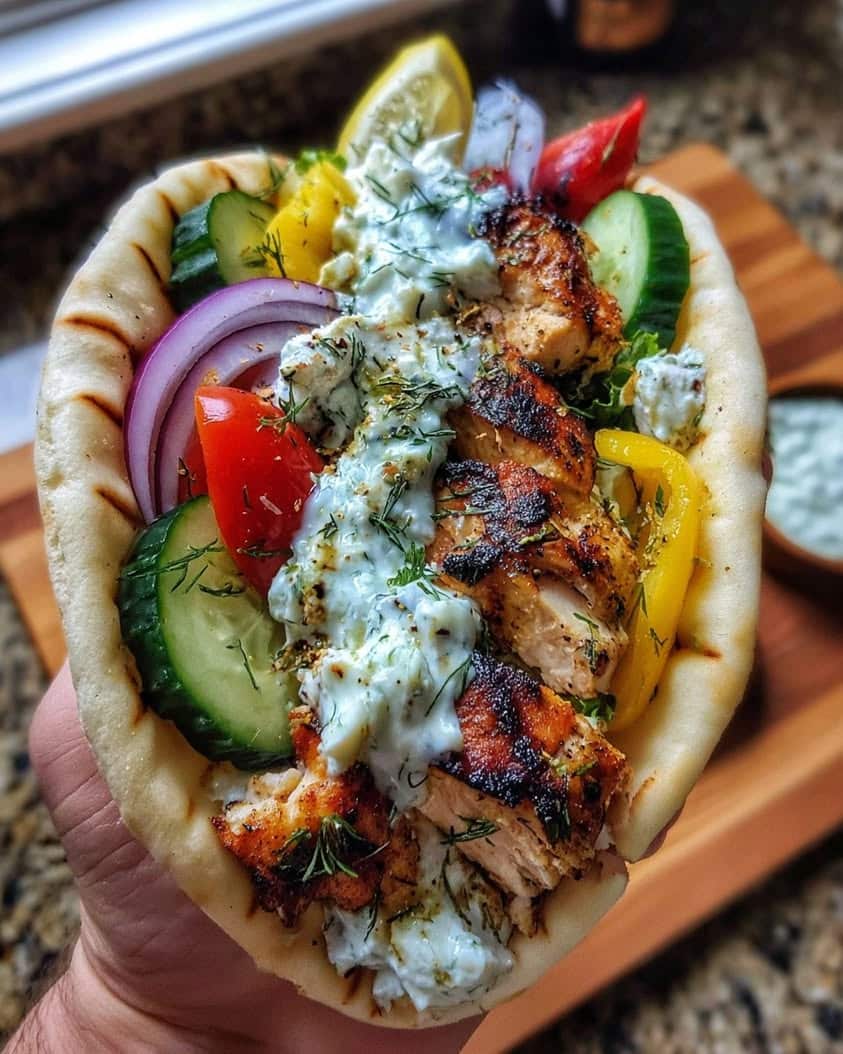
- Texture: You will enjoy a wonderful contrast of textures in every gyro. The chicken is juicy and tender with slight caramelization from cooking. Conversely, the tzatziki is luxuriously smooth and creamy, while the fresh tomato and onion add a crisp, juicy crunch. Finally, a warm pita provides the perfect soft yet sturdy vessel.
- Aroma: As the chicken cooks, your kitchen will fill with an incredibly inviting scent. The primary aromatic notes come from the garlic and oregano in the marinade, which become fragrant when heated. Additionally, the fresh dill and lemon in the tzatziki contribute a bright, clean aroma that completes the sensory experience.
- Visual Appeal: These gyros are a feast for the eyes with their vibrant colors. The golden-brown chicken looks stunning against the white of the creamy feta tzatziki and the bright red tomatoes. Ultimately, the green flecks of fresh dill and lettuce make the final presentation pop, promising a fresh and appetizing meal.
- Skill Level Needed: This is a beginner-friendly recipe designed for home cooks of all levels. You only need basic skills like chopping, mixing, and pan-frying or grilling. Importantly, there are no complex techniques, making it an excellent recipe for building confidence in the kitchen.
- Special Equipment: You can prepare this meal with standard kitchen tools. A sharp knife, cutting board, mixing bowls, and a large skillet or grill pan are all you need. For the best texture in the tzatziki, a box grater for the cucumber is helpful but not mandatory.
Recipe Overview
- Difficulty Level: We rate this Mediterranean Chicken Gyros recipe as easy. The steps are sequential and simple, involving basic marinating and cooking techniques. There is no need for special equipment or advanced culinary skills. Consequently, even a novice cook can achieve fantastic results on the first try.
- Category: This dish falls squarely into the main course category for lunch or dinner. It is a complete, handheld meal that is both filling and nutritious. Additionally, you can deconstruct it into a satisfying salad bowl for a low-carb option, showcasing its versatility.
- Cuisine: This recipe is inspired by the vibrant flavors of Greek and broader Mediterranean cuisine. It draws on classic flavor combinations like lemon-oregano-garlic and the ubiquitous yogurt-based tzatziki. While not strictly traditional in every aspect, it faithfully captures the spirit and taste of the region’s beloved street food.
- Cost: Preparing these Mediterranean Chicken Gyros at home is very cost-effective, especially compared to eating out. Chicken thighs are an affordable protein, and the marinade uses pantry staples. The tzatziki ingredients like yogurt, cucumber, and feta are also reasonably priced. Overall, you can feed a family for a fraction of the cost of restaurant gyros.
- Season: This is truly a year-round recipe. It feels light and fresh for spring and summer, perfect for grilling outdoors. Conversely, during fall and winter, the warm, comforting elements make it a cozy indoor meal. Therefore, its appeal is never limited by the calendar.
- Occasion: These gyros are incredibly versatile for any occasion. They are quick enough for a Tuesday family dinner yet impressive enough for casual weekend entertaining. Furthermore, they are a fantastic option for game day gatherings or potlucks, as guests can assemble their own.
Why You’ll Love This Recipe
First and foremost, the taste and texture of these Mediterranean Chicken Gyros are absolutely phenomenal. The marinade penetrates the chicken, ensuring every bite is infused with flavor, while the high-heat cooking creates delicious little caramelized bits. Meanwhile, the creamy feta tzatziki is a revelation, adding a cool, rich, and tangy element that cuts through the savory meat. The combination of warm, spiced chicken, cool sauce, and crisp veggies wrapped in soft pita is a textural and flavor symphony that is deeply satisfying and endlessly craveable.
From a convenience standpoint, this recipe is a weeknight hero. The active prep time is minimal, and most of the work happens in the marinade, which you can do ahead of time. Cooking the chicken is a swift process, taking less than 15 minutes. Consequently, you can have a restaurant-quality meal on the table in about half an hour. Moreover, the cleanup is straightforward, especially if you use the same bowl for marinating and mixing the tzatziki.
Nutritionally, this meal offers a fantastic balance. Chicken thighs provide high-quality protein and essential nutrients like iron and zinc. Greek yogurt in the tzatziki is packed with probiotics and protein. Fresh vegetables like tomatoes, onions, and cucumbers contribute vitamins, fiber, and antioxidants. By preparing it at home, you control the quality of ingredients and the amount of salt and oil, making it a healthier alternative to takeout.
The social and entertaining value of Mediterranean Chicken Gyros is incredibly high. This is an interactive, build-your-own meal that people adore. Setting out platters of warm chicken, pitas, tzatziki, and toppings allows everyone to customize their perfect gyro. This interactive style encourages conversation and makes any meal feel like a festive occasion. It is a guaranteed crowd-pleaser that takes the pressure off the host.
Finally, this recipe is wonderfully cost-effective and accessible. The ingredients are easy to find at any standard grocery store and are not expensive. You get a huge flavor payoff from simple, humble components. Compared to ordering delivery or going to a restaurant, making these gyros at home saves a significant amount of money while yielding far more food. It is a delicious proof that eating well does not have to break the bank.
Historical Background and Cultural Significance
The gyro, a pillar of Greek street food, has a fascinating and somewhat debated history. Its name comes from the Greek word “gyros,” meaning “turn” or “revolution,” referring to the vertical rotisserie on which the meat is traditionally cooked. While often associated specifically with Greece, the concept of seasoned, stacked meat cooked on a vertical spit and shaved off likely has roots in the broader Eastern Mediterranean and Middle Eastern regions, with close relatives like the Turkish döner kebab and the Arab shawarma. These dishes all share the ingenious cooking method that yields tender, juicy meat with a mix of crispy and succulent textures.
In Greece, the gyro became a cultural icon in the 20th century, particularly after World War II. It evolved as an affordable, quick, and delicious meal for workers and families. Traditionally, Greek gyros are made with pork, chicken, or sometimes lamb, heavily seasoned with oregano, thyme, garlic, and other Mediterranean herbs. The meat is stacked on the spit, slow-cooked, and thinly sliced to order, then served in a pita with tomatoes, onions, and tzatziki sauce. It represents the heart of Greek casual dining: simple, flavorful, and communal.
The recipe has evolved significantly as it traveled the globe. In the United States, gyros gained massive popularity, often featuring a pre-formed, seasoned meat loaf made from a blend of beef and lamb. The homemade version, like this Mediterranean Chicken Gyros recipe, represents a modern adaptation. It captures the essential flavors without requiring a specialized rotisserie, making the iconic taste accessible to home cooks everywhere. This evolution speaks to the dish’s incredible versatility and enduring appeal.
Regional variations within Greece and beyond are plentiful. In some areas, you might find gyros served with fried potatoes tucked inside the pita. The sauces can vary from the classic yogurt-based tzatziki to more spicy or herbaceous options. The type of bread can also differ. This recipe’s inclusion of feta cheese in the tzatziki is a delicious modern twist that adds a distinctly Greek salty tang, celebrating the cuisine’s core ingredients while allowing for personal creativity.
Ingredient Deep Dive
Let us start with the chicken. For the best Mediterranean Chicken Gyros, we recommend using boneless, skinless chicken thighs. Thighs are more forgiving than breasts because their higher fat content keeps them juicy and flavorful even with high-heat cooking. From a nutritional standpoint, they provide excellent protein, iron, and B vitamins. When selecting chicken, look for plump, pinkish flesh. If you prefer white meat, chicken breasts can be used, but be vigilant not to overcook them. Always pat the chicken dry before marinating to ensure the flavors adhere properly.
Greek yogurt is the non-negotiable base for authentic tzatziki. Its thick, strained texture provides the perfect creamy consistency without being watery. Culturally, yogurt has been a staple in Mediterranean and Middle Eastern diets for centuries. Nutritionally, it is a powerhouse of probiotics for gut health, calcium, and protein. For this recipe, use full-fat Greek yogurt for the richest flavor and creamiest result. If you need a dairy-free version, a thick, unsweetened coconut or almond-based yogurt can work, though the flavor profile will change.
Feta cheese is the star upgrade in our creamy feta tzatziki. This brined curd cheese is a quintessential product of Greece, with a protected designation of origin (PDO) for feta made in specific regions. Its salty, tangy flavor and crumbly texture elevate the sauce immensely. Feta is a good source of calcium and protein. For the best taste, buy a block of feta packed in brine rather than pre-crumbled cheese, which often contains anti-caking agents. You can crumble it yourself for a fresher, moister result.
Fresh herbs are the soul of the marinade and sauce. Oregano, specifically Mediterranean or Greek oregano, is earthy and slightly bitter, forming the backbone of the gyro flavor. Dill, used fresh in the tzatziki, provides a bright, grassy, and slightly anise-like note that is classic in Greek cuisine. Both herbs are rich in antioxidants. For the best flavor, always use fresh herbs when possible, especially for the dill in the tzatziki. If you must substitute dried oregano, use only one-third the amount, as dried herbs are more concentrated.
Common Mistakes to Avoid
- Not Marinating Long Enough: The marinade needs time to work its magic. Marinating for only 15 minutes will not impart deep flavor. Aim for at least 30 minutes, but ideally 2-4 hours or even overnight for the most succulent and tasty chicken for your Mediterranean Chicken Gyros.
- Using Watery Tzatziki: The biggest culprit is not properly draining the cucumber. After grating, you must squeeze out the excess water with your hands or a clean kitchen towel. Otherwise, your creamy feta tzatziki will become runny and dilute the other flavors.
- Overcooking the Chicken: Chicken thighs are forgiving, but they can still dry out if cooked too long. Cook them over medium-high heat just until they reach an internal temperature of 165°F and the juices run clear. They will continue to cook slightly from residual heat after being removed from the pan.
- Skipping the Resting Time: After cooking, let the chicken rest for 5 minutes before slicing. This allows the juices to redistribute throughout the meat. If you slice immediately, all those flavorful juices will end up on your cutting board instead of in your gyro.
- Using Cold Pita: A cold, stiff pita can tear and makes for a less enjoyable experience. Always warm your pitas before serving. You can quickly heat them in a dry skillet, over a gas flame, or wrapped in a damp paper towel in the microwave for 20-30 seconds.
- Overstuffing the Gyro: It is tempting to load up the pita, but this often leads to a mess. Use a moderate amount of chicken and toppings so you can actually wrap and hold the gyro without everything falling out the bottom. You can always go back for seconds.
- Using Pre-Crumbled Feta: Pre-crumbled feta is often drier and coated with anti-caking agents. For the creamiest, most flavorful sauce in your Mediterranean Chicken Gyros, buy a block of feta in brine and crumble it yourself just before adding it to the tzatziki.
- Not Tasting as You Go: Seasoning is key. Taste your tzatziki before serving and adjust the salt, lemon, or dill as needed. Similarly, season your chicken adequately with salt and pepper before cooking, even though it was marinated.
Essential Techniques
Proper Marinating: Marinating is not just about adding flavor; it also helps tenderize the meat. The acid in the lemon juice begins to break down proteins, resulting in a more tender bite. To master it, use a non-reactive container like glass or ceramic, and ensure the chicken is fully submerged in the marinade. A common pitfall is marinating for too long in highly acidic marinades, which can make the texture mushy. For this recipe, 2-4 hours is the sweet spot. You will know it is ready when the chicken has taken on a slightly opaque exterior from the lemon juice.
Draining Grated Cucumber: This technique is crucial for achieving a thick, creamy feta tzatziki, not a watery soup. After grating the cucumber, place it in a clean kitchen towel or several layers of paper towels. Then, twist and squeeze firmly over the sink until no more liquid runs out. The importance lies in removing excess water that would otherwise thin out the yogurt. The visual cue for success is a handful of dry, crumbly grated cucumber that holds together slightly when squeezed.
Getting a Good Sear on Chicken: A proper sear creates flavorful caramelization through the Maillard reaction. To achieve this, ensure your skillet is hot before adding the chicken and do not overcrowd the pan. Overcrowding steams the meat instead of searing it. Furthermore, resist the urge to move the chicken constantly. Let it cook undisturbed for a few minutes to develop a golden-brown crust. You will know it is time to flip when the edges look cooked and the chicken releases easily from the pan.
Pro Tips for Perfect Mediterranean Chicken Gyros
For an even more authentic flavor, add a pinch of ground cumin or smoked paprika to your chicken marinade. These warm spices add a subtle depth that complements the oregano and garlic beautifully.
If you have time, let the assembled creamy feta tzatziki sit in the refrigerator for at least an hour before serving. This resting period allows the flavors to meld and intensify, resulting in a much more cohesive and delicious sauce.
To prevent your pita from getting soggy, apply a layer of the tzatziki sauce directly onto the warm pita first. This creates a slight barrier before adding the juicy chicken and vegetables.
For easier eating and a neater presentation, wrap the bottom half of your assembled gyro in parchment paper or foil. This creates a handle that keeps everything contained and makes it much less messy to enjoy.
If using wooden skewers for a kebab-style presentation, soak them in water for at least 30 minutes before threading the chicken. This prevents them from burning on the grill or in the oven.
Do not discard the leftover marinade after removing the chicken. Instead, bring it to a rapid boil in a small saucepan for a few minutes to kill any bacteria, then use it as a flavorful basting sauce while the chicken cooks.
For a stunning presentation, serve all the components on a large platter or board. Arrange the sliced chicken, warm pitas, bowl of tzatziki, and all toppings separately so everyone can build their own masterpiece.
Variations and Adaptations
For regional variations, try a Turkish-inspired version by using a marinade with more paprika and a sauce of cacık (similar to tzatziki but often with mint). Alternatively, for a Lebanese twist, use a garlic toum (a powerful garlic sauce) instead of tzatziki and add some sumac to the chicken seasoning.
Seasonal adaptations are simple. In summer, grill the chicken outdoors and add seasonal veggies like grilled zucchini or eggplant to your gyro. In winter, cook the chicken in a hot oven or skillet and consider adding a spoonful of warm, spiced rice inside the pita for extra heartiness.
Dietary modifications are straightforward. For a gluten-free Mediterranean Chicken Gyros, use certified gluten-free pita or serve the components over a bed of lettuce or rice. For a dairy-free version, omit the feta and use a thick, unsweetened plant-based yogurt for the tzatziki base.
Flavor variations can keep this recipe exciting. Add a spicy kick by mixing chopped pepperoncini or a dash of red pepper flakes into the tzatziki. For an herb-forward version, double the fresh dill and add fresh mint to the sauce. A squeeze of fresh orange juice in the marinade can also add a lovely citrus sweetness.
Serving and Presentation Guide
Plating techniques can elevate this casual meal. For a family-style approach, arrange the sliced chicken on a platter, pile warm pitas in a basket, and present the creamy feta tzatziki and chopped toppings in small bowls. This encourages interaction and customization. For individual plates, you can pre-assemble the gyros, placing them seam-side down on the plate with a small side salad.
Garnishing ideas extend beyond the basic toppings. Add a sprinkle of extra crumbled feta or a drizzle of high-quality extra virgin olive oil over the assembled gyro. A few Kalamata olives or a pinch of fresh chopped parsley or mint on the side of the plate adds color and flavor.
Traditional accompaniments include a simple Greek salad of tomatoes, cucumber, red onion, and olives, or a portion of crispy Greek lemon potatoes. For a lighter side, a lemony quinoa salad or some grilled vegetables pair perfectly. These sides round out the meal and enhance the Mediterranean theme.
Modern serving suggestions include deconstructing the gyro into a hearty salad bowl. Start with a base of greens or grains, top with the sliced chicken, a generous dollop of tzatziki, and all the standard toppings. This is an excellent option for a low-carb or gluten-free meal that still delivers all the iconic flavors.
Wine and Beverage Pairing
Wine pairings for Mediterranean Chicken Gyros should complement the bright, herbal flavors without overpowering them. A crisp, dry white wine like Assyrtiko from Santorini is a classic Greek choice, with its citrus and mineral notes. Alternatively, a Sauvignon Blanc or a dry Rosé also works beautifully, cutting through the richness of the tzatziki. If you prefer red, opt for a light-bodied, low-tannin option like a Pinot Noir or a Greek Xinomavro.
Non-alcoholic alternatives are just as important. Sparkling water with a squeeze of lemon or lime is always refreshing. For something more special, try a homemade mint lemonade or a cucumber-infused water, which echo the fresh ingredients in the dish. Iced herbal teas, like mint or chamomile, are also lovely, light pairings.
While not typical for the meal itself, a strong Greek coffee or a mint tea served after the meal is a wonderful way to honor the culinary tradition and aid digestion. Serve the coffee in the traditional small cup, and offer the tea hot with a bit of honey if desired.
Storage and Shelf Life
Store all components of your Mediterranean Chicken Gyros separately for best results. Place cooled chicken in an airtight container in the refrigerator for up to 3-4 days. The creamy feta tzatziki will keep well in a sealed container for up to 5 days, as the acidity from the lemon and yogurt acts as a preservative. Keep chopped vegetables in their own container.
Signs of spoilage to watch for include an off or sour smell from the chicken or yogurt, significant liquid separation in the tzatziki (beyond normal whey), or any visible mold. When in doubt, it is safest to discard the item.
Reheating instructions are simple. Reheat the chicken gently in a skillet over medium heat with a splash of water or chicken broth to prevent drying out. You can also use the microwave in short bursts. Never reheat the tzatziki; always serve it cold. Re-warm pitas briefly in a toaster or dry skillet.
Freezing guidelines apply primarily to the cooked chicken. Let it cool completely, then freeze in a single layer on a baking sheet before transferring to a freezer bag to prevent clumping. It will keep for 2-3 months. Thaw overnight in the refrigerator before reheating. We do not recommend freezing the tzatziki, as the yogurt and cucumber will separate and become watery upon thawing.
Make Ahead Strategies
You can prep this entire meal over a timeline of up to 24 hours in advance. Marinate the chicken the night before and store it in the refrigerator. Prepare the creamy feta tzatziki a day ahead as well; its flavors will improve. Chop all your vegetables and store them in separate containers in the fridge.
Assess the quality impact of make-ahead steps. The chicken will be more flavorful after a longer marinade. The tzatziki will be thicker and more cohesive after the ingredients have time to meld. The vegetables may lose a slight bit of crispness but will still be perfectly acceptable. Therefore, making ahead is highly beneficial for this recipe.
For assembly, keep everything cold until just before serving. Reheat the chicken and warm the pitas as your final step. This ensures the hot components are hot and the cold components are refreshingly cold, giving you the ideal textural contrast in your Mediterranean Chicken Gyros.
Scaling Instructions
Halving the recipe for one or two people is simple. Use half of all listed ingredients. The cook time will remain roughly the same, though you may need a smaller skillet. Storage considerations are the same, just with smaller quantities.
Doubling or tripling the recipe for a crowd is easy, but requires planning. Use a very large bowl or multiple containers for marinating the chicken. Cook the chicken in batches to avoid overcrowding the pan, which leads to steaming. You may need to keep cooked batches warm in a low oven (200°F) on a baking sheet while you finish the rest.
Equipment adjustments for scaling up might include using a large roasting pan for marinating and multiple skillets or a large griddle to cook more chicken at once. For the tzatziki, you may need to mix it in a very large bowl or in batches in a stand mixer fitted with the paddle attachment.
Nutritional Deep Dive
A typical serving of these Mediterranean Chicken Gyros offers a balanced macro profile. The chicken provides high-quality protein for muscle repair and satiety. The Greek yogurt and feta contribute additional protein along with healthy fats. The pita offers complex carbohydrates for energy, while the vegetables add minimal calories but significant fiber, vitamins, and minerals.
The micronutrient analysis is impressive. You will get a boost of Vitamin C from the lemon and tomatoes, calcium from the yogurt and feta, and iron from the chicken. The herbs and garlic provide antioxidants and anti-inflammatory compounds. The cucumber and lettuce contribute hydration and additional vitamins like Vitamin K.
Health benefits of this meal include supporting muscle health, promoting gut health via probiotics in the yogurt, and providing anti-inflammatory nutrients. The balance of protein, fat, and fiber helps regulate blood sugar levels and keeps you feeling full and satisfied for hours, which can aid in weight management.
Dietary Adaptations
For a gluten-free version, simply replace the pita bread with a certified gluten-free pita or large lettuce leaves like romaine or butter lettuce for wraps. Ensure all other ingredients, like spices and yogurt, are certified gluten-free to avoid cross-contamination.
A dairy-free adaptation focuses on the creamy feta tzatziki. Use a thick, unsweetened, plain plant-based yogurt (coconut or almond work best). For the feta flavor, you can use a store-bought vegan feta or make a substitute from crumbled firm tofu marinated in lemon juice, salt, and nutritional yeast.
For a vegan Mediterranean “Gyros,” replace the chicken with thick slices of marinated portobello mushrooms, cauliflower steaks, or a store-bought vegan chicken alternative. Use the dairy-free tzatziki adaptation above. The marinade works wonderfully on hearty vegetables.
A low-carb or keto adaptation is easy. Serve the chicken, tzatziki, and all toppings over a bed of fresh greens or inside a low-carb tortilla. Omit the pita entirely. Be mindful of the carb count in the yogurt and onion, but in proper portions, this can fit nicely into a low-carb eating plan.
Troubleshooting Guide
If your chicken is tough or dry, it was likely overcooked. Next time, use a meat thermometer and remove the chicken from heat as soon as it reaches 165°F. Also, consider using chicken thighs instead of breasts, as they are more forgiving. For the current batch, chop the chicken finely and mix it with extra tzatziki to add moisture back.
If your tzatziki is too runny, you can try to salvage it by straining it through a fine-mesh sieve lined with cheesecloth for an hour. For future batches, remember to squeeze the grated cucumber until it is very dry. You can also add a tablespoon of grated onion, which helps thicken the sauce.
If the flavors taste bland, the issue is likely under-seasoning. Season each component generously with salt. Remember, the marinade needs salt to carry flavor into the chicken, and the tzatziki needs salt to balance the tang of the yogurt and lemon. Taste and adjust at every stage.
If your pitas are tearing, they are either too cold or of low quality. Always warm pitas before assembling. If they still tear, try using two pitas stacked together for extra strength, or look for a thicker style of pita or flatbread at the store specifically labeled for wraps or gyros.
Recipe Success Stories
Community feedback on this Mediterranean Chicken Gyros recipe has been overwhelmingly positive. Many home cooks report that the creamy feta tzatziki was a game-changer, with readers saying it is now their go-to sauce for everything from salads to grilled meats. Several have mentioned successfully doubling the recipe for large family reunions, where it was a massive hit with both adults and kids.
Variation successes are fun to hear about. One reader added a tablespoon of harissa paste to the marinade for a spicy North African twist and loved the result. Another used the same chicken and tzatziki to make a fantastic grain bowl with farro and roasted vegetables, proving the recipe’s versatility beyond the pita.
Reader suggestions have also improved the recipe. A common tip shared is to add a grated clove of garlic directly into the tzatziki for an extra punch, which we now often recommend. Others suggest serving with a side of homemade oven fries tucked into the gyro, a delicious nod to how it is sometimes served in Greece.
Frequently Asked Questions
Q: Can I use chicken breasts instead of thighs?
A: Yes, you can use chicken breasts. However, they are leaner and can dry out more easily. To prevent this, pound them to an even thickness for consistent cooking and be very careful not to overcook. Use a meat thermometer and remove them from heat at 165°F.
Q: How long can I marinate the chicken?
A: You can marinate the chicken for up to 24 hours in the refrigerator. The acid in the lemon juice will tenderize the meat, but marinating for longer than 24 hours can start to break down the texture too much, making it slightly mushy. The ideal range is 2 to 8 hours.
Q: Can I make the tzatziki sauce ahead of time?
A: Absolutely. In fact, making the creamy feta tzatziki a few hours or even a day ahead allows the flavors to develop and meld beautifully. Just store it in an airtight container in the refrigerator. Give it a good stir before serving.
Q: What can I use if I don’t have fresh dill?
A: Fresh dill is best, but in a pinch, you can use 1 to 2 teaspoons of dried dill weed. The flavor will be slightly different but still good. Alternatively, fresh mint or parsley can provide a different but still delicious herbal note.
Q: Can I cook the chicken on the grill?
A: Yes, grilling is an excellent method. Thread the marinated chicken onto skewers or place directly on a well-oiled grill grate over medium-high heat. Grill for 5-7 minutes per side, until cooked through and nicely charred. This adds a wonderful smoky flavor to your Mediterranean Chicken Gyros.
Q: Is there a way to make this recipe low-carb?
A: Easily. Simply serve all the components—the chicken, tzatziki, tomatoes, onions, lettuce—in a bowl without the pita. You can place it over a bed of greens or cauliflower rice. This creates a delicious and satisfying gyro bowl that is naturally low in carbohydrates.
Q: My tzatziki is too tangy. How can I fix it?
A: To balance excessive tanginess, try stirring in a teaspoon of honey or a pinch of sugar. You can also add a bit more crumbled feta or a splash of olive oil to mellow the sharpness. Next time, you may want to use a slightly milder yogurt or reduce the lemon juice by a teaspoon.
Q: Can I freeze the cooked chicken?
A: Yes, cooked chicken freezes well for this recipe. Let it cool completely, then store it in a freezer-safe bag or container for up to 3 months. Thaw overnight in the refrigerator and reheat gently in a skillet. We do not recommend freezing the assembled gyros or the tzatziki sauce.
Additional Resources
If you loved these Mediterranean Chicken Gyros, explore other recipes that use similar flavors. A classic Greek salad, lemon-oregano roasted potatoes, or spanakopita (spinach pie) would make fantastic sides or future meals. These dishes all celebrate the bright, herbaceous profile of Mediterranean cuisine.
For technique guides, consider learning more about working with phyllo dough for Greek pastries, mastering the art of grilling vegetables, or perfecting your knife skills for efficient vegetable chopping. These skills will enhance your overall cooking repertoire and make preparing meals like this even faster and more enjoyable.
For deeper ingredient information, research the different types of olive oil and how to choose a good one for dressing versus cooking. Learning about the varieties of Greek olives or the production of feta cheese can also deepen your appreciation for the components that make this cuisine so special.
PrintMediterranean Chicken Gyros with Creamy Feta Tzatziki
- Total Time: 45 minutes
- Yield: 4
Description
Tender, marinated chicken cooked to perfection and wrapped in warm pita with a tangy, creamy feta tzatziki sauce, fresh veggies, and Mediterranean spices for a flavorful, easy meal.
Ingredients
- 1.5 lbs boneless, skinless chicken thighs, sliced into strips
- 4 large pita breads or flatbreads
- 1 cup plain Greek yogurt
- 1/2 cup crumbled feta cheese
- 1 cucumber, grated and drained
- 2 cloves garlic, minced
- 1 lemon, juiced and zested
- 2 tbsp olive oil
- 1 tsp dried oregano
- 1 tsp paprika
- 1/2 tsp cumin
- Salt and black pepper to taste
- 1 tomato, diced
- 1/2 red onion, thinly sliced
- Fresh dill or parsley for garnish
Instructions
- In a bowl, combine olive oil, lemon juice, oregano, paprika, cumin, salt, and pepper. Add chicken strips, toss to coat, and marinate for at least 30 minutes (or overnight).
- For the tzatziki: Mix Greek yogurt, grated cucumber, feta, minced garlic, lemon zest, and a pinch of salt. Chill until ready to serve.
- Heat a skillet or grill over medium-high heat. Cook chicken for 6-8 minutes per side until browned and cooked through.
- Warm pita breads in a dry skillet or oven for 1-2 minutes until soft.
- Assemble gyros: Spread tzatziki on each pita, add chicken strips, top with diced tomato, red onion, and fresh herbs. Fold or roll and serve immediately.
Notes
You can customize the seasonings to taste.
- Prep Time: 15 minutes
- Cook Time: 30 minutes
- Method: Main
- Cuisine: Mediterranean