Spaghetti & Spinach with Sun-Dried Tomato Cream Sauce: A Restaurant-Quality Weeknight Wonder
Imagine a dish that perfectly balances rich, savory comfort with a bright, tangy punch. This Spaghetti & Spinach with Sun-Dried Tomato Cream Sauce delivers exactly that. It transforms simple pantry staples into a luxurious meal that feels special enough for a date night yet simple enough for a busy Tuesday. The secret lies in the sun-dried tomatoes, which pack an intense, concentrated flavor that infuses the entire creamy sauce with a deep, umami-rich character.
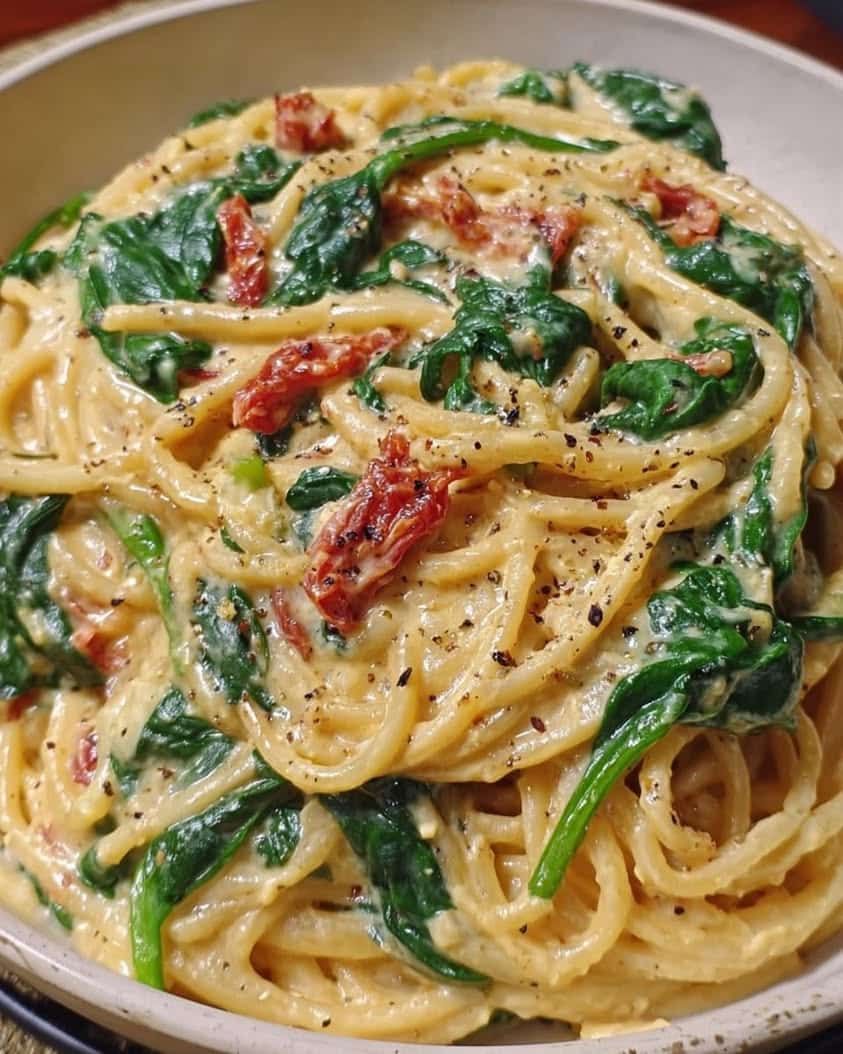
Furthermore, this recipe is a masterclass in texture and color. The al dente spaghetti provides a satisfying chew, while the fresh spinach wilts into silky ribbons that cling to every strand. Visually, the plate is a feast for the eyes with vibrant red sauce, flecks of herbs, and deep green spinach. Ultimately, this creamy sun-dried tomato pasta with spinach is a versatile canvas, welcoming additions like grilled chicken or shrimp but standing proudly on its own as a stunning vegetarian main course.
Quick Recipe Highlights
- Flavor Profile: This dish offers a complex harmony. The sun-dried tomatoes provide a sweet, tangy, and intensely savory base, beautifully mellowed by the rich, smooth cream. Garlic and Parmesan cheese add layers of pungent and salty depth, creating a truly addictive sauce.
- Texture: You experience a wonderful contrast. The spaghetti should be cooked al dente, offering a pleasant bite. Meanwhile, the cream sauce is luxuriously velvety, and the fresh spinach wilts down to a tender, almost silky consistency that melds seamlessly with the pasta.
- Aroma: As it cooks, your kitchen will fill with the irresistible scent of garlic sizzling in olive oil, followed by the deep, fruity aroma of rehydrating sun-dried tomatoes. Finally, the fresh parsley adds a final bright, herbaceous note that completes the sensory experience.
- Visual Appeal: This plate is strikingly beautiful. The rich, rosy-red cream sauce coats the pasta perfectly, creating a glossy finish. Vibrant green spinach leaves and a sprinkle of fresh herbs or extra Parmesan provide gorgeous color contrast, making it incredibly photogenic.
- Skill Level Needed: This is a beginner-friendly recipe. The techniques involve basic sautéing, simmering, and pasta cooking. If you can boil water and stir a pan, you can absolutely master this creamy sun-dried tomato pasta with spinach. It’s an excellent recipe for building kitchen confidence.
- Special Equipment: No special tools are required. You just need a large pot for boiling pasta and a large skillet or sauté pan for making the sauce. A good chef’s knife for chopping and a grater for fresh Parmesan are the only other essentials.
Recipe Overview
- Difficulty Level: We classify this as an easy recipe. The steps are sequential and simple, involving fundamental cooking skills. There is no intricate knife work or advanced techniques. The entire process is forgiving; for example, the sauce can simmer a little longer if needed, and the spinach wilts in seconds. It’s designed for success on the first try.
- Category: This dish fits multiple categories beautifully. It’s a stellar vegetarian main course, a quick and satisfying weeknight dinner, and an impressive yet easy pasta recipe for entertaining. Additionally, it can serve as a luxurious side dish to grilled meats or fish for a more elaborate meal.
- Cuisine: While inspired by Italian-American flavors, this is a modern fusion dish. It uses classic Italian ingredients like spaghetti, garlic, and Parmesan but incorporates them into a creamy, pan-based sauce that is a contemporary staple. The sun-dried tomato cream sauce itself has roots in both Italian and modern global pantry cooking.
- Cost: This is a cost-effective meal, especially considering its impressive flavor. Sun-dried tomatoes and heavy cream are the priciest components, but a little goes a long way. Using a block of Parmesan you grate yourself is more economical than pre-shredded. Overall, it delivers restaurant-quality taste at a fraction of the price.
- Season: This recipe is truly a year-round winner. In cooler months, the rich, creamy sauce provides comforting warmth. Conversely, in summer, the bright, tangy flavor of the sun-dried tomatoes feels fresh and lively. It’s a versatile dish that adapts to any season on your calendar.
- Occasion: Its versatility shines here too. It’s perfect for a fast family dinner, a casual meal with friends, or a cozy date night at home. You can easily double the recipe for a crowd. For a more formal occasion, plate it individually with a garnish of microgreens for an elegant touch.
Why You’ll Love This Recipe
First and foremost, the taste and texture are utterly captivating. Each forkful of this creamy sun-dried tomato pasta with spinach delivers a symphony of flavors. The initial tangy punch of the tomatoes gives way to the luxurious, smooth cream, all balanced by the savory saltiness of Parmesan. Texturally, the al dente pasta, the velvety sauce, and the tender spinach create a mouthfeel that is both comforting and sophisticated. It’s a dish that satisfies deeply on a sensory level, making every bite something to savor.
Next, consider the sheer convenience. This entire meal comes together in about thirty minutes, making it a hero for busy weeknights. The prep is minimal—mostly just chopping garlic and parsley. Meanwhile, the sauce cooks in the time it takes to boil the spaghetti. Everything comes together in one seamless flow. Consequently, you get a gourmet-tasting dinner with minimal active time and very little cleanup, as you can often use the pasta cooking water to thin your sauce.
From a nutritional standpoint, this dish offers more than just empty calories. Spinach is a powerhouse, packed with iron, vitamins A, C, and K, and fiber. Sun-dried tomatoes are concentrated sources of antioxidants like lycopene. Using whole wheat spaghetti boosts the fiber content significantly. While the cream adds richness, you control the portion. Therefore, you can enjoy a decadent-tasting meal that also provides valuable nutrients, especially when you load it up with that healthy green spinach.
This creamy sun-dried tomato pasta with spinach also boasts incredible social and entertaining value. It’s a universally appealing dish that pleases both adults and children. Its stunning presentation makes guests feel special, yet it doesn’t trap you in the kitchen. You can socialize while it simmers. Moreover, it pairs wonderfully with a simple salad and crusty bread for a complete, stress-free menu that feels thoughtfully prepared without any last-minute panic.
Finally, its cost-effectiveness and accessibility are major wins. The ingredients are easy to find at any standard grocery store. You likely have many of them—like garlic, pasta, and olive oil—in your pantry already. As a result, this recipe is both budget-friendly and practical. It demonstrates how a few quality ingredients, treated simply, can create something extraordinary. You don’t need expensive or exotic items to make a memorable and delicious family meal.
Historical Background and Cultural Significance
The story of this dish is a modern tale of global pantry fusion. Sun-drying tomatoes is an ancient preservation technique, particularly around the Mediterranean basin where summer harvests were abundant. Traditionally, these concentrated tomatoes found their way into rustic stews, breads, and antipasti. The concept of blending them into a rich, creamy pasta sauce, however, is a more recent innovation, born from the late 20th-century trend of combining luxurious ingredients for quick, impressive meals.
Culturally, it sits at the intersection of Italian tradition and contemporary global cooking. Pasta with tomato-based sauces is, of course, an Italian cornerstone. The addition of cream creates a “rosa” or pink sauce, popular in regions like Lombardy. Adding spinach nods to dishes like pasta Florentine. This recipe, therefore, borrows elements from Italian culinary grammar but arranges them in a new, accessible way that has become a staple in home kitchens and casual restaurants worldwide.
The evolution of this recipe is tied directly to ingredient availability. As sun-dried tomatoes packed in oil became a common sight in supermarket aisles outside of specialty stores, home cooks began experimenting. Their intense flavor meant a small amount could transform a simple cream sauce. Simultaneously, the desire for “one-pot” meals and 30-minute recipes surged. Consequently, this creamy sun-dried tomato pasta with spinach emerged as a perfect solution—fast, flavorful, and foolproof.
Regional variations are endless, showcasing its adaptability. In the American South, you might find it with added Cajun seasoning and shrimp. A Greek version could include kalamata olives and feta cheese instead of Parmesan. Some cooks add a splash of white wine for acidity, while others stir in roasted red peppers for sweetness. This adaptability is its true cultural significance; it’s a template that welcomes local flavors and personal touches, making it a truly global comfort food.
Ingredient Deep Dive
Sun-Dried Tomatoes: These are the star, providing the recipe’s signature depth. Historically, they preserved summer’s bounty. Nutritionally, they’re concentrated in lycopene, an antioxidant linked to heart health, and fiber. For the best flavor, choose tomatoes packed in olive oil rather than dried in a bag; the oil plumps them and can be used to start the sauce. Store an opened jar in the refrigerator. If you only have dry-packed, simply soak them in hot water for 10 minutes before using. For a substitution, try high-quality tomato paste or oven-roasted cherry tomatoes, though the flavor profile will change.
Heavy Cream: This ingredient creates the luxurious, velvety texture of the sauce. It’s a dairy product with a high fat content, which prevents curdling when heated and allows the sauce to coat the pasta smoothly. For a lighter version, half-and-half can work, but the sauce will be thinner and less rich. For a dairy-free alternative, full-fat canned coconut cream is excellent, adding a subtle sweetness that pairs surprisingly well with the tomatoes. Always add cream off the boil and simmer gently to avoid separation.
Fresh Spinach: This leafy green adds color, texture, and a major nutritional boost. It’s rich in iron, calcium, and vitamins A, C, and K. When selecting spinach, look for vibrant, crisp leaves without yellowing. Baby spinach is ideal as it’s tender and requires no stemming. To store, keep it unwashed in the original container or a plastic bag with a paper towel to absorb moisture. If spinach isn’t available, other sturdy greens like kale or Swiss chard can be used; just chop them finely and allow a little extra time to wilt.
Parmesan Cheese: This hard, aged cheese adds a critical savory, umami element known as “saltiness” but is far more complex. Authentic Parmigiano-Reggiano is worth the splurge for its superior flavor and granular texture that melts beautifully into the sauce. It’s a good source of protein and calcium. Always grate it fresh from a block; pre-shredded cheese contains anti-caking agents that can make your sauce grainy. For storage, wrap the block tightly in parchment and then foil. As a substitute, Pecorino Romano offers a sharper, saltier punch.
Spaghetti: The classic long pasta shape is perfect for holding onto the creamy sauce. Its neutral flavor allows the other ingredients to shine. For a healthier twist, whole wheat or legume-based spaghetti adds fiber and protein. Cooking it al dente (“to the tooth”) is crucial; it provides structure and prevents the final dish from becoming mushy. Always reserve a cup of the starchy pasta water before draining; this liquid is gold for adjusting your sauce’s consistency, helping it cling to every strand perfectly.
Common Mistakes to Avoid
- Overcooking the Pasta: Mushy spaghetti ruins the dish’s texture. Always cook pasta al dente, as it will continue to cook slightly when tossed with the hot sauce. Furthermore, set a timer and taste a piece a minute before the package’s suggested time.
- Using Pre-Shredded Parmesan: Bags of pre-shredded cheese contain cellulose to prevent clumping. This additive prevents the cheese from melting smoothly into your creamy sauce, often resulting in a grainy or clumpy texture. Instead, invest in a block and grate it fresh.
- Skipping the Pasta Water: The starchy, salty water left after boiling pasta is a magical ingredient. Not reserving any means you lose your best tool for thinning the sauce to a silky, cohesive consistency that perfectly coats each noodle. Always save at least one cup.
- Adding Cream to a Boiling Sauce: If you pour cold heavy cream directly into a violently bubbling pan, you risk it curdling or separating. To prevent this, always reduce the heat to a gentle simmer before stirring in the cream, then maintain a low, steady heat.
- Not Washing Fresh Spinach: Even pre-washed bags can harbor grit. Skipping a thorough rinse can leave sandy sediment in your beautiful creamy sun-dried tomato pasta. Always give spinach a good wash in a bowl of cold water, then dry it in a salad spinner or with towels.
- Using Dull, Unflavored Oil from the Tomato Jar: The oil in the sun-dried tomato jar is infused with incredible flavor. Discarding it is a major missed opportunity. Use this flavorful oil to sauté your garlic; it will build a deeper, more complex base for your entire sauce.
- Underseasoning the Sauce: Cream-based sauces need ample seasoning to avoid tasting bland. Remember to season in layers: salt the pasta water generously, then taste and adjust the sauce at the end with salt, pepper, and the salty Parmesan. The sauce should taste vibrant before it meets the pasta.
- Crowding the Pan with Garlic: If you add too much garlic to a cold pan and then heat it, it can cook unevenly and burn in spots, turning bitter. Instead, ensure your oil is warm but not smoking before adding the garlic, and stir it constantly for just 30-60 seconds until fragrant.
Essential Techniques
Sautéing Garlic: This foundational technique builds the flavor base. The goal is to gently cook the minced garlic in oil just until it becomes fragrant and loses its raw bite, without letting it brown or burn. Browning creates bitterness. To master it, heat your oil over medium heat, add the garlic, and stir constantly. It should sizzle gently. The moment you smell that warm, nutty aroma (usually within 30-60 seconds), it’s ready for the next ingredient. The visual cue is a very light golden hue, not deep brown.
Creating an Emulsified Sauce: This is the key to a creamy, cohesive sauce that clings to pasta. The technique involves vigorously tossing the cooked pasta with the sauce and a splash of starchy pasta water. The starch in the water acts as an emulsifier, binding the water-based elements and the fat from the cream and oil into a smooth, glossy coating. To do it, add the drained pasta directly to the skillet with the sauce. Over low heat, add a splash of reserved water and toss continuously with tongs until the sauce thickens and coats every strand.
Wilting Spinach: This quick technique adds volume and nutrients without overcooking the greens. The residual heat from the pasta and sauce is usually sufficient. After combining the pasta and sauce, simply add the fresh spinach and toss. The spinach will wilt from the heat in about 60-90 seconds, turning bright green and tender. The pitfall is adding it too early to the simmering sauce, which can cause it to overcook, lose its vibrant color, and become slimy. Add it at the very end for perfect texture.
Pro Tips for Perfect Spaghetti & Spinach with Sun-Dried Tomato Cream Sauce
First, always salt your pasta water generously. It should taste like the sea. This is your only chance to season the pasta itself from the inside out, creating a well-seasoned foundation for the entire dish.
Second, use the oil from the sun-dried tomato jar to sauté your garlic. This infused oil is packed with flavor and will give your sauce a deeper, more complex tomato essence from the very first step.
Third, reserve at least one cup of the starchy pasta water before draining. This liquid is essential for adjusting the final consistency of your sauce, helping it become silky and cling to the spaghetti perfectly.
Fourth, grate your Parmesan cheese fresh from a block. The pre-shredded variety contains anti-caking agents that prevent it from melting smoothly, which can lead to a grainy texture in your otherwise creamy sauce.
Fifth, add the fresh spinach off the heat. The residual warmth from the pasta and sauce is enough to wilt it perfectly. This preserves its vibrant green color and prevents it from becoming mushy.
Sixth, let the sauce simmer gently after adding the cream. A rapid boil can cause the cream to break or curdle. A low, steady heat ensures it stays velvety and smooth.
Seventh, toss the pasta in the sauce pan, not the other way around. Adding the drained spaghetti directly to the skillet with the sauce allows you to properly coat each strand and control the final consistency with pasta water.
Eighth, finish with a final drizzle of high-quality extra virgin olive oil and a crack of black pepper just before serving. This adds a fresh, fragrant layer of flavor and a professional touch.
Variations and Adaptations
Regional Variations: Travel this dish around the world with simple tweaks. For a Greek twist, add kalamata olives and crumbled feta cheese. Give it a Southern U.S. flair by adding sautéed shrimp and a pinch of Cajun seasoning. An Italian-American classic variation includes adding sliced Italian sausage and a splash of red wine to the sauce for extra depth.
Seasonal Adaptations: Make the most of each season. In summer, stir in fresh basil and halved cherry tomatoes at the end. During fall, add roasted cubes of butternut squash. For a winter warmer, incorporate crispy pancetta and a hint of nutmeg with the cream.
Dietary Modifications: This recipe is wonderfully adaptable. For a vegan version, use full-fat coconut cream and nutritional yeast or vegan Parmesan. To make it gluten-free, simply swap the spaghetti for your favorite GF pasta brand. For a keto or low-carb option, serve the sauce over spiralized zucchini noodles or shirataki noodles.
Flavor Variations: Experiment with different flavor profiles. Add a teaspoon of red pepper flakes with the garlic for a spicy kick. Stir in a tablespoon of tomato paste for an even deeper tomato flavor. A splash of dry white wine or a squeeze of lemon juice at the end can brighten the entire dish.
Texture Modifications: Play with textures for interest. Top the finished dish with toasted pine nuts or breadcrumbs for a satisfying crunch. For a richer mouthfeel, stir in a tablespoon of cream cheese or mascarpone along with the heavy cream. Alternatively, use a chunky pasta like rigatoni to hold more sauce in its tubes.
Presentation Alternatives: Change up how you serve it. For a family-style feast, present it in a large, warmed serving bowl. For individual plating, use a carving fork to twirl neat nests of pasta in the center of each bowl. In a shallow pasta bowl, drizzle a little extra cream around the edges and place the pasta in the center for a restaurant-style look.
Serving and Presentation Guide
Plating Techniques: For the most appealing presentation, use tongs to lift and twist portions of the creamy sun-dried tomato pasta with spinach, creating height on the plate or in a shallow bowl. This technique showcases the glossy sauce and vibrant spinach. Alternatively, for a rustic family-style feel, simply transfer the entire contents of the skillet to a large, warm serving platter.
Garnishing Ideas: The right garnish adds visual pop and flavor. A final sprinkle of freshly grated Parmesan is essential. Then, add a flourish of chopped fresh parsley or basil for color. A light drizzle of high-quality extra virgin olive oil adds sheen. For texture, a few reserved sun-dried tomato pieces or a crack of black pepper on top looks beautiful.
Traditional Accompaniments: In the Italian tradition, pasta is often served as a “primo” or first course. Following this, you could serve a simple “secondo” like grilled chicken or fish. More commonly for a complete meal, pair it with a crisp green salad dressed with a lemony vinaigrette to cut the richness, and plenty of warm, crusty bread for soaking up every last drop of sauce.
Modern Serving Suggestions: For a contemporary, well-rounded dinner plate, serve a smaller portion of the pasta alongside a protein like a pan-seared salmon fillet or lemon-herb grilled chicken breast. You can also deconstruct it for a lunch bowl: place the sauce and spinach over a bed of quinoa or farro for a hearty grain bowl variation.
Temperature Considerations: This dish is best served immediately, while the sauce is luxuriously creamy and the pasta is perfectly al dente. Ensure your serving bowls are warmed to prevent the pasta from cooling down too quickly. If you must hold it briefly, keep it in the warm skillet with the heat off and a lid on, but be aware the spinach will continue to wilt.
Portion Control Tips: A standard recipe serving is about one-quarter of the pasta made with one pound of spaghetti. To make it more substantial without overloading on carbs, bulk up the plate with extra spinach or serve it alongside a large salad. Remember, the sauce is rich, so a moderate portion of pasta is often very satisfying.
Wine and Beverage Pairing
Wine Pairings: The rich, creamy, and tangy profile of this pasta calls for wines with good acidity to cut through the fat. A crisp Italian Pinot Grigio or Vermentino is a classic choice. Alternatively, a light-bodied red like a Chianti or a Barbera with bright cherry notes can stand up to the tomatoes without overwhelming the dish. For a more adventurous pick, a dry rosé from Provence offers the perfect balance of fruit and acidity.
Non-Alcoholic Alternatives: Sparkling water with a squeeze of lemon or lime is always refreshing. For a more crafted option, try a tart cherry or pomegranate spritzer. Iced herbal tea, like lemon verbena or mint, can also complement the savory and tangy flavors beautifully without adding sweetness that might clash.
Coffee/Tea Pairings: After the meal, an espresso or a strong cup of Italian roast coffee can be a perfect palate cleanser. For tea, consider a black tea like Earl Grey, whose bergamot notes can echo the bright elements in the sauce, or a simple peppermint tea to aid digestion after a rich meal.
Temperature Considerations: White and rosé wines should be served well-chilled, around 45-50°F. Light reds like Chianti are best served slightly cooler than room temperature, around 55-60°F, to keep their acidity perceptible. Non-alcoholic spritzers and iced teas should be very cold to provide a refreshing contrast to the warm, creamy pasta.
Serving Suggestions: Always serve wine in appropriate glassware to enhance the experience. Provide a water glass for each guest as well, as the salty Parmesan and rich sauce will encourage sipping. For non-alcoholic options, consider serving them in a nice pitcher with glasses filled with ice for a welcoming touch.
Storage and Shelf Life
Storage Methods: Allow any leftovers to cool completely to room temperature before storing. Do not leave it out for more than two hours. Transfer the creamy sun-dried tomato pasta with spinach to an airtight container. It’s best to store the pasta and sauce together, as separating them can dry out the pasta.
Temperature Requirements: This dish must be stored in the refrigerator at 40°F or below. The dairy-based sauce is perishable and can spoil quickly if left at room temperature. Always place the container in the coldest part of your fridge, typically towards the back on a middle shelf.
Container Recommendations: Use a shallow, airtight container rather than a deep one. This allows the pasta to cool more evenly and quickly, reducing the risk of bacterial growth. Glass containers are ideal as they don’t absorb odors and allow you to see the contents.
Signs of Spoilage: Before reheating, inspect and smell the pasta. Discard it if you notice an off or sour smell, visible mold (often fuzzy spots), or if the sauce has separated irreversibly into a curdled, watery mess. When in doubt, it is safest to throw it out.
Reheating Instructions: The best method is on the stovetop. Place the pasta in a skillet with a splash of water, milk, or cream. Heat gently over medium-low heat, stirring frequently, until warmed through. The added liquid will help reconstitute the creamy sauce. Microwaving is quicker but can make the pasta rubbery; use a microwave-safe dish, cover with a damp paper towel, and heat in 30-second intervals, stirring in between.
Freezing Guidelines: Freezing is not highly recommended for cream-based pasta sauces, as they can separate and become grainy upon thawing. The spinach will also become mushy. If you must freeze, do so for no longer than one month. Thaw overnight in the refrigerator before reheating gently on the stovetop with added liquid, and expect a change in texture.
Make Ahead Strategies
Prep Timeline: You can prep several components up to two days in advance. Chop the garlic and parsley, storing them separately in small containers in the fridge. Grate the Parmesan cheese and keep it sealed. Measure out the cream and sun-dried tomatoes. This “mise en place” turns active cooking time into a simple assembly process.
Storage Between Steps: Keep all prepped ingredients in airtight containers in the refrigerator. The garlic and parsley can be stored together. The sun-dried tomatoes can be kept in their jar or transferred to a small bowl covered with their oil. The cream should remain in its original carton until ready to use.
Quality Impact Assessment: Prepping the aromatics (garlic, parsley) has no negative impact on flavor. Freshly grated Parmesan is always best, but grating it a day ahead is fine. Avoid pre-cooking the pasta, as it will overcook when reheated. The sauce itself is best made fresh, but you can sauté the garlic and tomatoes ahead, then finish with cream and spinach when ready to serve.
Assembly Tips: When ready to cook, simply boil your pasta. While it cooks, reheat the pre-sautéed garlic and tomato base in your skillet. Then, proceed with adding the cream and simmering. Finally, combine with the drained pasta, reserved water, and fresh spinach. This cuts the active cooking time nearly in half.
Reheating Guidelines: If you fully prepare the dish ahead, cool it quickly and store as directed. Reheat using the stovetop method with added liquid. The pasta will absorb sauce as it sits, so you will need more liquid (water, broth, or cream) than you used initially to restore a creamy consistency.
Fresh Element Additions: To maximize quality when making ahead, consider adding the fresh spinach and final garnishes just before serving. If you’ve combined everything, the spinach will lose its vibrant color and become overly soft. Adding a fresh handful of spinach and a sprinkle of herbs upon reheating revives the dish beautifully.
Scaling Instructions
Halving the Recipe: To serve two, simply halve all ingredients: use 8 oz spaghetti, 1/2 cup cream, etc. Cooking times remain largely the same, though the sauce may come together a minute or two faster. Use a medium skillet instead of a large one. Be mindful when halving garlic; one small clove is usually sufficient. The principle of reserving pasta water still applies, just save a little less.
Doubling or Tripling: For a crowd, double or triple the ingredients linearly. The main adjustment is equipment: you’ll need a very large pot for boiling more pasta and likely a Dutch oven or large stockpot for making the sauce. Cooking times may increase slightly for the sauce to reduce and thicken. Ensure you have enough space to toss the pasta with the sauce effectively; you may need to combine them in the large pasta pot instead of the skillet.
Equipment Adjustments: Scaling up requires larger vessels to prevent overcrowding, which leads to steaming instead of proper sautéing. For a double batch, a 5-quart Dutch oven is ideal for the sauce. For pasta, ensure your pot has enough water (at least 4 quarts per pound of pasta) so it doesn’t become too starchy and sticky.
Timing Modifications: When scaling up, start the sauce first, as it will take longer to heat through and simmer. Then, begin boiling the pasta water. The goal is to have the sauce nearly ready when the pasta is al dente. When scaling down, you can often start the pasta and sauce simultaneously, as everything comes together quickly.
Storage Considerations: Leftovers will increase proportionally when you scale up. Ensure you have enough appropriate-sized storage containers. Remember that a large pot of hot pasta and sauce will take much longer to cool to a safe temperature for refrigeration. To speed cooling, you can transfer it to several shallow containers before placing them in the fridge.
Nutritional Deep Dive
Macro Breakdown: A typical serving provides a balance of carbohydrates from the pasta, fats from the cream, olive oil, and Parmesan, and a moderate amount of protein from the cheese and the pasta itself. The spinach adds minimal calories but significant micronutrients. Using whole wheat pasta increases the fiber and protein content, making the meal more satiating and blood-sugar friendly.
Micronutrient Analysis: This dish is a notable source of several key vitamins and minerals. Spinach delivers high levels of Vitamin K (crucial for blood clotting and bone health), Vitamin A (for vision and immunity), and folate. Sun-dried tomatoes are rich in lycopene and potassium. Parmesan cheese provides calcium and phosphorus. Using the garlic and olive oil base also contributes beneficial plant compounds and monounsaturated fats.
Health Benefits: The combination of ingredients offers several health perks. Lycopene from the tomatoes is linked to reduced risk of certain cancers and heart disease. The healthy fats from olive oil can support good cholesterol levels. The fiber from spinach and whole wheat pasta promotes digestive health. The calcium supports bone strength. It’s a nutrient-dense meal that supports overall wellness when enjoyed as part of a balanced diet.
Dietary Considerations: As written, this recipe contains gluten (pasta), dairy (cream, Parmesan), and is vegetarian. It is not suitable for vegan, dairy-free, or gluten-free diets without modifications. The calorie and fat content is on the higher side due to the cream, so those monitoring intake should be mindful of portion size.
Portion Analysis: A standard serving (1/4 of the recipe with regular spaghetti) is satisfying but not overly massive. To manage calories, you can increase the ratio of spinach to pasta in your bowl. Using a smaller plate can also help with visual portion control. Remember, the sauce is flavorful, so you don’t need a mountain of pasta to feel satisfied.
Weight Management Tips: To enjoy this dish while managing weight, consider using half heavy cream and half whole milk, or even a light cream. Increase the spinach to three or four large handfuls to add volume and nutrients with few calories. Choose a high-fiber pasta like whole wheat or chickpea pasta to increase satiety. Finally, pair it with a large side salad to fill up on vegetables first.
Dietary Adaptations
Gluten-Free: This adaptation is very straightforward. Simply substitute the regular spaghetti for a high-quality gluten-free pasta made from brown rice, corn, or a legume blend. Be sure to cook it al dente according to package directions, as GF pasta can become mushy quickly. The sauce and all other ingredients remain exactly the same. Reserve pasta water as usual to adjust the sauce consistency.
Dairy-Free/Vegan: For a completely plant-based version, replace the heavy cream with full-fat canned coconut cream for the best richness and texture. Substitute the Parmesan with 3-4 tablespoons of nutritional yeast, which provides a cheesy, umami flavor. You can also use a store-bought vegan Parmesan. Ensure the sun-dried tomatoes are packed in oil without dairy additives. The result is a luxuriously creamy and tangy vegan pasta dish.
Low-Carb/Keto: Replace the spaghetti with spiralized zucchini noodles (zoodles) or shirataki noodles. Prepare your noodle substitute separately according to package directions—for zoodles, sauté them briefly to remove excess moisture. Make the sauce as directed, but you may want to simmer it a bit longer to thicken since there’s no starchy pasta water to add. The sauce itself, rich in fats from cream and oil, is perfectly keto-friendly.
Paleo: Similar to keto, use spiralized vegetable noodles like zucchini, sweet potato, or butternut squash. Ensure the sun-dried tomatoes have no added sugar or sulfites. Omit the Parmesan cheese entirely, or use a sprinkle of nutritional yeast if your paleo protocol allows. The cream can be used if you include dairy, or substitute with coconut cream for a strict dairy-free paleo version.
Low-FOD
Print A creamy, flavorful pasta dish featuring sun-dried tomatoes, fresh spinach, and a rich garlic-infused sauce, perfect for a quick and satisfying dinner. You can customize the seasonings to taste.Spaghetti & Spinach with Sun-Dried Tomato Cream Sauce
Description
Ingredients
Instructions
Notes