Authentic Greek Potato Salad Recipe with Feta and Lemon Dressing: A Vibrant Mediterranean Classic
This authentic Greek potato salad recipe with feta and lemon dressing is a complete departure from the heavy, mayonnaise-laden versions you might know. Instead, it bursts with the bright, clean flavors of the Mediterranean. Imagine tender, warm potatoes soaking up a vibrant dressing of extra virgin olive oil, fresh lemon juice, and aromatic oregano. Then, picture it all tossed with briny Kalamata olives, crisp cucumbers, sweet red onion, and creamy chunks of feta cheese. The result is a side dish that is simultaneously hearty and refreshing, making it the perfect companion for grilled meats or a satisfying vegetarian meal on its own.
Furthermore, this Greek potato salad is incredibly versatile and travels beautifully. It’s the ideal make-ahead dish for picnics, potlucks, and summer barbecues because it contains no dairy-based dressing that can spoil in the sun. The flavors actually improve as they meld together in the refrigerator. Additionally, this recipe is a fantastic introduction to Greek cuisine, showcasing how simple, high-quality ingredients can create something truly extraordinary. Each forkful delivers a symphony of textures and tastes, from the soft potato to the crunchy vegetables and the salty, tangy pop of feta.
Ultimately, this dish embodies the spirit of Greek cooking: fresh, flavorful, and focused on celebrating seasonal produce. It’s a healthy, colorful, and utterly delicious way to bring a taste of the Aegean to your table. Whether you’re hosting a crowd or simply want a flavorful lunch for the week, this authentic Greek potato salad recipe with feta and lemon dressing will become a fast favorite in your culinary repertoire.
Quick Recipe Highlights
- Flavor Profile: This salad delivers a bold, sunny combination of tangy lemon, rich olive oil, earthy oregano, and salty feta. The potatoes act as a perfect canvas, absorbing the dressing while the olives and red onion provide sharp, pungent accents that cut through the richness.
- Texture: You’ll experience a wonderful contrast between the creamy, soft interior of the warm potatoes and the crisp, fresh bite of cucumber and red onion. The feta adds a crumbly, creamy element, and the olives offer a firm, meaty texture.
- Aroma: As soon as you mix the dressing, the air fills with the citrusy zing of fresh lemon and the warm, woody scent of dried oregano. When combined with the earthy potatoes and salty feta, it creates an unmistakably Mediterranean fragrance.
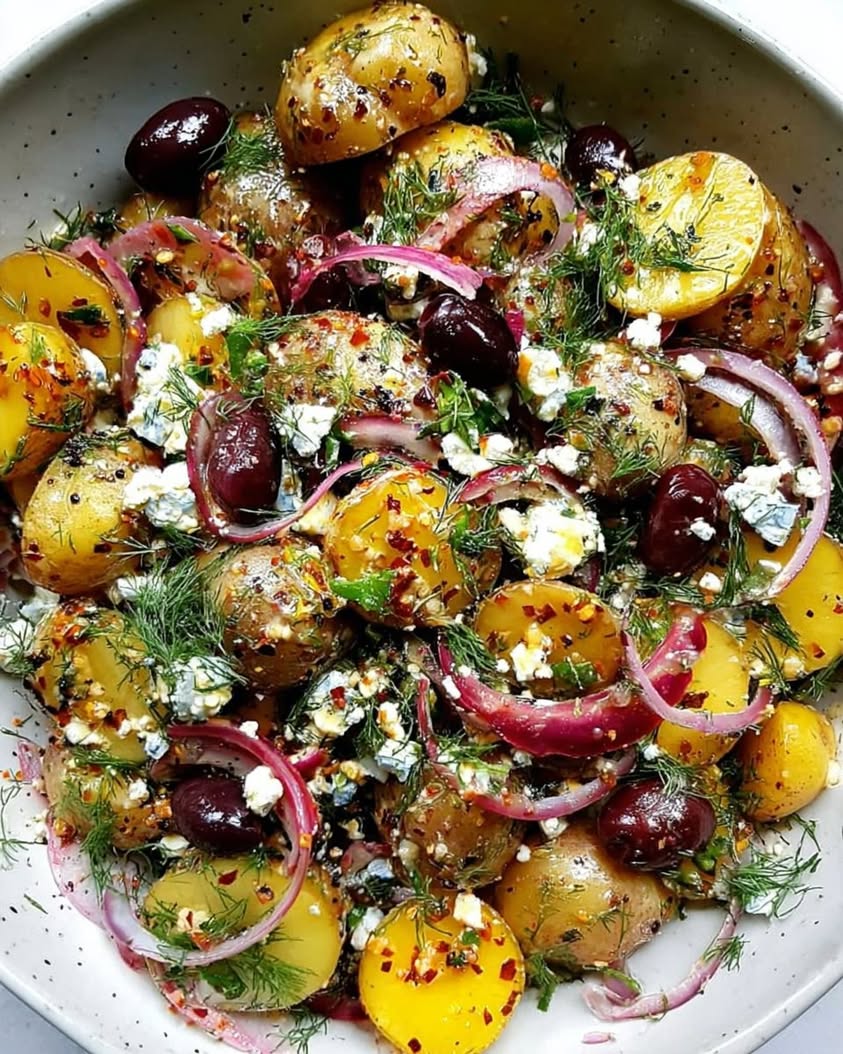
- Visual Appeal: This salad is a feast for the eyes with its bright white feta, deep purple Kalamata olives, vibrant green cucumber, and flecks of green oregano against the golden potatoes. It’s rustic, colorful, and inviting.
- Skill Level Needed: This is a beginner-friendly recipe. The primary skills are simple knife work for chopping and the ability to boil potatoes until just tender. There’s no complex technique, making it accessible for cooks of all levels.
- Special Equipment: You need only basic kitchen tools: a large pot for boiling potatoes, a sharp knife, a cutting board, a mixing bowl, and a whisk or fork for the dressing. No special appliances are required.
Recipe Overview
- Difficulty Level: We rate this authentic Greek potato salad recipe as “Easy” because it involves fundamental cooking techniques like boiling and chopping. The process is straightforward and forgiving; for instance, the dressing is simply whisked together, and there’s no need for precise emulsification. Even a novice cook can achieve excellent results on the first try.
- Category: This dish falls squarely into the side dish category, perfect alongside grilled chicken, lamb, fish, or burgers. However, it’s substantial enough to serve as a light main course for a vegetarian lunch, especially when paired with some crusty bread to soak up the delicious dressing.
- Cuisine: This is a classic example of Greek and broader Mediterranean cuisine. It highlights the region’s cornerstone ingredients: olive oil, lemon, oregano, olives, and feta cheese. The philosophy is one of simplicity, allowing a few high-quality components to shine without heavy sauces or complicated preparations.
- Cost: This is a very budget-friendly recipe. Potatoes, onions, and cucumbers are inexpensive staples. While extra virgin olive oil and authentic Greek feta are worth the investment, they are used in moderate amounts. Overall, you can feed a crowd for a fraction of the cost of a store-bought, pre-made salad.
- Season: This salad is perfect for spring and summer when you crave lighter, fresher fare. It’s ideal for outdoor dining. Conversely, it also brings a welcome burst of freshness and color to the winter table when seasonal produce is less vibrant.
- Occasion: Its versatility makes it suitable for countless occasions. It’s a star at casual weeknight dinners, elegant dinner parties, holiday feasts (especially Easter or Fourth of July), picnics, potlucks, and meal prep for healthy lunches throughout the week.
Why You’ll Love This Recipe
First and foremost, the taste and texture of this authentic Greek potato salad recipe are utterly addictive. The warm potatoes greedily drink up the lemony, herby dressing, becoming flavor-packed in every bite. Meanwhile, the cool cucumber, sharp onion, and salty olives provide constant contrast. Each mouthful is a little different, keeping your palate engaged. The creamy, tangy feta cheese brings everything together, adding a rich depth that makes the salad feel indulgent yet still light. It’s a harmonious balance that is far more interesting than any standard potato salad.
From a convenience standpoint, this recipe is a true winner. You can prepare it entirely in advance, and it actually benefits from sitting for a few hours. This makes it the ultimate stress-free dish for entertaining. Additionally, it requires no special equipment or hard-to-find ingredients. You likely have most items in your pantry already. The cooking process is simple and mostly hands-off while the potatoes boil. Consequently, you can easily multitask in the kitchen, preparing your main course or setting the table without worry.
Nutritionally, this Greek potato salad is a powerhouse compared to traditional versions. It uses heart-healthy extra virgin olive oil as its fat base, packed with antioxidants and monounsaturated fats. The fresh lemon juice provides vitamin C, and the vegetables add fiber and various micronutrients. By skipping the mayonnaise, you eliminate a significant amount of saturated fat and calories. Therefore, you can enjoy a generous portion feeling satisfied and nourished, not weighed down.
For social gatherings, this salad is a guaranteed crowd-pleaser. Its bright, familiar yet exotic flavors appeal to almost everyone. It’s a fantastic conversation starter and a beautiful addition to any buffet table. Because it’s served at room temperature or chilled, you don’t have to juggle oven space or keep it warm. Simply pull it from the fridge and serve. It pairs wonderfully with a wide array of grilled foods and other Mediterranean dishes, making menu planning a breeze.
Finally, this recipe is incredibly cost-effective and accessible. Potatoes are one of the most affordable vegetables available. You can adapt the recipe based on what you have; for example, you can use different types of olives or herbs. It stretches easily to feed more people by simply adding another potato or two. Investing in a good bottle of olive oil and a block of authentic feta pays off across many meals, not just this one. Ultimately, it delivers restaurant-quality flavor for a fraction of the price.
Historical Background and Cultural Significance
The origins of potato salad in Greece are intertwined with the introduction of the potato itself to the Mediterranean. Potatoes arrived in Europe from the Americas in the 16th century but were slow to gain widespread acceptance in Greece. Initially, they were considered food for the poor. However, by the 19th and 20th centuries, potatoes had become a staple in the Greek diet due to their hardiness and ability to grow in varied conditions. The concept of a “Greek” potato salad likely evolved as a natural fusion, applying the foundational principles of Greek village salads—tomatoes, cucumber, feta, onion, olives, and oregano—to the humble, filling potato.
Culturally, this dish reflects the Greek approach to “meze” or small plates meant for sharing. It is not typically a centerpiece but a glorious accompaniment, encouraging communal dining and conversation. The ingredients tell a story of the Greek landscape: olive oil from sun-drenched groves, oregano from mountain hillsides, lemons from coastal trees, and feta from sheep and goats grazing on aromatic herbs. Eating this salad is a direct connection to the terroir and the simple, resourceful cooking of Greek home kitchens and tavernas.
The evolution of the recipe is a testament to adaptability. While the core ingredients remain constant, every family and region might have its own touch. Some might add a splash of red wine vinegar for extra tang, while others might include capers or fresh dill. The type of potato can vary based on what’s locally available. This flexibility is key to its enduring popularity; it’s a framework rather than a rigid formula, allowing cooks to express personal and regional preferences while staying true to its Hellenic spirit.
Regarding regional variations, you might find differences across Greece. On islands, cooks might add fresh oregano or thyme picked from the hillside. In northern regions, a touch of paprika or a different cheese might appear. The version presented here, with its emphasis on lemon and oregano, is considered a classic representation. It has also traveled the world with the Greek diaspora, adapting to local ingredients while maintaining its essential character, thus becoming a global ambassador for Greek cuisine’s vibrant, healthy flavors.
Ingredient Deep Dive
Yukon Gold Potatoes: These are the ideal choice for this authentic Greek potato salad recipe. Cultivated for their buttery yellow flesh and thin skin, they hold their shape well when boiled but have a creamy, moist interior that absorbs dressing beautifully. Historically, the development of this variety provided a versatile potato perfect for boiling and salads. Nutritionally, they are a good source of potassium, vitamin C, and fiber, especially when the skin is left on. Always select firm potatoes without sprouts or green patches. Store them in a cool, dark, well-ventilated place—not the refrigerator. For substitutions, red potatoes or fingerlings are excellent alternatives.
Extra Virgin Olive Oil: This is the non-negotiable heart of the dressing. True extra virgin olive oil (EVOO) is cold-pressed, retaining robust flavor and healthful polyphenols. In Greek culture, olive oil is liquid gold, central to the diet and economy for millennia. It provides healthy monounsaturated fats and antioxidants. For the best flavor, choose a Greek EVOO with a fruity, peppery finish. Store it in a dark, cool cupboard away from heat and light. Do not substitute with refined or “light” olive oil, as they lack flavor. In a pinch, a good quality regular olive oil can work, but EVOO is worth the investment for this recipe.
Feta Cheese: Authentic Greek feta is a Protected Designation of Origin (PDO) product, meaning it must be made in Greece from at least 70% sheep’s milk (often blended with goat’s milk). This gives it a tangy, salty, and crumbly character distinct from cow’s milk feta. It’s a staple in Greek cuisine dating back to antiquity. Feta is a good source of calcium and protein. For the best results, buy a block stored in brine and crumble it yourself; pre-crumbled feta is often drier. Store leftover feta submerged in its brine in the refrigerator. If you cannot find Greek feta, a high-quality Bulgarian or French feta can be a suitable substitute.
Kalamata Olives: These iconic, almond-shaped olives from the Messinia region of Greece are deep purple, meaty, and have a rich, fruity, and slightly winy flavor. They are typically slit and cured in a brine of red wine vinegar and olive oil, sometimes with herbs. Olives have been a cornerstone of the Mediterranean diet for thousands of years, symbolizing peace and prosperity. They provide healthy fats and antioxidants. Look for olives sold in jars or at the deli counter with pits; they are superior in flavor to canned, pitted varieties. Store them in their liquid in the refrigerator. If unavailable, other brine-cured black olives like Gaeta can be used.
Fresh Lemon Juice: The bright, acidic component of the dressing is crucial. Freshly squeezed lemon juice is mandatory; bottled juice often has a flat, metallic taste. Lemons thrive in the Greek climate and are used abundantly in the cuisine for their ability to cut through richness and add freshness. They are an excellent source of vitamin C. Choose heavy, firm lemons with smooth skin for the most juice. Roll them on the counter before cutting to maximize yield. There is no true substitute for fresh lemon juice in this recipe, as its flavor is defining.
Common Mistakes to Avoid
- Overcooking the Potatoes: Boiling potatoes into mush is a common error. You want them tender enough to pierce with a fork but still holding their shape. Overcooked potatoes will fall apart when tossed, creating a muddy texture instead of distinct chunks. Test them a few minutes before the suggested time.
- Using Bottled Lemon Juice: The dressing’s vibrancy depends entirely on fresh lemon juice. Bottled juice lacks the bright, clean acidity and can impart an artificial or bitter flavor that will dull the entire salad. Always take the minute to squeeze fresh lemons.
- Adding Dressing to Cold Potatoes: Pouring the lemony olive oil dressing over cold, refrigerated potatoes is a missed opportunity. Warm potatoes absorb the dressing much more effectively, becoming seasoned from the inside out. Always dress them while they are still warm from boiling.
- Using Pre-Crumbled Feta: Pre-crumbled feta is coated in anti-caking agents and is often dry and less flavorful. A block of feta stored in brine is far superior in taste and texture. Take the extra step to crumble it yourself for creamy, moist chunks.
- Skipping the Oregano: Dried Greek oregano is not just a garnish; it’s a fundamental flavor. Its earthy, slightly peppery taste is iconic. Using fresh oregano instead (which has a milder flavor) or omitting it altogether will result in a salad that lacks authentic Greek character.
- Not Seasoning the Dressing Enough: The dressing should be boldly seasoned to stand up to the potatoes. Taste it before adding it to the salad. It should make you pucker slightly and be distinctly salty. Remember, the potatoes and other ingredients will dilute the seasoning.
- Chopping Vegetables Too Large or Too Small: Inconsistent chopping leads to uneven bites. Aim for a medium dice on the cucumber and red onion so they distribute evenly and provide texture without overwhelming. The olives can be halved or left whole, depending on preference.
- Forgetting to Reserve Some Feta for Garnish: Tossing all the feta into the salad means it will break down and become less distinct. Reserve a small handful to sprinkle on top just before serving. This adds visual appeal and ensures creamy pockets of cheese in every serving.
Essential Techniques
Boiling Potatoes to Perfect Tenderness: This is the most critical technique for your authentic Greek potato salad recipe. Start with cold, salted water to ensure even cooking from the outside in. Cut the potatoes into uniform, bite-sized chunks so they finish at the same time. A rolling boil is too vigorous and can break down the exteriors before the insides are cooked. Instead, maintain a gentle simmer. The potatoes are done when a paring knife or fork pierces them with little resistance, but they don’t fall apart. Immediately drain them and let them steam dry for a minute in the colander; this prevents a watery salad.
Building and Emulsifying the Dressing: While not a true emulsion like mayonnaise, whisking the dressing vigorously is key. The goal is to temporarily suspend the lemon juice in the olive oil, creating a cohesive mixture that will coat the potatoes evenly. Always add the dried oregano to the dressing, not directly to the salad. The acid and oil help bloom the oregano’s flavors. Whisk until the dressing looks slightly thickened and unified. Taste it on a piece of potato or lettuce to adjust seasoning before committing it to the whole salad.
Gently Folding Ingredients: Once the warm potatoes are dressed, you’ll add the remaining vegetables and most of the feta. Use a large, wide spoon or rubber spatula to fold the ingredients together. Avoid vigorous stirring or mashing. The goal is to combine everything evenly while preserving the integrity of the potato chunks and the distinct pieces of cucumber, onion, and olive. This gentle technique ensures a salad with great texture and visual appeal.
Pro Tips for Perfect Authentic Greek Potato Salad
First, salt your potato boiling water generously, like pasta water. This seasons the potatoes from the inside, creating a flavorful foundation. Second, let the dressed potatoes cool to room temperature before adding the fresh vegetables like cucumber and red onion. This prevents the cucumber from becoming limp and the onion from overcooking in the residual heat. Third, if time allows, let the assembled salad rest in the refrigerator for at least an hour before serving. This allows the flavors to marry and intensify beautifully.
Fourth, for an extra layer of flavor, add a teaspoon of Dijon mustard or a minced garlic clove to the dressing. While not strictly traditional, these additions add depth and are common in many modern Greek kitchens. Fifth, if your red onion is particularly sharp, soak the sliced pieces in cold water for 10 minutes before adding them to the salad. This mellows their pungency while keeping their crunch. Sixth, always use a high-quality, fruity extra virgin olive oil. It is the backbone of the dish, and its flavor will shine through.
Seventh, consider roasting the potatoes instead of boiling them. Toss cubed potatoes with olive oil, salt, and oregano, then roast at 425°F until golden and crisp outside and tender inside. This adds a wonderful caramelized flavor and textural contrast. Eighth, for a creamier version without mayonnaise, mash a few of the warm potato chunks into the dressing before tossing with the rest. This creates a thicker, clingier coating that is still light and flavorful.
Variations and Adaptations
For regional variations, explore different Greek influences. A Cretan twist might include some chopped fresh mint or a handful of wild greens (horta). A Cypriot version could feature a pinch of cumin in the dressing or the addition of capers. In some coastal areas, a few anchovy fillets minced into the dressing add a deep umami saltiness that complements the lemon perfectly.
Seasonal adaptations are easy. In summer, add ripe, diced tomatoes or sweet bell peppers. In fall, incorporate roasted red peppers or a sprinkle of smoked paprika. For winter, add hearty elements like roasted chickpeas or artichoke hearts. Spring invites the addition of fresh peas, chopped radishes, or tender asparagus tips blanched and cooled.
Dietary modifications are straightforward. For a vegan Greek potato salad, simply omit the feta cheese or use a high-quality vegan feta alternative. The salad is naturally gluten-free. To reduce carbs slightly, you can replace half the potatoes with steamed cauliflower florets, which also absorb the dressing well. For a higher-protein version, add a can of drained and rinsed chickpeas or white beans.
Flavor variations can personalize the dish. Add a tablespoon of chopped fresh dill or parsley for an herbal lift. A pinch of red pepper flakes will add subtle heat. For a richer dressing, whisk in a tablespoon of Greek yogurt or tahini. For a different acid, replace half the lemon juice with red wine vinegar for a more robust tang.
Serving and Presentation Guide
Plating this salad is part of its appeal. For a family-style presentation, use a wide, shallow bowl or a large platter. Mound the salad in the center, allowing the colorful ingredients to spill out naturally. Garnish generously with the reserved feta, a few whole Kalamata olives, a sprinkle of dried oregano, and a final drizzle of your best olive oil. This rustic, abundant look is authentically Greek.
For individual servings, use a ring mold to create a neat, elegant tower on each plate. Alternatively, serve it in small glass bowls or jars for a modern, picnic-ready look. Consider lining the platter with whole lettuce leaves, such as romaine or butter lettuce, before piling on the salad. This adds a fresh, green frame and provides edible “cups” for serving.
Traditional accompaniments include grilled meats like souvlaki (chicken or pork skewers), lamb chops, or whole fish. It’s also fantastic alongside spanakopita (spinach pie), dolmades (stuffed grape leaves), and warm pita bread. For a modern, light meal, serve it over a bed of mixed greens with grilled shrimp or chickpeas on top. It also makes a wonderful filling for a wrap or pita sandwich with some tzatziki sauce.
Wine and Beverage Pairing
Wine pairings for this vibrant salad should complement its acidity and Mediterranean flavors. A crisp, dry white wine is ideal. Look for a Greek Assyrtiko from Santorini; its high acidity and citrus notes mirror the lemon in the dressing perfectly. Alternatively, a Sauvignon Blanc, Pinot Grigio, or a dry Rosé from Provence would be excellent choices. These wines cleanse the palate and enhance the fresh, herbal notes of the salad.
For non-alcoholic alternatives, consider beverages that can stand up to the bold flavors. Sparkling water with a squeeze of lemon or lime is a classic, refreshing choice. Iced herbal teas, like mint or lemon verbena, work wonderfully. A glass of tart pomegranate juice or a cucumber-mint infused water would also be delightful pairings that continue the Mediterranean theme.
If serving this salad as part of a larger Greek feast, consider traditional Greek spirits. A small glass of ice-cold ouzo or tsipouro served alongside is a classic combination. The anise flavor of these spirits pairs surprisingly well with the salty feta and olives. For coffee, a strong Greek coffee after the meal is the perfect bitter finish to balance the meal’s tangy and salty elements.
Storage and Shelf Life
Proper storage is key to maintaining the quality of your authentic Greek potato salad. Always store it in an airtight container in the refrigerator. Because it contains no mayonnaise, it has a longer shelf life than traditional potato salad. It will keep well for 3 to 4 days. The flavors will continue to meld and develop, often tasting even better on the second day.
Signs of spoilage to watch for include an off or sour smell (beyond the tang of lemon and feta), a slimy texture on the vegetables, or visible mold. The cucumbers may release water over time, making the bottom of the container a bit watery; this is normal. You can simply drain it off or stir it back in. This salad does not freeze well, as the texture of the potatoes and cucumbers will become mushy and watery upon thawing.
There is no need to reheat this salad; it is meant to be served cold or at room temperature. If it’s very cold from the fridge, let it sit on the counter for 15-20 minutes before serving to take the chill off and allow the flavors to express themselves more fully. If the salad seems dry after storage, revive it with a fresh squeeze of lemon juice and a drizzle of olive oil before serving.
Make Ahead Strategies
This salad is a make-ahead dream. You can prepare the entire recipe up to a day in advance. For the best texture, employ a staggered approach. Boil and dress the potatoes, then let that mixture cool completely in the refrigerator. Chop the cucumber, onion, and olives, storing them separately in airtight containers. Crumble the feta and keep it in a separate container as well. About an hour before serving, combine all the components. This keeps the vegetables crisp and the feta from dissolving.
If making it fully in advance, expect the cucumbers to soften slightly and the onions to mellow. This is not a flaw but a different, equally delicious texture. The potatoes will have absorbed even more flavor. To refresh it, add a handful of freshly chopped parsley or a little extra lemon juice. Avoid adding more salt until you taste it, as the flavors concentrate over time.
For meal prep, divide the finished salad into individual portion-sized containers. It makes for a fantastic, satisfying lunch throughout the week. To keep it from getting monotonous, pack some extra lemon wedges and a small container of olives or feta to add just before eating. You can also add a protein like grilled chicken or chickpeas directly to each container to create a complete meal.
Scaling Instructions
Scaling this recipe is very straightforward because it’s based on ratios. To halve the recipe, simply divide all ingredient quantities by two. Use a smaller pot for boiling the potatoes. The timing for boiling will remain roughly the same, as the potato chunk size hasn’t changed. The total yield will be perfect for a small family or 2-3 people as a main course.
To double or triple the recipe for a crowd, multiply all ingredients accordingly. The key adjustment is to boil the potatoes in batches to avoid overcrowding the pot, which leads to uneven cooking. You may need to whisk the dressing in a very large bowl or even divide it into two batches to ensure proper emulsification. When mixing, use the largest bowl you have and fold gently to combine everything evenly without mashing.
Consider presentation when scaling up. For a large party, presenting the salad on two separate platters can be more practical and visually appealing than one enormous mound. Keep a little extra of each garnish (feta, olives, oregano) on hand to refresh the platters before serving if they’ve been sitting out. Remember, the salad’s flavor improves with time, so making a large batch a few hours ahead is a smart strategy for stress-free entertaining.
Nutritional Deep Dive
This authentic Greek potato salad recipe offers a balanced nutritional profile. The primary macronutrients come from the carbohydrates in the potatoes, healthy fats from the olive oil and olives, and protein from the feta cheese. A typical serving provides a good amount of complex carbs for sustained energy, alongside satiating fats and protein that help regulate blood sugar response from the potatoes.
Micronutrient analysis reveals a wealth of vitamins and minerals. Potatoes contribute potassium and vitamin C (especially if skins are on). Olive oil is rich in vitamin E and antioxidants. Feta provides calcium and phosphorus for bone health. Cucumbers offer hydration and vitamin K, while red onions contain quercetin, an antioxidant with anti-inflammatory properties. Lemon juice is a well-known source of vitamin C.
The health benefits are tied to the Mediterranean diet principles this salad exemplifies. The monounsaturated fats from olive oil support heart health. The combination of fiber from vegetables and potatoes with healthy fats promotes digestive health and satiety. Furthermore, the anti-inflammatory compounds in olive oil, oregano, and onions contribute to long-term wellness. It’s a dish that supports a healthy lifestyle without sacrificing flavor.
Dietary Adaptations
Gluten-Free: This recipe is naturally gluten-free. All ingredients—potatoes, vegetables, olive oil, lemon, herbs, feta, and olives—are inherently free from gluten. Always double-check labels on pre-packaged ingredients like olives or feta for any added gluten-containing stabilizers, though this is extremely rare.
Dairy-Free/Vegan: For a dairy-free or vegan Greek potato salad, omit the feta cheese. To replicate the salty, tangy element, you can add capers, chopped sun-dried tomatoes, or a vegan feta alternative made from tofu or almonds. Ensure the vegan feta is brined for the best texture and flavor. The rest of the recipe is already plant-based.
Low-Carb/Keto: For a lower-carb version, replace the potatoes with steamed cauliflower florets. Cauliflower has a similar ability to absorb dressing and provides a satisfying texture. Increase the amount of olives, cucumber, and feta to maintain bulk. Be mindful of the onion quantity, as onions contain carbs. This adaptation can make the salad suitable for a keto lifestyle.
Low-FODMAP: To make this salad low-FODMAP, which is helpful for those with IBS, you must modify a few ingredients. Use garlic-infused olive oil instead of plain olive oil if you typically add garlic. Omit the red onion entirely or use only the green tops of scallions (spring onions). Ensure the feta is well-tolerated, as some dairy can be problematic. The potatoes, cucumber, olives, lemon, and oregano are all low-FODMAP in typical serving sizes.
Troubleshooting Guide
Salad is Too Dry: If your Greek potato salad seems dry or under-dressed, the potatoes may have absorbed more dressing than expected. Simply whisk together an extra tablespoon each of lemon juice and olive oil with a pinch of salt and oregano. Drizzle it over the salad and toss gently to combine. Let it sit for 10 minutes before serving to allow the new dressing to soak in.
Salad is Too Wet/Watery: This usually happens if the potatoes were not drained well or if the cucumbers released a lot of water. Drain any excess liquid from the bottom of the bowl. In the future, let the potatoes steam dry in the colander for a full 5 minutes after boiling. You can also salt the cucumber chunks lightly and let them drain in a colander for 15 minutes before adding to the salad to remove excess moisture.
Lacking Flavor: If the salad tastes bland, it’s likely under-seasoned. The dressing needs to be quite bold on its own. Dissolve a little more salt directly into the lemon juice before whisking with the oil. Also, ensure you used enough dried oregano. A final sprinkle of flaky sea salt and a fresh drizzle of olive oil right before serving can often rescue a bland batch.
Potatoes Fell Apart: Overcooking is the culprit. If the potatoes are very mushy, you can still salvage the dish by turning it into more of a “potato spread.” Mash it coarsely with a fork and serve it as a dip with pita chips or crudités. For next time, check the potatoes earlier and remember they continue to cook a bit from residual heat after draining.
Recipe Success Stories
Community feedback on this authentic Greek potato salad recipe has been overwhelmingly positive. Many home cooks report it becoming their go-to potluck dish, consistently earning requests for the recipe. One reader shared how she brought it to a neighborhood barbecue and ended up sharing the recipe with three different families before the evening was over. Its ability to please diverse palates—from kids who pick out the olives to adults who appreciate the sophisticated flavors—is a common theme in success stories.
Variation successes are also frequently reported. A home cook from California added grilled artichoke hearts and said it was a revelation. Another used sweet potatoes instead of Yukon Golds for a fall twist and loved the result. A reader following a vegan diet used a almond-based feta and reported it was the best vegan potato salad they’d ever had. These adaptations show the recipe’s fantastic flexibility while maintaining its core appeal.
Photography tips from successful makers emphasize natural light. They suggest photographing the salad on a rustic wooden board or a bright white platter to make the colors pop. Garnishing with a whole sprig of fresh oregano or a lemon wedge in the frame adds a professional touch. Many note that the salad’s vibrant colors make it one of the easiest and most photogenic dishes to share on social media, often garnering high engagement and inspiring others to try it.
Frequently Asked Questions
Q: Can I use a different type of potato?
A: Absolutely. While Yukon Golds are ideal for their creamy texture, red potatoes or fingerlings are excellent substitutes. Russet potatoes are less ideal as they tend to be more starchy and may fall apart more easily, but they can work if you are careful not to overcook them.
Q: Do I have to peel the potatoes?
A: No, peeling is optional and a matter of preference. The skins on Yukon Gold and red potatoes are thin and tender, adding texture, fiber, and nutrients. If you prefer a smoother salad or are using potatoes with thicker skins, feel free to peel them.
Q: How far in advance can I make this?
A: You can make the full salad 24 hours in advance. For optimal texture of the fresh vegetables, you can prepare the dressed potatoes and chop the veggies separately, combining them 1-2 hours before serving. The flavors are best after at least an hour of chilling.
Q: Is this salad served cold or at room temperature?
A: Both are acceptable! It is traditionally served at room temperature in Greece. If made ahead and refrigerated, let it sit out for 15-20 minutes before serving to take the chill off. This allows the olive oil to liquefy and the flavors to bloom.
Q: Can I add tomatoes?
A: Yes, diced ripe tomatoes are a wonderful addition, especially in summer. Add them just before serving so they don’t make the salad too watery. Cherry or grape tomatoes, halved, are also a great option.
Q: What can I use instead of dried Greek oregano?
A: If you cannot find dried Greek oregano, regular dried oregano is fine. Do not substitute an equal amount of fresh oregano, as the flavor profile is different. If using fresh, use about three times the amount (1 tbsp fresh for 1 tsp dried) and know the taste will be milder and greener.
Q: My dressing isn’t emulsifying. What did I do wrong?
A> Don’t worry! A temporary emulsion is fine. Ensure
Print
Greek Potato Salad
- Total Time: 45 minutes
- Yield: 4
Description
A vibrant and tangy potato salad with Mediterranean flavors, featuring tender potatoes, crisp vegetables, and a zesty lemon-herb dressing.
Ingredients
- 2 pounds baby potatoes, halved
- 1 cup cherry tomatoes, halved
- 1/2 red onion, thinly sliced
- 1 cucumber, diced
- 1/2 cup Kalamata olives, pitted and halved
- 4 ounces feta cheese, crumbled
- 1/4 cup fresh dill, chopped
- 1/4 cup fresh parsley, chopped
- 1/4 cup olive oil
- 3 tablespoons lemon juice
- 2 cloves garlic, minced
- 1 teaspoon dried oregano
- Salt and black pepper to taste
Instructions
- Place the halved baby potatoes in a large pot of salted water. Bring to a boil and cook for 12-15 minutes until tender. Drain and let cool slightly.
- In a large bowl, combine the cooked potatoes, cherry tomatoes, red onion, cucumber, Kalamata olives, feta cheese, dill, and parsley.
- In a small bowl, whisk together the olive oil, lemon juice, minced garlic, dried oregano, salt, and black pepper to make the dressing.
- Pour the dressing over the potato mixture and gently toss until everything is evenly coated.
- Refrigerate for at least 30 minutes before serving to allow the flavors to meld.
Notes
You can customize the seasonings to taste.
- Prep Time: 15 minutes
- Cook Time: 30 minutes
- Method: Side
- Cuisine: Greek