Fresh Ravioli with Spring Asparagus and Herb Tomato Sauce: A Vibrant Weeknight Feast
Imagine a plate of tender, cheese-filled ravioli, perfectly coated in a light, garlicky tomato sauce and dotted with crisp-tender spears of fresh asparagus. This fresh ravioli with spring asparagus and herb tomato sauce recipe is a celebration of seasonal flavors that comes together in just thirty minutes. Consequently, it is the ideal answer for a busy weeknight when you crave something special yet simple. The combination of rich pasta, vibrant vegetables, and aromatic herbs creates a meal that feels both rustic and refined.
This dish masterfully balances comfort and freshness. The savory depth of the garlic and tomatoes provides a robust base, while the asparagus adds a welcome grassy note and satisfying crunch. Meanwhile, a generous sprinkle of fresh herbs like basil and parsley lifts the entire dish, adding a burst of color and fragrance. Ultimately, this fresh ravioli with spring asparagus and herb tomato sauce is more than just dinner; it is a quick trip to an Italian spring garden, delivered directly to your table with minimal effort.
Quick Recipe Highlights
- Flavor Profile: This fresh ravioli with spring asparagus and herb tomato sauce delivers a harmonious blend of savory, sweet, and herbal notes. The umami from the cheese filling and tomatoes meets the bright, slightly bitter taste of asparagus. Finally, fresh herbs provide a clean, aromatic finish that ties everything together beautifully.
- Texture: You will enjoy a delightful contrast of textures in every bite. The pasta offers a soft yet firm bite, while the asparagus provides a satisfying snap. Additionally, the sauce clings to the ravioli without being heavy, creating a cohesive and pleasing mouthfeel.
- Aroma: As the garlic sizzles and the tomatoes simmer, your kitchen will fill with an irresistible, comforting fragrance. The scent of fresh herbs added at the end is truly the crowning glory, promising a fresh and flavorful meal.
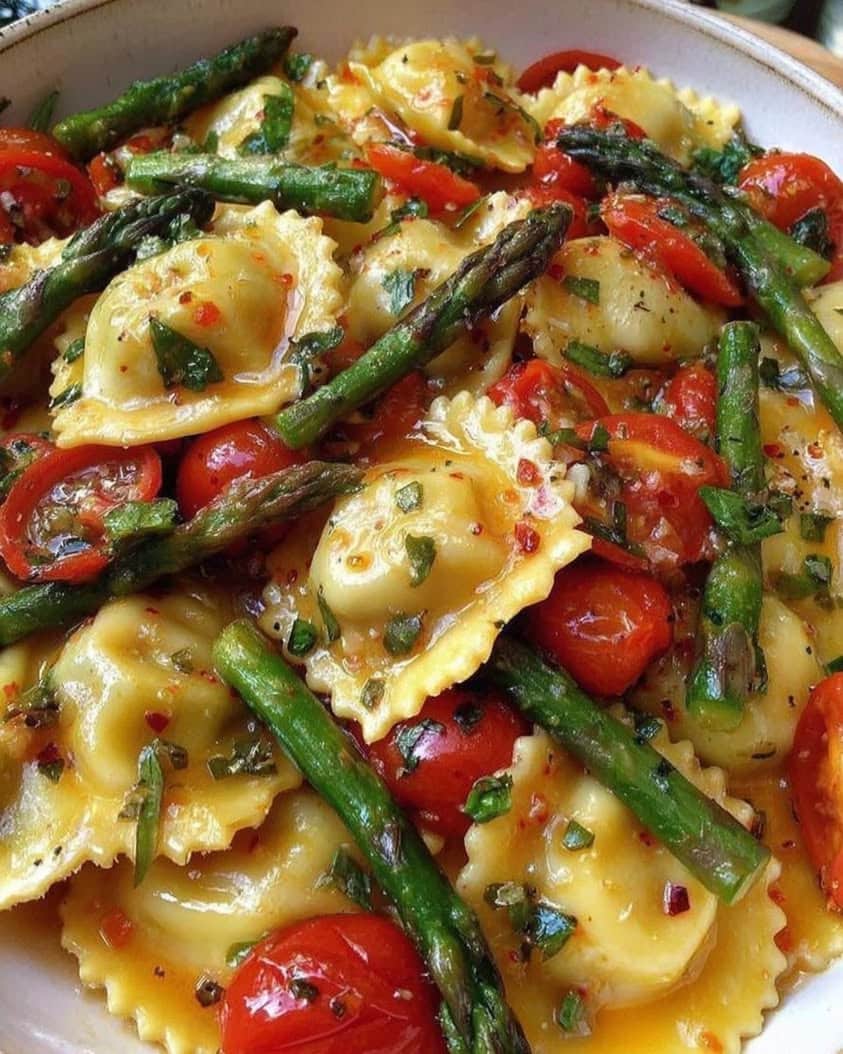
- Visual Appeal: This dish is a feast for the eyes with its vibrant color palette. The red of the tomato sauce, the green of the asparagus and herbs, and the golden hue of the ravioli create a stunning presentation that looks restaurant-worthy.
- Skill Level Needed: This is a fantastic recipe for cooks of all levels. It requires only basic sautéing and boiling techniques. Therefore, even a beginner can achieve impressive results with this straightforward fresh ravioli with spring asparagus and herb tomato sauce method.
- Special Equipment: You need only standard kitchen tools: a large pot for boiling pasta, a large skillet for the sauce, and a colander. No fancy equipment is necessary to make this delicious and accessible meal.
Recipe Overview
- Difficulty Level: We rate this fresh ravioli with spring asparagus and herb tomato sauce as easy because it uses store-bought ravioli, which eliminates the most time-consuming step of pasta making. The cooking techniques are fundamental, involving boiling pasta and creating a simple sautéed sauce. Anyone comfortable following a sequential recipe can master this dish on the first try.
- Category: This recipe fits perfectly into several categories: it is a quick and easy pasta dinner, a delightful vegetarian main course, and a wonderful seasonal spring recipe. It works for family dinners, casual entertaining, or a special treat for yourself.
- Cuisine: The dish is rooted in Italian-American cuisine, drawing on classic flavor combinations like tomato, garlic, and basil. It takes inspiration from the Italian tradition of pairing fresh pasta with seasonal vegetables, resulting in a light yet satisfying meal.
- Cost: This is a moderately priced meal that feels luxurious. Using quality store-bought fresh ravioli is the main investment, while asparagus, canned tomatoes, and herbs are relatively inexpensive, especially in season. Overall, it offers excellent value for a restaurant-quality dish made at home.
- Season: This fresh ravioli with spring asparagus and herb tomato sauce is ideally made in the spring when asparagus is at its peak, offering the best flavor and texture. However, you can enjoy it year-round with great results, as the other components are readily available.
- Occasion: It is perfect for a weeknight family dinner, a relaxed weekend lunch, or a casual dinner party with friends. The recipe scales easily and presents beautifully, making it versatile for many different dining situations.
Why You’ll Love This Recipe
First and foremost, the taste and texture of this fresh ravioli with spring asparagus and herb tomato sauce are utterly captivating. Each forkful delivers a symphony of flavors: the rich, cheesy interior of the ravioli, the sweet acidity of the tomatoes, the pungent kick of garlic, and the unique, verdant taste of asparagus. The textures play off each other wonderfully, from the tender pasta to the crisp vegetable. Ultimately, it is a dish that satisfies deeply without feeling heavy or overly rich.
From a convenience standpoint, this recipe is a true weeknight hero. It requires only about thirty minutes from start to finish, with most of that time being hands-off cooking. You can multitask by boiling the pasta water while you prepare the sauce components. Furthermore, using store-bought fresh ravioli streamlines the process immensely, allowing you to create a meal that tastes far more complex than the effort suggests. This fresh ravioli with spring asparagus and herb tomato sauce proves that impressive dinners do not require hours in the kitchen.
Nutritionally, this dish offers a well-rounded profile. Asparagus is a fantastic source of fiber, folate, and vitamins A, C, and K. Tomatoes provide lycopene, a powerful antioxidant. Using a whole-milk ricotta or cheese blend in the ravioli adds protein and calcium. By controlling the sauce, you can limit added sodium and avoid heavy creams, making this a lighter pasta option that still feels indulgent.
For social and entertaining value, this fresh ravioli with spring asparagus and herb tomato sauce is a winner. It looks elegant on the plate, sparking conversation and compliments. You can easily double the recipe to feed a crowd without significantly increasing your workload. Serving it family-style encourages sharing and creates a warm, communal dining experience. It is a reliable recipe that lets you spend time with your guests instead of being stuck in the kitchen.
Finally, this dish is cost-effective and accessible. Compared to ordering similar pasta at a restaurant, making it at home saves a considerable amount of money. The ingredients are common and can be found at any standard grocery store. You can also adapt it based on what is on sale or in your fridge, such as using different herbs or adding a handful of spinach. This fresh ravioli with spring asparagus and herb tomato sauce delivers gourmet flavor on a practical budget.
Historical Background and Cultural Significance
The story of ravioli stretches back centuries in Italian culinary history, with early mentions appearing in manuscripts from the 14th century. Originally, these stuffed pasta pockets were a practical way to use up leftovers, wrapping bits of meat, cheese, or vegetables in simple pasta dough. The concept traveled with Italian immigrants to America, where it evolved into the beloved dish we know today. The addition of spring vegetables like asparagus reflects a core Italian cooking principle: celebrating what is fresh and in season.
In Italian culture, pasta is much more than sustenance; it is a centerpiece of family and community. Recipes are often passed down through generations, with each family adding its own touch. A dish like this fresh ravioli with spring asparagus and herb tomato sauce embodies the “cucina povera” or “poor kitchen” philosophy at its best—transforming humble, seasonal ingredients into something extraordinary. It represents a connection to the land and the rhythm of the seasons, a tradition that resonates deeply in both old-world and modern cooking.
The evolution of this specific recipe is a testament to adaptation. Traditional Italian versions might use handmade ravioli with a simpler sauce of butter and sage. The tomato-based sauce with garlic and herbs is a more American-Italian innovation, popularized in the 20th century as canned tomatoes became a pantry staple. Incorporating asparagus, a vegetable with a short, prized season, elevates it from a simple pasta dish to a seasonal celebration, bridging old-world technique with new-world convenience.
Regional variations of this concept are endless across Italy. In the north, you might find ravioli served with a butter and Parmigiano sauce. In coastal regions, a light seafood broth could be used. The version presented here—fresh ravioli with spring asparagus and herb tomato sauce—draws most directly from the central Italian tradition of pairing pasta with vibrant, vegetable-forward sauces. It is a flexible template that welcomes interpretation, allowing cooks to express their personal style while honoring a rich culinary heritage.
Ingredient Deep Dive
Fresh Ravioli: Using quality store-bought fresh ravioli is the key shortcut in this recipe. Look for ravioli with a cheese filling, such as ricotta, ricotta and spinach, or a four-cheese blend, as these pair beautifully with the light tomato sauce. Fresh pasta cooks much faster than dried, usually in just 3-5 minutes, so it is crucial to time it correctly to avoid mushiness. If you cannot find fresh, a good-quality dried cheese tortellini can work in a pinch, though the texture will be different. Always cook pasta in well-salted water to season it from the inside out.
Asparagus: This spring vegetable adds essential freshness and texture. Choose firm, bright green spears with tightly closed tips. Thinner spears are often more tender and require less trimming. To prepare, simply snap off the woody ends—they will naturally break where the tough part begins. Asparagus is rich in prebiotic fiber, vitamins, and antioxidants. For this fresh ravioli with spring asparagus and herb tomato sauce, cutting them into bite-sized pieces ensures they cook quickly and integrate seamlessly into the dish.
Canned Diced Tomatoes: They provide consistent flavor and texture year-round, forming the base of the quick sauce. Opt for a brand with no added salt or sugar for the most control over your seasoning. The natural juices from the can help create the sauce’s body. Tomatoes are an excellent source of lycopene, especially when cooked. For a smoother sauce, you can use crushed tomatoes, but the texture of diced works wonderfully here. This is a pantry hero that makes the recipe accessible any day of the week.
Fresh Garlic and Herbs: Garlic builds the foundational savory flavor. Slice it thinly for a milder infusion or mince it for a more pronounced taste. Fresh herbs like basil and parsley are non-negotiable for the bright finish; they should be stirred in at the very end to preserve their color and volatile oils. Dried herbs cannot replicate the same vibrant effect. If basil is unavailable, fresh oregano or marjoram are lovely substitutes. This combination is what makes the fresh ravioli with spring asparagus and herb tomato sauce truly sing.
Common Mistakes to Avoid
- Overcooking the Ravioli: Fresh ravioli cooks very quickly. Always follow the package instructions and taste a piece a minute before the suggested time. Overcooked ravioli becomes bloated and can fall apart, ruining the texture of your dish.
- Not Salting the Pasta Water Enough: The water should taste like the sea. This is your primary chance to season the pasta itself. Undersalted water leads to bland ravioli that the sauce cannot fully compensate for.
- Crowding the Skillet: When sautéing the asparagus and garlic, ensure your pan is not overloaded. Otherwise, the vegetables will steam instead of sauté, resulting in soggy asparagus and improperly cooked garlic.
- Adding Herbs Too Early: Delicate fresh herbs like basil and parsley lose their color and bright flavor if cooked for too long. Always stir them in at the very end, just before serving, to maximize their impact.
- Using a Cold Plate: Serving this fresh ravioli with spring asparagus and herb tomato sauce on a cold plate can cause it to cool down too quickly. Warm your serving bowls or plates briefly with hot water or in a low oven.
- Skipping the Pasta Water: Do not drain all your pasta water! Reserving a cup before draining is crucial. The starchy water is the magic ingredient that helps the sauce emulsify and cling perfectly to the ravioli.
- Underseasoning the Sauce: Tomatoes and pasta can absorb a lot of salt. Season your sauce in layers: a little when you add the tomatoes, then again after combining with the pasta. Always do a final taste and adjust before serving.
- Choosing Woody Asparagus: Failing to properly trim the tough, woody ends of the asparagus will leave you with inedible, stringy pieces in your otherwise perfect dish. Always snap or cut off the bottom inch or two.
Essential Techniques
Sautéing Garlic: This technique builds the flavor foundation. Heat oil over medium heat until it shimmers, then add the sliced garlic. Cook, stirring constantly, just until it becomes fragrant and lightly golden—about 30 to 60 seconds. The goal is to cook out the raw pungency and develop a nutty sweetness without letting it burn. Burnt garlic turns bitter and can ruin the entire sauce. If it starts to color too quickly, immediately remove the pan from the heat and add your next ingredient to stop the cooking.
Blanching and Shocking (Optional for Asparagus): For exceptionally vibrant green and crisp-tender asparagus, you can use this restaurant technique. Briefly boil the asparagus pieces for 1-2 minutes, then immediately plunge them into a bowl of ice water. This halts the cooking process, locking in the color and perfect texture. Afterwards, drain and add them to the sauce at the end just to heat through. This extra step is optional but elevates the visual appeal and texture of your fresh ravioli with spring asparagus and herb tomato sauce.
Emulsifying the Sauce with Pasta Water: This is the pro secret to a silky, restaurant-quality sauce that coats every nook and cranny. The starchy water released by the cooking pasta acts as a binder. When you add the ravioli and a splash of this water to the skillet with the sauce, toss everything vigorously. The starch helps the liquid and oil combine into a glossy, cohesive sauce that clings to the pasta instead of pooling at the bottom of the plate.
Pro Tips for Perfect Fresh Ravioli with Spring Asparagus and Herb Tomato Sauce
First, always use the largest skillet you have. A crowded pan steams the ingredients instead of sautéing them, which is crucial for developing flavor in the garlic and asparagus. Furthermore, do not rinse your cooked ravioli after draining; the starch on the surface is essential for the sauce to adhere properly. For maximum flavor, consider toasting a pinch of red pepper flakes with the garlic for a subtle heat.
Next, time your pasta water to boil as you start the sauce. This ensures everything finishes at the same moment. Additionally, finish the dish with a high-quality finishing olive oil or a sprinkle of grated Pecorino Romano cheese for a salty, umami punch. If your sauce seems too thick after combining, simply add more reserved pasta water, a tablespoon at a time, until it reaches the perfect consistency.
Finally, for the best presentation, use kitchen tongs to gently lift the ravioli from the pot into the sauce skillet. This minimizes breakage. Serve immediately in warm bowls to keep the fresh ravioli with spring asparagus and herb tomato sauce at the ideal temperature for enjoyment. Garnish with whole basil leaves for a beautiful final touch.
Variations and Adaptations
For regional variations, you can take this dish in many directions. A Ligurian-inspired version could include a handful of toasted pine nuts and green beans instead of asparagus. To mimic a Roman style, omit the tomatoes and finish the dish with a sauce of butter, white wine, and Parmesan. For a touch of luxury, add seared scallops or shrimp in the last minute of cooking. The basic framework of fresh ravioli with spring asparagus and herb tomato sauce is wonderfully adaptable to different regional palates.
Seasonal adaptations are easy and encouraged. In summer, swap the asparagus for zucchini or yellow squash and add fresh cherry tomatoes. During fall, use roasted cubes of butternut squash and sage. For a winter twist, try sautéed mushrooms and kale. This flexibility ensures you can enjoy the essence of the recipe—fresh pasta with seasonal produce—all year long, making it a staple in your cooking repertoire.
Dietary modifications are straightforward. For a gluten-free version, use certified gluten-free fresh ravioli. To make it vegan, seek out high-quality vegan ravioli (often filled with cashew ricotta) and use a robust olive oil instead of butter. For a dairy-free option, simply ensure your ravioli filling is plant-based and omit any cheese garnish. The fresh ravioli with spring asparagus and herb tomato sauce formula is inclusive and can be tailored to meet various dietary needs without sacrificing flavor.
Serving and Presentation Guide
Plating is key for visual impact. Use a shallow pasta bowl or a wide, rimmed plate. With tongs, gently twist a portion of the ravioli and asparagus into the center, allowing some pieces to tumble naturally. Spoon any remaining sauce over the top. Avoid overcrowding the plate; negative space makes the food look more appetizing. For a family-style presentation, serve the entire fresh ravioli with spring asparagus and herb tomato sauce in a large, warm serving platter.
Garnishing adds the final professional touch. A final drizzle of extra-virgin olive oil adds shine. Sprinkle with freshly grated Parmesan or Pecorino Romano cheese. Scatter whole small basil leaves or finely chopped parsley over everything. For color contrast, add a few thin slices of raw asparagus tip or a twist of black pepper. These small details transform the dish from home-cooked to chef-worthy with minimal effort.
Consider traditional and modern accompaniments. A simple side of crusty bread is perfect for soaking up the sauce. A light, bitter greens salad with a lemon vinaigrette balances the richness. For a more substantial meal, start with a classic Italian antipasto platter. Regardless of your choice, the fresh ravioli with spring asparagus and herb tomato sauce remains the star of the show, supported by complements that enhance rather than compete with its vibrant flavors.
Wine and Beverage Pairing
Wine pairings should complement the dish’s acidity and herbal notes. A crisp, medium-bodied white wine like Pinot Grigio or Sauvignon Blanc works beautifully, as their acidity matches the tomatoes and cuts through the cheese filling. Alternatively, a light-bodied red with low tannins, such as a Chianti or a Barbera, can also pair well if you prefer red wine. The key is to avoid overly oaky or heavy wines that would overwhelm the delicate flavors of the fresh ravioli with spring asparagus and herb tomato sauce.
For non-alcoholic alternatives, consider sparkling water with a squeeze of lemon or a splash of blood orange juice. Iced herbal tea, like basil or mint, echoes the herbal notes in the dish. A tart lemonade or a ginger beer also provides a refreshing contrast to the savory pasta. Ultimately, the goal is to choose a beverage that cleanses the palate and refreshes between bites, enhancing the overall dining experience.
Storage and Shelf Life
Store any leftovers in an airtight container in the refrigerator for up to 3 days. Note that the pasta will continue to absorb the sauce, so it may become drier. The asparagus will also soften. For best results, reheat gently in a skillet over low heat with a splash of water, broth, or a little additional tomato sauce to loosen it up. Avoid microwaving, as it can make the ravioli rubbery and the asparagus mushy.
This fresh ravioli with spring asparagus and herb tomato sauce is not ideal for freezing once assembled, as the ravioli can become soggy and the asparagus texture suffers. However, you can freeze any unused uncooked ravioli according to its package directions. The tomato sauce base (without the asparagus and herbs) can be made ahead and frozen separately for up to 3 months. Thaw in the refrigerator overnight before reheating and finishing with fresh asparagus and herbs.
Make Ahead Strategies
You can prep several components in advance to get dinner on the table in under 15 minutes. Wash and trim the asparagus, then store it wrapped in a damp paper towel in a bag in the fridge. Measure out your herbs and keep them in a container. You can even slice the garlic ahead of time. Having everything ready means you can simply start sautéing when you are ready to cook. This advance prep makes executing the fresh ravioli with spring asparagus and herb tomato sauce incredibly fast and stress-free.
For the sauce, you can sauté the garlic and cook the tomatoes a day in advance. Cool the sauce completely and store it in the refrigerator. When ready to serve, reheat the sauce in a skillet, then proceed with adding the cooked pasta, asparagus, and fresh herbs. This method preserves the bright color and texture of the asparagus and the vibrancy of the herbs, which are best added at the last moment for maximum impact.
Scaling Instructions
Halving the recipe is simple for a meal for two. Use a medium skillet and reduce all ingredients by half. The cook times will remain roughly the same, though you may need slightly less pasta water to adjust the sauce consistency. Doubling or tripling the recipe for a crowd requires a very large pot for boiling the pasta in batches to avoid sticking. You may also need to cook the sauce in two separate skillets or use a large Dutch oven to ensure proper sautéing of the asparagus and garlic for your fresh ravioli with spring asparagus and herb tomato sauce.
When scaling up, do not simply double the garlic; increase it by about 1.5 times to prevent it from becoming overpowering. Have all your ingredients prepped and ready before you start cooking, as the process will move quickly. Finally, serve the pasta immediately in a large, warmed serving bowl to keep it hot. Cooking in batches ensures every serving of your fresh ravioli with spring asparagus and herb tomato sauce is perfectly cooked, not steamed or mushy.
Nutritional Deep Dive
This dish offers a balanced macronutrient profile. The ravioli provides carbohydrates for energy and protein from the cheese filling. The olive oil contributes healthy monounsaturated fats. Asparagus adds complex carbohydrates in the form of fiber, which aids digestion. Overall, it is a satisfying meal that provides sustained energy. To manage calories, be mindful of the amount of olive oil used and the portion size of the cheese-filled pasta.
Micronutrient-wise, this fresh ravioli with spring asparagus and herb tomato sauce is a powerhouse. Asparagus delivers folate, essential for cell growth, and vitamins A, C, and K. Tomatoes are rich in vitamin C and the antioxidant lycopene. Garlic contains allicin, a compound with potential immune-boosting properties. Using whole ingredients maximizes the nutritional benefit, making this a meal that nourishes as much as it delights.
Dietary Adaptations
For a gluten-free version, seek out fresh ravioli made with gluten-free flour blends, now commonly available in the refrigerated section. Ensure all other ingredients, like canned tomatoes, are certified gluten-free. The cooking method remains identical. For a dairy-free or vegan adaptation, use plant-based ravioli filled with alternatives like cashew cheese or tofu ricotta. Opt for a vegan Parmesan sprinkle or nutritional yeast for the cheesy flavor. The fresh ravioli with spring asparagus and herb tomato sauce framework is highly adaptable.
For a lower-carb or keto approach, the challenge is the pasta itself. Consider serving the asparagus and tomato herb sauce over spiralized zucchini noodles (“zoodles”) or shirataki noodles. You could also use the sauce as a topping for grilled chicken or fish. For a Paleo version, follow a similar path, avoiding grains and dairy, and focus on the vegetable and sauce components served over a compatible base like spaghetti squash.
Troubleshooting Guide
If your sauce is too watery, let it simmer uncovered for a few extra minutes to reduce and concentrate the flavors. Conversely, if it is too thick or the dish seems dry after combining, gradually stir in more reserved pasta water, one tablespoon at a time, until it reaches a silky, clinging consistency. This is the most common fix for sauce texture issues in pasta dishes like this fresh ravioli with spring asparagus and herb tomato sauce.
If the asparagus is still tough, you can add it to the sauce a minute or two earlier, or cover the skillet briefly to trap steam and help it cook through. If the garlic burns, unfortunately, it is best to start that step over, as burnt garlic imparts a bitter flavor that permeates the entire dish. For bland flavor, season aggressively with salt and freshly ground black pepper. A splash of lemon juice or a pinch of red pepper flakes can also wake up the flavors instantly.
Recipe Success Stories
Readers and home cooks consistently praise this fresh ravioli with spring asparagus and herb tomato sauce for its reliability and impressive results. Many note that it has become their go-to recipe for last-minute guests or a surefire way to get the family to eat more vegetables. One home cook shared that adding a squeeze of lemon zest at the end became her family’s preferred twist, adding another layer of brightness that complements the herbs perfectly.
Others have successfully adapted it based on what they had on hand. Common successful substitutions include using frozen peas or green beans when asparagus was out of season, or adding a handful of baby spinach at the end for extra greens. The feedback highlights the recipe’s versatility as a template. Many also emphasize the importance of not skipping the step of reserving pasta water, calling it the “secret weapon” for achieving a restaurant-quality sauce at home.
Frequently Asked Questions
Can I use dried ravioli instead of fresh? Yes, you can, but the cooking time will be longer (usually 8-12 minutes). Follow the package instructions for the dried ravioli and reserve pasta water as usual. The texture will be slightly denser, but the fresh ravioli with spring asparagus and herb tomato sauce will still be delicious.
What can I use if I don’t have fresh herbs? While fresh are ideal, in a pinch, add 1 teaspoon of dried oregano or Italian seasoning to the tomatoes as they simmer. Finish with a drizzle of good olive oil to mimic the freshness. The flavor profile will be different but still tasty.
How do I prevent the ravioli from sticking together? Use a large pot with plenty of boiling, salted water. Gently stir the ravioli immediately after adding them to the water. Do not overcrowd the pot; cook in batches if necessary. After draining, toss them gently with a bit of the sauce immediately.
Can I make this sauce with fresh tomatoes? Absolutely. Use about 1.5 pounds of ripe Roma or plum tomatoes. Score an “X” on the bottom, blanch in boiling water for 30 seconds, then peel, seed, and dice them before adding to the skillet. Simmer until they break down into a sauce.
Is this recipe freezer-friendly? Once assembled, it is not recommended to freeze, as the pasta and asparagus textures degrade. However, you can freeze the basic tomato sauce (without asparagus/herbs) separately for up to 3 months.
What protein can I add? For a non-vegetarian version, add cooked, shredded chicken, sautéed shrimp, or Italian sausage (cooked and crumbled) to the sauce when you add the tomatoes. This turns it into a more substantial one-pan meal.
My sauce tastes acidic. How can I fix it? A pinch of sugar or a small grated carrot cooked with the tomatoes can balance acidity. Alternatively, a splash of heavy cream or a tablespoon of butter stirred in at the end will mellow and enrich the sauce beautifully.
How do I know when the asparagus is done? It should be bright green and tender-crisp, offering slight resistance when pierced with a fork (al dente). It will continue to cook slightly from residual heat after you remove it from the pan, so factor that in.
Can I use a different cheese for garnish? Yes. Parmesan is classic, but Pecorino Romano offers a saltier, sharper bite. For a creamier finish, try crumbling some fresh goat cheese or ricotta salata over the top just before serving.
What’s the best way to reheat leftovers? Gently reheat in a skillet over medium-low heat with a tablespoon or two of water, broth, or extra tomato sauce. Stir frequently until warmed through. The microwave tends to make the pasta gummy.
Additional Resources
If you loved this fresh ravioli with spring asparagus and herb tomato sauce, explore other seasonal pasta recipes on our site. Consider a summer recipe with fresh corn and basil pesto, or a hearty autumn pasta with roasted squash and sage brown butter. Mastering a simple homemade marinara sauce will give you even more flexibility for quick dinners. Learning the technique for perfectly al dente vegetables will improve all your cooking.
For equipment, a high-quality, large stainless steel or enameled cast iron skillet is invaluable for recipes like this. A good pasta pot with a built-in strainer lid makes draining and reserving water easier. Invest in a microplane for finely grating cheese and a sharp chef’s knife for prepping vegetables efficiently. These tools will help you recreate this fresh ravioli with spring asparagus and herb tomato sauce and many other dishes with confidence and ease.
PrintRavioli with Tomatoes, Asparagus, Garlic, and Herbs
- Total Time: 45 minutes
- Yield: 4
Description
A vibrant and quick pasta dish featuring cheese ravioli tossed with fresh asparagus, cherry tomatoes, garlic, and aromatic herbs in a light olive oil sauce.
Ingredients
- 1 pound cheese ravioli (fresh or frozen)
- 1 bunch asparagus, trimmed and cut into 1-inch pieces
- 1 pint cherry tomatoes, halved
- 3 cloves garlic, minced
- 1/4 cup extra-virgin olive oil
- 1/4 cup fresh basil, chopped
- 2 tablespoons fresh parsley, chopped
- 1 teaspoon dried oregano
- Salt and black pepper to taste
- Grated Parmesan cheese for serving
Instructions
- Bring a large pot of salted water to a boil. Cook the ravioli according to package directions until al dente. Drain and set aside.
- While the ravioli cooks, heat olive oil in a large skillet over medium heat. Add asparagus and sauté for 4-5 minutes until tender-crisp.
- Add cherry tomatoes and garlic to the skillet. Cook for another 3-4 minutes until tomatoes soften and garlic is fragrant.
- Stir in the cooked ravioli, basil, parsley, oregano, salt, and pepper. Toss gently to combine and heat through for 1-2 minutes.
- Serve immediately, topped with grated Parmesan cheese.
Notes
You can customize the seasonings to taste.
- Prep Time: 15 minutes
- Cook Time: 30 minutes
- Method: Main
- Cuisine: Italian-American