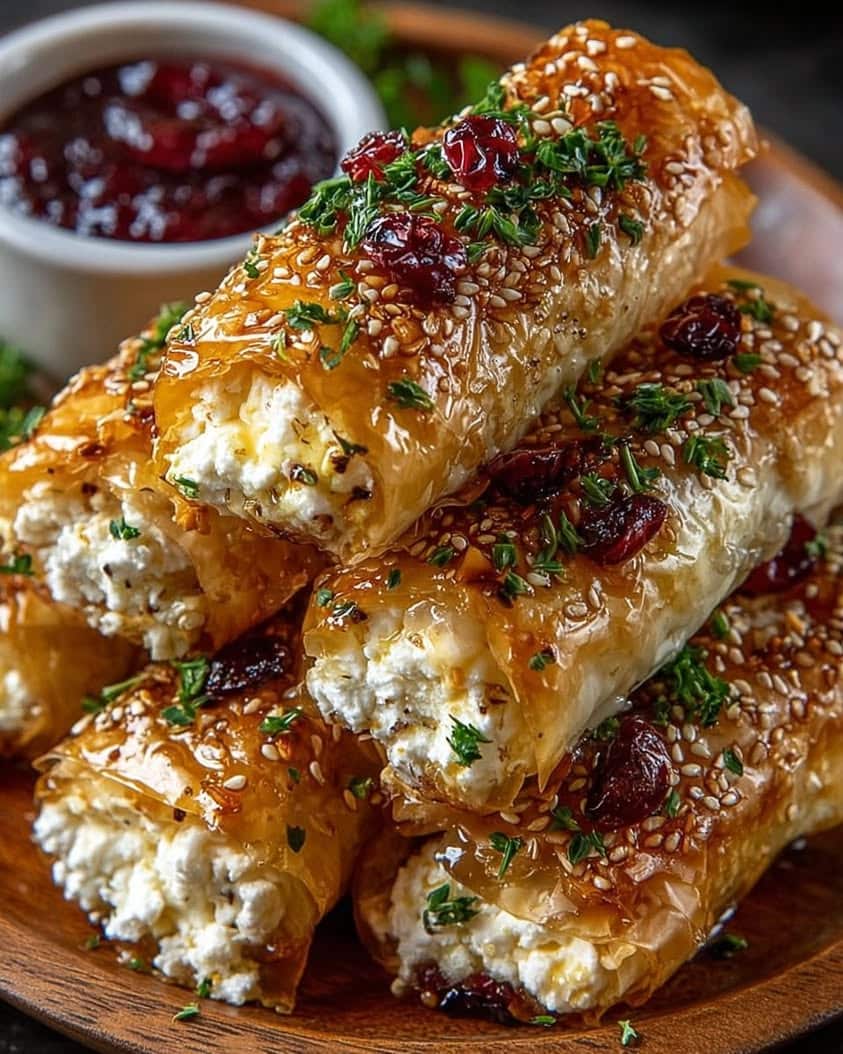
Golden Baked Feta Rolls with Sweet Cranberry Honey Glaze: A Festive Appetizer Masterpiece
Imagine pulling a tray of golden, flaky pastries from your oven. The aroma of baked feta and buttery puff pastry fills your kitchen. Meanwhile, a sweet-tart cranberry honey glaze bubbles on the stove. This is the magic of Golden Baked Feta Rolls with Sweet Cranberry Honey Glaze. Consequently, this recipe transforms simple ingredients into an unforgettable appetizer. It perfectly balances savory and sweet flavors in every single bite.
These rolls are a guaranteed crowd-pleaser for any gathering. They combine creamy, salty feta cheese with the bright pop of cranberry. The honey adds a floral sweetness that ties everything together beautifully. Moreover, using store-bought puff pastry makes the process incredibly simple. You achieve a professional-looking result with minimal effort. Ultimately, this dish brings a touch of gourmet elegance to your table. It is perfect for holiday parties, game day, or a special weekend treat.
The visual appeal is just as impressive as the taste. The pastry bakes to a perfect, shatteringly crisp golden brown. The vibrant red cranberry glaze drizzled over top creates a stunning contrast. Each roll is a little package of flavor and texture. Furthermore, they are easy to eat with your fingers, making them ideal for parties. This recipe for Golden Baked Feta Rolls with Sweet Cranberry Honey Glaze will quickly become a staple in your entertaining repertoire.
Quick Recipe Highlights
- Flavor Profile: These rolls deliver a sophisticated balance. The salty, tangy feta cheese is beautifully complemented by the sweet and tart cranberry honey glaze. Each bite offers a complex harmony that is both rich and refreshing.
- Texture: Experience a wonderful contrast in every mouthful. The exterior is incredibly flaky and crisp from the baked puff pastry. Inside, you find a warm, soft, and creamy feta filling that melts in your mouth.
- Aroma: As they bake, the kitchen fills with the comforting scent of buttery pastry. The aroma of baking cheese mingles with the sweet, berry-like fragrance of the cranberry honey glaze warming on the stovetop.
- Visual Appeal: The presentation is simply gorgeous. The rolls turn a deep, appetizing golden brown. The glossy red glaze drizzled on top adds a festive and professional finish that will impress your guests.
- Skill Level Needed: This is a beginner-friendly recipe. Using pre-made puff pastry eliminates the hardest part. The filling comes together in minutes, and assembly requires only basic rolling and cutting techniques.
- Special Equipment: You need only standard kitchen tools. A baking sheet, parchment paper, a rolling pin, a small saucepan, and a sharp knife or pizza cutter are all you require to make this impressive dish.
Recipe Overview
- Difficulty Level: We rate this recipe as easy for several important reasons. First, it utilizes convenient store-bought puff pastry. The filling involves no cooking, just mixing. Additionally, the assembly process is straightforward and forgiving. Even a first-time baker can achieve fantastic results with minimal stress.
- Category: These delicious rolls fit perfectly into multiple meal categories. Primarily, they shine as a standout appetizer or party hors d’oeuvre. They also work wonderfully as a unique side dish for a brunch or holiday meal. Some people even enjoy them as a light lunch with a simple salad.
- Cuisine: This dish draws inspiration from Mediterranean and modern fusion cuisines. Feta cheese is a staple of Greek cooking, while the use of honey and fruit glazes has roots in many European traditions. The result is a contemporary creation that feels both familiar and excitingly new.
- Cost: This is a very cost-effective recipe for its impressive output. A block of feta and a sheet of puff pastry are relatively inexpensive. Cranberries and honey are pantry staples, especially during the fall and winter seasons. You can create a platter that looks and tastes expensive for just a few dollars.
- Season: While delicious year-round, these rolls feel particularly special during the autumn and winter holidays. Cranberries are a classic seasonal ingredient associated with Thanksgiving and Christmas. The warm, baked nature of the dish is perfect for cooler weather gatherings.
- Occasion: These versatile rolls are suitable for countless events. They are ideal for holiday parties, potlucks, and festive gatherings. Furthermore, they make a great addition to a game day spread or a fancy cocktail party. They are also perfect for a special family weekend breakfast or brunch.
Why You’ll Love This Recipe
You will adore the incredible taste and texture of these Golden Baked Feta Rolls with Sweet Cranberry Honey Glaze. The flavor journey begins with the savory, creamy feta encased in buttery, flaky layers. Then, the sweet-tart glaze hits your palate, creating a perfect balance that is neither too rich nor too sweet. Every single bite delivers a satisfying crunch followed by a soft, warm center. This combination is utterly addictive and keeps people coming back for more. Ultimately, it is a symphony of contrasting elements that work together in flawless harmony.
The convenience factor of this recipe is another major reason to love it. Using pre-made puff pastry is a huge time-saver that does not compromise on quality or flavor. The filling requires zero cooking, just a quick crumble and mix. Assembly is simple and even fun, making it a great recipe to prepare with family or friends. From start to finish, you can have a stunning appetizer ready in well under an hour. This makes it a lifesaver for last-minute entertaining or when you want something impressive without a full day in the kitchen.
Consider the nutritional advantages these rolls offer compared to other fried appetizers. Baking the puff pastry uses significantly less fat than deep-frying alternatives. Feta cheese provides a good source of calcium and protein. Cranberries are packed with antioxidants and vitamin C. While still a treat, this dish incorporates wholesome ingredients that contribute more than just empty calories. You can feel good about serving something that is both indulgent and made with real, recognizable components.
The social and entertaining value of this dish cannot be overstated. These Golden Baked Feta Rolls with Sweet Cranberry Honey Glaze are designed for sharing. They are finger-friendly, perfectly portioned, and look absolutely beautiful on a serving platter. They serve as a fantastic conversation starter and immediately elevate the feel of any gathering. Guests are always impressed by the professional appearance and complex flavors. Consequently, they make you look like a culinary rock star with surprisingly little effort.
Finally, the cost-effectiveness and accessibility of the ingredients make this recipe a winner. You do not need any rare or expensive specialty items. The core components are readily available at any standard grocery store. This allows you to create a gourmet-tasting appetizer on a very modest budget. It is an excellent way to feed a crowd without breaking the bank. You get maximum flavor and visual impact for a minimal financial investment, which is always a great reason to love a recipe.
Historical Background and Cultural Significance
The origin story of this recipe is a modern tale of culinary fusion. It does not hail from one specific tradition but rather combines elements from several. The use of feta cheese baked in pastry has roots in Greek spanakopita and tiropita. Meanwhile, the concept of a sweet fruit glaze for savory pastries appears in various European and Middle Eastern cuisines. This particular combination of feta and cranberry is a contemporary innovation. It reflects the modern home cook’s desire to blend familiar flavors in new and exciting ways. The recipe was likely born from experimentation with seasonal ingredients and convenient pre-made doughs.
Understanding the cultural importance of the main ingredients provides deeper context. Feta cheese holds PDO status in Greece, meaning true feta must come from specific regions using traditional methods. It is a cheese steeped in history and pastoral tradition. Cranberries are one of North America’s few native fruits, historically used by Indigenous peoples for food, medicine, and dye. Honey is perhaps the world’s oldest sweetener, revered across ancient civilizations from Egypt to Rome. Combining these elements connects Mediterranean culinary heritage with New World ingredients and ancient practices.
The evolution of this recipe follows broader food trends. The rise of the “home entertainer” and food blogging culture has popularized impressive yet accessible appetizers. Dishes that are visually stunning for social media but simple enough for a Tuesday night have become hugely desirable. The Golden Baked Feta Rolls with Sweet Cranberry Honey Glaze fit this trend perfectly. They represent a move away from complicated, multi-step party food toward streamlined recipes with maximum payoff. This evolution prioritizes flavor, presentation, and ease in equal measure.
Regional variations of this concept are easy to imagine and execute. In the Mediterranean, one might use olives and sun-dried tomatoes instead of cranberries. A Middle Eastern variation could incorporate za’atar and a date syrup glaze. For a summer version, fresh basil and a peach honey glaze would be delightful. This adaptability is a testament to the solid foundation of the recipe. The core technique of wrapping cheese in pastry and adding a sweet accent is universally appealing. It invites cooks to personalize it with their local and seasonal favorites.
Ingredient Deep Dive
Feta cheese is the star of this dish, and its history is rich. This brined curd cheese has been made in Greece for centuries, with its name literally meaning “slice.” Traditionally, it is made from sheep’s milk or a blend with goat’s milk, contributing to its distinctive tangy and salty flavor. Nutritionally, feta is a good source of calcium, protein, and beneficial fats. When selecting feta for your Golden Baked Feta Rolls with Sweet Cranberry Honey Glaze, opt for a block packed in brine rather than pre-crumbled. This type is creamier, less dry, and has superior flavor. Store it submerged in its brine in the refrigerator. For a milder taste, you can rinse it briefly under cold water before using.
Puff pastry is the architectural wonder that creates the flaky layers. This laminated dough involves folding butter into the dough hundreds of times to create distinct, separate layers that puff when baked. While making it from scratch is a labor of love, high-quality store-bought all-butter puff pastry works excellently. It saves immense time and yields professional results. Look for it in the freezer section. Thaw it slowly in the refrigerator overnight for best results. Avoid rolling it too thin, as you want those layers to have room to expand and become beautifully golden and crisp.
Cranberries bring the essential sweet-tart element to the glaze. These native North American berries are harvested in the fall and are famous for their high antioxidant content and vitamin C. Their natural pectin helps thicken the glaze beautifully. You can use fresh or frozen cranberries; there is no need to thaw frozen ones. Simmering them with honey and a touch of water breaks them down into a vibrant, jammy sauce. If fresh cranberries are out of season, a high-quality cranberry sauce or jam can be thinned with honey and lemon juice as a quick substitute.
Honey is the natural sweetener that balances the tart cranberries and salty feta. Its flavor varies dramatically based on the flowers the bees visit, from light and floral to dark and robust. For this recipe, a mild, versatile honey like clover or wildflower works well. Honey not only adds sweetness but also gives the glaze a beautiful glossy sheen. It has natural preservative qualities as well. For a vegan adaptation, maple syrup or agave nectar can be used, though the flavor profile will shift slightly. Always add honey off the heat to preserve its delicate enzymes and flavors.
Common Mistakes to Avoid
- Using pre-crumbled feta: This is a common pitfall. Pre-crumbled feta is often drier, coated in anti-caking agents, and lacks the creamy texture of a block. Always buy a block of feta in brine and crumble it yourself for the best melt and flavor in your rolls.
- Not thawing puff pastry properly: If the pastry is too cold, it will crack when you try to roll or fold it. If it’s too warm, the butter will melt and the layers won’t puff. Thaw it slowly in the refrigerator for several hours or overnight until it’s pliable but still cold.
- Overfilling the rolls: It’s tempting to add more cheese, but too much filling will cause it to leak out during baking. This can burn on the baking sheet and prevent the pastry from sealing properly. Use a moderate amount for the perfect cheese-to-pastry ratio.
- Rolling the pastry too thin: You want the pastry to be sturdy enough to contain the filling and puff up. If you roll it too thin, it may tear or become too fragile. Follow the package instructions, usually rolling to about a 10×12 inch rectangle.
- Skipping the egg wash: The egg wash is crucial for achieving that deep, appetizing golden brown color and a slight shine. It also helps any toppings, like sesame seeds, adhere to the pastry. Simply brush with a beaten egg or just the yolk mixed with a teaspoon of water.
- Overcooking the cranberry glaze: The glaze should be simmered just until the cranberries pop and the mixture thickens slightly. If you cook it too long, it can become too thick and jam-like, making it difficult to drizzle. It will also thicken more as it cools.
- Not letting the glaze cool slightly: Drizzling piping hot glaze over the hot rolls can make it run off too quickly and not stick. Let the glaze cool for 5-10 minutes so it thickens to a perfect drizzling consistency that will cling to the pastry.
- Cutting the rolls with a dull knife: A dull knife will drag and compress the delicate layers of pastry, preventing them from puffing properly. Use a very sharp knife or a pizza cutter for clean, swift cuts that preserve the pastry’s structure.
- Baking on an unlined sheet: The cheese or glaze can sometimes drip. Using parchment paper or a silicone baking mat prevents sticking and makes cleanup effortless. It also promotes more even browning on the bottom of your Golden Baked Feta Rolls.
- Serving immediately from the oven: While tempting, the filling will be molten hot. Let the rolls rest for 5 minutes on the baking sheet. This allows the cheese to set slightly, making them easier to handle and preventing burnt mouths.
Essential Techniques
Properly rolling and handling puff pastry is the most critical technique. The goal is to gently enlarge the sheet without squashing the delicate layers of butter and dough. First, lightly flour your surface and rolling pin to prevent sticking. Roll from the center outward in one direction, then turn the dough 90 degrees and repeat. This maintains an even thickness and prevents the gluten from over-developing in one direction, which can cause shrinkage. The pastry should remain cold; if it becomes soft and sticky, place it back in the refrigerator for 10 minutes. Success is visible when the pastry is smooth, even, and still firm to the touch.
Creating the filling distribution is key for consistent flavor. Crumble the feta with your fingers into small, pea-sized pieces. Avoid turning it into a fine powder, as you want little pockets of creamy cheese. Sprinkle it evenly over the rolled-out pastry, leaving a clear half-inch border on all edges. This border is crucial for sealing. An uneven spread will result in some rolls being mostly pastry and others overly cheesy. The visual cue for correct distribution is a relatively uniform layer of white feta specks across the entire surface, with a clean, bare pastry frame around the outside.
Mastering the roll-up is about gentle pressure and a tight start. Begin rolling from the long side, using your fingers to tuck and roll the pastry over itself. Do not press down aggressively, but aim for a snug, even roll. The initial tuck is important to create a tight core. As you continue, the roll will form naturally. The finished log should be uniform in thickness from end to end. If it’s fatter in the middle, your filling distribution was uneven. A well-executed roll ensures each slice will be a perfect spiral of pastry and cheese.
Simmering the cranberry honey glaze requires patience. Combine the cranberries, honey, and water in a small saucepan over medium heat. As it heats, the cranberries will begin to pop and release their juices and natural pectin. Stir occasionally, gently mashing some berries against the side of the pan to help thicken the sauce. The glaze is done when it has reduced slightly, coats the back of a spoon, and has a vibrant, jammy consistency. Cooking it over too high a heat can cause it to scorch or reduce too much, becoming sticky instead of drizzle-able. The perfect glaze is pourable but not runny.
Pro Tips for Perfect Golden Baked Feta Rolls with Sweet Cranberry Honey Glaze
Chill the assembled log before slicing. After you roll up the pastry, wrap it in plastic and place it in the freezer for 15-20 minutes. This firms up the butter, making it much easier to get clean, sharp cuts without squashing the roll. Consequently, your baked rolls will have better-defined layers.
Add a whisper of lemon zest to the feta. The bright, citrusy note cuts through the richness and complements the cranberry flavor beautifully. Simply grate the zest of half a lemon right into the crumbled cheese before sprinkling it on the pastry.
Brush the tops with an egg yolk wash for maximum color. For an even deeper, more professional golden brown, use just the egg yolk beaten with a teaspoon of water. This creates a richer color and extra shine compared to a whole egg wash.
Score the tops lightly before baking. Use a very sharp paring knife to make two or three shallow, diagonal slashes on the top of each roll. This gives steam an escape route and allows the rolls to expand evenly without bursting at the seams.
Toast the sesame seeds for enhanced flavor. If you’re sprinkling sesame seeds on top, toast them in a dry skillet over medium heat for 2-3 minutes until fragrant and lightly golden before using. This unlocks their nutty aroma and adds another layer of flavor.
Make the glaze ahead of time. The cranberry honey glaze can be made up to 3 days in advance and stored in the refrigerator. Simply warm it gently on the stove or in the microwave until it returns to a drizzling consistency before serving.
Use a pizza cutter for slicing. It glides through the chilled pastry log with ease and creates perfectly even portions without dragging. This is the easiest tool for the job and helps maintain the integrity of the pastry layers.
Double the recipe and freeze half. Assemble the rolls completely, slice them, and then freeze the unbaked slices on a parchment-lined tray. Once frozen solid, transfer to a bag. Bake from frozen, adding a few extra minutes to the cooking time.
Variations and Adaptations
Consider regional variations to suit different flavor palates. For a Greek-inspired twist, mix chopped Kalamata olives and a pinch of dried oregano into the feta filling. A Middle Eastern version could include a sprinkle of za’atar in the filling and a drizzle of date syrup instead of the cranberry glaze. For a French touch, use herbed Boursin cheese instead of feta and a red wine reduction. These adaptations show how the basic formula is wonderfully versatile and can travel across culinary traditions with delicious results.
Seasonal adaptations keep this recipe exciting all year long. In spring, try a filling of herbed goat cheese with a strawberry-balsamic glaze. Summer invites a combination of ricotta, fresh basil, and a peach honey glaze. For autumn, the classic cranberry is perfect, but a fig and honey glaze with walnuts is also superb. Winter could feature a blue cheese and pear version. Essentially, match the cheese and fruit glaze to what is fresh and abundant at your local market.
Dietary modifications are straightforward for many needs. For a gluten-free version, use a certified gluten-free puff pastry. To make it dairy-free, substitute the feta with a firm, crumbly vegan cheese alternative made from almonds or tofu. For a nut-free guarantee, check all labels, especially on pre-made pastry. A lower-carb option might forgo the pastry and bake the feta mixture in a dish topped with the glaze, serving it with cucumber slices or low-carb crackers for dipping.
Experiment with flavor variations by changing the cheese or glaze components. Try tangy goat cheese for a sharper bite. Smoked gouda would add a wonderful depth. For the glaze, orange marmalade thinned with honey makes a brilliant citrus alternative. A rosemary-infused honey would add an aromatic, savory note. A spicy kick can come from adding a pinch of red pepper flakes to the glaze as it simmers. The possibilities are limited only by your imagination and pantry.
Texture modifications can alter the eating experience. For extra crunch, sprinkle chopped walnuts or pecans over the feta before rolling. For a creamier interior, mix a tablespoon of cream cheese with the feta. To highlight the flaky layers, brush the rolled-out pastry with very thin, almost transparent layer of Dijon mustard before adding the cheese; it adds flavor and helps separate the layers.
Presentation alternatives can make the dish feel new. Instead of individual rolls, create one large braided wreath. Cut the filled pastry into strips from the sides and braid them over the center. You can also make smaller, bite-sized pinwheels or fold the pastry into triangles to create hand pies. Different shapes work for different occasions, from elegant passed hors d’oeuvres to rustic family-style sharing plates.
Serving and Presentation Guide
Plating techniques can elevate these rolls from simple to stunning. For a casual gathering, pile them high on a rustic wooden board or in a woven basket lined with a linen napkin. For a more formal presentation, arrange them in a neat circular pattern on a white platter, leaving space in the center for a small bowl of extra glaze for dipping. Place fresh cranberries and sprigs of rosemary or thyme around the platter for a natural, festive garnish. The contrast of the golden pastry, red glaze, and green herbs is visually arresting.
Garnishing ideas add the final touch of polish. A light dusting of flaky sea salt, like Maldon, over the warm rolls and glaze enhances all the flavors. Fresh microgreens or delicate edible flowers scattered on the platter add color and sophistication. A final very light drizzle of high-quality olive oil over the plated rolls can add a lovely sheen and a hint of fruitiness. Remember, garnish should complement, not overwhelm, the beautiful food you’ve created.
Traditional accompaniments balance the rich, savory-sweet profile. Serve these Golden Baked Feta Rolls with a simple, crisp green salad dressed with a lemon vinaigrette to cut through the richness. A bowl of mixed olives and marinated artichoke hearts continues the Mediterranean theme. For a brunch setting, they pair wonderfully with a frittata or a fruit salad. These sides ensure your menu feels complete and well-rounded.
Modern serving suggestions include deconstructed approaches. Consider serving the baked feta roll “log” whole on a board, letting guests slice their own portions tableside with the glaze in a pitcher for pouring. Alternatively, offer the glaze on the side in individual small ramekins for dipping, which is also helpful for guests who may prefer less sweetness. Presenting them on slate tiles or marble slabs can give a very contemporary, chef-inspired look.
Temperature considerations are crucial for the best experience. These rolls are truly at their peak served warm, when the pastry is at its flakiest and the cheese is soft. However, they are still delicious at room temperature, making them excellent for buffets. If you must make them ahead, reheat them in a 350°F oven for 5-7 minutes to recrisp the pastry before serving and drizzling with glaze. Never microwave them, as it will make the pastry soggy.
Portion control tips help when planning for a crowd. Each roll is rich, so people typically eat 1-2 as part of a spread of other appetizers. If these are the main appetizer, plan for 2-3 per person. When serving as a side dish with a meal, one per person is usually sufficient. Cutting them into smaller, bite-sized pieces can stretch the yield for a larger party and encourage sampling.
Wine and Beverage Pairing
Wine pairings should complement the salty cheese and sweet-tart glaze. A crisp, high-acid white wine like Sauvignon Blanc or Pinot Grigio cuts through the richness beautifully. The citrus notes in these wines echo the potential lemon zest in the filling. For red wine lovers, a light-bodied, low-tannin red like a Beaujolais or Pinot Noir works well; their berry flavors harmonize with the cranberry. A dry Rosé is another fantastic option, bridging the gap between red and white with its refreshing acidity and subtle fruitiness. Avoid heavily oaked wines, as they can clash with the dish’s brightness.
Non-alcoholic alternatives can be just as thoughtful. A sparkling lemonade or cranberry spritzer (cranberry juice mixed with club soda and a squeeze of lime) mirrors the festive and tangy elements of the food. Iced herbal tea, such as hibiscus or mint, offers a refreshing and palate-cleansing effect. For a warmer option, a ginger-lemon tea complements the spices and richness. The key is to choose beverages with good acidity or effervescence to balance the savory, creamy notes of the rolls.
Coffee and tea pairings work wonderfully if serving these for brunch. A medium-roast coffee with low acidity won’t compete with the food’s flavors. A cappuccino’s creamy texture can be a nice match. For tea, an Earl Grey with its citrusy bergamot note is an elegant choice. A simple green tea provides a clean, slightly bitter contrast that can reset the palate between bites. Offer these warm beverages alongside chilled options to cater to all preferences.
Temperature considerations for beverages are important. Chilled whites, rosés, and sparkling drinks should be served well-chilled, around 45-50°F. Light reds like Pinot Noir are best slightly cooler than room temperature, around 55°F. Non-alcoholic spritzers and lemonades should be ice-cold. Warm teas and coffees should be freshly brewed and hot. Providing the right temperature ensures each beverage tastes its best and performs its role in pairing with the food.
Serving suggestions for a party include setting up a small beverage station. Have a chilled bottle of Sauvignon Blanc and a carafe of sparkling water with citrus slices available. Labeling the pairings with little tags can be a fun touch for guests. For a brunch, offer a coffee bar with various creamers and a pot of hot water with an assortment of tea bags. Making the drinks as inviting as the food completes the guest experience.
Storage and Shelf Life
Storage methods are straightforward but important for maintaining quality. Allow any leftover Golden Baked Feta Rolls with Sweet Cranberry Honey Glaze to cool completely to room temperature. Do not store them while still warm, as condensation will make the pastry soggy. Place them in a single layer in an airtight container, separating layers with parchment paper to prevent sticking. Alternatively, you can store them on a plate tightly wrapped with plastic wrap. They are best stored without the glaze drizzled on top; keep leftover glaze in a separate sealed container in the refrigerator.
Temperature requirements are key for food safety. Always store the baked rolls in the refrigerator if you plan to keep them for more than 2 hours. The dairy-based filling requires refrigeration. They will keep in the fridge for up to 3 days. For longer storage, freezing is the best option. The glaze can be stored in the refrigerator for up to a week due to the natural preservative qualities of honey.
Container recommendations focus on preventing sogginess. A shallow, wide container is better than a deep one, as it minimizes stacking and pressure on the delicate pastry. Glass or plastic containers with tight-fitting lids work well. If using a plate covered with plastic wrap, ensure the wrap is sealed tightly against the plate’s edges to keep air out. For the glaze, a small glass jar with a lid is perfect for easy reheating and drizzling.
Recognizing signs of spoilage is crucial. Discard the rolls if you notice any off odors, such as sourness beyond the tang of the feta. Visible mold growth, of course, means they must be thrown away. If the pastry has become unpleasantly soggy or slimy, it is past its prime. The glaze should remain a vibrant red; significant darkening or fermentation bubbles are indicators it should be discarded.
Reheating instructions are essential for restoring texture. To recrisp the pastry, preheat your oven or toaster oven to 350°F. Place the rolls on a baking sheet and heat for 5-8 minutes, until warm and crisp. Avoid using the microwave, as it will steam the pastry and make it chewy and soggy. Reheat the glaze gently in a small saucepan over low heat or in the microwave for 15-second intervals, stirring until warm and fluid again.
Freezing guidelines allow for excellent make-ahead preparation. Freeze the unbaked, sliced rolls on a parchment-lined baking sheet until solid, then transfer to a freezer bag for up to 2 months. Bake from frozen, adding 5-7 minutes to the baking time. You can also freeze baked rolls. Let them cool completely, freeze on a tray, then bag. Reheat from frozen in a 350°F oven for 10-12 minutes. The glaze can also be frozen in an ice cube tray for easy portioning.
Make Ahead Strategies
A prep timeline can turn party day into a breeze. You can prepare the entire recipe up to 24 hours in advance. Assemble the rolls, slice them, and arrange them on the parchment-lined baking sheet. Cover the entire sheet tightly with plastic wrap and refrigerate. The cranberry honey glaze can be made up to 3 days ahead and stored in the fridge. On the day of serving, simply brush the chilled rolls with egg wash, bake, warm the glaze, and drizzle. This strategy ensures fresh, hot appetizers with minimal last-minute work.
Storage between steps is simple with proper planning. If preparing the dough log ahead, wrap it tightly in plastic wrap after rolling. This prevents it from drying out in the refrigerator. If you’ve already sliced the rolls, store them on the baking sheet they will be cooked on, covered. This minimizes handling and preserves their shape. Always keep components refrigerated until ready to bake. The cold butter in the pastry is what creates the flaky layers, so keeping it chilled until oven time is a technical must.
Assessing the quality impact of make-ahead steps is reassuring. Refrigerating the assembled, unbaked rolls actually benefits the recipe. It allows the gluten in the pastry to relax, reducing shrinkage. It also firms the butter again, leading to a better puff. The flavor of the feta will mellow slightly as it sits, which is pleasant. The glaze’s flavors will meld and deepen when made ahead. Therefore, making these Golden Baked Feta Rolls ahead doesn’t diminish quality; it often enhances it.
Assembly tips for make-ahead include using the right tools. A pastry brush dedicated for egg wash is helpful. If you’re preparing multiple trays for a big event, consider using disposable aluminum baking sheets that can be covered and stored easily. Label everything with masking tape and the date. Organizing your components in the order you’ll need them—egg wash in a small bowl, sesame seeds in another—streamlines the final bake.
Reheating guidelines for components made ahead differ. The rolls themselves are best baked fresh. If you must bake them entirely ahead, let them cool, then store. Reheat as instructed in the storage section. The glaze should be gently reheated on the stovetop with a splash of water to loosen it to drizzling consistency. Never combine the baked rolls and glaze for storage, as the pastry will lose its crispness.
Adding fresh elements after storage elevates the final dish. Even if you made the glaze days ago, consider adding a tiny bit of fresh lemon juice after reheating to brighten it. Garnish the plated rolls with a final sprinkle of something fresh—chopped parsley, a few pomegranate arils, or that flaky sea salt—just before serving. This adds a pop of freshness and texture that makes the dish taste freshly made.
Scaling Instructions
Halving the recipe is simple for smaller gatherings. Use half a sheet of puff pastry (most packages come with two sheets). Cut the block of feta in half and crumble. Halve all other ingredients precisely. The baking time may reduce by 2-3 minutes, so start checking for doneness early. Use a smaller baking sheet or keep the rolls closer together on a half-sheet to ensure even baking. This is perfect for a cozy dinner for two or a small family snack.
Doubling or tripling the recipe for a crowd requires slight adjustments. Use multiple baking sheets and rotate them halfway through baking to ensure even browning. You may need to bake in batches unless you have a commercial oven. Mix the feta filling in a larger bowl to ensure even distribution of any added herbs or zest. When making a large batch of glaze, use a wider saucepan for faster, more even reduction. Keep the unbaked rolls chilled on their trays in the fridge until their turn in the oven to prevent the butter from softening.
Equipment adjustments are necessary when scaling. For a double batch, ensure you have two rolling pins or clean one thoroughly between uses. Having multiple pastry brushes speeds up the egg wash process. Use a large, sharp chef’s knife for slicing multiple logs efficiently. If baking multiple trays, consider using convection bake mode if your oven has it, as it circulates air for more uniform cooking. Always use parchment paper on every tray for easy cleanup and guaranteed non-stick results.
Timing modifications are minimal but important. When baking multiple trays, the total oven time will be longer. Factor in the time to bake in batches. The prep time will increase linearly, but efficiently—like rolling out two sheets of pastry at once—can save minutes. The glaze for a triple batch will take slightly longer to reduce and thicken. Start checking it a few minutes after the time stated in the standard recipe.
Storage considerations change with scale. A large batch of leftover baked rolls will take up more refrigerator space. Plan for a large, shallow container or several plates. For freezing unbaked rolls, ensure you have Print
Golden Baked Feta Rolls with Sweet Cranberry Honey
- Total Time: 45 minutes
- Yield: 4
Description
Flaky puff pastry rolls filled with creamy feta and herbs, baked until golden, and drizzled with a sweet-tart cranberry honey sauce for a perfect appetizer or snack.
Ingredients
- 1 sheet puff pastry, thawed
- 4 oz feta cheese, crumbled
- 1 tbsp fresh dill, chopped
- 1 tsp garlic powder
- 1 egg, beaten (for egg wash)
- 1/2 cup cranberry sauce
- 2 tbsp honey
- 1 tbsp olive oil
- Salt and black pepper to taste
Instructions
- Preheat oven to 400°F (200°C) and line a baking sheet with parchment paper.
- Roll out puff pastry sheet on a lightly floured surface. Sprinkle feta, dill, garlic powder, salt, and pepper evenly over the pastry.
- Roll the pastry tightly into a log, starting from the long side. Slice into 1-inch thick rounds and place on the baking sheet.
- Brush each roll with egg wash. Bake for 20-25 minutes until puffed and golden brown.
- While baking, mix cranberry sauce, honey, and olive oil in a small saucepan over low heat until warm and combined.
- Serve rolls warm, drizzled with the cranberry honey sauce.
Notes
You can customize the seasonings to taste.
- Prep Time: 15 minutes
- Cook Time: 30 minutes
- Method: Appetizer
- Cuisine: American