Easy Baked Ratatouille Recipe with Tomatoes, Zucchini, and Eggplant: A Rustic French Classic
Imagine a dish that captures the very essence of a sun-drenched summer garden. This easy baked ratatouille recipe with tomatoes, zucchini, and eggplant does exactly that. It transforms humble, peak-season vegetables into a stunningly beautiful and deeply flavorful casserole. Moreover, the oven does most of the work, gently roasting the vegetables until they are meltingly tender and their flavors have concentrated into a rich, savory symphony. Consequently, you get a healthy, plant-based meal that feels both rustic and elegant.
The magic of this classic French Provençal stew lies in its simplicity. Each vegetable maintains its unique character while simultaneously blending into a harmonious whole. The tomatoes break down into a luscious, jammy sauce. Meanwhile, the zucchini and eggplant become incredibly soft, soaking up the garlic, herbs, and olive oil. Ultimately, the result is a comforting, versatile dish that can serve as a hearty main, a spectacular side, or even a topping for crusty bread or polenta. This easy baked ratatouille recipe is a celebration of vegetables at their finest.
Quick Recipe Highlights
- Flavor Profile: This dish offers a savory, umami-rich base from roasted tomatoes and garlic, beautifully balanced by the sweet, earthy notes of zucchini and eggplant. Fresh herbs like thyme and basil provide a bright, aromatic finish that ties everything together.
- Texture: You will experience a wonderful contrast between the silky, softened vegetables and the slightly caramelized edges from roasting. The vegetables hold their shape but yield effortlessly to a fork, creating a satisfying, stew-like consistency.
- Aroma: As it bakes, your kitchen will fill with the irresistible scent of roasting garlic, sweet tomatoes, and fragrant herbs. It is a quintessentially Mediterranean aroma that promises a delicious meal.
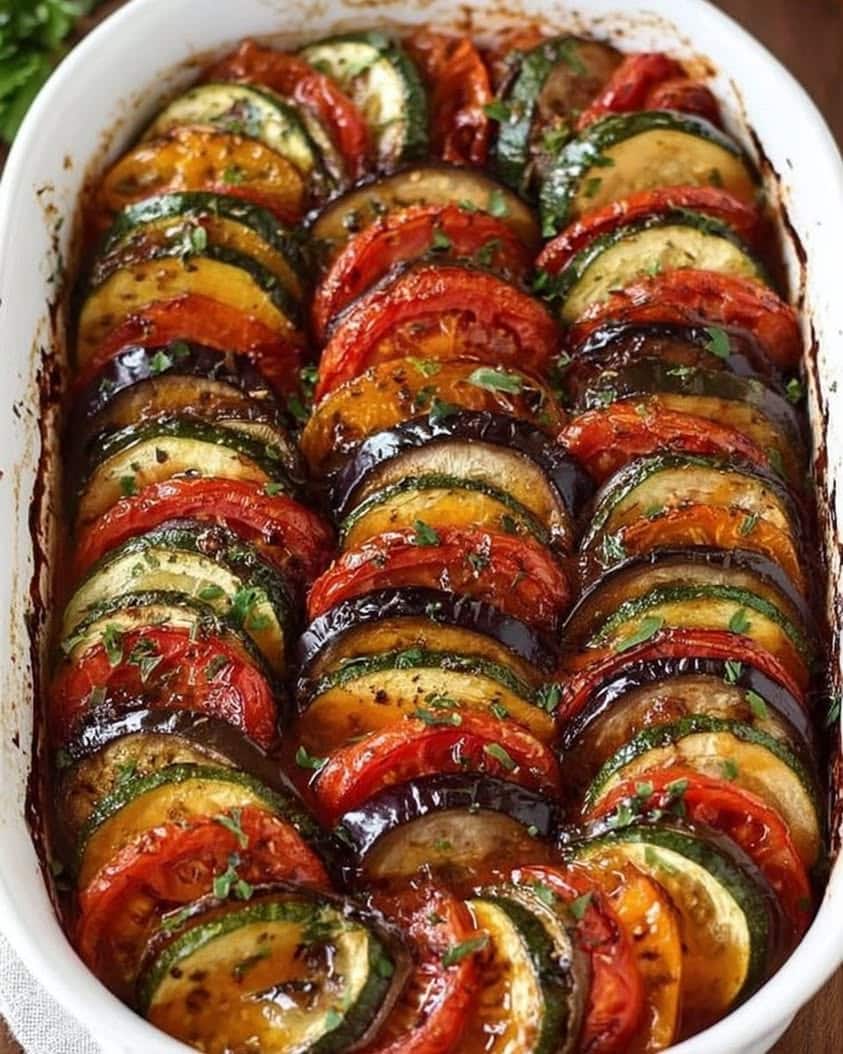
- Visual Appeal: The vibrant colors of red tomatoes, green zucchini, and purple eggplant create a stunning mosaic. Served directly from the baking dish, it is a rustic yet impressive centerpiece for any table.
- Skill Level Needed: This is a beginner-friendly recipe. The primary skills are simple vegetable chopping and layering. There is no complicated sautéing or precise timing, making it perfect for novice cooks.
- Special Equipment: You only need a good chef’s knife, a cutting board, and a large baking dish or Dutch oven. A mandoline slicer can speed up prep, but it is completely optional.
Recipe Overview
- Difficulty Level: We rate this easy baked ratatouille recipe as “Easy” because it involves straightforward techniques like chopping and layering. There is no fussy stirring or risk of overcooking individual components. Essentially, you assemble the ingredients and let the oven work its magic, making it very forgiving.
- Category: This dish is incredibly versatile. It fits perfectly as a vegetarian main course, a substantial side dish alongside grilled chicken or fish, or even as a luxurious pasta sauce. It is a true all-rounder for any meal.
- Cuisine: Ratatouille hails from the Provence region of France. It is a cornerstone of Niçoise cuisine, originally conceived as a peasant dish to use up a summer bounty. This baked version honors that tradition with a simple, hands-off cooking method.
- Cost: This is a very budget-friendly recipe, especially in the summer when the key vegetables are in season and plentiful. The other ingredients—olive oil, garlic, herbs—are pantry staples, keeping the overall cost quite low.
- Season: Late summer to early fall is the absolute prime time for this easy baked ratatouille recipe. This is when tomatoes, zucchini, and eggplant are at their peak flavor, sweetness, and affordability, yielding the best possible results.
- Occasion: It is perfect for a casual family dinner, a healthy weeknight meal, or a potluck contribution. Furthermore, its beautiful presentation makes it elegant enough for a dinner party or a special weekend lunch.
Why You’ll Love This Easy Baked Ratatouille Recipe
First and foremost, the taste is simply unforgettable. This easy baked ratatouille recipe delivers layers of deep, concentrated flavor that only slow roasting can achieve. The tomatoes become rich and sweet, while the eggplant transforms into a creamy, savory delight. Each bite is infused with garlic and herbs, creating a complex profile that is both comforting and sophisticated. Additionally, the natural sugars in the vegetables caramelize slightly in the oven, adding a subtle sweetness that balances the savory notes perfectly. It is a dish that satisfies the palate completely.
From a practical standpoint, the convenience is a major win. Unlike traditional stovetop methods that require constant attention, this version is largely hands-off. You simply chop, layer, and bake. Consequently, you free up time to prepare other parts of your meal or simply relax. This method also minimizes cleanup, as everything cooks in a single dish. Therefore, it is an ideal solution for busy weeknights when you want a healthy, home-cooked meal without the fuss. The oven does the heavy lifting for you.
Nutritionally, this dish is a powerhouse. It is packed with vitamins, minerals, and antioxidants from its colorful array of vegetables. Tomatoes provide lycopene, zucchini offers vitamin C, and eggplant brings fiber and phytonutrients. Furthermore, using olive oil as the primary fat adds heart-healthy monounsaturated fats. It is naturally gluten-free, vegan, and low in calories yet high in volume and satisfaction. Ultimately, you can feel great about serving this nourishing dish to your family and friends.
For entertaining, this easy baked ratatouille recipe is a star. It is a stunning dish to bring to the table, boasting vibrant colors that impress guests instantly. Importantly, it can be made ahead of time, as its flavors actually improve after sitting for a day. This means no last-minute stress for the host. It also pairs wonderfully with a variety of proteins and sides, making menu planning easy. Whether served warm, at room temperature, or even cold, it is always a crowd-pleaser.
Finally, its cost-effectiveness and accessibility are unbeatable. The recipe uses affordable, seasonal produce and common pantry ingredients. You can easily find everything at your local grocery store or farmers market. Additionally, it is highly adaptable; you can swap in other summer vegetables like bell peppers or yellow squash based on what you have available. This flexibility makes it a reliable go-to recipe that reduces food waste and stretches your grocery budget beautifully.
Historical Background and Cultural Significance
The origins of ratatouille are deeply rooted in the peasant cuisine of Provence, France. Originally, it was a practical dish created by farmers to make use of the abundant summer harvest. The name itself derives from the French verbs “ratouiller” and “tatouiller,” which are informal terms meaning “to stir up” or “to toss.” Historically, it was a humble stew, with each vegetable cooked separately over a fire before being combined, a technique that ensured each component retained its texture and flavor. This careful approach highlights the respect Provençal cooks had for their ingredients.
Culturally, ratatouille is more than just a recipe; it is a symbol of Provençal life and the Mediterranean diet. It represents a philosophy of cooking with what is fresh, local, and seasonal. The dish embodies the sun-drenched landscape of southern France, featuring the region’s iconic produce. For generations, it has been a staple at family tables, from simple weekday meals to large communal gatherings. Its presence signifies hospitality, abundance, and a connection to the land. Consequently, it holds a cherished place in French culinary heritage.
The recipe has evolved significantly over time. The traditional method involved labor-intensive sautéing of each vegetable in olive oil before combining them to stew. However, the modern baked version, like this easy baked ratatouille recipe, gained popularity for its simplicity and consistent results. This adaptation allows for caramelization and flavor concentration through oven roasting, often with all vegetables layered together. The 2007 animated film “Ratatouille” also catapulted the dish to global fame, introducing it to new audiences and inspiring countless home cooks to try their hand at this classic.
Regional variations abound across the Mediterranean. In Nice, the dish is known as “ratatouille niçoise” and often includes bell peppers and sometimes artichokes. In other parts of Provence, cooks might add a splash of local wine or different herb blends like herbes de Provence. Italian ciambotta and Spanish pisto are close cousins, showcasing how this concept of a summer vegetable stew is a universal theme. Each variation reflects local tastes and available produce, but the core principle of celebrating seasonal vegetables remains constant.
Ingredient Deep Dive
Eggplant: Also known as aubergine, this versatile vegetable has a history spanning Asia, the Middle East, and Europe. It adds a meaty, substantial texture and a unique ability to absorb surrounding flavors. For the best results in your easy baked ratatouille recipe, choose eggplants that are firm, heavy for their size, with smooth, shiny skin. Salting eggplant before use was traditionally done to draw out bitterness, but most modern varieties are mild. If you have time, salting can help reduce oil absorption. Store whole eggplants at cool room temperature for a day or two, or in the refrigerator’s crisper drawer for up to a week.
Zucchini: This summer squash is a relative newcomer, cultivated in Italy only a few hundred years ago. It provides a delicate sweetness and a tender texture that contrasts beautifully with the eggplant. Select small to medium-sized zucchini with bright, unblemished skin; larger ones can be seedy and watery. There is no need to peel them, as the skin adds color and nutrients. Zucchini is highly perishable; store it unwashed in a perforated plastic bag in the refrigerator for up to five days. For a variation, try yellow summer squash, which offers a similar texture and a vibrant color pop.
Tomatoes: The foundation of the sauce, tomatoes bring essential acidity, sweetness, and umami. In Provence, ripe plum tomatoes like Roma would be traditional. For this easy baked ratatouille recipe, canned whole San Marzano tomatoes are an excellent year-round choice, offering consistent flavor and texture. If using fresh, choose the ripest, most fragrant tomatoes you can find. Their high water content will create the necessary saucy base as they break down. Store fresh tomatoes at room temperature until fully ripe to preserve their flavor. Never refrigerate them, as cold temperatures degrade their texture and taste.
Garlic and Herbs: Garlic is non-negotiable, providing the aromatic backbone of the dish. Fresh garlic, thinly sliced or minced, will mellow and sweeten as it roasts. Fresh herbs are equally crucial. Thyme offers a woodsy, earthy note that stands up to long cooking, while fresh basil added at the end provides a bright, peppery finish. If fresh thyme is unavailable, a teaspoon of dried thyme can be used. However, always opt for fresh basil. Substitute other herbs like oregano or rosemary sparingly, as they can overpower the delicate balance.
Olive Oil: Use a good-quality extra-virgin olive oil. It is not just a cooking medium; it is a key flavor component that defines the dish’s character. The oil helps the vegetables caramelize, carries the flavors of the garlic and herbs, and adds a fruity, peppery note. A generous amount ensures the vegetables become tender and luxurious, not dry. Since the oil is not subjected to high-heat frying in this baked method, its delicate flavors remain intact. For the best taste, choose an oil you enjoy drizzling on finished dishes.
Common Mistakes to Avoid
- Using Underripe or Out-of-Season Vegetables: The flavor of your easy baked ratatouille recipe depends entirely on the quality of the produce. Winter tomatoes or oversized, watery zucchini will result in a bland, soggy dish. Always aim for peak-season vegetables for the deepest, sweetest flavor.
- Cutting Vegetables Inconsistently: Chopping the vegetables into wildly different sizes leads to uneven cooking. Some pieces will be mushy while others remain undercooked. Aim for a rough, but relatively uniform, dice or slice to ensure everything cooks at the same rate.
- Skimping on Olive Oil: Olive oil is essential for flavor and texture. Using too little will cause the vegetables to steam rather than roast, and they may dry out or stick to the pan. Be generous for the best caramelization and a silky final result.
- Overcrowding the Baking Dish: If the vegetables are piled too high, they will steam instead of roast. Use a large enough dish so the vegetables can lie in a relatively even layer. This allows hot air to circulate and promotes browning.
- Not Seasoning in Layers: Adding all the salt only at the end means the vegetables themselves will be underseasoned. Season each layer of vegetables as you assemble the dish to build flavor from the inside out.
- Using Dried Basil Instead of Fresh: Dried basil lacks the bright, anise-like flavor of fresh and can taste dusty. It cannot replicate the fresh herb’s impact. Always use fresh basil, adding it at the end of cooking to preserve its vibrant character.
- Under-baking the Ratatouille: Removing the dish from the oven too early means the vegetables won’t have time to fully break down and meld their flavors. The tomatoes should be jammy and the zucchini and eggplant should be completely tender. Be patient.
- Skipping the Resting Time: Serving ratatouille piping hot from the oven is tempting, but letting it rest for 10-15 minutes allows the juices to redistribute. This results in a better texture and gives the flavors a chance to harmonize further.
Essential Techniques
Layering for Flavor: The order in which you layer the vegetables in your easy baked ratatouille recipe is intentional. Starting with tomatoes and garlic at the bottom creates an instant flavor base. As the dish bakes, these ingredients release their juices first, forming a savory broth that the zucchini and eggplant then cook in. This technique infuses every bite with foundational flavor from the bottom up, ensuring the dish is cohesive and deeply seasoned throughout.
Low and Slow Roasting: Baking at a moderate temperature (around 400°F) is the key technique here. High heat would burn the garlic and herbs before the vegetables softened. Conversely, a moderate heat allows the vegetables’ natural sugars to caramelize gradually while their cell walls break down slowly. This process concentrates flavors and develops complexity without scorching. The goal is tender, melting vegetables with concentrated taste, not a quick char.
Pro Tips for Perfect Easy Baked Ratatouille
For maximum flavor, let your assembled easy baked ratatouille recipe sit at room temperature for 30 minutes before baking. This allows the salt to begin drawing moisture from the vegetables, which will then create more steam and juice during cooking.
If you have the time, salting the diced eggplant and zucchini in a colander for 30 minutes can draw out excess moisture. Rinse and pat them dry before using. This step can prevent a watery final dish and help the vegetables brown better.
Do not stir the ratatouille during baking. Letting it cook undisturbed allows the bottom layer to form a delicious, slightly caramelized foundation and lets the top vegetables roast properly. Stirring will make it mushy.
For a beautiful presentation, reserve a few fresh basil leaves. Just before serving, tear them over the top of the hot dish. The residual heat will wilt them slightly and release their incredible aroma.
Always taste and adjust the seasoning right before serving. After the long bake, you may need another pinch of salt or a drizzle of high-quality olive oil to brighten the flavors.
For a richer flavor, add a Parmesan rind to the baking dish before it goes into the oven. It will melt into the sauce, adding a subtle umami depth (omit for vegan diets).
Variations and Adaptations
Regional Variations: To make a true Ratatouille Niçoise, add one large sliced bell pepper (any color) and one sliced onion to the vegetable layers. Some traditional recipes also include a bay leaf nestled among the vegetables for an extra layer of aromatic flavor.
Seasonal Adaptations: In late fall, incorporate cubed winter squash like butternut or delicata. In spring, add a handful of fresh peas or fava beans in the last 10 minutes of baking. For a heartier winter version, add canned white beans or chickpeas to make it a complete meal.
Dietary Modifications: For a keto or low-carb version, reduce the amount of onion and tomato, and increase the proportion of zucchini and eggplant. To boost protein, stir in two cups of cooked lentils or cannellini beans after baking.
Flavor Variations: Add a teaspoon of smoked paprika or a pinch of red pepper flakes with the garlic for a smoky or spicy kick. A tablespoon of tomato paste mixed into the bottom layer can intensify the tomato flavor. For an Italian twist, use oregano and marjoram instead of thyme.
Texture Modifications: For a chunkier, more stew-like consistency, dice all vegetables larger. For a smoother, saucier result, use an immersion blender to pulse the baked ratatouille a few times before serving. You can also finish it with a handful of toasted breadcrumbs for a crunchy topping.
Presentation Alternatives: For an elegant “confit byaldi” style (popularized by the movie), use a mandoline to slice the eggplant, zucchini, and tomatoes into very thin, uniform rounds. Arrange them in concentric, overlapping circles in the baking dish over a thin tomato sauce.
Serving and Presentation Guide
Plating Techniques: For a family-style meal, bring the entire baking dish to the table—its rustic beauty is part of the appeal. For individual plates, use a shallow bowl and spoon a generous portion into the center. Create a small well in the middle and drizzle with high-quality olive oil or a dollop of ricotta.
Garnishing Ideas: Fresh torn basil is classic. Other excellent garnishes include a sprinkle of flaky sea salt, microgreens, chopped fresh parsley, or toasted pine nuts. A final grating of Parmesan or Pecorino cheese adds a salty, umami punch (omit for vegan).
Traditional Accompaniments: In Provence, ratatouille is often served with crusty bread to soak up the juices. It is also a classic side for simply grilled lamb, chicken, or fish. A glass of rosé wine is the traditional beverage pairing.
Modern Serving Suggestions: Use it as a topping for creamy polenta or mashed potatoes. Toss it with cooked pasta for a quick primavera. Spoon it over crusty toast for a hearty bruschetta, or use it as a filling for an omelet or frittata.
Temperature Considerations: This easy baked ratatouille recipe is wonderfully versatile. Serve it warm as a comforting main, at room temperature as part of a summer buffet, or even cold straight from the refrigerator the next day. The flavors evolve beautifully at different temperatures.
Portion Control Tips: As a main course, plan for about 1.5 to 2 cups per person. As a side dish, ¾ to 1 cup is sufficient. Remember, it is very satisfying but not overly heavy, so err on the side of generosity.
Wine and Beverage Pairing
Wine Pairings: A dry, crisp rosé from Provence is the classic and perfect match. Its acidity cuts through the richness of the olive oil, and its berry notes complement the sweet vegetables. A light-bodied, fruity red like a Grenache or a Beaujolais also works beautifully. For white wine lovers, choose a Sauvignon Blanc or a Vermentino with good acidity to balance the dish’s savory notes.
Non-Alcoholic Alternatives: Sparkling water with a squeeze of lemon or a splash of herbal bitters is refreshing. Iced herbal tea, like lemon verbena or mint, complements the Mediterranean flavors. A tart cherry or pomegranate spritzer also pairs wonderfully, mimicking the acidity of wine.
Coffee/Tea Pairings: After the meal, a light roast coffee with bright, citrusy notes can be a nice finish. For tea, consider a Moroccan mint green tea—the mint echoes the fresh herbs in the dish, and the green tea’s lightness doesn’t overwhelm the palate.
Temperature Considerations: White and rosé wines should be well-chilled, around 45-50°F. Light reds should be served slightly cool, at about 55°F. Non-alcoholic spritzers and iced teas are best served cold to provide a refreshing contrast to the warm, savory ratatouille.
Serving Suggestions: Always offer water alongside any beverage pairing. The savory nature of the dish makes you thirsty. If serving wine, pour it just before bringing the food to the table so it’s at the ideal temperature for the first bite.
Storage and Shelf Life
Storage Methods: Allow your easy baked ratatouille recipe to cool completely to room temperature before storing. Transfer it to an airtight container. Leaving it in the hot baking dish to cool on the counter for hours can promote bacterial growth.
Temperature Requirements: Refrigerate ratatouille promptly. It must be kept at or below 40°F. Do not leave it out for more than two hours after cooking, or one hour if the room temperature is above 90°F.
Container Recommendations: Glass containers with tight-fitting lids are ideal as they don’t absorb odors or stains. You can also use BPA-free plastic containers. If using the original baking dish, cover it tightly with plastic wrap or aluminum foil.
Signs of Spoilage: Discard the ratatouille if you notice an off or sour smell, significant mold growth (often fuzzy white, green, or black spots), or if the texture becomes excessively slimy. When in doubt, throw it out.
Reheating Instructions: Reheat gently on the stovetop over medium-low heat, stirring occasionally, until warmed through. You can also microwave it in a covered, microwave-safe dish, stirring every 30 seconds. Add a splash of water if it seems dry.
Freezing Guidelines: Ratatouille freezes very well for up to 3 months. Freeze it in portion-sized airtight containers or freezer bags, leaving some headspace for expansion. Thaw overnight in the refrigerator before reheating. The texture of the zucchini may soften slightly, but the flavor remains excellent.
Make Ahead Strategies
Prep Timeline: You can chop all the vegetables (except the basil) up to 24 hours in advance. Store them separately in airtight containers or resealable bags in the refrigerator. The eggplant and zucchini may brown slightly, but this won’t affect the cooked dish.
Storage Between Steps: Keep the pre-chopped tomatoes and their juices in one container. Store the diced zucchini and eggplant in another. Keep the sliced garlic in a small container. This makes assembly on cooking day incredibly fast.
Quality Impact Assessment: Making the entire dish 1-2 days ahead is actually beneficial. The flavors meld and deepen as it sits. The texture may become more uniform and stew-like, which many people prefer. Simply reheat gently before serving.
Assembly Tips: For a dinner party, assemble the ratatouille in the baking dish, cover it tightly, and refrigerate it for up to 8 hours before you plan to bake it. Let it sit at room temperature for 30 minutes before putting it in the preheated oven.
Reheating Guidelines: Reheat a full make-ahead dish in a 350°F oven, covered with foil, until bubbling hot (about 20-30 minutes). For individual portions, the stovetop or microwave is faster. Always reheat only the amount you plan to serve immediately.
Fresh Element Additions: No matter when you make it, always add the fresh basil just before serving. If you’ve made it ahead, the flavor of the basil will have faded if added before storage. A final drizzle of fresh olive oil upon serving also revives the flavors.
Scaling Instructions
Halving the Recipe: Simply divide all ingredient quantities by two. Use a smaller baking dish, such as an 8×8 inch square or a 9-inch round dish. The bake time may be reduced by 5-10 minutes; start checking for doneness at the 35-minute mark.
Doubling or Tripling: Multiply all ingredients accordingly. You will need to use multiple baking dishes to avoid overcrowding. Do not pile the vegetables deeper than about 2 inches in any one dish, or they will steam instead of roast. You may need to rotate the dishes in the oven and add 5-10 minutes to the baking time.
Equipment Adjustments: For a larger batch, a wide, shallow roasting pan is better than a deep casserole dish. The increased surface area promotes better evaporation and caramelization. Ensure your oven racks are positioned to allow for good air circulation around the pans.
Timing Modifications: When scaling up, the baking time does not increase linearly. A double batch in two separate dishes will take roughly the same time as a single batch. A triple batch may require a few extra minutes. Always rely on visual and textural cues—tender vegetables and bubbly sauce—over strict timing.
Storage Considerations: A larger batch means more leftovers. Plan your storage containers in advance. Consider freezing half the batch immediately after it cools if you don’t plan to eat it all within 4-5 days.
Nutritional Deep Dive
Macro Breakdown: A serving of this easy baked ratatouille recipe is primarily carbohydrates from the vegetables, but they are complex carbs high in fiber. It contains a moderate amount of healthy fats from olive oil and is very low in protein. To make it a balanced meal, pair it with a protein source like beans, lentils, grilled chicken, fish, or a side of quinoa.
Micronutrient Analysis: This dish is a micronutrient powerhouse. Tomatoes provide vitamin C, potassium, and the antioxidant lycopene. Eggplant offers nasunin (an antioxidant) and fiber. Zucchini contributes vitamin A, manganese, and more vitamin C. Garlic adds allicin, known for its potential health benefits. The olive oil provides vitamin E and healthy fats.
Health Benefits: The combination of ingredients supports heart health, reduces inflammation, and aids digestion. The high fiber content promotes satiety and gut health. The antioxidants help combat oxidative stress. It is a perfect example of a nutrient-dense, calorie-conscious meal that aligns with the Mediterranean diet, one of the world’s healthiest eating patterns.
Dietary Considerations: This recipe is naturally gluten-free, dairy-free, vegan, and vegetarian. It is also nut-free and soy-free. It is suitable for many common dietary restrictions, making it an excellent choice for mixed-diet gatherings.
Portion Analysis: A standard serving (about 1.5 cups) is voluminous and filling due to the high water and fiber content of the vegetables, yet it is relatively low in calories. This makes it an excellent choice for volume eating and weight management strategies.
Weight Management Tips: The fiber and water content help you feel full on fewer calories. To keep it even lighter, you can reduce the olive oil by 1-2 tablespoons, though this may affect the luxurious mouthfeel. Pairing it with a lean protein turns it into a complete, satisfying meal that supports weight goals.
Dietary Adaptations
Gluten-free: This easy baked ratatouille recipe is naturally gluten-free as written. Simply ensure that any packaged ingredients, like canned tomatoes, are certified gluten-free if you have celiac disease or a severe sensitivity. It is a safe and delicious option.
Dairy-free: The recipe contains no dairy. For garnishes, avoid Parmesan cheese and use alternatives like nutritional yeast, vegan Parmesan, or simply extra herbs and olive oil for finishing.
Vegan: This is a fully vegan recipe. The primary fat source is plant-based olive oil, and all other ingredients are vegetables and herbs. It is a staple for vegan diets, offering deep flavor and satisfaction.
Low-carb/Keto: For a stricter low-carb or keto adaptation, reduce or omit the onions and tomatoes, as they contain more sugars. Increase the proportion of zucchini and eggplant. Add more olive oil and consider including keto-friendly vegetables like mushrooms and bell peppers.
Paleo: This recipe is Paleo-compliant as written, using whole, unprocessed ingredients. Just ensure your canned tomatoes have no added sugar or non-Paleo preservatives. Using fresh tomatoes is the best Paleo option.
Low-FODMAP: Garlic and onion are high in FODMAPs. To adapt, use garlic-infused olive oil (where the garlic is strained out) for flavor and omit the onion entirely. The zucchini and eggplant should be limited to a ½-cup serving per person to stay within Monash University guidelines.
Troubleshooting Guide
Texture Issues (Too Watery): If your ratatouille is soupy, the vegetables likely released more water than expected. Solution: Continue baking uncovered for an additional 10-15 minutes to evaporate excess liquid. For future attempts, try salting the eggplant and zucchini beforehand or using less juicy tomato varieties.
Flavor Balance (Too Bland): Underseasoning is the common culprit. Solution: Stir in more salt, a teaspoon of good vinegar (like red wine or balsamic), or a squeeze of lemon juice to brighten the flavors. A pinch of red pepper flakes can also add dimension. Remember, potatoes and pasta will absorb seasoning, so sauce them generously.
Temperature Problems (Bottom Burns): If the bottom is scorching, your oven’s heating element may be too close to the dish or running hot. Solution: Move the dish to a higher rack, place a baking sheet on the rack below to diffuse heat, or reduce the oven temperature by 25°F.
Equipment Challenges: If you lack a large baking dish, you can use a deep oven-safe skillet or a Dutch oven. The key is the surface area. A deeper pot will result in more steaming; just extend the cook time slightly and consider uncovering it for the last 10 minutes.
Ingredient Substitutions: No fresh thyme? Use 1 teaspoon dried thyme. No fresh tomatoes? A 28-ounce can of whole, crushed, or diced tomatoes works perfectly. No zucchini? Yellow summer squash is a direct swap. The recipe is forgiving, so use what you have.
Timing Concerns: If the vegetables aren’t tender after the suggested time, they may have been cut too large or your oven runs cool. Solution: Cover the dish with foil to trap steam and continue baking in 10-minute increments until they yield easily to a fork.
Recipe Success Stories
Community feedback on this easy baked ratatouille recipe has been overwhelmingly positive. Many readers report it becoming their go-to summer dish for potlucks, where it always disappears quickly. One home cook shared that her vegetable-averse teenager asked for seconds, calling it “the good stew.” Another found that doubling the recipe and freezing portions provided easy, healthy lunches for weeks.
Variation successes are common. A reader added spicy Italian sausage for a meat-loving crowd and received rave reviews. Another used it as a pizza topping on a pre-baked crust with goat cheese, creating a stunning vegetarian pizza. Several have successfully made it in a slow cooker on low for 6 hours, though they noted the texture was softer and the flavors slightly less concentrated than the baked version.
Adaptation stories highlight its flexibility. A reader on a low-sodium diet omitted added salt and used salt-free canned tomatoes, then finished with a splash of vinegar, finding it perfectly flavorful. Another with a tomato allergy replaced the tomatoes with a base of roasted red peppers puréed with a little vegetable broth, creating a delicious “rouille” style ratatouille.
Reader suggestions have improved the recipe. One tip was to add a sprig of rosemary for the last 15 minutes of baking for a piney aroma. Another suggested serving it with a dollop of pesto on top instead of plain basil. A clever reader uses the leftovers as a filling for lasagna, layering it with noodles and béchamel sauce.
Photography tips from successful makers: Shoot in natural light, preferably with the baking dish on a wooden table for a rustic feel. A garnish of bright green basil and a drizzle of vibrant green olive oil right before the photo makes the colors pop. Getting a close-up shot of a spoon lifting the tender vegetables showcases the perfect texture.
Frequently Asked Questions
Q: Can I make ratatouille in a slow cooker?
A: Yes, you can. Layer the ingredients as directed in your slow cooker. Cook on low for 6-7 hours or on high for 3-4 hours. The Print
Baked Ratatouille with Tomatoes, Zucchini, and Eggplant
- Total Time: 45 minutes
- Yield: 4
Description
A classic French vegetable medley baked to tender perfection with herbs and olive oil.
Ingredients
- 2 medium eggplants, sliced into rounds
- 2 zucchinis, sliced into rounds
- 4 ripe tomatoes, sliced
- 1 large onion, thinly sliced
- 3 cloves garlic, minced
- 1/4 cup olive oil
- 1 teaspoon dried thyme
- 1 teaspoon dried oregano
- Salt and black pepper to taste
- Fresh basil leaves for garnish
Instructions
- Preheat oven to 375°F (190°C). Lightly grease a large baking dish.
- Arrange eggplant, zucchini, tomato, and onion slices in alternating layers in the dish.
- In a small bowl, mix minced garlic, olive oil, thyme, oregano, salt, and pepper. Drizzle evenly over the vegetables.
- Cover the dish with foil and bake for 25 minutes. Remove foil and bake uncovered for an additional 5-10 minutes until vegetables are tender and lightly browned.
- Garnish with fresh basil before serving.
Notes
You can customize the seasonings to taste.
- Prep Time: 15 minutes
- Cook Time: 30 minutes
- Method: Main
- Cuisine: French