Creamy Greek Chicken Flatbread with Fresh Tzatziki & Veggies: A Mediterranean Feast in Minutes
Imagine a warm, pillowy flatbread piled high with juicy, herb-infused chicken, cool and creamy tzatziki, and a rainbow of crisp, fresh vegetables. This Creamy Greek Chicken Flatbread with Fresh Tzatziki & Veggies is not just a meal; it’s a vibrant, flavor-packed experience that brings the sunny essence of the Mediterranean directly to your table. Moreover, it transforms simple, wholesome ingredients into a stunning and satisfying dish perfect for any night of the week. Consequently, you get a restaurant-quality presentation with minimal effort and maximum reward.
The magic of this recipe lies in its beautiful contrast of textures and temperatures. You have the savory, slightly charred chicken against the cool, tangy yogurt sauce. Then, you get the crunch of cucumbers and red onion playing off the soft flatbread. Every single bite delivers a symphony of classic Greek flavors that are bright, fresh, and incredibly satisfying. Ultimately, this dish is a fantastic way to enjoy a balanced meal that feels indulgent yet is deceptively simple to prepare.
Quick Recipe Highlights
- Flavor Profile: This flatbread bursts with authentic Greek flavors. You get the tangy, garlicky punch from the tzatziki, the savory oregano and lemon from the chicken, and the sweet, fresh notes from the tomatoes and red onion. Together, they create a perfectly balanced and refreshing taste.
- Texture: The experience is all about delightful contrasts. Expect tender, juicy chicken, creamy and cool tzatziki sauce, and the satisfying crunch of fresh cucumbers and red onion, all resting on a soft yet sturdy flatbread base.
- Aroma: As the chicken cooks, your kitchen will fill with the irresistible scent of garlic, lemon, and dried oregano. Meanwhile, the fresh dill in the tzatziki adds a light, herbal fragrance that promises a clean, refreshing finish.
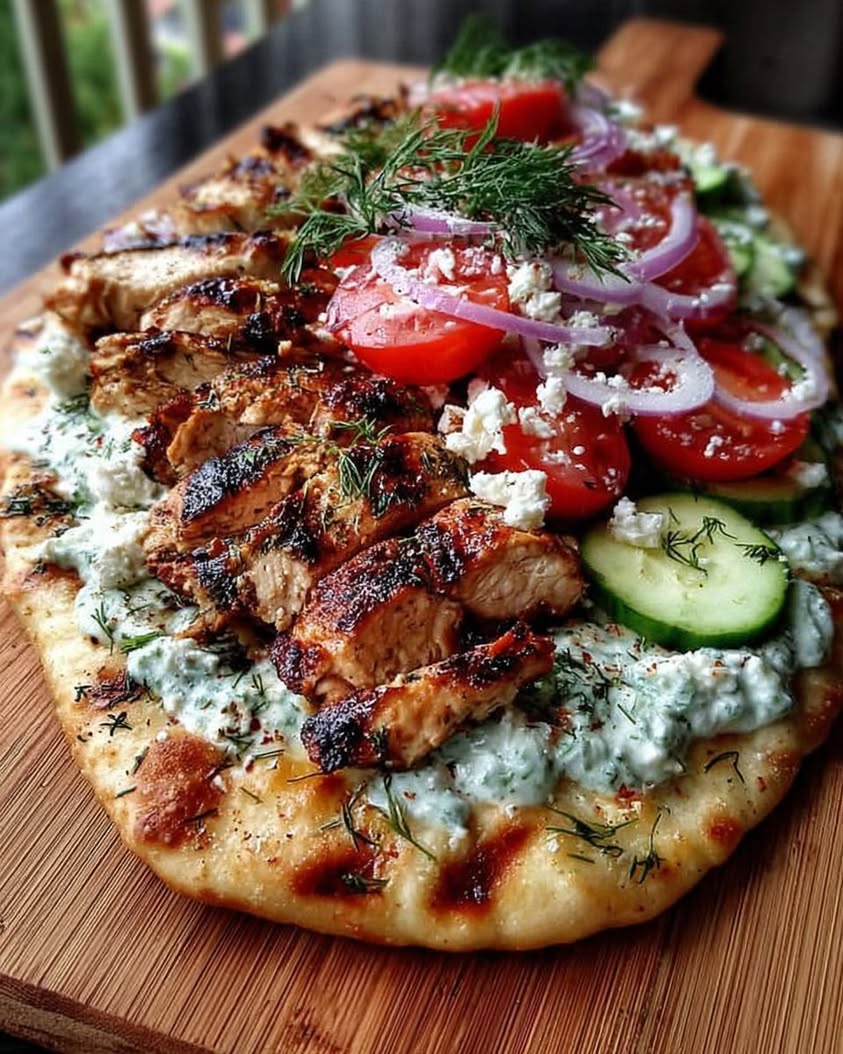
- Visual Appeal: This dish is a feast for the eyes with its vibrant colors. The white tzatziki, red tomatoes, green cucumbers, and purple onion create a stunning mosaic against the golden-brown chicken and flatbread, making it incredibly Instagram-worthy.
- Skill Level Needed: This is a beginner-friendly recipe. The techniques involve simple pan-searing, basic vegetable chopping, and easy assembly. Therefore, even novice cooks can achieve impressive, delicious results with confidence.
- Special Equipment: You need only standard kitchen tools. A good skillet or grill pan for the chicken, a mixing bowl for the tzatziki, and a sharp knife for prepping the vegetables are perfectly sufficient. No fancy gadgets are required.
Recipe Overview
- Difficulty Level: We rate this recipe as easy. The steps are straightforward and logical. You prepare the tzatziki, cook the chicken, chop the veggies, and assemble. There are no complex techniques or precise baking times, making it very forgiving for cooks of all levels.
- Category: This dish is wonderfully versatile. It fits perfectly as a quick and hearty weeknight dinner, a fun and interactive meal for a casual gathering, or even a flavorful lunch option. It straddles the line between handheld street food and a composed plate.
- Cuisine: This recipe is firmly rooted in the vibrant traditions of Greek and broader Mediterranean cuisine. It highlights classic flavor pillars like lemon, oregano, garlic, yogurt, and fresh vegetables, offering a modern, accessible take on timeless combinations.
- Cost: This is a cost-effective meal. Chicken thighs or breasts, Greek yogurt, and seasonal vegetables are generally affordable. Flatbreads are inexpensive, and the herb and spice pantry staples stretch a long way, delivering high value and flavor per dollar.
- Season: This recipe shines brightest in the spring and summer. The fresh, cool vegetables and light, tangy sauce are ideal for warmer weather. However, its bright flavors also provide a wonderful antidote to the heaviness of winter meals.
- Occasion: It’s perfect for casual weeknight dinners, weekend lunches, or informal entertaining. You can easily set up a “build-your-own” flatbread bar for parties, making it a social and customizable centerpiece for any relaxed gathering.
Why You’ll Love This Creamy Greek Chicken Flatbread
First and foremost, the taste and texture are absolutely unbeatable. Each component brings something special. The chicken is marinated in a simple blend of lemon, garlic, and oregano, resulting in juicy, flavorful bites. Then, the homemade tzatziki sauce adds a creamy, cooling element that cuts through the richness. Finally, the fresh vegetables provide a necessary crunch and sweetness. Consequently, every mouthful is a perfect, harmonious blend of savory, tangy, and fresh flavors that will have you reaching for another piece.
Secondly, the convenience factor is a major win. From start to finish, you can have this stunning meal on the table in about 35 minutes. The prep work is simple and mostly involves chopping and mixing. Furthermore, you can easily prepare elements ahead of time. For instance, make the tzatziki a day in advance or cook the chicken ahead for an even quicker assembly. This makes it a lifesaver on busy evenings when you want something delicious without a long time commitment.
Nutritionally, this flatbread offers a fantastic balance. It provides lean protein from the chicken, healthy fats from the olive oil and yogurt, and a generous serving of vitamins and fiber from the fresh vegetables. Using Greek yogurt as the base for the sauce adds a significant protein boost and probiotics. You can also opt for whole-grain flatbreads for added fiber. Ultimately, it’s a meal that fuels your body well while satisfying your taste buds completely.
For entertaining, this Creamy Greek Chicken Flatbread is a superstar. It’s visually impressive and feels special, yet it doesn’t trap you in the kitchen away from your guests. You can assemble everything on a large platter for a family-style feast. Alternatively, set out all the components and let everyone build their own masterpiece. This interactive element makes dinner fun and engaging, ensuring your meal is both memorable and delicious.
Finally, it’s incredibly cost-effective and accessible. The ingredients are common and easy to find at any grocery store. You likely have many of the spices and oils in your pantry already. There’s no need for expensive, hard-to-source items. Additionally, the recipe is flexible; you can swap in different vegetables based on what’s in season or on sale. Therefore, you get a gourmet-tasting meal that is kind to your wallet and simple to shop for.
Historical Background and Cultural Significance
The origins of this dish are deeply woven into the fabric of Greek culinary tradition, drawing from centuries of Mediterranean food culture. While the specific combination presented here is a modern fusion, its core components are ancient. Flatbreads, known as “psomi” in Greek, have been a staple for millennia, serving as a versatile edible plate and utensil. Similarly, tzatziki sauce, with its roots in the Ottoman Empire, has been a cooling accompaniment to grilled meats for generations. This recipe respectfully combines these timeless elements into a contemporary, handheld feast.
Culturally, the meal embodies the Greek philosophy of “philoxenia,” or love for strangers, which extends to generous hospitality. Meals are meant to be shared, flavorful, and made with fresh, local ingredients. The vibrant colors of the tomatoes, cucumbers, and onions reflect the bright landscapes of the Greek islands. Moreover, the use of olive oil, lemon, oregano, and yogurt represents the holy quartet of Greek flavoring, showcasing a cuisine built on simplicity, quality, and balance rather than complexity.
The evolution of this recipe mirrors global food trends toward casual, interactive dining. Traditional Greek souvlaki or gyros, featuring meat wrapped in pita, inspired the concept. The modern twist lies in using a larger, open-faced flatbread as a base, allowing for more generous toppings and a beautiful presentation. This adaptation makes the meal easier to share and customize at the table, blending street food authenticity with the comfort of a sit-down meal.
Regional variations across the Mediterranean are fascinating. In Turkey, a similar dish might feature doner kebab meat and a slightly different yogurt sauce called “cacik.” Lebanese versions could include toum (garlic sauce) and pickled turnips. The beauty of this Creamy Greek Chicken Flatbread recipe is its adaptability. You can honor its Greek roots or easily incorporate flavors from neighboring cultures, making it a delicious canvas for exploring the entire region’s rich culinary tapestry.
Ingredient Deep Dive
Let’s start with the star: Greek yogurt. This thick, strained yogurt is central to Greek cuisine and is the foundation of our tzatziki. Historically, straining yogurt was a preservation method. Nutritionally, it’s a powerhouse, offering nearly double the protein of regular yogurt, along with probiotics for gut health. When selecting it, choose plain, full-fat Greek yogurt for the creamiest texture and richest flavor. For storage, always keep it refrigerated and use it by the date on the container. If you need a substitute, strained regular yogurt or even labneh can work, though the texture will vary slightly.
Next, the chicken. We recommend boneless, skinless chicken thighs for their inherent juiciness and flavor, though breasts work too. The marinade of lemon juice, olive oil, garlic, and oregano is classic. Olive oil, the “liquid gold” of the Mediterranean, provides healthy monounsaturated fats. Fresh lemon juice tenderizes the meat and adds brightness. Dried oregano, a quintessential Greek herb, offers earthy, aromatic notes. For the best results, marinate the chicken for at least 30 minutes. Store raw chicken in the coldest part of your fridge and cook it thoroughly to 165°F internally.
The vegetable trio brings freshness and crunch. English cucumbers are ideal because they have fewer seeds and thinner skin. They provide hydration and a crisp texture. Tomatoes add sweetness and acidity; choose ripe, firm varieties like Roma or cherry tomatoes. Red onion offers a sharp, pungent bite that mellows slightly when thinly sliced. For selection, look for firm, unblemished vegetables. To store, keep cucumbers and tomatoes at room temperature until cut, then refrigerate. Red onions can be stored in a cool, dark place. For substitutions, try kalamata olives, bell peppers, or peppery arugula.
Finally, the flatbread acts as our edible plate. Traditional Greek flatbreads like “pita” or “lagana” are perfect. They are soft yet sturdy enough to hold the toppings without becoming soggy. You can often find them in the bakery or international aisle. For a homemade touch, you can quickly warm store-bought naan or pita bread. To store, keep flatbreads in a bread box or sealed bag. Before serving, a quick warm-up in the oven or skillet makes them pliable and enhances their flavor. For a gluten-free version, use a certified gluten-free flatbread or a large lettuce wrap.
Common Mistakes to Avoid
- Soggy Flatbread: Assembling the flatbread too far in advance is a common error. The moisture from the tzatziki and vegetables will seep into the bread. To prevent this, always assemble just before serving. You can also lightly toast the flatbread first to create a moisture barrier.
- Watery Tzatziki: Not draining the cucumbers properly leads to a runny sauce. After grating the cucumber, you must squeeze out the excess water thoroughly using a clean kitchen towel or your hands. This step is crucial for a thick, creamy consistency.
- Overcooked Chicken: Chicken breasts, in particular, can dry out quickly if overcooked. Use a meat thermometer to check for doneness at 165°F. Remember, the chicken will continue to cook slightly after being removed from the heat, so take it off just as it reaches temperature.
- Skimping on Marination Time: While you can cook the chicken immediately, allowing it to marinate for even 20-30 minutes makes a significant difference in flavor penetration and tenderness. For best results, plan for this short marinating window.
- Using Low-Fat Yogurt: Non-fat Greek yogurt often contains stabilizers and can have a tangier, less creamy taste. For the most authentic and luxurious tzatziki, use full-fat Greek yogurt. The fat carries flavor and creates a beautifully rich texture.
- Thick Vegetable Slices: Chunky cuts of cucumber or onion can be overwhelming and make the flatbread difficult to eat. Aim for thin slices or small dice. This ensures each bite has a balanced mix of all ingredients and is easy to manage.
- Forgetting to Season Layers: Seasoning only the chicken is a mistake. Lightly season your vegetable toppings with a pinch of salt and pepper. Also, taste your tzatziki and adjust the salt, lemon, and garlic as needed. Every layer should be flavorful.
- Cold Ingredients on Warm Bread: Using ice-cold tzatziki and veggies straight from the fridge on a warm flatbread can cause condensation and sogginess. Let the tzatziki and chopped vegetables sit at room temperature for 10-15 minutes before assembling for the best texture contrast.
Essential Techniques
Making Thick Tzatziki: The key technique here is thoroughly removing moisture from the grated cucumber. After grating, place the cucumber in a clean kitchen towel or several layers of paper towels. Then, twist and squeeze firmly over the sink until no more liquid runs out. This step is non-negotiable for a creamy, dip-like consistency instead of a watery dressing. The visual cue for success is a yogurt mixture that holds its shape on a spoon.
Perfectly Pan-Seared Chicken: For juicy, golden-brown chicken, start with a hot pan and don’t overcrowd it. Overcrowding steams the meat instead of searing it. Place the chicken in the pan and resist the urge to move it for a few minutes. This allows a proper crust to form. You’ll know it’s ready to flip when the edges look opaque and it releases easily from the pan. Finally, always let the cooked chicken rest for 5 minutes before slicing to allow the juices to redistribute.
Knife Skills for Vegetables: Uniform, thin slicing is essential for both aesthetics and even flavor distribution. Use a sharp chef’s knife. For the cucumber, you can use a mandoline for perfectly even slices, but a steady hand works too. For the red onion, slice it pole-to-pole (from root to stem end) for more attractive pieces that are less fibrous. The goal is pieces that are substantial enough to provide crunch but delicate enough to eat gracefully.
Warming Flatbreads: A warm flatbread is more pliable and flavorful. You can warm them in a dry skillet over medium heat for 30-60 seconds per side until soft and slightly puffed. Alternatively, wrap them in foil and warm in a 350°F oven for 5-10 minutes. The goal is to heat them through without crisping or toasting them like a cracker. They should be soft and warm to the touch, ready to become the base for your toppings.
Pro Tips for Perfect Creamy Greek Chicken Flatbread
First, double the tzatziki recipe. This sauce is so delicious you’ll want extra for dipping any leftover pita or vegetables. It also keeps well for several days, making it a versatile condiment for other meals.
Second, add a sprinkle of crumbled feta cheese right before serving. This introduces a salty, tangy element that beautifully complements the creamy tzatziki and savory chicken, taking the flavor profile to another level.
Third, if using chicken breasts, pound them to an even thickness before marinating. This ensures they cook quickly and evenly, preventing the thinner ends from drying out while the thicker center finishes cooking.
Fourth, let the tzatziki rest. After mixing, cover it and let it sit in the fridge for at least an hour. This allows the garlic flavor to mellow and permeate the yogurt, resulting in a more harmonious and rounded sauce.
Fifth, use the residual heat in your skillet. After removing the chicken, you can quickly warm the flatbreads in the same pan. They’ll pick up subtle, delicious flavors from the chicken drippings and herbs.
Sixth, finish with a flourish. Just before serving, drizzle a little high-quality extra virgin olive oil and a squeeze of fresh lemon juice over the assembled flatbreads. This adds a final layer of freshness and richness.
Variations and Adaptations
For regional twists, try a Turkish adaptation by adding a pinch of mint to the tzatziki and using sumac-spiced chicken. A Lebanese version might include a drizzle of tahini sauce and some pickled pink turnips for added tang and color. These small changes can transport your taste buds across the Mediterranean.
Seasonal adaptations are easy. In summer, add grilled zucchini or eggplant slices. For fall, incorporate roasted red peppers or a sprinkle of toasted pine nuts. In winter, a handful of hearty greens like spinach, quickly wilted in the pan after cooking the chicken, adds warmth and nutrients.
Dietary modifications are straightforward. For gluten-free, use a certified gluten-free flatbread. For dairy-free, substitute the Greek yogurt with a thick, plain coconut or almond-based yogurt. For a vegetarian option, replace the chicken with seasoned, grilled halloumi cheese or crispy chickpeas.
Flavor variations can keep this recipe exciting. Add a spicy harissa paste to the chicken marinade, or mix chopped kalamata olives and capers into the tzatziki. A smoky paprika or a brush of pesto on the flatbread before adding toppings are other fantastic ways to personalize the dish.
Texture modifications can cater to different preferences. For extra crunch, add a handful of shredded romaine lettuce or thinly sliced radishes. For a softer bite, you could lightly pickle the red onions to mellow their sharpness and add a tangy complexity.
Presentation alternatives are fun for parties. Instead of large flatbreads, use mini pitas or even sturdy tortilla chips for a Greek-inspired “nachos” platter. You can also deconstruct the ingredients into a hearty salad bowl, with the flatbread served on the side for scooping.
Serving and Presentation Guide
Plating is key for visual impact. Place the warm flatbread on a large wooden board or platter. Spread the tzatziki evenly, leaving a small border. Then, artfully arrange the sliced chicken in a single layer. Next, scatter the cucumbers, tomatoes, and red onion in distinct, colorful sections rather than mixing them completely. This mosaic look is stunning and allows people to see all the fresh components.
Garnishing adds the final professional touch. A generous sprinkle of fresh chopped dill or parsley is classic. You can also add a few whole Kalamata olives, a light dusting of paprika or dried oregano, and a final drizzle of extra virgin olive oil. These small additions make the dish look restaurant-crafted.
For traditional accompaniments, consider serving with a simple Greek salad on the side, a bowl of warmed olives, or some hummus and pita chips. A glass of chilled Assyrtiko wine or sparkling water with lemon completes the Mediterranean experience perfectly.
Modern serving suggestions include a “build-your-own” bar. Place all components—warmed flatbreads, chicken in a serving dish, tzatziki in a bowl, and vegetables in separate containers—on a table. Let guests assemble their own creations, which is especially fun for families and casual gatherings.
Temperature considerations are crucial. Serve the flatbread immediately after assembly while the bread is still warm and the chicken is hot. The contrast with the cool vegetables and tzatziki is part of the magic. If you must wait, keep components separate and assemble at the last possible moment.
Portion control is simple. One medium-sized flatbread per person is typically sufficient for a main course. For appetizers or a lighter meal, you can cut larger flatbreads into quarters or sixths. This also makes them easier to share and sample alongside other dishes.
Wine and Beverage Pairing
For wine pairings, you want something that complements the dish’s bright acidity and herbal notes. A crisp, dry Greek white wine like Assyrtiko or Moschofilero is the perfect match. Their citrus and mineral flavors echo the lemon and oregano in the chicken. Alternatively, a Provençal rosé with its dry, strawberry notes works beautifully. If you prefer red, choose a light-bodied, low-tannin option like a Beaujolais or a Greek Xinomavro rosé to avoid overpowering the meal.
Non-alcoholic alternatives should be refreshing and palate-cleansing. Sparkling water with a squeeze of lemon or lime is ideal. For a more crafted option, try a cucumber-mint cooler or a homemade lemonade infused with a sprig of fresh rosemary. Iced herbal teas, like mint or chamomile, also pair wonderfully without competing with the food’s flavors.
While not traditional, certain coffees or teas can work if serving this for lunch. A light, bright cold brew coffee can be surprisingly complementary. For tea, a glass of unsweetened iced black tea with lemon or a mint tea would be refreshing. The key is to avoid overly sweet or creamy beverages that would clash with the tzatziki.
Always serve white wines and rosés well-chilled, between 45-55°F. For non-alcoholic sparklers, serve them ice-cold. This contrast between the cool drink and the warm, savory flatbread is incredibly satisfying. Have a chilled carafe of water on the table as well to cleanse the palate between bites.
Presentation matters for drinks too. Serve wine in appropriate stemware to enhance the aroma. For non-alcoholic options, use tall glasses with plenty of ice and a fresh garnish—a cucumber ribbon for the cooler or a lemon wedge for the sparkling water. This attention to detail makes the entire meal feel special.
Storage and Shelf Life
Store all components separately for the best results. Place leftover sliced chicken in an airtight container in the refrigerator for up to 3-4 days. Tzatziki will keep well in a sealed container for about 4-5 days; its flavor often improves after a day. Chopped vegetables are best used within 1-2 days. Store flatbreads in their original bag or an airtight container at room temperature.
Temperature is critical. The chicken and tzatziki must be refrigerated promptly. Do not leave assembled flatbreads at room temperature for more than two hours due to the dairy and meat. For longer storage, you can freeze the cooked, sliced chicken in a freezer-safe bag or container for up to 2-3 months.
Use glass or BPA-free plastic containers with tight-fitting lids. This prevents odors from transferring and keeps moisture levels stable. For the tzatziki, pressing a piece of plastic wrap directly onto the surface before sealing the lid can help prevent oxidation and a “skin” from forming.
Signs of spoilage include an off or sour smell from the yogurt, slimy texture on the chicken or vegetables, or visible mold. If the tzatziki separates significantly and smells fermented, it’s time to discard it. When in doubt, always err on the side of caution and throw it out.
Reheating instructions are simple. Reheat chicken gently in a skillet over medium-low heat with a splash of water or broth to prevent drying out. You can also use the microwave in short bursts. Never reheat the tzatziki or the assembled flatbread, as this will make the bread soggy and can curdle the yogurt sauce.
Freezing is not recommended for the assembled dish or the tzatziki, as the yogurt and cucumbers will become watery and grainy upon thawing. The chicken freezes well, and you can also freeze flatbreads. For a make-ahead freezer meal, freeze the cooked chicken and then thaw overnight in the fridge before assembling with fresh ingredients.
Make Ahead Strategies
An ideal prep timeline spreads the work over two days. Day 1: Make the tzatziki sauce and store it in the fridge. This allows flavors to meld beautifully. You can also chop the vegetables (except tomatoes, which are best cut fresh) and store them in separate containers. Day 2: Marinate the chicken in the morning, then cook and assemble just before dinner for the freshest, crispiest result.
Storage between steps is straightforward. Keep the tzatziki in a sealed container. Store pre-chopped cucumbers and onions in containers lined with a paper towel to absorb excess moisture. Keep tomatoes whole until ready to slice. The chicken marinade can be combined with the chicken in a zip-top bag and left in the fridge for up to 24 hours.
Assessing quality impact is important. Making the tzatziki ahead is a major quality enhancer. Pre-chopping vegetables saves time but may slightly reduce their crispness after a day. Cooking the chicken ahead is fine, but reheating can dry it out slightly. Therefore, the best make-ahead combo is sauce and veggie prep, with cooking the chicken fresh.
For assembly, have all your prepped components lined up and ready to go. Warm your flatbreads, then quickly layer tzatziki, hot chicken, and cold vegetables. This assembly-line approach takes mere minutes and ensures every element is at its ideal temperature and texture when served.
If you must reheat pre-cooked chicken, do so gently. A skillet with a tiny bit of broth or water over medium-low heat works best. Cover the skillet to create steam, which helps rehydrate the meat. Alternatively, use the microwave at 50% power in 30-second intervals until just warmed through.
Always add the fresh elements last. If you’ve pre-chopped cucumbers and onions, give them a quick refresh in an ice-water bath for 5 minutes before assembling to restore some crispness. Slice tomatoes at the very last moment to maintain their structure and prevent excess juice from making the flatbread soggy.
Scaling Instructions
Halving the recipe is simple for a smaller household. Use one chicken breast or two thighs, half a cucumber, one small tomato, and a quarter of a red onion. Mix a single serving of tzatziki using ½ cup of yogurt. The cooking time will remain roughly the same, though you may need a smaller skillet. This is a perfect solution for a quick dinner for two.
Doubling or tripling for a crowd requires slight adjustments. Use two large skillets or cook the chicken in batches to avoid overcrowding. You can keep cooked chicken warm on a baking sheet in a 200°F oven. For the tzatziki, mix in a large bowl. Consider setting up an assembly station so guests can build their own flatbreads, which is easier than assembling dozens individually.
Equipment adjustments may be needed when scaling up. You’ll need a larger mixing bowl for the tzatziki and more containers for prepped vegetables. For very large groups, consider using sheet pans to warm multiple flatbreads in the oven simultaneously. Having extra serving platters and utensils on hand will make the process smoother.
Timing modifications are minimal. The prep time will increase linearly as you chop more vegetables. The cook time for the chicken may increase slightly if you’re cooking in batches. Start the chicken earlier to ensure it’s all ready at the same time. You can prepare the tzatziki and vegetables well in advance to manage the workload.
Storage considerations change with scale. Leftovers will be more plentiful, so ensure you have enough airtight containers. If you suspect you’ll have lots of leftover components, store them separately as recommended. This way, you can reassemble fresh flatbreads the next day or use the chicken and tzatziki in salads or grain bowls.
Nutritional Deep Dive
This dish offers a well-rounded macronutrient profile. The chicken provides high-quality, complete protein essential for muscle repair and satiety. The Greek yogurt adds additional protein and healthy fats, particularly if using full-fat yogurt. The olive oil contributes heart-healthy monounsaturated fats. The vegetables and flatbread provide complex carbohydrates and fiber, offering sustained energy. Overall, it’s a balanced plate that supports stable blood sugar levels and keeps you full for hours.
Micronutrient analysis reveals a wealth of vitamins and minerals. Cucumbers and tomatoes are rich in vitamins C and K, potassium, and antioxidants like lycopene. Red onions provide quercetin, a powerful anti-inflammatory compound. Greek yogurt is an excellent source of calcium, B vitamins, and probiotics for gut health. The olive oil and herbs add polyphenols, which have antioxidant properties. Together, they make this meal a nutrient-dense choice.
The health benefits are significant. The combination of lean protein, healthy fats, and fiber supports weight management by promoting fullness. The probiotics in yogurt aid digestion. The antioxidants in the vegetables combat oxidative stress. The monounsaturated fats in olive oil support heart health. This meal is a delicious way to eat for both pleasure and wellness.
For dietary considerations, it’s naturally high in protein and can be adapted for many needs. For lower-carb diets, use a lettuce wrap instead of flatbread. For dairy-free, use a plant-based yogurt. Be mindful of sodium if using pre-marinated chicken or adding feta; you can control this by making your own marinade and using less added salt.
Portion analysis shows one serving (one flatbread with toppings) is satisfying as a main course. If you’re watching calories, you can use a lighter hand with the olive oil in the marinade and tzatziki. Loading up on the non-starchy vegetables (cucumbers, tomatoes, onions) increases volume and nutrients without adding many calories, helping you feel full and nourished.
For weight management, this recipe is an excellent tool. It’s high in protein and fiber, both of which increase satiety. The healthy fats slow digestion, preventing energy crashes. To make it even lighter, you can use chicken breast, increase the vegetable ratio, and choose a smaller or whole-grain flatbread. It’s a meal that feels indulgent while supporting your health goals.
Dietary Adaptations
Gluten-Free: This adaptation is very simple. Use a certified gluten-free flatbread, which is widely available. Ensure your Greek yogurt and all other packaged ingredients (like dried oregano) are certified gluten-free, as cross-contamination can occur. All fresh ingredients are naturally gluten-free, making this an easy switch.
Dairy-Free: Replace the Greek yogurt with a thick, plain, unsweetened plant-based yogurt. Coconut yogurt offers the best fat content for creaminess, but almond or soy yogurts can work. Be sure to strain it if it’s runny. The flavor will be different but still delicious, with a tangy, coconutty note that pairs well with the herbs.
Vegan: Omit the chicken and yogurt. For protein, use seasoned, roasted chickpeas or crispy baked tofu cubes marinated in the same lemon-oregano mixture. For the “tzatziki,” use a thick plant-based yogurt mixed with garlic, dill, and drained cucumber. The result is a fresh, plant-powered flatbread that’s full of flavor and texture.
Low-Carb/Keto: Skip the flatbread entirely. Serve the chicken, tzatziki, and vegetables over a bed of fresh greens for a hearty salad. Alternatively, use a large, sturdy lettuce leaf like romaine or butter lettuce as a wrap. Ensure you use full-fat yogurt and plenty of olive oil to meet the high-fat requirements of a keto diet.
Paleo: Similar to low-carb, omit the grains. Use a grain-free flatbread alternative made from almond or coconut flour if desired, or serve as a salad. Ensure the yogurt is coconut-based, as dairy is excluded in a strict Paleo diet. All other ingredients—meat, vegetables, olive oil, herbs—are perfectly Paleo-friendly.
Low-FODMAP: This requires specific swaps. Use only the green tops of spring onions instead of red onion. Replace garlic in the marinade and tzatziki with garlic-infused olive oil, which provides flavor without the high-FODMAP compounds. Use lactose-free Greek yogurt if sensitive. These changes allow those with IBS to enjoy the flavors without digestive discomfort.
Troubleshooting Guide
Issue: Flatbread is soggy and falling apart. This is almost always an assembly or timing issue. Ensure your tzatziki is thick (cucumbers well-drained) and that you are assembling just before eating. Toast or warm the flatbread first to create a slight barrier. If prepping for later, keep all components separate and assemble at the last second.
Issue: Chicken is dry and tough. The most common causes are overcooking or using very lean chicken breasts without pounding them evenly. Use a meat thermometer and remove chicken at 165°F. Let it rest before slicing. Consider using chicken thighs for more forgiveness. If using breasts, pound them to an even ½-inch thickness before cooking.
Issue: Tzatziki is too runny. You did not remove enough water from the cucumbers. Next time, after grating, salt the cucumber lightly, let it sit in a colander for 10 minutes, then squeeze aggressively in a towel. You can also try adding a tablespoon of grated cucumber back into the sauce to thicken it slightly.
Issue: Flavors are bland. This usually means under-seasoning. Remember to season every layer: salt and pepper in the chicken marinade, salt in the tzatziki, and a light pinch on the fresh vegetables. Don’t be shy with the garlic, lemon zest, and fresh herbs. Let the tzatziki sit for an hour for flavors to develop fully.
Issue: Vegetables make the flatbread watery. Tomatoes and cucumbers release juice. Slice tomatoes just before serving. If you salt vegetables ahead of time, they will release water, so add them fresh. You can also seed your tomatoes by cutting them in half Print
Creamy Greek Chicken Flatbread with Tzatziki, Cucumbers, Tomatoes & Red Onion
- Total Time: 45 minutes
- Yield: 4
Description
A fresh and flavorful Mediterranean-inspired flatbread topped with seasoned grilled chicken, creamy tzatziki, and crisp vegetables.
Ingredients
- 2 boneless, skinless chicken breasts, sliced into strips
- 2 tablespoons olive oil
- 1 teaspoon dried oregano
- 1/2 teaspoon garlic powder
- Salt and black pepper to taste
- 4 flatbreads or pitas
- 1 cup tzatziki sauce
- 1 cucumber, thinly sliced
- 1 cup cherry tomatoes, halved
- 1/2 red onion, thinly sliced
- 1/4 cup crumbled feta cheese
- Fresh dill or parsley for garnish
Instructions
- Season the chicken strips with olive oil, oregano, garlic powder, salt, and pepper. Grill or pan-sear over medium-high heat until cooked through, about 6-8 minutes.
- Warm the flatbreads in a skillet or oven until lightly toasted.
- Spread a generous layer of tzatziki sauce over each flatbread.
- Top with grilled chicken strips, cucumber slices, cherry tomatoes, and red onion slices.
- Sprinkle with crumbled feta cheese and garnish with fresh dill or parsley.
- Serve immediately and enjoy.
Notes
You can customize the seasonings to taste.
- Prep Time: 15 minutes
- Cook Time: 30 minutes
- Method: Main
- Cuisine: Greek