Grilled Flank Steak with a Balsamic Caprese Twist: A Summer Showstopper
Imagine the perfect summer evening meal. The grill is fired up, the air is fragrant with smoke, and you are about to serve a dish that looks as incredible as it tastes. This Grilled Flank Steak with a Balsamic Caprese Twist is exactly that kind of meal. It masterfully combines the robust, savory char of a perfectly grilled steak with the bright, fresh flavors of a classic Italian Caprese salad. Consequently, you get a dinner that feels both impressively gourmet and wonderfully simple to prepare.
The magic of this recipe lies in its beautiful contrasts. You start with a lean, flavorful flank steak, marinated in a simple blend of olive oil, garlic, and herbs. After grilling to juicy perfection, you top it with slices of ripe tomato, creamy fresh mozzarella, and fragrant basil. Finally, a generous drizzle of syrupy balsamic reduction ties everything together. The result is a symphony of textures and tastes: hot and cool, savory and sweet, rich and acidic. Ultimately, this dish is a guaranteed crowd-pleaser that will have everyone asking for seconds.
Moreover, this Grilled Flank Steak with a Balsamic Caprese Twist is incredibly versatile. It is perfect for a casual weeknight dinner when you want something special without hours of work. Simultaneously, it is elegant enough to serve at a dinner party or summer gathering. The vibrant red tomatoes, white mozzarella, and green basil create a stunning visual presentation that celebrates the colors of the season. Therefore, whether you are feeding your family or entertaining guests, this recipe delivers on every level.
Quick Recipe Highlights
- Flavor Profile: This dish offers a bold harmony of savory, umami-rich beef paired with the sweet acidity of balsamic and the creamy freshness of mozzarella. The garlic and herb marinade infuses the steak with depth, while the basil adds a final aromatic punch.
- Texture: Expect a wonderful contrast between the tender, slightly chewy grain of the sliced flank steak and the soft, yielding bite of fresh mozzarella and juicy tomato. The reduced balsamic adds a sticky, glossy component that enhances every mouthful.
- Aroma: The scent begins with the smoky char of the grill, followed by the savory garlic and herbs from the marinade. As you assemble the dish, the fresh, peppery aroma of basil and the sweet-tangy scent of the balsamic reduction complete the sensory experience.
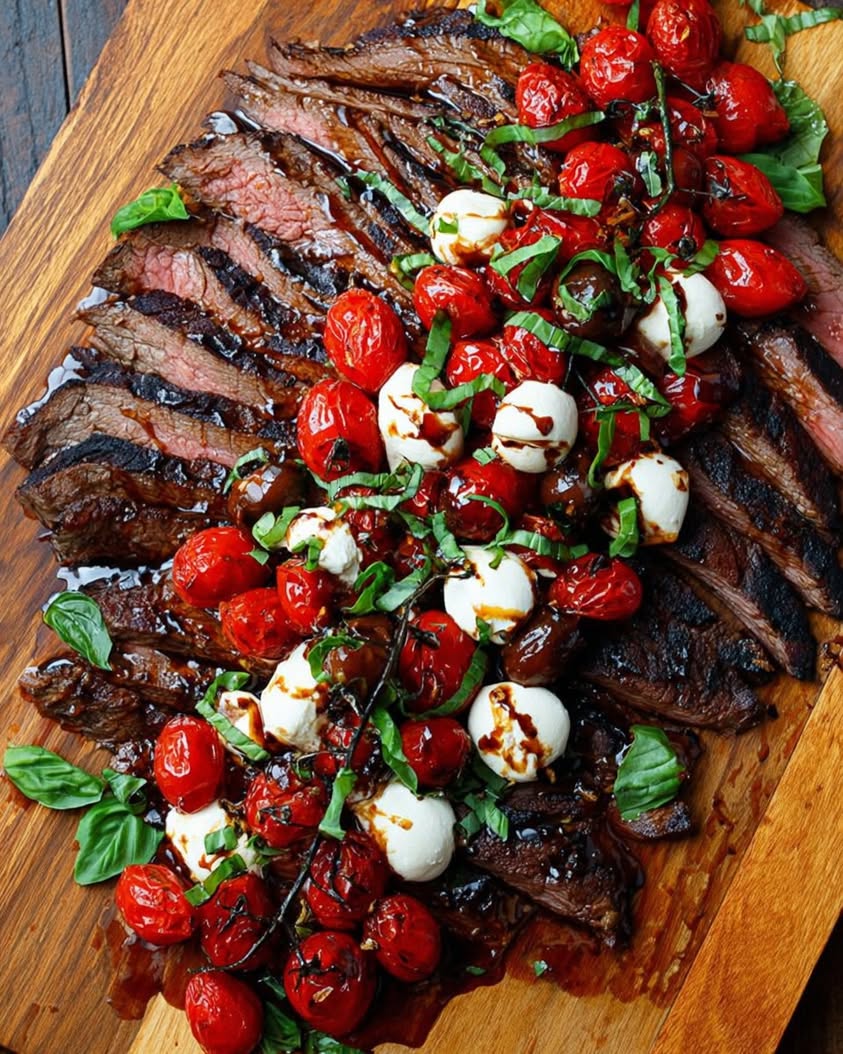
- Visual Appeal: This is a strikingly beautiful plate. The deep brown sear on the steak acts as a canvas for the bright red tomato slices, white mozzarella, and vibrant green basil leaves. The dark balsamic glaze adds dramatic, artistic drizzles.
- Skill Level Needed: This is an accessible recipe for most home cooks. The primary skills required are managing a grill or grill pan to achieve a good sear and mastering the simple technique of reducing balsamic vinegar. Otherwise, assembly is straightforward.
- Special Equipment: You will need a grill (charcoal, gas, or indoor grill pan) and a small saucepan for reducing the balsamic vinegar. A sharp knife for slicing the steak against the grain is also crucial for perfect tenderness.
Recipe Overview
- Difficulty Level: We rate this recipe as “Easy.” The steps are simple and sequential: marinate, grill, reduce, and assemble. There is no complex knife work or advanced culinary techniques. The most critical step, grilling the steak to your preferred doneness, is easily managed with a meat thermometer.
- Category: This is a main course protein dish, ideal for lunch or dinner. It falls squarely into the category of grilled meats and summer entrees. Additionally, it can be the centerpiece of a low-carb or high-protein meal when served with a simple side salad.
- Cuisine: The recipe is a fusion of American grilling traditions and Italian culinary flair. The Caprese salad component (tomato, mozzarella, basil) is a staple of Italian cuisine, specifically from the Campania region. Combining it with grilled steak creates a modern, cross-cultural dish.
- Cost: This is a moderately priced meal. Flank steak is typically more affordable than premium cuts like filet mignon but delivers exceptional flavor. The fresh mozzarella and high-quality balsamic vinegar are the other primary costs, but they are used purposefully for maximum impact.
- Season: This recipe shines in late spring through summer. This is when tomatoes and basil are at their peak of flavor and abundance. Grilling outdoors during warmer months makes the cooking process enjoyable and keeps the kitchen cool.
- Occasion: Perfect for backyard barbecues, Father’s Day, date nights at home, or any casual weekend gathering. Its impressive presentation also makes it suitable for more formal alfresco dinner parties. It is a versatile choice for numerous celebratory meals.
Why You’ll Love This Recipe
First and foremost, the taste of this Grilled Flank Steak with a Balsamic Caprese Twist is simply unforgettable. Each component brings its own signature flavor that harmonizes beautifully with the others. The savory, charred meat provides a hearty base. Meanwhile, the sweet and tangy balsamic reduction cuts through the richness. Furthermore, the creamy mozzarella and acidic tomato refresh the palate. Finally, the basil adds a final layer of aromatic complexity. Every bite is a balanced journey through contrasting yet complementary tastes that will delight your senses.
From a convenience standpoint, this recipe is a dream. The active hands-on time is surprisingly short. You can prepare the marinade and balsamic reduction ahead of time, making final assembly a breeze. Grilling the steak is a quick process, taking only minutes per side. Consequently, you can have a restaurant-quality meal on the table in well under an hour. This efficiency makes it an ideal choice for busy weeknights when you crave something special without a lengthy cooking commitment.
Nutritionally, this dish offers several advantages. Flank steak is a lean cut of beef, providing high-quality protein, iron, and B vitamins. Tomatoes are rich in lycopene and vitamin C, while fresh basil contains antioxidants. Using a high-quality balsamic reduction allows you to control the sweetness without relying on processed sauces. By focusing on whole, fresh ingredients, you create a meal that is both indulgent and nourishing. It supports a balanced diet without sacrificing an ounce of flavor.
The social and entertaining value of this recipe is exceptionally high. It is a visually stunning dish that immediately signals to guests that you have gone the extra mile. The process of slicing the steak at the table and revealing the beautiful interior topped with Caprese ingredients creates a moment of anticipation and delight. It encourages sharing and conversation, making the meal an experience rather than just a plate of food. It is a guaranteed way to impress friends and family with your culinary skills.
Finally, this Grilled Flank Steak with a Balsamic Caprese Twist is cost-effective and accessible. As mentioned, flank steak is a budget-friendly cut that, when cooked and sliced correctly, rivals more expensive steaks in tenderness and flavor. The other ingredients are pantry staples or easily found at any grocery store. You do not need rare or exotic components to achieve spectacular results. This accessibility ensures that anyone can recreate this gourmet-feeling meal at home without breaking the bank.
Historical Background and Cultural Significance
The story of this dish begins with two distinct culinary traditions. The Caprese salad, originating from the island of Capri in Italy, is a testament to simplicity and the beauty of fresh, local ingredients. Historically, it showcases the colors of the Italian flag: green (basil), white (mozzarella), and red (tomato). It emerged as a popular summer dish in the 20th century, celebrating the ripe produce of the Campania region. Its elegance lies in its minimalism, allowing the quality of each component to shine.
Conversely, the tradition of grilling beef over an open flame has deep roots in American cuisine, particularly from Western cattle ranching and backyard barbecue culture. Flank steak, a cut from the abdominal muscles of the cow, was historically a less prized cut that required proper technique to become tender. Grilling it quickly over high heat and slicing it thinly against the grain transformed it into a flavorful and affordable family meal. This method became a staple of American home cooking.
The fusion of these two ideas is a relatively modern innovation, exemplifying contemporary cooking’s trend toward blending cultural flavors. By topping a classic American grilled steak with an iconic Italian salad, chefs and home cooks create a dish that is greater than the sum of its parts. This evolution reflects our globalized food culture, where ingredients and techniques travel freely, inspiring new and delicious combinations. The balsamic reduction adds a touch of modern gastronomy, providing a concentrated flavor boost.
Regional variations of this concept exist. For instance, some versions might use a different cut of steak like hanger or skirt steak. Others might incorporate pesto instead of fresh basil leaves, or add arugula for a peppery note. The core concept, however, remains the same: combining the hearty satisfaction of grilled beef with the refreshing, acidic brightness of a Caprese-inspired topping. This recipe’s cultural significance lies in its ability to bridge culinary worlds, creating a universally appealing dish that honors its diverse origins.
Ingredient Deep Dive
Flank Steak: This long, flat cut comes from the cow’s lower abdominal muscles. Because these muscles are used frequently, the meat is lean and flavorful but can be tough if not cooked properly. Its prominent grain makes slicing against it absolutely essential for tenderness. Flank steak is an excellent source of protein, zinc, vitamin B12, and iron. When shopping, look for a steak with bright red color and minimal surface moisture. For best results, pat it dry before marinating to ensure a superior sear on the grill.
Fresh Mozzarella: Unlike the low-moisture, shredded variety, fresh mozzarella (often labeled “mozzarella di bufala” or “fior di latte”) is soft, moist, and milky. Traditionally made from buffalo or cow’s milk, it is a staple of Italian cuisine. It is lower in sodium and calories than many aged cheeses but provides calcium and protein. Seek out balls packed in water or whey for the best texture and flavor. For this recipe, slice it just before assembling to prevent it from drying out and to maintain its delicate, creamy quality.
Heirloom or Vine-Ripened Tomatoes: The quality of your tomato is non-negotiable for a true Caprese experience. Heirloom varieties offer complex flavors and beautiful colors, while ripe vine tomatoes provide reliable sweetness and acidity. Tomatoes are rich in lycopene, an antioxidant linked to heart health, and vitamin C. Choose tomatoes that are heavy for their size, fragrant at the stem end, and yield slightly to gentle pressure. Never refrigerate them, as cold temperatures degrade their texture and flavor. Store at room temperature until ready to use.
Fresh Basil: This aromatic herb is the soul of the Caprese twist. Its sweet, peppery flavor with hints of mint and anise is irreplaceable. Basil contains antioxidants like flavonoids and volatile oils with anti-inflammatory properties. For the most vibrant flavor and presentation, buy a live basil plant or a bunch with perky, bright green leaves. Avoid leaves with black spots or wilting. To store, treat it like a bouquet of flowers: trim the stems and place them in a glass of water on the counter, loosely covering the leaves with a plastic bag.
Balsamic Vinegar: Authentic traditional balsamic vinegar (Aceto Balsamico Tradizionale) is aged for years and is incredibly expensive. For cooking and reducing, a good-quality “condimento” or commercial balsamic vinegar is perfect. The reduction process concentrates its natural sugars, creating a sweet-tangy syrup. Balsamic vinegar contains antioxidants from the grapes. When reducing, use a moderate heat to avoid burning the sugars. The glaze is ready when it coats the back of a spoon and has a syrup-like consistency that will beautifully drizzle over the finished steak.
Common Mistakes to Avoid
- Not Slicing Against the Grain: This is the single biggest mistake with flank steak. The long muscle fibers make the meat chewy if sliced with the grain. Always identify the direction of the fibers after cooking and slice perpendicularly across them. This shortens the fibers, guaranteeing a tender bite.
- Overcooking the Steak: Flank steak is best served medium-rare to medium. Overcooking makes it dry and tough. Use a meat thermometer and pull the steak off the grill at 130-135°F for medium-rare. Remember, it will continue to cook as it rests, raising the temperature another 5-10 degrees.
- Skipping the Resting Period: Cutting into the steak immediately after grilling causes all the precious juices to spill onto the cutting board. Let the steak rest, tented loosely with foil, for at least 10 minutes. This allows the juices to redistribute throughout the meat, ensuring every slice is juicy.
- Using Low-Quality Balsamic for the Reduction: A reduction will only amplify the flavor of the vinegar you start with. Using a very cheap, overly acidic balsamic will result in a harsh, unpleasant glaze. Invest in a moderately priced bottle labeled “Modena” for a balanced, sweet-tangy reduction.
- Adding Cold Toppings to Hot Steak: While the contrast is nice, taking mozzarella straight from the fridge and placing it on hot steak can make the cheese seize up and sweat. Let the mozzarella and tomato slices sit at room temperature for 20-30 minutes before assembling for the best texture and flavor integration.
- Not Patting the Steak Dry Before Grilling: A wet steak steams instead of sears. Before placing it on the grill, thoroughly pat the marinated flank steak dry with paper towels. A dry surface is critical for achieving that beautiful, flavorful crust (the Maillard reaction) that defines great grilled meat.
- Cutting the Steak with a Dull Knife: A dull knife will tear and crush the meat fibers instead of slicing cleanly through them. This can make even properly cooked and sliced steak seem tougher. Use a sharp chef’s knife or carving knife for clean, effortless slices.
- Over-Reducing the Balsamic: If you reduce the balsamic vinegar for too long, it can become too thick and sticky, almost like candy. It should be syrupy and coat a spoon, but still be pourable. It will continue to thicken slightly as it cools, so err on the side of a slightly thinner consistency.
Essential Techniques
Marinating for Flavor and Tenderness: Marinating the flank steak serves two key purposes. First, it infuses the surface of the meat with flavor from garlic, herbs, and acid. Second, the acid (from vinegar or lemon juice in many marinades) can help break down surface proteins very slightly, contributing to tenderness. However, do not marinate flank steak for more than 4-6 hours, as the acid can start to make the outer layer mushy. For this recipe, even 30 minutes provides great flavor penetration.
Achieving the Perfect Grill Sear: A proper sear creates complex flavors through the Maillard reaction. To achieve this, ensure your grill grates are very hot and clean before adding the steak. Pat the steak dry, then place it on the grill and resist the urge to move it. Allow it to develop a crust and release naturally from the grates, which usually takes 4-6 minutes for the first side. Flipping too early will tear the meat and prevent a good sear from forming.
Reducing Balsamic Vinegar: This technique concentrates flavor and creates a luxurious sauce. Pour balsamic vinegar into a small saucepan and bring it to a simmer over medium heat. Then, reduce the heat to maintain a gentle bubble. Stir occasionally. The vinegar will reduce in volume by about half. Watch for the syrup to coat the back of a spoon. The visual cue for success is a consistency similar to warm maple syrup. Be patient, as rushing with high heat can burn the sugars.
Slicing Against the Grain: This is the most critical technique for serving tender flank steak. After the steak has rested, examine the surface to see the direction of the long, parallel muscle fibers. Position your knife so the blade is perpendicular (at a 90-degree angle) to those fibers. Slice thinly, at about a ¼-inch thickness, across the entire steak. This cuts the long, tough fibers into short, manageable pieces, transforming the texture of the meat completely.
Pro Tips for Perfect Grilled Flank Steak with a Balsamic Caprese Twist
- Score the surface of the flank steak lightly in a crosshatch pattern before marinating. This helps the marinade penetrate deeper and can also prevent the steak from curling on the grill.
- Bring your balsamic reduction to the desired consistency, then remove it from the heat and let it cool slightly. It will continue to thicken as it cools, ensuring a perfect drizzling texture by the time you assemble the dish.
- For an extra flavor boost, sprinkle a tiny pinch of flaky sea salt (like Maldon) over the assembled steak just before serving. The crunchy salt crystals provide a wonderful textural contrast and enhance all the other flavors.
- If you do not have a grill, a cast-iron skillet or grill pan over high heat works excellently. Preheat the pan until it is smoking hot to mimic the intense heat of a grill and achieve a great sear.
- Use a meat thermometer to eliminate guesswork. For medium-rare, remove the steak at 130-135°F. Letting it rest will bring it to the perfect 135-140°F final temperature.
- Toast the basil leaves very briefly. For a subtle depth of flavor, you can quickly wave individual basil leaves over the grill or a gas flame for just a second before placing them on the steak. This wilts them slightly and releases their aromatic oils.
- Consider adding a layer of peppery arugula underneath the sliced steak before adding the Caprese toppings. This adds color, a peppery note, and makes the presentation even more abundant and restaurant-style.
Variations and Adaptations
Regional Variations: In Argentina, you might find a similar concept using chimichurri sauce instead of balsamic and Caprese. For a French twist, substitute the mozzarella for a creamy goat cheese and the basil for fresh tarragon. A California version could include sliced avocado and a squeeze of lime alongside the traditional toppings.
Seasonal Adaptations: In winter, when tomatoes are less flavorful, use high-quality sun-dried tomatoes (packed in oil) for a concentrated burst of flavor. You can also roast cherry tomatoes with garlic and olive oil to create a warm, jammy topping instead of fresh slices.
Dietary Modifications: For a dairy-free version, use a plant-based mozzarella-style cheese or simply omit the cheese and add extra basil and a drizzle of high-quality olive oil. The balsamic reduction is naturally vegan and gluten-free, making it a safe and flavorful component for many diets.
Flavor Variations: Infuse the balsamic reduction with a sprig of fresh rosemary or a few black peppercorns while it simmers, then strain before using. Alternatively, add a teaspoon of Dijon mustard or a minced shallot to the steak marinade for additional complexity.
Texture Modifications: For a more integrated dish, chop the tomato and fresh mozzarella into a small dice and mix with torn basil to create a Caprese “salsa” to spoon over the sliced steak. This is easier to eat and ensures every bite gets a bit of everything.
Presentation Alternatives: Instead of assembling one large platter, create individual plates. Fan out slices of steak on each plate, then artfully arrange the tomato, mozzarella, and basil on top. Drizzle each plate individually with the balsamic reduction for a refined, restaurant-style presentation.
Serving and Presentation Guide
Plating this dish is part of the fun. Start with a large wooden board or a sleek white platter as your canvas. After slicing the rested steak, arrange the slices slightly overlapping in the center. This creates a bed for the toppings. Next, strategically place slices of tomato and mozzarella over and between the steak slices. Tuck whole or torn basil leaves throughout, allowing their green color to pop against the red and white. Finally, use a spoon to drizzle the balsamic reduction in zig-zags or artistic dots over the entire arrangement. The goal is a rustic yet elegant look that appears abundant and inviting.
Consider traditional accompaniments like a simple arugula salad dressed with lemon juice and olive oil, or grilled asparagus or zucchini. A crusty baguette is perfect for soaking up any juices and balsamic glaze left on the platter. For a modern take, serve with a side of creamy polenta or a farro salad with herbs. Temperature is key: serve the dish immediately after assembly so the steak is still warm, gently melting the mozzarella just slightly while the tomatoes remain cool and refreshing.
Wine and Beverage Pairing
The robust flavor of the grilled steak calls for a red wine with good acidity to cut through the richness. A medium-bodied Italian red like Chianti Classico or Barbera is a classic and perfect choice. Their bright cherry notes and earthy undertones complement both the meat and the Italian-inspired toppings. Alternatively, a Malbec from Argentina or a Cabernet Franc can also work beautifully, offering darker fruit flavors that stand up to the char.
For non-alcoholic alternatives, consider a sparkling water with a squeeze of lemon or lime to cleanse the palate. A tart cherry or pomegranate juice spritzer can mirror the sweet-tangy notes of the balsamic. Iced herbal tea, such as hibiscus or mint, also provides a refreshing counterpoint to the savory steak. The goal is to choose a beverage that refreshes the palate between bites of this flavorful, multi-component dish.
Storage and Shelf Life
Store leftover components separately for best quality. Place sliced, cooled steak in an airtight container in the refrigerator for up to 3-4 days. Keep the tomato and mozzarella slices in a separate container. The balsamic reduction can be stored at room temperature in a sealed jar for several weeks. Assembled leftovers will become soggy, so it is best to reassemble portions as needed.
To reheat the steak, avoid the microwave, which can make it rubbery. Instead, bring it to room temperature, then briefly sear slices in a hot skillet for about 30 seconds per side just to warm through. You can also enjoy the leftover steak cold in salads or sandwiches. The balsamic reduction does not need reheating; it will loosen up at room temperature.
Make Ahead Strategies
This recipe is excellent for prepping ahead. You can marinate the steak in a sealed bag in the refrigerator for up to 6 hours before grilling. The balsamic reduction can be made days in advance and stored at room temperature. Slice the tomatoes and mozzarella, and wash and dry the basil leaves, storing them separately in the fridge. Then, when ready to serve, simply grill the steak, let it rest, and assemble. This strategy makes the recipe ideal for entertaining, as the bulk of the work is done beforehand.
Scaling Instructions
This recipe scales linearly and easily. To feed a crowd, simply multiply all ingredients by the desired factor. For two people, halve the recipe. The key adjustment when scaling up is grill space; you may need to cook steaks in batches. Ensure you do not overcrowd the grill, as this will cause the temperature to drop and the meat to steam. The resting time and assembly process remain the same regardless of quantity.
Nutritional Deep Dive
A serving of this Grilled Flank Steak with a Balsamic Caprese Twist provides a balanced macronutrient profile. The flank steak is an excellent source of high-quality, complete protein, essential for muscle repair and satiety. The fresh mozzarella adds additional protein and healthy fats, particularly saturated fats and some calcium. Tomatoes and basil contribute minimal carbohydrates but are rich in vitamins, minerals, and antioxidants. The balsamic reduction adds natural sugars from the concentrated grapes. Overall, this is a meal that supports energy levels and provides essential nutrients without excessive empty calories.
Dietary Adaptations
Gluten-Free: This recipe is naturally gluten-free. Ensure that your balsamic vinegar is certified gluten-free, as very rare instances of cross-contamination can occur, but most pure balsamic vinegar is safe.
Dairy-Free: Omit the fresh mozzarella or substitute it with a high-quality vegan mozzarella alternative made from cashews or coconut oil. The rest of the recipe components are already dairy-free.
Low-Carb/Keto: This dish is inherently low in carbohydrates. The primary carbs come from the tomatoes and the balsamic reduction. For a stricter keto approach, use fewer tomato slices and be mindful of the portion of balsamic glaze, as it contains concentrated sugars.
Paleo: Omit the cheese (as dairy is excluded in strict Paleo). The dish then consists of steak, tomatoes, basil, and a reduction made from naturally fermented grape juice (balsamic vinegar), which is generally considered Paleo-friendly in moderation.
Troubleshooting Guide
Steak is Too Chewy: This is almost always due to incorrect slicing. Ensure you are slicing thinly and definitively against the grain. Also, verify you did not overcook the steak; use a thermometer next time and pull it off the grill at 130-135°F for medium-rare.
Balsamic Reduction is Too Thin/Too Thick: If too thin, return it to the saucepan and simmer a bit longer. If it has become too thick and sticky, simply stir in a teaspoon of warm water at a time until it returns to a drizzling consistency.
Lack of Flavor in the Steak: Ensure you adequately seasoned the steak with salt in the marinade. Salt is crucial for bringing out the meat’s natural flavor. Also, patting the steak dry before grilling ensures a proper sear, which creates foundational flavor compounds.
Toppings Make the Steak Soggy: This happens if the steak is not allowed to rest and drain excess juices before slicing, or if the assembled platter sits for too long before serving. Assemble just before bringing to the table for the best texture.
Recipe Success Stories
Readers and home cooks love the “wow factor” of this dish. Many report that it has become their go-to recipe for impressing guests, with several noting that it looks far more complicated to make than it actually is. One home cook shared that she used the leftover balsamic reduction on strawberries and ice cream, showcasing its versatility. Another successfully adapted it for a gluten-free and dairy-free guest by omitting the cheese and everyone still raved about the flavor. The common thread in success stories is following the core techniques—slicing against the grain and making a proper reduction—which consistently yield fantastic results.
Frequently Asked Questions
Q: Can I use a different cut of steak?
A: Absolutely. Skirt steak or hanger steak are excellent alternatives with similar texture and flavor profiles. Cooking times may vary slightly due to thickness, so always use a meat thermometer for the best results.
Q: How long can I marinate the flank steak?
A: For best results, marinate for at least 30 minutes and up to 6 hours. Marinating longer than 6-8 hours, especially in an acidic marinade, can start to break down the surface proteins too much, giving the exterior a mushy texture.
Q: My balsamic reduction hardened after cooling. What do I do?
A: This means it was reduced a bit too far. Simply place the jar or container in a bowl of warm water to gently heat it, or microwave it in 5-second bursts, stirring between each, until it becomes liquid and syrupy again.
Q: Can I make this entirely ahead of time?
A: You can prep all components ahead, but for optimal texture and temperature contrast, assemble just before serving. Grill the steak, let it rest, and have your toppings and reduction ready to go for quick assembly.
Q: Is there a substitute for fresh mozzarella?
A: Burrata is a luxurious substitute, adding an even creamier center. For a firmer texture, you could use fresh slices of low-moisture mozzarella, though it will be less creamy. Goat cheese crumbles offer a tangy alternative.
Q: Can I cook this indoors?
A: Yes. Use a grill pan or a heavy cast-iron skillet preheated over high heat. You may get more smoke, so ensure your kitchen is well-ventilated. The goal is the same: a hot surface to achieve a good sear.
Q: What’s the best way to slice the steak thinly?
A> Use a very sharp knife. For the thinnest slices, you can slightly angle your knife (not quite 90 degrees) as you cut against the grain. This creates wider, thinner slices that are exceptionally tender.
Q: Can I freeze the cooked flank steak?
A: Yes, though the texture may change slightly upon thawing. Slice the cooked and cooled steak, place it in a single layer in a freezer bag, remove excess air, and freeze for up to 2 months. Thaw in the refrigerator before reheating gently.
Additional Resources
If you loved this fusion recipe, explore other dishes that combine grilling with fresh toppings, like Grilled Salmon with Mango Salsa or Grilled Chicken with Peach and Basil Relish. To master your grilling technique, research guides on direct vs. indirect heat and how to properly clean and oil grill grates. For more on Italian ingredients, learn about the different types of balsamic vinegar (Traditional vs. Commercial) or how to make your own fresh mozzarella at home. Investing in a good instant-read meat thermometer will improve your results on countless recipes beyond this one.
PrintGrilled Flank Steak with Balsamic Caprese Twist
- Total Time: 45 minutes
- Yield: 4
Description
A juicy grilled flank steak topped with a fresh tomato, mozzarella, and basil salad, drizzled with balsamic glaze for a flavorful twist on classic Caprese.
Ingredients
- 1.5 lbs flank steak
- 2 tbsp olive oil
- 2 cloves garlic, minced
- 1 tsp salt
- 1/2 tsp black pepper
- 2 large tomatoes, sliced
- 8 oz fresh mozzarella, sliced
- 1/4 cup fresh basil leaves
- 2 tbsp balsamic glaze
- 1 tsp dried oregano
Instructions
- Season the flank steak with olive oil, minced garlic, salt, pepper, and oregano. Let it marinate for at least 30 minutes.
- Preheat grill to medium-high heat. Grill the steak for 5-7 minutes per side for medium-rare, or until desired doneness. Let rest for 10 minutes.
- Arrange tomato and mozzarella slices on a platter, top with basil leaves, and drizzle with balsamic glaze.
- Slice the rested steak thinly against the grain and serve over the Caprese salad.
Notes
You can customize the seasonings to taste.
- Prep Time: 15 minutes
- Cook Time: 30 minutes
- Method: Main
- Cuisine: American