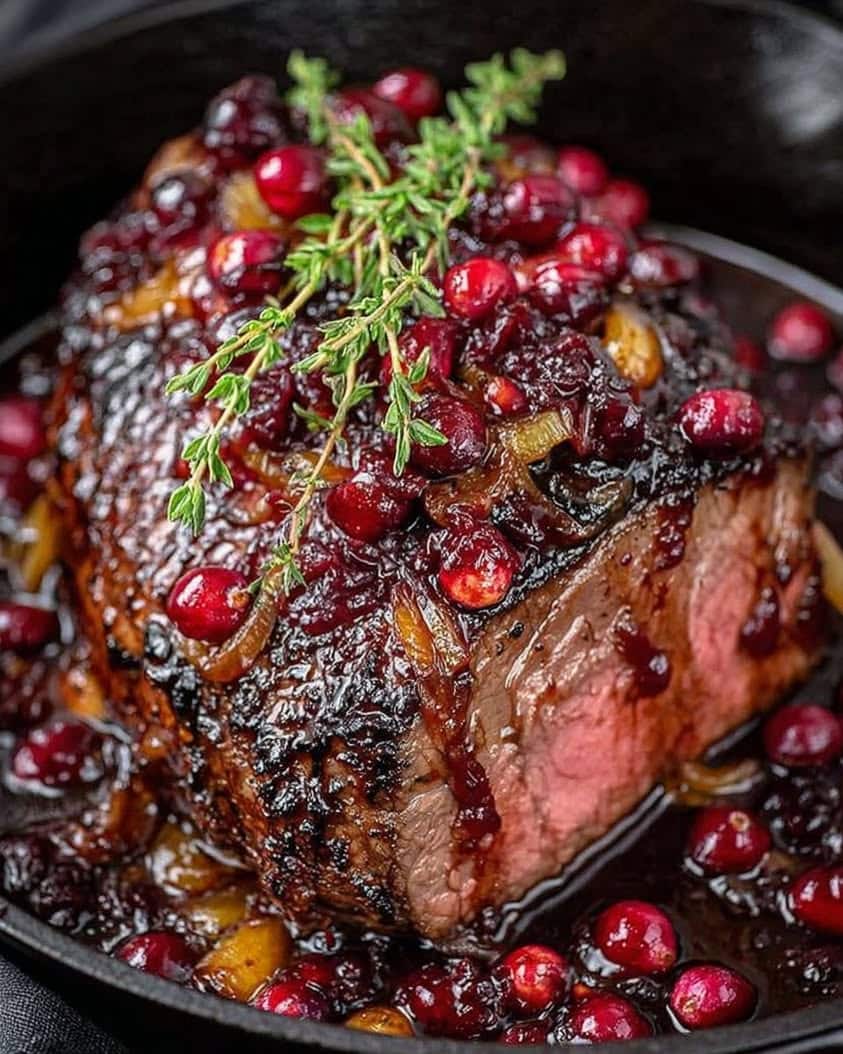
Perfect Ribeye Roast with Cranberry Balsamic Glaze: A Showstopping Holiday Centerpiece
Imagine presenting a magnificent, perfectly cooked ribeye roast at your holiday table. The exterior boasts a savory, herb-flecked crust, while the interior reveals juicy, tender slices of beef cooked to a beautiful rosy medium-rare. Now, picture draping that masterpiece with a glossy, deeply flavorful cranberry balsamic glaze. This combination creates a symphony of taste that is both luxurious and comforting. Ultimately, this recipe is designed to be the unforgettable centerpiece of your most special meals.
Creating this perfect ribeye roast with cranberry balsamic glaze is surprisingly straightforward. The secret lies in understanding a few key techniques rather than complex steps. First, you will season the roast generously and allow it to come to room temperature. Next, you will roast it low and slow to ensure even cooking. Finally, you will craft a simple yet spectacular glaze on the stovetop. The result is a restaurant-quality dish that will have your guests asking for the recipe.
The magic of this dish truly comes from the balance of flavors. The rich, beefy flavor of the prime rib roast finds its perfect counterpart in the sweet-tart glaze. Fresh cranberries and balsamic vinegar reduce together into a luxurious sauce. Consequently, every bite offers a delightful contrast. This perfect ribeye roast with cranberry balsamic glaze is more than a meal; it is a culinary event.
Quick Recipe Highlights
- Flavor Profile: This dish delivers a powerful punch of savory, umami-rich beef perfectly complemented by a sweet, tangy, and slightly tart glaze. The fresh herbs and garlic on the roast crust add aromatic depth, while the reduced balsamic vinegar in the glaze provides a sophisticated, caramelized acidity that cuts through the richness.
- Texture: Expect a beautiful contrast in textures. The exterior of the ribeye roast forms a delightful, slightly crisp crust from the high-heat sear. Meanwhile, the interior remains incredibly tender, juicy, and succulent, slicing easily with a sharp knife. The glaze adds a lovely, glossy coating that adheres to each slice.
- Aroma: As the roast cooks, your kitchen will fill with the irresistible scent of roasting beef, toasted garlic, and fragrant rosemary and thyme. When you add the cranberry balsamic glaze to the mix, the air becomes sweet and tangy with notes of simmering berries and rich, reduced vinegar.
- Visual Appeal: The presentation is stunning. A beautifully browned roast rests on a carving board, its surface glistening with herbs. Once sliced, the pink interior is revealed. The deep ruby-red glaze poured over the top adds a dramatic, festive pop of color that makes the entire platter look professionally crafted.
- Skill Level Needed: This recipe is accessible to intermediate home cooks. It requires patience and attention to temperature but does not involve overly complicated techniques. Success hinges on using a good meat thermometer and managing oven temperatures properly, which are manageable skills for anyone comfortable following detailed instructions.
- Special Equipment: The only essential special tool is a reliable instant-read or probe meat thermometer. This is non-negotiable for achieving perfect doneness. Additionally, a sturdy roasting pan with a rack is highly recommended to allow air circulation. A medium saucepan is needed for the glaze, and a sharp carving knife is crucial for serving.
Recipe Overview
- Difficulty Level: We rate this perfect ribeye roast with cranberry balsamic glaze as intermediate. While the steps are simple, the recipe demands precision with timing and temperature. You must manage a multi-stage cooking process, from searing to roasting to resting. Furthermore, making the glaze requires careful reduction to achieve the right consistency without burning. However, with clear guidance, any dedicated cook can master it.
- Category: This dish firmly sits in the category of celebratory main courses and holiday feasts. It is a premium centerpiece protein designed for dinners where you want to impress. Think Christmas, Thanksgiving, Easter, or milestone celebrations like anniversaries. It is the star of the show around which all side dishes revolve.
- Cuisine: The recipe draws from classic American holiday traditions, specifically the prime rib roast dinner. The use of cranberry sauce nods to classic Thanksgiving accompaniments. Meanwhile, the balsamic glaze introduces an element of modern Italian-inspired cuisine, creating a delicious fusion that feels both timeless and contemporary.
- Cost: This is a special-occasion dish with a higher cost per serving. The main expense is the ribeye roast itself, a premium cut of beef. The fresh herbs, cranberries, and quality balsamic vinegar add minor costs. Overall, while it is an investment, it delivers exceptional value in terms of flavor, impressiveness, and the number of people it feeds.
- Season: This perfect ribeye roast with cranberry balsamic glaze is quintessentially a fall and winter recipe. Cranberries are freshest in the late autumn, making the glaze seasonally appropriate. The hearty, rich nature of the roast is ideal for colder weather. It brings warmth and festivity to holiday tables from November through December.
- Occasion: It is tailor-made for formal dinners, holiday gatherings, and any event where you want the meal to be memorable. It works beautifully for a festive Christmas dinner, an elegant New Year’s Eve feast, or a sophisticated dinner party. The impressive presentation makes it perfect for moments you want to photograph and remember.
Why You’ll Love This Recipe
First and foremost, the taste and texture are simply unparalleled. The ribeye roast, also known as prime rib, is famed for its marbling, which translates to incredible juiciness and beefy flavor. When cooked using the method in this recipe, you achieve a perfect edge-to-edge doneness with a flavorful crust. The cranberry balsamic glaze then elevates it to another level. Its sweet and tangy notes cut through the richness of the beef, creating a balanced and complex flavor profile in every single bite. You will love the sophisticated contrast that makes this dish feel gourmet.
From a convenience standpoint, this recipe is brilliantly designed for stress-free entertaining. A significant portion of the cook time is hands-off roasting in the oven. This allows you to focus on preparing side dishes, setting the table, or spending time with your guests. The glaze can be made ahead of time and gently reheated. Moreover, the roast needs a lengthy rest period before carving, which is built into the schedule. Consequently, you are not scrambling at the last minute. This planning makes hosting a large holiday meal much more manageable and enjoyable.
Nutritionally, this perfect ribeye roast with cranberry balsamic glaze offers more than just indulgence. Beef is an excellent source of high-quality protein, iron, zinc, and B vitamins, particularly B12. The cranberries in the glaze are packed with antioxidants and vitamin C. Using fresh ingredients allows you to control the sodium and sugar content, unlike many pre-made sauces or glazes. When served with healthy vegetable sides, this meal can be part of a balanced celebratory feast.
The social and entertaining value of this dish is immense. Presenting a whole, beautifully glazed roast is a dramatic and generous gesture that makes everyone feel special. Carving at the table adds a sense of ceremony and tradition to the meal. It is a conversation starter and a guaranteed crowd-pleaser. Serving this perfect ribeye roast with cranberry balsamic glaze shows your guests that you have invested time and care into creating a remarkable experience for them.
Finally, considering the cost-effectiveness, this recipe provides excellent value. While the upfront cost for the roast is significant, it feeds a large group elegantly. Compared to the per-person cost of a similar meal at a high-end steakhouse, cooking at home is far more economical. The leftover roast, if there is any, makes incredible sandwiches or can be repurposed into other meals. Therefore, this dish delivers luxury dining at a fraction of the restaurant price.
Historical Background and Cultural Significance
The tradition of roasting large joints of beef dates back centuries in English cuisine, with the famed “Sunday roast” becoming a cultural institution. British colonists brought this tradition to America. Over time, the rib roast became the centerpiece for the most important celebrations, especially Christmas. The specific cut, from the rib primal, was prized by nobility and the wealthy for its tenderness and flavor. This historical preference cemented its status as a luxury item for festive occasions, a reputation it holds to this day.
In American culture, the ribeye roast, often called “standing rib roast” or “prime rib,” became synonymous with holiday luxury and abundance. Its appearance on the table signifies celebration, family gathering, and indulgence. The mid-20th century, with the rise of home ovens and celebratory post-war dining, saw the prime rib dinner reach peak popularity in steakhouses and home kitchens alike. It represents a classic, somewhat retro, and utterly comforting form of American culinary celebration.
The evolution of the recipe for a perfect ribeye roast with cranberry balsamic glaze is a modern twist on these old traditions. Classic prime rib was often served with simple pan juices or horseradish cream. The introduction of a fruit-based glaze, particularly using native North American cranberries, is a contemporary innovation. It pairs the Old World tradition of roasting beef with New World ingredients and a more modern, sauce-centric plating style. This fusion reflects how holiday cooking continues to evolve while honoring its roots.
Regional variations of the holiday roast are fascinating. In the UK, it is served with Yorkshire pudding and horseradish. In the American South, it might be accompanied by creamed spinach. The cranberry element in our glaze is a clear nod to the Northeastern United States, where cranberries are harvested. Some modern variations might use a coffee rub, a red wine reduction, or a mustard crust. Our version with the cranberry balsamic glaze sits beautifully within this tradition of regional and personal adaptation, creating a new classic for today’s holiday tables.
Ingredient Deep Dive
Let us start with the star: the ribeye roast. This cut comes from the rib section of the cow, known for exceptional marbling (intramuscular fat). This fat renders during the slow roast, basting the meat from within and resulting in unparalleled juiciness and flavor. When selecting your roast, look for bright red meat with fine, white streaks of fat throughout. A thick fat cap on one side is desirable for flavor. Ask your butcher for a “standing rib roast” with the bones frenched for elegant presentation. Store it in the coldest part of your refrigerator until ready to use.
Fresh cranberries are the tart heart of our glaze. These native North American berries are a seasonal treasure, harvested in the fall. They are packed with vitamin C and unique antioxidants called proanthocyanidins, known for supporting urinary tract health. Select berries that are firm, plump, and deep red in color; avoid soft or shriveled ones. They freeze beautifully, so you can buy extra bags in season. For this perfect ribeye roast with cranberry balsamic glaze, their natural pectin helps the sauce thicken to a lovely, glossy consistency as it cooks.
Balsamic vinegar is the sophisticated backbone of the glaze. True traditional balsamic vinegar, Aceto Balsamico Tradizionale, is aged for years and used sparingly. For cooking, a good quality, moderately priced balsamic vinegar works perfectly. It adds a complex sweetness and acidity that balances the cranberries and the rich beef. The vinegar reduces with the berries and sugar, caramelizing and mellowing into a deep, rich flavor. Avoid using the very cheapest balsamic, as it can be overly harsh. A decent grocery-store brand labeled “balsamic vinegar of Modena” is ideal for this recipe.
Fresh rosemary and thyme are non-negotiable for the herb crust. These woody herbs are classic partners for roast beef, their robust, aromatic flavors standing up to the intense cooking process. Rosemary, with its piney scent, and thyme, with its earthy, subtle notes, infuse the fat and meat as the roast cooks. Always use fresh herbs here; dried herbs will burn and become bitter. To prepare, simply strip the leaves from the stems and chop them finely with the garlic to create a fragrant paste for the roast’s exterior.
Common Mistakes to Avoid
- Not Bringing the Roast to Room Temperature: Cooking a cold roast straight from the fridge is a major error. The center will remain undercooked while the exterior overcooks. Always plan to let your perfect ribeye roast with cranberry balsamic glaze sit on the counter for at least 1-2 hours before cooking. This step ensures even cooking from edge to center.
- Skipping the Sear: The initial high-heat blast is crucial for developing the Maillard reaction, which creates that delicious, savory crust full of complex flavors. If you skip this step and just put the roast in a low oven, you will miss out on a key layer of taste and texture. Do not rush this initial browning phase.
- Guessing Doneness Without a Thermometer: Relying on time alone or poking the meat to check doneness is unreliable and often leads to overcooking. The only way to guarantee a perfect medium-rare interior is to use a reliable instant-read thermometer. Insert it into the thickest part of the roast, away from bone or large fat pockets.
- Carving Immediately After Roasting: This is perhaps the most common mistake. The meat needs a long rest period—at least 30 minutes—to allow the juices, which have been driven to the center by heat, to redistribute throughout the roast. If you carve immediately, all those precious juices will run out onto the cutting board, leaving you with drier meat.
- Over-Reducing the Glaze: When making the cranberry balsamic glaze, keep a close eye on it as it simmers. The goal is a syrup-like consistency that coats the back of a spoon. If you reduce it too far, it can become sticky, overly thick, and bitter. Remember, it will thicken slightly more as it cools. It is better to err on the side of slightly too thin.
- Using Low-Quality Balsamic Vinegar: The flavor of the glaze hinges on the quality of the balsamic. A very cheap, overly acidic vinegar will not mellow properly and can make the entire glaze taste harsh. Invest in a decent bottle of balsamic vinegar for cooking; the difference in your perfect ribeye roast with cranberry balsamic glaze will be noticeable.
- Not Seasoning Liberally Enough: A large roast needs a generous amount of salt and pepper to properly season it throughout. Do not be shy. The salt not only adds flavor but also helps draw moisture to the surface to promote better browning and crust formation. Season every side of the roast thoroughly.
- Slicing the Meat Too Thin or Too Thick: Use a very sharp carving knife. For a ribeye roast, aim for slices about 1/2-inch to 3/4-inch thick. Slices that are too thin can fall apart and dry out quickly. Slices that are too thick can be awkward to eat. Cut against the grain for the most tender bite.
Essential Techniques
The first essential technique is bringing the meat to room temperature. This is critical for even cooking. A cold roast will have a significant temperature gradient from the fridge-cold center to the room-temp exterior. When it hits the oven, the outside will cook much faster than the inside. By letting it sit out, you reduce this gradient, allowing the heat to penetrate more uniformly. Plan for 1-2 hours on the counter. Do not worry about food safety; this timeframe is safe for a large, solid cut of meat.
Mastering the sear is your next key technique. Pat the roast completely dry with paper towels; moisture is the enemy of browning. Heat your roasting pan or a large skillet over medium-high heat with a high-smoke-point oil. Sear the roast on all sides, including the ends, until a deep brown crust forms. This process, the Maillard reaction, creates hundreds of new flavor compounds. It is not just for looks; it fundamentally enhances the taste of your perfect ribeye roast with cranberry balsamic glaze. Take your time to get good color on every surface.
Low and slow roasting is the heart of the method. After searing, you lower the oven temperature significantly. This gentle heat allows the roast to cook evenly from the outside in without the outer layers becoming tough and dry before the center reaches the desired temperature. It is a forgiving method that gives you a large window of doneness. Using a probe thermometer that stays in the meat while it cooks is the best way to monitor this process without opening the oven door and losing heat.
The final non-negotiable technique is resting the meat. When the roast comes out of the oven, the muscle fibers are tight, and the juices are concentrated in the center. Resting for 30-45 minutes allows the fibers to relax and reabsorb those juices throughout the entire roast. Tent it loosely with foil to keep it warm. If you skip this step, the juices will flood out when you cut, leaving the meat dry. This patience is rewarded with supremely juicy slices for your perfect ribeye roast with cranberry balsamic glaze.
Pro Tips for Perfect Ribeye Roast with Cranberry Balsamic Glaze
For the most accurate temperature reading, insert your thermometer into the center of the thickest part of the meat, making sure the tip is not touching bone or a large pocket of fat. Bone conducts heat differently, and fat is not an accurate indicator of the meat’s doneness.
If you have time, season the roast with salt up to 24 hours in advance and leave it uncovered on a rack in the fridge. This “dry brining” process allows the salt to penetrate deeply, seasoning the meat throughout and helping the surface dry for an even better sear.
Let your finished cranberry balsamic glaze cool for 5-10 minutes before spooning it over the carved meat. A very hot glaze can cause the delicate fat on the roast to melt too quickly. A warm glaze will cling beautifully to each slice.
Use the drippings in the roasting pan to make a simple, flavorful au jus. After removing the roast, place the pan on the stovetop over medium heat. Add a cup of beef broth or red wine, scrape up all the browned bits (fond), and simmer for a few minutes. Strain and serve alongside the glaze.
For clean, professional-looking slices, use a long, sharp carving knife and wipe it clean with a damp cloth between cuts. This prevents shredding and ensures each slice of your perfect ribeye roast with cranberry balsamic glaze looks pristine on the platter.
If your roast is very lean, consider adding a layer of flavor and moisture by placing a few strips of bacon over the top fat cap before it goes into the oven. As the bacon renders, it will baste the roast, adding a subtle smoky flavor and protecting the surface.
Variations and Adaptations
For regional variations, consider a coffee and chili rub inspired by the American Southwest. Combine finely ground coffee, ancho chili powder, brown sugar, and cumin for a dark, spicy crust. Alternatively, a French-inspired version could use a paste of Dijon mustard, shallots, and herbes de Provence before roasting. The cranberry balsamic glaze pairs wonderfully with both, proving its versatility.
Seasonal adaptations are easy. In the spring, try a glaze with fresh cherries and a splash of port wine. For a summer twist, use ripe blueberries and a touch of orange zest. The core technique for the perfect ribeye roast remains the same; you are simply swapping the fruit component of the glaze to match what is fresh and abundant.
Dietary modifications are straightforward. The recipe is naturally gluten-free. For a refined sugar-free version, use pure maple syrup or honey in the glaze, keeping in mind it may brown faster. To make the entire dish dairy-free, simply ensure the butter used for searing is a plant-based alternative or use more olive oil.
Flavor variations can personalize the dish. Add a tablespoon of finely chopped fresh ginger or a pinch of cinnamon to the cranberry glaze for a warm spice note. For an herbal twist, stir a teaspoon of chopped fresh rosemary into the finished glaze. A splash of orange liqueur like Grand Marnier added at the end of reducing the glaze adds a lovely citrus complexity.
For texture modifications, you can leave the cranberry glaze chunky with whole berries for a more rustic, jam-like consistency. Alternatively, after simmering, you can puree it until completely smooth for an elegant, velvety sauce. You could also add a handful of chopped toasted pecans or walnuts to the glaze just before serving for a delightful crunch.
Presentation alternatives include serving the roast carved and arranged on a platter with the glaze drizzled over the top. For individual plating, fan 2-3 slices on each plate and spoon the glaze around the meat. You can also serve the glaze on the side in a small gravy boat, allowing guests to add as much or as little as they like.
Serving and Presentation Guide
Plating techniques start with the carving. Transfer the rested roast to a large, clean cutting board. Slice against the grain into your desired thickness. For a family-style presentation, neatly overlap the slices on a large, warm platter. Drizzle about half of the warm cranberry balsamic glaze over the top, allowing it to cascade down the sides. Serve the remaining glaze on the side.
Garnishing ideas should be simple and elegant to complement, not compete with, the main event. A few fresh sprigs of rosemary or thyme scattered around the platter add a touch of green. You can also garnish with a handful of whole fresh cranberries for a pop of color. A light sprinkle of flaky sea salt over the glazed meat just before serving enhances both flavor and visual appeal.
Traditional accompaniments for a perfect ribeye roast with cranberry balsamic glaze include creamy mashed potatoes or decadent potato gratin to soak up the juices. Roasted seasonal vegetables like Brussels sprouts, carrots, or asparagus provide a wholesome balance. A simple green salad with a sharp vinaigrette helps cut the richness of the meal.
Modern serving suggestions might include individual Yorkshire puddings or popovers, creamy polenta, or a farro and wild mushroom pilaf. For a lighter touch, serve with a cauliflower puree or roasted rainbow carrots. The goal is to choose sides that provide contrasting textures and flavors that support the star of the show without overwhelming it.
Temperature considerations are vital. Serve the roast and glaze warm. Warm your serving platter in a low oven before arranging the meat to prevent it from cooling too quickly. Side dishes should be ready to go when the roast is carved. The harmony of a hot, juicy slice of meat with warm glaze and hot sides is part of the magic.
Portion control tips are helpful for planning. A bone-in ribeye roast will yield about one serving per rib. For an 8-serving roast, you would typically look for a 4-rib roast. If your roast is boneless, plan for about 1/2 pound of meat per person. Remember, this is a rich dish, and people may take smaller portions if there are many sides, so a little can go a long way.
Wine and Beverage Pairing
Wine pairings for this rich, flavorful dish should be bold enough to stand up to it. A classic Cabernet Sauvignon from Napa Valley is a perfect match, with its full body, tannic structure, and notes of dark fruit and cassis that complement the beef and the berry glaze. A Syrah or Shiraz, with its peppery, dark fruit profile, also works beautifully. For a more elegant option, choose a Pinot Noir with good acidity; its red fruit notes will harmonize with the cranberry in the glaze.
Non-alcoholic alternatives can be just as thoughtful. A tart cherry juice or pomegranate juice spritzer with a splash of soda water mirrors the fruity elements of the glaze. For a richer option, a non-alcoholic sparkling cider has the body and slight sweetness to pair well. Iced tea, either black or a fruity herbal blend like hibiscus, can provide a refreshing counterpoint to the meal’s richness.
While not traditional, coffee and tea pairings after the meal can be delightful. A dark roast coffee with notes of chocolate or nuttiness can be a satisfying end to the feast. For tea, consider a smoky Lapsang Souchong or a robust Assam black tea. These bold flavors can stand up to the lingering savory and sweet notes of the perfect ribeye roast with cranberry balsamic glaze.
Temperature considerations are key for beverages. Red wines should be served at a cool room temperature, around 60-65°F. Chilling them too much mutes their flavor and accentuates tannins. Non-alcoholic sparkling ciders should be well-chilled. Iced tea and spritzers should be cold and refreshing. Having a variety of options at their proper temperatures shows attention to detail.
Serving suggestions include setting out both red wine and non-alcoholic options so all guests are accommodated. If serving wine, consider decanting it an hour before the meal to allow it to breathe and open up. Provide water glasses for everyone as well. Ultimately, the best pairing is one that your guests enjoy, so offering a choice is always a good strategy.
Storage and Shelf Life
Storage methods for leftovers are important. First, let any leftover carved meat cool to room temperature, but do not leave it out for more than two hours. Store the sliced roast and any remaining glaze in separate, airtight containers. This prevents the meat from becoming soggy. You can also store larger, uncarved portions of the roast if you have leftovers, which is ideal for maintaining moisture.
Temperature requirements are strict for food safety. Refrigerate the cooked roast and glaze promptly. They will keep safely in the refrigerator for 3-4 days. The internal temperature of your fridge should be 40°F or below. For longer storage, freezing is an excellent option for the meat, though the glaze may separate slightly when thawed.
Container recommendations include shallow containers for rapid cooling. Glass or BPA-free plastic containers with tight-fitting lids work well. For the glaze, a small mason jar is perfect. If storing a large piece of roast, you can wrap it tightly in plastic wrap and then in aluminum foil or place it in a heavy-duty freezer bag, pressing out all the air.
Signs of spoilage to watch for include an off or sour smell, a slimy texture on the surface of the meat, or any mold growth. If the glaze develops bubbles, an alcoholic smell, or visible mold, discard it immediately. When in doubt, it is always safer to throw it out than risk foodborne illness.
Reheating instructions are crucial for preserving quality. The best method is to reheat slices gently. Place them in a baking dish with a splash of beef broth or water, cover tightly with foil, and warm in a 300°F oven until just heated through. Avoid the microwave, as it can quickly make the beef tough and rubbery. Reheat the glaze gently in a small saucepan over low heat, stirring occasionally.
Freezing guidelines: For best quality, freeze the cooked roast within 2-3 days. Wrap portions tightly in plastic wrap and then in foil or freezer paper, or use a vacuum sealer. Label with the date. It will maintain best quality for 2-3 months. Thaw overnight in the refrigerator before reheating using the gentle oven method described above.
Make Ahead Strategies
A prep timeline can turn a complex holiday meal into a manageable project. Up to two days ahead, you can make the cranberry balsamic glaze. Let it cool, then store it covered in the refrigerator. One day ahead, prepare the herb and garlic paste for the roast. You can also trim and season the roast with salt, leaving it uncovered on a rack in the fridge to dry-brine. On the day of, all that is left is the searing, roasting, and gentle reheating of the glaze.
Storage between steps is simple. Keep the prepared herb paste in a small covered container in the fridge. The dry-brining roast should sit uncovered on a rack over a baking sheet on the bottom shelf of your refrigerator. This allows air circulation for the surface to dry. The chilled glaze can be reheated slowly in a saucepan, adding a tablespoon of water if it has thickened too much.
Quality impact assessment of make-ahead steps is positive. Making the glaze ahead allows the flavors to meld and deepen. Dry-brining the roast significantly improves its seasoning and crust potential. The herb paste can be made ahead without issue. None of these steps detract from the final dish; in fact, they enhance it and reduce day-of stress for your perfect ribeye roast with cranberry balsamic glaze.
Assembly tips for the day of are straightforward. Take the roast out of the fridge 1-2 hours before cooking to come to room temperature. Pat it dry, then rub it with the herb paste. Sear and roast as directed. While the roast is resting, gently reheat the glaze. This workflow ensures everything comes together hot and perfectly timed for your guests.
Reheating guidelines for the make-ahead glaze are gentle. Place it in a small saucepan over low heat. Stir frequently until it is warm and fluid again. If it seems too thick, whisk in a teaspoon of water or beef broth at a time until it reaches the desired consistency. Do not boil it vigorously, as this can cause it to become bitter or break.
Fresh element additions can brighten make-ahead components. If you made the glaze ahead, consider stirring in a teaspoon of fresh orange zest or a small pinch of chopped fresh rosemary after reheating. This adds a burst of fresh aroma that makes the sauce taste newly made. You can also garnish the finished platter with completely fresh herb sprigs that were not used in cooking.
Scaling Instructions
Halving the recipe is simple if you are cooking for a smaller group. Look for a 2-rib roast (about 4-5 pounds). The cooking time will be significantly less, so relying on a meat thermometer is even more critical. Start checking the internal temperature about 45-60 minutes after it goes into the low oven. Halve all the ingredients for the herb paste and the cranberry balsamic glaze. The glaze may cook a bit faster due to the smaller volume.
Doubling or tripling the recipe for a large crowd is possible, but with caveats. You would need a very large oven and multiple roasting pans, or you could cook two roasts sequentially. It is difficult to get an even sear on an extremely large roast. A better strategy for a crowd might be to cook two separate 4-rib roasts. Double or triple the glaze recipe in a large saucepan. Remember that a larger volume of glaze will take longer to reduce to the proper consistency.
Equipment adjustments are necessary when scaling. A larger roast requires a larger, heavy-duty roasting pan. Ensure your oven can accommodate the size, with enough space for air circulation around the pan. When making more glaze, use a wider saucepan to increase the surface area for faster, more even reduction. For smaller roasts, a large cast-iron skillet can serve as both searing vessel and roasting pan.
Timing modifications are not linear. A double-sized roast will not take double the time. The cooking time increases, but not proportionally. Use the target internal temperature as your only true guide, not the clock. For glazes, a doubled batch will take longer to reduce but not twice as long. Stir more frequently to prevent scorching on the bottom of the pan.
Storage considerations change with scale. A larger roast means more potential leftovers. Plan your storage containers in advance. Leftover glaze from a doubled batch can be stored in multiple smaller jars, which is useful for future meals. It also freezes well. Label everything clearly with the contents and date to keep your refrigerator organized.
Nutritional Deep Dive
A macro breakdown for a serving of this dish reveals it is a high-protein, moderate-to-high fat meal. The ribeye roast provides a significant amount of complete protein, essential for muscle repair and satiety. The fat content comes primarily from the marbling in the beef, which includes both saturated and monounsaturated fats. The cranberry balsamic glaze adds carbohydrates in the form of natural fruit sugars and added sweetener. This makes the dish a balanced, if rich, source of all three macronutrients.
The micronutrient analysis is impressive. Beef is an excellent source of heme iron, which is highly absorbable, as well as zinc, selenium, and B vitamins, particularly B12, which is crucial for nerve function and energy metabolism. Cranberries contribute vitamin C, vitamin K, and manganese. The herbs, garlic, and balsamic vinegar add various antioxidants and phytonutrients. Together, they create a nutrient-dense celebratory meal.
Health benefits, when consumed as part of a balanced diet, include supporting muscle mass due to high-quality protein, boosting iron levels to prevent anemia, and providing zinc for immune function. The antioxidants in cranberries and balsamic vinegar may help combat oxidative stress. However, due to the saturated fat content, moderation is key. Enjoying this perfect ribeye roast with cranberry balsamic glaze as a special occasion meal fits perfectly into a healthy lifestyle.
Dietary considerations are important to note. This recipe is naturally gluten-free. It is not suitable for vegetarians or vegans. For those on low-carb or keto diets, the glaze can be modified by using a sugar substitute like erythritol and being mindful of the carb count in the cranberries. For low-sodium diets, you can reduce or omit the added salt in the herb rub, relying on the other flavors.
Portion analysis helps with mindful eating. A standard serving is about 6-8 ounces of cooked meat with 2-3 tablespoons of glaze. This is a substantial and satisfying portion. Pairing it with large servings of non-starchy vegetables (like roasted Brussels sprouts) and a smaller portion of a starch can create a more balanced plate. Listening to your body’s fullness cues is always wise with such a rich dish.
Weight management tips for enjoying this meal include being mindful of portion size as mentioned. Load half your plate with vegetables first. Eat slowly to allow satiety signals to register. You can also trim any visible external fat from your slice if desired. Remember, one indulgent meal will not derail progress; it is overall patterns that Print
Ribeye Roast with Cranberry Balsamic Glaze
- Total Time: 45 minutes
- Yield: 4
Description
A succulent ribeye roast coated in a savory herb rub and served with a tangy-sweet cranberry balsamic glaze, perfect for holiday dinners or special occasions.
Ingredients
- 1 (4-5 lb) ribeye roast
- 2 tbsp olive oil
- 1 tbsp chopped fresh rosemary
- 1 tbsp chopped fresh thyme
- 2 tsp kosher salt
- 1 tsp black pepper
- 4 garlic cloves, minced
- 1 cup fresh cranberries
- 1/2 cup balsamic vinegar
- 1/4 cup honey
- 1/4 cup water
- 1 tbsp unsalted butter
Instructions
- Preheat oven to 450°F (230°C). Pat the ribeye roast dry with paper towels and place it in a roasting pan.
- In a small bowl, mix olive oil, rosemary, thyme, salt, pepper, and minced garlic. Rub this mixture all over the roast.
- Roast for 15 minutes, then reduce heat to 325°F (160°C) and continue roasting until internal temperature reaches 135°F (57°C) for medium-rare, about 1.5 to 2 hours. Let rest for 20 minutes.
- While the roast rests, make the glaze: In a saucepan, combine cranberries, balsamic vinegar, honey, and water. Bring to a boil, then simmer for 10-15 minutes until cranberries burst and sauce thickens. Stir in butter until melted.
- Slice the roast and serve drizzled with the cranberry balsamic glaze.
Notes
You can customize the seasonings to taste.
- Prep Time: 15 minutes
- Cook Time: 30 minutes
- Method: Main
- Cuisine: American