Layered Mediterranean Vegetable Lasagna with Three-Cheese Drizzle: A Vibrant, Meatless Masterpiece
Imagine a dish that captures the sun-drenched essence of the Mediterranean coast, layered with roasted vegetables and draped in a luxurious, creamy cheese sauce. This Layered Mediterranean Vegetable Lasagna with Three-Cheese Drizzle is exactly that. It is a celebration of seasonal produce, transforming humble eggplant, zucchini, and bell peppers into a stunning, flavorful centerpiece. Moreover, it offers a deeply satisfying, meatless meal that will impress even the most devoted carnivores at your table.
The magic of this recipe lies in its layers of flavor and texture. First, you roast the vegetables to concentrate their natural sweetness and achieve a perfect, tender bite. Then, you assemble them with rich tomato sauce and fresh herbs. Finally, you crown the entire creation with a decadent, garlicky three-cheese drizzle that bakes into a golden, aromatic blanket. Consequently, every forkful delivers a harmonious blend of savory, sweet, and creamy notes.
This Layered Mediterranean Vegetable Lasagna with Three-Cheese Drizzle is more than just dinner. It is a culinary project that fills your kitchen with irresistible aromas and results in a visually spectacular dish. Perfect for a weekend family meal or a dinner party with friends, it proves that vegetable-forward cooking can be incredibly indulgent and deeply comforting.
Quick Recipe Highlights
- Flavor Profile: This dish boasts a robust, savory-sweet foundation from slow-roasted vegetables and a tangy tomato sauce, beautifully balanced by the rich, garlicky, and herbaceous notes of the three-cheese drizzle. Ultimately, it delivers a complex taste that is both fresh and deeply comforting.
- Texture: You will experience a wonderful contrast between the tender, almost melt-in-your-mouth layers of roasted eggplant and zucchini, the slight bite of the bell peppers, and the velvety, creamy texture of the cheese sauce. The top layer becomes delightfully golden and bubbly in the oven.
- Aroma: As it bakes, your kitchen will fill with the mouthwatering scents of roasting garlic, sweet tomatoes, fragrant basil and oregano, and the nutty, savory perfume of melting Parmesan, ricotta, and mozzarella cheeses.
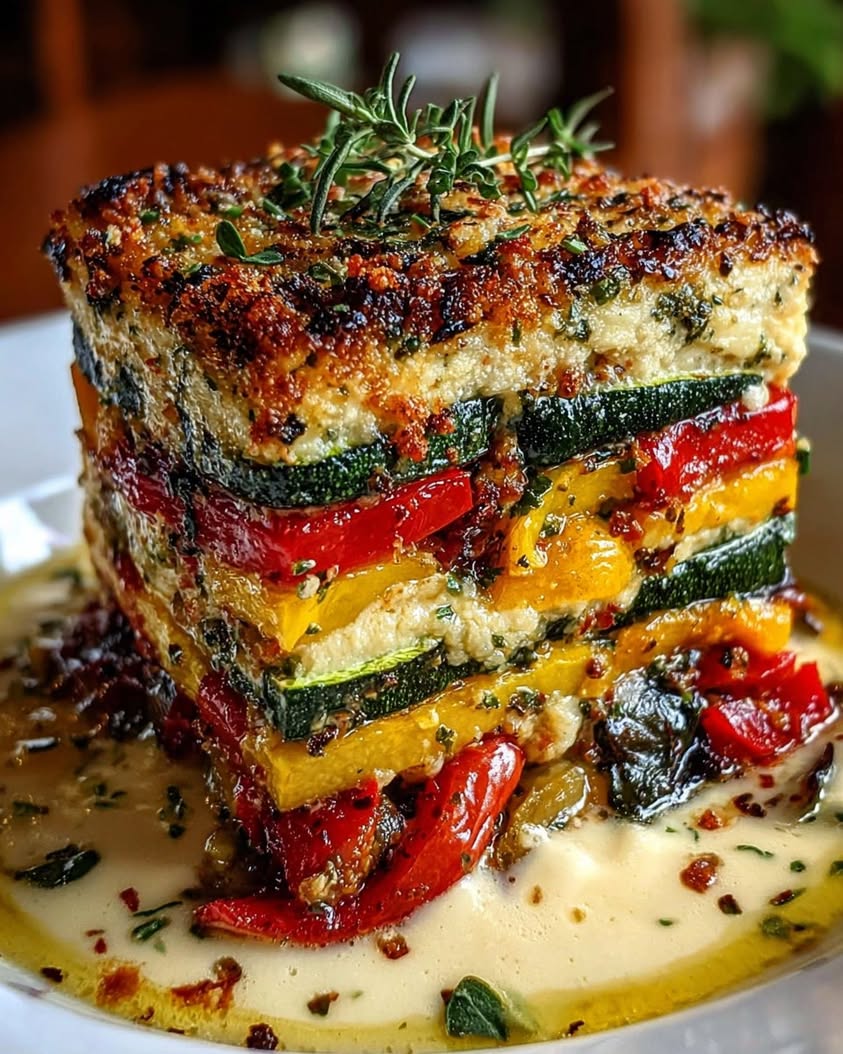
- Visual Appeal: The cross-section of this lasagna is a true masterpiece, showcasing vibrant stripes of deep purple eggplant, green zucchini, and bright red and yellow bell peppers. The golden-brown cheese drizzle on top adds a final touch of rustic elegance.
- Skill Level Needed: This recipe is ideal for a confident home cook. It involves several components like roasting vegetables and making a cheese sauce, but the steps are straightforward. Therefore, with a little organization, even intermediate cooks can achieve fantastic results.
- Special Equipment: You will need a few key tools: a large baking sheet for roasting, a 9×13 inch baking dish, a medium saucepan for the cheese sauce, and a sharp chef’s knife for prepping all the beautiful vegetables efficiently.
Recipe Overview
- Difficulty Level: We rate this Layered Mediterranean Vegetable Lasagna with Three-Cheese Drizzle as intermediate. The process involves multiple components requiring coordination, such as roasting vegetables to the perfect tenderness and preparing a smooth, lump-free cheese sauce. However, each step is clearly explained, making the entire process manageable and rewarding for cooks ready to expand their skills.
- Category: This dish proudly sits in several categories. It is a magnificent vegetarian main course, a spectacular casserole for potlucks, and an impressive centerpiece for holiday meals or dinner parties. Furthermore, it makes excellent leftovers, tasting even better the next day.
- Cuisine: This recipe draws direct inspiration from the sun-soaked, vegetable-centric cooking of the Mediterranean region, particularly Italy and Greece. It utilizes classic flavors like olive oil, garlic, oregano, and basil, celebrating the natural goodness of seasonal produce in a layered, lasagna-style format.
- Cost: Preparing this Layered Mediterranean Vegetable Lasagna with Three-Cheese Drizzle is surprisingly cost-effective, especially when vegetables are in season. The main expenses are the fresh produce and the three cheeses. Overall, it yields a large quantity of high-quality food for less than the price of a restaurant meal, making it an excellent value.
- Season: This dish shines brightest in late summer and early fall when eggplant, zucchini, and bell peppers are at their peak flavor, sweetness, and affordability. Nevertheless, you can make it year-round with good-quality grocery store produce for a taste of sunshine in any season.
- Occasion: It is perfect for a special Sunday family dinner, a festive meatless holiday option like Christmas Eve, or a show-stopping dish to bring to a potluck. Its make-ahead nature also makes it a smart choice for entertaining, as you can prepare it early and simply bake before guests arrive.
Why You’ll Love This Recipe
First and foremost, the taste and texture of this Layered Mediterranean Vegetable Lasagna with Three-Cheese Drizzle are utterly captivating. Each vegetable layer brings its own unique character. The eggplant becomes incredibly tender and almost meaty, the zucchini offers a fresh, mild flavor, and the bell peppers provide a sweet, robust note. Meanwhile, the creamy garlic herb cheese sauce ties everything together with its rich, savory depth. Every bite is a satisfying journey through complementary flavors and pleasing textures that will have everyone asking for seconds.
From a convenience standpoint, this recipe is a dream for planning. You can roast all the vegetables ahead of time and even prepare the cheese sauce a day in advance. Consequently, on the day you want to serve it, assembly is quick and stress-free. Additionally, it bakes beautifully, filling your home with an aroma that promises a fantastic meal. This make-ahead flexibility makes it an ideal choice for busy weeknights when you want something special or for effortless entertaining where you can enjoy your own party.
Nutritionally, this Layered Mediterranean Vegetable Lasagna with Three-Cheese Drizzle is packed with benefits. It is loaded with vitamins, minerals, and fiber from its rainbow of vegetables. Using olive oil and a moderate amount of cheese provides healthy fats and protein. Compared to traditional meat lasagna, it is generally lower in saturated fat and calories while being just as filling and satisfying. It is a delicious way to incorporate more vegetables into your diet without feeling like you are sacrificing flavor or indulgence.
For social gatherings, this dish is a true superstar. Its vibrant appearance is a guaranteed conversation starter. It caters beautifully to vegetarian guests and is often a hit with those looking to reduce their meat intake. Serving a large, shareable dish like this Layered Mediterranean Vegetable Lasagna with Three-Cheese Drizzle fosters a warm, communal dining experience. It is the kind of meal that feels generous and celebratory, perfect for bringing people together around the table.
Finally, this recipe is wonderfully cost-effective and accessible. The ingredients are simple, whole foods that are easy to find at any supermarket. You can often find great deals on eggplant and zucchini, especially in season. Making a lavish, restaurant-quality meal at home for a fraction of the cost is incredibly rewarding. This Layered Mediterranean Vegetable Lasagna with Three-Cheese Drizzle proves that eating well does not have to be complicated or expensive.
Historical Background and Cultural Significance
The concept of layering ingredients, especially vegetables and cheese, has ancient roots across the Mediterranean. While modern pasta-based lasagna hails from the Emilia-Romagna region of Italy, the idea of creating a baked, layered casserole is much older and more widespread. Early versions, known as “lasagne” in ancient Rome, were likely simple sheets of dough with various fillings. Over centuries, this technique traveled and evolved, incorporating local ingredients like the abundant eggplants, zucchini, and tomatoes found throughout Southern Italy and Greece.
Culturally, dishes like this Layered Mediterranean Vegetable Lasagna with Three-Cheese Drizzle represent the heart of Mediterranean home cooking. They embody the principles of “cucina povera” or “poor kitchen,” which focuses on transforming humble, readily available ingredients into magnificent, flavorful meals. Using a bounty of summer vegetables is a traditional way to celebrate the harvest and preserve its goodness. This style of cooking is deeply connected to family, tradition, and sharing food with loved ones around a communal table.
The recipe has evolved significantly with the global exchange of ingredients. Tomatoes, now a staple, were introduced to Europe from the Americas. Eggplant, originally from Asia, became a cornerstone of Mediterranean cuisine. The modern vegetarian interpretation, focusing on vegetables as the star instead of meat, reflects contemporary dietary trends and a renewed appreciation for plant-based eating. Our version with a creamy three-cheese drizzle is a luxurious twist on these rustic, vegetable-forward traditions.
Regional variations of vegetable layered casseroles are abundant. In Greece, you might find “Moussaka,” a layered dish with eggplant, potato, and spiced meat topped with béchamel. In Italy, “Parmigiana di Melanzane” layers fried eggplant with tomato sauce and cheese. Our Layered Mediterranean Vegetable Lasagna with Three-Cheese Drizzle draws inspiration from these classics but uses a wider array of vegetables and a distinct, drizzle-style cheese topping for a unique presentation and texture. It is a celebration of Mediterranean flavors in a familiar, comforting format.
Ingredient Deep Dive
Eggplant, or aubergine, is the foundational vegetable in this lasagna. Historically, it traveled from India through the Middle East before becoming a Mediterranean staple. It is rich in fiber, antioxidants, and nasunin, a compound linked to brain health. When selecting, choose firm, heavy eggplants with smooth, shiny skin and a bright green stem. To prevent a bitter taste and a soggy texture, salting sliced eggplant and letting it drain for 30 minutes is a classic technique. This draws out excess moisture and tightens the flesh, ensuring your layers hold their shape beautifully.
Zucchini, or courgette, adds a fresh, mild flavor and structure. A summer squash native to the Americas, it was embraced wholeheartedly in Mediterranean cooking. It is low in calories but high in vitamin C, manganese, and beneficial antioxidants. Look for small to medium-sized zucchini that feel firm and have bright, unblemished skin. Larger zucchinis can be seedy and watery. You do not typically need to salt zucchini before roasting, but patting the slices very dry helps them caramelize instead of steam in the oven.
Bell Peppers provide vibrant color and a sweet, robust flavor. Originally from Central and South America, they were cultivated across Europe. Red and yellow peppers are simply ripe green peppers, offering higher levels of vitamins A and C. Choose peppers that feel heavy for their size, with taut, glossy skin and no soft spots. Roasting them intensifies their natural sweetness and adds a subtle smoky depth that is essential to the flavor profile of this Layered Mediterranean Vegetable Lasagna with Three-Cheese Drizzle.
The Three-Cheese Drizzle relies on a specific blend for perfect flavor and texture. Whole-milk ricotta provides a creamy, slightly granular base. Fresh mozzarella (not low-moisture) offers superb meltability and stretch. Finally, freshly grated Parmesan or Pecorino Romano adds a sharp, salty, umami punch that elevates the entire sauce. Using pre-shredded cheese is not recommended, as it contains anti-caking agents that can make your sauce grainy. For the best results, always grate your own cheese just before using.
Common Mistakes to Avoid
- Skipping the Salting Step for Eggplant: Not salting eggplant can lead to a bitter aftertaste and a soggy, watery texture in your final dish. The salt draws out excess moisture and condenses the flesh. Therefore, always take the time to salt, drain, and pat your eggplant slices dry.
- Overcrowding the Baking Sheet: When roasting vegetables, giving them space is crucial. If the pan is too crowded, the vegetables will steam instead of roast. Consequently, you will miss out on the caramelized, flavorful edges that are key to the dish’s depth. Use two sheets if necessary.
- Using Watery Tomato Sauce: A thin, runny sauce will make your lasagna layers slip and become soupy. Opt for a high-quality, thick marinara or simmer your own sauce until it is very concentrated. This ensures clean layers and a firm slice when served.
- Not Letting the Lasagna Rest: Cutting into your Layered Mediterranean Vegetable Lasagna with Three-Cheese Drizzle right out of the oven is a recipe for a sloppy mess. Allowing it to rest for 20-25 minutes lets the layers set, the cheese solidify slightly, and the temperatures even out, guaranteeing perfect, neat portions.
- Underseasoning the Vegetables: Vegetables need generous seasoning before roasting. Do not be shy with salt, pepper, and dried herbs like oregano. Remember, some seasoning will be lost during cooking, so season confidently to build layers of flavor from the very beginning.
- Making a Lumpy Cheese Sauce: Adding cheese to a too-hot base or not stirring constantly can cause the proteins to seize and create a grainy sauce. Always remove your milk or béchamel base from the heat before gradually whisking in the cheese until it is fully melted and smooth.
- Using Pre-Shredded Cheese: Pre-shredded cheeses contain cellulose or starch to prevent clumping. These additives prevent the cheese from melting smoothly into a creamy sauce, often resulting in a stringy or gummy texture. For the silkiest Three-Cheese Drizzle, grate your cheese from a block.
- Layering While Ingredients Are Hot: Assembling your lasagna with piping hot roasted vegetables and sauce can start cooking the eggs in the cheese mixture prematurely. Always let your components cool to warm or room temperature before building the layers for the best texture.
Essential Techniques
Salting and Draining Eggplant is a non-negotiable technique for this recipe. First, slice the eggplant and lay the pieces on a rack or paper towels. Generously sprinkle both sides with kosher salt. The salt pulls out bitter compounds and excess water through osmosis. After 30-60 minutes, you will see beads of moisture on the surface. Rinse the slices briefly to remove excess salt and then pat them thoroughly dry with clean towels. This process ensures your eggplant becomes tender, not soggy, and absorbs other flavors beautifully during roasting.
Roasting Vegetables to Perfection is about managing moisture and heat. Always preheat your oven to a high temperature, around 425°F. Toss your dried vegetable slices in just enough olive oil to coat them lightly; too much oil will make them greasy. Arrange them in a single layer with space between each piece. Roast until the edges are caramelized and the centers are tender. The visual cues are golden-brown spots and slightly shrunken, flexible slices. Proper roasting concentrates the vegetables’ natural sugars, creating the foundational flavor for your Layered Mediterranean Vegetable Lasagna with Three-Cheese Drizzle.
Creating a Smooth, Creamy Cheese Sauce requires patience and temperature control. Start by making a simple roux with butter and flour, cooking it for a minute to remove the raw flour taste. Gradually whisk in warm milk to prevent lumps, cooking until the mixture thickens. Crucially, remove the sauce from the heat before adding your grated cheeses. The residual heat is enough to melt them smoothly. Stir constantly until fully incorporated. If the sauce seems too thick for drizzling, you can thin it with a tablespoon or two of milk. The final sauce should be velvety and coat the back of a spoon.
Pro Tips for Perfect Layered Mediterranean Vegetable Lasagna
Use a mandoline slicer to ensure all your vegetable slices are a uniform thickness. This guarantees even roasting and consistent layering, so every bite has the perfect texture.
Layer your ingredients in a specific order for structural integrity. Start with a thin layer of tomato sauce on the bottom to prevent sticking, then follow with vegetables, more sauce, and herbs. Repeat, finishing with the creamy cheese drizzle on top.
Fresh herbs are your best friend. Add a layer of fresh basil or oregano leaves between the vegetable layers. The heat will gently wilt them, infusing the entire dish with a bright, aromatic flavor that dried herbs cannot match.
For an extra flavor boost, mix a tablespoon of tomato paste into your tomato sauce. It adds a deeper, richer umami note that complements the sweet roasted vegetables perfectly.
If you see the top of your lasagna browning too quickly during baking, loosely tent it with aluminum foil. This will protect the cheese drizzle while allowing the interior to continue cooking through.
Invest in a good, deep 9×13 inch ceramic or glass baking dish. These materials distribute heat evenly, preventing the dreaded burnt edges and undercooked center that can happen with thin metal pans.
Let the assembled lasagna sit at room temperature for 20 minutes before baking. This takes the chill off the ingredients and promotes more even cooking from edge to center.
For a beautiful golden-brown top, switch your oven to broil for the final 2-3 minutes of baking. Watch it closely, as it can go from perfect to burnt in seconds.
Variations and Adaptations
For regional variations, you can take this dish in many directions. Add a Greek spin by incorporating layers of spinach and feta cheese into the drizzle. For an Italian “Parmigiana” style, bread and fry the eggplant slices before layering. You could also add a Middle Eastern touch with a sprinkle of za’atar or sumac in the vegetable seasoning.
Seasonal adaptations are simple. In winter, incorporate roasted butternut squash or mushrooms for earthy depth. In spring, try layers of roasted asparagus and leeks. The framework of the Layered Mediterranean Vegetable Lasagna with Three-Cheese Drizzle is wonderfully flexible, allowing you to showcase the best produce any time of year.
Dietary modifications are straightforward. For a gluten-free version, ensure your tomato sauce is certified gluten-free and use a gluten-free flour blend or cornstarch to thicken the cheese sauce. For a vegan adaptation, use a cashew-based cream sauce and vegan cheeses. To reduce carbs, simply increase the vegetable layers and use less or no tomato sauce.
Flavor variations can personalize the dish. Add heat with red pepper flakes between layers or in the cheese sauce. Incorporate sun-dried tomatoes or kalamata olives for a salty, intense burst. Swap the Italian herbs for herbes de Provence for a French-inspired flavor profile.
Texture modifications can cater to different preferences. For a firmer bite, do not salt the eggplant and roast it until just tender. For a softer, more unified casserole, roast the vegetables until they are very tender and almost falling apart. You can also blend half the roasted vegetables into the tomato sauce for a chunkier, more integrated base.
Presentation alternatives offer creative freedom. Instead of a large baking dish, assemble individual portions in small ramekins for a elegant dinner party presentation. You can also deconstruct the lasagna, serving the roasted vegetables on a platter topped with the warm cheese drizzle and fresh herbs for a family-style meal.
Serving and Presentation Guide
Plating this lasagna beautifully is part of the experience. Use a sharp, thin-bladed knife to cut clean portions. A flat, wide spatula or pie server helps lift each piece out intact. For a restaurant-style look, place a square of lasagna slightly off-center on a warm, white plate. Wipe any drips from the rim for a clean presentation.
Garnishing adds the final touch of freshness and color. A sprinkle of chopped fresh parsley, basil, or microgreens right before serving adds a vibrant green contrast. A light drizzle of high-quality extra virgin olive oil or a balsamic glaze around the plate adds shine and a touch of acidity. A few shavings of Parmesan cheese with a vegetable peeler provide an elegant, salty finish.
Traditional accompaniments keep the meal light and balanced. A simple arugula salad with a lemon vinaigrette cuts through the richness perfectly. Crusty, warmed bread is essential for soaking up any delicious sauce left on the plate. For a more substantial meal, serve with a side of garlic sautéed greens or white beans.
Modern serving suggestions can streamline your meal. Consider serving it as the star of a buffet alongside other Mediterranean salads like a Greek salad or roasted potato wedges. For a casual gathering, slice it into smaller squares and serve as a hearty appetizer or part of a larger tapas-style spread.
Temperature considerations are key. Serve the lasagna warm, not piping hot, to allow the flavors to be fully appreciated. Ensure your salad is chilled and your bread is warm. This contrast in temperatures makes the dining experience more dynamic and enjoyable.
Portion control is easy with this rich dish. A standard 9×13 inch pan typically yields 8 generous servings or 12 more modest portions. Since it is very satisfying, consider serving slightly smaller pieces alongside a large salad. Guests can always come back for more if they wish.
Wine and Beverage Pairing
Wine pairings should complement the dish’s rich, savory, and slightly sweet notes. A medium-bodied Italian red like Chianti Classico or Barbera works wonderfully. Their bright acidity cuts through the creamy cheese, and their cherry notes harmonize with the tomato sauce. Alternatively, a fuller-bodied white like an oak-aged Chardonnay or a Viognier can stand up to the flavors without overpowering the vegetables.
Non-alcoholic alternatives are just as important. Sparkling water with a twist of lemon or lime cleanses the palate between bites. For a more crafted option, a rosemary-infused lemonade or a chilled, unsweetened hibiscus tea (agua de jamaica) offers herbal and tart notes that contrast beautifully with the lasagna’s richness.
While not traditional, coffee and tea can be lovely after the meal. A dark roast espresso or a cup of strong black tea helps digest the rich meal. An herbal tea like peppermint or ginger tea is also a soothing, palate-cleansing way to end the dining experience.
Temperature is crucial for beverages. Serve red wines slightly below room temperature, around 60-65°F. White wines and non-alcoholic drinks should be well-chilled. Iced beverages are refreshing, but avoid making them so cold that they numb the palate to the lasagna’s nuanced flavors.
Serving suggestions include offering both red and white wine options to cater to different preferences. Always provide plenty of still water on the table. If serving a non-alcoholic punch or infused water, present it in a beautiful carafe with ice and fresh herb sprigs to elevate the entire table setting.
Storage and Shelf Life
Proper storage is essential for maintaining quality. Cool the lasagna completely to room temperature before covering. Do not leave it out for more than two hours. Transfer leftovers to an airtight container, or cover the baking dish tightly with plastic wrap and then foil. You can refrigerate it for up to 4 days.
Temperature requirements are strict. Always store the lasagna in the refrigerator at 40°F or below. Never store a large, hot dish directly in the fridge, as it can raise the internal temperature and risk spoiling other foods. Let it cool on the counter first, then refrigerate.
Container recommendations include glass or BPA-free plastic containers with tight-fitting lids. If storing in the original baking dish, a layer of plastic wrap pressed directly onto the surface of the lasagna will prevent it from drying out, followed by a layer of aluminum foil over the dish.
Signs of spoilage are easy to spot. Look for an off smell, a slimy texture on the surface, or any visible mold. If you see any of these signs, discard the entire dish immediately. When in doubt, it is always safer to throw it out.
Reheating instructions are simple for best results. Reheat individual portions in the microwave covered with a damp paper towel to retain moisture. For larger amounts, cover with foil and reheat in a 350°F oven until warmed through, about 20-30 minutes. You can also reheat slices in a skillet on the stovetop with a splash of water to create steam.
Freezing guidelines allow for longer storage. Wrap cooled portions tightly in plastic wrap and then in foil, or place in a freezer-safe container. It will keep for up to 3 months. Thaw overnight in the refrigerator before reheating. Note that the texture of the zucchini may become slightly softer after freezing and thawing.
Make Ahead Strategies
A prep timeline makes entertaining easy. You can roast all vegetables 2 days in advance and store them covered in the fridge. Prepare the tomato sauce and the three-cheese drizzle 1 day ahead, storing them separately. On the day of serving, simply assemble the cold components in the dish and bake. Add 10-15 minutes to the baking time since you are starting from cold.
Storage between steps is simple. Keep the roasted vegetables, tomato sauce, and cheese sauce in separate airtight containers in the refrigerator. If the cheese sauce thickens too much overnight, you can gently reheat it with a splash of milk, whisking until it returns to a drizzling consistency.
Assessing quality impact is important. Make-ahead components often improve in flavor as they meld. The roasted vegetables hold up very well. The cheese sauce may thicken but is easily adjusted. The final baked texture of the Layered Mediterranean Vegetable Lasagna with Three-Cheese Drizzle is virtually identical whether assembled fresh or from prepped components.
Assembly tips for make-ahead include building the entire lasagna the night before. Cover it tightly and refrigerate. Let it sit on the counter for 30-45 minutes before baking to take the chill off, then bake as directed, adding extra time as needed. This is the ultimate stress-free dinner party strategy.
Reheating guidelines for a fully made-ahead lasagna are straightforward. If baking from refrigerated, cover with foil and bake at 375°F for 45-50 minutes, then uncover and bake for another 15-20 minutes until bubbly and hot in the center. Use a knife inserted into the center to check the temperature; it should be very hot to the touch.
Fresh element additions after baking revive the dish. Always add fresh herb garnishes like basil or parsley after the lasagna comes out of the oven. A final drizzle of good olive oil or a sprinkle of flaky sea salt just before serving will brighten all the pre-made flavors and add a professional touch.
Scaling Instructions
Halving the recipe is simple for smaller households. Use an 8×8 inch baking dish. Precisely halve all ingredient quantities. Roasting times may be slightly shorter due to less volume on the baking sheet, so check for doneness 5-10 minutes earlier. The bake time will also be reduced by about 10-15 minutes.
Doubling or tripling the recipe is great for a crowd. You will need multiple baking sheets to roast all the vegetables in batches without overcrowding. Use two 9×13 inch dishes or one very large lasagna pan. Increase the baking time by 15-25 minutes, and check that the center is hot and bubbly. The layers in the center will take longer to heat through.
Equipment adjustments are necessary when scaling. For a double batch, ensure your food processor or mixing bowl is large enough for the increased cheese sauce quantity. You may need to make the sauce in two batches. Have plenty of kitchen towels ready for patting dry all the vegetable slices.
Timing modifications are crucial. When doubling, the prep time will increase, but not necessarily double. You can prep vegetables in assembly-line fashion. The roasting time per sheet will remain the same, but you will have multiple batches. Factor this into your overall schedule.
Storage considerations change with scale. A double batch will yield a lot of leftovers. Plan your storage containers in advance. Consider freezing half of the baked lasagna in portion-sized containers for future easy meals. Label and date everything clearly.
Nutritional Deep Dive
The macro breakdown of this dish is favorable. A serving provides a good balance of complex carbohydrates from the vegetables, moderate protein from the cheeses, and healthy fats primarily from olive oil. It is a satisfying meal that provides sustained energy without the heavy feeling of a meat-based lasagna.
Micronutrient analysis reveals a wealth of vitamins and minerals. Eggplant provides fiber and antioxidants. Zucchini offers vitamin C and manganese. Red and yellow bell peppers are exceptionally high in vitamins A and C. The cheeses contribute calcium and phosphorus. Together, they make this Layered Mediterranean Vegetable Lasagna with Three-Cheese Drizzle a nutrient-dense choice.
Health benefits are linked to its Mediterranean diet principles. The high vegetable content supports heart health, digestion, and inflammation reduction. The use of olive oil as the primary fat source is associated with improved cholesterol levels. The dish is also rich in antioxidants from the colorful vegetables, which help protect cells from damage.
Dietary considerations are important to note. This recipe contains dairy and gluten (if using regular flour in the sauce). It is vegetarian but not vegan or gluten-free in its standard form. However, as discussed, it can be easily adapted for those dietary needs with simple substitutions.
Portion analysis shows that a standard serving is quite filling due to its high fiber and protein content. This can aid in weight management by promoting satiety and reducing the likelihood of overeating or snacking later. It is a satisfying meal that fits well into a balanced diet.
Weight management tips include being mindful of the cheese drizzle portion. You can lightly drizzle rather than smother the top to reduce fat and calories slightly. Serving with a large, non-starchy salad fills the plate and adds volume without many calories, helping you feel fully satisfied.
Dietary Adaptations
For a gluten-free Layered Mediterranean Vegetable Lasagna, ensure your tomato sauce is certified gluten-free. To thicken the cheese sauce, use a gluten-free all-purpose flour blend at a 1:1 ratio, or use cornstarch. Make a slurry with 2 tablespoons of cornstarch and a little cold milk, then whisk it into the warming milk base until thickened before adding cheese.
A dairy-free or vegan version is achievable. For the cheese drizzle, create a sauce from soaked cashews blended with nutritional yeast, lemon juice, garlic, and vegetable broth until silky smooth. Use a vegan mozzarella shred for meltability. Layer with a robust vegan tomato sauce. The roasted vegetable layers remain the delicious, flavorful star.
A low-carb or keto adaptation focuses on increasing vegetables and reducing tomatoes. Use more layers of eggplant and zucchini, and make a tomato sauce with minimal onions and using a low-carb tomato product. For the cheese sauce, thicken it with a keto-friendly thickener like xanthan gum instead of flour, and ensure all cheeses are full-fat.
For a Paleo version, omit all dairy and grains. The cheese drizzle is not Paleo, so you could top the lasagna with a creamy avocado herb sauce or a dairy-free “cheese” sauce made from nuts and nutritional yeast. Use a tomato sauce sweetened only with vegetables, not sugar.
A Low-FODMAP adaptation requires careful vegetable selection. Use only the green parts of zucchini and scallions (green onions). Replace onion and garlic in the sauce with garlic-infused olive oil and the green tops of leeks. Use a lactose-free cheese blend for the drizzle, as hard cheeses like Parmesan are typically low in lactose.
Troubleshooting Guide
If your lasagna is too watery, the culprit is usually under-roasted vegetables or a watery tomato sauce. Next time, salt and drain the eggplant thoroughly, pat all vegetables dry before roasting, and use a thicker sauce. For salvage, you can carefully pour off excess liquid from the corner of the baking dish after it rests, or serve with a slotted spoon.
If the flavors seem bland, you likely underseasoned during the prep stages. Vegetables need generous seasoning before roasting. The tomato sauce should be well-seasoned. The cheese drizzle needs enough salt and garlic. To fix a baked lasagna, serve with flaky sea salt, extra grated Parmesan, and a drizzle of flavorful olive oil at the table.
If the top is burning before the center is hot, your oven temperature may be too high, or the rack is too close to the broiler element. Next time, bake at 375°F and place the dish in the center of the oven. If it’s happening now, loosely tent the top with foil for the remainder of the baking time.
If your cheese sauce is lumpy or grainy, it likely got too hot. For future attempts, always remove the milk base from the heat before adding cheese. To fix a lumpy sauce, you can try blending it with an immersion blender until smooth. If it’s grainy from pre-shredded cheese, it’s harder to fix, so strain it through a fine-mesh sieve to remove clumps.
If the layers are sliding apart when you cut, the lasagna did not rest long enough after baking. Always let it rest for at least 20 minutes. Also, ensure your tomato sauce is thick, not runny. Using a very sharp knife and a confident, clean slicing motion will also help get neat portions.
If the vegetables are still firm after baking, they were not roasted enough before assembly. They should be fully tender when pierced with a fork before going into the lasagna. The baking time in the dish melds flavors and heats everything through but does not significantly further cook tough vegetables.
Frequently Asked Questions
Can I use no-boil lasagna noodles in this vegetable lasagna? This specific recipe is designed as a vegetable-only layered casserole, so traditional pasta noodles are not included. The roasted vegetable slices act as the “noodles.” Adding dry pasta would throw off the moisture balance and require a different cooking approach.
Do I have to peel the eggplant? It is not necessary to peel eggplant, especially younger ones with tender skin. The skin contains nutrients and helps the slices hold their shape. If you have an older eggplant with very thick, tough skin, you may choose to peel it for a more uniform texture.
Can I make this lasagna completely ahead and freeze it before baking? Absolutely. Assemble the lasagna in a freezer-safe dish, wrap it tightly in plastic Print
Layered Mediterranean Eggplant, Zucchini, Yellow & Red Bell Pepper Lasagna with Creamy Garlic Herb Three-Cheese Drizzle
- Total Time: 45 minutes
- Yield: 4
Description
A vibrant, vegetable-packed lasagna featuring roasted eggplant, zucchini, and bell peppers layered with a rich tomato sauce and topped with a decadent three-cheese garlic herb drizzle.
Ingredients
- 1 large eggplant, sliced into 1/4-inch rounds
- 2 medium zucchinis, sliced lengthwise into 1/4-inch strips
- 1 yellow bell pepper, sliced into strips
- 1 red bell pepper, sliced into strips
- 2 cups marinara sauce
- 9 no-boil lasagna noodles
- 1 cup ricotta cheese
- 1/2 cup grated Parmesan cheese
- 1/2 cup shredded mozzarella cheese
- 1/2 cup heavy cream
- 3 cloves garlic, minced
- 2 tablespoons fresh basil, chopped
- 1 tablespoon fresh oregano, chopped
- 2 tablespoons olive oil
- Salt and black pepper to taste
Instructions
- Preheat oven to 400°F (200°C). Arrange eggplant, zucchini, and bell peppers on baking sheets, drizzle with olive oil, season with salt and pepper, and roast for 20 minutes until tender.
- Reduce oven to 375°F (190°C). Spread a thin layer of marinara sauce in a 9×13 inch baking dish. Layer 3 lasagna noodles, half the roasted vegetables, and 1/3 of the remaining sauce. Repeat layers, finishing with a final layer of noodles and sauce.
- In a bowl, mix ricotta, Parmesan, and mozzarella. In a saucepan, heat heavy cream with minced garlic until simmering, then stir into cheese mixture along with basil and oregano. Drizzle evenly over the top lasagna layer.
- Cover with foil and bake for 25 minutes. Remove foil and bake an additional 10 minutes until bubbly and golden. Let rest for 10 minutes before serving.
Notes
You can customize the seasonings to taste.
- Prep Time: 15 minutes
- Cook Time: 30 minutes
- Method: Main
- Cuisine: Mediterranean