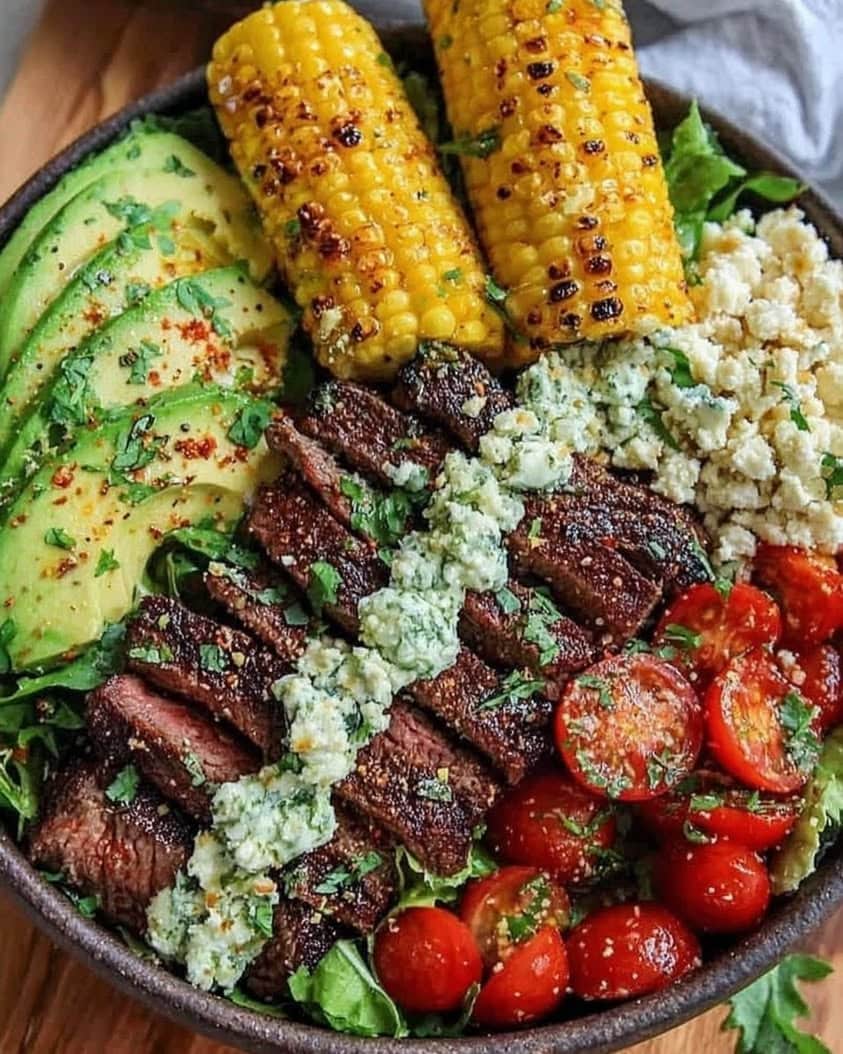
Steak, Avocado, and Roasted Corn Bowl with Cilantro Cream Sauce: A Flavor-Packed Power Meal
Imagine a meal that perfectly balances smoky, savory, creamy, and fresh flavors in every single bite. This Steak, Avocado, and Roasted Corn Bowl with Cilantro Cream Sauce is exactly that kind of culinary masterpiece. It’s a vibrant, restaurant-quality dish you can easily create at home, offering a satisfying and nutritious dinner that feels both indulgent and wholesome. Ultimately, this recipe brings together simple, high-quality ingredients in a way that celebrates texture and taste.
The star of this show is undoubtedly the juicy, perfectly seared steak, paired with sweet, charred roasted corn and creamy avocado. However, the real magic lies in the drizzle of vibrant cilantro cream sauce that ties everything together. This bowl is a fantastic solution for busy weeknights when you want something substantial, yet it’s impressive enough for weekend entertaining. Furthermore, it’s incredibly versatile, allowing you to customize the base grains and toppings to suit your preferences.
From the sizzle of the steak hitting the hot pan to the fresh scent of chopped cilantro, this cooking experience is a delight for the senses. You’ll love how quickly this hearty bowl comes together, making it a practical choice for meal prep. Consequently, you can enjoy a delicious, high-protein lunch ready to go. This Steak and Avocado Bowl with Roasted Corn and Cilantro Cream is more than just a meal; it’s a colorful, flavorful experience that will become a regular in your dinner rotation.
Quick Recipe Highlights
- Flavor Profile: This bowl delivers a powerful combination of savory, umami-rich steak, sweet and smoky roasted corn, and the cool, creamy fat of avocado. The cilantro cream sauce adds a bright, herby, and tangy note that cuts through the richness perfectly.
- Texture: Expect a wonderful contrast between the tender, juicy bite of the steak, the crisp-tender char on the corn, the creamy softness of avocado, and the satisfying chew of your chosen grain base like rice or quinoa.
- Aroma: The cooking process fills your kitchen with the irresistible smell of searing beef and roasting corn. Meanwhile, the fresh herbs in the sauce—cilantro and lime—add a final layer of bright, inviting fragrance.
- Visual Appeal: This dish is a feast for the eyes with its striking color palette: deep brown steak, golden yellow corn, vibrant green sauce, and the pale green of avocado against a neutral grain base. It’s naturally beautiful and Instagram-worthy.
- Skill Level Needed: This is an accessible recipe for most home cooks. The techniques involved—pan-searing steak, roasting corn, and blending a sauce—are fundamental. With a few key tips, anyone can achieve excellent results.
- Special Equipment: You’ll need a good skillet or cast-iron pan for the steak, a baking sheet for the corn, and a blender or food processor for the silky smooth cilantro cream sauce. A sharp knife for prepping ingredients is also essential.
Recipe Overview
- Difficulty Level: We rate this recipe as “Easy” because it breaks down into straightforward, manageable steps. While it involves multiple components, each one is simple to execute. The steak searing requires attention but not advanced skill, and the sauce comes together in a blender. Therefore, even novice cooks can follow along successfully.
- Category: This dish fits perfectly into several categories: it’s a high-protein main course, an excellent meal prep option, and a fantastic healthy dinner bowl. It also works well as a hearty lunch and can be adapted for various dietary plans, including gluten-free and low-carb lifestyles.
- Cuisine: This bowl draws inspiration from modern American “bowl food” trends and Southwest or Tex-Mex flavors. The use of cilantro, lime, avocado, and corn creates a familiar flavor profile that many find comforting and exciting, though it’s a contemporary fusion creation rather than a traditional dish.
- Cost: The cost is moderate and centers on the price of the steak cut. Using flank or skirt steak keeps it affordable. Other ingredients like corn, avocado, cilantro, and sour cream are generally inexpensive. Overall, it delivers restaurant-quality taste for a fraction of the price of dining out.
- Season: This recipe shines in late summer and early fall when fresh corn and cilantro are at their peak. However, thanks to year-round availability of key ingredients, it’s truly a satisfying dish for any season, offering a taste of summer even in the middle of winter.
- Occasion: It’s incredibly versatile for occasions. Serve it for a casual weeknight family dinner, plate it beautifully for a date night at home, or even set up a “bowl bar” with all the components for a fun, interactive gathering with friends.
Why You’ll Love This Recipe
First and foremost, the taste and texture combination is utterly irresistible. Each forkful delivers a symphony of flavors: the deep, savory char of the steak, the burst of sweetness from the roasted corn, and the cool, rich avocado. Then, the cilantro cream sauce wraps it all in a bright, herby embrace. The contrast between hot and cold, crunchy and creamy, makes every bite interesting and deeply satisfying. Consequently, this isn’t a boring or monotonous meal; it’s an engaging eating experience that keeps you coming back for more.
From a convenience standpoint, this Steak and Avocado Bowl is a winner. The components cook simultaneously, so your total active time is minimal. You can roast the corn while the steak rests and whip up the sauce in the blender in minutes. Furthermore, it’s an exceptional meal prep champion. Simply store the components separately in the fridge and assemble a fresh, restaurant-quality lunch in seconds throughout the week. This efficiency makes healthy eating effortless and delicious.
Nutritionally, this bowl is a powerhouse. It provides a substantial amount of high-quality protein from the steak, which is essential for muscle repair and satiety. The avocado contributes heart-healthy monounsaturated fats and fiber, while the corn offers antioxidants and vitamins. By choosing a whole grain like quinoa or brown rice as your base, you add complex carbohydrates and more fiber. This balance of macronutrients fuels your body steadily and keeps you full for hours.
For social and entertaining value, this recipe is a fantastic choice. It feels special and indulgent, making guests feel pampered. You can easily double or triple the recipe for a crowd. Alternatively, set up a DIY bowl station where everyone can customize their own creation, which is always a hit. The vibrant, colorful presentation is sure to impress, and the familiar yet elevated flavors appeal to a wide range of palates.
Finally, this dish is cost-effective and accessible. You control the quality of ingredients and the portion sizes. Using a more affordable cut of steak like flank or skirt keeps the budget in check without sacrificing flavor, especially when marinated and cooked properly. The other ingredients are pantry and fridge staples or easy-to-find fresh produce. Therefore, you get a gourmet-feeling meal that is both kind to your wallet and simple to shop for.
Historical Background and Cultural Significance
The concept of the “grain bowl” or “power bowl” is a relatively modern culinary phenomenon, gaining massive popularity in the 2010s alongside the rise of fast-casual dining and heightened interest in health-conscious, customizable meals. This Steak, Avocado, and Roasted Corn Bowl is a direct descendant of that trend. It represents a contemporary approach to eating that prioritizes balanced nutrition, bold flavors, and visual appeal all in one vessel. While not rooted in ancient tradition, it reflects current food culture’s desire for meals that are both nourishing and exciting.
Culturally, the bowl draws heavily on flavors and ingredients synonymous with Southwestern and Mexican-American cuisines. The use of corn, avocado, cilantro, and lime is a nod to these rich culinary traditions. In many Mesoamerican cultures, corn is not just a food but a sacred staple, a symbol of life and sustenance. Avocados have been cultivated in Central America for thousands of years. By incorporating these elements, the recipe pays homage to their deep historical significance while reinterpreting them in a modern, fusion context.
The evolution of this recipe follows the broader story of how global flavors have been adopted and adapted in mainstream American cooking. The seared steak component is a classic technique, but pairing it with a creamy, herbaceous sauce and fresh vegetables showcases a move away from heavy, starch-centric plates. This evolution speaks to a more integrative view of a meal, where vegetables and sauces share the spotlight with the protein, creating a more harmonious and complete dish on a single plate—or in a single bowl.
Regional variations of this concept are endless. In California, you might find a similar bowl with a kale base and a ginger-lime dressing. In Texas, it could feature a smoky chipotle sauce and black beans. The beauty of the bowl format is its inherent flexibility. Our version with roasted corn and cilantro cream sits comfortably within this spectrum, offering a specific, delicious take that can itself be the starting point for countless personal adaptations, reflecting local tastes and available ingredients.
Ingredient Deep Dive
Steak (Flank or Skirt): Flank and skirt steak are flavorful, lean cuts from the cow’s abdominal muscles. Historically, these were considered less desirable “butcher’s cuts,” but their rich beefy flavor and affordability have made them hugely popular. They are excellent for marinating and quick, high-heat cooking. Nutritionally, they are packed with protein, iron, zinc, and B vitamins. When selecting, look for bright red color with minimal visible gristle. For the most tender result, always slice them thinly against the grain after cooking. You can substitute with hanger steak or even sirloin if needed.
Fresh Corn: Corn, or maize, is a New World crop domesticated in southern Mexico over 9,000 years ago and is central to many Indigenous American cultures. For this recipe, fresh corn on the cob, roasted to bring out its natural sugars, provides unbeatable sweetness and smoky depth. It’s a good source of fiber, vitamins B and C, and antioxidants like lutein. Choose ears with bright green, snug husks and plump, tightly packed kernels. For a shortcut, frozen fire-roasted corn can work in a pinch, though fresh is ideal for texture and flavor.
Avocado: Avocados originated in south-central Mexico and have been cultivated for millennia. They are unique fruits due to their high healthy fat content, primarily monounsaturated oleic acid, which benefits heart health. They also provide nearly 20 vitamins and minerals, including potassium and folate. A ripe avocado should yield slightly to gentle pressure at the stem end. To speed ripening, place it in a paper bag with a banana. To prevent browning after slicing, a squeeze of lime juice is essential. For a substitute, a dollop of guacamole can work, though fresh slices are preferred for texture.
Cilantro & Lime (for the Sauce): Cilantro, the leaves of the coriander plant, and lime are quintessential flavor partners in Latin American, Asian, and Middle Eastern cuisines. Cilantro adds a bright, citrusy note, though its taste is genetically determined—some people perceive it as soapy. Lime juice provides crucial acidity to balance the sauce’s richness. Together, they offer vitamin C and antioxidants. For the brightest flavor, use both the cilantro leaves and tender stems. If cilantro is a problem, substitute with flat-leaf parsley and add a touch of extra lime zest.
Sour Cream & Mayo (Sauce Base): The combination of sour cream and mayonnaise creates the lush, creamy foundation for the sauce. Sour cream adds tang, while mayo contributes body and a subtle richness. For a lighter version, Greek yogurt can replace one or both. This mixture helps carry the flavors of the cilantro, garlic, and lime, coating the other bowl components beautifully. Using full-fat versions will yield the creamiest, most stable sauce, but low-fat alternatives can be used with the understanding the texture may be slightly thinner.
Common Mistakes to Avoid
- Not Letting the Steak Rest: Slicing the steak immediately after cooking causes all the precious juices to run out onto the cutting board, leaving the meat dry. Always tent it with foil and let it rest for at least 5-10 minutes. This allows the fibers to relax and reabsorb the juices.
- Slicing With the Grain: Flank and skirt steak have long, tough muscle fibers. Slicing with the grain (parallel to the fibers) makes each piece chewy and stringy. You must identify the direction of the fibers and slice perpendicularly across them to create tender, short-grained pieces.
- Overcrowding the Pan: When searing the steak, if the pan is too crowded or the pieces are too close together, they will steam instead of sear. This prevents the formation of a flavorful, caramelized crust. Cook in batches if necessary to ensure each piece has contact with the hot surface.
- Using Watery Vegetables in the Sauce: If your cilantro isn’t thoroughly dried after washing, or if you use bottled lime juice with additives, you can end up with a thin, runny sauce. Always pat herbs dry and use fresh lime juice for the best consistency and flavor.
- Over-Blending the Sauce: Blending the cilantro cream sauce for too long can incorporate too much air, making it frothy, and can even cause it to separate or become bitter from over-processing the herbs. Blend just until smooth and vibrant green.
- Roasting Corn Without Enough Oil: Tossing the corn in a small amount of oil is crucial. The oil helps conduct heat, promotes even roasting and charring, and prevents the kernels from drying out and burning. Don’t skip this simple step.
- Adding Avocado Too Early: Avocado browns quickly when exposed to air. Slice and add it just before serving, not during the assembly of components for later. A quick toss in leftover lime juice from the sauce prep can also help delay oxidation.
- Underseasoning the Components: Each element—the steak, the corn, the sauce, and even the grain base—needs to be properly seasoned with salt. Seasoning in layers builds depth of flavor. Taste each component as you go and adjust accordingly.
Essential Techniques
Pan-Searing Steak: This technique uses high heat to create a flavorful, caramelized crust (the Maillard reaction) while keeping the interior juicy. First, ensure your steak is dry and at room temperature. Next, heat your pan until very hot before adding oil. Then, place the steak in and do not move it for several minutes to allow a proper crust to form. Finally, flip only once. The goal is a deep brown exterior and an interior cooked to your desired doneness. A common pitfall is moving the steak too soon, which tears the developing crust.
Roasting Fresh Corn: Roasting corn intensifies its natural sweetness and adds a smoky, charred dimension. The key is high, direct heat. You can do this in a hot oven (broiler) or on a grill. First, coat the kernels lightly in oil to promote browning and prevent sticking. Then, spread them in a single layer so they roast, not steam. Cook until you see noticeable char spots, which indicate caramelization. The visual cue for success is a mix of bright yellow and deep golden-brown kernels.
Blending an Emulsified Sauce: The cilantro cream sauce is an emulsion, where the liquids (lime juice) and fats (sour cream/mayo) are blended into a smooth, unified consistency. The blade of the blender creates a stable suspension. For success, start with your softer, wetter ingredients (like sour cream) at the bottom near the blade to help pull down the leafy herbs. Blend on high just until completely smooth and pale green. Over-blending can break the emulsion, causing it to thin out or separate.
Slicing Against the Grain: This is the single most important step for ensuring tender steak from tougher cuts. After the steak rests, examine it to see which direction the long muscle fibers are running. Then, position your knife perpendicular (at a 90-degree angle) to those fibers and slice. This cuts the long, tough fibers into short, manageable pieces, making the meat much easier to chew. Slices should be about ¼-inch thick for optimal texture in the bowl.
Pro Tips for Perfect Steak, Avocado, and Roasted Corn Bowl
Bring your steak to room temperature for 20-30 minutes before cooking. This simple step ensures more even cooking from edge to center, preventing a overcooked exterior and a cold, raw interior.
After washing your cilantro, use a salad spinner or pat it vigorously with paper towels. Removing excess water is crucial for a thick, creamy sauce instead of a watery one.
Let the cilantro cream sauce sit for 15-20 minutes before serving. This rest time allows the flavors to meld and deepen, resulting in a more complex and harmonious sauce.
Use the residual heat from the steak pan to quickly warm your tortillas if serving them on the side. Just place a tortilla in the hot, off-heat pan for 15-20 seconds per side.
For the corn, if you have a gas stove, you can char the ears directly over the flame for a minute or two before cutting off the kernels. This adds an incredible smoky flavor.
When assembling the bowls, think in layers. Start with the warm grain base, then add the warm steak and corn, and finally top with the cold avocado and sauce. This preserves the distinct temperatures and textures.
If meal prepping, store the sauce in a separate, airtight container and the avocado unsliced. Slice the avocado and assemble the bowl just before eating to prevent sogginess and browning.
For an extra flavor boost, add a pinch of smoked paprika or cumin to the seasoning rub for the steak, or blend a small amount into the cilantro cream sauce.
Variations and Adaptations
Regional Variations: For a Tex-Mex twist, add black beans, pico de gallo, and a sprinkle of cotija cheese. A California-inspired version might include a base of massaged kale and a sprinkle of sunflower seeds. For an Asian fusion take, substitute the cilantro sauce with a ginger-scallion vinaigrette and use sesame-roasted broccoli instead of corn.
Seasonal Adaptations: In fall, substitute the corn with roasted sweet potatoes or Brussels sprouts. During winter, use roasted butternut squash. For spring, try adding blanched asparagus or fresh peas. The formula of protein + roasted veg + creamy sauce + grain is endlessly adaptable to what’s fresh and in season.
Dietary Modifications: For a gluten-free bowl, ensure your grain base (like rice or quinoa) and any condiments are certified gluten-free. To make it dairy-free, replace the sour cream in the sauce with vegan mayo and unsweetened coconut yogurt. For a lower-carb or keto version, serve the steak, avocado, corn, and sauce over a bed of cauliflower rice or simply on a bed of shredded lettuce.
Flavor Variations: Change the profile of the sauce by adding a chipotle pepper in adobo for smokiness, a handful of fresh mint for brightness, or a ripe pear for subtle sweetness. Marinate the steak in different blends: try a Korean-inspired gochujang marinade or a simple Italian mix of garlic and rosemary.
Texture Modifications: For more crunch, add toasted pepitas, crushed tortilla chips, or diced jicama. For extra creaminess, include a spoonful of black bean dip or a drizzle of crema. If you prefer a warmer sauce, gently heat the cilantro cream in a small saucepan over very low heat, stirring constantly.
Presentation Alternatives: Instead of a bowl, serve the components as a vibrant salad on a large platter. Alternatively, stuff everything into a large burrito or wrap. For a fun appetizer, create steak and avocado crostini on toasted baguette slices drizzled with the cilantro cream.
Serving and Presentation Guide
Plating Techniques: For visual appeal, think about color blocking. Place your grain base (like white rice or light quinoa) on one side of the bowl. Then, arrange the sliced steak in a fan or pile on another section. Next, cluster the roasted corn and avocado slices in their own distinct areas. This organized chaos looks artful and allows each ingredient to shine. Finally, drizzle the vibrant green sauce over everything or serve it on the side in a small ramekin.
Garnishing Ideas: A final garnish adds a professional touch. Consider a sprinkle of chopped fresh cilantro, thinly sliced radishes for color and crunch, a wedge of lime on the side for squeezing, or a light dusting of chili powder or smoked paprika. A few microgreens or edible flowers can elevate the presentation for a special occasion.
Traditional Accompaniments: Warm corn or flour tortillas are a classic and practical side, perfect for making mini tacos with the bowl ingredients. A simple side salad of shredded lettuce with a lime vinaigrette complements the meal without competing. For a heartier spread, serve with a side of black beans or Mexican-style rice.
Modern Serving Suggestions: For a casual gathering, serve the components deconstructed in separate bowls or on a platter and let everyone build their own creation. This interactive style is engaging and caters to different preferences. For a single serving, use a wide, shallow bowl to showcase all the beautiful ingredients without them becoming a jumbled mess.
Temperature Considerations: The magic of this bowl is in the contrast. Serve the steak and corn warm or at room temperature. The avocado and cilantro cream sauce should be cold or cool. The grain base can be warm or room temperature. This interplay of temperatures makes the eating experience dynamic and refreshing.
Portion Control Tips: This recipe is naturally balanced, but you can adjust portions based on your needs. For a lighter meal, increase the volume of greens or grains and slightly reduce the steak portion. For a more substantial, high-protein meal, do the opposite. The bowl format makes it easy to visualize and control your portions of protein, carbs, and fats.
Wine and Beverage Pairing
Wine Pairings: The savory, charred steak and rich avocado call for a wine with good structure and acidity. A Malbec from Argentina, with its dark fruit flavors and smoky notes, is an excellent match. Alternatively, a Zinfandel can handle the dish’s boldness with its jammy fruit and spice. For a white wine option, a fuller-bodied Chardonnay with a touch of oak can complement the creamy sauce and stand up to the steak’s flavor.
Non-Alcoholic Alternatives: Sparkling water with a squeeze of lime and a few muddled cucumber slices is incredibly refreshing and cleanses the palate. A tart cherry juice or pomegranate juice on ice provides a sweet-tart counterpoint to the savory bowl. For a creamy option, a horchata (rice milk drink with cinnamon) pairs wonderfully with the Mexican-inspired flavors.
Coffee/Tea Pairings: While not a typical pairing for this meal, if serving for brunch or lunch, a bold, dark roast coffee can complement the charred notes of the steak and corn. For tea, an iced hibiscus tea (agua de jamaica) is a fantastic choice—its tart, cranberry-like flavor and vibrant red color are a perfect fit for the dish’s flavor profile.
Temperature Considerations: Serve red wines slightly below room temperature (around 60-65°F). White wines and sparkling waters should be well-chilled. Iced teas and non-alcoholic drinks are best served over plenty of ice to stay crisp and refreshing against the hearty, warm components of the bowl.
Serving Suggestions: Always offer water as a baseline. If serving wine, consider pouring it just before sitting down to eat. For a crowd, a large pitcher of infused water or iced tea allows guests to help themselves. Presenting beverages in clear glassware showcases their color and adds to the overall vibrant tablescape.
Storage and Shelf Life
Storage Methods: Store all components separately in airtight containers in the refrigerator. The cooked steak and roasted corn will keep for 3-4 days. The cilantro cream sauce is best used within 2-3 days as the herbs will eventually darken and the flavor can dull. Keep the avocado whole and unsliced until ready to serve. Cooked grains like rice or quinoa can be stored for 5-6 days.
Temperature Requirements: All cooked and prepared components must be refrigerated at 40°F or below. Do not leave the assembled bowl or any of its perishable parts (especially the sauce with dairy) at room temperature for more than 2 hours.
Container Recommendations: Use glass containers with tight-sealing lids for best results. They are non-porous and won’t absorb odors. For the sauce, a small mason jar is perfect. For the steak, store it sliced or whole in a shallow container to allow it to cool quickly and evenly.
Signs of Spoilage: Discard any component that develops an off smell, sour odor, or slimy texture. The sauce may separate slightly when cold—this is normal; just stir it vigorously. If mold appears or the avocado develops dark, sunken spots, it should be thrown away.
Reheating Instructions: Reheat the steak and corn gently. The microwave can make the steak rubbery, so prefer a skillet over medium-low heat just until warmed through. You can also add them cold to the bowl—the contrast with warm grains is nice. The sauce should be served cold; do not reheat it.
Freezing Guidelines: Freezing is not recommended for the assembled bowl or for the avocado and sauce. You can freeze the cooked, sliced steak and roasted corn separately for up to 2 months. Thaw overnight in the refrigerator and reheat gently in a skillet. The texture of the steak may be slightly less juicy after freezing.
Make Ahead Strategies
Prep Timeline: You can prep nearly this entire meal 1-2 days in advance. Day 1: Cook your grain base (rice/quinoa) and let it cool before refrigerating. Make the cilantro cream sauce and store it in a jar. Shuck the corn and slice any other veggies (except avocado). Day of: Remove steak from fridge to come to temp, roast the corn, cook the steak, slice the avocado, and assemble.
Storage Between Steps: As mentioned, keep everything separate. The cooled grains go in one container. The sauce in its jar. Prepped vegetables (like diced onion for garnish) in another. This prevents cross-contamination of flavors and textures and maintains optimal freshness for each element.
Quality Impact Assessment: Pre-cooking the steak will cause it to lose some juiciness upon reheating, but when sliced and stored properly, it remains very good. The sauce’s flavor often improves after a few hours in the fridge. The corn holds up well. The only significant quality loss comes from pre-slicing the avocado, which will brown.
Assembly Tips: For quick assembly, set up your fridge like an assembly line. When ready to eat, grab your bowl, add a scoop of grains, microwave them briefly if desired, top with reheated (or cold) steak and corn, add fresh avocado slices, and finish with a generous drizzle of the cold sauce.
Reheating Guidelines: Reheat the steak and corn together in a non-stick skillet over medium heat with a tiny splash of water or broth to create steam and prevent drying out. Cover for a minute to heat through. Alternatively, use the microwave at 50% power in short bursts.
Fresh Element Additions: The key to a make-ahead bowl tasting fresh is adding cold, crisp elements at the end. Always add the avocado, any fresh herbs for garnish (like extra cilantro), and the cold sauce just before serving. This restores brightness and texture contrast.
Scaling Instructions
Halving the Recipe: Halving is straightforward for a smaller meal. Use half the amount of each ingredient. Cooking times for the steak and corn may be slightly shorter due to less volume in the pan, so keep a close eye. The sauce can be halved, but blending a very small amount can be tricky; consider making the full batch and using the extra as a dip or salad dressing.
Doubling or Tripling: For a crowd, doubling or tripling works well. The main adjustment is cooking the steak in batches to avoid overcrowding the pan. You may need to use two sheet pans for the corn, rotating them in the oven for even roasting. The sauce can be made in a large blender or in batches. Consider setting up a buffet-style bowl bar for easy serving.
Equipment Adjustments: When scaling up, ensure you have a large enough skillet or plan to use multiple skillets simultaneously. A sheet pan with a wire rack can help roast more corn efficiently. A high-powered blender or food processor is essential for larger sauce batches.
Timing Modifications: When cooking multiple steaks, the process will take longer due to batch cooking. Factor this into your schedule. You can hold cooked steak, tented with foil, in a low oven (200°F) while you finish other batches. Roast all corn at once, even if it requires two pans.
Storage Considerations: Scaling up means more leftovers. Ensure you have enough appropriate-sized, airtight containers for storage. Label containers with contents and dates. For large gatherings, it’s often better to have a bit extra than to run out, as the leftovers store and reheat well.
Nutritional Deep Dive
Macro Breakdown: A typical serving of this Steak and Avocado Bowl provides an excellent balance. The steak is a rich source of complete protein (approx. 25-30g per serving), crucial for muscle maintenance. The avocado and sauce contribute healthy fats (15-20g), primarily monounsaturated, which support heart health and satiety. The corn and grain base offer complex carbohydrates (40-50g) for sustained energy. This macronutrient profile makes it a fulfilling and balanced meal.
Micronutrient Analysis: This bowl is a micronutrient powerhouse. The steak provides heme iron (highly absorbable), zinc, and B vitamins like B12. Avocado is loaded with potassium (more than a banana), vitamin K, and folate. Corn contributes antioxidants like lutein and zeaxanthin, beneficial for eye health. Cilantro and lime add vitamin C and various phytonutrients. Together, they cover a wide spectrum of essential vitamins and minerals.
Health Benefits: The combination of lean protein, healthy fats, and fiber promotes stable blood sugar levels and prolonged fullness, aiding in weight management. The iron supports oxygen transport in the blood, while the antioxidants combat oxidative stress. The monounsaturated fats from avocado are linked to reduced inflammation and improved cholesterol levels. It’s a meal that truly fuels and nourishes the body.
Dietary Considerations: This recipe is naturally gluten-free if served with certified gluten-free grains. It can be adapted to be dairy-free (see adaptations). It’s suitable for those following a balanced, whole-foods diet. For low-sodium diets, be mindful of the amount of added salt and use low-sodium soy sauce or coconut aminos if incorporating them.
Portion Analysis: One serving, as outlined, is a complete meal. The portion of steak is typically 4-6 ounces cooked, which is a standard serving size for protein. The half an avocado per serving provides a good amount of healthy fat without overdoing calories. The cup of grains and corn rounds out the plate. This portion is designed to be satisfying without being excessive.
Weight Management Tips: For a lower-calorie version, increase the volume of non-starchy vegetables—add a bed of spinach or shredded lettuce under the grains. Use a lighter hand with the oil for roasting and searing. Opt for light sour cream or Greek yogurt in the sauce. Remember, the high protein and fiber content already make this bowl very satiating, which naturally helps with portion control.
PrintSteak, Avocado, and Roasted Corn Bowl with Cilantro Cream Sauce
- Total Time: 45 minutes
- Yield: 4
Description
A vibrant and flavorful bowl featuring juicy steak, creamy avocado, sweet roasted corn, and a zesty cilantro cream sauce, perfect for a healthy and satisfying meal.
Ingredients
- 1 lb flank steak, sliced into strips
- 2 ears of corn, husked
- 1 avocado, sliced
- 1 cup cooked quinoa or rice
- 1/2 cup sour cream
- 1/4 cup fresh cilantro, chopped
- 1 lime, juiced
- 2 cloves garlic, minced
- 1 tbsp olive oil
- Salt and pepper to taste
- 1/2 tsp chili powder
- 1/4 cup red onion, diced
Instructions
- Preheat grill or oven to 400°F. Brush corn with olive oil, season with salt, and roast for 15-20 minutes until charred. Let cool, then cut kernels off the cob.
- Season steak strips with chili powder, salt, and pepper. Heat olive oil in a skillet over medium-high heat and cook steak for 3-4 minutes per side until desired doneness. Set aside to rest.
- In a small bowl, mix sour cream, chopped cilantro, lime juice, minced garlic, and a pinch of salt to make the cilantro cream sauce.
- Assemble bowls by dividing cooked quinoa or rice among four bowls. Top with steak strips, roasted corn, avocado slices, and diced red onion.
- Drizzle with cilantro cream sauce and serve immediately.
Notes
You can customize the seasonings to taste.
- Prep Time: 15 minutes
- Cook Time: 30 minutes
- Method: Main
- Cuisine: American