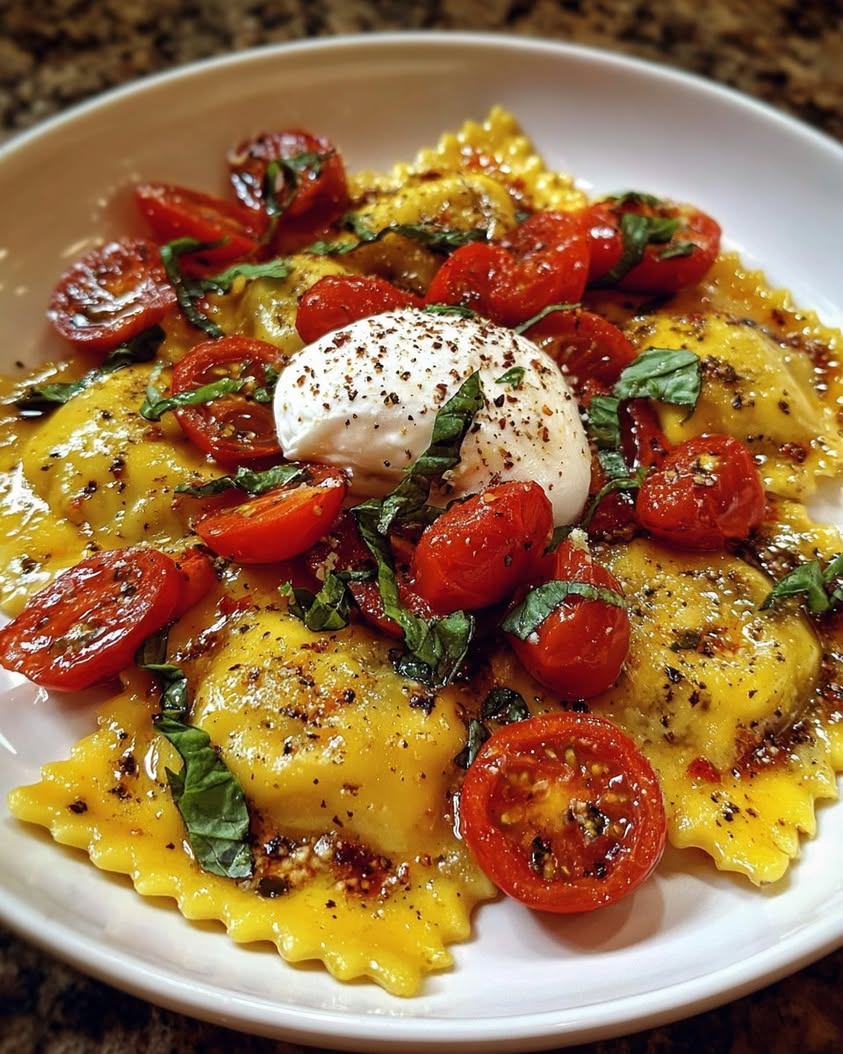
Ricotta Lemon Ravioli with Burst Tomatoes and Creamy Burrata: A Taste of Italian Sunshine
Imagine a dish that captures the very essence of a sun-drenched Italian garden. This Ricotta Lemon Ravioli with Burst Tomatoes and Creamy Burrata is exactly that. It is a celebration of fresh, vibrant flavors that come together in a surprisingly elegant yet comforting meal. The delicate homemade pasta envelopes a bright, citrus-kissed ricotta filling. Meanwhile, the sauce features sweet, blistered cherry tomatoes that burst in your mouth. Finally, a luxurious ball of fresh burrata cheese melts over the top, creating a creamy, dreamy finish.
This recipe is perfect for a special date night or a weekend cooking project. It feels impressively restaurant-quality, yet the techniques are approachable for any enthusiastic home cook. The process of making fresh pasta is incredibly rewarding. Additionally, the act of shaping each ravioli becomes a mindful, almost therapeutic practice. Ultimately, the result is a plate of pure joy. Each bite offers a perfect harmony of textures and tastes, from the tender pasta to the tangy lemon and the rich, milky burrata.
Furthermore, this dish is incredibly versatile. You can serve it as a stunning main course for a small gathering. Alternatively, you can plate smaller portions as an unforgettable primo piatto. The colors alone are a feast for the eyes. Vibrant red tomatoes contrast beautifully with the pale yellow pasta and the snowy white cheese. A final drizzle of golden olive oil and a sprinkle of fresh basil complete the picture. This Ricotta Lemon Ravioli with Burst Tomatoes and Creamy Burrata is more than just dinner. It is an experience.
Quick Recipe Highlights
- Flavor Profile: This dish delivers a beautiful balance. The ricotta filling is bright and tangy from fresh lemon zest, which perfectly complements the sweet, concentrated flavor of burst cherry tomatoes. The creamy, mild burrata adds a luxurious richness that ties all the elements together.
- Texture: Experience a wonderful textural journey. The homemade pasta is tender yet has a slight bite. The ricotta filling is smooth and light. The tomatoes offer juicy pops, and the burrata provides an irresistibly soft, creamy center that oozes over the warm ravioli.
- Aroma: The kitchen will fill with incredible scents. First, you will smell the fresh, grassy notes of extra virgin olive oil heating. Then, the garlic becomes fragrant and toasty. Finally, the sweet tomatoes burst, releasing their summery essence, all underscored by the bright, clean scent of lemon zest.
- Visual Appeal: This plate is a masterpiece of rustic elegance. Golden-brown ravioli nestle in a vibrant sauce of red tomatoes and green basil. The pristine white burrata ball sits proudly on top, ready to be broken open. A final garnish of microgreens or more basil adds the perfect finishing touch.
- Skill Level Needed: This is an intermediate-level recipe due to the fresh pasta component. However, with patience and clear instructions, even a confident beginner can succeed. The key skills involve making a simple pasta dough, rolling it thinly, and carefully sealing the ravioli.
- Special Equipment: A pasta roller, either a manual crank machine or a KitchenAid attachment, is highly recommended for achieving uniformly thin sheets. Additionally, you will need a ravioli cutter or a sharp knife, a pastry brush for sealing, and a large skillet for the sauce.
Recipe Overview
- Difficulty Level: We rate this Ricotta Lemon Ravioli with Burst Tomatoes and Creamy Burrata as intermediate. The primary challenge lies in crafting the fresh pasta dough and forming the ravioli. While the steps are straightforward, they require a bit of practice and patience to master the thinness of the dough and the proper sealing technique to prevent filling leakage.
- Category: This dish fits beautifully into several categories. Primarily, it is a spectacular main course for a special Italian-inspired dinner. It also serves as an impressive first course for a multi-course meal. Furthermore, it is the ultimate weekend project for anyone passionate about homemade pasta and fresh flavors.
- Cuisine: This recipe is firmly rooted in Italian cuisine, drawing inspiration from the fresh, simple ingredients of Southern Italy. The use of ricotta and lemon is classic in ravioli fillings from regions like Sicily. Meanwhile, the burst tomato sauce and fresh burrata celebrate the modern, ingredient-focused style of contemporary Italian cooking.
- Cost: The cost is moderate and depends heavily on ingredient quality. Fresh, high-quality ricotta and burrata are worthwhile investments. Conversely, the pasta ingredients are very inexpensive. Overall, you can create a restaurant-quality meal for four at a fraction of the price you would pay dining out.
- Season: This dish shines brightest in late summer when cherry tomatoes are at their peak sweetness and basil is plentiful. However, it is a wonderful year-round recipe because good cherry tomatoes are often available. Ultimately, it brings a much-needed burst of sunshine to any table, especially during colder months.
- Occasion: This ravioli is perfect for celebrating milestones. It is ideal for anniversaries, Valentine’s Day, or a birthday dinner at home. Additionally, it makes a stunning centerpiece for a small dinner party with friends. The hands-on nature of making pasta together can also be a fun and memorable group activity.
Why You’ll Love This Recipe
First and foremost, the taste and texture of this Ricotta Lemon Ravioli are simply unforgettable. The bright, citrusy filling cuts through the richness of the cheese in the most delightful way. Each forkful delivers a complex yet harmonious blend of sweet, tangy, and creamy notes. The homemade pasta provides a satisfying, al dente texture that you simply cannot get from store-bought versions. Moreover, the burst tomatoes create a sauce that is both light and intensely flavorful, clinging perfectly to each delicate ravioli pocket.
From a convenience perspective, this recipe offers surprising benefits. While making pasta from scratch requires time, the steps can be broken down and are very manageable. You can prepare the dough and filling ahead of time, making assembly much quicker. Furthermore, the sauce comes together in one pan in under fifteen minutes. This means the active cooking time is focused and efficient. Consequently, you can create a truly spectacular meal without spending hours over a hot stove.
Nutritionally, this dish is a great source of high-quality protein from the ricotta and eggs in the pasta dough. Ricotta is also rich in calcium and vitamin A. Using whole milk ricotta provides satiating fats that help you feel full and satisfied. Tomatoes are packed with lycopene, a powerful antioxidant. By making your own pasta, you control the ingredients, avoiding the preservatives and excess sodium often found in packaged foods. It is a meal that nourishes both body and soul.
The social and entertaining value of this ravioli is immense. Serving a homemade pasta dish demonstrates care and effort, making guests feel truly special. The process of making the ravioli can even be a fun, interactive activity for a couple or a small group. The final presentation is incredibly elegant and Instagram-worthy, guaranteed to impress. It sparks conversation and creates a warm, communal dining experience centered around incredible food.
Finally, this Ricotta Lemon Ravioli with Burst Tomatoes and Creamy Burrata is cost-effective and accessible. The ingredients are not exotic or hard to find. Good ricotta, burrata, and cherry tomatoes are available at most well-stocked supermarkets. Compared to ordering a similar dish at a fine Italian restaurant, making it at home saves a significant amount of money. This allows you to splurge on the highest quality cheese and olive oil, elevating the entire dish without breaking the bank.
Historical Background and Cultural Significance
The origin of ravioli is deeply woven into the fabric of Italian culinary history. While its exact birthplace is debated, with claims from regions like Liguria, Emilia-Romagna, and Lombardy, the concept is ancient. Early forms likely emerged as a practical way to encase and stretch precious fillings, such as leftover meats, herbs, and cheeses, within a simple dough. These stuffed pasta pockets were a genius solution for minimizing waste and creating a hearty, portable meal. The name “ravioli” itself may derive from the old Italian word “ravvolgere,” meaning “to wrap,” which perfectly describes the technique.
Culturally, ravioli holds immense importance in Italy, often served during festive occasions and family gatherings. Specific shapes and fillings are tied to particular regions, towns, and even holidays. For example, ricotta-filled ravioli are a staple in many Southern Italian and Sicilian celebrations. The addition of lemon zest reflects the citrus-growing traditions of areas like the Amalfi Coast and Sicily, where lemons are a celebrated ingredient. This connection to place and tradition transforms ravioli from mere food into an edible story of culture and heritage.
The evolution of the ravioli recipe is a tale of regional adaptation and ingredient availability. The basic concept of stuffed pasta traveled and morphed based on local resources. In landlocked regions, fillings featured more meats and wild greens. In coastal areas, seafood found its way inside. The ricotta and lemon combination represents a classic pairing from the sun-drenched south, where sheep’s milk ricotta was plentiful and citrus trees abundant. This particular filling highlights the Italian culinary philosophy of “cucina povera” or “poor kitchen,” transforming simple, fresh ingredients into something extraordinary.
Regional variations of ricotta-filled pasta are endless. In Sicily, you might find “ravioli alla siciliana” with ricotta, sugar, and cinnamon, often served with a meat ragù. In Rome, “ricotta e spinaci” (ricotta and spinach) is iconic. Our version with lemon zest and a fresh tomato sauce leans into a more modern, lighter interpretation popular in contemporary trattorias. It emphasizes bright, clean flavors and high-quality, fresh components over long-cooked sauces. This evolution shows how traditional dishes continuously adapt to modern tastes while still honoring their roots.
Ingredient Deep Dive
Let us start with the star of the filling: whole milk ricotta. Historically, ricotta is not a cheese but a “recooked” dairy product made from the whey left over from cheese-making. This process gives it a uniquely light, slightly grainy texture and a mild, sweet flavor. Nutritionally, it is an excellent source of protein and calcium. For the best results, seek out fresh ricotta from the cheese counter, often sold in containers. Avoid brands with stabilizers like gums, as they can make the filling watery. If your ricotta seems wet, drain it in a fine-mesh strainer for 30 minutes before using.
Fresh lemon zest is the magical ingredient that elevates the ricotta filling from simple to sublime. The zest, which is the brightly colored outer skin of the lemon, contains potent aromatic oils bursting with citrus flavor without the acidity of the juice. When selecting lemons, choose ones with firm, vibrant yellow skin that feels heavy for its size, indicating juiciness. Always zest the lemon directly into your mixture, avoiding the bitter white pith underneath. This ingredient is not just a flavoring; it provides the essential bright, sunny note that defines this Ricotta Lemon Ravioli dish.
The burst cherry tomato sauce relies on one key component: sweet, ripe cherry or grape tomatoes. These small tomatoes have a higher sugar content and thinner skin than larger varieties, allowing them to blister and collapse quickly into a jammy, intense sauce. Heirloom varieties can add beautiful color. Their nutritional profile is rich in vitamins C and K and the antioxidant lycopene, which becomes more bioavailable when cooked. For the best sauce, do not overcrowd the pan. This ensures the tomatoes blister and caramelize instead of steaming. A pinch of sugar can help balance the acidity if your tomatoes are not perfectly in season.
Burrata is the crowning glory of this dish. Meaning “buttered” in Italian, burrata is a fresh cheese consisting of a mozzarella shell filled with stracciatella, a creamy mixture of shredded mozzarella and cream. It originated in the Puglia region in the early 20th century as a way to use up curd remnants. You must seek out the freshest burrata possible, often sold in a liquid-filled container. It should be consumed within a day or two of purchase for optimal creaminess. Allow it to come to room temperature before serving. When you tear it open over the hot ravioli, the luscious center creates an instant, luxurious sauce.
Common Mistakes to Avoid
- Overworking the Pasta Dough: Kneading the dough too aggressively or for too long can develop excess gluten, making it tough and difficult to roll out. Conversely, mix just until it comes together, then knead gently until smooth. The dough should be supple and elastic, not hard.
- Using Wet Ricotta: Adding ricotta straight from a watery container will make your filling soggy and cause the ravioli to break open during cooking. Always drain ricotta in a fine-mesh sieve for at least 30 minutes. You can even wrap it in cheesecloth and gently squeeze out excess moisture.
- Overfilling the Ravioli: The temptation to add more filling is strong, but it is a primary cause of bursting. Use only a teaspoon-sized amount per ravioli. Furthermore, leave ample border space around the filling when sealing to ensure a strong seal that can withstand boiling water.
- Not Sealing the Edges Properly: Simply pressing the edges together is not enough. After placing the filling, use a pastry brush to lightly dampen the dough border with water. This acts as a glue. Then, press firmly around the filling, working from the center out to push any air pockets.
- Boiling Ravioli in a Small Pot: Crowding ravioli in a small pot of water makes them stick together and cook unevenly. Always use a large, wide pot of generously salted water. Give them plenty of room to float and move freely. Cook in batches if necessary.
- Overcooking the Fresh Pasta: Fresh pasta cooks in just 2-3 minutes. It is done when it floats to the surface and looks slightly puffed. Immediately remove it with a slotted spoon. Letting it boil too long turns it mushy and gummy, ruining the delicate texture you worked so hard to create.
- Skipping the Pasta Water: The starchy, salted water the ravioli cooked in is liquid gold for your sauce. Always reserve at least a cup before draining. Adding a splash to your tomato pan helps emulsify the sauce, making it silky and helping it cling perfectly to each ravioli.
- Adding Cold Burrata: Serving burrata straight from the refrigerator mutes its flavor and creamy texture. Take it out at least 30 minutes before serving. The contrast of the cool, creamy cheese against the warm pasta is lovely, but it should not be ice-cold.
Essential Techniques
Making the Pasta Dough: This technique is the foundation. Start by mounding your flour on a clean surface and creating a well in the center. Crack the eggs into the well. Using a fork, gradually incorporate the flour from the inner walls into the eggs until a shaggy dough forms. Then, use your hands to knead. The goal is a smooth, elastic dough that springs back when poked. If it feels too dry, add water a few drops at a time. If too sticky, add a dusting of flour. Proper kneading develops the gluten network that gives pasta its structure and chew. Wrap the dough in plastic and let it rest for at least 30 minutes. This relaxes the gluten, making it much easier to roll out thinly without snapping back.
Rolling Pasta Sheets: After resting, divide the dough into four manageable pieces. Keep the pieces you are not working with covered. Flatten a piece with your hand and run it through the widest setting on your pasta roller. Fold it into thirds, like a letter, and run it through again. Repeat this folding and rolling process 2-3 times. This helps even out the dough. Then, progressively move to thinner settings, rolling the sheet through each setting once without folding. Do not skip settings, as this can tear the dough. You are aiming for sheets so thin you can vaguely see your hand through them. Lightly dust the sheets with semolina flour to prevent sticking as you work.
Forming and Sealing Ravioli: Lay one pasta sheet on a lightly floured surface. Place small mounds of filling in even rows, leaving about 1.5 inches between them. Using a pastry brush, lightly brush water around each mound of filling. Carefully drape a second sheet of pasta over the top. Starting from the center, gently press down around each filling mound, pushing out any air pockets. Air is the enemy, as it expands during cooking and can cause ravioli to burst. Use a ravioli cutter, pizza wheel, or sharp knife to cut between the mounds, creating individual squares or circles. Press the edges firmly one more time to ensure a complete seal.
Creating the Burst Tomato Sauce: This technique is about controlled, high-heat cooking. Heat your olive oil in a large skillet until it shimmers. Add the tomatoes in a single layer. Do not stir them immediately. Let them sit for a minute to blister and char slightly on one side. Then, shake the pan or stir gently. Add the garlic and a pinch of red pepper flakes, cooking just until fragrant. The goal is to break the tomato skins and release their juices, creating a quick, flavorful sauce. Season well with salt. The tomatoes should collapse but still retain some shape, creating a chunky, vibrant sauce rather than a smooth purée.
Pro Tips for Perfect Ricotta Lemon Ravioli
First, for the brightest lemon flavor, use a microplane zester. It creates fine, fluffy zest that disperses evenly throughout the ricotta filling without any bitter pith. Always zest the lemon directly over your bowl to capture every drop of the essential oils.
Second, when rolling pasta, if a sheet becomes too long to manage, simply cut it in half. Working with manageable lengths prevents tearing and makes the assembly process much less stressful. Keep unused sheets under a damp kitchen towel to prevent them from drying out.
Third, test your seal on one ravioli before committing to the whole batch. Boil a single ravioli for 2-3 minutes. If it holds together, your technique is sound. If it bursts, you may be overfilling or not sealing tightly enough, giving you a chance to adjust.
Fourth, do not rinse your cooked ravioli. Rinsing washes away the precious surface starch that helps the sauce adhere. Simply lift them directly from the boiling water with a slotted spoon and transfer them straight into the waiting tomato sauce.
Fifth, finish the dish with a high-quality finishing olive oil. This oil is typically fruitier and more aromatic than your cooking oil. Drizzle it over the plated ravioli and burrata just before serving. The fresh flavor will be pronounced and elevate the entire dish.
Sixth, let the burrata shine. Do not chop it. Place the whole ball on top of the plated ravioli and let your guests tear into it themselves. The theatrical reveal of the creamy center is part of the fun and experience.
Variations and Adaptations
For regional variations, look to different parts of Italy. Add toasted pine nuts and raisins to the ricotta filling for a Sicilian touch. Incorporate sautéed wild mushrooms and thyme for a hearty autumn version from the north. For a coastal twist, top the finished dish with grilled shrimp or scallops.
Seasonal adaptations are easy and rewarding. In spring, substitute the tomatoes with a sauce of fresh peas, mint, and pancetta. In autumn, use a base of roasted butternut squash purée with sage brown butter. In winter, a simple brown butter and sage sauce lets the lemon ravioli take center stage.
Dietary modifications are straightforward. For a gluten-free version, use a high-quality gluten-free flour blend designed for pasta. For a vegetarian dish, ensure your cheese uses vegetarian rennet. To make it vegan, substitute the ricotta with blended firm tofu, nutritional yeast, and lemon, and use a vegan burrata alternative.
Flavor variations can personalize the dish. Add a tablespoon of finely chopped fresh herbs like basil, chives, or parsley to the ricotta filling. For a richer filling, mix in a few tablespoons of grated Parmesan or Pecorino Romano cheese. A pinch of freshly grated nutmeg adds a classic, warm background note.
Texture modifications can add interest. For a crunch, sprinkle toasted breadcrumbs or pangrattato over the top before serving. Alternatively, add a tablespoon of finely chopped toasted walnuts to the ricotta filling for a subtle nutty crunch in every bite.
Presentation alternatives can change the feel. Instead of individual ravioli, make one large “raviolo” per plate. Serve the deconstructed components in a bowl: the ricotta mixture on one side, the tomatoes on another, and torn pieces of burrata, letting guests assemble their perfect bite.
Serving and Presentation Guide
Plating techniques matter for visual impact. For a family-style presentation, arrange all the ravioli on a large, warm platter. Spoon the burst tomatoes and their juices over the top, then place the whole burrata in the center. For individual plates, use a shallow bowl. Place 4-5 ravioli in a circular pattern, spoon sauce around them, and place a portion of the burrata off to the side or directly on top.
Garnishing is the final touch of artistry. Fresh basil leaves, either whole, torn, or in a chiffonade, are classic. Microgreens, such as basil or pea shoots, add a delicate, modern look. A final crack of black pepper, a flaky sea salt like Maldon, and a drizzle of your best olive oil are non-negotiable for flavor and sheen.
Traditional accompaniments keep the focus on the pasta. A simple, crisp green salad with a lemon vinaigrette cleanses the palate. A side of grilled or roasted vegetables, like asparagus or zucchini, complements without competing. Crusty, warm bread is essential for soaking up every last bit of sauce and creamy burrata.
Modern serving suggestions might include a small amuse-bouche to start, like a shot of chilled tomato consommé. For a wine pairing, offer a tasting of two different whites to compare how they interact with the lemon and ricotta. This turns the meal into a more interactive, educational dining experience.
Temperature considerations are crucial. Serve the ravioli and sauce piping hot. The burrata should be at cool room temperature. The contrast is delightful. Warm your serving plates or platter beforehand. Cold plates will cause the dish to cool down too quickly, solidifying the cheese and congealing the sauce.
Portion control is easy with ravioli. As a main course, 4-5 large ravioli per person is typically sufficient, given the richness of the burrata. As a first course, 2-3 ravioli are perfect. Remember, the goal is to leave guests satisfied, not overly full, so they can appreciate the nuanced flavors.
Wine and Beverage Pairing
Wine pairings should complement the dish’s brightness and creaminess. A classic Italian Pinot Grigio from Alto Adige, with its crisp acidity and notes of green apple and citrus, is a flawless match. It cuts through the ricotta’s richness. Alternatively, a Vermentino from Sardinia or Liguria offers more body and herbal notes that pair beautifully with the basil and lemon. For a richer option, a lightly oaked Chardonnay can stand up to the burrata without overwhelming the ravioli’s delicate flavors.
Non-alcoholic alternatives can be just as sophisticated. A sparkling lemonade or a basil-infused soda mirrors the citrus and herbal notes in the dish. For a more complex option, try a chilled, non-alcoholic Italian-style bitter aperitif. These often have citrus and herbal flavors that mimic the complexity of wine without the alcohol.
While not traditional, certain teas can pair surprisingly well. A lightly brewed white tea with floral or citrus notes would not clash with the flavors. A more robust choice would be an iced herbal tea infusion with lemon verbena or mint. The key is to avoid overly sweet or tannic beverages that would fight with the food.
Temperature considerations are paramount. White wines should be served well-chilled, between 45-50°F. This crisp temperature refreshes the palate between bites of the rich pasta and cheese. Non-alcoholic sparkling drinks should also be served very cold. Iced teas should be brewed strong and then poured over ice to prevent dilution.
Serving suggestions include pouring the wine just before guests sit down. Have a chilled wine sleeve or bucket nearby to keep the bottle at the perfect temperature throughout the meal. For non-alcoholic options, consider serving them in elegant stemware to make the experience feel just as special.
Storage and Shelf Life
Storage methods depend on the component. Unfilled pasta dough can be wrapped tightly in plastic and refrigerated for up to 24 hours. Let it come to room temperature for 30 minutes before rolling. Assembled, uncooked ravioli are best cooked fresh. However, you can freeze them in a single layer on a baking sheet, then transfer to a freezer bag for up to 2 months. Cook directly from frozen, adding a minute or two to the boiling time.
Temperature requirements are strict for dairy. Any leftover cooked ravioli with sauce and burrata must be refrigerated within two hours. Store in an airtight container. The burrata will not retain its perfect texture once broken and refrigerated, becoming more solid. The tomatoes and pasta will keep for 2-3 days.
Container recommendations include shallow, airtight containers for leftovers to allow for quick, even cooling. For freezing uncooked ravioli, use heavy-duty freezer bags, pressing out all the air to prevent freezer burn. Label the bag with the date so you use them within the optimal timeframe.
Signs of spoilage include an off or sour smell, especially from the dairy components. The pasta may become slimy, or the tomato sauce may develop mold. If the burrata’s liquid becomes cloudy or the cheese develops an unusual color, discard it immediately. When in doubt, throw it out.
Reheating instructions for leftovers are gentle. Place the ravioli and sauce in a skillet with a splash of water or broth. Cover and warm over low heat, stirring occasionally, until heated through. Avoid the microwave, as it will make the pasta rubbery and can cause the burrata remnants to separate and become greasy.
Freezing guidelines are best applied only to uncooked, assembled ravioli. Do not freeze the finished dish with sauce and burrata, as the textures will degrade terribly. The burst tomato sauce can be frozen separately for up to 3 months. Thaw in the refrigerator overnight before reheating gently in a pan.
Make Ahead Strategies
Your prep timeline can be spread over two days. On day one, make the pasta dough and the ricotta filling. Wrap the dough and store the filling in separate airtight containers in the refrigerator. This breaks the work into manageable chunks and allows the flavors in the filling to meld overnight.
Storage between steps is simple. The chilled dough will need about 30 minutes at room temperature to become pliable again before rolling. The filling can be used straight from the fridge. You can even roll out the pasta sheets a few hours ahead. Layer them between sheets of parchment dusted with semolina, cover with plastic wrap, and refrigerate.
Assessing quality impact, making the filling ahead actually improves the flavor as the lemon zest infuses the ricotta. The pasta dough also benefits from a longer, cooler rest, becoming more elastic and easier to work with. The only element that must be done last minute is cooking the tomatoes and assembling the final dish.
Assembly tips for a make-ahead plan: Assemble all your ravioli on baking sheets lined with parchment and semolina. You can refrigerate them, uncovered, for up to 2 hours before cooking. If you need longer, freeze them on the sheet, then bag them. Do not refrigerate assembled ravioli for more than a few hours, as the moisture from the filling can start to break down the pasta.
Reheating guidelines do not apply to the make-ahead components, as you are cooking them fresh. The strategy is about prepping components, not the finished dish. This ensures you get the perfect, fresh-cooked texture of the pasta and the vibrant, just-made quality of the sauce when it is time to serve.
Fresh element additions are key. Even if you pre-make the filling and dough, always use freshly burst tomatoes and room-temperature burrata. Garnish with basil you tear just before serving. This contrast between the prepared base and the fresh, bright finishing elements makes the dish sing.
Scaling Instructions
Halving the recipe is straightforward for a romantic dinner for two. Simply divide all ingredient quantities by two. The pasta dough process remains the same; you will just have a smaller ball to work with. Use a smaller skillet for the sauce. One ball of burrata may still be appropriate for two, as you can use half and save the rest for another use.
Doubling or tripling the recipe for a crowd requires planning. Mix the pasta dough in separate batches to avoid overworking a huge mass of dough. Roll and fill in assembly-line stations. Use multiple large pots of boiling water to cook the ravioli in batches without crowding. Keep cooked batches warm on a baking sheet in a low oven, lightly coated with sauce to prevent sticking.
Equipment adjustments are necessary when scaling up. Ensure you have enough baking sheets lined with parchment for your assembled ravioli. You may need to use two large skillets for the tomato sauce or cook it in batches. Have a large, warm serving platter or multiple serving bowls ready.
Timing modifications are minimal when scaling. The sauce will take slightly longer if you overcrowd the pan, so cook tomatoes in batches if doubling. The ravioli cooking time per batch remains 2-3 minutes. The key is organization: have your water boiling, sauce components measured, and garnishes ready before you start cooking the first batch of pasta.
Storage considerations change when making large quantities. If you have many uncooked ravioli, freezing is your best friend. Freeze them on sheets as described, then bag them. This turns your cooking project into a future convenience, giving you several meals’ worth of gourmet ravioli ready to boil from frozen.
Nutritional Deep Dive
The macro breakdown of this dish provides balanced energy. The pasta offers complex carbohydrates for fuel. The ricotta and eggs in the dough contribute high-quality protein for muscle repair and satiety. The olive oil and burrata provide healthy fats, which are essential for nutrient absorption and hormone health. This combination makes for a satisfying meal that sustains energy levels.
Micronutrient analysis reveals a wealth of vitamins and minerals. Ricotta and burrata are excellent sources of calcium for bone health and phosphorus. Tomatoes provide vitamin C, K, potassium, and the antioxidant lycopene. Eggs in the pasta dough add B vitamins and selenium. Lemon zest contributes a small amount of vitamin C and flavonoids. Using whole-wheat flour for the pasta would further increase the fiber and mineral content.
Health benefits are linked to its whole-food ingredients. The lycopene in cooked tomatoes is associated with heart health and reduced cancer risk. The calcium supports bone density. The monounsaturated fats in olive oil are anti-inflammatory. The protein helps maintain muscle mass. This is a meal that supports overall wellness when enjoyed as part of a balanced diet.
Dietary considerations include being vegetarian if the cheese uses vegetarian rennet. It contains gluten from the wheat flour and is high in dairy. For those monitoring sodium, you can control the amount of salt added during cooking. The dish is not inherently low-carb or keto due to the pasta, but the filling and sauce components are suitable for those diets if served over alternatives like zucchini noodles.
Portion analysis shows that a serving of 4-5 ravioli with sauce and a share of burrata is a substantial main course. It is rich, so listening to your body’s fullness cues is important. The protein and fat content promote satiety, helping to prevent overeating. This is not a light meal, but it is a nourishing and complete one.
Weight management tips include being mindful of portion size, as described. You can increase the vegetable ratio by serving a larger side salad. Using a bit less olive oil in the sauce or a smaller portion of burrata can modestly reduce calories without sacrificing core flavor. The key is savoring a reasonable portion of this delicious, satisfying dish.
PrintRicotta and Lemon Zest Ravioli with Burst Tomatoes and Burrata
- Total Time: 45 minutes
- Yield: 4
Description
A fresh and vibrant pasta dish featuring homemade ravioli filled with creamy ricotta and zesty lemon, served with sweet burst cherry tomatoes and topped with luscious burrata cheese.
Ingredients
- 1 cup whole milk ricotta cheese
- 1 lemon, zested and juiced
- 1 large egg
- 1/4 cup grated Parmesan cheese
- Salt and black pepper to taste
- 24 round wonton wrappers
- 2 cups cherry tomatoes
- 2 cloves garlic, minced
- 2 tablespoons olive oil
- 1 ball burrata cheese
- Fresh basil leaves for garnish
Instructions
- In a bowl, mix ricotta, lemon zest, egg, Parmesan, salt, and pepper until smooth.
- Place a teaspoon of filling in the center of each wonton wrapper, brush edges with water, and top with another wrapper, pressing to seal.
- Heat olive oil in a skillet over medium heat, add cherry tomatoes and garlic, and cook until tomatoes burst, about 5-7 minutes.
- Cook ravioli in boiling salted water for 2-3 minutes until they float, then drain.
- Serve ravioli topped with burst tomatoes, torn burrata, a drizzle of olive oil, and fresh basil.
Notes
You can customize the seasonings to taste.
- Prep Time: 15 minutes
- Cook Time: 30 minutes
- Method: Main
- Cuisine: Italian