Creamy Greek Chicken Flatbread with Fresh Tzatziki Toppings: A Mediterranean Feast in Minutes
Imagine the vibrant flavors of a sun-drenched Greek taverna, all piled onto a warm, soft flatbread. This Creamy Greek Chicken Flatbread with Fresh Tzatziki Toppings brings that exact experience straight to your kitchen table. Moreover, it combines tender, herb-marinated chicken with a cool, garlicky tzatziki sauce and a rainbow of crisp vegetables. Consequently, every bite delivers a perfect harmony of creamy, tangy, and savory notes. Ultimately, this dish is not just a meal; it’s a quick and delicious escape to the Mediterranean.
This recipe is a fantastic solution for busy weeknights when you crave something wholesome and exciting. For instance, the chicken cooks quickly in a skillet, absorbing the classic flavors of lemon, oregano, and garlic. Meanwhile, you can prepare the simple, refreshing toppings. The assembly is fun and customizable, making it a great option for family-style dining. Therefore, whether you need a speedy dinner or an impressive casual lunch, this creamy Greek chicken flatbread delivers on all fronts.
Quick Recipe Highlights
- Flavor Profile: This dish bursts with bright, Mediterranean flavors. The chicken is savory and herbaceous, while the tzatziki adds a creamy, garlicky tang. Finally, the fresh cucumbers, tomatoes, and red onion provide a crisp, refreshing counterpoint.
- Texture: You will enjoy a wonderful contrast of textures. The flatbread offers a soft yet sturdy base, while the chicken is juicy and tender. Additionally, the vegetables add a satisfying crunch, and the tzatziki sauce brings a smooth, cooling creaminess.
- Aroma: As the chicken cooks, your kitchen will fill with the irresistible scent of garlic, lemon, and dried oregano. Furthermore, the fresh dill in the tzatziki adds a light, herbal fragrance that signals a fresh, homemade meal.
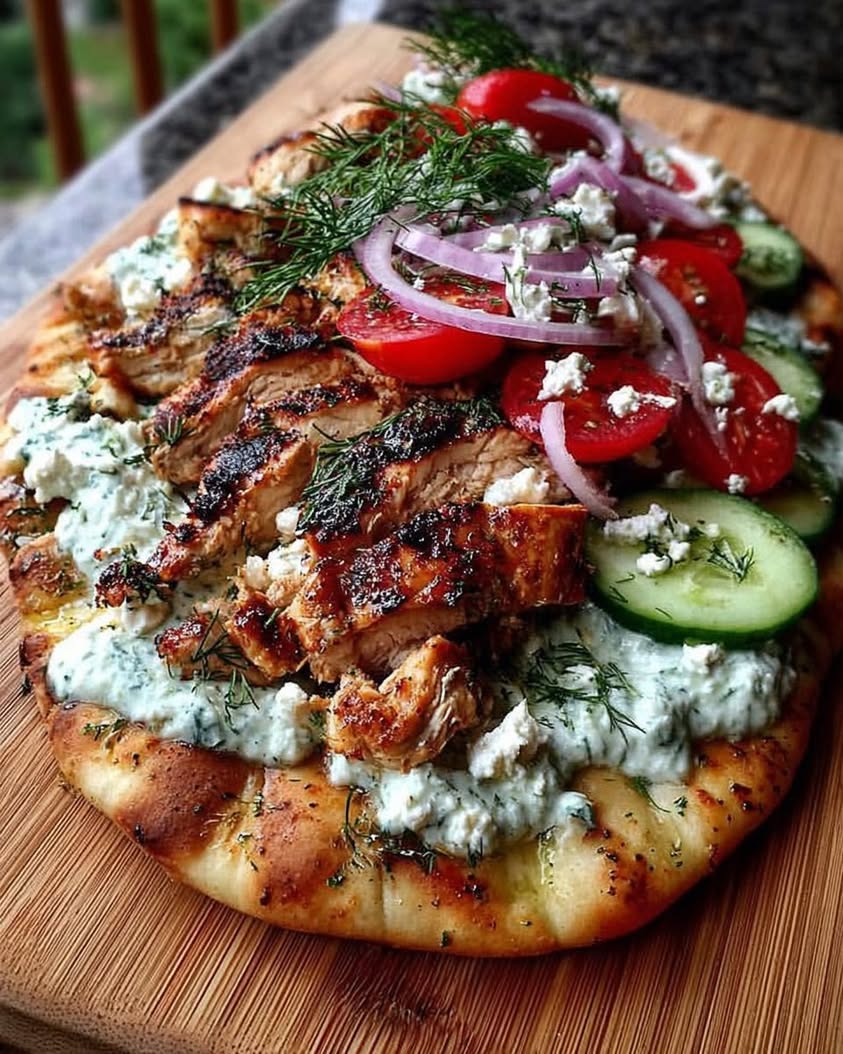
- Visual Appeal: This flatbread is a feast for the eyes with its vibrant colors. The white tzatziki, red tomatoes, green cucumbers, and purple-red onion create a stunning, appetizing mosaic against the golden-brown chicken and flatbread.
- Skill Level Needed: This is a beginner-friendly recipe requiring basic kitchen skills like chopping, mixing, and pan-frying. No special techniques are needed, making it accessible for cooks of all levels who want a delicious result.
- Special Equipment: You only need common kitchen tools: a sharp knife, cutting board, mixing bowls, a skillet for the chicken, and a box grater for the cucumber in the tzatziki. A grill pan can also be used for nice char marks on the chicken.
Recipe Overview
- Difficulty Level: We rate this recipe as “Easy” because it uses straightforward techniques and common ingredients. The steps are sequential and simple, from marinating the chicken to assembling the flatbreads. There is no complex dough-making or lengthy baking process involved.
- Category: This dish perfectly fits into multiple categories: a quick main course, a fun handheld dinner, or a shareable appetizer. It’s ideal for a light lunch, a casual weeknight supper, or even a party platter when cut into smaller pieces.
- Cuisine: This recipe is firmly rooted in Greek and broader Mediterranean cuisine. It draws inspiration from classic Greek souvlaki and gyros, translating those iconic flavors into a convenient flatbread format. The use of yogurt, cucumber, lemon, and oregano is quintessentially Greek.
- Cost: This is a very cost-effective meal. Chicken thighs or breasts are affordable protein options. The vegetables and herbs are inexpensive, and staples like yogurt, garlic, and lemon are kitchen fundamentals. You can easily feed a family for less than the cost of takeout.
- Season: This creamy Greek chicken flatbread is truly a year-round winner. It feels light and refreshing in the spring and summer when tomatoes and cucumbers are at their peak. Conversely, it also provides a bright, flavorful escape during the colder fall and winter months.
- Occasion: It’s incredibly versatile for different occasions. Serve it for a fast family dinner, a casual weekend lunch, or a game-day gathering. You can even set up a “build-your-own” flatbread bar for a fun and interactive meal with friends.
Why You’ll Love This Recipe
First and foremost, the taste and texture are utterly irresistible. Each component of this creamy Greek chicken flatbread plays a specific role. The marinated chicken delivers deep, savory flavor, while the homemade tzatziki sauce provides a cool, creamy contrast that cuts through the richness. Simultaneously, the fresh vegetables add a necessary crunch and juiciness. Every single bite is a balanced explosion of Mediterranean flavors that will have you reaching for another piece.
From a convenience standpoint, this recipe is a true weeknight hero. The active cooking time is minimal, and the process is straightforward. You can often marinate the chicken in advance, making the final cook and assembly incredibly fast. Furthermore, the ingredients are easy to find at any standard grocery store. Therefore, you can whip up a restaurant-quality meal without the hassle or expense of dining out.
Nutritionally, this dish offers a well-rounded profile. Chicken provides lean protein to keep you full, while the Greek yogurt in the tzatziki adds probiotics and calcium. The vegetables contribute essential vitamins, minerals, and fiber. By using a whole-grain or low-carb flatbread, you can easily boost the nutritional value even further. It’s a satisfying meal that fuels your body with quality ingredients.
For social and entertaining value, this creamy Greek chicken flatbread is a superstar. It’s visually impressive and universally appealing. You can easily double or triple the recipe for a crowd. Alternatively, set out all the components and let guests build their own creations, which is always a hit. It’s a casual, shareable food that encourages conversation and a relaxed dining atmosphere.
Finally, it is remarkably cost-effective and accessible. You likely have many of the spices and staples already in your pantry. Chicken and seasonal vegetables are budget-friendly. Compared to ordering similar dishes from a restaurant or delivery service, making this at home saves significant money. Consequently, you get a gourmet-tasting meal that is kind to your wallet and completely customizable to your taste.
Historical Background and Cultural Significance
The origins of this dish lie in the rich culinary traditions of Greece. Specifically, it is a direct descendant of the beloved Greek gyro and souvlaki. For centuries, Greeks have been marinating meat in olive oil, lemon, and herbs before cooking it over fire. The concept of serving this flavorful meat with yogurt sauce and vegetables wrapped in bread is a cornerstone of Greek street food culture. This creamy Greek chicken flatbread modernizes that tradition by using a flatbread as a convenient base.
Culturally, food like this is central to Greek social life. Meals are often shared, leisurely affairs focused on fresh, local ingredients. The combination of yogurt, cucumber, and garlic in tzatziki has ancient roots, with similar sauces appearing in various forms across the Eastern Mediterranean and Middle East. This dish embodies the Greek philosophy of “philoxenia,” or love for strangers, representing food meant to be shared generously with family and friends.
The recipe has evolved significantly with globalization and modern convenience. Traditionally, the meat would be slow-roasted on a vertical spit. This home-kitchen version uses quick pan-frying or grilling, adapting the method for ease without sacrificing core flavors. The use of pre-made flatbreads is another modern adaptation, saving time while still providing the essential bread component that soaks up the delicious juices and sauces.
Regional variations of this concept abound throughout the Mediterranean. In Turkey, a similar dish might use doner kebab meat and a sauce called cacik. In the Middle East, shawarma served in pita with toum (garlic sauce) follows a similar principle. Each region adds its own signature spices and accompaniments. This particular recipe with its emphasis on oregano, lemon, and dill stays true to its Hellenic roots while being adaptable to local tastes and ingredients.
Ingredient Deep Dive
Greek Yogurt: This is the foundation of the tzatziki sauce and a staple in Greek cuisine. Historically, yogurt has been consumed in the region for thousands of years. Nutritionally, it’s packed with protein, calcium, and probiotics for gut health. For the best results, always use full-fat, plain Greek yogurt for maximum creaminess and flavor. Avoid any with added sugars or flavors. If you need a substitute, strained regular plain yogurt or even labneh can work, though the texture will vary.
Chicken (Thighs or Breasts): Chicken is a versatile, lean protein central to many global diets. In this recipe, boneless, skinless thighs are recommended for their juiciness and flavor, but breasts work for a leaner option. They are an excellent source of protein and B vitamins. For selection, look for plump, pink meat without any gray discoloration. To store, keep refrigerated and use within 1-2 days of purchase, or freeze for longer storage. For substitutions, you can use turkey cutlets or even firm tofu for a vegetarian version.
Cucumber: The cucumber, especially the English or Persian variety, is crucial for the tzatziki’s refreshing quality. Culturally, cucumbers have been cultivated for over 3,000 years and are celebrated for their hydrating properties. They provide vitamins K and C, potassium, and are very low in calories. Choose firm, dark green cucumbers without soft spots. After grating for tzatziki, always squeeze out the excess water to prevent a soggy sauce. For a different twist, you could use finely chopped radish for a peppery crunch.
Fresh Dill & Oregano: These herbs define the aromatic profile of Greek cooking. Dill, with its feathery leaves and slight anise flavor, is fresh and bright. Oregano, particularly dried Greek oregano, is earthy, robust, and slightly peppery. Both herbs offer antioxidants. Fresh dill is best, but in a pinch, you can use a smaller amount of dried dill weed. For oregano, dried is actually traditional in the marinade. Store fresh herbs with stems in a glass of water in the fridge. Substitute fresh oregano with dried, or use marjoram as a close cousin.
Flatbread: Flatbreads are one of the oldest forms of bread, predating oven-baked loaves. They act as the edible plate or utensil in many cultures. For this recipe, choose a soft, pliable flatbread like naan, pita, or lavash that can hold the toppings without tearing. Look for options without too many added sugars. To store, keep them in a bread box or freeze them. For a gluten-free version, use a certified gluten-free flatbread or even large lettuce leaves as a wrap.
Common Mistakes to Avoid
- Not Draining the Grated Cucumber: This is the most common error. If you skip squeezing out the cucumber water, your tzatziki will become watery and dilute the flavors. Consequently, it will make the flatbread soggy upon assembly. Always use a clean kitchen towel or your hands to wring out as much liquid as possible.
- Overcooking the Chicken: Chicken, especially breasts, can quickly become dry and tough if cooked too long. Use a meat thermometer to ensure it reaches 165°F internally, then remove it immediately from the heat. Let it rest for a few minutes before slicing to retain its juices.
- Using Non-Greek Yogurt: Regular yogurt is much thinner than Greek yogurt. If you use it, your tzatziki sauce will lack body and likely be runny. For the proper creamy consistency that clings to the flatbread, full-fat Greek yogurt is essential.
- Skipping the Marinating Time: While you can cook the chicken immediately, marinating even for 20-30 minutes makes a significant difference. It allows the lemon, garlic, and herbs to penetrate the meat, resulting in far more flavorful and tender chicken for your creamy Greek chicken flatbread.
- Chopping Vegetables Too Far in Advance: Dicing the tomatoes, cucumber, and onion too early can lead to a loss of crispness and the vegetables sitting in their own juices. For the freshest texture and presentation, chop your veggies just before you’re ready to assemble the flatbreads.
- Spreading Tzatziki on Hot Flatbread: If your flatbread is very hot from toasting, spreading the cold tzatziki on it can cause the yogurt to separate or become greasy. Let the flatbread cool for a minute or two, or add the tzatziki just before serving.
- Overloading the Flatbread: It’s tempting to pile everything high, but an overstuffed flatbread is difficult to eat and can fall apart. Use a moderate, even layer of each ingredient to ensure every bite has a bit of everything and the structure holds.
- Using Old, Stale Spices: Dried oregano loses its potency over time. If your spices are more than a year old, they will contribute very little flavor. For the best tasting marinade, ensure your dried herbs are fresh and aromatic.
Essential Techniques
Marinating the Chicken: Marinating is crucial for infusing flavor and tenderizing the meat. To master it, ensure your chicken pieces are of even thickness so they marinate and cook uniformly. Combine the oil, acid (lemon juice), and seasonings thoroughly before adding the chicken. A common pitfall is marinating in a reactive metal bowl, which can impart off-flavors; always use glass or ceramic. Visually, the chicken should be evenly coated, and you’ll know it’s working when you smell the herbs and garlic before it even hits the pan.
Making Tzatziki: The key technique here is achieving a thick, cohesive sauce. Start by grating the cucumber and squeezing out all excess moisture—this step cannot be overstated. Then, mix the yogurt, garlic, lemon juice, and herbs gently. Over-mixing can sometimes cause the yogurt to thin out. Let the sauce rest in the refrigerator for at least 30 minutes before serving; this allows the flavors to meld and the sauce to thicken slightly. Success is a creamy, spreadable sauce that holds its shape on a spoon.
Pan-Frying Chicken to Perfect Doneness: This technique ensures juicy, flavorful chicken every time. Pat the marinated chicken dry before adding it to the hot skillet to promote browning, not steaming. Do not overcrowd the pan, as this lowers the temperature and leads to steaming. Cook over medium-high heat until you see a golden-brown crust form, then flip. The visual cue for success is that golden color and an internal temperature of 165°F. Letting it rest before slicing is the final, essential step to keep the juices inside the meat.
Pro Tips for Perfect Creamy Greek Chicken Flatbread
First, toast your flatbread lightly in a dry skillet or oven before assembling. This adds a slight crispness that helps prevent sogginess and enhances the overall texture of the final dish.
For the most flavorful tzatziki, mince your garlic and then mash it into a paste with a pinch of salt using the side of your knife. This technique distributes the garlic flavor more evenly and prevents any harsh, raw garlic bites.
When slicing the cooked chicken, cut it against the grain. This shortens the muscle fibers, making each piece much more tender and easier to bite through when piled on the flatbread.
If you have time, let the assembled tzatziki sauce sit overnight. The flavors of garlic, dill, and lemon will deepen and meld beautifully, creating a more complex and delicious sauce for your creamy Greek chicken flatbread.
Drizzle a little extra virgin olive oil and a squeeze of fresh lemon juice over the assembled flatbread just before serving. This adds a final layer of bright flavor and a professional, glossy finish.
To keep your red onion crisp and mitigate its sharpness, soak the thin slices in a bowl of ice water for 10 minutes after cutting. Then, drain and pat them dry. This tames the bite and makes them extra crunchy.
Use kitchen shears to cut the finished flatbreads. They are much more effective than a knife for cleanly cutting through the layers of bread, chicken, and vegetables without squashing everything.
For a warm flatbread experience, you can briefly warm the assembled flatbread in a preheated oven (350°F) for 3-4 minutes. Just be careful not to melt the tzatziki completely—warm it just until the bread is hot and the chicken is reheated.
Variations and Adaptations
For regional variations, explore different Mediterranean influences. Try a Turkish twist by adding a pinch of mint and cumin to the tzatziki and using sumac on the vegetables. For a Lebanese flair, swap tzatziki for a garlic toum sauce and add a sprinkle of za’atar to the chicken. A Cypriot version might include halloumi cheese grilled alongside the chicken.
Seasonal adaptations are simple and rewarding. In summer, use heirloom tomatoes and fresh garden cucumbers. For fall, add roasted red peppers or caramelized onions. In winter, incorporate warm spices like a hint of cinnamon or allspice into the chicken marinade for depth. Spring calls for adding fresh peas or asparagus tips to the vegetable mix.
Dietary modifications are straightforward. For gluten-free, use certified gluten-free flatbread or lettuce wraps. To make it dairy-free, substitute the Greek yogurt with a thick, plain coconut or almond milk yogurt. For a vegan version, use marinated and grilled chickpeas, cauliflower, or a plant-based chicken alternative along with dairy-free yogurt.
Flavor variations can keep this recipe exciting. Add a spicy kick by mixing harissa paste into the chicken marinade or sprinkling crushed red pepper flakes on top. For a richer taste, crumble some feta cheese over the assembled flatbread. Incorporate a smoky element by using smoked paprika in the marinade or grilling the chicken over charcoal.
Texture modifications can cater to personal preference. For extra crunch, add toasted pine nuts or chopped walnuts. For a creamier experience, add a layer of hummus beneath the tzatziki. If you prefer a softer vegetable component, you can quickly pickle the red onions and cucumbers for a tangy, softer bite.
Presentation alternatives offer fun ways to serve. Instead of large flatbreads, use mini pitas or naan dippers for a party appetizer. Deconstruct the ingredients into a salad bowl over chopped romaine. Alternatively, layer everything into a jar for a portable “Greek flatbread in a jar” lunch.
Serving and Presentation Guide
Plating techniques matter for visual appeal. Place the flatbread on a large wooden board or a simple white plate to let the colors pop. Arrange the chicken slices neatly in a single layer, slightly overlapping. Then, artfully scatter the diced tomatoes, cucumbers, and red onion. Drizzle the tzatziki in zig-zags or dollop it in small mounds. Finally, garnish with a whole sprig of fresh dill or oregano for a professional touch.
Garnishing ideas extend beyond herbs. A sprinkle of paprika or sumac adds a pop of color and flavor. A few Kalamata olives or pepperoncini on the side enhance the Greek theme. A light dusting of crumbled feta cheese is both a garnish and a flavor booster. A final drizzle of high-quality extra virgin olive oil adds shine and richness.
Traditional accompaniments include a simple Greek salad on the side, lemon wedges for extra brightness, and a bowl of olives. For a heartier meal, serve with lemon-roasted potatoes or orzo pasta tossed with olive oil and herbs. These sides complete the Mediterranean feast experience.
Modern serving suggestions might involve cutting the large flatbread into triangles or squares for easy sharing as an appetizer. For a family-style meal, place all components—bowls of chicken, veggies, sauce, and warm flatbreads—in the center of the table and let everyone build their own. This interactive approach is fun and caters to individual preferences.
Temperature considerations are key. The chicken and flatbread should be warm, while the tzatziki and fresh vegetables should be cold. This contrast is part of the magic. Assemble just before eating to maintain these temperatures. If preparing components ahead, have the cold items chilled and the warm items ready to heat at the last minute.
Portion control tips are helpful for balancing the meal. One medium-sized flatbread per person is usually sufficient for a main course. For a lighter lunch or appetizer, half a flatbread is adequate. Remember that the toppings are nutrient-dense, so you don’t need to overload the bread to feel satisfied. Balance the ratio to about 40% chicken, 30% vegetables, and 30% sauce and bread.
Wine and Beverage Pairing
Wine pairings should complement the bright, herbal, and creamy elements. A crisp, dry white wine like Assyrtiko from Santorini is the classic Greek choice, with its citrus notes cutting through the richness. Alternatively, a Sauvignon Blanc with its grassy, herbal character pairs beautifully with the dill and oregano. For red wine lovers, a light-bodied, low-tannin red like a Beaujolais or a Greek Xinomavro rosé won’t overpower the chicken and works well with the tomatoes and onions.
Non-alcoholic alternatives can be just as sophisticated. Sparkling water with a squeeze of lemon or lime is always refreshing. For a crafted mocktail, try a cucumber-mint cooler or a pomegranate spritzer. Iced herbal teas, like mint or lemon verbena, echo the herbal notes in the dish. A tall glass of traditional Greek lemonade (portokalada) would also be a perfect, authentic match.
Coffee and tea pairings are ideal for a lunch setting. After enjoying this creamy Greek chicken flatbread, a strong Greek coffee provides a bitter contrast that cleanses the palate. For tea, opt for a light herbal blend with mint or chamomile. These warm beverages offer a soothing finish to the meal without competing with the dominant flavors.
Temperature considerations for beverages are straightforward. White wines and non-alcoholic spritzers should be well-chilled. Red wines should be served slightly cooler than room temperature. Iced drinks should be cold but not watered down—use large ice cubes. Ultimately, the goal is to have a drink that refreshes the palate between bites of the flavorful, savory flatbread.
Serving suggestions include offering a variety of options if you’re entertaining. Place bottles of chilled white wine and a pitcher of a signature non-alcoholic beverage on the table. Provide plenty of ice and clean glassware. Encourage guests to try different pairings to see how they interact with the layers of flavor in the dish.
Storage and Shelf Life
Storage methods must separate the components to maintain quality. Store leftover cooked chicken, chopped vegetables, and tzatziki sauce in separate airtight containers. The assembled flatbread does not store well and will become soggy. Keep the flatbreads themselves in their original packaging or a bread bag at room temperature.
Temperature requirements are specific. The chicken, vegetables, and tzatziki must be refrigerated at 40°F or below. The chicken and tzatziki will keep for 3-4 days. The chopped vegetables are best used within 1-2 days for optimal crispness. Do not leave any dairy-based components at room temperature for more than two hours.
Container recommendations are important. Use glass containers for the tzatziki and chicken to prevent odor absorption. For the vegetables, a container with a vented lid or a slightly open seal can help prevent condensation that leads to sogginess. Always label containers with the date so you know when to use them by.
Signs of spoilage to watch for include an off or sour smell from the yogurt sauce, a slimy texture on the chicken or vegetables, or any visible mold. If the tzatziki has separated significantly and looks watery, it’s likely past its prime. When in doubt, it’s safest to discard the item.
Reheating instructions apply only to the chicken. Gently reheat it in a skillet over medium-low heat with a splash of water or chicken broth to keep it moist. You can also use the microwave at 50% power in short bursts. Do not reheat the tzatziki or vegetables. Always reheat only the portion you plan to eat immediately.
Freezing guidelines are limited. You can freeze the cooked, sliced chicken in a freezer-safe bag or container for up to 2 months. Thaw overnight in the refrigerator before reheating. We do not recommend freezing the tzatziki sauce, as the yogurt will separate and become grainy upon thawing. The fresh vegetables also do not freeze well for this application.
Make Ahead Strategies
Prep timeline can streamline your cooking. Up to 24 hours in advance, you can marinate the chicken in the refrigerator—this only improves the flavor. You can also make the tzatziki sauce a day ahead; in fact, its flavors improve with time. Chop the vegetables (except the tomatoes, which can get mushy) and store them in a sealed container in the fridge. This leaves only cooking the chicken and assembling on the day you plan to serve.
Storage between steps is simple. Keep the marinating chicken in a covered bowl or resealable bag on the bottom shelf of your fridge. Store the prepared tzatziki in its own airtight container. Keep the chopped veggies in a separate container. This modular approach makes final assembly a quick, five-minute task.
Quality impact assessment is positive for most components. The chicken becomes more flavorful when marinated ahead. The tzatziki’s garlic and herb notes meld and deepen overnight. The only potential quality loss is with the vegetables, which may lose a bit of crispness if chopped too far in advance; for this reason, we recommend chopping them no more than a few hours before serving.
Assembly tips for make-ahead meals: If you need a fully portable lunch, assemble the flatbread but keep the tzatziki in a separate small container. Add it just before eating to prevent a soggy bread situation. You can also create a “deconstructed” lunch box with all components compartmentalized.
Reheating guidelines for pre-cooked components are specific. Reheat the chicken gently as described earlier. Warm the flatbread in a toaster oven or dry skillet for a minute. Add the cold tzatziki and vegetables after reheating the base components to maintain the desired temperature contrast.
Fresh element additions are the final touch. Even if you’ve pre-chopped cucumbers and onions, add a final sprinkle of fresh herbs like dill or parsley right before serving. A last-minute squeeze of lemon juice over the assembled flatbread can brighten all the pre-made components instantly.
Scaling Instructions
Halving the recipe is simple for smaller households. Use half of every ingredient. A standard single chicken breast or two thighs will suffice. Use a smaller skillet for cooking. The timing will remain roughly the same, though you may need to reduce cook time by a minute or two since there’s less food in the pan. This is a perfect way to test the recipe or make a quick dinner for two.
Doubling or tripling the recipe for a crowd requires slight adjustments. Use two large skillets or cook the chicken in batches to avoid overcrowding, which leads to steaming. You may need to make the tzatziki in two separate bowls to ensure even mixing. Consider setting up an assembly line for topping the flatbreads. Keep cooked chicken warm in a low oven (200°F) on a sheet pan while you finish other batches.
Equipment adjustments become necessary when scaling up. For a large group, a large electric griddle can cook many chicken pieces at once. Use an extra-large mixing bowl for the tzatziki if tripling. Have multiple cutting boards ready for vegetable prep. For serving, use large platters or baking sheets to hold the assembled flatbreads before bringing them to the table.
Timing modifications are minimal when scaling. The prep time will increase linearly with the amount of vegetables to chop. The cook time for the chicken may increase slightly if you’re cooking in batches, as you’ll need time between each batch. Factor in an extra 10-15 minutes of active time for each time you double the recipe.
Storage considerations for large batches are important. If you have significant leftovers, store components separately as usual. You may need more containers. Label everything clearly. Remember that the tzatziki has a 3-4 day fridge life, so scale according to how many people you expect to serve within that window.
Nutritional Deep Dive
Macro breakdown for one serving (assuming one flatbread with all toppings) provides a balanced profile. You can expect approximately 35-40 grams of high-quality protein from the chicken and Greek yogurt, which supports muscle repair and satiety. Carbohydrates, primarily from the flatbread and vegetables, offer energy and fiber. Healthy fats from olive oil and yogurt contribute to hormone health and nutrient absorption. This balance makes the creamy Greek chicken flatbread a sustaining meal.
Micronutrient analysis reveals a wealth of vitamins and minerals. The chicken provides B vitamins, particularly B6 and niacin, for energy metabolism. Tomatoes and red onions are rich in vitamin C and antioxidants like lycopene. Cucumbers offer vitamin K and potassium. Greek yogurt adds a significant amount of calcium and probiotics. Together, they create a nutrient-dense meal supporting overall health.
Health benefits are numerous. The lean protein aids in weight management by promoting fullness. The probiotics in yogurt support digestive and immune health. The antioxidants in the vegetables combat inflammation. The monounsaturated fats from olive oil are heart-healthy. This dish is a great example of how delicious food can also be functional and beneficial for your body.
Dietary considerations are easily addressed. For lower carb needs, use a low-carb tortilla or serve the toppings over a salad. For higher protein, increase the chicken portion. The dish is naturally high in protein and can be modified to be lower in fat by using low-fat yogurt and less oil in the marinade. Always check specific flatbread labels for sodium content if that is a concern.
Portion analysis shows that one flatbread is a satisfying single serving. The volume from the vegetables adds bulk without excessive calories, helping you feel full. The combination of protein, fiber, and healthy fats provides a slow, steady release of energy, preventing the blood sugar spikes associated with more carbohydrate-heavy meals.
Weight management tips include being mindful of the flatbread choice—opting for a whole-grain, high-fiber version can increase satiety. You can also use a “half-and-half” approach: use one full flatbread but load it with extra vegetables and a bit less chicken, increasing volume and nutrients while moderately managing calories. The tzatziki is a low-calorie, high-flavor sauce compared to many creamy alternatives, making it an excellent choice.
Dietary Adaptations
Gluten-Free: This adaptation is very simple. Replace the regular flatbread with a certified gluten-free flatbread, corn tortilla, or large lettuce leaves like romaine or butter lettuce for a wrap. Ensure all other packaged ingredients, like yogurt, are labeled gluten-free, as cross-contamination can sometimes occur. The rest of the recipe is naturally gluten-free.
Dairy-Free: For the tzatziki, substitute the Greek yogurt with a thick, plain, unsweetened dairy-free yogurt made from coconut milk or almond milk. Look for brands that have a similar tangy profile. The result will be slightly different but still creamy and delicious. Check that your flatbread is also dairy-free if necessary.
Vegan: Replace the chicken with a plant-based protein like seasoned and pan-fried extra-firm tofu, tempeh, or chickpeas. Use a thick, plain vegan yogurt for the tzatziki. Ensure the flatbread contains no dairy or honey. The vegetables and herbs remain the same, creating a vibrant, plant-powered version of the dish.
Low-Carb/Keto: Omit the flatbread entirely. Serve the chicken, tzatziki, and vegetable toppings over a bed of fresh greens as a hearty salad, or inside a large, crisp lettuce wrap. Be sure to use full-fat Greek yogurt for the sauce to align with keto fat macros. Double-check that no added sugars are in your yogurt or marinade ingredients.
Paleo: Similar to low-carb, avoid grains and legumes. Use lettuce cups or a grain-free flatbread alternative made from almond or coconut flour. Ensure the yogurt is a coconut-based yogurt without additives. Use fresh lemon juice and herbs for the marinade, avoiding any processed condiments.
Low-FODMAP: This requires specific swaps. Use only the green tops of spring onions instead of red onion. Replace garlic in the marinade and tzatziki with garlic-infused olive oil (where the garlic solids are removed). Use lactose-free Greek yogurt. Ensure the portion size of chicken and other ingredients adheres to Monash University guidelines for stacking.
PrintCreamy Greek Chicken Flatbread with Tzatziki, Cucumbers, Tomatoes & Red Onion
- Total Time: 45 minutes
- Yield: 4
Description
A fresh and flavorful Mediterranean-inspired flatbread topped with tender Greek-seasoned chicken, creamy tzatziki, and crisp vegetables.
Ingredients
- 2 large flatbreads or naan
- 1 lb boneless, skinless chicken breasts, cut into bite-sized pieces
- 2 tbsp olive oil
- 1 tbsp Greek seasoning blend
- 1 cup plain Greek yogurt
- 1/2 cup grated cucumber, squeezed dry
- 1 clove garlic, minced
- 1 tbsp fresh dill, chopped
- 1 tbsp lemon juice
- 1/2 cup diced cucumber
- 1/2 cup cherry tomatoes, halved
- 1/4 cup thinly sliced red onion
- Salt and pepper to taste
Instructions
- Preheat oven to 400°F (200°C). Place flatbreads on a baking sheet and warm in oven for 5 minutes.
- In a bowl, toss chicken pieces with olive oil, Greek seasoning, salt, and pepper. Cook in a skillet over medium-high heat until browned and cooked through, about 8-10 minutes.
- In another bowl, mix Greek yogurt, grated cucumber, garlic, dill, lemon juice, salt, and pepper to make tzatziki sauce.
- Spread tzatziki evenly over warmed flatbreads. Top with cooked chicken, diced cucumber, cherry tomatoes, and red onion slices.
- Return flatbreads to oven for 3-5 minutes to heat through. Slice and serve immediately.
Notes
You can customize the seasonings to taste.
- Prep Time: 15 minutes
- Cook Time: 30 minutes
- Method: Main
- Cuisine: Greek