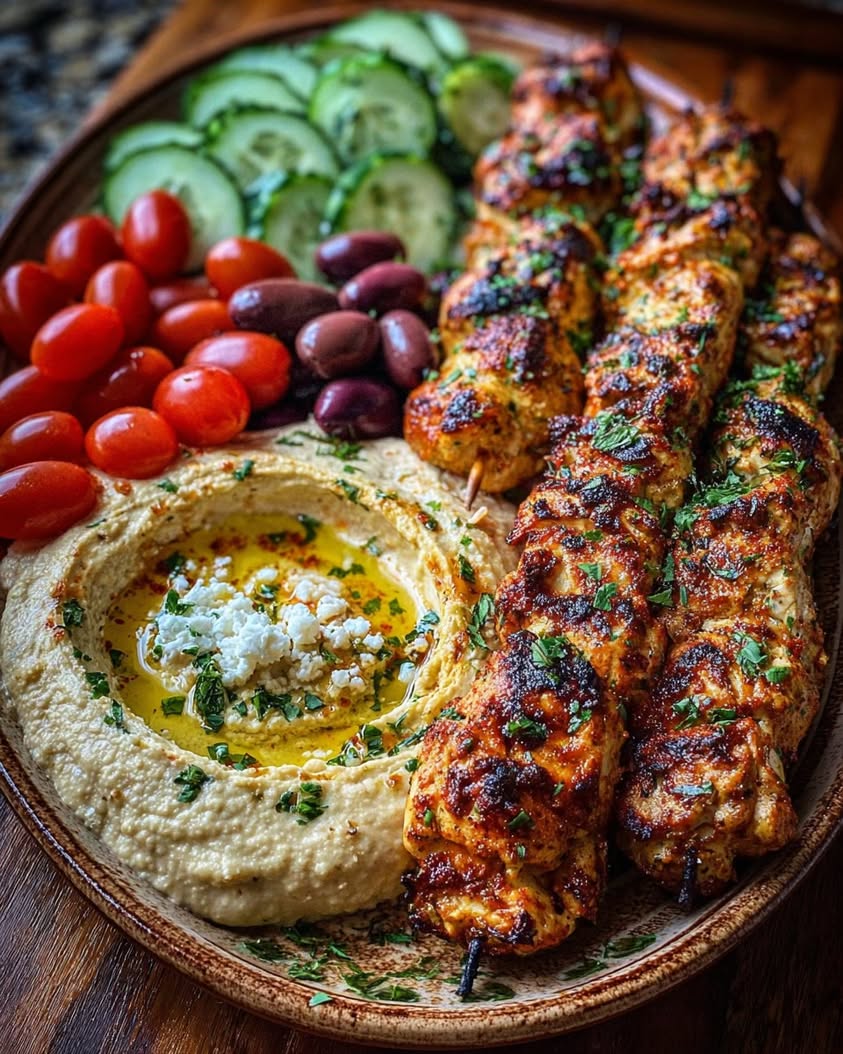
Mediterranean Chicken Skewers with Hummus Spread: A Flavorful Journey to the Coast
Imagine the vibrant flavors of the Mediterranean coast arriving on your dinner table. These Mediterranean Chicken Skewers with Hummus Spread bring that exact experience home. Furthermore, they combine juicy, herb-marinated chicken with a creamy, garlicky homemade hummus. Consequently, every bite delivers a perfect harmony of savory, tangy, and fresh notes. Ultimately, this dish transforms a simple weeknight meal into a memorable culinary event.
The magic of these Mediterranean Chicken Skewers lies in their brilliant simplicity. First, a quick marinade infuses the chicken with lemon, garlic, and oregano. Then, a brief stint on the grill or in the oven creates a beautifully charred exterior. Meanwhile, the hummus spread provides a cool, rich base that complements the warm skewers perfectly. As a result, you get a meal that is both impressive and surprisingly easy to execute. This recipe truly captures the essence of healthy, flavorful Mediterranean cooking.
Moreover, this meal is a feast for the senses. Visually, the golden-brown chicken against the pale hummus is stunning. Aromatically, the scent of grilling meat and lemon will fill your kitchen. Texturally, you experience the tender chicken and the smooth, creamy spread. Therefore, these Mediterranean Chicken Skewers offer a complete dining experience. They are perfect for anyone seeking a delicious, protein-packed meal that feels both gourmet and approachable.
Quick Recipe Highlights
- Flavor Profile: These skewers deliver a bright, savory punch. The marinade, featuring lemon and oregano, creates a tangy and herbaceous foundation. Additionally, the hummus adds a nutty, garlicky depth that balances the chicken perfectly.
- Texture: You will enjoy wonderfully tender and juicy chicken pieces. The hummus provides a luxuriously smooth and creamy contrast. Consequently, each mouthful is a satisfying blend of substantial protein and velvety spread.
- Aroma: While cooking, the scent of garlic, lemon, and charring herbs is irresistible. The toasted cumin in the hummus adds a warm, earthy note. Altogether, these aromas promise a delicious meal before the first bite.
- Visual Appeal: The presentation is naturally beautiful. Golden-brown chicken skewers rest on a swirl of creamy hummus, often garnished with paprika and fresh parsley. This colorful plate is ideal for sharing on social media or with guests.
- Skill Level Needed: This is a beginner-friendly recipe. Basic skills like cubing chicken, mixing a marinade, and operating a grill or broiler are all that’s required. The hummus is also simple to blend, making the entire dish very accessible.
- Special Equipment: You will need wooden or metal skewers. If using wooden ones, soak them in water for 30 minutes first. A grill, grill pan, or standard oven broiler works for cooking. A food processor or blender is essential for the smoothest hummus.
Recipe Overview
- Difficulty Level: We rate this recipe as easy. The steps are straightforward and involve no complex techniques. Most of the active time is hands-off marinating. Even novice cooks can achieve fantastic results with careful attention to the simple instructions.
- Category: This dish fits multiple categories beautifully. It is a fantastic main course for dinner. Additionally, it works wonderfully as an appetizer or party food when made into smaller skewers. You can also pack it for a unique and satisfying lunch.
- Cuisine: This recipe is firmly rooted in Eastern Mediterranean cuisine. It draws inspiration from Greek and Levantine culinary traditions. The use of oregano, lemon, and olive oil is classically Greek. Meanwhile, the hummus spread has its origins in the Middle East.
- Cost: This is a very cost-effective meal. Chicken thighs or breasts are affordable protein options. The marinade and hummus ingredients are pantry staples like spices, oil, and canned chickpeas. Overall, you can feed a family a restaurant-quality meal on a modest budget.
- Season: These Mediterranean Chicken Skewers are truly a year-round favorite. They shine in summer for easy outdoor grilling. Conversely, they bring sunny, warm flavors to the table during colder months when cooked indoors. The fresh ingredients are always readily available.
- Occasion: This versatile dish suits many occasions. It is perfect for a casual weeknight family dinner. Simultaneously, it is elegant enough for a dinner party or festive gathering. You can also prepare it for meal prep or a healthy weekend lunch.
Why You’ll Love This Recipe
First and foremost, the taste and texture are utterly irresistible. The chicken becomes incredibly flavorful and juicy from its citrusy marinade. Meanwhile, the homemade hummus is far superior to any store-bought version. Its creamy texture and rich tahini flavor create a perfect partnership with the savory skewers. Every component complements the other, resulting in a balanced and deeply satisfying meal that will have everyone asking for seconds.
Furthermore, the convenience factor is a major win. The preparation is simple and mostly involves marinating time where you can do other things. Cooking the skewers is incredibly fast, taking just minutes on the grill or under the broiler. This makes the recipe ideal for busy evenings when you want something delicious without spending hours in the kitchen. The entire meal comes together in about thirty-five minutes from start to finish.
From a nutritional standpoint, these Mediterranean Chicken Skewers are a powerhouse. They offer a fantastic balance of lean protein from the chicken and healthy fats from the olive oil and tahini. Chickpeas in the hummus add fiber and plant-based protein. This combination helps keep you full and energized. It is a wholesome meal that aligns perfectly with a Mediterranean diet, known for its numerous health benefits.
Additionally, this recipe has tremendous social and entertaining value. Skewers are inherently fun and interactive food, perfect for sharing. Serving them on a large platter with the hummus spread creates a beautiful, communal dining experience. They are a guaranteed hit at barbecues, potlucks, or casual get-togethers. You can easily double or triple the recipe to feed a crowd without much extra effort.
Finally, the cost-effectiveness and accessibility make this a go-to recipe. The ingredients are common and affordable, available at any standard grocery store. You do not need any expensive or exotic items. This approachability means you can enjoy a taste of the Mediterranean without a fancy restaurant price tag. It is a fantastic way to eat well and flavorfully on any budget.
Historical Background and Cultural Significance
The concept of skewered and grilled meat has ancient roots across the Mediterranean and Middle East. Historically, soldiers would cook meat on their swords over open fires. This practical method evolved into the kebabs enjoyed today. The specific flavor profile of these Mediterranean Chicken Skewers, with lemon and oregano, leans heavily into Greek culinary traditions. Greek cuisine celebrates simple, fresh ingredients that allow natural flavors to shine, a philosophy embodied in this recipe.
Hummus, meaning “chickpea” in Arabic, has a rich and debated history. Many cultures across the Levant claim its origin. Essentially, it is a staple food made from readily available ingredients: chickpeas, tahini, lemon, and garlic. Its cultural importance cannot be overstated. It is a dish of celebration, everyday nourishment, and hospitality. Serving hummus signifies sharing and community, making it the perfect companion to the communal skewers.
The evolution of this recipe pairing is a modern interpretation of classic elements. While chicken skewers and hummus have existed separately for centuries, combining them on one plate is a contemporary fusion. This combination showcases the global appreciation for Mediterranean and Middle Eastern flavors. It reflects how traditional dishes adapt and merge in today’s interconnected culinary world, creating new classics that honor their origins.
Regional variations of this dish are fascinating. In Turkey, the chicken might be marinated with yogurt and spices. In Lebanon, a toum (garlic sauce) might accompany the skewers instead of, or alongside, hummus. The type of wood used for grilling can also impart different smoky notes. Our version uses a classic Greek marinade with a Levantine spread, creating a delicious pan-Mediterranean fusion that celebrates the best of the region’s flavors.
Ingredient Deep Dive
Chicken thighs are our preferred protein for these Mediterranean Chicken Skewers. They offer more flavor and juiciness than breasts due to their slightly higher fat content. Thighs are also more forgiving during cooking, remaining tender even if slightly overcooked. From a nutritional standpoint, they provide high-quality protein, iron, and B vitamins. When selecting, look for plump, pink thighs with minimal liquid in the package. You can substitute breasts, but monitor cooking time closely to prevent dryness.
Tahini is the soul of authentic hummus. This paste made from ground sesame seeds has been a staple from the Mediterranean to Asia for millennia. It provides a distinct nutty flavor and creamy richness that is irreplaceable. Nutritionally, it is a great source of healthy fats, calcium, and copper. Always stir your tahini well before using, as the oil separates. For the best flavor, choose a tahini made from 100% hulled sesame seeds with a smooth, pourable consistency.
Extra virgin olive oil is the liquid gold of the Mediterranean. It is used both in the marinade and as a finishing drizzle. High-quality olive oil contributes fruity, peppery notes that are integral to the flavor profile. Its monounsaturated fats are heart-healthy. For the marinade, a good standard extra virgin olive oil works perfectly. For finishing, consider using a more robust, flavorful single-origin oil to drizzle over the completed dish for an extra layer of aroma and taste.
Fresh lemon juice is the brightening agent in both components. Its acidity tenderizes the chicken in the marinade and balances the richness of the hummus. Always use freshly squeezed juice, not bottled, for the brightest, cleanest flavor. The zest can also be added to the marinade for an extra citrus punch. Lemons are rich in vitamin C and antioxidants. Choose heavy, smooth-skinned lemons, as they tend to be juicier.
Canned chickpeas are the convenient foundation for the hummus. While you can cook dried chickpeas, quality canned ones save significant time. For the creamiest texture, peel the chickpeas by rubbing them in a towel after rinsing. This removes the outer skins. Chickpeas are an excellent source of plant-based protein, fiber, and folate. They promote digestive health and provide sustained energy. Always rinse canned chickpeas thoroughly to remove the starchy liquid they are packed in.
Common Mistakes to Avoid
- Not soaking wooden skewers leads to burning. Always soak them in water for at least 30 minutes before threading the chicken. This creates a protective barrier that prevents them from catching fire on the grill or under the broiler.
- Overcrowding the skewers results in steamed, not charred, chicken. Leave a small space between each piece of meat. This allows hot air to circulate, ensuring even cooking and those desirable caramelized edges.
- Using bottled lemon juice ruins the fresh flavor. The preservatives and concentrated taste can make the marinade and hummus taste artificial and overly sharp. Always squeeze fresh lemons for the best results.
- Skipping the marinating time means less flavorful chicken. The marinade needs time to penetrate the meat. Even 30 minutes helps, but one to two hours is ideal for deeply infused flavor and optimal tenderness.
- Over-processing the hummus makes it gummy. Blend the ingredients just until smooth. If you run the food processor too long, the hummus can become warm and develop an unpleasant, pasty texture.
- Not adjusting hummus consistency properly. The perfect hummus is creamy but holds its shape. Add the ice water slowly and blend until you achieve a smooth, pillowy texture. It should not be runny.
- Cooking skewers straight from the fridge can cause uneven cooking. Let the threaded skewers sit at room temperature for about 10-15 minutes before cooking. This helps them cook more evenly throughout.
- Forgetting to oil the grill grates or baking sheet. This simple step is crucial to prevent the chicken from sticking and tearing when you try to turn the skewers. A light brush of oil ensures easy flipping.
Essential Techniques
Marinating effectively is the first key technique. The purpose is to infuse flavor and tenderize the meat. Combine your acid (lemon juice), oil, and seasonings thoroughly. Place the chicken and marinade in a sealed bag, removing as much air as possible. This ensures every piece is coated. Massage the bag gently. Then, refrigerate for the recommended time. Do not marinate for excessively long in acidic mixtures, as it can start to break down the protein too much, resulting in a mushy texture.
Threading the skewers correctly ensures even cooking. Cut your chicken into uniform, bite-sized cubes. Slide them onto the skewer, leaving a tiny gap between each piece. Do not pack them tightly. This spacing allows heat to reach all sides of each cube, promoting caramelization and preventing steaming. If using vegetables, thread them on separate skewers from the chicken, as their cooking times differ.
Achieving the perfect hummus texture requires patience. First, process the tahini and lemon juice until creamy. This initial emulsification is a pro secret. Then, add the other ingredients. The final trick is adding ice water, not regular water, while blending. The cold water helps create an incredibly light and smooth consistency. Blend for a full two to three minutes after adding all ingredients. This incorporates air and makes the hummus fluffy.
Grilling or broiling the skewers demands attention. Preheat your cooking surface fully. For grilling, aim for medium-high heat. For broiling, place the rack about 6 inches from the element. Cook for 3-4 minutes per side. Look for visible grill marks or a golden-brown color and clear juices. Avoid constantly flipping; let one side develop good color before turning. Use a meat thermometer to ensure the chicken reaches 165°F internally for safety.
Pro Tips for Perfect Mediterranean Chicken Skewers
Add a tablespoon of plain Greek yogurt to the chicken marinade. The yogurt’s enzymes and acidity tenderize the meat further, guaranteeing incredibly juicy results. It also helps the herbs and spices cling to the chicken.
Toast your cumin seeds before grinding them for the hummus. Dry-toast them in a small pan for about a minute until fragrant. Then, grind them. This simple step unlocks a deeper, warmer, and more complex flavor in your spread.
Let your hummus rest before serving. After blending, cover it and let it sit at room temperature for 30 minutes. This allows the flavors to meld and develop fully. The texture also settles into its final, perfect creaminess.
Use two skewers per kebab for easier turning. Thread the chicken pieces onto two parallel skewers instead of one. This method prevents the chicken from spinning when you try to flip them, making grilling much simpler.
Finish the dish with a high-quality garnish. A drizzle of robust extra virgin olive oil, a sprinkle of smoked paprika or sumac, and some fresh chopped parsley or mint elevate the presentation and add final bursts of flavor.
Warm your pita bread for serving. Briefly heat pitas on the grill, in a dry skillet, or in the oven. Warm pita is more pliable and fragrant, creating the perfect vehicle for scooping up hummus and chicken.
Variations and Adaptations
For regional variations, explore different marinades. Try a Turkish version with yogurt, paprika, and a touch of cinnamon. Alternatively, a Moroccan chermoula marinade with cilantro, parsley, and cumin offers a North African twist. You can also swap the hummus for tzatziki (Greek yogurt sauce) or a spicy harissa paste for a different flavor profile.
Seasonal adaptations are simple. In summer, add skewered vegetables like zucchini, bell peppers, and red onion alongside the chicken. In winter, serve the skewers over a warm, spiced rice pilaf or a hearty grain salad. The hummus can be served at room temperature year-round, making it a versatile constant.
Dietary modifications are straightforward. For a gluten-free meal, ensure your spices are certified GF and serve with vegetable sticks or gluten-free crackers. For a dairy-free version, the recipe is naturally compliant as written. To make it lower-carb, increase the vegetable skewers and serve the hummus with cucumber slices or bell pepper strips instead of pita.
Flavor variations can personalize the dish. Add a spoonful of harissa paste to the hummus for a spicy kick. Mix za’atar seasoning into the chicken marinade for an herby, tangy flavor. For a smoky note, add a teaspoon of smoked paprika to either the marinade or the hummus garnish.
Texture modifications can cater to preferences. For chunkier hummus, pulse the ingredients briefly instead of blending until completely smooth. For extra-tender chicken, you can pound the thighs slightly before cubing them, which breaks down fibers for a more delicate bite.
Presentation alternatives make the dish fun. Instead of full-sized skewers, make appetizer-sized versions on shorter sticks. Deconstruct the meal into a bowl: start with hummus, add a grain like quinoa, top with sliced chicken, and finish with vegetables and sauce. This is excellent for meal prep.
Serving and Presentation Guide
Plating techniques set the stage. Swipe a generous amount of hummus across the center of a large platter or individual plates using the back of a spoon. Arrange the warm skewers directly over the hummus or leaning against it. This method creates height and visual interest. Alternatively, place a bowl of hummus in the center of a board and surround it with the skewers, lemon wedges, and other accompaniments.
Garnishing adds the final touch. A drizzle of high-quality olive oil is essential. Then, sprinkle with paprika (smoked or sweet), sumac, or a pinch of cayenne for color. Fresh herbs like chopped parsley, dill, or mint bring brightness. A few whole chickpeas or a sprinkle of toasted pine nuts add textural contrast.
Traditional accompaniments include warm pita bread, either whole or cut into triangles. A simple chopped salad of cucumber, tomato, red onion, and parsley with a lemon-olive oil dressing complements the richness. Olives and pickled vegetables, like turnips or peppers, add a briny, tangy element that cuts through the creaminess.
Modern serving suggestions might include a side of cauliflower rice for a low-carb option. A farro or bulgur wheat salad with herbs and lemon is another hearty, healthy pairing. For a casual gathering, set out all the components and let guests build their own plates or wraps.
Temperature considerations are key. Serve the skewers hot off the grill or broiler. The hummus is best at cool room temperature; avoid serving it ice-cold from the fridge, as it mutes the flavors. Warm pita bread is more enjoyable than cold. Balancing these temperatures enhances the overall eating experience.
Portion control is easy with skewers. Typically, two to three skewers per person is a satisfying main course serving. For an appetizer, one skewer per person is sufficient. The hummus can be portioned at about ¼ to ⅓ cup per serving as a base. This structure helps in planning for gatherings or managing meal sizes.
Wine and Beverage Pairing
Wine pairings should complement the dish’s bright and savory notes. A crisp, dry white wine like a Greek Assyrtiko or a Sauvignon Blanc works beautifully. Their acidity matches the lemon in the dish and cleanses the palate from the rich hummus. For red wine lovers, a light-bodied, low-tannin red like a Grenache or a chilled Beaujolais is excellent. It won’t overpower the chicken and complements the earthy spices.
Non-alcoholic alternatives are just as exciting. A sparkling lemonade or limeade with a sprig of mint echoes the citrus notes. Iced herbal teas, like mint or lemon verbena, are refreshing. For a more authentic touch, try a glass of Ayran, a savory yogurt drink popular in Turkey and the Middle East, which pairs perfectly with the flavors.
While not traditional, certain coffees and teas can work after the meal. A light, citrusy herbal tea like lemongrass or ginger would be a soothing finish. A small cup of strong Greek or Turkish coffee offers a bitter contrast that can be pleasant after the creamy, savory meal, though it is a more acquired pairing.
Temperature considerations for beverages are straightforward. White wines and non-alcoholic options should be well-chilled. Red wines should be served slightly cooler than room temperature. Iced drinks are perfect for summer barbecues, while warm herbal tea might be preferable for an indoor winter meal.
Serving suggestions include offering a variety. At a party, set out a pitcher of homemade mint lemonade and a bottle of a recommended white wine. Provide plenty of ice and citrus garnishes. This allows guests to choose what best suits their taste and makes the meal feel complete and thoughtfully curated.
Storage and Shelf Life
Storage methods differ for components. Store leftover cooked chicken skewers in an airtight container in the refrigerator for up to 3-4 days. Hummus should be stored in a separate sealed container with a thin layer of olive oil on top to prevent drying out; it will last 4-5 days. Do not store them combined, as the chicken’s moisture can make the hummus watery.
Temperature requirements are strictly refrigeration for leftovers. Never leave the assembled dish at room temperature for more than two hours. Both chicken and hummus are perishable. Always cool components to room temperature before covering and refrigerating to prevent condensation, which can promote bacterial growth.
Container recommendations are simple. Use glass or BPA-free plastic containers with tight-fitting lids. For the hummus, a shallow container is better than a deep one, as it minimizes the surface area exposed to air when you dip into it, helping it stay fresh longer.
Signs of spoilage include an off or sour smell, a change in texture (slimy chicken or separated, watery hummus), or any visible mold. If the hummus develops a greyish film on top, it has likely oxidized; you can scrape this off if it smells fine, but it’s a sign it’s aging.
Reheating instructions apply only to the chicken. Reheat skewers in a 350°F oven for about 10 minutes or until warmed through, or use a microwave for quickness. For best texture, use the oven or a toaster oven. Do not reheat the hummus; serve it cold or at room temperature.
Freezing guidelines are possible for the chicken. Freeze cooked, cooled chicken pieces (removed from skewers) in a single layer on a baking sheet, then transfer to a freezer bag for up to 3 months. Thaw in the fridge overnight before reheating. Hummus can be frozen, but the texture may become slightly grainy upon thawing; it’s best enjoyed fresh.
Make Ahead Strategies
A prep timeline makes entertaining stress-free. You can marinate the chicken up to 24 hours in advance; this only deepens the flavor. The hummus can be made 2-3 days ahead. On the day of serving, thread the chicken onto skewers and let them sit at room temperature for 15 minutes before cooking. Re-fluff the hummus with a spoon and add fresh garnishes.
Storage between steps is easy. Keep the marinating chicken in a sealed bag or container in the refrigerator. Store the prepared hummus in its own container. Keep pre-soaked wooden skewers in a damp paper towel in the fridge if you won’t be using them immediately.
The quality impact of making ahead is positive. Marinating longer improves the chicken. Hummus flavors meld and improve over a day. The only element that doesn’t hold well is pre-cooked chicken stored for multiple days, as it can dry out upon reheating. Therefore, cooking the skewers just before serving is ideal.
Assembly tips for efficiency: If making for a party, prepare all components and arrange your serving platter ahead of time. Cover and refrigerate. When guests arrive, quickly cook the skewers (they take just minutes) and place them warm on the waiting platter. This provides the best of both worlds: advance prep and hot, fresh food.
Reheating guidelines for pre-cooked chicken are specific. If you must cook ahead, slightly undercook the skewers by a minute. When reheating, they will come to perfect doneness without becoming tough. Use an oven or toaster oven instead of a microwave for better texture control.
Fresh element additions are crucial when making ahead. Always add final garnishes like a fresh drizzle of oil, herbs, and paprika just before serving. This restores visual vibrancy and adds a layer of fresh flavor and aroma that may have faded in the fridge.
Scaling Instructions
Halving the recipe is simple for smaller households. Use one pound of chicken and simply divide all marinade ingredients in half. For the hummus, one 15-ounce can of chickpeas is already a good amount for 2-3 people; you can still make the full hummus batch as leftovers are great. Cooking time remains the same; just use fewer skewers.
Doubling or tripling for a crowd is easy. Multiply all ingredients proportionally. Use multiple baking sheets or grill in batches to avoid overcrowding. For the hummus, you may need to blend in batches if your food processor is small. A large crowd-pleasing tip is to set up a skewer and hummus bar with different toppings and sauces.
Equipment adjustments may be needed when scaling up. You will need more skewers and likely more baking sheets or grill space. For very large batches, consider using the oven’s broiler function on multiple racks, rotating the sheets halfway through. A larger food processor or blender is helpful for big batches of hummus.
Timing modifications are minimal when scaling. The marinating time remains constant. Cooking time per batch remains the same, but the total active cooking time increases with each batch. Plan accordingly and keep early batches warm in a low oven (200°F) on a sheet pan, loosely covered with foil.
Storage considerations for large batches are important. Store components separately in multiple containers to avoid a single large container being opened repeatedly, which introduces bacteria. Label containers with dates. Consider if you have enough refrigerator space for the scaled-up ingredients and leftovers before you begin.
Nutritional Deep Dive
The macro breakdown of this meal is well-balanced. A serving provides high-quality protein from the chicken and chickpeas, essential for muscle repair and satiety. Healthy fats come from olive oil and tahini, supporting heart health and nutrient absorption. Complex carbohydrates and fiber are present in the chickpeas and any whole-grain pita served. This combination provides sustained energy without spiking blood sugar.
Micronutrient analysis reveals a wealth of vitamins and minerals. Chicken offers B vitamins, particularly B6 and niacin, crucial for energy metabolism. Chickpeas are rich in folate, iron, and phosphorus. Olive oil and tahini provide vitamin E and antioxidants. Lemon juice contributes vitamin C. Together, they support immune function, bone health, and reduce inflammation.
Health benefits are aligned with the Mediterranean diet. This eating pattern is consistently linked to reduced risk of heart disease, improved brain health, and better weight management. The anti-inflammatory properties of olive oil, garlic, and lemon, combined with lean protein and fiber, make this meal a powerful tool for long-term wellness. It’s a delicious way to eat for health.
Dietary considerations are mostly positive. The meal is naturally dairy-free and can be gluten-free with the right accompaniments. It is high in protein and fiber, which promotes fullness. For those monitoring sodium, you can control the salt added to both the marinade and hummus. Using low-sodium canned chickpeas is an easy adjustment.
Portion analysis helps with mindful eating. One serving (2-3 skewers with ⅓ cup hummus) is typically between 400-500 calories, depending on specific cuts and oil amounts. This makes it a substantial but not excessive main course. The protein and fiber content help prevent overeating later by keeping you satisfied for hours.
Weight management tips include being mindful of the pita bread and olive oil drizzle. Opt for whole-wheat pita and measure your oil. You can also increase the volume of the meal by serving it over a large bed of leafy greens or with a big side salad, which adds nutrients and bulk with minimal calories.
Dietary Adaptations
For a gluten-free version, ensure your spices are certified gluten-free, as cross-contamination can occur. Serve the skewers and hummus with vegetable crudités, gluten-free crackers, or a side salad instead of pita. This adaptation is simple and loses none of the flavor or satisfaction of the original dish.
The recipe is naturally dairy-free as written. No dairy products are used in the standard marinade or hummus. Always double-check labels on pre-made ingredients like tahini or spices for hidden dairy derivatives, though this is very rare. This makes it an excellent choice for those with lactose intolerance or dairy allergies.
A vegan adaptation requires replacing the chicken. Use large, firm cubes of extra-firm tofu, tempeh, or seitan. Press the tofu well to remove moisture before marinating. The marinade and cooking method remain the same. The hummus is already plant-based. This creates a completely vegan meal that is still high in protein and flavor.
For a low-carb or keto approach, focus on the chicken and hummus but adjust the hummus. Chickpeas are higher in carbs, so you can make a “hummus” from steamed cauliflower or zucchini blended with tahini, lemon, and garlic. Serve the skewers over a bed of greens or with keto-friendly vegetables. This significantly reduces the net carbohydrate count.
A Paleo adaptation also modifies the hummus, as legumes are excluded. Use a base of roasted eggplant (like baba ganoush) or steamed sweet potato blended with tahini (sesame is generally Paleo-approved) and spices. Ensure the chicken marinade uses approved ingredients—most are fine. This keeps the spirit of the dish while adhering to Paleo guidelines.
Troubleshooting Guide
If your chicken is dry, the likely cause is overcooking. Chicken thighs are forgiving, but breasts dry out quickly. Use a meat thermometer and remove skewers at 165°F. Next time, try the yogurt marinade tip for extra moisture insurance. For now, serve with extra hummus and a generous drizzle of olive oil to add moisture back to each bite.
If the hummus is too thick or grainy, it needs more liquid. With the processor running, slowly add more ice water, one tablespoon at a time, until it reaches a creamy consistency. Graininess can also come from unpeeled chickpeas or under-processing. Blend for a full 2-3 minutes to achieve maximum smoothness. Peeling the chickpeas is a surefire fix for graininess.
If the flavors taste bland, you likely need more salt or acid. Season in layers. Taste the hummus and add more salt, lemon juice, or even a pinch of cumin. For the chicken, ensure you used enough salt in the marinade. A final sprinkle of flaky sea salt and a squeeze of fresh lemon over the cooked skewers can brighten everything up instantly.
If the skewers are burning on the outside but raw inside, your heat is too high. On a grill, move them to a cooler zone or reduce the flame. Under a broiler, lower the oven rack so the skewers are farther from the heat element. The goal is medium-high, not maximum, heat to cook the interior without charring the exterior too quickly.
If you lack a key ingredient like tahini, you can substitute with natural, unsweetened creamy almond butter or cashew butter. The flavor will be different but still delicious. For a non-nut option, a tablespoon of toasted sesame oil blended in can provide a hint of sesame flavor, though the texture won’t be as creamy.
If timing is off and components are ready at different times, prioritize. The hummus can sit. The chicken is best served hot. If the chicken is done early, tent it loosely with foil to keep warm for up to 10 minutes. If the hummus isn’t ready, quickly blend it while the chicken rests. Having your garnishes prepped ahead prevents this scramble.
PrintMediterranean Chicken Skewers with Hummus Spread
- Total Time: 45 minutes
- Yield: 4
Description
Tender chicken skewers marinated in zesty Mediterranean spices, grilled to perfection and served with a creamy homemade hummus spread.
Ingredients
- 1.5 lbs boneless, skinless chicken breast, cubed
- 1/4 cup olive oil
- 2 tbsp lemon juice
- 3 cloves garlic, minced
- 1 tsp dried oregano
- 1 tsp smoked paprika
- 1/2 tsp ground cumin
- Salt and black pepper to taste
- 1 can (15 oz) chickpeas, drained and rinsed
- 1/4 cup tahini
- 2 tbsp extra virgin olive oil
- 1 tbsp lemon juice
- 1/4 tsp ground cumin
- Salt to taste
- Wooden or metal skewers
- Fresh parsley for garnish
Instructions
- Soak wooden skewers in water for 30 minutes if using.
- In a bowl, whisk together olive oil, lemon juice, garlic, oregano, paprika, cumin, salt, and pepper. Add chicken cubes, toss to coat, and marinate for at least 30 minutes.
- Thread marinated chicken onto skewers.
- Preheat grill or grill pan to medium-high heat. Grill skewers for 10-12 minutes, turning occasionally, until chicken is cooked through.
- For the hummus, blend chickpeas, tahini, extra virgin olive oil, lemon juice, cumin, and salt in a food processor until smooth, adding water as needed for desired consistency.
- Serve chicken skewers over a spread of hummus, garnished with fresh parsley.
Notes
You can customize the seasonings to taste.
- Prep Time: 15 minutes
- Cook Time: 30 minutes
- Method: Main
- Cuisine: Mediterranean
kers highlight natural light. Shooting the golden skewers against the creamy hummus on a rustic wooden board or a simple white plate makes the colors