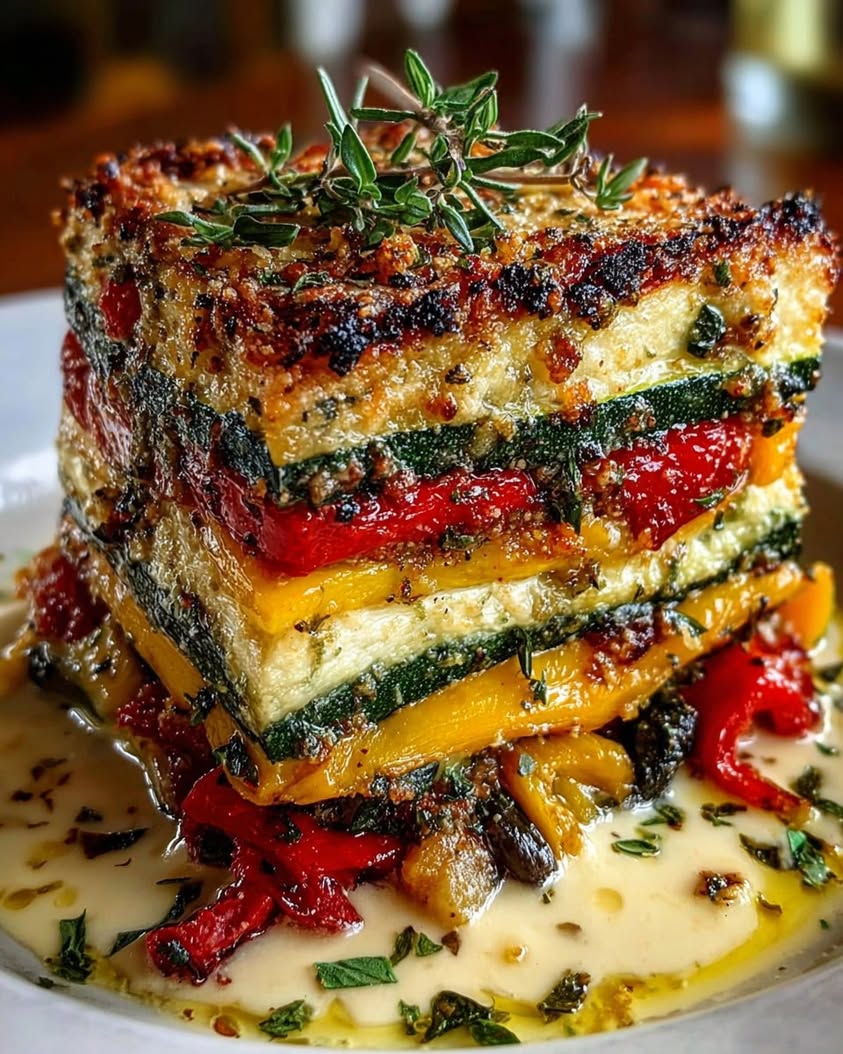
Layered Mediterranean Eggplant, Zucchini, Yellow & Red Bell Pepper Lasagna with Creamy Garlic Herb Three-Cheese Drizzle: A Vibrant, Vegetable-Packed Feast
Imagine a dish that captures the essence of a sun-drenched Mediterranean garden. This layered Mediterranean vegetable lasagna does exactly that. It transforms humble eggplant, zucchini, and sweet bell peppers into a stunning, flavorful masterpiece. Moreover, it skips traditional pasta entirely. Instead, it relies on beautifully roasted vegetable slices to create its hearty structure. Consequently, each bite delivers a symphony of textures and tastes.
This recipe is a celebration of plant-based abundance. The process involves roasting vegetables to concentrate their natural sugars. Then, you layer them with a rich tomato sauce and a generous drizzle of a creamy garlic herb three-cheese sauce. Ultimately, the final bake creates a bubbling, golden-brown dish that is as beautiful as it is delicious. This Mediterranean vegetable lasagna is perfect for a special family dinner or an impressive potluck contribution. It is a guaranteed crowd-pleaser.
Furthermore, this dish is incredibly versatile and satisfying. It proves that vegetarian meals can be deeply comforting and substantial. The creamy three-cheese drizzle adds a luxurious finish that ties all the components together. In essence, this recipe is more than just dinner. It is a vibrant, edible work of art that brings the colors and flavors of the Mediterranean to your table.
Quick Recipe Highlights
- Flavor Profile: This Mediterranean vegetable lasagna offers a robust, savory taste from roasted vegetables and herbs. The creamy three-cheese drizzle adds a tangy, garlicky richness that perfectly balances the sweet, caramelized notes of the peppers and tomatoes.
- Texture: You will experience a wonderful contrast between the tender, melt-in-your-mouth roasted vegetable layers and the creamy, velvety cheese sauce. The top develops a slightly crisp, golden crust that adds a satisfying final bite.
- Aroma: While baking, your kitchen will fill with the irresistible scents of roasting garlic, sweet onions, and fragrant herbs like oregano and basil. The aroma is unmistakably Mediterranean and deeply inviting.
- Visual Appeal: This dish is a rainbow on a plate. The deep purple eggplant, green zucchini, and bright yellow and red bell peppers create stunning, colorful layers that make presentation effortless and impressive.
- Skill Level Needed: This recipe requires basic knife skills for slicing vegetables and comfort with multi-step cooking. It is ideal for a confident home cook looking to create a show-stopping vegetarian centerpiece.
- Special Equipment: A mandoline slicer is highly recommended for achieving uniformly thin vegetable slices. You will also need two or three large baking sheets for roasting and a 9×13 inch baking dish for assembly.
Recipe Overview
- Difficulty Level: This Mediterranean vegetable lasagna is rated intermediate due to its multiple preparation steps. You must slice and roast several vegetables, prepare a homemade tomato sauce, and make a separate cheese sauce. However, each step is straightforward and manageable with a little organization.
- Category: This dish fits perfectly as a vegetarian main course. It is substantial enough for a holiday centerpiece. Additionally, it works well as a hearty side dish alongside grilled proteins like chicken or fish.
- Cuisine: The recipe draws direct inspiration from the rustic, vegetable-forward cooking of the Mediterranean region. It uses classic ingredients like eggplant, zucchini, oregano, and olive oil. The flavors celebrate the simplicity and quality of fresh produce.
- Cost: This is a moderately priced recipe. The main cost comes from the variety of fresh vegetables and the three types of cheese. Fortunately, it yields a large number of servings, making it cost-effective for feeding a group.
- Season: This lasagna is ideal for late summer and early fall. That is when eggplant, zucchini, and bell peppers are at their peak freshness and most affordable. However, you can make it year-round with good-quality produce.
- Occasion: It is perfect for Sunday family dinners, vegetarian holiday meals like Easter or Christmas, and elegant dinner parties. It also travels well for potlucks and can be made ahead for easy entertaining.
Why You’ll Love This Recipe
First and foremost, the taste and texture of this Mediterranean vegetable lasagna are extraordinary. Each layer contributes something special. The eggplant becomes silky and rich. The zucchini offers a fresh, light note. Meanwhile, the bell peppers provide a sweet, robust depth. The creamy three-cheese drizzle binds everything together with its garlicky, herbal tang. Consequently, every forkful is a complex and satisfying experience. The absence of pasta allows the natural flavors of the vegetables to shine brightly. Ultimately, it is a dish that feels both indulgent and nourishing.
From a convenience standpoint, this recipe offers excellent preparation flexibility. You can roast the vegetables and prepare the sauces a day in advance. Then, you simply assemble and bake the dish when ready. This make-ahead quality is a huge advantage for busy hosts. Furthermore, the assembly process is simple and even fun. You get to create beautiful, colorful layers. It is a rewarding cooking project that yields impressive results without requiring professional chef skills.
Nutritionally, this lasagna is a powerhouse. It is packed with vitamins, minerals, and fiber from its array of colorful vegetables. Eggplant and zucchini are particularly good sources of antioxidants. Using vegetables instead of pasta also lowers the overall carbohydrate content. Additionally, the cheese provides protein and calcium. Choosing a high-quality olive oil adds heart-healthy fats. Therefore, this is a meal that supports your well-being while delighting your taste buds.
For social gatherings, this Mediterranean vegetable lasagna is a true star. Its stunning appearance immediately draws compliments. It caters beautifully to vegetarian guests without making them feel like an afterthought. Moreover, it is substantial enough to please meat-eaters as well. Serving a dish that looks this beautiful and tastes this good creates a memorable dining experience. It sparks conversation and shows your guests you care about providing a special meal.
Finally, this recipe is cost-effective and accessible. While it uses several ingredients, most are common pantry staples or readily available fresh produce. You can often find deals on seasonal vegetables. The recipe is also adaptable. You can swap in different cheeses or herbs based on what you have available. This flexibility makes it a reliable go-to recipe for feeding a crowd without breaking the bank. It proves that eating well does not have to be expensive or complicated.
Historical Background and Cultural Significance
The concept of layering ingredients is ancient and spans many cultures. However, the modern pasta-based lasagna we know originated in the Emilia-Romagna region of Italy. This Mediterranean vegetable lasagna is a contemporary, health-conscious twist on that classic format. It draws inspiration from traditional Italian melanzane alla parmigiana, a baked dish with fried eggplant, tomato sauce, and cheese. Our version expands on that idea. It incorporates a wider variety of summer vegetables popular across the entire Mediterranean basin.
Culturally, this dish celebrates the Mediterranean dietary pattern. This pattern is renowned for its health benefits and emphasis on fresh, local produce. Countries like Greece, Italy, Spain, and southern France have built their cuisines around vegetables, olive oil, herbs, and cheese. This recipe embodies that philosophy perfectly. It is a direct homage to the rustic, family-style cooking found in countryside villages. There, meals are built from what is freshly harvested from the garden.
The evolution of this recipe mirrors broader food trends. As home cooks seek more vegetable-centric meals, classic comfort foods have been reinvented. The “vegetable lasagna” category has exploded with variations. This particular version stands out by eliminating pasta entirely. It uses the vegetables themselves as the structural layers. This innovation makes the dish naturally gluten-free. It also intensifies the vegetable flavor. The creamy three-cheese drizzle is a modern touch that adds luxury while staying true to the region’s love for dairy like feta, ricotta, and Parmesan.
Regional variations of this concept are endless. In Greece, you might find a similar dish called moussaka, which uses eggplant and a béchamel sauce. In Provence, a ratatouille bake shares the same vegetable foundation. Our recipe borrows elements from these traditions. It creates a fusion that is both familiar and new. This adaptability is a testament to the timeless appeal of combining roasted vegetables, tomato, and cheese. It is a formula that has been delicious for centuries and continues to evolve.
Ingredient Deep Dive
Let us start with eggplant, the star of many Mediterranean dishes. Historically, eggplant traveled from India through the Middle East before becoming a staple in Southern European cooking. It provides a meaty, substantial texture that makes this lasagna satisfying. Nutritionally, it is rich in fiber, antioxidants, and nasunin, a compound linked to brain health. When selecting eggplants, choose ones that feel heavy for their size with smooth, shiny skin and a green stem. To prevent bitterness, you can salt sliced eggplant and let it drain. However, most modern varieties are bred to be less bitter. Store whole eggplant at cool room temperature for a day or in the refrigerator for up to three days.
Zucchini, or courgette, is another summer squash integral to this dish. It adds a light, fresh contrast to the richer eggplant. Zucchini is incredibly hydrating and a good source of vitamin C, manganese, and more antioxidants. For this recipe, select medium-sized, firm zucchini. Avoid overly large ones, as they can be seedy and watery. A mandoline is the best tool for achieving the uniform, thin slices needed for even roasting and layering. Store zucchini unwashed in a plastic bag in the refrigerator’s crisper drawer. It is best used within a week.
Bell peppers, both red and yellow, bring vibrant color and a sweet, smoky flavor once roasted. They are exceptionally high in vitamin C, even more than oranges. The red ones are also a great source of vitamin A and lycopene. Choose peppers with firm, taut skin and no soft spots. Their bright colors are not just for show. They indicate different nutrient profiles. You can absolutely use all one color if needed. Store peppers in the refrigerator’s vegetable drawer. For a deeper flavor, consider charring them over an open flame before peeling and slicing. This adds a wonderful smoky dimension.
The creamy garlic herb three-cheese drizzle is what makes this lasagna exceptional. A blend of ricotta, feta, and Parmesan creates a perfect balance of creaminess, tang, and saltiness. Ricotta provides a smooth, mild base. Feta, a brined cheese with Greek origins, adds a distinctive salty punch. Parmesan contributes umami depth. Using fresh herbs like parsley, oregano, or basil is non-negotiable for authentic Mediterranean flavor. Fresh garlic is also essential. For a smoother sauce, blend the ingredients in a food processor. If you need a dairy-free version, blended silken tofu or cashew cream with nutritional yeast can work as a substitute, though the flavor profile will change.
Common Mistakes to Avoid
- Skipping the Salting of Eggplant: While not always necessary, salting eggplant slices draws out excess moisture and can reduce potential bitterness. If you skip this step, your eggplant may release too much water during roasting, making the layers soggy. Simply sprinkle slices with salt, let them sit for 30 minutes, then rinse and pat thoroughly dry.
- Cutting Vegetables Too Thick: Uniform, thin slices are crucial for even cooking and easy layering. Slices that are too thick will not become tender enough. They will also make the lasagna difficult to cut and serve. Use a sharp knife or, better yet, a mandoline slicer set to about 1/4-inch thickness.
- Underseasoning the Vegetables: Vegetables need ample seasoning before roasting. Do not be shy with salt, pepper, and dried herbs like oregano. Roasting concentrates flavors, so properly seasoned vegetables will create a flavorful dish. Conversely, underseasoned vegetables will result in a bland lasagna.
- Overcrowding the Baking Sheets: When roasting, give the vegetable slices plenty of space. Overcrowding causes them to steam instead of roast. This leads to limp, soggy vegetables rather than ones with lightly caramelized edges. Use multiple baking sheets or roast in batches if necessary.
- Using a Watery Tomato Sauce: A thin, runny sauce will make the entire lasagna watery. Opt for a high-quality, thick marinara or jarred pasta sauce. Alternatively, simmer your own sauce until it is very thick and concentrated. The sauce should coat the back of a spoon without dripping off easily.
- Not Letting the Lasagna Rest: Cutting into the lasagna immediately after pulling it from the oven is a recipe for a messy plate. The layers need time to set. Let it rest for at least 15-20 minutes. This allows the cheese sauce to firm up slightly and makes clean slicing possible.
- Forgetting to Taste the Cheese Drizzle: Before drizzling, always taste your creamy three-cheese mixture. Adjust the seasoning with salt, pepper, or more herbs. Remember, the feta and Parmesan are salty, so you may not need extra salt. The sauce should be flavorful on its own.
- Baking in the Wrong Size Dish: Using a dish that is too small will force you to over-stack the layers, leading to uneven cooking. A dish that is too large will result in a thin, spread-out lasagna. A standard 9×13 inch baking dish is ideal for this recipe’s yield.
Essential Techniques
Roasting Vegetables for Lasagna: Proper roasting is the most important technique here. The goal is to remove moisture and concentrate flavor, not to cook the vegetables until mushy. Toss your sliced vegetables in olive oil, salt, and herbs. Then, spread them in a single layer on parchment-lined baking sheets. Roast at a high temperature (around 425°F) until they are tender and the edges just begin to caramelize. This step ensures your lasagna layers hold their structure and do not release excess water during the final bake. The visual cue for success is vegetables that are pliable but not browned or crispy all over.
Creating a Thick, Flavorful Tomato Sauce: Even if using a jarred sauce, enhancing it is key. Sauté onions and garlic until soft. Then, add your sauce and let it simmer to reduce and thicken. This concentrates the tomato flavor. Adding a pinch of sugar can balance acidity, while dried oregano and basil reinforce the Mediterranean profile. The sauce should be the consistency of a thick stew, not a soup. It needs to support the vegetable layers without making them swim.
Mastering the Creamy Cheese Drizzle: This sauce should be pourable but not thin. Combine room-temperature ricotta, crumbled feta, grated Parmesan, minced garlic, herbs, and a splash of milk or cream. Whisk vigorously or pulse in a food processor until smooth. The consistency should be similar to a thick pancake batter. If it is too thick, add milk a teaspoon at a time. If it is too thin, add more Parmesan. The drizzle will thicken further when baked. Taste and adjust seasoning aggressively, as this sauce carries a lot of the dish’s flavor.
Layering for Structural Integrity: Think of building a stable wall. Start with a thin layer of tomato sauce on the bottom to prevent sticking. Then, add a single, even layer of one type of roasted vegetable. Overlap the slices slightly. Next, spoon over some tomato sauce and drizzle a zigzag of cheese sauce. Repeat with the next vegetable. Avoid over-saucing each layer, which can lead to a soupy result. The final top layer should get an extra generous amount of the creamy three-cheese drizzle for a beautiful, browned finish.
Pro Tips for Perfect Layered Mediterranean Vegetable Lasagna
First, invest in a mandoline slicer. It guarantees uniformly thin slices of eggplant and zucchini. This leads to even roasting and professional-looking layers. Always use the safety guard to protect your fingers.
Second, roast your vegetables on parchment paper. This prevents sticking without needing excessive oil. It also makes cleanup incredibly easy. You can simply lift the parchment with the roasted vegetables and slide them onto your assembly station.
Third, let all components cool slightly before assembling. Putting a hot tomato sauce or hot vegetables directly into the baking dish can create steam. This steam will condense and make the lasagna watery during baking.
Fourth, use a spoon to spread sauces. For the tomato sauce, use the back of a spoon to spread it thinly and evenly over each vegetable layer. For the cheese drizzle, use a spoon to create decorative zigzags. This ensures even distribution without disturbing the vegetable layers.
Fifth, cover with foil for the first part of baking. This allows the lasagna to heat through thoroughly without over-browning the top. Then, remove the foil for the last 15-20 minutes to let the cheese drizzle bubble and turn a beautiful golden brown.
Sixth, do not skip the rest time. Letting the lasagna rest for 15-20 minutes after baking is non-negotiable. It allows the layers to set, making it possible to cut clean, beautiful squares that hold their shape on the plate.
Seventh, garnish with fresh herbs just before serving. A sprinkle of chopped fresh basil, parsley, or oregano adds a burst of color and a fresh aroma that elevates the entire dish. It is the perfect finishing touch.
Eighth, use a sharp, thin-bladed knife for serving. A chef’s knife or a long, thin slicing knife will cut through the layers cleanly. Wipe the blade between cuts for the neatest presentation.
Variations and Adaptations
For regional variations, consider adding a Greek spin by incorporating a layer of sautéed spinach and using only feta in the drizzle. An Italian version might include a layer of sliced portobello mushrooms and use fresh mozzarella pearls along with the drizzle. For a Provençal touch, add a layer of thinly sliced potatoes and replace some of the tomato sauce with a layer of prepared ratatouille.
Seasonal adaptations are simple. In winter, use roasted butternut squash or sweet potato slices in place of zucchini. In spring, add layers of roasted asparagus and artichoke hearts. The creamy three-cheese drizzle works beautifully with almost any roasted vegetable combination, making this recipe adaptable year-round.
For dietary modifications, a gluten-free version is already achieved by using no pasta. To make it dairy-free, create a “cheese” drizzle from soaked blended cashews, nutritional yeast, lemon juice, and garlic. For a vegan version, use the cashew drizzle and ensure your tomato sauce contains no animal products. To lower the fat content, use part-skim ricotta and reduce the amount of olive oil used for roasting.
Flavor variations can come from the herb profile. Try adding chopped fresh mint or dill to the cheese drizzle for a brighter flavor. For a spicy kick, add red pepper flakes to the tomato sauce or a pinch of smoked paprika to the roasted vegetables. A tablespoon of sun-dried tomato paste mixed into the tomato sauce adds incredible depth.
Texture modifications can include adding a crunchy element. Sprinkle panko breadcrumbs mixed with a little Parmesan and olive oil on top for the last 10 minutes of baking. Alternatively, add a layer of toasted pine nuts or walnuts between the vegetable layers for a surprising crunch.
Presentation alternatives include making individual lasagnas in small baking dishes or oven-safe mason jars for a personalized touch. You can also deconstruct the dish. Serve the roasted vegetables on a platter topped with dollops of the cold cheese drizzle and a side of warm tomato sauce for dipping.
Serving and Presentation Guide
Plating this Mediterranean vegetable lasagna is part of the pleasure. Use a sharp knife to cut clean squares or rectangles. Slide a flat, wide spatula underneath to lift each portion carefully onto a warm plate. For a restaurant-style look, offset the slice slightly on the plate rather than placing it dead center. This creates a more dynamic visual.
Garnishing is essential for the final pop of color and freshness. A sprinkle of chopped fresh basil, Italian parsley, or microgreens is classic. A light drizzle of high-quality extra virgin olive oil around the plate adds shine and flavor. For a touch of color, a few halved cherry tomatoes or a twist of lemon zest works beautifully.
Traditional accompaniments include a simple green salad with a lemony vinaigrette to cut through the richness. A side of crusty, warmed bread is perfect for soaking up any delicious sauce left on the plate. For a more substantial meal, grilled chicken breast or lamb chops pair wonderfully with the Mediterranean flavors.
Modern serving suggestions might include a dollop of basil pesto on the side or a small ramekin of chili oil for those who like heat. Serving it alongside other Mediterranean mezze like hummus, olives, and stuffed grape leaves creates a fantastic feast-style meal.
Temperature considerations are key. The lasagna is best served warm, not piping hot. The rest time allows it to reach the perfect serving temperature. Ensure your plates are warm to keep the food hot longer. If serving buffet-style, keep the baking dish on a warming tray or in a low-temperature oven.
Portion control is easy with this hearty dish. A single square from a 9×13 inch pan is a satisfying main course portion. For a side dish or as part of a larger spread, you can cut smaller portions. The recipe yields about 8 generous main-course servings or 12-14 side dish servings.
Wine and Beverage Pairing
Wine pairings for this robust Mediterranean vegetable lasagna should complement its earthy vegetables and tangy cheese. A medium-bodied Italian red like Chianti Classico or Barbera works wonderfully. Their bright acidity cuts through the richness of the cheese. Alternatively, a fruity but dry rosé from Provence is an excellent choice. Its berry notes and crisp finish balance the savory and sweet elements of the roasted peppers and tomatoes.
For white wine lovers, choose something with enough body and acidity to stand up to the dish. A Vermentino from Sardinia or a Greco di Tufo from Campania have the necessary weight and mineral notes. An oak-aged Chardonnay can also pair well, as its buttery notes will harmonize with the creamy cheese drizzle.
Non-alcoholic alternatives are just as important. Sparkling water with a squeeze of lemon or lime is always refreshing. For something more special, try a homemade rosemary-lemonade or a pomegranate spritzer. Iced herbal tea, like mint or hibiscus, also complements the Mediterranean flavors beautifully without competing with them.
Coffee and tea pairings are ideal for after the meal. A strong espresso or a cup of Italian roast coffee helps digest the rich meal. For tea, consider a peppermint tea for its soothing properties or a light, floral green tea. These beverages provide a clean, palate-cleansing finish to the dining experience.
Temperature and serving suggestions are straightforward. Serve red wines slightly below room temperature, around 60-65°F. White wines and rosés should be chilled. Non-alcoholic beverages are best served very cold. Always offer water on the table to cleanse the palate between bites of the flavorful lasagna.
Storage and Shelf Life
Proper storage is crucial for maintaining the quality of your Mediterranean vegetable lasagna. First, allow the baked dish to cool completely to room temperature. Do not leave it out for more than two hours to prevent bacterial growth. Then, cover the baking dish tightly with plastic wrap or aluminum foil. Alternatively, transfer individual portions to airtight containers. Store it in the refrigerator for up to 4-5 days.
For longer storage, this lasagna freezes exceptionally well. Wrap the entire cooled dish or individual portions tightly in plastic wrap, then again in foil. You can also use freezer-safe containers. Label with the date. Frozen, it will maintain best quality for about 3 months. The texture of the vegetables may become slightly softer upon thawing, but the flavor will remain excellent.
Reheating instructions depend on the method. For refrigerated portions, reheat in a 350°F oven until warmed through, about 20-30 minutes for a large piece. Cover with foil to prevent over-browning. You can also reheat single servings in the microwave. Use a medium power setting and heat in 60-second intervals to avoid making the vegetables rubbery. For frozen lasagna, thaw overnight in the refrigerator before reheating as above. You can reheat from frozen, but it will take significantly longer and may dry out the edges.
Signs of spoilage are easy to spot. Discard the lasagna if you notice an off or sour smell, visible mold (often fuzzy and green or white), or if the texture becomes excessively slimy. When in doubt, it is always safer to throw it out. Properly stored and reheated, however, this dish makes fantastic leftovers.
Make Ahead Strategies
This Mediterranean vegetable lasagna is an ideal make-ahead meal. You can break down the preparation over two days for stress-free entertaining. On Day 1, focus on prep work. Slice all the vegetables, roast them on baking sheets, and let them cool. Prepare the tomato sauce and the creamy three-cheese drizzle. Store each component separately in airtight containers in the refrigerator. The roasted vegetables will keep for 2 days, and the sauces for 3-4 days.
On the day of serving, assembly is quick. Let the cold components sit at room temperature for about 20 minutes to take the chill off. Then, layer everything in your baking dish as directed. Because the components are cold, you may need to add 10-15 minutes to the covered baking time to ensure the center is fully heated. The rest of the recipe instructions remain the same.
You can also assemble the entire lasagna a day in advance. Cover the unbaked, assembled dish tightly with plastic wrap and refrigerate. When ready to bake, remove the plastic wrap, cover with foil, and bake. Add at least 20-25 minutes to the initial covered baking time since you are starting with a cold dish. Check for bubbling at the edges and a hot center before removing the foil for the final browning.
The quality impact of making ahead is minimal, and often beneficial. Allowing the flavors to meld in the refrigerator overnight can actually improve the taste. The key is ensuring the roasted vegetables are thoroughly patted dry before storing. This prevents excess moisture from seeping out and making the layers soggy during the extended storage.
Scaling Instructions
Halving this Mediterranean vegetable lasagna recipe is straightforward for smaller households. Simply divide all ingredient quantities by two. Use an 8×8 inch or 9×9 inch baking dish. The roasting time for the vegetables may be slightly shorter, so check for doneness a few minutes early. The baking time for the assembled lasagna will also be reduced. Start checking for doneness after 30 minutes of covered baking. The result will be a perfect, smaller-scale version of the original.
Doubling or tripling the recipe is excellent for large gatherings or meal prep. Multiply all ingredients accordingly. You will need to roast the vegetables in multiple batches to avoid overcrowding the pans. Use two separate 9×13 inch baking dishes for assembly. The baking time may increase slightly for a doubled recipe in a deep dish. Look for the same visual cues: bubbling edges and a golden-brown top. If baking multiple dishes at once, rotate them in the oven halfway through for even cooking.
Equipment adjustments are necessary when scaling. For a double batch, ensure you have enough baking sheets. You may also need a larger mixing bowl for the cheese drizzle. A key tip for large batches is to season each batch of vegetables individually as you roast them. This ensures even seasoning throughout the entire dish.
Storage considerations change with scale. A single large lasagna in a deep dish will take longer to cool in the center, which is a food safety concern. For large batches, consider dividing the lasagna into two shallower dishes. This promotes faster, safer cooling for storage. Label and date all containers clearly, especially if freezing portions from a large batch.
Nutritional Deep Dive
This Mediterranean vegetable lasagna offers a well-rounded macro profile. A typical serving provides a good balance of complex carbohydrates from the vegetables, moderate protein from the cheese, and healthy fats from the olive oil and dairy. It is significantly lower in carbs and higher in fiber than a traditional pasta-based lasagna. The exact numbers depend on specific ingredients and portion size, but it is a nutrient-dense choice.
The micronutrient analysis is impressive due to the variety of colorful vegetables. Eggplant provides nasunin and fiber. Zucchini offers vitamin C and manganese. Red and yellow bell peppers are bursting with vitamins A and C. Tomatoes contribute lycopene. The cheeses add calcium and vitamin B12. Using olive oil as the primary fat source introduces heart-healthy monounsaturated fats and antioxidants.
Health benefits are linked to the Mediterranean dietary pattern this dish exemplifies. Regular consumption of such meals is associated with reduced risk of heart disease, improved brain health, and better weight management. The high fiber content promotes digestive health and sustained energy levels. The antioxidants combat oxidative stress and inflammation in the body.
For dietary considerations, this dish is naturally vegetarian and gluten-free. It can be adapted for other needs as previously discussed. For those monitoring sodium, you can reduce the salt in the roasting step and use a low-sodium tomato sauce. Choosing part-skim cheeses can lower the saturated fat content without sacrificing too much creaminess.
Portion analysis is key for weight management. A single square from the pan is very filling due to the high fiber and water content of the vegetables. It promotes satiety, which can help prevent overeating. Pairing it with a large side salad increases the volume of the meal without adding many calories, supporting a balanced approach to eating.
Dietary Adaptations
For a gluten-free version, this recipe is already compliant as written, containing no pasta or wheat-based ingredients. Always double-check your tomato sauce and cheese labels to ensure no hidden gluten-containing additives or stabilizers are present.
Creating a dairy-free version requires a substitute for the creamy three-cheese drizzle. A blend of soaked raw cashews, nutritional yeast, lemon juice, garlic, and water, blended until silky smooth, makes an excellent “cheese” sauce. For the topping, a sprinkle of dairy-free Parmesan-style shreds can add a finishing touch.
A vegan adaptation uses the dairy-free cheese sauce mentioned above. Also, ensure your tomato sauce contains no animal products like meat broth or dairy. The rest of the recipe, featuring roasted vegetables, is inherently vegan. This creates a stunning plant-based centerpiece.
For a low-carb or keto adaptation, focus on reducing the higher-carb vegetables. Increase the amount of eggplant and zucchini, and reduce or omit the bell peppers and onions. Use a no-sugar-added tomato sauce. The cheese sauce is already keto-friendly. This modification significantly lowers the net carbohydrate count per serving.
A Paleo version would avoid all dairy and legumes. Use the dairy-free cashew cheese sauce (cashews are technically a seed and often Paleo-acceptable). Ensure the tomato sauce has no sugar or non-Paleo oils. The dish then becomes a celebration of vegetables, herbs, and healthy fats.
For a Low-FODMAP adaptation, this recipe requires careful modification. Eggplant and zucchini are low-FODMAP in moderate servings. Replace onions with the green tops of scallions for flavor. Use a garlic-infused olive oil instead of fresh garlic to impart flavor without the FODMAPs. Limit the portion size to keep within recommended Monash University guidelines for each vegetable.
Troubleshooting Guide
If your lasagna turns out watery, the most common culprit is under-roasted vegetables that released too much juice during baking. Next time, roast the slices until they are very pliable and slightly shrunken. Also, ensure your tomato sauce is very thick. For a salvage operation, you can carefully spoon out excess liquid from the edges of the baked dish. Let it rest longer before cutting to allow the remaining liquid to be reabsorbed.
If the flavor seems bland, you likely underseasoned during the roasting stage. Vegetables need generous seasoning before they go into the oven. To fix a baked but bland lasagna, serve it with a side of flavorful pesto, a sprinkle of flaky sea salt, or a drizzle of balsamic glaze. Next time, taste your tomato sauce and cheese drizzle before assembling and adjust seasoning aggressively.
If the top is browning too quickly before the center is hot, you have an oven that runs hot or placed the dish too high. Immediately cover the dish loosely with foil to shield the top. Continue baking until the center is bubbly. In the future, bake on a center rack and use an oven thermometer to verify your oven’s temperature accuracy.
If the vegetable layers are still firm or crunchy, the slices were likely too thick or not roasted long enough. Unfortunately, you cannot fix this after baking. Continue baking the entire dish, covered, until a knife inserted into the center meets no resistance. For next time, use a mandoline for consistent thickness and roast until the vegetables are fully tender.
If the cheese drizzle separates or looks grainy, it may have been overheated or the cheeses were at different temperatures. A quick fix is to whisk in a tablespoon of warm milk or cream to smooth it out. For prevention, ensure all cheese components are at room temperature before mixing. Avoid overheating the sauce if you choose to warm it before drizzling.
PrintLayered Mediterranean Eggplant, Zucchini, Yellow & Red Bell Pepper Lasagna with Creamy Garlic Herb Three-Cheese Drizzle
- Total Time: 45 minutes
- Yield: 4
Description
A vibrant, vegetable-packed lasagna featuring roasted eggplant, zucchini, and bell peppers layered with a rich tomato sauce and topped with a decadent three-cheese garlic herb drizzle.
Ingredients
- 1 large eggplant, sliced into 1/4-inch rounds
- 2 medium zucchinis, sliced lengthwise into 1/4-inch strips
- 1 yellow bell pepper, sliced into strips
- 1 red bell pepper, sliced into strips
- 2 tablespoons olive oil
- 1 teaspoon dried oregano
- Salt and black pepper to taste
- 3 cups marinara sauce
- 9 no-boil lasagna noodles
- 1 cup ricotta cheese
- 1/2 cup grated Parmesan cheese
- 1/2 cup shredded mozzarella cheese
- 1/2 cup heavy cream
- 2 cloves garlic, minced
- 1 tablespoon fresh basil, chopped
- 1 tablespoon fresh parsley, chopped
Instructions
- Preheat oven to 400°F (200°C). Arrange eggplant, zucchini, and bell peppers on baking sheets, drizzle with olive oil, and season with oregano, salt, and pepper. Roast for 20 minutes until tender.
- Reduce oven to 375°F (190°C). Spread 1 cup marinara sauce in a 9×13 inch baking dish. Layer 3 lasagna noodles, half the roasted vegetables, and 1 cup sauce. Repeat layers.
- In a bowl, mix ricotta, Parmesan, and mozzarella. In a saucepan, warm heavy cream with garlic until simmering, then stir into cheese mixture with basil and parsley.
- Spread cheese drizzle over the top layer. Cover with foil and bake for 25 minutes. Uncover and bake 10 more minutes until bubbly. Let rest 10 minutes before serving.
Notes
You can customize the seasonings to taste.
- Prep Time: 15 minutes
- Cook Time: 30 minutes
- Method: Main
- Cuisine: Mediterranean