Mediterranean Hummus Flatbread with Feta: An Easy Flavorful Feast
Imagine a meal that combines creamy, savory, and fresh flavors all on a crispy canvas. This Mediterranean Hummus Flatbread with Feta is exactly that. It is a vibrant and satisfying dish that brings the sunny flavors of the Mediterranean straight to your table. Moreover, it is incredibly simple to assemble, making it perfect for busy weeknights or casual entertaining. Ultimately, this recipe transforms a few quality ingredients into a stunning and delicious centerpiece.
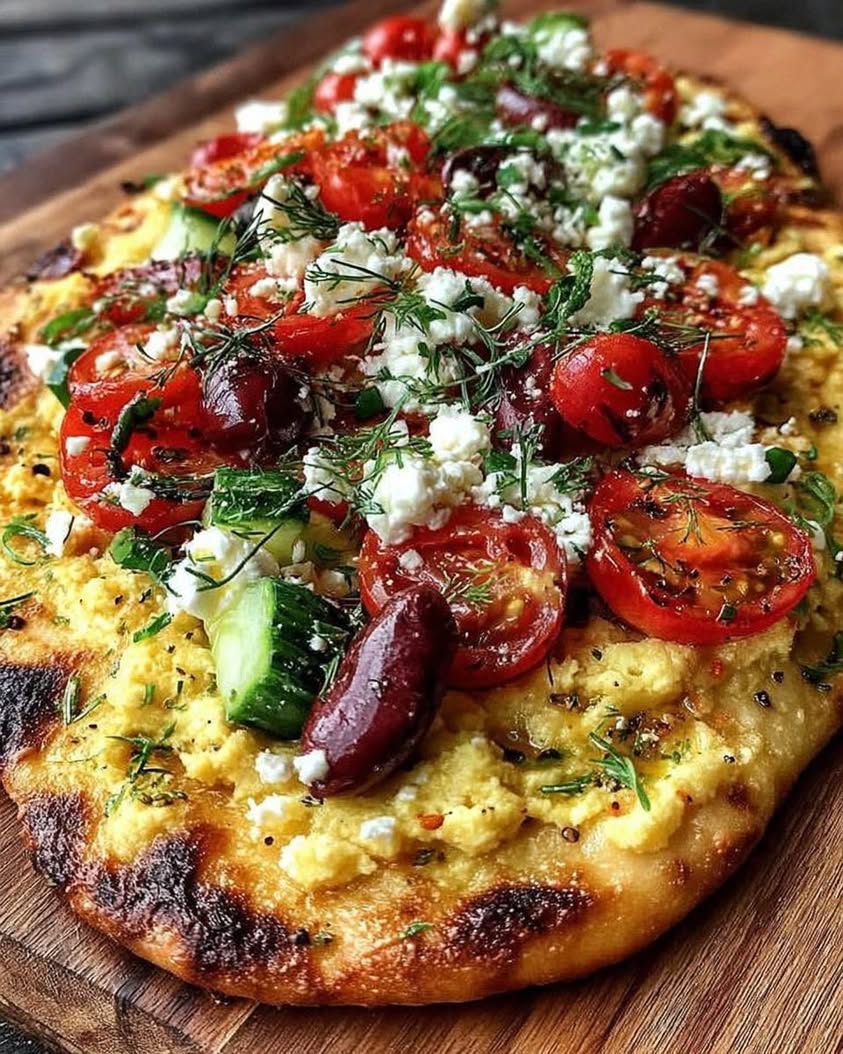
The star of this show is a generous layer of smooth, garlicky hummus spread over a perfectly baked flatbread. Consequently, you get a rich and protein-packed base. Then, a colorful confetti of diced cucumbers, juicy cherry tomatoes, briny Kalamata olives, and crisp red onion gets scattered on top. Finally, a generous crumbling of tangy feta cheese and a drizzle of olive oil bring everything together. The result is a textural and flavor masterpiece that feels gourmet but requires minimal effort.
This Mediterranean Hummus Flatbread with Feta is more than just a quick meal. It is a versatile culinary creation. For instance, you can easily customize it with your favorite vegetables or proteins. Additionally, it serves beautifully as an appetizer cut into strips, a light lunch, or a meatless main course. Therefore, whether you are cooking for one or feeding a crowd, this recipe adapts to your needs. Its bright, fresh ingredients and satisfying combination of textures guarantee it will become a regular in your recipe rotation.
Quick Recipe Highlights
- Flavor Profile: This Mediterranean Hummus Flatbread with Feta delivers a harmonious balance. You experience the creamy, earthy depth of hummus first. Then, the salty punch of feta and olives meets the bright acidity of fresh tomatoes and lemon.
- Texture: Every bite offers a delightful contrast. The flatbread provides a sturdy, crispy base. Meanwhile, the creamy hummus, crunchy vegetables, and crumbly cheese create a satisfying and dynamic mouthfeel.
- Aroma: As it bakes, the warm, toasty scent of the flatbread and garlic from the hummus fills your kitchen. Afterwards, the fresh herbs like parsley or oregano add a final, fragrant green note.
- Visual Appeal: This dish is a feast for the eyes with its vibrant Mediterranean colors. The red of the tomatoes, green of the cucumbers, purple of the onion, and white of the feta create a stunning, Instagram-worthy presentation.
- Skill Level Needed: Absolutely beginner-friendly. This Mediterranean Hummus Flatbread with Feta requires no advanced cooking techniques. Essentially, you just assemble pre-prepped ingredients and bake.
- Special Equipment: You only need a basic baking sheet and an oven. A pizza cutter or sharp knife makes slicing easy. Otherwise, no special tools are required for this simple flatbread recipe.
Recipe Overview
- Difficulty Level: We classify this Mediterranean Hummus Flatbread with Feta as “Easy” for clear reasons. Firstly, it involves zero complicated techniques like dough-making or sauce reduction. Secondly, the assembly process is intuitive and forgiving. Finally, the ingredient list is short and flexible, allowing for substitutions without compromising the final dish.
- Category: This versatile recipe fits multiple meal categories perfectly. It shines as a quick and healthy main course for a light dinner. Alternatively, you can slice it into smaller pieces for a crowd-pleasing appetizer. It also makes an excellent lunch option, served warm or at room temperature.
- Cuisine: This dish draws direct inspiration from the sun-drenched flavors of the Eastern Mediterranean. Specifically, it combines classic Levantine ingredients like hummus and chickpeas with Greek staples like feta and olives. The result is a modern fusion that celebrates the broader Mediterranean diet’s focus on fresh produce, legumes, and olive oil.
- Cost: Preparing this Mediterranean Hummus Flatbread with Feta is very budget-friendly. The base ingredients like hummus, flatbread, and vegetables are inexpensive. Meanwhile, a little feta cheese goes a long way in terms of flavor. You can easily feed two people a restaurant-quality meal for a fraction of the cost of dining out.
- Season: This is truly a year-round recipe. However, it tastes particularly sublime in late summer when tomatoes and cucumbers are at their peak sweetness and freshness. During colder months, it provides a vibrant, healthy contrast to heavier comfort foods.
- Occasion: Its flexibility makes it suitable for numerous occasions. It is ideal for a casual weeknight family dinner. Furthermore, it is impressive enough for a relaxed dinner party appetizer. It also travels well for picnics or potlucks when pre-sliced.
Why You’ll Love This Recipe
First and foremost, the taste and texture of this Mediterranean Hummus Flatbread with Feta are utterly irresistible. Each component plays a crucial role. The creamy hummus acts as a flavorful sauce, while the fresh vegetables add juicy crunch. Simultaneously, the salty feta and olives provide a savory depth that keeps you coming back for another bite. The combination is both refreshing and deeply satisfying, hitting all the right notes on your palate.
Secondly, the convenience factor is a major win. This recipe comes together in about twenty-five minutes from start to finish. Since you use a pre-made flatbread and store-bought hummus, you skip the most time-consuming steps. Consequently, you can have a gorgeous, homemade meal on the table faster than you could get delivery. It is the ultimate solution for those nights when you want something delicious and wholesome without a long cooking process.
From a nutritional standpoint, this Mediterranean Hummus Flatbread with Feta is packed with benefits. Chickpeas in the hummus offer a great source of plant-based protein and fiber, promoting fullness and digestive health. The colorful array of vegetables provides essential vitamins, minerals, and antioxidants. Additionally, olive oil and feta contribute healthy fats. This dish is a balanced meal that aligns perfectly with the principles of the celebrated Mediterranean diet, known for supporting heart health and longevity.
For entertaining, this flatbread is a superstar. It looks incredibly impressive and colorful on a serving board. Guests can easily grab a slice, making it perfect for casual gatherings. You can easily double or triple the recipe to feed a crowd. Moreover, because it is naturally vegetarian, it caters to a wide range of dietary preferences. Serving this Mediterranean Hummus Flatbread with Feta guarantees compliments and empty plates.
Finally, it is incredibly cost-effective and accessible. You do not need any rare or expensive ingredients. Most components are pantry staples or easy finds at any grocery store. This accessibility means you can whip it up spontaneously. Ultimately, this recipe proves that eating well does not require complicated techniques or a large budget. It is a testament to the power of combining simple, quality ingredients with bold Mediterranean flavors.
Historical Background and Cultural Significance
The story of flatbread is one of the oldest in human cuisine. Essentially, flatbreads were among the first breads ever made, originating in ancient Mesopotamia and Egypt. These simple breads, cooked on hot stones or in communal ovens, formed the staple carbohydrate for countless civilizations across the Middle East and Mediterranean. The modern pita or naan you find today are direct descendants of these ancient recipes. Using flatbread as a base for toppings is a tradition as old as the bread itself, making our Mediterranean Hummus Flatbread with Feta part of a timeless culinary practice.
Hummus, a central component of this dish, carries deep cultural significance. Its origins are fiercely debated among several Middle Eastern and Mediterranean cultures, including Lebanon, Israel, Egypt, and Greece. Historically, hummus is a humble paste of chickpeas, tahini, lemon, and garlic. It has been a dietary staple in the Levant for centuries, valued for its nutrition, affordability, and delicious flavor. Spreading hummus on bread is a classic way to enjoy it, transforming our flatbread recipe into a modern interpretation of a very ancient meal.
The evolution of this specific recipe is a tale of modern fusion cooking. While combining bread, chickpeas, and vegetables is traditional, the assembly and presentation reflect contemporary tastes. The use of a single, large flatbread as a “pizza-style” canvas is a more recent trend. This format allows for beautiful presentation and easy sharing. The addition of feta cheese, a Greek staple, to a primarily Levantine base showcases how culinary borders blur in modern kitchens. Our Mediterranean Hummus Flatbread with Feta is a delicious product of this global exchange.
Regional variations of this concept are endless. In Greece, you might find a similar dish called “pita me hummus,” often featuring different herbs. In Lebanon, it could be served as “manakish” with a za’atar spice blend alongside the hummus. Some Israeli versions might include a spicy zhug sauce or pickled vegetables. The beauty of this Mediterranean Hummus Flatbread with Feta recipe is its adaptability. It provides a foundational template that you can customize based on regional spices, local cheeses, or seasonal produce, keeping the ancient tradition alive and ever-evolving.
Ingredient Deep Dive
Hummus: This creamy spread is the soul of the dish. Culturally, hummus is a cornerstone of Middle Eastern cuisine, symbolizing hospitality and shared meals. Nutritionally, it is a powerhouse made from chickpeas, offering plant-based protein, fiber, and essential minerals like iron and folate. The tahini (sesame paste) provides healthy fats and calcium. For the best Mediterranean Hummus Flatbread with Feta, choose a high-quality, classic hummus or make your own. Look for a smooth texture and balanced garlic-lemon flavor. Store-bought hummus keeps refrigerated for about a week after opening.
Flatbread: The foundation must be sturdy. Traditionally, flatbreads like pita were baked in hot ovens or on griddles. For this recipe, a thicker, pre-baked flatbread or naan works best to support the toppings without getting soggy. Nutritionally, it provides carbohydrates for energy. Opt for whole-grain versions for added fiber. You can find suitable flatbreads in the bakery or international aisle. At home, store them in a cool, dry place or freeze for longer shelf life. For a gluten-free Mediterranean Hummus Flatbread with Feta, use a certified gluten-free flatbread or a large tortilla.
Feta Cheese: This briny cheese adds the essential salty, tangy punch. Authentic Greek feta is made from at least 70% sheep’s milk, often mixed with goat’s milk, and protected by EU law. It is lower in fat than many cheeses and a good source of calcium and protein. For the best flavor in your Mediterranean Hummus Flatbread with Feta, buy feta in blocks stored in brine, not pre-crumbled. The brine keeps it moist and flavorful. Crumble it just before serving. Store leftover feta submerged in its brine in the refrigerator.
Cucumber & Tomato: These vegetables provide crucial freshness and hydration. In Mediterranean climates, these salad staples are abundant and celebrated for their cooling properties. They are low in calories but high in vitamins (like Vitamin C and K), antioxidants, and water content. For optimal texture, use English or Persian cucumbers as they have fewer seeds. Choose ripe, firm cherry tomatoes for their sweetness. Always rinse and dry vegetables thoroughly before dicing to prevent a watery flatbread. These ingredients are best added fresh and not baked for too long.
Kalamata Olives & Red Onion: These are the flavor intensifiers. Kalamata olives, from Greece, are known for their dark purple color, almond shape, and rich, fruity taste. They are a hallmark of the Mediterranean diet and contain healthy monounsaturated fats. Red onion adds a sharp, pungent crunch and a pop of color. Its flavor mellows slightly when baked. For convenience, you can buy pitted Kalamata olives. Slice the red onion thinly for easier eating. Both ingredients store well in the refrigerator for extended periods.
Common Mistakes to Avoid
- Using a Soggy Flatbread Base: Starting with a soft or thin flatbread is a common error. Consequently, the hummus and vegetable juices can make it unpleasantly mushy. Always choose a thick, pre-baked flatbread or lightly toast it before adding toppings to create a moisture barrier.
- Spreading Hummus Too Thickly: While hummus is delicious, an overly thick layer can overwhelm the other flavors and make the final dish heavy. Aim for a thin, even layer just enough to coat the flatbread. This allows the texture of the base and the freshness of the toppings to shine through.
- Adding Wet Vegetables: Not thoroughly drying diced cucumbers and tomatoes after washing is a critical mistake. The excess water will seep out during baking or sitting, creating a pool of liquid on your Mediterranean Hummus Flatbread with Feta. Always pat vegetables dry with a clean kitchen towel.
- Overbaking the Flatbread: The goal is to warm the flatbread and slightly melt the feta, not to cook the fresh vegetables into mush. Baking for too long will wilt the veggies and burn the edges. Typically, 8-10 minutes in a hot oven is sufficient to achieve the perfect warm-yet-crispy result.
- Using Pre-Crumbled Feta: Pre-crumbled feta is often drier, less flavorful, and coated in anti-caking agents. For the best taste and creamy texture in your Mediterranean Hummus Flatbread with Feta, always buy a block of feta in brine and crumble it yourself just before assembly.
- Skipping the Fresh Herb Finish: Omitting the final garnish of fresh parsley, dill, or oregano is a missed opportunity. These herbs add a vital layer of aromatic freshness that cuts through the richness. They provide color and a flavor boost that dried herbs cannot match.
- Forgetting to Drizzle with Olive Oil: A final drizzle of good extra-virgin olive oil before serving is non-negotiable. It enhances all the flavors, adds a luxurious mouthfeel, and is a true hallmark of Mediterranean cuisine. Do not skip this simple but transformative step.
- Cutting Immediately After Baking: Slicing your hot Mediterranean Hummus Flatbread with Feta right out of the oven can cause the toppings to slide off. Let it rest for 2-3 minutes on the cutting board. This allows the hummus to set slightly, ensuring clean, stable slices.
Essential Techniques
Pre-Baking the Flatbread: This technique is crucial for achieving a crisp base that withstands moist toppings. Simply place the naked flatbread in the preheated oven for 3-4 minutes before adding any ingredients. This step dries out the surface and creates a slight toast, forming a barrier against sogginess. The visual cue for success is a flatbread that is lightly golden and firm to the touch, not browned or brittle.
Even Ingredient Distribution: How you arrange the toppings impacts every bite. After spreading the hummus evenly, scatter the vegetables and olives in a single, well-distributed layer. Avoid clumping ingredients in the center. Then, crumble the feta evenly over the top. This ensures that each slice of your Mediterranean Hummus Flatbread with Feta gets a perfect balance of creamy, crunchy, and salty elements.
Controlled Baking: Baking is about melting and warming, not fully cooking the vegetables. Place the assembled flatbread in the upper third of a very hot oven (around 425°F). This position encourages the base to crisp while gently warming the toppings and just starting to soften the feta. The perfect finish shows slightly wilted vegetable edges, softened olives, and feta that is warm and soft but not completely melted or browned.
Pro Tips for Perfect Mediterranean Hummus Flatbread with Feta
First, lightly brush the flatbread with olive oil before the initial pre-bake. This adds flavor and promotes an extra-crispy, golden crust.
Experiment with flavored hummus varieties. A roasted red pepper or garlic hummus can add an exciting twist to your base layer.
For an extra flavor boost, toss your diced red onion in the lemon juice called for in the dressing for 5 minutes before assembling. This quick-pickle step mellows its sharpness.
If using a very juicy tomato variety, consider removing some of the seeds and gel before dicing to minimize excess moisture on your flatbread.
Add a pinch of dried oregano or za’atar to the hummus as you spread it for an instant depth of Mediterranean herb flavor.
For a beautiful presentation and varied texture, reserve a small handful of each vegetable and some feta to scatter on top after baking.
Let the baked flatbread rest on a wire cooling rack for a minute instead of a plate. This prevents steam from softening the underside of your crispy base.
Serve with lemon wedges on the side. A fresh squeeze of lemon juice right before eating brightens all the flavors dramatically.
Variations and Adaptations
Regional Variations: Travel your taste buds by swapping ingredients. For a Greek twist, add chopped spinach and artichoke hearts. For a Lebanese flair, drizzle with tahini sauce and sprinkle with sumac. An Italian version could use pesto as a base with mozzarella and sun-dried tomatoes. The framework of the Mediterranean Hummus Flatbread with Feta is wonderfully adaptable to these regional flavors.
Seasonal Adaptations: Make this recipe year-round with seasonal produce. In spring, use asparagus tips and fresh peas. Summer is perfect for zucchini ribbons and corn kernels. For fall, try roasted squash or pumpkin with sage. Winter versions can include roasted Brussels sprout halves and caramelized onions. The hummus and feta base pairs beautifully with almost any vegetable.
Dietary Modifications: This dish is easily customizable. For a vegan Mediterranean Hummus Flatbread, omit the feta or use a vegan alternative and ensure your hummus is dairy-free. To make it gluten-free, use a certified gluten-free flatbread. For a higher-protein version, add a layer of canned, drained chickpeas or white beans on top of the hummus before adding vegetables.
Flavor Variations: Change the flavor profile entirely with simple swaps. Use a spicy harissa hummus for heat. Swap feta for goat cheese for a tangier note or halloumi for a squeaky, grillable texture. Incorporate different olives like Castelvetrano for a buttery flavor. A drizzle of balsamic glaze after baking adds a sweet-and-sour dimension.
Serving and Presentation Guide
Plating is simple but impactful. Transfer the whole baked flatbread to a large wooden cutting board or a simple platter. Use a pizza cutter or sharp chef’s knife to slice it into wedges or squares. For a rustic family-style meal, leave it whole and let everyone serve themselves. For individual plates, place one or two slices slightly overlapping on a neutral-colored plate to let the vibrant toppings stand out.
Garnishing elevates the visual appeal. Always finish with a final drizzle of high-quality extra-virgin olive oil. Then, sprinkle with fresh, chopped herbs like flat-leaf parsley, dill, or mint. A light dusting of paprika or sumac adds a pop of color and flavor. For extra texture, sprinkle with toasted pine nuts or sesame seeds. A few whole leaves of fresh herb make a beautiful final touch.
Consider traditional and modern accompaniments. Serve with a simple side salad of mixed greens with a lemon vinaigrette to complement the meal. For a heartier spread, offer bowls of Greek yogurt or tzatziki for dipping. If serving as an appetizer, accompany with other Mediterranean dips like baba ganoush or tapenade. A bowl of marinated olives and feta makes a perfect prelude to the flatbread itself.
Wine and Beverage Pairing
Wine pairings should complement the dish’s bright and salty characteristics. A crisp, dry white wine like a Greek Assyrtiko or a Sauvignon Blanc works beautifully. Their acidity cuts through the richness of the hummus and feta. Alternatively, a light-bodied, fruity red like a Beaujolais or a Greek Xinomavro can also pair well if served slightly chilled. The key is to avoid overly oaky or tannic wines that might clash with the fresh vegetables.
For non-alcoholic alternatives, consider beverages that offer refreshment. Sparkling water with a squeeze of lemon or lime is a classic choice. Iced herbal teas, like mint or lemon verbena, are wonderfully complementary. A freshly squeezed lemonade, perhaps with a hint of rosemary, mirrors the citrus notes in the dish. These options cleanse the palate between bites of your flavorful Mediterranean Hummus Flatbread with Feta.
Storage and Shelf Life
This dish is best enjoyed immediately after baking while the flatbread is crisp. However, you can store leftovers in an airtight container in the refrigerator for up to 24 hours. Be aware that the flatbread will soften from the moisture of the toppings. For the best texture, reheat slices in a toaster oven or regular oven at 350°F for 5-7 minutes to re-crisp the base. Avoid microwaving, as it will make the flatbread very soggy.
I do not recommend freezing the fully assembled and baked Mediterranean Hummus Flatbread with Feta. The fresh vegetables do not freeze and thaw well, becoming watery and limp. You can, however, freeze individual components. Flatbreads freeze beautifully for months. Hummus can also be frozen, though it may separate slightly upon thawing (a good stir will recombine it). Assemble and bake from thawed or fresh components for optimal quality.
Make Ahead Strategies
You can efficiently prep components ahead of time to streamline assembly. Dice the cucumbers, tomatoes, red onion, and olives up to a day in advance. Store them separately in airtight containers in the refrigerator. Crumble the feta cheese and keep it chilled. When ready to eat, simply pre-bake your flatbread, spread the hummus, top with your pre-chopped ingredients, and bake. This strategy cuts active prep time to under 5 minutes.
For the best quality, add fresh herbs and the final drizzle of olive oil only after baking, even when using pre-prepped vegetables. If you need to assemble the entire flatbread ahead of a party, you can do so up to 2 hours in advance. Keep it covered and refrigerated, then bake just before guests arrive. This ensures the base stays as crisp as possible and the vegetables retain their fresh texture.
Scaling Instructions
This recipe scales up or down with ease. For one serving, simply use half a flatbread and reduce other ingredients proportionally. To feed a crowd, multiply the ingredients by the number of flatbreads you need. Bake multiple flatbreads on separate baking sheets, or bake them in batches. If baking more than two at once, you may need to rotate the sheets in the oven for even cooking. Remember that assembly time increases linearly, but baking time remains roughly the same per batch.
Nutritional Deep Dive
This Mediterranean Hummus Flatbread with Feta offers a balanced nutritional profile. The hummus and feta provide a good mix of plant-based and dairy protein, promoting satiety. The whole-grain flatbread (if used) and vegetables contribute complex carbohydrates and fiber for sustained energy. Healthy fats come from the olive oil, olives, and tahini in the hummus. This combination supports stable blood sugar levels and provides a wide range of vitamins and minerals from the colorful vegetable toppings.
Specifically, chickpeas are rich in iron, folate, and phosphorus. The vegetables offer vitamins A, C, and K, along with antioxidants like lycopene from tomatoes. Feta cheese is a source of calcium and beneficial probiotics. Using olive oil as the primary fat adds heart-healthy monounsaturated fats. This meal is naturally nutrient-dense and aligns with dietary patterns known to support long-term health, making it a delicious and smart choice.
Dietary Adaptations
Gluten-Free: Use a certified gluten-free flatbread, tortilla, or even a pre-baked gluten-free pizza crust. Check that your hummus is also certified gluten-free, as some brands may include additives with gluten.
Dairy-Free/Vegan: Omit the feta cheese. For a creamy, salty element, use a vegan feta alternative made from tofu or almonds, or simply add extra olives and capers. Ensure your hummus is made without dairy (most are).
Low-Carb/Keto: Replace the flatbread with a low-carb tortilla or a base made from “fathead” dough. Be mindful of the carb count in hummus and tomatoes; you may wish to reduce the quantity of hummus and increase high-fat toppings like olives and a generous drizzle of olive oil.
Nut-Free: This recipe is naturally nut-free if you use a hummus that does not contain tahini (sesame seed paste) or ensure the tahini is processed in a nut-free facility if you have a sesame allergy. Check all labels carefully.
Troubleshooting Guide
Soggy Flatbread: If your base turns out soft, the culprit is likely excess moisture. Next time, pre-bake the flatbread longer (5-6 minutes) to create a sturdier barrier. Also, ensure all diced vegetables are thoroughly dried. If assembling ahead, add the vegetables just before baking, not before refrigeration.
Bland Flavor: If your Mediterranean Hummus Flatbread with Feta tastes flat, it likely needs more seasoning. Season each layer: add a pinch of salt and pepper to the vegetables before topping, use a well-seasoned hummus, and don’t forget the final drizzle of good olive oil and a squeeze of fresh lemon juice. Herbs and spices like oregano, cumin, or smoked paprika can also boost flavor.
Toppings Sliding Off: This happens if you cut the flatbread too hot or overload it. Let it rest for a few minutes after baking so the hummus can set. Also, apply toppings in a thin, even layer rather than piling them high. Using a slightly thicker hummus can also help act as a “glue.”
Recipe Success Stories
Readers love how this recipe becomes a family-friendly canvas. One home cook reported her kids devouring it when she added mini pepperoni slices to their half, making it a fun hybrid meal. Another found it was the perfect solution for using up leftover grilled vegetables from a summer barbecue, simply chopping them and scattering them on top. The flexibility of the Mediterranean Hummus Flatbread with Feta is consistently praised as its greatest strength.
Many have shared their beautiful presentation photos, showcasing creative variations. A common success tip is using a variety of colored cherry tomatoes (yellow, red, orange) for a stunning visual effect. Others have made mini versions on small pitas for a party appetizer spread, reporting that they were the first item to disappear. These stories highlight how a simple concept can lead to impressive and delicious results.
Frequently Asked Questions
Can I use pita bread instead of flatbread? Yes, you can use pocketless pita bread. However, it is often thinner than naan or artisan flatbreads, so watch it closely during the pre-bake step to avoid burning. You may need to reduce the pre-bake time to 2-3 minutes.
What’s the best hummus flavor for this recipe? Classic or garlic hummus works perfectly as a neutral base that lets the toppings shine. For more depth, roasted garlic or roasted red pepper hummus are excellent choices. Avoid overly chunky or spicy varieties if serving to a general audience.
Can I make this without an oven? Yes, you can use a toaster oven following the same steps. You can also cook it in a large skillet on the stovetop over medium-low heat with a lid to melt the cheese, though the bottom may not get as uniformly crisp.
How do I keep the vegetables crisp? The key is not to overbake. The vegetables should only warm through, not fully cook. Also, ensure they are diced to a similar, small size so they heat evenly and quickly. Adding them in a single, sparse layer helps.
Is this recipe served hot or cold? It is best served warm, straight from the oven, when the flatbread is crisp and the feta is slightly softened. It can also be enjoyed at room temperature, such as for a picnic, though the base will soften over time.
Can I add meat to this flatbread? Absolutely. Pre-cooked and crumbled sausage, sliced grilled chicken, or even leftover lamb are fantastic additions. Add them on top of the hummus before the vegetables so they warm through during baking.
My feta didn’t melt. Is that normal? Yes, that’s completely normal. Authentic feta cheese softens and may get a little oily when heated, but it does not melt and become stringy like mozzarella. Its texture should become creamier, not liquid.
What can I use instead of Kalamata olives? Any brined olive works well. Green Castelvetrano olives offer a buttery, mild flavor. Black Niçoise olives are more pungent. You can even use sliced green olives with pimentos for a different taste profile.
How can I make this lower in sodium? Choose a low-sodium hummus, reduce the amount of feta or use a lower-sodium variety, and rinse the Kalamata olives thoroughly under water before chopping to remove some of the surface brine.
Can I prepare the hummus from scratch? Definitely! Homemade hummus is delicious. Simply blend a can of drained chickpeas, tahini, lemon juice, garlic, olive oil, and salt until smooth. Using it in this Mediterranean Hummus Flatbread with Feta adds a wonderful homemade touch.
Mediterranean Hummus Flatbread with Feta
- Total Time: 45 minutes
- Yield: 4
Description
A quick and flavorful flatbread topped with creamy hummus, fresh vegetables, and tangy feta cheese, perfect for a light lunch or appetizer.
Ingredients
- 1 large flatbread or naan
- 1/2 cup hummus
- 1/4 cup crumbled feta cheese
- 1/4 cup diced cucumber
- 1/4 cup diced cherry tomatoes
- 2 tablespoons sliced Kalamata olives
- 1 tablespoon chopped fresh parsley
- 1 tablespoon olive oil
- 1/2 teaspoon dried oregano
- Salt and pepper to taste
Instructions
- Preheat the oven to 375°F (190°C). Place the flatbread on a baking sheet and toast for 5-7 minutes until lightly crisp.
- Spread the hummus evenly over the toasted flatbread, leaving a small border around the edges.
- Top with diced cucumber, cherry tomatoes, Kalamata olives, and crumbled feta cheese.
- Drizzle with olive oil and sprinkle with dried oregano, salt, and pepper.
- Return to the oven for 3-5 minutes until the cheese softens slightly.
- Remove from oven, garnish with fresh parsley, slice, and serve warm.
Notes
You can customize the seasonings to taste.
- Prep Time: 15 minutes
- Cook Time: 30 minutes
- Method: Main
- Cuisine: Mediterranean