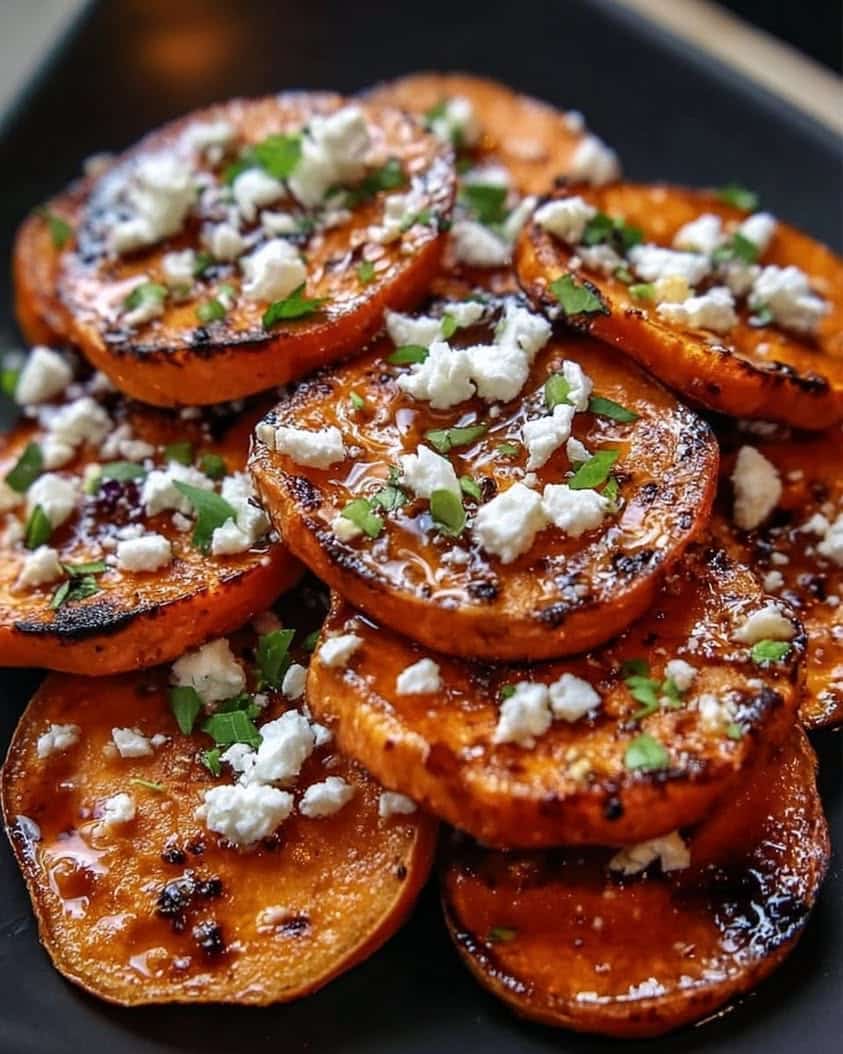
Honey Roasted Sweet Potato Rounds with Feta: A Simple Elegant Side
Imagine a side dish that effortlessly bridges the gap between rustic comfort and elegant simplicity. This recipe for honey roasted sweet potato rounds with feta does exactly that. Moreover, it transforms a humble root vegetable into a stunning centerpiece for your table. The process involves slicing sweet potatoes into perfect rounds, roasting them until caramelized, and finishing them with a drizzle of honey and a sprinkle of salty feta. Consequently, you achieve a beautiful harmony of sweet, savory, and creamy flavors in every single bite.
These honey roasted sweet potato rounds offer a fantastic upgrade to your standard weeknight vegetable routine. They are perfect for busy home cooks because they require minimal hands-on effort. You simply slice, season, and roast. Meanwhile, the oven does most of the heavy lifting. Furthermore, the final presentation is incredibly impressive. The golden-brown edges, glossy honey glaze, and crumbled white feta create a dish that looks as good as it tastes. Ultimately, this recipe proves that extraordinary food does not need to be complicated.
Finally, this dish showcases the incredible versatility of sweet potatoes. They naturally carry a wonderful sweetness that intensifies beautifully in the dry heat of the oven. When you add the floral notes of honey and the briny punch of feta cheese, you create a complex flavor profile. This combination will delight your taste buds and leave you craving more. Whether you serve it for a casual family dinner or a festive holiday gathering, these honey roasted sweet potato rounds promise to become a new favorite.
Quick Recipe Highlights
- Flavor Profile: This dish masterfully balances natural sweetness with savory saltiness. The caramelized edges of the roasted sweet potato offer a deep, almost nutty flavor. Meanwhile, the honey provides a bright, floral sweetness that perfectly complements the creamy, tangy saltiness of the feta cheese.
- Texture: You will enjoy a wonderful contrast of textures in every bite. The exterior of the sweet potato rounds becomes slightly crisp and caramelized during roasting. Conversely, the interior stays wonderfully tender and soft. Additionally, the crumbled feta adds a delightful creamy yet crumbly element that melts in your mouth.
- Aroma: As the sweet potatoes roast, your kitchen will fill with a warm, comforting scent reminiscent of autumn. The aroma of caramelizing sugars mingles with earthy spices like cinnamon or paprika if you use them. Finally, the finishing touch of honey adds a subtle, sweet fragrance just before serving.
- Visual Appeal: This dish is a feast for the eyes with its vibrant orange centers, golden-brown edges, and snowy white feta crumbles. The circular shape of the rounds makes for elegant plating. Furthermore, a final drizzle of honey adds a beautiful glossy sheen that makes the dish look restaurant-quality.
- Skill Level Needed: This is an ideal recipe for beginners and seasoned cooks alike. It requires only basic knife skills for slicing and simple techniques like tossing and roasting. Importantly, there is no fussy timing or complicated steps, making it a very forgiving recipe for anyone to try.
- Special Equipment: You need only a few standard kitchen tools. A sharp chef’s knife and a sturdy cutting board are essential for slicing the sweet potatoes evenly. Additionally, a large baking sheet and some parchment paper will ensure easy roasting and cleanup. That is truly all you need.
Recipe Overview
- Difficulty Level: We rate this recipe as easy because it involves straightforward, sequential steps. First, you prep the vegetables. Next, you toss them with oil and seasonings. Then, you roast them on a single sheet pan. Finally, you add the toppings. There are no advanced techniques like emulsifying or braising required. Consequently, even a novice cook can achieve excellent results with minimal stress.
- Category: This dish fits beautifully into multiple meal categories. Primarily, it serves as a spectacular vegetable side dish for proteins like roast chicken, grilled pork, or baked fish. Alternatively, you can present it as a standout item on a holiday buffet or potluck table. For a lighter meal, you can even top the rounds with a fried egg or some greens to turn it into a main course.
- Cuisine: While not tied to one specific tradition, this recipe draws inspiration from modern American and Mediterranean cuisines. The use of honey and warm spices nods to Middle Eastern flavor profiles. Meanwhile, the incorporation of salty feta cheese is a classic Greek touch. Ultimately, it represents a fusion approach that prioritizes simple, high-quality ingredients and bold, complementary flavors.
- Cost: This is an incredibly budget-friendly recipe. Sweet potatoes are inexpensive year-round, especially in the fall. Honey and olive oil are pantry staples for many. Feta cheese is a relatively affordable cheese option that adds big flavor in small quantities. Therefore, you can create an impressive dish for a crowd without straining your grocery budget.
- Season: Although sweet potatoes are available all year, this recipe feels particularly fitting for autumn and winter. The warm, caramelized flavors embody the cozy essence of fall. However, the bright notes of honey and fresh herbs also make it suitable for a spring or summer barbecue side. Truly, it is a versatile dish for any season.
- Occasion: These honey roasted sweet potato rounds are perfect for both everyday dinners and special events. They elevate a simple weeknight meal with very little extra effort. Simultaneously, their elegant appearance and crowd-pleasing taste make them ideal for Thanksgiving, Christmas, or a dinner party. They are a reliable recipe that always delivers.
Why You’ll Love This Recipe
First and foremost, the taste and texture combination is utterly irresistible. The natural sugars in the sweet potato caramelize during roasting, creating deep, complex flavors. When you add the sticky sweetness of honey and the sharp saltiness of feta, each bite becomes a perfect balance. The contrast between the tender interior, slightly crisp edges, and creamy cheese is simply divine. This dish satisfies cravings for something both wholesome and indulgent, making it a true crowd-pleaser for all ages.
From a practical standpoint, the convenience of this recipe is a major win. It utilizes a single sheet pan, which means minimal cleanup. The prep work is quick and simple, involving mostly slicing and tossing. Once the rounds are in the oven, you have twenty-five minutes to prepare the rest of your meal or simply relax. This hands-off approach makes it an ideal choice for busy weeknights when you want a healthy, delicious side without spending hours in the kitchen.
Nutritionally, these honey roasted sweet potato rounds pack a powerful punch. Sweet potatoes are an excellent source of beta-carotene, which your body converts to vitamin A for eye and skin health. They also provide a good amount of fiber, vitamin C, and potassium. Using olive oil adds heart-healthy monounsaturated fats. While honey and feta are used as flavorful accents, they are added in moderation. Therefore, you get a nutrient-dense vegetable dish that feels like a treat.
For entertaining, this dish offers tremendous social value. It is visually stunning, sparking conversation when you bring it to the table. The familiar yet elevated flavors are universally appealing, so you do not have to worry about picky eaters. You can easily double or triple the recipe to feed a large group using the same simple method. Serving a beautiful, homemade dish like this makes guests feel cared for and impresses them with your culinary skills, even though the effort was minimal.
Finally, the cost-effectiveness and accessibility of the ingredients cannot be overstated. Sweet potatoes are one of the most affordable and readily available vegetables. The other components—oil, salt, pepper, honey, and feta—are common pantry or refrigerator items. You do not need to hunt for exotic spices or special equipment. This accessibility means you can make this impressive dish anytime the craving strikes, without a special trip to the store. It is gourmet cooking on a very practical budget.
Historical Background and Cultural Significance
The story of the sweet potato is a global journey. Botanists believe the plant originated in Central or South America over 5,000 years ago. From there, Polynesian explorers remarkably transported it across the Pacific to islands like New Zealand and Hawaii long before European contact. Later, Spanish and Portuguese traders introduced the tuber to Asia and Africa. Consequently, the sweet potato became a dietary staple in cuisines worldwide, valued for its hardiness, nutritional content, and sweet flavor. This history sets the stage for its modern use in dishes like our roasted rounds.
Culturally, the sweet potato holds significant importance in many societies. In the United States, it is deeply associated with Thanksgiving and Southern cooking, often appearing candied or in pies. In Japan, it is used in both savory dishes and desserts like daigaku imo (candied sweet potato). Across Africa, it is a crucial security crop during droughts. The act of roasting vegetables, however, is one of humanity’s oldest cooking methods. Combining this ancient technique with a globally traveled vegetable creates a dish that feels both timeless and contemporary.
The evolution of this specific recipe reflects modern culinary trends towards simple, vegetable-forward dishes with bold flavor contrasts. The pairing of sweet and salty is a classic combination found in many cuisines, from prosciutto-wrapped melon to salted caramel. Applying this principle to roasted vegetables is a natural progression. Using feta cheese, a briny cheese with Greek origins, adds a Mediterranean twist. Meanwhile, the drizzle of honey at the end is a technique borrowed from modern plating aesthetics, adding a glossy finish and a burst of flavor that would be lost if added before roasting.
Regional variations of roasted sweet potatoes are endless. In the American South, you might find them roasted with pecans and a bourbon glaze. In the Middle East, they could be topped with tahini and za’atar. Korean cuisine often features roasted sweet potatoes as a street food, enjoyed plain for their pure, caramelized flavor. Our version with honey and feta sits comfortably within this global tapestry. It borrows elements from different traditions to create something new, celebrating the sweet potato’s versatility and its ability to bridge culinary cultures on a single sheet pan.
Ingredient Deep Dive
Let us start with the star: the sweet potato. This vibrant tuber is not actually related to the common white potato; it belongs to the morning glory family. Cultivated for millennia, it was a staple for ancient Peruvian cultures. Nutritionally, it is a powerhouse of beta-carotene, fiber, and vitamins B6 and C. When selecting sweet potatoes, look for firm specimens with smooth, unblemished skin. Avoid any with soft spots or signs of sprouting. Store them in a cool, dark, well-ventilated place—not the refrigerator, as cold temperatures can alter their texture and flavor.
Next, consider the honey. As one of humanity’s oldest sweeteners, honey has been used in cooking and medicine for over 8,000 years. Its flavor profile varies dramatically based on the flowers visited by the bees, from light and floral clover honey to dark and robust buckwheat honey. Honey contains antioxidants and has natural preservative qualities. For this recipe, a mild, runny honey like clover or wildflower works perfectly, allowing for easy drizzling. Store honey at room temperature in a sealed container. If it crystallizes, simply place the jar in warm water to liquefy it again.
Now, examine the feta cheese. Traditionally, authentic Greek feta is made from at least 70% sheep’s milk, often blended with goat’s milk, and aged in brine. This process gives it its characteristic tangy, salty flavor and crumbly yet creamy texture. Feta is a good source of calcium and protein. When shopping, look for feta stored in brine for the best flavor and texture. You can substitute it with other crumbly salty cheeses like cotija or a dairy-free alternative made from tofu or almonds for a vegan version. Always crumble feta just before serving to maintain its texture.
Finally, the supporting cast: olive oil, salt, and pepper. A good quality extra-virgin olive oil contributes fruity notes and helps achieve crispy caramelization. Its monounsaturated fats are a healthy choice for roasting. Sea salt or kosher salt is preferable to table salt for its clean flavor and better control during seasoning. Freshly cracked black pepper adds a subtle warmth that enhances the sweetness of the potato and the honey. Together, these simple ingredients create a foundation that allows the primary flavors to shine without complexity.
Common Mistakes to Avoid
- Cutting Uneven Rounds: Slices of drastically different thickness will cook unevenly. Consequently, some pieces will burn while others remain undercooked. Always aim for consistent 1/4 to 1/2-inch thick rounds using a sharp knife for clean cuts.
- Crowding the Pan: Placing the sweet potato rounds too close together on the baking sheet causes them to steam instead of roast. For proper caramelization, ensure each round has a little space around it. Use two pans if necessary.
- Skipping the Parchment Paper: Roasting without parchment paper or a silicone mat often leads to frustrating sticking. The natural sugars caramelize and glue the potatoes to the metal. Lining your pan guarantees easy release and simpler cleanup.
- Neglecting to Flip: For even browning on both sides, you must flip the rounds halfway through the cooking time. If you forget this step, one side may become overly dark while the other side stays pale and less flavorful.
- Adding Honey Before Roasting: Drizzling honey on the potatoes before they go in the oven is a common error. The high heat will cause the honey to burn and become bitter. Always add honey after roasting, while the rounds are still warm.
- Using Cold Feta: Crumbling cold, straight-from-the-fridge feta is difficult and can result in uneven chunks. Let the cheese sit at room temperature for 10-15 minutes before crumbling. This makes the process easier and allows the cheese’s flavor to bloom.
- Underseasoning: Sweet potatoes need a generous amount of seasoning. Do not be shy with the salt and pepper before roasting. Seasoning layers flavor from the inside out. Taste a round after roasting and adjust with a pinch of flaky salt if needed.
- Overloading with Toppings: While toppings are delicious, balance is key. Too much honey can make the dish cloyingly sweet, and too much feta can overwhelm it. Use these elements as accents to complement, not mask, the flavor of the roasted sweet potato.
Essential Techniques
Uniform Slicing: Achieving even slices is the most critical technique for this recipe. Consistent thickness ensures every piece roasts at the same rate. Use a sharp chef’s knife and steady pressure. For extra precision, you can use a mandoline slicer set to 1/4-inch. The visual cue for success is a stack of rounds that are virtually identical in size. This simple step is the foundation of perfect, evenly cooked results.
Dry Roasting for Caramelization: The goal of roasting is to draw out moisture and concentrate sugars, creating caramelization. To master this, ensure your oven is fully preheated and the baking sheet is not overcrowded. The high, dry heat causes the Maillard reaction, which develops complex flavors and a beautiful brown color. The visual cue is golden-brown edges with some darker, caramelized spots. If the potatoes are steaming or turning pale yellow, your oven may be too low or the pan too crowded.
The Halfway Flip: Flipping the rounds midway through cooking is non-negotiable for even cooking. This technique exposes both sides directly to the hot pan and air circulation. Use a thin spatula to gently turn each piece. The cue to flip is when the bottom side has developed a nice golden color and releases easily from the pan, usually around the 12-13 minute mark. This simple action guarantees perfect texture on all sides.
Finishing with Cold Accents: Adding the honey and feta after roasting is a specific technique that preserves their distinct qualities. Drizzling warm honey over hot potatoes allows it to thin out and coat each round evenly without burning. Sprinkling cool, crumbled feta on top provides a refreshing temperature and texture contrast that would be lost if baked. The cue for success is seeing the honey glisten and the feta just barely start to soften from the residual heat.
Pro Tips for Perfect Honey Roasted Sweet Potato Rounds
First, choose sweet potatoes that are similar in diameter. This makes slicing uniform rounds much easier and leads to more consistent cooking. Look for medium-sized, cylindrical potatoes rather than very large or oddly shaped ones.
For extra flavor, toss the sweet potato rounds with a pinch of smoked paprika or ground cinnamon along with the salt and pepper. These warm spices complement the natural sweetness beautifully without overpowering the dish.
To maximize crispiness, pat the sweet potato rounds completely dry with a clean kitchen towel after washing them. Any excess surface moisture will steam the potatoes instead of allowing them to roast and caramelize properly.
If you want to infuse more flavor, toss the rounds with a sprig of fresh rosemary or thyme before roasting. Remove the herbs before serving. The aromatic oils will lightly perfume the potatoes with a subtle, earthy note.
For the best caramelization, resist the urge to stir or move the potatoes frequently. Let them sit undisturbed on the hot pan to develop a good sear. You should only flip them once, at the halfway point.
After roasting, let the potatoes sit on the pan for 2-3 minutes before transferring. This allows them to firm up slightly, making them less likely to break when you move them to a serving platter.
For a beautiful presentation, alternate drizzling the honey in zig-zags and sprinkling the feta in clusters. This creates visual interest and ensures that each serving gets a balanced amount of both toppings.
Finally, add a final flourish just before serving. A sprinkle of fresh chopped herbs like parsley or chives, or a handful of toasted pepitas or walnuts, adds a pop of color, freshness, and crunch that elevates the dish even further.
Variations and Adaptations
For regional variations, explore different global flavor profiles. Give the rounds a Middle Eastern twist by topping them with a drizzle of tahini, a sprinkle of za’atar, and some pomegranate seeds. For a Southern-inspired version, use pure maple syrup instead of honey and add candied pecans. An Italian variation could include a balsamic glaze reduction and shaved Parmesan cheese instead of feta. The basic roasting method remains the same, but the finishing touches can transport your taste buds anywhere.
Seasonal adaptations are simple and effective. In the fall, incorporate roasted apples or pears onto the same pan during the last 10 minutes of cooking. For a winter holiday table, add a sprinkle of pomegranate arils and chopped rosemary. In spring, finish the dish with fresh pea shoots and a lemon zest. Summer calls for a topping of fresh corn salsa or chopped tomatoes with basil. This flexibility makes the recipe a year-round staple.
Dietary modifications are straightforward. For a vegan version, use maple syrup or agave nectar instead of honey and a plant-based feta alternative. To make it paleo or Whole30 compliant, omit the cheese and ensure your honey is raw and unprocessed. A low-carb or keto adaptation would involve using a lower-starch vegetable like rutabaga or turnip, sliced into rounds, and roasting them similarly, then using a sugar-free syrup alternative sparingly.
Experiment with flavor variations by changing the seasoning base. Toss the rounds with curry powder and coconut oil before roasting, then finish with cilantro and lime juice. Alternatively, use an Italian herb blend and finish with a balsamic glaze. For a spicy kick, add cayenne pepper or chili powder to the oil mixture and top with sliced jalapeños. The sweet potato is a fantastic canvas for almost any spice profile you enjoy.
Texture modifications can also add interest. For extra crunch, sprinkle the rounds with breadcrumbs or panko mixed with a little oil during the last 5 minutes of roasting. For a creamier element, serve the rounds on a bed of garlicky yogurt or whipped goat cheese. You can also chop the roasted rounds and toss them into a grain bowl or salad for a different eating experience.
Presentation alternatives offer fun ways to serve. Instead of a platter, stack the rounds in a tower, layering them with feta in between. Skewer them on appetizer sticks for easy finger food at a party. Alternatively, chop the roasted rounds and fold them into a warm grain salad with a honey-lemon vinaigrette. Changing how you present the dish can make it feel entirely new.
Serving and Presentation Guide
Plating techniques matter for visual impact. For a family-style presentation, arrange the warm rounds in a single, slightly overlapping layer on a large, rustic platter or wooden board. Drizzle the honey in a loose, artistic pattern across the top, then scatter the feta generously. For individual plates, create a small stack of 3-4 rounds in the center, drizzle vertically, and place a small cluster of feta to the side. This intentional plating makes the dish feel special and considered.
Garnishing ideas extend beyond feta and honey. Fresh, soft herbs like chopped parsley, cilantro, or dill add a vibrant green color and a burst of freshness. Toasted nuts like pecans, walnuts, or pine nuts contribute crunch and richness. A final sprinkle of flaky sea salt, such as Maldon, enhances both flavor and texture with a delicate crunch. A light dusting of smoked paprika or sumac can add a beautiful color contrast and an extra layer of flavor.
Traditional accompaniments for a side dish like this include simple roasted or grilled proteins. It pairs wonderfully with herb-roasted chicken, grilled pork chops, pan-seared salmon, or baked white fish. The sweet and savory notes of the potatoes complement the richness of the meat without competing. For a vegetarian feast, serve it alongside a hearty lentil loaf, stuffed peppers, or a large green salad with a tangy vinaigrette.
Modern serving suggestions might incorporate these rounds into a broader meal concept. Use them as a base for a brunch dish topped with a poached egg and hollandaise. Crumble them over a kale salad with a citrus dressing for a warm salad component. They can even be served as an appetizer with toothpicks and a side of garlic aioli or yogurt dip for dipping. Their versatility is a key strength.
Temperature considerations are important. These honey roasted sweet potato rounds are best served warm, shortly after they come out of the oven. The feta should be cool when added, providing a pleasant contrast. If you must make them ahead, reheat the rounds in a single layer on a baking sheet in a 350°F oven until warm throughout, then add the cold toppings. Avoid serving them cold, as the textures will become less appealing and the honey will solidify.
Portion control tips are helpful for meal planning. As a side dish, plan for about 4-6 rounds per adult. If serving as part of a larger buffet with many other items, 2-3 rounds per person is sufficient. Remember that the richness of the toppings means a little goes a long way in terms of flavor. It is better to have a slightly smaller portion that feels complete than an overly large one that becomes too heavy.
Wine and Beverage Pairing
Choosing the right wine can elevate this dish beautifully. The sweet and savory profile pairs excellently with off-dry white wines. A German Riesling or a Gewürztraminer, with their slight sweetness and aromatic notes, complement the honey and balance the saltiness of the feta. For red wine lovers, a light-bodied, fruity Pinot Noir with low tannins works well. It will not overpower the dish and its red fruit flavors will harmonize with the caramelized sweetness of the potatoes.
For non-alcoholic alternatives, consider beverages that can bridge the sweet and savory gap. A sparkling apple cider provides effervescence and autumnal flavor. Iced ginger tea or lemon-ginger kombucha offers a spicy, refreshing counterpoint to the richness. A simple glass of chilled club soda with a squeeze of lime can also cleanse the palate beautifully between bites, making each taste feel fresh.
While not a classic coffee or tea dish, certain pairings can work if serving these rounds for brunch. A medium-roast coffee with notes of caramel or nut would echo the flavors in the potatoes. For tea, a smoky Lapsang Souchong or a sweet, floral white tea could create an interesting contrast. Generally, however, this dish is best enjoyed with the wine or non-alcoholic options mentioned above.
Temperature considerations for your beverages are straightforward. White wines and non-alcoholic sparklers should be served well-chilled. Red wines should be served slightly below room temperature, around 60-65°F. Iced teas or kombuchas should be cold. The goal is to have a refreshing, temperature-contrasting beverage that cleanses the palate, especially since the dish itself is served warm.
Serving suggestions for your beverage pairing are simple. Pour wines into appropriate glassware to allow the aromas to develop. Serve non-alcoholic options in tall, attractive glasses with ice and perhaps a garnish like a citrus wedge or a sprig of mint. Presenting the drinks with care enhances the overall dining experience, making a simple meal feel more like an occasion.
Storage and Shelf Life
Proper storage methods are key to maintaining quality. Allow any leftover honey roasted sweet potato rounds to cool completely to room temperature before storing. Do not store them with the honey and feta already on top, as the feta will become soggy and the honey will make everything sticky. Instead, store the plain roasted rounds separately in an airtight container in the refrigerator. Store the crumbled feta in a separate small container. The honey can remain in its original jar at room temperature.
Temperature requirements are specific. The cooked sweet potato rounds must be refrigerated and should be consumed within 3-4 days. Do not leave them at room temperature for more than two hours after cooking, as this can allow harmful bacteria to grow. The feta cheese, if already crumbled, should also be kept refrigerated and used within a week. Always use clean utensils when handling leftovers to prevent contamination.
Container recommendations include glass or BPA-free plastic containers with tight-fitting lids. For the best results, place the cooled rounds in a single layer if possible, or separate layers with parchment paper to prevent them from sticking together. This also helps maintain their shape and prevents them from becoming mushy. A shallow container is better than a deep one, as it minimizes stacking and crushing.
Signs of spoilage are important to recognize. Discard the sweet potato rounds if they develop an off or sour smell, visible mold (often fuzzy spots in white, green, or black), or an excessively slimy texture. If the feta develops an ammonia-like smell or shows signs of mold beyond its natural blue veins (in the case of some varieties), it should also be discarded. When in doubt, it is always safer to throw it out.
Reheating instructions are simple but crucial for restoring texture. To reheat, arrange the rounds in a single layer on a baking sheet. Warm them in a preheated 350°F oven for 8-12 minutes, or until heated through. This method will help re-crisp the edges. Avoid using the microwave, as it will make the rounds soft and soggy. Once reheated, then add your fresh honey drizzle and feta crumbles.
Freezing guidelines are possible but with caveats. You can freeze the plain roasted rounds (without toppings) on a parchment-lined baking sheet until solid, then transfer them to a freezer bag. They will keep for up to 2 months. However, note that the texture will become softer and more watery upon thawing and reheating, as the cell structure of the potato breaks down. They are best used in soups, stews, or mashed after freezing, rather than served as distinct rounds.
Make Ahead Strategies
A smart prep timeline can make dinner effortless. You can peel and slice the sweet potatoes up to a day in advance. To prevent browning, submerge the slices in a bowl of cold water, cover, and refrigerate. When ready to cook, drain the slices and pat them thoroughly dry with kitchen towels. This step is essential, as wet potatoes will not caramelize properly. Having the potatoes pre-sliced cuts your active prep time down to just a few minutes on cooking day.
Storage between steps is simple with the water method mentioned above. The acid in the water helps prevent oxidation. You can also toss the dried slices with oil and seasonings, then spread them on a baking sheet, cover with plastic wrap, and refrigerate for a few hours before roasting. Do not season them more than 4-6 hours ahead, as the salt can draw out too much moisture.
Assessing the quality impact of make-ahead steps is important. Pre-soaking in water has no negative impact on flavor and actually can help achieve crispier results by removing surface starch. Pre-oiling and seasoning for a short period is fine, but doing it too far in advance can lead to soggy potatoes. The honey and feta should absolutely be added fresh, just before serving, to preserve their distinct textures and flavors.
Assembly tips for a streamlined process are key. On the day of serving, simply take your prepped, dried potatoes from the fridge, give them a quick toss to redistribute the oil if needed, spread on your lined pan, and roast. While they roast, crumble your feta and have your honey and any fresh garnishes ready. This workflow turns active cooking time into mere minutes of assembly.
Reheating guidelines for make-ahead components are straightforward. If you roast the potatoes completely ahead of time, let them cool and store as directed. Reheat in the oven as described in the storage section to restore texture. They will not be quite as perfect as fresh-from-the-oven, but the oven method is far superior to the microwave for maintaining some crispness.
Fresh element additions are the final touch. No matter how much you prep ahead, always add the honey and feta at the last possible moment. This ensures the honey is glossy and fluid and the feta retains its crumbly, cool texture. Also add any fresh herb garnishes after reheating. This strategy gives you the convenience of make-ahead prep with the vibrant quality of a freshly made dish.
Scaling Instructions
Halving the recipe is simple for smaller households. Use one large sweet potato, about 1 pound. Reduce all other ingredients proportionally: use 1 tablespoon of oil, 1/4 teaspoon of salt, etc. The cook time may decrease slightly, so start checking for doneness around the 20-minute mark. Use a standard baking sheet; the smaller quantity will just have more space between rounds, which actually promotes better browning. All other techniques remain identical.
Doubling or tripling the recipe for a crowd is easy but requires planning. You will need multiple baking sheets. Do not stack two sheets in the oven on the same rack, as this blocks heat circulation and leads to uneven cooking. Instead, use two racks and rotate the sheets top-to-bottom and front-to-back halfway through cooking. You may also need to add a few extra minutes to the cook time due to the increased volume of food in the oven. Work in batches if your oven cannot accommodate multiple sheets properly.
Equipment adjustments are necessary when scaling up. For a double batch, you will likely need two large rimmed baking sheets. Ensure you have enough parchment paper to line them. For a triple batch, consider roasting in three separate batches for the most consistent results, keeping the cooked batches warm in a 200°F oven on a wire rack set over a sheet pan. This prevents them from getting soggy.
Timing modifications are minimal but important. When cooking multiple sheets at once, the total cook time may increase by 3-5 minutes. Watch for visual cues rather than relying strictly on the timer. The rounds should be tender when pierced with a fork and have caramelized edges. Because oven temperatures can vary, using an oven thermometer to ensure accuracy is especially helpful when cooking large batches.
Storage considerations change with scale. If you have a large amount of leftovers, divide them into meal-sized portions in separate containers before refrigerating. This makes reheating easier and prevents you from having to reheat the entire batch. Remember that the quality is best within the first day or two, so plan your large batches for events where you expect most of the food to be consumed.
PrintRoasted Sweet Potato Rounds with Honey and Feta
- Total Time: 45 minutes
- Yield: 4
Description
A simple yet elegant side dish featuring crispy roasted sweet potato rounds topped with creamy feta cheese and a drizzle of honey.
Ingredients
- 2 large sweet potatoes, sliced into 1/2-inch rounds
- 2 tablespoons olive oil
- 1 teaspoon smoked paprika
- 1/2 teaspoon garlic powder
- Salt and black pepper to taste
- 1/2 cup crumbled feta cheese
- 2 tablespoons honey
- Fresh thyme leaves for garnish
Instructions
- Preheat the oven to 400°F (200°C). Line a baking sheet with parchment paper.
- In a large bowl, toss the sweet potato rounds with olive oil, smoked paprika, garlic powder, salt, and pepper until evenly coated.
- Arrange the rounds in a single layer on the prepared baking sheet. Roast for 25-30 minutes, flipping halfway through, until tender and golden brown.
- Remove from the oven and immediately sprinkle with crumbled feta cheese. Drizzle honey over the top and garnish with fresh thyme leaves. Serve warm.
Notes
You can customize the seasonings to taste.
- Prep Time: 15 minutes
- Cook Time: 30 minutes
- Method: Side
- Cuisine: American