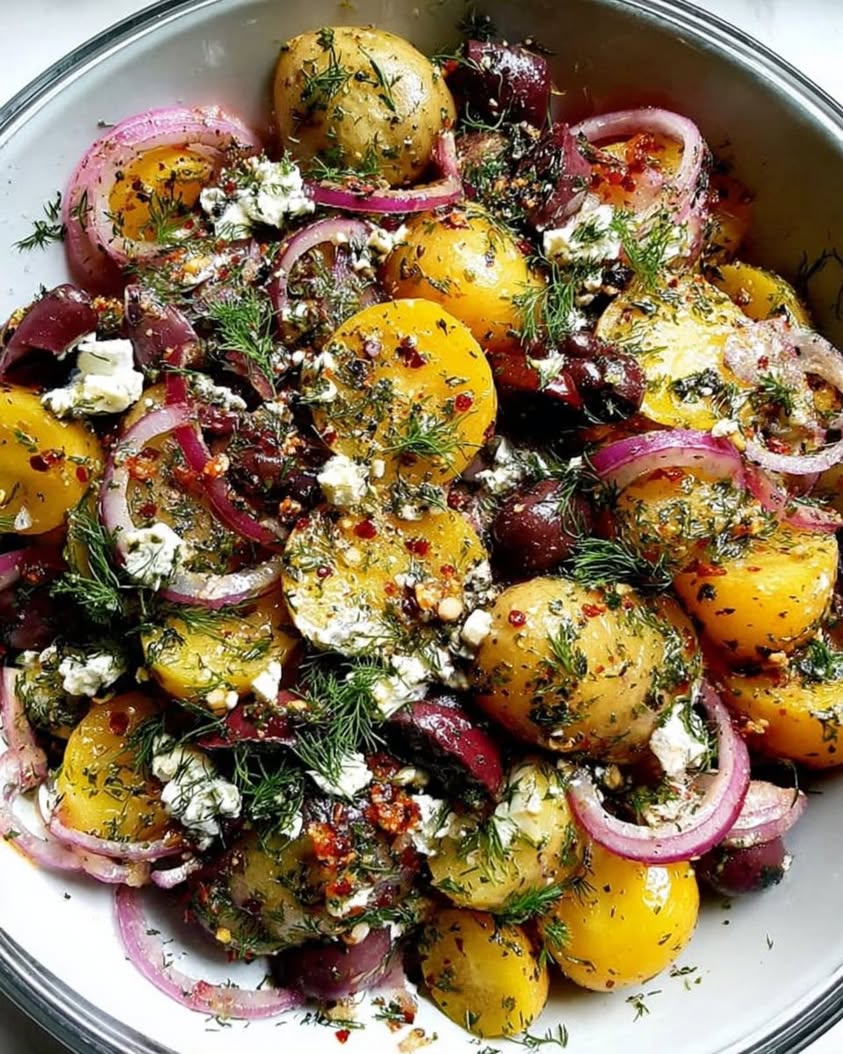
Authentic Greek Potato Salad Recipe with Feta and Lemon Dressing: A Taste of the Mediterranean
Imagine a potato salad that breaks all the rules. This Authentic Greek Potato Salad Recipe with Feta and Lemon Dressing is a vibrant departure from the heavy, mayo-laden versions you might know. Instead, it offers a symphony of bright, fresh flavors that transport you straight to a sun-drenched taverna by the Aegean Sea. Moreover, it is a celebration of simple ingredients elevated by a zesty lemon and olive oil dressing, creating a dish that is both refreshing and deeply satisfying.
The heart of this Mediterranean potato salad lies in its perfect balance. Tender, warm potatoes soak up the tangy lemon and herbaceous oregano dressing, while crisp cucumbers and juicy tomatoes add a refreshing crunch. Consequently, every bite delivers a delightful contrast of textures and temperatures. Finally, the crowning glory is a generous sprinkle of briny feta cheese and briny Kalamata olives, tying all the elements together with a salty, creamy finish that is utterly irresistible.
This recipe is more than just a side dish. It is a versatile culinary star. For instance, you can serve it as part of a mezze platter, pack it for a picnic, or enjoy it as a light main course. Ultimately, this Authentic Greek Potato Salad Recipe with Feta and Lemon Dressing is your ticket to a healthier, more flavorful way to enjoy a classic comfort food, guaranteed to become a staple in your recipe collection.
Quick Recipe Highlights
- Flavor Profile: This salad bursts with bright, tangy lemon, aromatic oregano, and the rich, salty punch of feta cheese. Additionally, the olive oil base creates a smooth, luxurious mouthfeel that coats each ingredient perfectly.
- Texture: You will experience a wonderful mix of creamy, soft potatoes, crisp cucumbers, and juicy tomatoes. Meanwhile, the feta adds a delightful crumble, and the olives provide a firm, meaty bite.
- Aroma: Fresh oregano and lemon zest create an instantly recognizable Mediterranean fragrance. As the salad sits, the garlic infuses the dressing with a warm, inviting scent that promises bold flavor.
- Visual Appeal: This dish is a feast for the eyes with its vibrant colors: the red of tomatoes, green of cucumbers, purple of onions, white of feta, and deep brown of olives against the golden potatoes.
- Skill Level Needed: This is a beginner-friendly recipe requiring only basic chopping and mixing skills. Furthermore, the cooking process is straightforward, involving simple potato boiling and dressing emulsification.
- Special Equipment: No special tools are required. You just need a large pot for boiling, a sharp knife, a cutting board, and a bowl for mixing. A whisk or fork for the dressing is helpful but not essential.
Recipe Overview
- Difficulty Level: This recipe is classified as easy because it involves fundamental techniques like boiling and chopping. The steps are sequential and simple, with minimal room for error if you follow the instructions. Essentially, anyone comfortable in a kitchen can achieve perfect results on their first try.
- Category: This dish fits beautifully into several categories. It is a stellar side dish for grilled meats, a fantastic potluck contribution, and a satisfying vegetarian main course. Its versatility makes it suitable for casual lunches and elegant dinners alike.
- Cuisine: This is a quintessential dish from Greek cuisine, showcasing the hallmarks of Mediterranean cooking: fresh vegetables, high-quality olive oil, lemon, and herbs. It reflects the region’s focus on simple, wholesome ingredients that create complex, healthful flavors.
- Cost: This is a very budget-friendly recipe. Potatoes, cucumbers, and onions are inexpensive staples. While feta cheese and Kalamata olives might cost slightly more, a little goes a long way in terms of flavor impact, making the overall cost per serving quite low.
- Season: This salad is perfect for spring and summer when tomatoes and cucumbers are at their peak. However, it is truly a year-round dish because its core ingredients are always available. It brings a taste of summer sunshine to any table, even in winter.
- Occasion: It is ideal for outdoor gatherings, barbecues, picnics, and family dinners. Its make-ahead nature and crowd-pleasing flavor profile make it a stress-free choice for entertaining. It also travels well without wilting or becoming soggy.
Why You’ll Love This Recipe
First and foremost, the taste and texture are unbeatable. This Authentic Greek Potato Salad Recipe with Feta and Lemon Dressing offers a refreshing alternative to heavy, creamy salads. Each forkful delivers a bright, zesty flavor from the lemon dressing that perfectly complements the earthy potatoes. The creamy feta and briny olives add layers of savory depth, while the fresh vegetables provide a satisfying crunch. Consequently, it is a dish that engages all your senses and leaves you feeling nourished and satisfied, not weighed down.
Secondly, the convenience factor is a major win. Unlike many potato salads that require precise timing and chilling, this version is wonderfully forgiving. You can toss the warm potatoes with the dressing, allowing them to absorb maximum flavor. Furthermore, you can prepare it hours in advance, as the flavors only improve as they meld together. This makes it an ideal choice for busy weeknights or last-minute entertaining, eliminating kitchen stress.
Nutritionally, this salad is a powerhouse. It is packed with vitamins from fresh vegetables, healthy fats from olive oil, and complex carbohydrates from potatoes. The olive oil provides heart-healthy monounsaturated fats, while the vegetables offer fiber and antioxidants. Therefore, it is a delicious way to enjoy a meal that supports overall well-being, aligning with the principles of the celebrated Mediterranean diet.
For social gatherings, this dish is a superstar. Its vibrant colors and fresh flavors are always a hit with guests. It pairs seamlessly with a wide variety of main courses, from lamb souvlaki to grilled fish. Moreover, it is naturally vegetarian and can be easily adapted for other dietary needs, ensuring everyone at your table can enjoy it. It sparks conversation and often becomes the most requested recipe from your friends.
Finally, it is incredibly cost-effective and accessible. The ingredients are simple, wholesome, and easy to find at any grocery store. You do not need expensive or exotic components to create an impressive and authentic-tasting dish. This accessibility means you can enjoy a taste of the Mediterranean anytime, turning ordinary ingredients into an extraordinary meal without straining your budget.
Historical Background and Cultural Significance
The origins of Greek potato salad are intertwined with the broader history of Greek cuisine and the introduction of the potato itself. Potatoes arrived in Greece relatively late, around the 19th century. However, Greeks quickly incorporated this versatile tuber into their culinary tradition, applying classic flavor profiles from older dishes. The combination of lemon, oregano, and olive oil—a cornerstone of Greek cooking—was a natural pairing for the humble potato, creating a new classic that felt timeless.
This dish holds significant cultural importance as a representation of “meraki,” a Greek word meaning to do something with soul, creativity, and love. Preparing and sharing food is central to Greek social life. This potato salad, often part of a large spread of mezze (small plates), embodies the spirit of communal dining and hospitality known as “philoxenia.” It is a dish meant to be shared, encouraging conversation and connection around the table.
The recipe has evolved alongside modern Greek home cooking. While always simple, variations emerged based on regional produce and family preference. Some areas might add capers or fresh dill, while others keep it strictly to the core ingredients. The version with feta and Kalamata olives has become particularly popular internationally, as it encapsulates the bold, sunny flavors people associate with Greece. It represents an adaptation that stayed true to its roots while achieving global appeal.
Regional variations across Greece and the diaspora are fascinating. On islands, you might find versions with added wild greens or different local herbs. In tavernas, it is often served slightly warm, right after the potatoes are dressed. The diaspora communities, particularly in places like Australia and the United States, sometimes incorporate ingredients like bell peppers or red wine vinegar, creating delicious fusion versions. Nevertheless, the soul of the dish—the marriage of lemon, oregano, and olive oil with potatoes—remains constant, a delicious testament to its enduring appeal.
Ingredient Deep Dive
Potatoes: Waxy potatoes like Yukon Gold or red potatoes are essential for this Authentic Greek Potato Salad Recipe with Feta and Lemon Dressing. Their lower starch content helps them hold their shape after boiling, providing a creamy yet firm bite that won’t turn to mush. Historically, potatoes became a Greek staple after their introduction in the 1800s, offering a reliable and filling crop. Nutritionally, they are a great source of vitamin C, potassium, and fiber, especially with the skin on. For the best results, choose firm potatoes without sprouts or green spots. Store them in a cool, dark, and well-ventilated place, never in the refrigerator, as cold temperatures can convert their starch to sugar.
Extra Virgin Olive Oil: This is the liquid gold of Greek cuisine and the base of your dressing. High-quality extra virgin olive oil provides a fruity, peppery backbone that carries the other flavors. It has been a cultural and economic pillar in the Mediterranean for millennia. It is rich in monounsaturated fats and antioxidants, which are linked to heart health and reduced inflammation. Look for oil bottled in dark glass and preferably from a single origin. Store it in a cool, dark cupboard away from heat and light to preserve its flavor and health benefits. Do not substitute with neutral oils; the flavor of olive oil is non-negotiable here.
Fresh Lemon Juice & Zest: Lemon provides the essential bright, tangy acidity that defines this salad. In Greek cooking, lemon is used to balance the richness of olive oil and add a refreshing note. The zest contains potent aromatic oils that intensify the citrus flavor without additional liquid. Lemons are an excellent source of vitamin C and can aid digestion. Always choose firm, heavy lemons with vibrant yellow skin for the most juice. For the best flavor, zest the lemon before juicing it. You can store whole lemons at room temperature for a week or in the refrigerator for longer.
Feta Cheese: Authentic Greek feta is a PDO (Protected Designation of Origin) product made from at least 70% sheep’s milk, often blended with goat’s milk. Its tangy, salty, and crumbly texture is irreplaceable. Feta has been made in Greece for centuries and is a staple in the diet. It is a good source of calcium and protein. For the best flavor, buy feta in a block stored in brine, not pre-crumbled. The brine keeps it moist and flavorful. Store it in its brine in the refrigerator. If you need a substitute, other brined cheeses like Bulgarian sirene or French feta can work, but avoid dry, crumbly substitutes.
Kalamata Olives: These iconic, almond-shaped olives from the Peloponnese region are dark purple, meaty, and have a rich, fruity flavor. They are typically slit and cured in wine vinegar or brine. Olives are a symbol of peace and prosperity in Greek culture and have been cultivated for thousands of years. They provide healthy fats and antioxidants. Look for olives sold in jars or at the deli counter with pits in, as they retain more flavor. You can store them in their brine in the refrigerator. Pit them just before using for the best texture and taste.
Common Mistakes to Avoid
- Using Starchy Potatoes: Russet or baking potatoes will become too soft and fall apart when mixed. This results in a mashed potato texture instead of a distinct salad. Always choose waxy or all-purpose varieties like Yukon Gold or red potatoes for the perfect bite.
- Overcooking the Potatoes: Boiling potatoes until they are falling apart is a common error. You should cook them just until a knife slides in easily with slight resistance. Overcooked potatoes will absorb too much dressing and become mushy, ruining the salad’s texture.
- Dressing Cold Potatoes: Pouring the vibrant lemon dressing over cold potatoes is a missed opportunity. The warm potatoes act like a sponge, soaking up the flavors of the oil, lemon, and herbs deeply. This step is crucial for a flavorful Authentic Greek Potato Salad Recipe with Feta and Lemon Dressing.
- Using Bottled Lemon Juice: The fresh, bright acidity of real lemon juice is irreplaceable. Bottled juice often has a flat, metallic, or preservative taste that will dull your entire dish. Always squeeze fresh lemons for both the juice and the zest.
- Adding Feta Too Early: If you mix the crumbled feta in while the potatoes are very warm, it will melt and become greasy. For the best texture, let the dressed potatoes cool slightly before gently folding in the feta cheese so it retains its crumbly integrity.
- Neglecting to Season the Dressing: The dressing must be tasted and properly seasoned before it meets the potatoes. Underseasoned dressing leads to a bland salad. Remember, the potatoes and vegetables will dilute the seasoning, so the dressing should be bold on its own.
- Chopping Vegetables Inconsistently: Haphazard chopping creates an uneven eating experience. Aim for a uniform dice on your cucumbers, tomatoes, and onions. This ensures every forkful gets a balanced mix of all the flavors and textures.
- Skipping the Resting Time: Serving the salad immediately after mixing is fine, but it truly shines after resting. Allowing it to sit for 30-60 minutes lets the flavors marry and develop complexity. Patience here rewards you with a much more cohesive and delicious dish.
Essential Techniques
Boiling Potatoes to Perfect Tenderness: This technique is critical for texture. Start your potatoes in cold, well-salted water; this allows them to heat evenly and season from the inside out. Bring to a boil, then reduce to a simmer. Cook until just tender when pierced with a knife—the point should meet slight resistance in the center. Immediately drain and let them steam dry in the colander for a minute. This prevents a watery salad and ensures the dressing clings properly. The visual cue is a potato that holds its shape when tossed but yields easily to a bite.
Emulsifying the Lemon-Olive Oil Dressing: An emulsion is a stable mixture of two liquids that don’t normally combine, like oil and lemon juice. To achieve this, whisk your lemon juice, mustard (if using), and seasonings vigorously in a bowl. Then, add the olive oil in a very slow, steady stream while continuously whisking. This action breaks the oil into tiny droplets suspended in the lemon juice, creating a creamy, cohesive dressing that won’t separate immediately. The key is constant motion and patience. A perfectly emulsified dressing will coat the back of a spoon evenly.
Folding Ingredients Gently: Once your potatoes are dressed and slightly cooled, you add the softer ingredients like feta, tomatoes, and olives. Use a broad, flexible spatula and a gentle turning motion from the bottom of the bowl up. This “folding” technique incorporates everything without crushing the potatoes or turning the feta into a paste. It preserves the distinct textures of each component, which is essential for the final mouthfeel of your Authentic Greek Potato Salad Recipe with Feta and Lemon Dressing.
Pro Tips for Perfect Greek Potato Salad
Cut your potatoes into uniform, bite-sized pieces before boiling. This ensures they all cook at the same rate, so you don’t end up with some pieces mushy and others undercooked. Consistent size is the first step to perfect texture.
Salt your potato boiling water generously, like seawater. This is your primary chance to season the potatoes from within. Well-seasoned water means well-seasoned potatoes, forming a flavorful foundation for the entire salad.
Add a splash of the dressing to the empty, still-warm pot after draining the potatoes. Then return the potatoes to the pot and toss. The residual heat helps the potatoes absorb this first layer of flavor even more deeply before adding the rest of the vegetables.
Use the best extra virgin olive oil you can reasonably afford. Since the dressing is not cooked, the oil’s flavor is front and center. A high-quality, fruity olive oil will elevate the entire dish from good to extraordinary.
If your tomatoes are very juicy, consider seeding them before dicing. Simply cut them in half horizontally and gently squeeze out the seeds and excess liquid. This prevents the salad from becoming watery, especially if you plan to make it ahead of time.
For an extra flavor boost, add a pinch of dried oregano to the boiling water with the potatoes. The heat will bloom the oregano’s oils, infusing the potatoes with its aromatic essence from the inside out.
Let the dressed salad sit at room temperature for at least 20 minutes before serving if possible. This allows the potatoes to fully absorb the dressing and the flavors to meld, resulting in a more cohesive and delicious final product.
Always taste and adjust the seasoning right before serving. Chilling can dull flavors, so a final pinch of salt, a squeeze of lemon, or a crack of black pepper can wake up all the ingredients perfectly.
Variations and Adaptations
Regional Variations: Across Greece, you’ll find delightful tweaks to this classic. In Crete, they might add a handful of chopped wild greens like purslane or rocket (arugula). In the Ionian islands, a touch of red wine vinegar sometimes joins the lemon. Some family recipes include a finely chopped pepperoncini for a subtle heat. Exploring these regional twists is a delicious way to experience the diversity within Greek cuisine while staying true to the spirit of the dish.
Seasonal Adaptations: Embrace what’s fresh. In spring, add tender asparagus tips or fresh peas. Summer is perfect for sweet cherry tomatoes and crisp bell peppers. For a fall version, incorporate roasted cubes of pumpkin or sweet potato and swap oregano for fresh rosemary. In winter, use hearty kale massaged with a little lemon juice or add roasted Brussels sprout halves. This flexibility makes the Authentic Greek Potato Salad Recipe with Feta and Lemon Dressing a year-round favorite.
Dietary Modifications: For a vegan version, omit the feta or use a high-quality vegan feta alternative made from tofu or almonds. Increase the olives and capers for salty flavor. To make it gluten-free, simply ensure all your packaged ingredients like mustard or olives are certified gluten-free—most naturally are. For a lower-carb option, reduce the potato quantity and add more non-starchy vegetables like cauliflower florets or zucchini.
Flavor Variations: While the classic profile is perfect, don’t be afraid to experiment. Add a tablespoon of chopped fresh dill or mint for a different herbal note. A teaspoon of capers can introduce another layer of briny complexity. For a creamier texture without mayo, stir in a spoonful of Greek yogurt into the dressing. A pinch of sumac or smoked paprika sprinkled on top before serving adds color and a subtle flavor twist.
Texture Modifications: If you prefer more crunch, add toasted pine nuts or slivered almonds. For a creamier potato experience, gently mash a small portion of the warm potatoes into the dressing before adding the rest, creating a thicker coating. You can also roast the potatoes instead of boiling them for a caramelized, firmer exterior and fluffy interior, which adds a whole new dimension.
Presentation Alternatives: Instead of mixing everything in a bowl, create a composed salad on a large platter. Arrange the dressed potato slices, then artfully scatter the tomatoes, cucumbers, onions, feta, and olives on top. Drizzle with extra dressing and garnish with whole oregano sprigs. This deconstructed style is stunning for entertaining and allows guests to appreciate each component visually.
Serving and Presentation Guide
Plating Techniques: For a family-style meal, serve your Authentic Greek Potato Salad Recipe with Feta and Lemon Dressing in a wide, shallow bowl or on a large platter. This showcases all the colorful ingredients. Use a large spoon to serve, ensuring each portion gets a bit of everything. For individual plates, use a ring mold to create a neat, tall cylinder of salad in the center of the plate, then carefully lift the mold away for a restaurant-quality presentation.
Garnishing Ideas: A final garnish adds visual appeal and a burst of fresh flavor. A drizzle of high-quality olive oil over the top adds shine. Sprinkle with extra crumbled feta, a few whole Kalamata olives, and a light dusting of dried oregano or chopped fresh parsley. Thin lemon slices or twists placed around the edge of the platter are both decorative and functional.
Traditional Accompaniments: In Greece, this salad is often part of a larger spread. Serve it alongside other mezze like tzatziki, dolmades (stuffed grape leaves), spanakopita (spinach pie), and grilled pita bread. It pairs perfectly with simply grilled proteins like chicken souvlaki, lamb chops, or whole fish. A bowl of olives and some simple grilled vegetables complete the Mediterranean feast.
Modern Serving Suggestions: For a contemporary twist, serve the salad in individual lettuce cups or endive spears as an appetizer. Use it as a hearty filling for a wrap or pita sandwich with some grilled chicken or falafel. You can also top a bed of leafy greens with a scoop of this potato salad for a more substantial lunch salad.
Temperature Considerations: This salad is most flavorful when served at room temperature. If made ahead and refrigerated, take it out about 20-30 minutes before serving to allow the olive oil to loosen and the flavors to brighten. The contrast between the cool, crisp vegetables and the slightly warmer, dressed potatoes is part of its charm. Avoid serving it ice-cold from the fridge.
Portion Control Tips: As a side dish, plan for about ¾ to 1 cup per person. As a main course for a light lunch, 1.5 to 2 cups is appropriate. Remember, the salad is satisfying but not overly heavy. If serving as part of a large buffet with many other dishes, you can reduce the portion size accordingly, as people will want to try a little of everything.
Wine and Beverage Pairing
Wine Pairings: The bright acidity and herbal notes in this salad call for wines with similar characteristics. A crisp, dry Greek white like Assyrtiko from Santorini is a perfect match—its citrus and mineral notes echo the lemon and complement the saltiness of the feta. Alternatively, a Sauvignon Blanc with its grassy, herbal quality pairs beautifully with the oregano. For a red option, choose a light-bodied, low-tannin wine like a Greek Xinomavro rosé or a Beaujolais; their fruity freshness won’t overpower the salad.
Non-Alcoholic Alternatives: Sparkling water with a squeeze of lemon or lime and a sprig of fresh mint is a refreshing and simple choice. For something more elaborate, try a homemade lemonade infused with fresh basil or thyme. Iced herbal teas, like a chilled mint or chamomile tea, are also excellent companions. These drinks cleanse the palate and enhance the salad’s fresh flavors without competing with them.
Coffee/Tea Pairing: While not a traditional pairing for the meal itself, a post-meal Greek coffee or a strong espresso is a wonderful way to finish a Mediterranean-inspired lunch. The intense, rich coffee provides a bold contrast to the salad’s freshness. For tea, a cup of mint tea would be a soothing and digestif-friendly option that continues the herbal theme of the meal.
Temperature Considerations: Always serve white and rosé wines well-chilled, between 45-55°F. Light reds should be served slightly cool, around 55-60°F, to highlight their fruit and acidity. Your non-alcoholic beverages should also be served cold to provide a refreshing counterpoint to the salad, especially if enjoying it on a warm day.
Serving Suggestions: Pour wine into appropriate glassware to appreciate its aroma—a standard white wine glass is fine. For water or lemonade, use tall glasses with plenty of ice. Present beverages alongside the meal rather than before, as their role is to complement the food. Encourage guests to take a sip between bites to reset their palate for the next flavorful forkful of your Authentic Greek Potato Salad Recipe with Feta and Lemon Dressing.
Storage and Shelf Life
Storage Methods: Store leftover salad in an airtight container in the refrigerator. Glass containers are ideal as they don’t absorb odors and allow you to see the contents. If possible, store the salad in a single layer or without too much weight on top to prevent the vegetables from being crushed. Keep it towards the front of the fridge where the temperature is most consistent, not in the door.
Temperature Requirements: This salad must be kept refrigerated at 40°F or below. Do not leave it at room temperature for more than 2 hours, or 1 hour if the ambient temperature is above 90°F. The dairy (feta) and moist environment can promote bacterial growth if left in the “danger zone” (40-140°F) for too long.
Container Recommendations: A shallow, wide container is better than a deep, narrow one. This allows the salad to cool quickly and evenly when first stored, and prevents the bottom layers from becoming soggy under pressure. If using a deep container, avoid packing the salad down tightly.
Signs of Spoilage: Discard the salad if you notice an off or sour smell that wasn’t present before. Visible mold, especially on the feta or vegetables, is a definite sign it has gone bad. If the vegetables become excessively slimy or the potatoes develop an unpleasant, fermented taste, it’s time to throw it out. When in doubt, err on the side of caution.
Reheating Instructions: This salad is best enjoyed cold or at room temperature. Reheating is not recommended, as it will wilt the fresh vegetables and cause the feta to melt. If you prefer it slightly less chilled, simply let the desired portion sit on the counter for 15-20 minutes before serving to take the edge off the refrigerator cold.
Freezing Guidelines: Freezing is not advisable for this Authentic Greek Potato Salad Recipe with Feta and Lemon Dressing. The high water content in the cucumbers, tomatoes, and potatoes will cause them to become mushy and watery when thawed. The texture of the feta will also degrade significantly. This is a dish meant to be enjoyed fresh.
Make Ahead Strategies
Prep Timeline: You can fully prepare this salad up to 24 hours in advance. For best results, cook and dress the potatoes, then let the mixture cool completely to room temperature. Store the dressed potatoes and the pre-chopped vegetables (cucumbers, tomatoes, onion) separately in the refrigerator. About 30 minutes before serving, combine everything and add the feta and olives. This preserves the optimal texture of each component.
Storage Between Steps: Store the cooled, dressed potatoes in an airtight container. Keep the chopped vegetables in a separate container, perhaps with a paper towel at the bottom to absorb excess moisture. Store the crumbled feta and olives in their own small containers. This compartmentalized approach prevents sogginess and maintains freshness.
Quality Impact Assessment: Making it ahead actually improves the flavor of the potatoes, as they have more time to absorb the dressing. The risk is the fresh vegetables releasing water and becoming limp. By keeping them separate until the end, you mitigate this risk. The feta may bleed a little color into the dressing over time, but this doesn’t affect taste.
Assembly Tips: When ready to serve, give the dressed potatoes a gentle stir as the olive oil may have solidified slightly in the fridge. Add the chilled vegetables and fold to combine. Finally, fold in the feta and olives. This order ensures the feta stays crumbly and doesn’t get stained by the tomato juices.
Reheating Guidelines: As mentioned, do not reheat. If the salad is too cold, let it sit out. If the potatoes seem a bit dry after refrigeration (having absorbed the dressing), drizzle a tiny amount of fresh olive oil and a squeeze of lemon juice over the top and toss gently to refresh it.
Fresh Element Additions: For a make-ahead salad that tastes just-made, consider adding a final flourish of fresh herbs right before serving. A sprinkle of chopped fresh dill, parsley, or oregano will add a burst of color and aroma that says “fresh.” You can also add an extra drizzle of your best olive oil on the finished platter.
Scaling Instructions
Halving the Recipe: Halving is straightforward for smaller households. Use a medium pot for boiling the potatoes to ensure they are still submerged. All other ingredient quantities can be simply divided in half. The dressing may emulsify more easily in a smaller bowl. The total prep and cook time will remain roughly the same, though the potato boiling time might be slightly less if the pot is less crowded.
Doubling or Tripling: For a crowd, you can confidently double or triple this Authentic Greek Potato Salad Recipe with Feta and Lemon Dressing. Use a very large pot or boil the potatoes in batches to avoid overcrowding, which leads to uneven cooking. Mix the dressing in a large measuring cup with a spout for easy pouring. Consider mixing the salad in a very large bowl or even a clean, food-safe storage bin. Taste and adjust seasoning carefully, as scaling up spices isn’t always linear.
Equipment Adjustments: Scaling up requires larger equipment. Ensure you have a pot large enough to hold the potatoes with ample water. You’ll need a bigger mixing bowl and a whisk with a larger head or even an immersion blender with a whisk attachment to emulsify a large volume of dressing efficiently. For serving, have a large platter or multiple bowls ready.
Timing Modifications: While prep time (chopping) increases linearly with volume, cook time for the potatoes may increase slightly if the pot is very full. Start checking for doneness a few minutes earlier than the original recipe suggests. Allow more time for the large quantity of dressed potatoes to cool before adding the fresh vegetables if you are making it ahead.
Storage Considerations: A large batch will take longer to cool to a safe refrigeration temperature. To prevent bacterial growth, spread the dressed potato mixture into a shallow pan or multiple containers to cool quickly before covering and refrigerating. Do not stack warm containers in the fridge.
Nutritional Deep Dive
Macro Breakdown: A serving of this salad provides a balanced mix of macronutrients. The potatoes and vegetables offer complex carbohydrates for sustained energy. The olive oil and olives contribute healthy monounsaturated fats, which are beneficial for heart health. The feta cheese adds a modest amount of protein and fat. This combination helps keep you full and satisfied without a heavy calorie load, making it a nutritionally complete side or light meal.
Micronutrient Analysis: This dish is rich in essential vitamins and minerals. Potatoes provide vitamin C, B6, and potassium. Tomatoes are an excellent source of lycopene, a powerful antioxidant. Cucumbers offer hydration and vitamin K. Olive oil is packed with vitamin E and polyphenols. Onions contain quercetin, and oregano is dense with antioxidants. Together, they create a micronutrient powerhouse that supports immune function, reduces inflammation, and promotes overall health.
Health Benefits: Following the Mediterranean diet pattern, this salad supports cardiovascular health through its healthy fats and antioxidants. The fiber from vegetables and potato skins aids digestion and promotes gut health. The anti-inflammatory properties of olive oil, oregano, and lemon can help reduce chronic disease risk. It’s a nutrient-dense food that promotes satiety, which can be helpful for weight management as part of a balanced diet.
Dietary Considerations: This salad is naturally vegetarian and gluten-free. It contains dairy (feta) and is not suitable for a strict vegan or dairy-free diet without modification. For those monitoring sodium, be mindful that feta and olives are high in salt; you can reduce their quantity or seek lower-sodium versions. The carbohydrate content is moderate, primarily from the potatoes.
Portion Analysis: A standard serving (about 1.5 cups) is a satisfying portion that provides energy without excessive calories. As a side, it complements a protein source. As a main, it’s filling enough for lunch. Paying attention to portion size is key, especially with the calorie-dense olive oil and feta, though these are healthy calories from whole foods.
Weight Management Tips: This salad is an excellent choice for weight management due to its high volume and fiber content, which promote fullness. To reduce calories slightly, you can use a bit less olive oil (though not recommended for flavor) or increase the proportion of non-starchy vegetables like cucumbers and tomatoes. Avoid adding extra high-calorie ingredients like excessive nuts or more cheese. Enjoy it as the centerpiece of a meal with a lean protein.
PrintGreek Potato Salad
- Total Time: 45 minutes
- Yield: 4
Description
A vibrant and tangy potato salad with Mediterranean flavors, featuring tender potatoes, crisp vegetables, and a zesty lemon-herb dressing.
Ingredients
- 2 lbs baby potatoes, halved
- 1 cup cherry tomatoes, halved
- 1/2 red onion, thinly sliced
- 1 cucumber, diced
- 1/2 cup Kalamata olives, pitted
- 4 oz feta cheese, crumbled
- 1/4 cup fresh dill, chopped
- 1/4 cup fresh parsley, chopped
- 1/3 cup extra virgin olive oil
- 3 tbsp fresh lemon juice
- 2 cloves garlic, minced
- 1 tsp dried oregano
- Salt and black pepper to taste
Instructions
- Boil the potatoes in salted water until tender, about 15-20 minutes. Drain and let cool slightly.
- In a large bowl, whisk together olive oil, lemon juice, garlic, oregano, salt, and pepper to make the dressing.
- Add the cooked potatoes, tomatoes, red onion, cucumber, olives, and herbs to the bowl. Gently toss to coat with the dressing.
- Fold in the crumbled feta cheese. Adjust seasoning if needed.
- Chill in the refrigerator for at least 30 minutes before serving to allow flavors to meld.
Notes
You can customize the seasonings to taste.
- Prep Time: 15 minutes
- Cook Time: 30 minutes
- Method: Side
- Cuisine: Greek