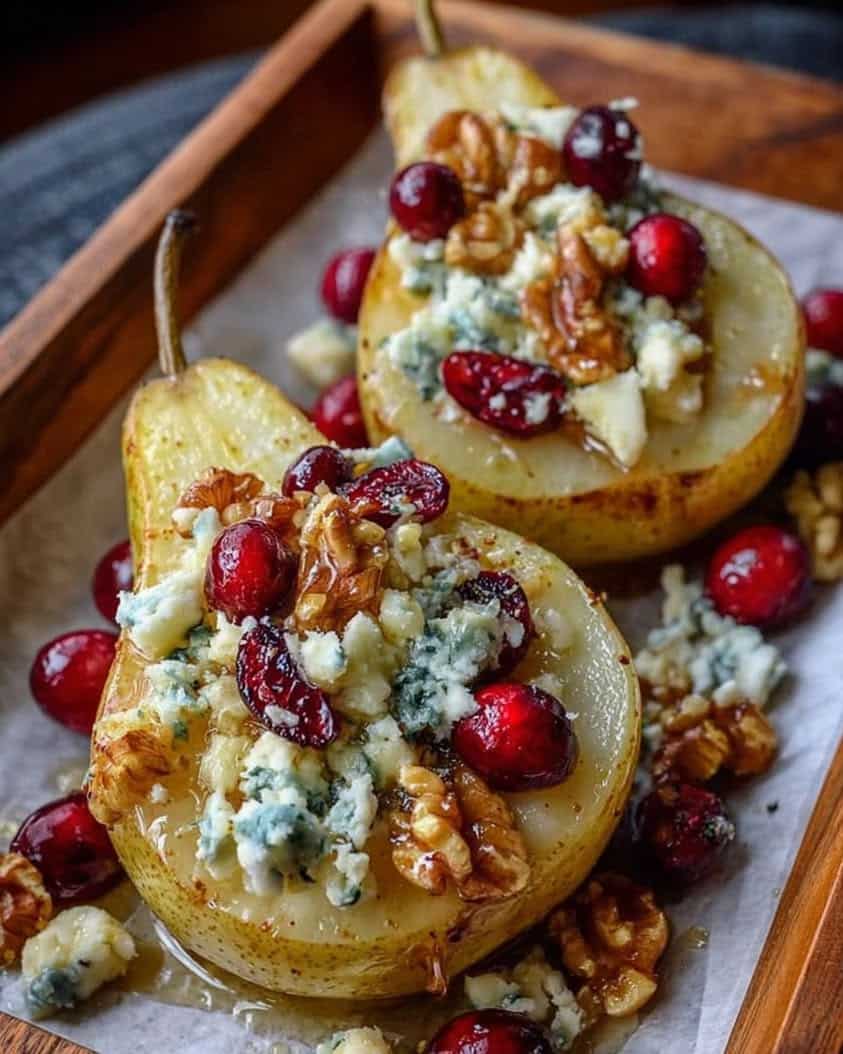
Baked Pears with Cranberries and Blue Cheese: An Elegant Fall Dessert
Imagine a dessert that perfectly captures the essence of autumn in a single, stunning dish. This recipe for baked pears with cranberries and blue cheese does exactly that. It transforms simple, seasonal ingredients into a sophisticated finale for any meal. The warm, tender fruit, the tart pop of cranberries, the rich crunch of walnuts, and the creamy, pungent blue cheese create a symphony of flavors and textures. Consequently, this dish feels both rustic and elegant, making it ideal for a cozy family dinner or a festive holiday gathering.
The beauty of these baked pears lies in their effortless preparation. You need only a handful of ingredients and minimal active kitchen time. While the oven works its magic, the pears soften and caramelize, their natural sugars concentrating into a luscious, honeyed syrup. Meanwhile, the cranberries burst, releasing their vibrant juice and tangy flavor that cuts through the sweetness. Ultimately, this dessert is a celebration of balance, where sweet meets savory and creamy meets crunchy in every delightful bite.
Furthermore, this dish offers a welcome departure from overly rich, heavy desserts. It feels indulgent yet surprisingly light. The natural sweetness of the fruit means you can use less added sugar, relying instead on the floral notes of honey. As a result, you can enjoy a satisfying dessert that doesn’t leave you feeling weighed down. This recipe for baked pears with cranberries and blue cheese is not just food; it’s an experience that engages all the senses.
Quick Recipe Highlights
- Flavor Profile: This dish masterfully balances sweet, savory, tangy, and earthy notes. The baked pears offer a mellow, caramelized sweetness, while the cranberries provide a sharp, fruity tartness. Additionally, the blue cheese introduces a creamy, salty, and complex savory element that elevates the entire dessert.
- Texture: You will enjoy a wonderful contrast of textures in every spoonful. The pears bake until tender but not mushy. Meanwhile, the walnuts add a essential crunchy contrast, and the blue cheese offers a soft, crumbly creaminess that melts slightly from the warmth of the fruit.
- Aroma: As the pears bake, your kitchen will fill with the warm, comforting scent of cinnamon and caramelizing fruit. The aroma of toasted walnuts and the distinct, tangy scent of melting blue cheese create an incredibly inviting and complex fragrance.
- Visual Appeal: This dessert is a feast for the eyes with its beautiful color palette. The golden-brown pears, vibrant red cranberry sauce, and creamy white and blue cheese crumbles create a stunning presentation that looks professional and artful on any plate.
- Skill Level Needed: This is an exceptionally beginner-friendly recipe. It requires no advanced techniques like tempering or folding. Basically, you just need to halve pears, mix a simple filling, and bake. Therefore, even novice cooks can achieve impressive, restaurant-quality results.
- Special Equipment: You need only very basic kitchen tools. A sharp knife, a spoon for coring, a small baking dish, and a mixing bowl are all that’s required. No stand mixer, food processor, or special pans are necessary for this simple baked pears recipe.
Recipe Overview
- Difficulty Level: We rate this recipe as “Easy” because it involves straightforward techniques like coring fruit and simple baking. There is no complex pastry work or precise temperature control needed. The steps are sequential and hard to mess up, making it perfect for cooks of all levels. Finally, the visual cues for doneness are very clear.
- Category: This dish beautifully straddles multiple categories. Primarily, it serves as an elegant dessert or a fancy finish to a meal. However, it can also double as a luxurious brunch item or a sophisticated cheese course. Its versatility is one of its greatest strengths.
- Cuisine: While not tied to one specific tradition, this recipe draws inspiration from modern American and European farmhouse cooking. It utilizes classic fall flavor pairings popular in French and Italian cuisine, where fruit, nuts, and cheese often come together in both savory and sweet applications.
- Cost: This is a relatively economical dessert, especially when pears and cranberries are in season. Pears, honey, and walnuts are generally affordable. Blue cheese can be a splurge, but a little goes a long way. Overall, you can create this impressive dish for a fraction of the cost of a restaurant dessert.
- Season: This is the quintessential fall and winter recipe. Pears and cranberries are at their peak during these cooler months. The warm, spiced, and comforting nature of the baked dish is perfectly suited for chilly evenings and holiday celebrations from October through December.
- Occasion: This dessert is incredibly versatile for different events. It’s simple enough for a quiet Tuesday night but elegant enough for Thanksgiving, Christmas, or a dinner party. You can easily scale it up for a crowd or prepare it in individual portions for a plated dessert.
Why You’ll Love This Recipe
First and foremost, the taste and texture appeal of these baked pears is undeniable. Each component brings something unique to the table, creating a harmonious and sophisticated flavor profile. The tender, sweet pear acts as the perfect vessel for the tangy cranberry compote and the rich, salty blue cheese. Meanwhile, the walnuts provide a necessary crunch that ties everything together. Consequently, every bite is a delightful journey through contrasting yet complementary sensations that feel both indulgent and refined.
You will also appreciate the sheer convenience and preparation benefits. This recipe requires minimal hands-on time and uses ingredients you can often find in your pantry or easily pick up at any grocery store. The assembly is quick; you simply prep the pears, mix the filling, and bake. Therefore, you can socialize with guests or prepare the rest of your meal while the oven does the work. It’s the ultimate “set it and forget it” dessert that yields maximum impressive results with minimal effort.
From a nutritional standpoint, this dessert offers distinct advantages over many traditional options. Pears are a great source of dietary fiber and vitamin C. Walnuts contribute healthy fats, protein, and omega-3s. Cranberries are packed with antioxidants. Compared to a slice of cake or a bowl of ice cream, this dish provides more nutrients and less refined sugar. Thus, you can enjoy a truly satisfying dessert that also contributes positively to your well-being.
The social and entertaining value of this dish is exceptionally high. It presents beautifully and sparks conversation. Guests are always impressed by the elegant combination of flavors and the thoughtful presentation. Because it’s not a common, everyday dessert, it feels special and celebratory. Serving these baked pears shows care and attention to detail, making your guests feel truly welcomed and catered to during any gathering.
Finally, the cost-effectiveness and accessibility of the ingredients make this a recipe you can turn to again and again. You don’t need expensive, hard-to-find specialty items. Firm baking pears like Bosc or Anjou are widely available. Frozen cranberries work perfectly year-round. A small wedge of quality blue cheese can flavor multiple servings. Essentially, you can create a gourmet-tasting dessert without a gourmet budget, which is a win for any home cook.
Historical Background and Cultural Significance
The practice of baking fruit with sweeteners and spices spans centuries and continents. Early recipes often involved burying fruit in ashes or cooking it in primitive ovens with honey, a precious sweetener. The combination of fruit and cheese, however, has particularly strong roots in European culinary traditions. For instance, the British have long enjoyed apples with cheddar, while the French pair pears with Roquefort. Our recipe for baked pears with cranberries and blue cheese is a modern fusion that draws inspiration from these timeless, cross-cultural pairings of sweet and savory.
Cranberries add a distinctly North American element to the dish’s cultural tapestry. Native American tribes used cranberries for food, dye, and medicine long before European settlers arrived. They introduced the tart berry to pilgrims, who likely incorporated them into early colonial cooking. Including cranberries in a baked fruit dessert connects it to a very old, autumnal American tradition, echoing the flavors of the first Thanksgiving harvests and the preservation methods used for long winters.
The evolution of this specific recipe reflects broader trends in modern cuisine. Contemporary cooks and chefs increasingly seek balance in dishes, moving away from cloyingly sweet desserts. The intentional addition of a savory, funky element like blue cheese represents a desire for complexity and sophistication on the plate. This evolution shows how home cooking has embraced restaurant techniques and flavor philosophies, making adventurous pairings accessible to everyone in their own kitchen.
Regional variations of baked fruit dishes are plentiful, which allows for creative interpretation. In the American South, you might find baked peaches with bourbon and pecans. In Italy, baked figs with honey and mascarpone are a classic. Our version with cranberries and walnuts feels particularly suited to the Northeastern United States, where both ingredients are native. Ultimately, this recipe is a canvas, inviting you to incorporate local ingredients and personal tastes, continuing the living tradition of fruit-based desserts.
Ingredient Deep Dive
Pears (Bosc or Anjou): Choosing the right pear is crucial for success in this baked pears recipe. Bosc or Anjou pears are ideal because they hold their shape beautifully during baking. They have a denser, less watery flesh than Bartlett or Comice pears, which prevents them from turning to mush. Historically, pears have been cultivated for thousands of years, originating in Asia and spreading through Europe. They are a good source of fiber and vitamin C. Select pears that are firm but slightly yielding at the stem for the best texture. Store them at room temperature until ripe, then refrigerate to slow further ripening.
Fresh or Frozen Cranberries: Cranberries provide the essential tart counterpoint to the sweet pears and honey. They are one of only three major fruits native to North America. Packed with vitamin C and unique antioxidants called proanthocyanidins, they offer significant health benefits. When baked, their natural pectin helps create a lovely, jammy sauce. You can use fresh or frozen cranberries interchangeably without thawing. Look for berries that are plump and brightly colored. Store fresh cranberries in the refrigerator in their original bag, or freeze them for several months for year-round use.
Blue Cheese (like Gorgonzola or Stilton): Blue cheese introduces a bold, savory depth that makes this dessert unforgettable. The mold cultures (Penicillium) used to create the blue veins have been employed in cheesemaking for centuries, with famous varieties like Roquefort protected by French law. Nutritionally, it provides calcium and protein. For this recipe, a creamy, crumbly blue like Gorgonzola Dolce or a domestic blue works well. Avoid overly dry or intensely salty varieties. Store blue cheese tightly wrapped in wax paper inside an airtight container in the refrigerator’s cheese drawer to maintain its moisture and prevent odor transfer.
Walnuts: Walnuts contribute healthy fats, a satisfying crunch, and an earthy flavor. They are one of the oldest tree foods, cultivated since 7000 B.C. They are an excellent source of omega-3 fatty acids and antioxidants. Toasting the walnuts before adding them to the baked pears is a non-negotiable step; it deepens their flavor and improves their crunch. You can toast them in a dry skillet over medium heat for 3-5 minutes, watching carefully to prevent burning. Store walnuts in an airtight container in the refrigerator or freezer to prevent their oils from turning rancid.
Honey: Honey acts as the natural sweetener and glue that brings the filling together. Its floral notes complement the fruit without overpowering it. As a natural humectant, it helps keep the baked pears moist. The use of honey in cooking predates recorded history. It contains trace enzymes, minerals, and vitamins. For best flavor, choose a mild, liquid honey like clover or orange blossom. If your honey has crystallized, gently warm the jar in a bowl of hot water to liquefy it. Always store honey at room temperature in a sealed container.
Common Mistakes to Avoid
- Using Overripe Pears: Overly soft pears will collapse into mush during baking. You need fruit with structural integrity. Always choose firm, just-ripe Bosc or Anjou pears that yield only slightly to pressure at the stem end. This ensures they become tender but maintain a pleasing, spoonable texture.
- Skipping the Toasted Walnuts: Adding raw walnuts results in a bland, sometimes bitter flavor and a less crunchy texture. Toasting is a simple step that unlocks the nuts’ essential oils and deep, nutty aroma. Simply toast in a dry pan for a few minutes until fragrant for a major flavor upgrade.
- Overcrowding the Baking Dish: Packing the pears too tightly in the dish prevents proper caramelization and even cooking. The hot air needs to circulate around each pear half. Arrange them in a single layer with a little space between each one to ensure they roast properly.
- Using Pre-Crumbled Blue Cheese: Pre-crumbled cheese often contains anti-caking agents that can dry it out and affect its melting quality. For the best flavor and creamy texture, always buy a wedge of blue cheese and crumble it yourself just before serving the baked pears.
- Underseasoning the Filling: The cranberry-walnut filling needs more than just honey. A pinch of salt and a dash of cinnamon are not optional; they are essential for balancing the sweetness and adding depth. Salt amplifies all the other flavors, making the dessert taste more complete.
- Baking at the Wrong Temperature: A temperature that’s too low won’t caramelize the pears, while one that’s too high may burn the honey before the pears soften. 375°F (190°C) is the sweet spot, allowing the fruit to cook through and the juices to bubble and thicken perfectly.
- Serving Straight from the Oven: The blue cheese will melt into nothing if added to piping hot pears. Let the baked pears cool for 5-10 minutes after removing them from the oven. This allows them to set slightly and provides the ideal warm (not hot) temperature for the cheese to soften without disappearing.
- Forgetting to Baste: Not spooning the pan juices over the pears during baking leads to dry tops. Basting every 10-15 minutes ensures the pears stay moist and glazed with the delicious honey-cranberry syrup, enhancing both flavor and appearance.
Essential Techniques
Corning and Hollowing Pears: This technique creates a stable cavity for the filling. First, slice the pear in half lengthwise. Then, use a melon baller or a small teaspoon to carefully scoop out the core and the stringy fibers leading to the stem. Be sure to create a generous well without cutting through the bottom of the pear. A proper hollow ensures each pear half can hold a substantial amount of the flavorful cranberry and walnut mixture, which is key for the final presentation and taste distribution.
Toasting Walnuts: Toasting is a dry-heat method that transforms walnuts from good to great. Place raw walnut pieces in a single layer in a dry skillet over medium heat. Cook, shaking the pan frequently, for 3-5 minutes until they become fragrant and take on a slightly darker color. The visual cue for success is a rich golden-brown hue and a strong, nutty aroma. Immediately transfer them to a plate to stop the cooking process and prevent burning from residual heat.
Basting During Baking: Basting involves spooning the hot pan juices over the exposed surface of the pears during cooking. This technique serves multiple purposes. It keeps the pear flesh from drying out, encourages even caramelization, and builds layers of flavor by repeatedly coating the fruit with the reducing honey and cranberry syrup. Perform this step every 10-15 minutes for consistently moist and glossy baked pears.
Testing for Doneness: Properly baked pears should be tender enough to pierce easily with the tip of a paring knife or a fork, but not so soft that they lose their shape. The visual cue is a golden-brown color on the cut surfaces and edges, and the cranberry filling should be bubbling actively. The pan juices will have thickened into a syrupy consistency. If the pears are still firm, continue baking in 5-minute increments until they yield gently to pressure.
Pro Tips for Perfect Baked Pears
First, always choose pears that are firm to the touch for the best structure. Soft pears will turn to mush in the oven. Second, toast your walnuts ahead of time and let them cool completely before mixing them into the filling. This prevents them from becoming soggy. Third, use a mild, runny honey for easier mixing and a more delicate flavor profile that won’t overpower the other ingredients.
Fourth, don’t skip the pinch of salt in the cranberry filling; it is the secret weapon that makes all the sweet and tart flavors pop. Fifth, baste the pears generously with the pan juices every 10 minutes during baking. This simple action guarantees a beautiful glaze and prevents dry spots. Sixth, let the baked pears rest for 5-10 minutes after removing them from the oven before adding the blue cheese. This allows the cheese to soften perfectly without melting away.
Seventh, for an extra flavor boost, add a teaspoon of orange zest or a splash of brandy to the cranberry filling before baking. Finally, crumble the blue cheese with your fingers for irregular, interesting pieces that provide bursts of flavor, rather than using uniformly small crumbles from a package.
Variations and Adaptations
Regional Variations: You can easily adapt this baked pears recipe to reflect local ingredients. In the South, try using pecans instead of walnuts and a splash of bourbon in the honey. For a Mediterranean twist, use pistachios and drizzle with pomegranate molasses after baking. In the Pacific Northwest, hazelnuts and a drizzle of maple syrup would be a beautiful alternative, showcasing regional flavors.
Seasonal Adaptations: While perfect for fall, this dessert is adaptable year-round. In winter, add a pinch of cloves or allspice to the filling. For spring, use almonds and substitute the cranberries with a few raspberries. In summer, try grilled peach halves with the same cranberry, walnut, and blue cheese topping for a fantastic barbecue dessert.
Dietary Modifications: For a vegan version, replace the honey with maple syrup or agave nectar and use a plant-based blue cheese alternative or omit it. For a gluten-free diet, this recipe is naturally compliant—just ensure any added oats or thickeners are certified gluten-free. To reduce sugar, decrease the honey by half and rely on the pears’ natural sweetness.
Flavor Variations: Experiment with different cheese and spice pairings. Goat cheese offers a tangy but less pungent alternative to blue cheese. A soft, rindless Brie can be delicious. Spice-wise, cardamom or a tiny bit of freshly grated nutmeg can replace the cinnamon for a different aromatic profile.
Texture Modifications: For added texture, sprinkle the top with rolled oats or a crumble made from flour, butter, and brown sugar before baking. Alternatively, for a smoother component, serve the baked pears with a dollop of mascarpone or vanilla bean ice cream on the side instead of the crumbled cheese.
Presentation Alternatives: Instead of baking pear halves, you can slice pears into thick wedges and arrange them in a baking dish for a deconstructed, rustic presentation. For individual servings, bake each prepared pear half in its own ramekin. This not only looks elegant but also makes serving at a dinner party incredibly easy.
Serving and Presentation Guide
Plating is key to showcasing these beautiful baked pears. Place one or two warm pear halves in the center of a shallow bowl or dessert plate. Spoon over plenty of the syrupy cranberry sauce and pan juices, allowing it to pool around the fruit. The vibrant red sauce against the golden pear creates instant visual appeal. Arrange the crumbled blue cheese and toasted walnuts artfully over and around the pears, ensuring each serving gets a balanced amount of all components.
Consider traditional and modern accompaniments. A simple garnish of fresh mint or thyme sprigs adds a touch of green and freshness. For a traditional touch, a small scoop of vanilla ice cream or a dollop of lightly sweetened whipped cream is heavenly. For a modern, lighter option, a spoonful of Greek yogurt or crème fraîche provides a tangy contrast. Always serve the dish warm, not scalding hot, to appreciate the full spectrum of flavors and textures.
Temperature considerations are important. The pears should be warm to enhance their sweetness and soften the cheese slightly, but not so hot that the cheese completely melts. Portion control is simple; one large pear half makes a perfect dessert portion, while two halves are ideal for a more substantial serving or a standalone light lunch or brunch item when paired with a simple green salad.
Wine and Beverage Pairing
The complex sweet, tart, and savory notes of these baked pears call for thoughtful beverage pairings. For wine, a late-harvest Riesling or Gewürztraminer is exceptional. Their inherent sweetness and floral notes mirror the honey and fruit, while their acidity cuts through the richness of the cheese. Alternatively, a Tawny Port or a Sauternes offers a luxurious pairing, their caramel and nutty flavors complementing the toasted walnuts and baked fruit beautifully.
Non-alcoholic alternatives can be just as sophisticated. A sparkling apple cider provides festive bubbles and complementary fruit flavor. A warm mug of spiced chai tea echoes the cinnamon in the dish, or a cup of rich hot chocolate can create a decadent dessert experience. For a refreshing contrast, a glass of chilled ginger beer or lemon-ginger kombucha works wonderfully with the tangy cranberries.
Always consider serving temperature. Serve white dessert wines well-chilled, and Port slightly below room temperature. Non-alcoholic sparkling drinks should be cold. Hot beverages like tea or cider should be served piping hot to contrast the warm, not hot, temperature of the dessert itself, creating a pleasant sensory experience.
Storage and Shelf Life
Store any leftover baked pears in an airtight container in the refrigerator for up to 3 days. It’s best to store the components separately if possible: keep the baked pears with their syrup in one container and the blue cheese crumbles and walnuts in another. This prevents the nuts from becoming soggy and the cheese from dissolving. The cranberry syrup may thicken when chilled; this is normal.
Signs of spoilage include an off smell, visible mold (different from the intentional blue cheese mold), or an excessively slimy texture on the pear flesh. To reheat, place the pears and syrup in an oven-safe dish, cover with foil, and warm in a 300°F (150°C) oven for 10-15 minutes until heated through. You can also microwave individual portions in 30-second intervals. Add the fresh cheese and nuts after reheating. This dish does not freeze well, as the texture of the pears becomes unpleasantly watery upon thawing.
Make Ahead Strategies
You can prep several components of this baked pears recipe ahead of time to streamline dinner party execution. Up to a day in advance, core and halve the pears. To prevent browning, submerge them in a bowl of water with a squeeze of lemon juice, then drain and pat dry before using. You can also toast the walnuts and mix the dry cranberry filling (cranberries, toasted walnuts, cinnamon, salt). Store both separately in airtight containers at room temperature.
On the day of serving, simply combine the pre-mixed dry filling with the honey, stuff the prepped pears, and bake. The quality impact of prepping the pears a day ahead is minimal if you use the acidulated water bath. The walnuts may lose a tiny bit of crunch but will still be far superior to untoasted nuts. Always add the blue cheese crumble fresh, just before serving, to maintain its perfect texture and bold flavor.
Scaling Instructions
This recipe scales up or down very easily. For halving the recipe to serve two, simply use two pear halves and reduce all other ingredients by half. Use a smaller baking dish to ensure the pears are snug but not overcrowded. The bake time may be slightly reduced by 5 minutes, so start checking for doneness early. When doubling or tripling for a crowd, use multiple baking dishes or a very large roasting pan to maintain a single layer of pears. You may need to increase the bake time by 5-10 minutes and rotate the pans in the oven for even cooking.
Equipment adjustments are minimal. The main consideration is using a baking dish where the pears fit in a single layer with a little space between them, regardless of batch size. Timing modifications are minor; larger batches may require a slightly longer bake time. Always rely on the visual and textural cues for doneness—tender pears and bubbling syrup—rather than strictly adhering to the original time. For storage, larger batches are best served immediately, but leftovers can be refrigerated as usual.
Nutritional Deep Dive
This baked pears dessert offers a favorable macro breakdown compared to many traditional sweets. A serving provides complex carbohydrates and fiber from the pears and cranberries, healthy fats and protein from the walnuts and blue cheese, and natural sugars primarily from the fruit and honey. The fiber content helps slow sugar absorption, preventing a sharp blood sugar spike. The fats from the nuts and cheese contribute to satiety, meaning you’ll feel satisfied with a reasonable portion.
Micronutrient analysis reveals a good dose of vitamin C from the pears and cranberries, calcium from the cheese, and manganese and copper from the walnuts. The antioxidants in cranberries (proanthocyanidins) and the polyphenols in walnuts provide anti-inflammatory benefits. For dietary considerations, this is a naturally gluten-free dessert. For weight management, it’s a nutrient-dense choice that satisfies a sweet tooth with more vitamins, minerals, and fiber than a comparable portion of cake or cookies, helping you feel full on fewer calories.
Dietary Adaptations
Gluten-Free: This recipe is naturally gluten-free as written. Simply ensure that any packaged ingredients, like oats if used in a crumble variation, are certified gluten-free to avoid cross-contamination.
Dairy-Free/Vegan: For a dairy-free or vegan baked pears recipe, omit the blue cheese or substitute it with a store-bought vegan blue cheese alternative if available. Replace the honey with an equal amount of maple syrup or agave nectar to keep it plant-based.
Low-Carb/Keto: To adapt for a low-carb or keto diet, reduce the amount of pear used (perhaps use a quarter of a pear per serving) and significantly reduce or omit the honey. Increase the walnut and blue cheese portions, and use a low-carb sweetener like erythritol or monk fruit mixed with the cranberries, though be aware cranberries themselves contain carbs.
Paleo: For a Paleo version, omit the blue cheese (as dairy is excluded). Ensure you are using raw honey. All other ingredients—pears, cranberries, walnuts, cinnamon—are Paleo-compliant.
Low-FODMAP: Pears can be high in FODMAPs (fructose). To make a Low-FODMAP version, use a firm, ripe Bosc pear and limit the portion to one half per serving, as small amounts may be tolerated in the elimination phase. Omit the honey and use maple syrup instead, and ensure the walnuts are limited to a small handful.
Troubleshooting Guide
Pears Are Too Hard: If your pears are still firm after the suggested bake time, they were likely underripe. Cover the dish tightly with foil to trap steam and continue baking in 5-10 minute increments until a knife pierces them easily. Next time, choose pears that yield slightly at the stem.
Pears Are Mushy: Mushy pears were overripe before baking or were baked for too long. Unfortunately, you cannot fix this texture. Serve them as a compote or sauce. For future attempts, use firmer fruit and check for doneness 5-10 minutes before the timer goes off.
Filling Is Too Dry: A dry filling usually means not enough honey or pan juices were incorporated. After baking, if the filling seems dry, stir a tablespoon of warm water or orange juice into the pan syrup and spoon it over the pears before serving to moisten everything.
Honey Burned in the Pan: If the honey and juices have scorched, the oven temperature was likely too high or the dish was placed too close to the heating element. Carefully remove the pears to a clean plate. Do not scrape the burnt bits from the pan into the sauce. Make a quick fresh syrup by warming a little more honey with a splash of water or juice and drizzle it over the pears.
Blue Cheese Melted Into Nothing: This happens if the cheese is added to pears that are too hot. Let the baked pears cool for a full 10 minutes on a rack before crumbling the cheese over the top. The residual warmth will soften it perfectly without causing it to liquefy.
Recipe Success Stories
Community feedback on this baked pears recipe has been overwhelmingly positive. Many readers report it becoming their go-to “fancy but easy” dessert for holiday meals. One home cook shared that she made it for a book club and received multiple requests for the recipe, with friends astonished that something so elegant came from her kitchen with so little effort. Another reader successfully adapted it for a vegan Thanksgiving by using maple syrup and omitting the cheese, and her guests loved the vibrant, tart flavor.
Adaptation stories are always inspiring. A reader from Vermont substituted the walnuts with locally harvested butternuts and used maple syrup instead of honey, creating a hyper-local version. Another added a tablespoon of bourbon to the filling for a grown-up twist that was a hit at a dinner party. Photography tips from the community include shooting in natural light to highlight the gloss of the syrup and using dark-colored plates to make the colors of the pears, cranberries, and cheese truly pop.
Frequently Asked Questions
Q: Can I use canned pears?
A: No, canned pears are too soft and mushy and will not hold up to baking. You need the structure and texture of fresh, firm baking pears like Bosc or Anjou for this recipe to work correctly.
Q: What can I use instead of blue cheese if I don’t like it?
A: Goat cheese (chèvre) is a fantastic alternative. It provides a similar tangy, creamy element without the pungent blue mold flavor. A soft, rindless Brie or even a sharp white cheddar can also work well for a different profile.
Q: Can I make this recipe with apples instead?
A: Absolutely. Firm, tart apples like Granny Smith or Honeycrisp work beautifully. You may need to adjust the bake time slightly, as apples can sometimes take a little longer to become tender than pears.
Q: Are frozen cranberries okay to use?
A: Yes, frozen cranberries are perfect and often more economical than fresh, especially off-season. Use them directly from the freezer without thawing; they will bake perfectly into the filling.
Q: How do I prevent the pears from turning brown before baking?
A> After coring and halving, you can submerge the pears in a bowl of cold water mixed with the juice of half a lemon for 10-15 minutes. This acidulated water bath prevents oxidation. Just be sure to pat them dry thoroughly before filling and baking.
Q: Can I prepare this dish completely ahead of time?
A: You can prep the components ahead (toast nuts, mix dry filling, core pears), but for the best texture, assemble and bake the pears close to serving time. You can bake them up to an hour ahead and let them rest at room temperature, then re-warm gently if desired before adding the cheese.
Q: Is this served hot or cold?
A: It is best served warm. The ideal temperature is warm enough to slightly soften the blue cheese and highlight the pear’s sweetness, but not so hot that the cheese melts completely. Let it rest for 5-10 minutes after baking.
Q: Can I add oats to the filling?
A> Yes, adding a tablespoon or two of old-fashioned rolled oats to the cranberry-walnut mixture can give it a pleasant, hearty texture. They will absorb some of the juices and soften during baking.
Q: My syrup is very thin. How can I thicken it?
A> If the pan juices are too runny after baking, carefully pour them into a small saucepan. Simmer over medium heat for 3-5 minutes until reduced and syrupy. You can also mix a teaspoon of cornstarch with a tablespoon of cold water and whisk it into the simmering juices until thickened.
Q: What’s the best way to reheat leftovers?
A: Reheat in a covered oven-safe dish at 300°F (150°C) for 10-15 minutes, or microwave individual portions in 30-second intervals. Always add the blue cheese and walnuts after reheating to preserve their texture.
Baked Pears with Cranberries, Honey, Walnuts & Blue Cheese
- Total Time: 45 minutes
- Yield: 4
Description
A warm, elegant dessert or appetizer featuring sweet baked pears topped with tangy cranberries, crunchy walnuts, and creamy blue cheese, all drizzled with honey.
Ingredients
- 4 ripe but firm pears, halved and cored
- 1/2 cup fresh or frozen cranberries
- 1/4 cup chopped walnuts
- 1/4 cup crumbled blue cheese
- 3 tablespoons honey
- 1 tablespoon melted butter
- 1/2 teaspoon ground cinnamon
- Pinch of salt
Instructions
- Preheat oven to 375°F (190°C). Arrange pear halves cut-side up in a baking dish.
- In a small bowl, mix cranberries, walnuts, blue cheese, cinnamon, and salt. Spoon mixture into pear cavities.
- Drizzle melted butter and 2 tablespoons of honey over the pears.
- Bake for 25-30 minutes until pears are tender and topping is golden.
- Remove from oven, drizzle with remaining honey, and serve warm.
Notes
You can customize the seasonings to taste.
- Prep Time: 15 minutes
- Cook Time: 30 minutes
- Method: Dessert
- Cuisine: American