Sweet Potato Beet Stacks with Pesto and Burrata: An Elegant Appetizer
These stunning Sweet Potato Beet Stacks with Pesto and Burrata are a true showstopper. Consequently, they will instantly elevate any dinner party or holiday table. Imagine perfectly roasted rounds of earthy beet and sweet potato, layered with creamy burrata cheese and vibrant basil pesto. Ultimately, each bite delivers a beautiful harmony of sweet, savory, and fresh flavors that will impress your guests.
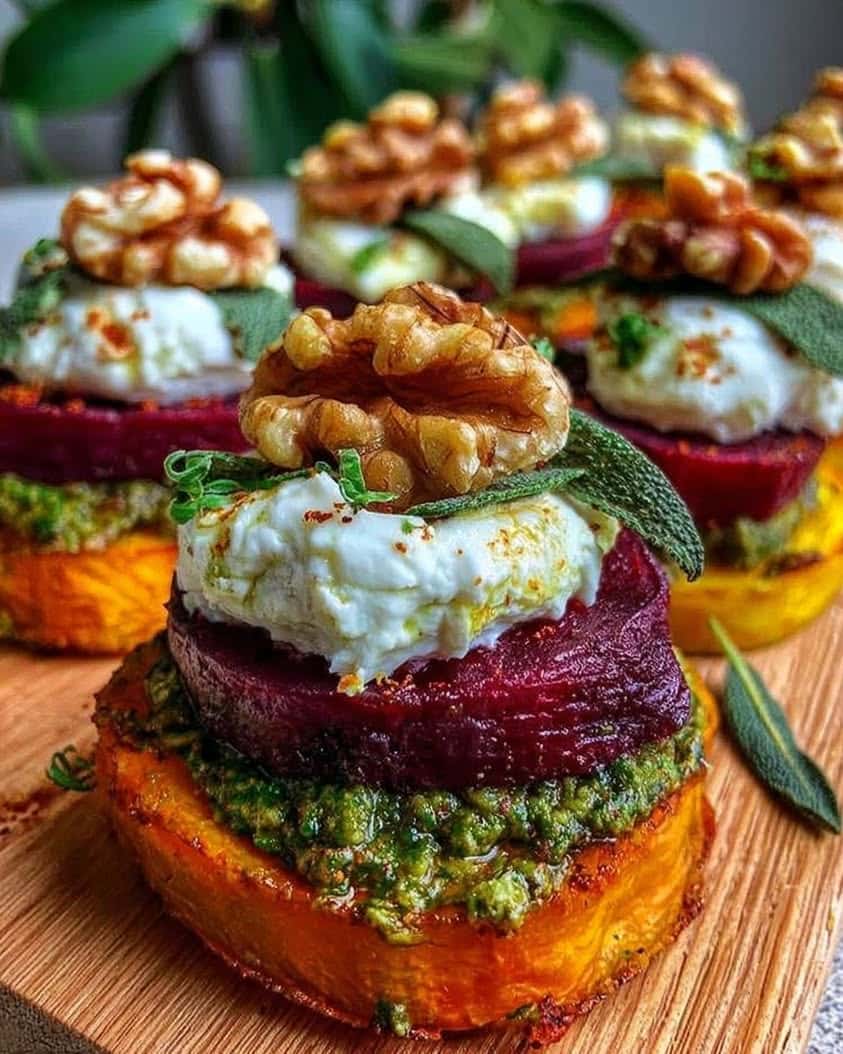
This recipe transforms humble root vegetables into an elegant, restaurant-quality appetizer. The process is surprisingly simple, however the presentation is undeniably sophisticated. You roast thin slices of sweet potato and beet until tender, then layer them with rich, milky burrata and a generous dollop of homemade or high-quality pesto. Finally, a sprinkle of toasted walnuts adds the perfect crunch, creating a textural masterpiece.
Moreover, this dish is a feast for the eyes as much as the palate. The deep magenta of the beets contrasts beautifully with the orange sweet potato and the snowy white burrata. Drizzled with green pesto and garnished with herbs, these stacks are a colorful centerpiece. They celebrate seasonal produce in the most delicious way, making them perfect for autumn gatherings or a bright winter meal.
Quick Recipe Highlights
- Flavor Profile: These stacks offer a complex taste journey. Earthy, sweet beets meet the natural caramelized sugar of roasted sweet potato. Meanwhile, the basil pesto adds a bright, herby punch, and the burrata contributes a luxurious, creamy richness that ties everything together.
- Texture: The texture contrast is absolutely key. You get tender, melt-in-your-mouth roasted vegetables against the luscious, soft burrata. Furthermore, the toasted walnuts provide a crucial crunchy element, ensuring every bite has a satisfying mix of soft and crisp.
- Aroma: The aroma is deeply inviting. As the vegetables roast, their natural sugars caramelize, filling your kitchen with a warm, sweet scent. Then, the fresh basil from the pesto and the nutty fragrance of toasting walnuts add layers of herbal and toasty notes.
- Visual Appeal: This dish is a photographer’s dream. The vertical stacks create dramatic height, and the vibrant color palette of red, orange, white, and green is stunning. Consequently, it looks intricate and artistic, despite the straightforward assembly.
- Skill Level Needed: This is an accessible recipe for most home cooks. The primary skills involve simple vegetable slicing, basic roasting, and assembly. Therefore, even a beginner can achieve impressive results with careful attention to slicing thickness and roasting time.
- Special Equipment: You need very little special gear. A sharp chef’s knife or mandoline ensures uniform slices for even cooking. Additionally, a good baking sheet and parchment paper are essential. A food processor simplifies making pesto, but a store-bought version works perfectly.
Recipe Overview
- Difficulty Level: We rate this recipe as “Easy.” The steps are sequential and simple: slice, roast, layer. There is no complex knife work or finicky techniques. However, achieving uniformly thin slices is important for even cooking and stable stacks, so a mandoline can be helpful but is not mandatory.
- Category: This dish fits beautifully into several categories. Primarily, it serves as an elegant appetizer or starter. Alternatively, you can present it as a stunning vegetarian main course for a light lunch or dinner, perhaps alongside a simple green salad.
- Cuisine: The inspiration is modern, vegetable-forward American cuisine with clear Italian influences. The use of burrata and pesto directly references Italian culinary traditions. Meanwhile, the stacking presentation and focus on root vegetables align with contemporary farm-to-table trends.
- Cost: This is a moderately priced dish that feels luxurious. Sweet potatoes and beets are very affordable, especially in season. Burrata and pre-made pesto are the main cost drivers, but a little goes a long way. Toasting your own walnuts is a cost-effective way to add premium texture.
- Season: This recipe shines in the fall and winter. Root vegetables like beets and sweet potatoes are at their peak sweetness and flavor during these cooler months. Nevertheless, you can find good quality produce year-round, making it a versatile option for any season.
- Occasion: These stacks are perfect for special occasions. They are ideal for holiday dinners, dinner parties, anniversary meals, or any event where you want to serve something visually impressive. They also make a fantastic Meatless Monday centerpiece or a romantic date-night meal at home.
Why You’ll Love This Recipe
First and foremost, you will adore the incredible taste and texture of these Sweet Potato Beet Stacks. Each component brings its own unique character to the party. The sweet, caramelized vegetables pair magically with the rich, creamy burrata. Meanwhile, the pesto cuts through the richness with its herbal brightness, and the walnuts offer a satisfying crunch. Every single bite is a balanced explosion of flavor and mouthfeel that will keep you coming back for more.
Furthermore, this recipe offers remarkable convenience for such an elegant result. You can prepare many elements ahead of time. For instance, roast the vegetable slices and toast the walnuts a day in advance. Then, assembly takes just minutes before serving. This make-ahead flexibility makes it a stress-free choice for entertaining, allowing you to enjoy your own party instead of being stuck in the kitchen.
From a nutritional standpoint, these stacks are a powerhouse. Sweet potatoes and beets are loaded with fiber, vitamins, and antioxidants. They support digestive health and provide sustained energy. Additionally, walnuts add healthy fats and protein. While burrata is indulgent, using it as a flavorful accent rather than the main component keeps the dish balanced. You get a meal that feels decadent but is rooted in wholesome ingredients.
Moreover, the social and entertaining value of this dish is exceptionally high. It is a guaranteed conversation starter. Guests are always impressed by the beautiful presentation and sophisticated flavor combination. Serving this appetizer sets a tone of care and creativity. It shows you put thought into the meal, making everyone feel special. It’s a recipe that builds memorable dining experiences.
Finally, this dish is surprisingly cost-effective and accessible. The core ingredients are inexpensive root vegetables. While burrata might be a splurge, one ball can serve four people generously when layered. You can often find pre-made pesto on sale, or make a batch yourself with affordable basil. Consequently, you can create a restaurant-quality dish on a reasonable home cooking budget, which is always a win.
Historical Background and Cultural Significance
The story of this dish is a modern tale of culinary fusion. It doesn’t have centuries of tradition but rather represents contemporary cooking trends. Chefs began exploring vegetable-centric plating, moving sides to the center of the plate. The stack presentation gained popularity in the 1990s and 2000s as a way to add height and drama to dishes. This recipe borrows that technique, applying it to rustic, earthy ingredients for a striking effect.
Cultural significance comes from the individual ingredients. Beets have deep roots in Eastern European cuisine, often appearing in soups and salads. Sweet potatoes are a staple in the American South and a symbol of harvest and comfort. Burrata and pesto are iconic to Italian cuisine, specifically the regions of Puglia and Liguria. Therefore, this stack is a delicious cultural mosaic on a plate.
The evolution of the recipe follows the broader trend of “vegetable-forward” dining. As people seek to eat more plants, chefs and home cooks alike get creative. They elevate vegetables from simple sides to star attractions. This stack does exactly that. It treats the beet and sweet potato with the same care and presentation usually reserved for meat or fish, celebrating their natural beauty and flavor.
Regional variations are easy to imagine. In the Mediterranean, one might use feta instead of burrata and add olives. A French twist could involve goat cheese and herbes de Provence. An Asian-inspired version might swap pesto for a miso-ginger glaze. The basic formula—roasted vegetable rounds + creamy element + sauce + crunch—is wonderfully adaptable. This flexibility ensures the concept of a vegetable stack remains fresh and relevant across different culinary landscapes.
Ingredient Deep Dive
Let’s start with sweet potatoes. This vibrant tuber originated in Central or South America and has become a global staple. Nutritionally, it’s famous for its high beta-carotene content, which the body converts to vitamin A. For the best flavor, choose firm sweet potatoes with smooth, unblemished skin. Store them in a cool, dark, well-ventilated place—not the refrigerator. If needed, you can substitute with butternut squash or carrots for a similar sweet, roasted flavor.
Next, consider the mighty beet. Beets have been cultivated since ancient times, prized by Romans and later in Eastern Europe. They are rich in folate, manganese, and dietary nitrates, which may support heart health and stamina. Select beets that are firm with smooth skin and vibrant greens attached if possible. Store them unwashed in the refrigerator crisper. Golden beets make a beautiful, less-staining alternative. You cannot easily substitute beets, but parsnips could offer a different earthy-sweet note.
Now, examine burrata. This luxurious cheese from Puglia, Italy, is a relative newcomer, invented in the early 20th century. “Burrata” means “buttered,” hinting at its rich, creamy interior (stracciatella) encased in a mozzarella shell. It provides high-quality protein and calcium. Always buy burrata as fresh as possible and consume it quickly. For a dairy-free version, a high-quality vegan mozzarella or a scoop of creamy vegan ricotta can work, though the texture will differ.
Finally, focus on the pesto. Traditional Genovese pesto is a blend of basil, pine nuts, garlic, Parmesan, and olive oil. It adds healthy fats and vibrant flavor. For the brightest taste, use fresh basil and high-quality extra virgin olive oil. Store-bought pesto is a great time-saver. For nut allergies, use sunflower seeds. For a dairy-free version, omit the cheese or use a nutritional yeast alternative. You can also experiment with other herb-based sauces like a kale pesto or a sun-dried tomato spread.
Common Mistakes to Avoid
- Slicing Vegetables Too Thick: This is the most common error. Thick slices won’t cook evenly and will make the stacks unstable and difficult to eat. Aim for consistent 1/4-inch thick rounds using a sharp knife or mandoline for the best results.
- Not Drying the Vegetable Slices: After washing, pat your beet and sweet potato slices thoroughly dry. Excess moisture will steam the vegetables instead of allowing them to roast and caramelize properly, leading to soggy results.
- Crowding the Baking Sheet: Give the slices plenty of space on the pan. If they are too close, they will steam and become limp. For crisp edges and proper roasting, use two sheets or roast in batches if necessary.
- Using Burreta Straight From the Fridge: Cold burrata is less creamy and flavorful. Always let it sit at room temperature for 20-30 minutes before assembling. This allows its rich, buttery texture to fully express itself.
- Overloading the Stacks: More is not always better. Overfilling the stacks makes them wobbly and difficult to eat gracefully. Use a moderate amount of pesto and burrata between layers to maintain structural integrity.
- Skipping the Walnut Toast: Raw walnuts can be bitter and lack crunch. Taking five minutes to toast them in a dry pan unlocks their nutty flavor and gives the dish its essential textural contrast. Do not skip this simple step.
- Assembling Too Early: If assembled more than 15-20 minutes before serving, the stacks can become soggy from the pesto and burrata moisture. Roast and prep components ahead, but layer them just before you plan to serve.
- Neglecting Seasoning: Root vegetables need salt. Season the slices lightly with salt and pepper before roasting. Also, taste your pesto; if it’s bland, add a pinch more salt or a squeeze of lemon juice to brighten it up.
Essential Techniques
Uniform Slicing: Consistent thickness is arguably the most important technique for this recipe. Why? It ensures every piece cooks at the same rate, preventing some slices from being undercooked while others burn. To master it, use a mandoline on a fixed setting for perfect rounds. If using a knife, take your time and aim for steady, even pressure. The common pitfall is rushing and creating wedges or uneven disks. Visual success looks like a stack of identical vegetable coins.
High-Heat Roasting: Roasting at a high temperature (400°F or above) is crucial. This technique caramelizes the natural sugars in the beets and sweet potatoes, creating deep, complex flavors and slightly crisp edges. To master it, preheat your baking sheet in the oven for extra sear. The common pitfall is roasting at too low a temperature, which steams the vegetables. Look for visual cues: the edges should brown and curl slightly, and the centers should be tender when pierced with a fork.
Balanced Assembly: Building a stable, beautiful stack is a key presentation technique. It’s important because it affects the eating experience and visual appeal. Start with a larger, sturdier slice as the base. Spread pesto thinly but evenly, then add small pieces of burrata. Alternate colors for visual impact. The common pitfall is using too much “glue” (pesto and cheese), which causes sliding. A successful stack stands tall on the plate without immediate toppling.
Pro Tips for Perfect Sweet Potato Beet Stacks
Use a mandoline slicer for perfectly even rounds. This guarantees uniform cooking and creates professional-looking, stable stacks. It’s a small investment that pays off in presentation.
Roast the beet and sweet potato slices on separate parchment-lined trays. Beets can bleed color, and their cooking times might vary slightly. Keeping them separate prevents color transfer and allows you to pull each vegetable at its perfect doneness.
Let the roasted vegetable slices cool slightly before handling. They will firm up a bit as they cool, making them less fragile and easier to stack without breaking.
Drain the burrata briefly before using. Gently place the ball in a fine-mesh strainer for a minute to let excess liquid (the whey) drip away. This prevents your stacks from getting soggy.
Toast walnuts in a dry skillet over medium heat for 3-5 minutes. Stir them constantly until fragrant. This simple step intensifies their flavor and ensures a satisfying crunch in every bite.
Garnish with microgreens or fresh basil just before serving. This adds a final pop of fresh color and flavor, making the dish look restaurant-finished.
Serve with a small knife and fork. While you can eat these with your hands, providing utensils makes for a more elegant and less messy experience for your guests.
Variations and Adaptations
For regional variations, imagine a Greek version with roasted zucchini and eggplant rounds, topped with whipped feta and a drizzle of olive oil and oregano. A Mexican-inspired stack could use roasted poblano and sweet potato with cotija cheese and a cilantro-lime crema. The basic architecture invites global flavors.
Seasonal adaptations are simple. In spring, use thin slices of asparagus and new potatoes. Summer welcomes stacks of grilled zucchini, eggplant, and tomato with fresh mozzarella. The fall/winter version with beets and sweet potatoes is classic, but you can also incorporate roasted parsnips or delicata squash.
Dietary modifications are straightforward. For vegan stacks, replace burrata with a cashew-based ricotta or a thick, creamy vegan cheese spread. Use a nut-free and dairy-free pesto. For a paleo or Whole30 version, omit the cheese and ensure your pesto is compliant, using nutritional yeast if desired.
Flavor variations can change the profile entirely. Swap basil pesto for a sun-dried tomato pesto, a kale-walnut pesto, or a vibrant cilantro-jalapeño version. Add a layer of caramelized onions or a smear of fig jam between the vegetable rounds for a sweet and savory twist.
Texture modifications can cater to preferences. For extra crunch, add crispy fried shallots or garlic breadcrumbs on top. For a smoother experience, blend the pesto with extra oil or a touch of Greek yogurt to make it more sauce-like for drizzling.
Presentation alternatives offer fun options. Instead of free-form stacks, use a ring mold to create perfectly cylindrical towers. Alternatively, deconstruct the salad: chop the roasted vegetables, toss with pesto and torn burrata, and serve in a bowl topped with walnuts.
Serving and Presentation Guide
Plating techniques start with your canvas. Use a neutral-colored plate (white or black) to make the vibrant colors pop. Wipe the plate edge clean after plating. Place one or two stacks slightly off-center for a modern, artistic look. You can also drizzle extra pesto or a balsamic reduction around the base of the stacks for a decorative touch.
Garnishing ideas go beyond walnuts. Fresh herb sprigs like basil, thyme, or dill add freshness. Edible flowers make a stunning special-occasion garnish. A light flake of sea salt (like Maldon) over the top just before serving enhances flavor and adds visual texture. A microgreen salad piled gently on the side or on top adds elegance.
Traditional accompaniments are light and simple. A crisp arugula salad with a lemon vinaigrette balances the richness. For a heartier meal, serve alongside a warm lentil salad or a crusty baguette to soak up any leftover pesto and burrata cream.
Modern serving suggestions might include presenting the stacks as part of a shared appetizer board. Arrange the components separately—a bowl of roasted veggie rounds, a bowl of burrata, pesto in a jar, toasted nuts—and let guests build their own bites. This is interactive and fun for casual gatherings.
Temperature considerations are key. The vegetable rounds should be warm or at room temperature. The burrata and pesto should be at room temperature. This ensures the burrata is creamy and the flavors are at their peak. Avoid serving the stacks cold, as it mutes the flavors.
Portion control is simple. As an appetizer, one stack per person is perfect. As a main course, plan for two to three stacks per person, accompanied by a substantial side salad or some crusty bread to make a complete and satisfying meal.
Wine and Beverage Pairing
Wine pairings should complement the earthy sweetness and creamy richness. A crisp, acidic white wine like Sauvignon Blanc or Pinot Grigio cuts through the fat of the burrata beautifully. For red wine lovers, a light-bodied, low-tannin red like Pinot Noir or Beaujolais won’t overpower the vegetables. A dry rosé is also a fantastic, versatile choice that bridges the flavor gap between the beets and the cheese.
Non-alcoholic alternatives can be just as thoughtful. A sparkling water with a twist of lemon or lime cleanses the palate. For something more complex, try a tart cherry or pomegranate spritzer. An herbal iced tea, like mint or lemon verbena, echoes the herbal notes in the pesto and complements the dish wonderfully.
Coffee and tea pairings are less traditional but can work. If serving for a brunch or lunch, a medium-roast coffee with low acidity won’t clash with the vegetables. For tea, a green tea like Sencha or a light oolong offers a clean, palate-cleansing effect that works well after the rich, creamy bites.
Temperature considerations are standard. Serve white wines and rosés well-chilled (45-50°F). Serve light reds slightly cool (55-60°F). Non-alcoholic spritzers and teas should be cold or iced. The goal is to have a refreshing beverage that contrasts with the warm, rich food.
Serving suggestions include offering both a white and a red wine option if you have multiple guests. Always provide water. For a special touch, consider a single, signature cocktail or mocktail that incorporates herbal or citrus notes to pair with the meal.
Storage and Shelf Life
Storage methods depend on the component. You can store assembled stacks for only a few hours in the fridge before they become soggy. It’s best to store the roasted vegetable slices, pesto, and burrata separately. Place cooled vegetable slices in an airtight container in the refrigerator. Store pesto in a jar with a thin layer of olive oil on top to prevent browning. Keep burrata in its original liquid in the fridge.
Temperature requirements are straightforward. All components must be refrigerated at or below 40°F. Do not leave assembled stacks at room temperature for more than two hours due to the dairy content.
Container recommendations are simple. Use shallow containers for vegetable slices to prevent breaking. A glass mason jar is perfect for pesto. Keep burrata in its tub or transfer to a sealed container with its liquid.
Signs of spoilage include an off smell (sour or rancid), visible mold (especially on pesto or cheese), and a slimy texture on the vegetables. Burrata that has separated excessively or smells strongly acidic is past its prime. Always discard anything you are unsure about.
Reheating instructions apply only to the vegetable slices. To reheat, place them on a baking sheet in a 350°F oven for 5-10 minutes until warmed through. Do not microwave, as they will become rubbery. Never reheat assembled stacks or burrata.
Freezing guidelines are not recommended for this dish. The high water content in the vegetables and dairy causes poor texture upon thawing. Pesto can be frozen successfully in ice cube trays for future use, but the complete dish does not freeze well.
Make Ahead Strategies
Your prep timeline can span two days. Day 1: Wash, peel, and slice the vegetables. Toast the walnuts. Make or purchase the pesto. Day 2 (or day of): Roast the vegetable slices. Let them cool. Just before guests arrive, assemble the stacks. This spreads the work and minimizes last-minute stress.
Storage between steps is easy. Keep the raw, sliced vegetables in a bowl of cold water in the fridge to prevent browning, especially for the sweet potatoes. Drain and pat very dry before roasting. Store toasted walnuts at room temperature in an airtight container. Refrigerate pesto.
Quality impact assessment is positive. Roasting the vegetables ahead and reheating them slightly actually improves their flavor, allowing the sugars to settle. The pesto’s flavor melds and deepens when made ahead. The only element that must be fresh is the burrata, which you should open just before assembly.
Assembly tips for make-ahead: Have all your components—warm veggies, room-temp burrata, pesto, nuts, garnish—lined up on the counter. Use a spoon or small offset spatula for the pesto. Tear the burrata with your hands or use a spoon to scoop creamy pieces. Work quickly to build 4-6 stacks at a time for serving.
Reheating guidelines for the vegetables are simple. Spread them in a single layer on a parchment-lined sheet. Warm in a 350°F oven for 5-8 minutes. You want them just warm to the touch, not hot, as you’ll be adding room-temperature cheese.
Fresh element additions are the final touch. Always add the toasted walnuts and any fresh herb garnish at the very last second before serving. This preserves their texture and vibrant color, ensuring the dish looks and tastes its absolute best.
Scaling Instructions
Halving the recipe is simple for a smaller meal. Use one small sweet potato and one medium beet. You will only need half a ball of burrata. Keep pesto and walnut amounts roughly the same, as you can use leftovers. Use one baking sheet and reduce roasting time slightly, checking for doneness a few minutes early.
Doubling or tripling for a crowd requires planning. You will likely need to roast in multiple batches to avoid steaming the vegetables. Use multiple oven racks and rotate the sheets halfway through. Consider mixing the vegetable types on each sheet to save space. For assembly, set up a station with all components and build stacks in batches as needed.
Equipment adjustments are necessary when scaling up. You will need more baking sheets and potentially larger bowls for components. If making pesto from scratch, ensure your food processor is large enough, or make it in batches. For a very large party, consider the deconstructed “salad” variation for easier serving.
Timing modifications are minimal. Roasting time may increase slightly if you overcrowd pans, so it’s better to do multiple batches. Assembly time scales linearly—allow 2-3 minutes per stack. For a party of 12, building 12 stacks will take about 30 focused minutes.
Storage considerations become more important. When making large batches, you will have more components to store separately. Use several shallow containers for the roasted vegetables to prevent them from crushing each other. Keep pesto in a larger sealed container, and buy burrata balls as close to serving as possible.
Nutritional Deep Dive
The macro breakdown of one stack is balanced. You get complex carbohydrates from the sweet potato and beet for sustained energy. The burrata provides a moderate amount of protein and a higher amount of healthy fats, primarily from the olive oil in the pesto and the cheese itself. The walnuts add more healthy fats, fiber, and a small amount of additional protein, making this a satiating dish.
Micronutrient analysis reveals a wealth of vitamins and minerals. Sweet potatoes are exceptionally high in Vitamin A (as beta-carotene) and Vitamin C. Beets are a great source of folate, manganese, and potassium. The basil in pesto offers Vitamin K, and the olive oil provides Vitamin E. Together, they create a nutrient-dense plate that supports immune function, vision, and heart health.
Health benefits are significant. The fiber promotes digestive health and helps regulate blood sugar. The antioxidants in the colorful vegetables combat oxidative stress. The monounsaturated fats from the olive oil and nuts support healthy cholesterol levels. The nitrates in beets may help lower blood pressure and improve exercise performance.
Dietary considerations are varied. This dish is naturally gluten-free. It is vegetarian but not vegan due to the cheese. It can be adapted for many diets as discussed. For those watching sodium, you can control salt levels by making your own pesto and seasoning the vegetables lightly.
Portion analysis shows that as an appetizer, one stack is a perfect, moderate portion. As a main, two stacks with a side salad provide a complete meal of roughly 500-700 calories, depending on the amount of pesto and cheese used. It’s a fulfilling meal that won’t leave you overly stuffed.
Weight management tips include being mindful of the pesto and cheese portions, as they are calorie-dense. You can lightly brush the vegetable slices with oil instead of tossing to reduce fat. Using a low-fat burrata or reducing the amount of cheese are other easy adjustments to lower the calorie count while maintaining flavor.
Dietary Adaptations
For a gluten-free version, this recipe is naturally compliant. Simply ensure any store-bought pesto is certified gluten-free, as some brands may include additives with gluten. All other ingredients—vegetables, cheese, nuts—are inherently gluten-free.
For a dairy-free or vegan adaptation, replace the burrata. Excellent options include a firm, creamy vegan mozzarella that can be sliced, or a cashew-based ricotta that can be dolloped. For the pesto, use a dairy-free recipe that omits Parmesan or uses nutritional yeast. Many high-quality store-bought vegan pestos are now available.
For a low-carb or keto adaptation, focus on the beets, which are lower in net carbs than sweet potatoes. You could replace the sweet potato entirely with more beet rounds or with slices of roasted zucchini or eggplant. Ensure your pesto is made without added sugar, and be mindful of the portion size of beets to stay within your carb limits.
For a paleo adaptation, omit the dairy. Replace burrata with a dollop of avocado or a paleo-friendly “cheese” made from nuts and nutritional yeast. Ensure your pesto is made without cheese, using only basil, nuts, garlic, and olive oil. This creates a wholly plant-based, grain-free, and dairy-free dish.
For a low-FODMAP adaptation, this requires careful modification. Sweet potato is low-FODMAP in 1/2 cup servings, so keep portions small. Beets are high in fructans and should be limited or replaced with low-FODMAP veggies like carrot rounds. Use a garlic-infused oil instead of garlic cloves in the pesto, and omit the walnuts if sensitive, using pumpkin seeds (pepitas) instead.
Troubleshooting Guide
If your stacks are soggy, the cause is likely excess moisture. Solution: Ensure vegetable slices are patted bone-dry before roasting. Let them cool completely on a rack after roasting so steam escapes. Drain the burrata well. Assemble at the last possible minute. If prepping ahead, store components separately and assemble just before serving.
If the flavor is bland, you likely under-seasoned. Solution: Season the vegetable slices generously with salt and pepper before roasting. Taste your pesto and adjust with salt, lemon juice, or more garlic. Burrata itself is mild, so the seasoning must come from the other components. A final flake of sea salt on the finished stack can make a world of difference.
If the vegetables are burning on the edges but raw in the middle, your slices are too thin or your oven is too hot. Solution: Aim for a consistent 1/4-inch thickness. Check your oven temperature with a thermometer. If slices are correct and oven is accurate, try lowering the temperature to 375°F and roasting a few minutes longer for more even cooking.
If the stacks keep falling over, you have a structural issue. Solution: Use your largest, most stable slices for the base. Use pesto and burrata as a “mortar,” but don’t overdo it. Build on the plate you’re serving on to avoid moving them. Chilling the assembled stacks for 5-10 minutes can also help them set slightly before serving.
If you’re out of an ingredient, don’t panic. Solution: For burrata, fresh mozzarella, ricotta, or even a creamy goat cheese are good substitutes. For walnuts, pecans, pine nuts, or pumpkin seeds work. No pesto? A simple drizzle of high-quality olive oil with fresh herbs and a pinch of salt can be delicious.
If timing is off and components are ready at different times, manage temperature. Solution: Roast the beets first, as they take slightly longer. Keep finished vegetable slices warm in a turned-off oven with the door ajar. Have everything else prepped. Quick assembly brings it all together at the right temperature.
Recipe Success Stories
Community feedback on this Sweet Potato Beet Stacks recipe has been overwhelmingly positive. Many home cooks report that it’s their new “go-to” impressive appetizer. One reader said, “I made these for a book club, and they were the talk of the night—everyone asked for the recipe!” Another mentioned how their vegetarian guests were thrilled to have such a beautiful centerpiece dish. The consistent theme is that the dish looks far more complex to make than it actually is, which is the best kind of recipe.
Variation successes from readers are inspiring. One person used golden beets and butternut squash for a stunning all-yellow stack. Another added a thin layer of prosciutto between the vegetable layers for a non-vegetarian twist. A family with nut allergies successfully used toasted sunflower seeds in the pesto and as a topping. These adaptations show the recipe’s fantastic flexibility and how it can be personalized to suit any taste or dietary need.
Reader suggestions have also improved the recipe. Several people recommended using a small cookie cutter to get perfectly round, uniform slices from uneven vegetables—a brilliant tip for presentation. Another suggested warming the plates before serving to keep the stacks at an ideal temperature longer. One cook advised adding a tiny drop of honey to the pesto if the basil is slightly bitter. Incorporating these community-driven tips makes the recipe even more foolproof.
Photography tips from those who have made it are invaluable. The best photos often use natural light from a side window. Shooting from a slight overhead angle captures the beautiful layers. A dark, rustic wooden board or a stark white plate makes the colors truly stand out. Several readers noted that garnishing with bright green microgreens or purple basil adds that final professional touch that makes the photo pop on social media.
Frequently Asked Questions
Can I make these stacks ahead of time? You can prep all components ahead, but assemble just before serving. Roast the vegetables and toast the walnuts up to 2 days in advance. Store them separately in the fridge and at room temperature, respectively. Assemble the stacks 15-20 minutes before your guests arrive for the best texture and stability.
What can I use instead of a mandoline? A sharp chef’s knife and a steady hand work perfectly. Take your time to slice evenly. Alternatively, many vegetable peelers have a julienne or slicing side that can create thin ribbons, which you could layer instead of rounds for a different but equally beautiful presentation.
My beets are staining everything. Help! Wear disposable gloves while handling raw beets. Roast them on a separate tray from the sweet potatoes. To clean a cutting board, rub it with coarse salt and half a lemon, then rinse. For hands, rub with lemon juice or a paste of baking soda and water.
Is there a substitute for burrata? Absolutely. Print
Sweet Potato & Beet Stacks with Pesto, Burrata & Walnuts
- Total Time: 45 minutes
- Yield: 4
Description
A vibrant, layered dish featuring roasted sweet potato and beet slices stacked with creamy burrata, basil pesto, and crunchy walnuts, perfect as an elegant appetizer or light main.
Ingredients
- 2 medium sweet potatoes, peeled and sliced into 1/4-inch rounds
- 2 medium beets, peeled and sliced into 1/4-inch rounds
- 2 tablespoons olive oil
- Salt and black pepper to taste
- 1/2 cup basil pesto (store-bought or homemade)
- 8 ounces burrata cheese, torn into pieces
- 1/2 cup walnuts, toasted and roughly chopped
- Fresh basil leaves for garnish
- Balsamic glaze for drizzling
Instructions
- Preheat oven to 400°F (200°C). Toss sweet potato and beet slices with olive oil, salt, and pepper, then arrange in a single layer on baking sheets. Roast for 20-25 minutes until tender and slightly caramelized.
- Let the roasted slices cool slightly. On a serving platter, layer alternating slices of sweet potato and beet to form small stacks.
- Top each stack with a spoonful of pesto, a piece of burrata, and a sprinkle of toasted walnuts.
- Garnish with fresh basil leaves and drizzle with balsamic glaze just before serving.
Notes
You can customize the seasonings to taste.
- Prep Time: 15 minutes
- Cook Time: 30 minutes
- Method: Main
- Cuisine: American