Spinach and Artichoke Stuffed Spaghetti Squash: A Healthy Comfort Food
Imagine a dish that delivers all the creamy, savory satisfaction of your favorite restaurant dip but transforms it into a wholesome, complete meal. That is the magic of this Spinach and Artichoke Stuffed Spaghetti Squash recipe. This innovative dish takes the beloved flavors of a classic appetizer and nestles them inside a tender, naturally low-carb vessel. Consequently, you get a dinner that feels indulgent yet is packed with vegetables and lean protein. The aroma that fills your kitchen as it bakes is simply irresistible, promising a comforting and delicious experience.
This recipe is a fantastic solution for anyone seeking a healthier alternative to pasta without sacrificing flavor or satisfaction. The spaghetti squash, when roasted, separates into delicate, noodle-like strands that perfectly cradle the rich filling. Moreover, the process is surprisingly straightforward, making it an excellent choice for both weeknight dinners and casual entertaining. Ultimately, this Spinach and Artichoke Stuffed Spaghetti Squash proves that eating well does not mean giving up on the foods you love. It is a versatile, crowd-pleasing dish that will quickly become a staple in your recipe rotation.
Quick Recipe Highlights
- Flavor Profile: This dish features a harmonious blend of savory, creamy, and slightly tangy notes. The garlic and Parmesan cheese create a deep umami base, while the artichoke hearts add a subtle briny tang. Finally, the mild sweetness of the roasted squash perfectly balances the rich filling.
- Texture: You will enjoy a wonderful contrast of textures. The spaghetti squash offers tender, slightly al dente strands, while the filling is luxuriously creamy with pleasant bites from the chopped artichokes and wilted spinach. The melted cheese topping adds a delightful golden crust.
- Aroma: While baking, the kitchen fills with the warm, comforting scents of roasting garlic, melting cheese, and earthy squash. This aromatic medley is a classic signal of home-cooked comfort food that will have everyone eagerly awaiting dinner.
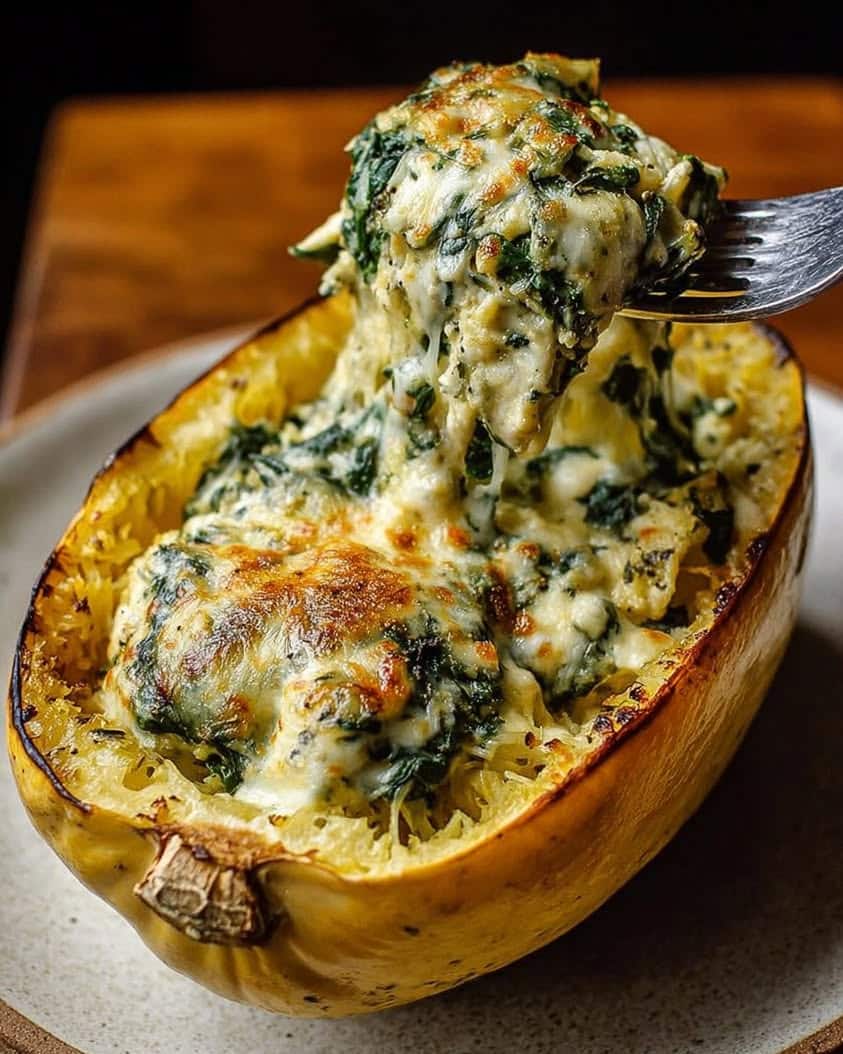
- Visual Appeal: The presentation is stunning with the golden halved squash boats overflowing with a vibrant green and creamy filling, topped with a bubbly, browned cheese crust. It is a colorful and impressive dish that looks as good as it tastes.
- Skill Level Needed: This is a beginner-friendly recipe. The steps are simple: halve and roast the squash, mix the filling, and bake. Therefore, even novice cooks can achieve fantastic results with minimal culinary expertise required.
- Special Equipment: You need a sharp knife and a sturdy spoon to handle the squash. Additionally, a baking sheet is essential. A microwave offers a shortcut for cooking the squash, but roasting in the oven develops the best flavor.
Recipe Overview
- Difficulty Level: We rate this recipe as easy because it involves fundamental techniques like chopping, mixing, and baking. There is no complex knife work or precise timing. However, safely cutting the hard squash is the trickiest part, which we address with clear instructions.
- Category: This dish fits perfectly into several categories: a healthy main course, a vegetarian dinner option, a low-carb meal, and a comfort food classic. It is substantial enough to stand alone but also pairs beautifully with a simple side salad.
- Cuisine: While spinach and artichoke dip has roots in American cuisine, using spaghetti squash as a vessel is a modern, health-conscious twist. The recipe draws inspiration from Italian flavors with the Parmesan and garlic, creating a delightful fusion style.
- Cost: This is a very budget-friendly meal. Spaghetti squash is inexpensive, especially in season. Canned artichokes and frozen spinach are affordable pantry staples. Overall, the cost per serving is significantly lower than dining out, making it a smart choice for families.
- Season: This recipe shines in the fall and winter when spaghetti squash is at its peak. Nevertheless, it is a wonderful year-round dish because the ingredients are readily available. It provides cozy warmth in colder months and a lighter feel in spring and summer.
- Occasion: It is ideal for casual weeknight dinners, meal prep for healthy lunches, or as a show-stopping centerpiece for a vegetarian-friendly gathering. It is also a fantastic dish for potlucks because it travels well and appeals to a wide audience.
Why You’ll Love This Recipe
First and foremost, the taste and texture of this Spinach and Artichoke Stuffed Spaghetti Squash are utterly divine. Each forkful combines the creamy, garlicky filling with the sweet, tender strands of squash. The melted cheese creates a perfect golden crust that adds a satisfying crunch. Furthermore, the flavors are familiar and comforting, reminiscent of your favorite dip, yet they feel entirely new and exciting as a main course. This dish successfully bridges the gap between indulgence and nourishment, leaving you fully satisfied without any heaviness.
From a convenience standpoint, this recipe is a true winner. The preparation is straightforward and mostly hands-off once the squash goes into the oven. You can easily prepare the filling while the squash roasts, making efficient use of your time. Additionally, the ingredients are simple and easy to find at any grocery store. This Spinach and Artichoke Stuffed Spaghetti Squash is also incredibly forgiving; slight variations in ingredient amounts will not ruin the dish. Therefore, it takes the stress out of cooking and allows you to enjoy the process.
Nutritionally, this meal is a powerhouse. Spaghetti squash is low in calories and carbohydrates but high in fiber and essential nutrients like vitamin C and beta-carotene. Spinach provides a massive boost of iron, vitamin K, and folate. Artichokes are renowned for their digestive benefits and are packed with fiber and antioxidants. By using Greek yogurt and a moderate amount of cheese, you achieve a creamy texture with added protein and probiotics. Consequently, this dish supports weight management, digestive health, and overall wellness.
For social and entertaining value, this recipe is a gem. It presents beautifully right in the squash boat, making for a dramatic and rustic tableside presentation. It is a conversation starter and demonstrates thoughtful, homemade cooking. Moreover, it comfortably serves a group and can be easily doubled for a crowd. It caters to various dietary preferences, being naturally gluten-free and easily adaptable for other needs. Serving this Spinach and Artichoke Stuffed Spaghetti Squash guarantees impressed guests and requests for the recipe.
Finally, this dish is remarkably cost-effective and accessible. It transforms humble, inexpensive ingredients into a restaurant-quality meal. A single spaghetti squash yields generous portions, stretching your food budget further. The recipe uses frozen spinach and canned artichokes, which are affordable and have a long shelf life, reducing food waste. Compared to ordering a similar dish at a restaurant or buying pre-made versions, this homemade Spinach and Artichoke Stuffed Spaghetti Squash saves you money while delivering superior flavor and quality. It proves that eating well does not require a lavish budget.
Historical Background and Cultural Significance
The origin story of this dish is a modern tale of culinary adaptation. Spaghetti squash, native to the Americas, gained popularity in the late 20th century as a low-carb alternative to pasta. Meanwhile, spinach and artichoke dip emerged as a staple of American casual dining and party culture in the 1950s and 1960s, often credited to brands promoting canned artichokes. The innovative fusion of stuffing this iconic dip into a vegetable “boat” is a relatively recent phenomenon, born from the health-conscious and gluten-free movements of the 21st century. It represents a creative pivot towards vegetable-centric comfort food.
Culturally, this recipe sits at a fascinating intersection. It borrows the communal, comforting essence of the party dip—a food meant for sharing and enjoyment. By transforming it into a main course, it elevates the dip from a snack to a legitimate meal, reflecting a shift towards more substantive vegetarian options. The use of spaghetti squash also taps into the enduring American fascination with pasta substitutes and “hidden vegetable” recipes, especially for families seeking to increase their veggie intake. Therefore, this dish carries the cultural weight of adaptation and mindful eating.
The evolution of the recipe is ongoing and dynamic. Early versions likely involved simply mixing the dip ingredients and baking them in the squash. Contemporary adaptations, however, have refined the technique. Cooks now often add protein like chicken or chickpeas, use different cheese blends like mozzarella or feta, and incorporate herbs like basil or dill. The cooking method has also evolved, with some opting to microwave the squash for speed or shred it and mix it directly into the filling. This evolution shows the recipe’s flexibility and its responsive nature to current food trends like high-protein and keto diets.
Regional variations of this concept are plentiful. In the Mediterranean, you might find a version stuffed with feta, olives, and tomatoes. In the Southwestern U.S., cooks could add black beans, corn, and peppers with a sprinkle of chili powder. Some Italian-inspired variations forego the creamy base for a marinara-based filling with ricotta. These regional twists highlight the basic formula’s versatility: a roasted squash vessel plus a flavorful, cohesive filling. The Spinach and Artichoke Stuffed Spaghetti Squash acts as a template, inviting cooks worldwide to imprint their local flavors and ingredients onto it.
Ingredient Deep Dive
Spaghetti Squash: This winter squash, named for its unique flesh that separates into spaghetti-like strands, is native to Central America. It is a fantastic source of fiber, vitamin C, manganese, and vitamin B6. When selecting, choose a squash that feels heavy for its size with a firm, matte yellow rind free of soft spots. Store it in a cool, dark place for up to a month. After cooking, you can store the strands in an airtight container in the fridge for up to 5 days. For a substitution, you can use acorn squash or even large portobello mushroom caps as edible vessels.
Frozen Spinach: Using frozen spinach is a convenient and nutritious choice. Spinach has a long history, cultivated for centuries in Persia before spreading worldwide. It is packed with iron, calcium, magnesium, and vitamins A, C, and K. The freezing process locks in nutrients at peak freshness. Always thaw and thoroughly squeeze out excess water to prevent a soggy filling. You can substitute fresh spinach; simply wilt about 10 ounces in a pan until reduced. For a different green, try using thawed frozen chopped kale or Swiss chard.
Canned Artichoke Hearts: Artichokes are one of the oldest cultivated vegetables, cherished by ancient Romans and Greeks. They are rich in fiber, vitamin C, folate, and minerals like magnesium and potassium. Canned artichoke hearts offer year-round convenience and a tender texture. Look for artichokes packed in water, not oil, for this recipe. Before using, drain and rinse them to remove the salty brine, then chop them roughly. You can substitute marinated artichoke hearts for a more robust flavor, but reduce added salt elsewhere. Fresh artichoke hearts are a wonderful but labor-intensive alternative.
Greek Yogurt: This ingredient provides the signature creamy texture while adding protein and probiotics. Greek yogurt is made by straining regular yogurt to remove whey, resulting in a thicker, tangier product. It contributes calcium, vitamin B12, and live active cultures that aid digestion. For this recipe, use plain, full-fat or 2% Greek yogurt for the best flavor and creaminess. Avoid flavored varieties. As a substitute, you can use sour cream, cream cheese, or a dairy-free yogurt alternative for a vegan version. The yogurt also helps bind the filling together beautifully.
Common Mistakes to Avoid
- Not Removing Enough Moisture: Failing to thoroughly squeeze the thawed spinach and drain the artichokes is a critical error. Excess water will steam in the oven, resulting in a watery, soggy filling that does not set properly. Always take the time to remove as much liquid as possible.
- Undercooking the Squash: If the squash halves are not tender enough before stuffing, the final bake will not soften them sufficiently. You will be left with crunchy, difficult-to-scrape strands. Test for doneness by piercing the flesh easily with a fork before proceeding to the stuffing step.
- Overfilling the Squash Boats: While generous stuffing is good, piling it too high can cause it to spill over during baking, making a mess of your pan. Additionally, the top may brown too quickly while the center remains cold. Fill the boats just to the rim for even cooking.
- Using Pre-Shredded Cheese: Pre-shredded cheese contains anti-caking agents like cellulose that prevent it from melting as smoothly and cohesively as cheese you shred yourself. For the creamiest, best-textured filling and topping, always buy a block of Parmesan and mozzarella and grate it fresh.
- Skipping the Seasoning Layers: Remember to season both the squash flesh and the filling mixture. Salting the roasted squash strands enhances their natural flavor. Similarly, seasoning the filling well before baking ensures every component is flavorful, not just the cheese on top.
- Not Letting it Rest: Pulling the stuffed squash from the oven and serving it immediately can lead to a filling that is too loose. Letting it rest for 5-10 minutes allows the filling to set slightly, making it easier to scoop and serve neat portions.
- Using a Dull Knife: Cutting a raw spaghetti squash requires a sharp, sturdy chef’s knife. A dull knife is dangerous and can slip. For ultimate safety, you can microwave the whole squash for 2-3 minutes to slightly soften the skin before cutting.
- Forgetting to Oil the Cut Sides: Lightly brushing or drizzling oil on the cut sides of the squash before roasting is essential. This step promotes caramelization, enhances flavor, and prevents the strands from drying out. Do not just place them cut-side down on the pan without oil.
Essential Techniques
Roasting the Squash: Roasting is the preferred method for cooking the spaghetti squash because it concentrates its natural sugars and develops a deeper, sweeter flavor. The key is to roast it cut-side down on an oiled pan. This technique creates a steamy environment inside the squash half, which perfectly tenderizes the flesh and makes the strands easy to separate. A common pitfall is roasting cut-side up, which can lead to drying. You will know it is done when the outer skin gives slightly to pressure and the flesh pierces easily with a fork.
Shredding the Squash Strands: After roasting, use a fork to gently scrape the flesh from the skin. Hold the squash half steady with an oven mitt and drag the tines of the fork from one end to the other. The flesh will naturally separate into long, spaghetti-like strands. The goal is to leave a stable border of flesh attached to the skin to form a sturdy “boat” for the filling. Avoid scraping too aggressively, which can tear the skin. Properly shredded strands should be tender but still have a slight bite, similar to al dente pasta.
Preparing a Dry Filling: The success of the creamy texture hinges on removing excess moisture from the spinach and artichokes. For frozen spinach, thaw it completely, then place it in a clean kitchen towel or several layers of paper towels. Twist and squeeze firmly until no more green liquid runs out. For canned artichokes, drain them in a colander and press down with your hands or the back of a spoon. You can even pat them dry with a paper towel after chopping. This crucial step prevents a runny, disappointing final product.
Broiling for Finish: Using the broiler for the last few minutes of cooking is the professional trick for achieving a perfectly golden, bubbly cheese crust without overcooking the filling. Watch it closely, as broilers vary in intensity. Position the oven rack so the top of the dish is 4-6 inches from the heating element. The process usually takes only 2-4 minutes. The visual cue for success is a uniformly browned top with spots of deeper caramelization. Remove it immediately once achieved to prevent burning.
Pro Tips for Perfect Spinach and Artichoke Stuffed Spaghetti Squash
First, lightly score the cut side of the squash before roasting. Make a few shallow cuts in a crosshatch pattern; this helps the oil and seasoning penetrate and makes shredding the cooked strands even easier.
Second, mix a tablespoon of flour or cornstarch into your filling if you are concerned about excess moisture. This acts as a binder and helps absorb any residual liquid, ensuring a set and creamy texture.
Third, add a pinch of nutmeg to the filling. This classic pairing with spinach enhances its earthy flavor and adds a subtle warmth that complements the cheese and garlic beautifully.
Fourth, for a richer flavor, sauté the garlic in a teaspoon of butter or olive oil before adding it to the filling mixture. This mellows the raw garlic bite and adds a layer of savory depth.
Fifth, reserve a handful of the scraped squash strands to mix into the filling. This stretches the filling further and integrates the squash flavor more completely throughout the dish.
Sixth, let the stuffed squash rest for a full 10 minutes after baking. This allows the heat to distribute evenly and the filling to firm up, making it much easier to serve clean portions.
Seventh, use kitchen shears to quickly snip the squeezed ball of spinach into smaller pieces directly over the mixing bowl. This is faster and less messy than trying to chop it on a cutting board.
Eighth, for meal prep, roast and shred the squash up to three days in advance. Store the strands and empty squash boats separately in the fridge, then stuff and bake when ready for a quick assembly.
Variations and Adaptations
Regional Variations: For a Mediterranean twist, substitute feta cheese for half the mozzarella and add chopped Kalamata olives and sun-dried tomatoes. A Southwestern version could include black beans, corn, diced green chiles, and a blend of Monterey Jack and cheddar cheese, topped with a dollop of salsa or avocado crema. An Italian-inspired adaptation might mix the squash strands with ricotta, marinara sauce, and fresh basil before stuffing it back in.
Seasonal Adaptations: In spring, incorporate fresh peas and asparagus tips into the filling. During summer, add fresh herbs like basil, dill, or chives and top with a fresh tomato bruschetta after baking. For a heartier winter meal, mix in cooked, shredded chicken or turkey, or use roasted mushrooms for a deeper umami flavor that complements the colder weather.
Dietary Modifications: For a vegan Spinach and Artichoke Stuffed Spaghetti Squash, use dairy-free yogurt and cheese alternatives. Nutritional yeast can add a cheesy flavor. To make it keto, ensure you use full-fat dairy and confirm the artichokes fit your macros. For a paleo version, omit the dairy and use a compliant creamy base like cashew cream or coconut milk.
Flavor Variations: Add a teaspoon of Italian seasoning or herbes de Provence to the filling. For a kick, mix in a pinch of red pepper flakes or a dash of hot sauce. A tablespoon of lemon zest or a squeeze of fresh lemon juice brightens the entire dish. You can also swap the Parmesan for Romano or Asiago cheese for a different salty, nutty note.
Texture Modifications: For extra protein and texture, fold in a can of drained white beans or chickpeas. To add crunch, mix in toasted pine nuts or walnuts into the filling, or sprinkle panko breadcrumbs mixed with a little olive oil on top before the final bake. For an ultra-creamy texture, blend half the filling mixture in a food processor before combining it with the rest.
Presentation Alternatives: Instead of stuffing the halves, scrape all the squash out, mix it thoroughly with the filling, and bake it in a casserole dish for a easier-to-serve option. For individual portions, use smaller sweet dumpling squashes. You can also use the filling to stuff large portobello mushroom caps or bell pepper halves for a different vegetable vessel.
Serving and Presentation Guide
Plating Techniques: Serve each squash half on a large, warm plate or shallow bowl. Use a large spoon to help transfer it from the baking sheet without breaking the boat. For a more refined presentation, you can scrape the entire contents onto the plate, arranging the strands neatly and topping them with a scoop of the filling. Alternatively, slice each half into thick rounds after baking for a unique cross-section view.
Garnishing Ideas: A final flourish makes the dish pop. Sprinkle with fresh chopped parsley, chives, or basil. A light drizzle of high-quality olive oil or a balsamic glaze adds shine and flavor. A few cracks of black pepper or a sprinkle of flaky sea salt enhances the top. For color and freshness, add a small side salad directly on the plate or scatter microgreens over the squash.
Traditional Accompaniments: This stuffed squash is a complete meal, but it pairs wonderfully with a simple green salad dressed with a light vinaigrette to cut through the richness. A crusty whole-grain bread or garlic breadsticks are perfect for scooping up any leftover filling. For a heartier spread, serve it alongside a bowl of tomato soup or a lentil salad.
Modern Serving Suggestions: For a brunch option, top each serving with a poached or fried egg. For a deconstructed approach, serve the creamy spinach and artichoke mixture in a bowl alongside a pile of the roasted squash strands, letting everyone build their own bite. It also makes excellent leftovers served cold or reheated, perhaps chopped and added to a wrap or salad the next day.
Temperature Considerations: This dish is best served hot from the oven after its brief rest. The cheese should be molten, and the filling should be steaming. If serving for a crowd, you can hold the baked squash in a warm oven (around 200°F) for up to 20 minutes before serving. Avoid letting it sit at room temperature for too long, as the cheese will solidify and the dish will lose its appealing warmth.
Portion Control Tips: One half of a medium spaghetti squash is a standard and satisfying serving. For larger appetites or as a sole meal, serve the full half. For a multi-course dinner or for those with lighter appetites, you can slice each baked half in two, creating four smaller portions from one squash. The recipe scales easily if you need to adjust for more or fewer people.
Wine and Beverage Pairing
Wine Pairings: The creamy, savory, and slightly tangy profile of this dish calls for wines with good acidity to cut through the richness. A crisp Sauvignon Blanc, with its herbal and citrus notes, is a classic and excellent match. An unoaked Chardonnay offers a fuller body without overwhelming the flavors. For red wine lovers, a light-bodied Pinot Noir with its bright red fruit and earthy undertones complements the dish without clashing. A dry Rosé is another versatile option that bridges the gap between white and red.
Non-Alcoholic Alternatives: Sparkling water with a squeeze of lemon or lime provides a refreshing, palate-cleansing effervescence. Iced herbal tea, such as mint or lemon verbena, offers a fragrant and soothing companion. For a creamier contrast, a chilled glass of buttermilk or a savory tomato-based beverage like a Virgin Mary can be interesting pairings. Kombucha, especially a ginger or citrus flavor, adds probiotic benefits and a tangy fizz that mirrors the dish’s brightness.
Coffee/Tea Pairings: While not a typical pairing for the meal itself, a cup of herbal tea after dinner would be lovely. A peppermint or ginger tea can aid digestion after the rich meal. For a coffee pairing, a medium-roast coffee with low acidity and notes of nut or caramel would be a pleasant finish, though it is best enjoyed after the meal rather than during.
Temperature Considerations: White and rosé wines should be served well-chilled, between 45-55°F. Light reds like Pinot Noir are best served slightly cooler than room temperature, around 55-60°F. Non-alcoholic sparkling drinks are most refreshing when ice-cold. The contrast between the cold beverage and the hot food is part of the enjoyable experience.
Serving Suggestions: Always serve wine in appropriate glassware to enhance its aroma and taste. Provide plenty of cold water on the table as well. For a dinner party, you might offer both a white and a red option to cater to different preferences, as this dish is versatile enough to pair with both. Remember, the best pairing is ultimately what you enjoy most.
Storage and Shelf Life
Storage Methods: Allow any leftovers to cool completely to room temperature before storing. Do not leave the stuffed squash at room temperature for more than two hours. Transfer the leftovers to an airtight container. You can store the squash halves intact or scoop out the filling and strands together. Properly stored, the dish will last in the refrigerator for 3-4 days.
Temperature Requirements: Refrigeration below 40°F is essential for safety. For longer storage, freezing is an option (see below). Never store the cooked squash at room temperature, as the moist, protein-rich filling is a prime environment for bacterial growth.
Container Recommendations: Use shallow airtight containers to promote rapid, even cooling. Glass containers with locking lids are ideal as they do not absorb odors and allow you to see the contents. If storing the squash boat halves, you may need a larger container; wrapping them tightly in plastic wrap and then foil is also effective.
Signs of Spoilage: Discard the leftovers if you notice an off or sour smell, significant mold growth (often fuzzy spots in white, green, or blue), or a slimy texture on the squash or filling. If the cheese develops an unusual discoloration or the dish has been stored for longer than 4 days, it is safest to throw it out.
Reheating Instructions: The best way to reheat is in the oven. Preheat to 350°F, place the leftovers in an oven-safe dish, cover with foil, and bake for 15-20 minutes until heated through. You can also use the microwave: place a portion on a microwave-safe plate, cover loosely, and heat in 60-second intervals, stirring in between, until hot. The microwave may make the texture slightly soggier.
Freezing Guidelines: This dish freezes reasonably well. Assemble and bake the stuffed squash as directed, then let it cool completely. Wrap each half tightly in plastic wrap, then in foil, or place in a heavy-duty freezer bag. Label with the date. Freeze for up to 2 months. Thaw overnight in the refrigerator before reheating in the oven. Note that the squash texture may become slightly softer after freezing and thawing.
Make Ahead Strategies
Prep Timeline: You can break this recipe into stages over two days. On Day 1, roast the spaghetti squash, let it cool, shred the strands, and store the empty boats and strands separately in the fridge. You can also prepare the filling mixture (without the egg, if using) and store it in a separate container. On Day 2, combine the cold squash strands with the filling, stuff the boats, and bake. Add 5-10 minutes to the baking time since you are starting with cold components.
Storage Between Steps: Store the cooled, empty squash boats wrapped in plastic in the fridge. Keep the shredded strands in a separate airtight container; they may release a little liquid, which you can drain before using. The filling mixture can be stored in its own container. Keeping components separate until assembly prevents sogginess and maintains the best texture.
Quality Impact Assessment: Pre-roasting the squash has minimal negative impact and can even improve flavor as the strands firm up slightly. Preparing the filling a day ahead allows the flavors to meld beautifully. The only potential downside is a very slight loss of freshness in the herbs or greens, but this is negligible for a baked dish like this.
Assembly Tips: When ready to assemble, mix the cold shredded squash strands into the filling. This helps the filling adhere and distributes the squash evenly. If the filling seems too thick after refrigeration, you can stir in a tablespoon of milk or broth to loosen it. Stuff the boats and proceed with baking.
Reheating Guidelines: For make-ahead meals, bake the stuffed squash as directed, cool completely, and portion into meal prep containers. Reheat individual portions in the microwave (covered) for 2-3 minutes or in a toaster oven at 375°F until hot and the cheese re-melts. The texture is best when reheated in a conventional oven.
Fresh Element Additions: If preparing components ahead, consider adding a fresh element just before serving to brighten the dish. A sprinkle of fresh herbs (parsley, chives), a squeeze of lemon juice, or a drizzle of fresh olive oil after reheating can restore a just-made vibrancy to the leftovers or make-ahead portions.
Scaling Instructions
Halving the Recipe: Halving this Spinach and Artichoke Stuffed Spaghetti Squash is simple. Use one small spaghetti squash. Halve all other ingredient quantities. The baking times will remain roughly the same, but keep a close eye as a smaller squash may cook slightly faster. Use a smaller baking sheet or adjust oven rack position if needed for even browning.
Doubling or Tripling: To feed a crowd, simply multiply the ingredient quantities by your desired factor. You will need multiple baking sheets. Roast the squash halves in a single layer, not stacked, and rotate the sheets halfway through cooking for even roasting. You may need to bake in batches if your oven cannot accommodate multiple sheets. Consider mixing the filling in a very large bowl or dividing the mixing into batches.
Equipment Adjustments: When scaling up, ensure you have a large enough mixing bowl for the filling. For more than two squashes, using a stand mixer with the paddle attachment can efficiently combine the filling ingredients. Have multiple baking sheets ready and consider using parchment paper for easier cleanup. A large commercial-style baking sheet (half-sheet pan) can typically hold 4 squash halves.
Timing Modifications: The active prep time will increase when scaling up, but the oven time remains consistent per batch. If baking multiple batches, the total time will be the bake time multiplied by the number of batches. To save time, you can roast all squash halves first, then stuff and bake them all in a final batch, though this requires enough oven space.
Storage Considerations: Scaling up often means more leftovers. Ensure you have adequate airtight containers for storage. If making for a potluck or event, transport the baked squash in a insulated carrier to keep it warm. For large-batch meal prep, portion the baked and cooled squash into individual containers for easy grab-and-go lunches throughout the week.
Nutritional Deep Dive
Macro Breakdown: A serving of this Spinach and Artichoke Stuffed Spaghetti Squash provides a balanced macronutrient profile. It is relatively low in carbohydrates, with the majority coming from the fiber-rich squash and vegetables. The Greek yogurt, cheese, and optional egg contribute a substantial amount of protein, which promotes satiety and supports muscle maintenance. The fats are primarily from the cheese and olive oil, providing a source of energy and aiding in the absorption of fat-soluble vitamins from the spinach and squash.
Micronutrient Analysis: This dish is a micronutrient powerhouse. Spaghetti squash is rich in vitamin C, beta-carotene (which converts to vitamin A), and B vitamins. Spinach delivers massive amounts of vitamin K, iron, folate, and magnesium. Artichokes contribute folate, vitamin C, and magnesium. The dairy components add calcium, vitamin B12, and phosphorus. Together, these nutrients support immune function, bone health, red blood cell formation, and energy metabolism.
Health Benefits: The high fiber content from the vegetables promotes digestive health and helps maintain stable blood sugar levels. The combination of protein and fiber leads to prolonged feelings of fullness, which can aid in weight management. The antioxidants in the spinach, artichokes, and squash combat oxidative stress and inflammation. The probiotics in Greek yogurt support a healthy gut microbiome. This meal is a prime example of how delicious food can also be deeply nourishing.
Dietary Considerations: This recipe is naturally gluten-free. It can be adapted to be vegetarian, and with careful ingredient swaps, it can fit vegan, paleo, and keto diets. It is generally low in sugar. Those monitoring sodium should be mindful of the cheese and canned artichokes; opting for low-sodium artichokes and reducing added salt can help manage this.
Portion Analysis: One half of a medium squash is a satisfying and volumous portion due to the high water and fiber content of the vegetables. This large volume for a moderate calorie count is a key principle of volumetrics, a healthy eating strategy. It allows you to feel fully satisfied without overconsuming calories, making it an excellent choice for mindful eating.
Weight Management Tips: This dish is an ally for weight management. To make it even lighter, you can use reduced-fat cheese and increase the proportion of spinach and artichokes. Ensure you measure the oil used for roasting to control added fat. Pairing it with a large side salad (with a light dressing) increases the meal’s volume and nutrient density further, helping to control overall calorie intake while maximizing satisfaction.
PrintSpinach and Artichoke Stuffed Spaghetti Squash
- Total Time: 45 minutes
- Yield: 4
Description
A healthy and flavorful twist on classic spinach and artichoke dip, served inside roasted spaghetti squash for a low-carb, satisfying meal.
Ingredients
- 1 large spaghetti squash (about 3-4 pounds)
- 1 tablespoon olive oil
- 1/2 teaspoon salt
- 1/4 teaspoon black pepper
- 1 (10-ounce) package frozen chopped spinach, thawed and drained
- 1 (14-ounce) can artichoke hearts, drained and chopped
- 1 cup shredded mozzarella cheese
- 1/2 cup grated Parmesan cheese
- 4 ounces cream cheese, softened
- 1/2 cup plain Greek yogurt
- 2 cloves garlic, minced
- 1/4 teaspoon red pepper flakes (optional)
Instructions
- Preheat oven to 400°F (200°C). Cut spaghetti squash in half lengthwise and scoop out seeds. Drizzle with olive oil and season with salt and pepper. Place cut-side down on a baking sheet and roast for 30-35 minutes, or until tender.
- While squash roasts, prepare filling. In a large bowl, combine spinach, artichokes, mozzarella, Parmesan, cream cheese, Greek yogurt, garlic, and red pepper flakes. Mix until well combined.
- Once squash is cooked, use a fork to scrape the flesh into strands, leaving about a 1/2-inch border to keep shells intact. Add the scraped strands to the filling mixture and stir to combine.
- Spoon the filling back into the squash shells, mounding it slightly. Return to oven and bake for 15-20 minutes, or until filling is hot and cheese is melted and bubbly. Let cool for 5 minutes before serving.
Notes
You can customize the seasonings to taste.
- Prep Time: 15 minutes
- Cook Time: 30 minutes
- Method: Main
- Cuisine: American