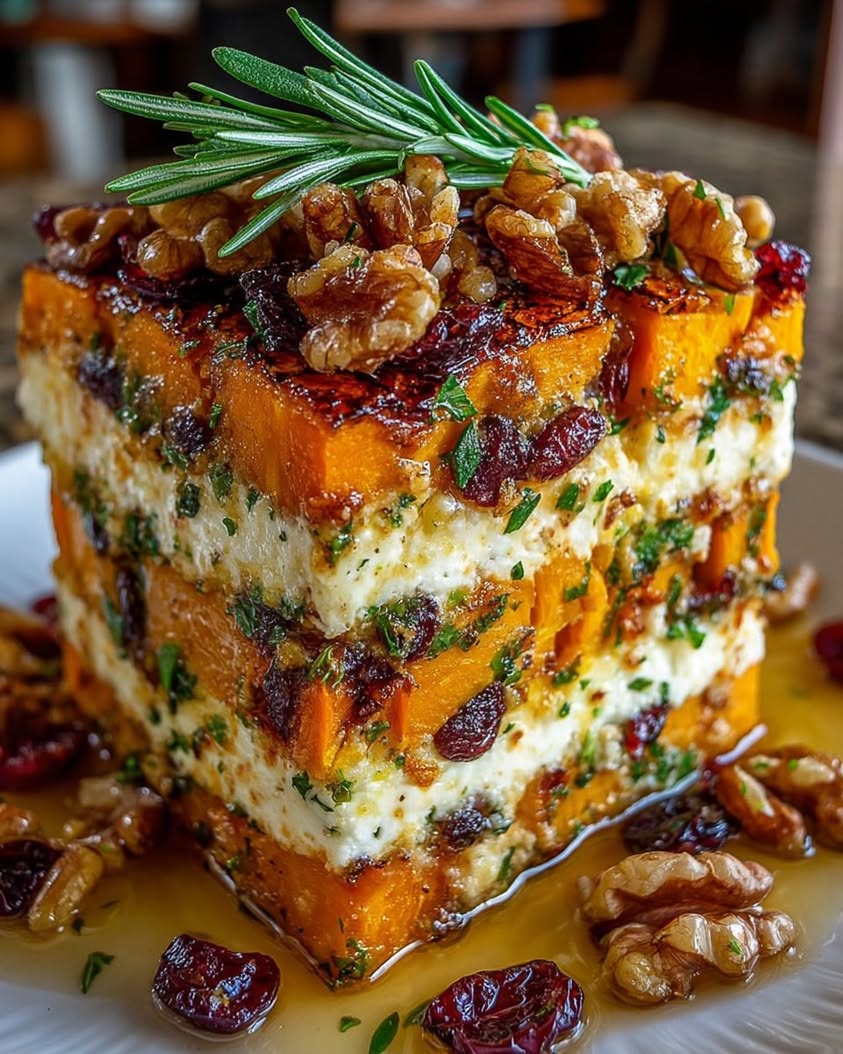
Layered Sweet Potato and Butternut Squash Lasagna with Honey Glaze: A Festive Vegetarian Masterpiece
Imagine a dish that captures the very essence of a cozy autumn evening. This Layered Sweet Potato and Butternut Squash Lasagna with Honey Glaze is precisely that. It transforms humble root vegetables and simple pantry staples into a stunning centerpiece. Consequently, it is perfect for holiday gatherings or a special Sunday supper. Moreover, the combination of savory roasted vegetables, creamy feta, and a sweet-tart cranberry-honey glaze creates a symphony of flavors in every bite.
This vegetarian lasagna recipe is a beautiful departure from the traditional tomato-based version. Instead, it celebrates the natural sweetness of seasonal produce. The layers of thinly sliced sweet potato and butternut squash become tender and almost pasta-like during baking. Meanwhile, the walnuts add a crucial crunch, and the feta cheese provides a salty, tangy contrast. Ultimately, the final drizzle of warm cranberry-honey glaze ties all the elements together with a glossy, festive finish.
Preparing this dish is a rewarding culinary project. The process of layering the colorful vegetables feels artistic and meditative. As a result, you end up with a casserole that is as visually impressive as it is delicious. This recipe proves that comfort food can be both nourishing and elegant. Therefore, it is guaranteed to become a new favorite in your recipe rotation.
Quick Recipe Highlights
- Flavor Profile: This dish masterfully balances sweet, savory, and tangy notes. The natural sugars in the roasted sweet potato and butternut squash caramelize beautifully. Then, the salty feta and earthy walnuts ground the sweetness. Finally, the vibrant cranberry-honey glaze adds a bright, acidic pop that cuts through the richness.
- Texture: You experience a wonderful contrast of textures in every forkful. The vegetable layers become meltingly tender, almost like delicate pasta sheets. Meanwhile, the toasted walnuts retain a satisfying crunch. Additionally, the creamy feta cheese sauce adds a luxurious, smooth mouthfeel that binds everything together.
- Aroma: As this lasagna bakes, your kitchen will fill with an irresistible fragrance. First, you will smell the earthy sweetness of roasting root vegetables. Then, aromatic notes of thyme and rosemary will waft through the air. Finally, the scent of bubbling cheese and toasted nuts creates a truly comforting and complex aroma.
- Visual Appeal: This dish is a feast for the eyes with its stunning vertical layers of orange and deep yellow. The cross-section reveals beautiful stripes of sweet potato and butternut squash. Subsequently, the golden-brown cheese topping and the jewel-toned red glaze make for a presentation that is perfect for any holiday table.
- Skill Level Needed: This recipe requires basic knife skills for slicing vegetables and simple assembly techniques. While there are several components, each step is straightforward. Consequently, a confident home cook will find the process enjoyable and manageable with a little organization.
- Special Equipment: A mandoline slicer is highly recommended for achieving uniformly thin vegetable slices. You will also need a good baking dish, a medium saucepan for the glaze, and a blender or food processor for the cheese sauce. A sturdy vegetable peeler is essential for prepping the squash and sweet potatoes.
Recipe Overview
- Difficulty Level: We rate this Layered Sweet Potato and Butternut Squash Lasagna as “Moderate.” The challenge lies not in complex techniques, but in organization and prep. You must slice vegetables uniformly, prepare three separate components, and assemble them carefully. However, each individual step is simple and clearly explained, making the overall process very achievable.
- Category: This is a fantastic main dish for vegetarian holidays or a hearty meatless Monday. It also shines as a spectacular side dish alongside a roast turkey or ham. Furthermore, it fits beautifully into the category of make-ahead casseroles, as its flavors often improve overnight.
- Cuisine: This recipe is a modern, vegetarian twist on classic Italian-American baked pasta dishes. It draws inspiration from Mediterranean flavors with the use of feta, walnuts, and olive oil. Simultaneously, it incorporates quintessential North American autumn produce like sweet potatoes and cranberries, creating a delightful fusion.
- Cost: This is a reasonably economical dish, especially when root vegetables are in season. Sweet potatoes, carrots, and squash are typically affordable. Feta cheese and walnuts are the primary splurges. Overall, you can expect to feed a crowd for less than the cost of a meat-based lasagna.
- Season: This recipe is ideal for fall and winter when sweet potatoes, butternut squash, and cranberries are at their peak. The warm, hearty nature of the bake is perfect for cooler weather. However, you can certainly enjoy it year-round as a colorful and satisfying meal.
- Occasion: This lasagna is perfect for Thanksgiving, Christmas, or a festive Friendsgiving dinner. It also makes an impressive dish for a potluck or a special family weekend meal. Because it is visually stunning, it is ideal for any occasion where you want the food to make a statement.
Why You’ll Love This Recipe
First and foremost, the taste and texture of this Layered Sweet Potato and Butternut Squash Lasagna are utterly captivating. Each bite delivers a complex harmony of flavors. The sweetness of the roasted vegetables is perfectly balanced by the salty, tangy feta cheese. Then, the crunchy walnuts provide a necessary textural contrast, preventing the dish from feeling one-dimensional. Finally, the cranberry-honey glaze introduces a sweet-tart note that elevates the entire experience, making it feel special and celebratory.
From a convenience standpoint, this recipe offers significant preparation benefits. You can roast the vegetable slices and prepare the cheese sauce a day in advance. Consequently, on the day of serving, you simply need to layer the components and bake. This make-ahead strategy is a game-changer for stress-free entertaining. Moreover, the lasagna holds very well after baking, so it does not need to be served the second it comes out of the oven.
Nutritionally, this dish is a powerhouse. Sweet potatoes and butternut squash are loaded with beta-carotene, fiber, and vitamins. Walnuts contribute healthy fats and omega-3s, while the feta offers a dose of calcium and protein. Compared to a traditional lasagna, this version is naturally gluten-free and packed with more vitamins and minerals. Therefore, it is a comforting meal that also makes you feel good.
For social gatherings, this vegetarian lasagna has immense value. It serves as a stunning centerpiece that will spark conversation. It caters beautifully to vegetarians and is a welcome alternative for guests who may not eat meat. Furthermore, its vibrant colors and elegant presentation make the whole table look more inviting. It is a dish that shows you put thought and care into the meal.
Finally, this recipe is cost-effective and accessible. The main ingredients are humble root vegetables, which are often inexpensive, especially in season. You likely have many of the pantry staples like olive oil, honey, and herbs on hand. Even the “splurge” items like feta and walnuts go a long way in terms of flavor impact. Ultimately, you create a restaurant-worthy dish without the restaurant price tag.
Historical Background and Cultural Significance
The concept of layering ingredients dates back centuries across many cultures. However, the modern lasagna we know originated in the Emilia-Romagna region of Italy. Traditionally, it features sheets of pasta, ragù, béchamel, and Parmigiano-Reggiano. This Layered Sweet Potato and Butternut Squash Lasagna is a contemporary, vegetable-forward interpretation of that classic structure. It replaces wheat pasta with thin slices of starchy vegetables, a technique inspired by gluten-free and low-carb culinary innovations.
Culturally, this dish represents a shift towards celebrating vegetables as the main event. It aligns with modern dietary trends that emphasize plant-based eating without sacrificing comfort or flavor. The use of sweet potato and squash also taps into the deep culinary traditions of the Americas, where these native ingredients have been staples for thousands of years. By combining them with Old World techniques and ingredients like feta, the recipe creates a meaningful cultural fusion.
The evolution of this specific recipe likely stems from the growing popularity of vegetable “noodles.” As spiralizers and mandolines became common kitchen tools, cooks began experimenting with vegetable layers as pasta substitutes. The addition of cranberries and walnuts nods to traditional Thanksgiving flavors, suggesting this dish may have evolved as a vegetarian centerpiece for the holiday. Over time, recipes like this have been refined to balance moisture content, cooking times, and flavor layers for the perfect result.
Regional variations of this concept are plentiful. In the Mediterranean, you might find a similar bake with layers of eggplant, zucchini, and potatoes with a tomato sauce. In Latin American cuisine, layered casseroles often feature plantains or yuca. This particular version with its sweet glaze has a distinctly North American character. You could easily adapt it by using different cheeses, like goat cheese or ricotta, or by swapping the walnuts for pecans to suit local tastes and ingredients.
Ingredient Deep Dive
Sweet potatoes are a cornerstone of this lasagna. Historically, they originated in Central or South America over 5,000 years ago and are now a global staple. Nutritionally, they are an excellent source of beta-carotene (which converts to vitamin A), vitamin C, manganese, and fiber. Their natural sweetness intensifies when roasted. For this recipe, choose firm, medium-sized sweet potatoes with smooth skin. Avoid any with soft spots or sprouts. Store them in a cool, dark, well-ventilated place—not in the refrigerator, as cold temperatures can alter their texture and flavor.
Butternut squash brings a velvety, nutty sweetness to the dish. This winter squash is native to the Americas and has been cultivated for its long storage life. It is rich in vitamins A and C, potassium, and magnesium. When selecting squash, look for one that feels heavy for its size with a firm, matte skin and a long, solid neck. You can store whole squash in a cool, dark place for months. Once cut, wrap the pieces tightly and refrigerate for up to five days. For a time-saver, pre-cut squash is widely available.
Feta cheese provides the essential salty, tangy counterpoint. Traditionally, authentic Greek feta is made from at least 70% sheep’s milk, sometimes blended with goat’s milk. This gives it a distinctive crumbly texture and sharp flavor. Nutritionally, feta is a good source of calcium and protein, though it is also high in sodium. For the best flavor in your lasagna, seek out a block of feta packed in brine rather than pre-crumbled varieties, which often contain anti-caking agents. If you need a substitute, a firm ricotta salata or a creamy goat cheese would work well.
The cranberry-honey glaze is the crowning glory. Cranberries are one of North America’s few native fruits and have a long history of use by Indigenous peoples. They are packed with vitamin C and unique antioxidants called proanthocyanidins. Honey, one of humanity’s oldest sweeteners, adds floral notes and helps create a glossy, lacquered finish. For the glaze, you can use fresh or frozen cranberries. The honey can be substituted with maple syrup for a different flavor profile. The glaze can be made ahead and gently reheated before serving.
Common Mistakes to Avoid
- Slicing Vegetables Too Thick: This is the most common error. Overly thick slices will not become tender and pasta-like; they will remain crunchy and difficult to cut. Always use a mandoline for uniform, 1/8-inch thick slices to ensure even cooking and proper layering.
- Skipping the Vegetable Roasting Step: Do not try to layer raw vegetable slices. Pre-roasting them is crucial. This step drives off excess moisture, concentrates flavor, and partially cooks the vegetables. Otherwise, your lasagna will be watery and the veggies undercooked.
- Using Pre-Crumbled Feta: Pre-crumbled feta is often dry and coated in anti-caking agents. It will not blend into a smooth, creamy sauce. Instead, always buy a block of feta in brine and crumble it yourself for the best texture and meltability.
- Overloading the Layers: When assembling, resist the urge to pile on too many vegetable slices per layer. Two slightly overlapping layers of each vegetable are sufficient. Over-stacking creates a dense, heavy result that may not cook through properly in the center.
- Neglecting to Season Each Layer: Seasoning is not just for the cheese sauce. Lightly sprinkle each layer of vegetables with a little salt and pepper as you build. This ensures every bite is properly seasoned from the inside out.
- Pouring Cold Glaze Over Hot Lasagna: The thermal shock can cause the cheese layer to seize or the glaze to not adhere properly. Let the baked lasagna rest for 15 minutes, and gently warm the glaze before drizzling it over the top.
- Cutting Immediately After Baking: Like any lasagna, this one needs time to set. If you cut it right out of the oven, the layers will slide apart, and it will be soupy. A 15-20 minute rest allows the structure to firm up for clean, beautiful slices.
- Forgetting to Toast the Walnuts: Raw walnuts can have a slightly bitter flavor. Taking five minutes to toast them in a dry pan or the oven enhances their nutty taste and adds a deeper, more complex crunch to the final dish.
Essential Techniques
Using a mandoline slicer is non-negotiable for perfect vegetable layers. This tool guarantees uniformly thin slices, which is critical for even cooking and a cohesive final structure. To master it, always use the hand guard to protect your fingers. Move the vegetable in a smooth, consistent motion against the blade. A common pitfall is applying uneven pressure, resulting in slices of varying thickness. The visual cue for success is a stack of translucent, even slices that are flexible enough to bend without breaking.
Pre-roasting the vegetable slices is a technique that serves multiple purposes. Primarily, it removes a significant amount of the vegetables’ natural water content. This prevents the lasagna from becoming a soggy mess during the final bake. Additionally, roasting caramelizes the natural sugars, deepening the flavor profile. Spread the slices in a single layer on parchment-lined baking sheets. Do not overcrowd them, as steaming will occur instead of roasting. Success is evident when the slices are pliable and slightly dried at the edges, but not crispy or browned.
Creating a smooth feta sauce requires gentle heat and patience. The goal is to melt the cheese into the cream without causing it to separate or become greasy. Use low to medium heat and stir constantly. Adding a small amount of cornstarch slurry helps stabilize the emulsion and thicken the sauce to a perfect coating consistency. A common mistake is boiling the sauce, which will cause the proteins to tighten and the fat to separate. The sauce is ready when it is hot, smooth, and coats the back of a spoon.
Pro Tips for Perfect Layered Sweet Potato and Butternut Squash Lasagna
First, pat the roasted vegetable slices dry with a paper towel before assembling. This removes any surface moisture released during roasting, ensuring your lasagna layers bind together properly instead of sliding apart.
Second, lightly grease your baking dish and sprinkle the bottom with a thin layer of breadcrumbs or almond meal. This creates a barrier that prevents the bottom layer from sticking and adds a subtle textural contrast.
Third, let all components cool to room temperature before layering. Assembling with hot roasted vegetables or warm cheese sauce can make the layers mushy and difficult to handle.
Fourth, use a spoon to spread the cheese sauce. Do not pour it, as the weight can displace the delicate vegetable layers. Gently dollop and spread it evenly with the back of the spoon.
Fifth, cover the lasagna with foil for the first 30-40 minutes of baking. This traps steam and ensures the vegetables become perfectly tender. Then, remove the foil to allow the top to brown beautifully.
Sixth, toast the walnuts in a dry skillet until fragrant. This simple step takes just minutes but dramatically enhances their flavor and crunch, elevating the entire dish.
Seventh, make the cranberry-honey glaze while the lasagna bakes. Let it cool slightly so it thickens to a perfect drizzling consistency by the time the lasagna comes out of the oven.
Eighth, use a sharp, thin-bladed knife to cut servings. Clean the knife between cuts for the cleanest, most presentable slices that show off all the beautiful layers.
Variations and Adaptations
For regional variations, consider incorporating local ingredients. In the South, add a layer of sautéed collard greens and use pecans instead of walnuts. For a Mediterranean twist, add layers of sautéed spinach and use kalamata olives and oregano in the cheese sauce. A Mexican-inspired version could include a layer of black beans, use cotija cheese, and add a sprinkle of chili powder to the vegetables before roasting.
Seasonal adaptations are easy with this versatile recipe. In spring, use thin slices of zucchini, yellow squash, and asparagus tips. For summer, layers of roasted eggplant and bell peppers with a tomato-herb sauce would be delightful. The autumn version is the classic one presented here. In the depths of winter, you could use parsnips, carrots, and celery root for a different but equally comforting root vegetable bake.
Dietary modifications are straightforward. For a vegan version, use a cashew-based cream sauce and a vegan feta alternative. Omit the honey in the glaze and use maple syrup or agave. For a nut-free dish, substitute toasted pumpkin seeds (pepitas) or breadcrumbs for the walnuts. To make it lower in fat, use a light cream or even a thickened Greek yogurt in the cheese sauce, and reduce the amount of cheese slightly.
Serving and Presentation Guide
Plating this lasagna is part of the enjoyment. Use a sharp, offset spatula to lift each portion from the baking dish and transfer it to the center of a warm plate. Wipe the edges of the plate clean for a professional look. For a family-style presentation, serve it directly from the baking dish at the table, allowing guests to admire the whole creation before slicing.
Garnishing adds the final touch of elegance. Beyond the glaze, consider a light sprinkle of fresh, chopped herbs like parsley, thyme, or chives. A few extra whole cranberries from the glaze or some microgreens add color and freshness. A final dusting of finely chopped, toasted walnuts right on top of the glaze provides visual texture and reinforces the flavor.
Traditional accompaniments keep the meal balanced. A simple, bitter green salad with a bright vinaigrette cuts through the richness of the lasagna. For a heartier meal, serve with roasted Brussels sprouts or sautéed green beans. A crusty whole-grain bread or dinner rolls are perfect for soaking up any extra glaze or sauce left on the plate.
Wine and Beverage Pairing
Choosing the right wine enhances this dish’s complex flavors. A medium-bodied white wine with good acidity is an excellent match. Consider an Oregon Pinot Gris or a French Viognier; their stone fruit notes and slight sweetness complement the squash and sweet potato. For red wine lovers, a lighter, low-tannin red like a Beaujolais or Pinot Noir works well. The fruit-forward character of these reds pairs nicely without overpowering the vegetables.
Non-alcoholic alternatives can be just as sophisticated. A sparkling apple cider mirrors the autumnal themes. For a still option, try a tart cherry juice spritzer with a squeeze of lime and a sprig of rosemary. Iced hibiscus tea, slightly sweetened, offers a beautiful ruby color and tangy flavor that echoes the cranberry glaze beautifully.
If serving this as part of a holiday brunch, coffee and tea pairings are relevant. A medium-roast coffee with notes of caramel or nut will complement the dish’s sweetness. For tea, a smoky Lapsang Souchong or a spiced chai tea can stand up to the robust flavors. Always serve coffee hot and tea according to its type—black tea hot, iced tea chilled.
Storage and Shelf Life
Proper storage is key to maintaining quality. Cool the lasagna completely before covering. Store it in the baking dish tightly wrapped with plastic wrap, or transfer individual portions to airtight containers. It will keep in the refrigerator for 3-4 days. The flavors often meld and improve on the second day, making this a fantastic make-ahead meal.
For freezing, wrap the entire cooled lasagna or individual portions tightly in plastic wrap, then in a layer of aluminum foil. Label with the date. It can be frozen for up to 2 months. To reheat, thaw overnight in the refrigerator. Then, cover with foil and bake at 350°F until heated through, usually 30-45 minutes for a whole pan. You may need to add a fresh drizzle of glaze after reheating, as it can soak in.
Signs of spoilage include an off smell, visible mold (often fuzzy and green or white), or a slimy texture on the surface. If you see any of these signs, discard the lasagna immediately. Always reheat leftovers to an internal temperature of 165°F to ensure food safety.
Make Ahead Strategies
You can break down this recipe over two days for stress-free entertaining. On Day 1, roast all the vegetable slices. Let them cool, then store them stacked between layers of parchment paper in an airtight container in the fridge. Also, prepare the feta cheese sauce, let it cool, and store it in a separate container. You can even toast the walnuts and make the cranberry glaze ahead of time.
On the day of serving, simply assemble the cold components in the baking dish. Because everything starts cold, you will need to add 10-15 minutes to the covered baking time. This method ensures the lasagna is fresh and hot for your meal without last-minute kitchen chaos. Add the final glaze drizzle just before serving for maximum visual impact and flavor.
Scaling Instructions
Halving the recipe is simple for a smaller household. Use an 8×8 inch baking dish. Precisely halve all ingredient quantities. The roasting time for the vegetables may be slightly less, so check for doneness a few minutes early. The baking time will also be reduced; start checking for doneness at the 45-minute mark.
Doubling or tripling for a crowd requires some adjustments. Use multiple baking dishes rather than one enormous one, as the center may not cook evenly in a very deep dish. Roast the vegetables in batches to avoid steaming. You may need to prepare the cheese sauce in two batches as well to ensure it emulsifies properly. Stagger the baking of the dishes if oven space is limited, keeping the unbaked ones refrigerated until ready to go in.
Nutritional Deep Dive
This lasagna offers a robust macro-nutrient profile. It provides complex carbohydrates from the sweet potatoes and squash, which offer sustained energy release. The feta cheese and walnuts contribute healthy fats and a moderate amount of protein, making it a satisfying main dish. While it contains dairy fat, it is primarily from cheese, which also delivers calcium and other essential minerals.
The micronutrient content is impressive. The orange vegetables are loaded with beta-carotene, crucial for eye health and immune function. They are also good sources of vitamin C and potassium. Walnuts add vitamin E, magnesium, and plant-based omega-3 fatty acids. Feta cheese provides calcium, phosphorus, and B vitamins. Together, these ingredients create a meal that supports overall wellness.
Dietary Adaptations
For a gluten-free version, this recipe is naturally compliant as written. Just ensure any packaged ingredients like broth or cream are certified gluten-free. For dairy-free needs, replace the feta and cream with a vegan alternative. A cashew cream sauce blended with nutritional yeast and lemon juice can mimic the tangy creaminess. Use a plant-based butter substitute for greasing the pan.
A vegan adaptation requires the aforementioned dairy substitutions and replaces the honey in the glaze with maple syrup or agave nectar. For a lower-carb or keto approach, reduce the amount of sweet potato and carrot, focusing more on the squash. Increase the cheese and nut content for fat and protein. A Paleo version would omit all dairy and grains, using a coconut milk-based sauce and ensuring the honey is raw.
Troubleshooting Guide
If your lasagna is watery, the likely culprit is under-roasted vegetables. Next time, roast them until they are very pliable and slightly dried at the edges. Also, ensure you pat them dry after roasting. For a current fix, let the baked lasagna rest longer before cutting, and use a slotted spoon to serve.
If the cheese sauce breaks or becomes grainy, it was likely overheated. To salvage it, remove it from heat immediately and whisk in a tablespoon of cold cream. For prevention next time, use low heat and add a cornstarch slurry to help stabilize the emulsion from the start.
If the vegetable layers are still firm after baking, they were either sliced too thick or the lasagna was under-baked. Cover the dish with foil and return it to the oven for another 10-15 minutes. Check for doneness by inserting a sharp knife into the center; it should slide in easily.
Frequently Asked Questions
Can I use pre-cut squash from the grocery store? Absolutely. Pre-cut butternut squash is a great time-saver. Just be sure to slice it thinly on a mandoline, as the chunks are often too thick for layering directly.
What can I use instead of a mandoline? A very sharp chef’s knife and a steady hand can work, but achieving perfectly uniform thin slices is challenging. A food processor with a slicing disk is the next best alternative.
Can I make this lasagna vegan? Yes. Use a cashew or tofu-based cream sauce, a vegan feta alternative, and maple syrup instead of honey in the glaze. The vegetable layers will remain the same.
How do I know when the lasagna is done baking? The top should be golden brown, and the edges should be bubbling. A knife inserted into the center should meet no resistance from the vegetable layers.
Can I freeze the assembled but unbaked lasagna? Yes. Assemble it in a freezer-safe dish, wrap it tightly, and freeze. Thaw in the refrigerator overnight before baking, adding extra time as needed.
My glaze is too thick. How can I thin it? Add warm water, one teaspoon at a time, and whisk until it reaches a pourable consistency. If it’s too thin, simmer it for a few more minutes to reduce.
Can I use other nuts? Certainly. Pecans, hazelnuts, or pine nuts would all be delicious substitutes for the walnuts. Toast them first for the best flavor.
Is there a way to make this lower in fat? Use half-and-half or whole milk instead of heavy cream for the sauce, and reduce the amount of feta slightly. The texture will be less rich but still tasty.
What herbs work best in this recipe? Rosemary, thyme, and sage are classic pairings with winter squash. Fresh herbs are ideal, but dried work too—use about one-third the amount.
Can I add protein to this lasagna? For a non-vegetarian version, cooked Italian sausage or ground turkey seasoned with sage and fennel would be a flavorful addition between the layers.
Additional Resources
If you loved this Layered Sweet Potato and Butternut Squash Lasagna, explore other vegetable-centric casseroles. A mushroom and kale strata or a creamy potato and leek gratin would be excellent next projects. For more gluten-free pasta alternatives, try making zucchini noodle (zoodle) bakes or lasagnas with eggplant slices.
To master the techniques used here, practice your knife skills with our guide to chopping vegetables safely and efficiently. Learning how to properly roast vegetables to caramelize their sugars is another fundamental skill that will improve countless dishes. Understanding emulsion principles will help you create perfect cheese and cream sauces every time.
For seasonal variations, bookmark recipes that highlight produce throughout the year. In spring, look for asparagus and pea dishes. Summer is perfect for tomato and zucchini recipes. This lasagna is your go-to for fall and winter. Investing in a good quality mandoline slicer and a heavy, ceramic baking dish will make preparing this and similar recipes much easier and more enjoyable.
PrintLayered Sweet Potato, Butternut Squash, Carrot Lasagna with Feta, Walnuts, and Cranberry-Honey Glaze
- Total Time: 45 minutes
- Yield: 4
Description
A hearty vegetarian lasagna featuring roasted sweet potato, butternut squash, and carrot layers, topped with tangy feta, crunchy walnuts, and a sweet-tart cranberry-honey glaze.
Ingredients
- 2 medium sweet potatoes, thinly sliced
- 1 small butternut squash, peeled and thinly sliced
- 3 large carrots, thinly sliced
- 1 cup crumbled feta cheese
- 1/2 cup chopped walnuts
- 1 cup fresh cranberries
- 1/4 cup honey
- 2 tablespoons olive oil
- 1 teaspoon dried thyme
- 1 teaspoon garlic powder
- Salt and black pepper to taste
- 2 cups marinara sauce
- 9 no-boil lasagna noodles
- 1 cup shredded mozzarella cheese
Instructions
- Preheat oven to 400°F (200°C). Toss sweet potato, butternut squash, and carrot slices with olive oil, thyme, garlic powder, salt, and pepper. Roast on a baking sheet for 20 minutes until tender.
- In a small saucepan, combine cranberries and honey. Cook over medium heat for 10 minutes, stirring occasionally, until cranberries burst and glaze thickens. Set aside.
- Reduce oven to 375°F (190°C). In a 9×13 inch baking dish, spread a thin layer of marinara sauce. Layer 3 lasagna noodles, half the roasted vegetables, and 1/3 cup feta. Repeat layers, ending with noodles.
- Top final noodle layer with remaining marinara sauce, mozzarella cheese, and remaining feta. Cover with foil and bake for 25 minutes.
- Remove foil, sprinkle with walnuts, and drizzle with cranberry-honey glaze. Bake uncovered for 10 more minutes until cheese is bubbly. Let cool for 10 minutes before serving.
Notes
You can customize the seasonings to taste.
- Prep Time: 15 minutes
- Cook Time: 30 minutes
- Method: Main
- Cuisine: American