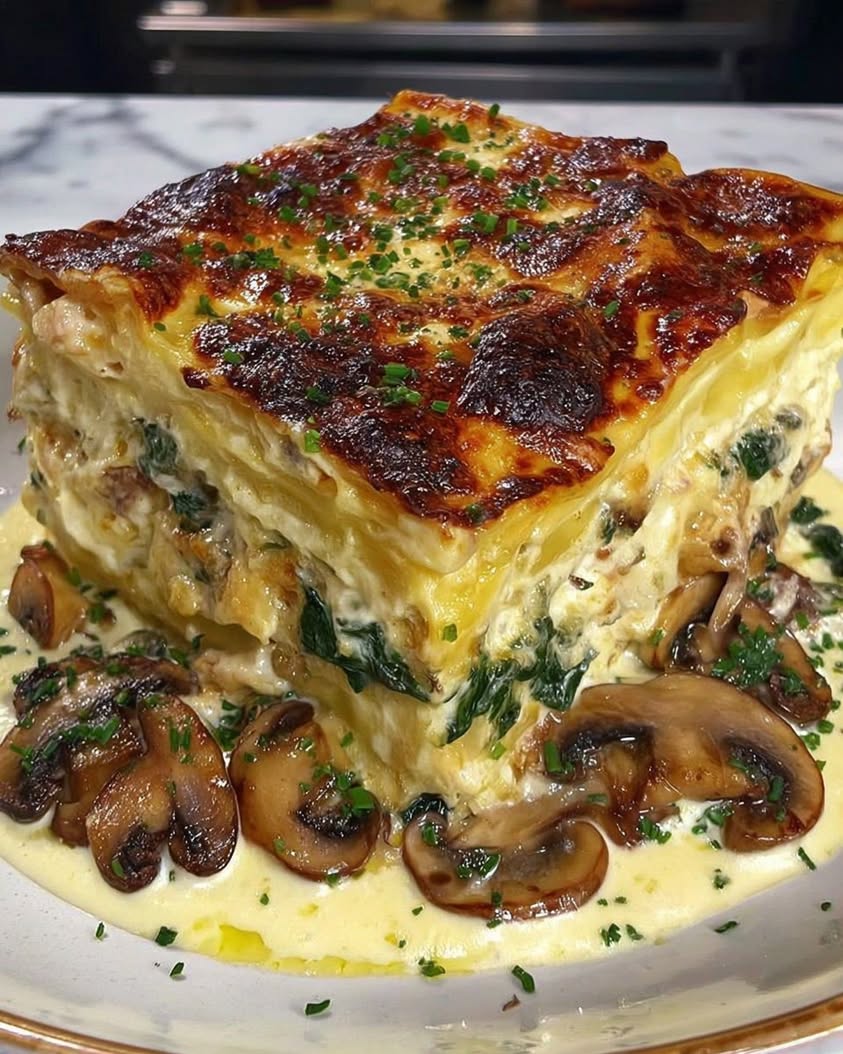
Creamy Cottage Cheese Mushroom Spinach Lasagna Bake: A Lighter, Protein-Packed Comfort Classic
Imagine a bubbling, golden-brown lasagna that fills your kitchen with the savory aroma of garlic and herbs. This Creamy Cottage Cheese Mushroom Spinach Lasagna Bake delivers that iconic comfort food experience with a clever, nutritious twist. Instead of heavy ricotta, we use creamy, protein-rich cottage cheese blended into a smooth, flavorful filling. The result is a lasagna that feels indulgent yet sits lightly, making it a perfect centerpiece for family dinners or meal prep.
This recipe masterfully combines earthy mushrooms, vibrant spinach, and a robust marinara sauce between layers of tender no-boil noodles. Ultimately, the magic happens in the oven where everything melds into a cohesive, cheesy masterpiece. Whether you are seeking a healthier pasta bake or simply want to use cottage cheese in a delicious new way, this dish is a guaranteed crowd-pleaser. It proves that wholesome ingredients can create the most satisfying and comforting meals.
Quick Recipe Highlights
- Flavor Profile: This lasagna boasts a deeply savory and umami-rich taste from the sautéed mushrooms and garlic, balanced by the bright acidity of tomato sauce and the creamy, mild tang of the cottage cheese filling. Herbs like oregano and basil add a classic Italian warmth.
- Texture: Expect a wonderful contrast between the tender, cooked-through lasagna noodles, the meaty bite of mushrooms, the slight wilt of spinach, and the creamy, almost ricotta-like consistency of the blended cottage cheese layer. The melted mozzarella on top provides the perfect stretchy, golden finish.
- Aroma: As it bakes, the kitchen fills with the quintessential scent of Italian cooking: garlic and onions softening in olive oil, earthy mushrooms roasting, tomato sauce simmering with herbs, and finally, the irresistible smell of baked cheese forming a crispy top.
- Visual Appeal: The presentation is stunning, with distinct layers visible at the cross-section—red sauce, white filling, green spinach, and brown mushrooms. The top turns a beautiful, speckled golden brown with bubbly, melted mozzarella that begs to be sliced into.
- Skill Level Needed: This is a fantastic recipe for cooks of all levels. The steps are straightforward: sauté vegetables, blend the filling, layer, and bake. No advanced techniques are required, making it an excellent introduction to homemade lasagna.
- Special Equipment: You will need a good skillet for sautéing, a blender or food processor to smooth the cottage cheese filling, and a 9×13 inch baking dish. A box grater for fresh mozzarella is helpful but not essential if you buy pre-shredded.
Recipe Overview
- Difficulty Level: We rate this recipe as “Easy.” The process involves basic cooking techniques like sautéing and blending, followed by simple assembly. There is no need to pre-cook lasagna noodles, which saves significant time and effort. The instructions are sequential and hard to mess up, making it perfect for a weeknight.
- Category: This dish falls squarely into the main course category. It is a hearty, complete meal that provides protein, vegetables, and carbohydrates in one pan. Additionally, it fits into the “healthy comfort food” and “meal prep” categories beautifully, as it reheats wonderfully and feels like a treat.
- Cuisine: The recipe is firmly rooted in Italian-American cuisine, drawing on the classic structure of lasagna. However, the use of cottage cheese as the primary cheese filling is a common midwestern and health-conscious adaptation that has become beloved in its own right across the United States.
- Cost: This is a very cost-effective meal. Cottage cheese is typically less expensive than ricotta, and mushrooms and spinach are affordable vegetable options. Using no-boil noodles and a simple jarred marinara sauce keeps both time and costs down, while still yielding a restaurant-quality result.
- Season: This lasagna is truly a year-round dish. It provides cozy warmth in the fall and winter. Conversely, it is also excellent in spring and summer when served with a light side salad, as it does not require standing over a hot stove for long periods.
- Occasion: It is ideal for casual family dinners, potlucks, and feeding a crowd. Furthermore, it makes exceptional leftovers, so it is a brilliant Sunday meal prep option for busy weeks. You can also dress it up with a nicer salad and bread for a casual dinner party.
Why You’ll Love This Recipe
First and foremost, the taste and texture are utterly divine. This Creamy Cottage Cheese Mushroom Spinach Lasagna Bake delivers all the rich, savory satisfaction of traditional lasagna without the heaviness. The blended cottage cheese becomes luxuriously smooth and clings to the noodles, while the mushrooms add a meaty depth that will please even carnivores. Each bite is a perfect harmony of creamy, tangy, earthy, and herbal notes. Ultimately, it is the kind of dish where everyone asks for seconds and then requests the recipe.
From a convenience standpoint, this recipe is a weeknight hero. You skip the step of boiling lasagna noodles, which saves time, dishes, and the risk of torn pasta. The vegetable sauté is quick, and the filling comes together in a blender in seconds. The assembly is therapeutic and simple. After that, the oven does the rest of the work, leaving you time to relax or prepare a simple side salad. It is a one-dish wonder that minimizes cleanup while maximizing flavor.
Nutritionally, this lasagna is a powerhouse. Cottage cheese is packed with high-quality casein protein, which promotes satiety and muscle repair. Spinach contributes iron, vitamins A, C, and K, while mushrooms are a great source of B vitamins and antioxidants. By using a lean protein and packing in vegetables, you create a balanced meal that fuels your body. This approach allows you to enjoy classic comfort food while aligning with health-conscious goals.
For social and entertaining value, this dish is a superstar. It travels well for potlucks, feeds a large group affordably, and appeals to a wide range of palates. Moreover, it can be prepared ahead of time and baked just before guests arrive, making you a calm and collected host. The impressive, bubbly presentation always garners compliments, proving that thoughtful, homemade food is the heart of any great gathering.
Finally, its cost-effectiveness and accessibility cannot be overstated. The ingredients are pantry-staples and readily available at any grocery store. By using cottage cheese, you often save money compared to ricotta. This recipe demonstrates that eating well does not require expensive or exotic ingredients. Instead, it relies on smart technique and flavorful combinations to transform everyday items into an extraordinary meal.
Historical Background and Cultural Significance
Lasagna’s origins trace back to ancient Greece, with the term “laganon” referring to a flat sheet of pasta dough. However, the layered dish we know today evolved in Naples, Italy, during the Middle Ages. Early recipes in the 14th century featured fermented dough and cheese, but tomatoes were not introduced until after the Columbian Exchange. The modern lasagna, with its layers of pasta, ragù, béchamel, and cheese, was codified in the Emilia-Romagna region, particularly in the city of Bologna.
In Italian-American cuisine, lasagna took on a life of its own, often becoming richer and cheesier. The use of ricotta cheese became standard in many American recipes, diverging from the béchamel-based versions of Northern Italy. This adaptation reflected the availability of ingredients and the American love for creamy, cheesy textures. Lasagna became a cornerstone of Sunday dinners, holiday feasts, and community gatherings, symbolizing abundance and familial love.
The evolution towards using cottage cheese is a particularly interesting American twist. During the mid-20th century, cottage cheese was heavily promoted as a health food. Home cooks, particularly in the Midwest and health-conscious communities, began substituting it for ricotta in lasagna and stuffed pasta shells. This swap added more protein, reduced fat content, and often lowered cost. Over time, this version gained its own beloved status, creating a distinct sub-category of lasagna that is both nostalgic and practical.
Regional variations of lasagna are vast. In Southern Italy, lasagna often includes hard-boiled eggs, meatballs, and ricotta. In Bologna, “Lasagna alla Bolognese” uses green spinach pasta, a meat ragù, and béchamel. In contrast, our Creamy Cottage Cheese Mushroom Spinach Lasagna Bake represents a modern, vegetable-forward, and protein-enriched interpretation. It honors the traditional structure while embracing contemporary nutritional insights and the versatile, creamy potential of blended cottage cheese.
Ingredient Deep Dive
Cottage Cheese: Cultured for centuries, cottage cheese is a fresh cheese curd product with a mild flavor. Nutritionally, it is a superstar, offering a high amount of protein (specifically casein) for relatively few calories, along with calcium and B vitamins. For this recipe, choose a small-curd, 4% milkfat variety for the creamiest result, though low-fat works too. Avoid non-fat if possible, as a little fat carries flavor and improves texture. Blend it until completely smooth to mimic the consistency of ricotta. Store it in the coldest part of your refrigerator and use it by the date on the container.
Cremini Mushrooms: Also known as baby bellas, these are simply the brown, more mature version of the white button mushroom. They have a deeper, earthier flavor and a firmer texture. They are rich in B vitamins, selenium, and antioxidants. Select mushrooms that are firm with closed caps, avoiding any that are slimy or shriveled. Store them in a paper bag in the fridge. For this lasagna, slice them evenly so they cook uniformly. You can substitute white button mushrooms or portobellos, but avoid delicate varieties like shiitake for this application, as they have a very different texture.
Fresh Spinach: This leafy green is packed with iron, calcium, magnesium, and vitamins A, C, and K. It wilts dramatically when cooked, allowing you to incorporate a large volume of nutrients into the dish. Use pre-washed baby spinach for convenience. You do not need to chop it, as it will wilt down in the pan. Ensure you squeeze out all excess liquid after wilting; this step is crucial to prevent a watery lasagna. Frozen chopped spinach, thoroughly thawed and squeezed dry, is a perfect and economical substitute.
No-Boil Lasagna Noodles: A modern kitchen marvel, these noodles are par-cooked and dried so they hydrate and cook directly in the sauce during baking. They save significant time and hassle. Ensure the noodles are completely surrounded by sauce or filling to properly soften. Do not soak them beforehand. Brand quality can vary slightly, but most major brands perform reliably. For a gluten-free version, use certified gluten-free no-boil noodles, and check that your other ingredients (like marinara) are also gluten-free.
Marinara Sauce: This simple tomato-based sauce is a staple of Italian-American cooking. Choose a high-quality jarred sauce with a short ingredient list, or use your favorite homemade version. The sauce provides acidity, sweetness, and moisture to the dish. For a deeper flavor, you can sauté a tablespoon of tomato paste with the mushrooms before adding the sauce. If your sauce is very thick, you may thin it with a quarter cup of water or vegetable broth to ensure the noodles hydrate fully.
Common Mistakes to Avoid
- Not Squeezing the Spinach Dry: After wilting, spinach holds a tremendous amount of water. If you skip the step of squeezing it in a clean kitchen towel or paper towels, that water will release into your lasagna during baking. Consequently, you will end up with a soupy, separated final product instead of neat, firm slices.
- Using Unblended Cottage Cheese: Adding cottage cheese straight from the container results in a curdy, wet filling that does not hold layers well. Always blend the cottage cheese with the egg and seasonings until completely smooth. This creates a cohesive, ricotta-like layer that binds the lasagna together beautifully.
- Overloading Layers: It is tempting to pile on the filling, but restraint is key. Too much of any component, especially the sauce, can make the lasagna unstable and difficult to slice. Follow the layering order and use moderate, even amounts for the cleanest layers and best texture.
- Underseasoning the Filling: The cottage cheese mixture and the vegetable sauté need ample seasoning. Taste the blended cottage cheese before assembling. Remember, it is diluting into a large dish, so it should taste slightly saltier than perfect on its own. Season each component as you go for a perfectly balanced final flavor.
- Not Letting it Rest: Cutting into the lasagna straight from the oven is a recipe for a sloppy mess. The resting period (at least 15 minutes) is non-negotiable. During this time, the layers set, the cheese firms up slightly, and the liquids redistribute. As a result, you will get clean, picture-perfect slices.
- Using a Sauce That’s Too Thin: A watery marinara sauce will not provide enough structure for the noodles to absorb and can lead to a mushy bake. Choose a thick, robust sauce. If yours seems thin, simmer it for 10-15 minutes on the stove to reduce and concentrate the flavor before assembling.
- Baking Uncovered the Entire Time: Starting the bake covered with foil is essential. It traps steam, which gently cooks and softens the no-boil noodles. If baked uncovered from the start, the top cheese may burn before the noodles are fully tender. Always follow the covered-then-uncovered baking method.
- Not Browning the Mushrooms Enough: Mushrooms release water first, then brown. If you rush the sauté and pull them off the heat while they are still steaming and pale, you miss out on deep, caramelized flavor. Cook them until they are golden brown and all their liquid has evaporated.
Essential Techniques
Sautéing Mushrooms to Perfection: This technique is crucial for developing umami. Start with a hot pan and oil. Add the mushrooms in a single layer if possible; do not crowd the pan, or they will steam. Let them cook undisturbed for a few minutes to develop a sear. Then, stir occasionally. They will first release their liquid—keep cooking until this liquid evaporates and the mushrooms begin to sizzle again and turn a rich golden brown. This process concentrates their flavor and improves texture.
Wilting and Draining Spinach: Adding fresh spinach to a hot pan causes it to wilt rapidly due to its high water content. The key is to cook it just until it collapses, which takes only a minute or two. Immediately transfer it to a colander or a clean kitchen towel. Once cool enough to handle, gather the spinach and twist or press firmly to squeeze out every drop of green liquid. This step ensures your lasagna layers remain distinct and not watery.
Blending the Cottage Cheese Filling: Transforming cottage cheese into a smooth, spreadable filling is what makes this recipe special. Use a blender or food processor for the best results. Add the cottage cheese, egg, and seasonings, then blend on high until completely homogenous and silky, scraping down the sides as needed. This usually takes 30-60 seconds. The final mixture should have no visible curds and should be thick yet pourable.
Layering for Structural Integrity: Proper layering ensures even cooking and beautiful slices. Always start with a thin layer of sauce on the bottom of the dish to prevent sticking. Then, place noodles side by side without overlapping. Spread fillings evenly to the edges. Repeat the layers, ending with sauce and cheese on top. Press down gently on the final noodle layer before adding the top sauce to ensure everything is compact and will bake evenly.
Pro Tips for Perfect Creamy Cottage Cheese Mushroom Spinach Lasagna Bake
For an extra flavor boost, add a splash of dry white wine or sherry to the mushrooms after they have released their liquid. Let it cook off completely before proceeding. This deglazes the pan and adds a subtle complexity.
Grate your own mozzarella from a block. Pre-shredded cheese contains anti-caking agents that can prevent it from melting as smoothly and stretchily as freshly grated cheese.
Let all your components (sautéed veggies, blended cottage cheese) cool for about 10 minutes before assembling. This prevents the heat from prematurely cooking the egg in the filling or making the noodles too soft too quickly.
If the top of your lasagna is browning too quickly during the final uncovered bake, simply lay a loose piece of foil over the top (do not crimp it) to shield it while the center finishes cooking.
For a richer flavor, mix a quarter cup of grated Parmesan or Pecorino Romano cheese directly into the blended cottage cheese filling.
Use the back of a spoon or a small offset spatula to spread the cottage cheese mixture evenly over the noodles. It is sticky, so a tool helps create a thin, uniform layer.
To test for doneness, insert a knife into the center of the lasagna. It should slide through the noodles with little to no resistance. Also, the edges should be bubbling vigorously.
For the cleanest slices, use a sharp chef’s knife and wipe it clean with a damp paper towel between each cut.
Variations and Adaptations
Regional Variations: For a more traditional Italian-American touch, add a layer of browned Italian sausage or ground beef to the mushroom mixture. For a “white” lasagna, replace the marinara with a béchamel or Alfredo sauce. A Greek-inspired version could use chopped artichoke hearts, kalamata olives, and feta cheese mixed into the cottage cheese filling.
Seasonal Adaptations: In summer, incorporate roasted zucchini or yellow squash slices and fresh basil. In fall, swap mushrooms for roasted butternut squash or pumpkin puree mixed into the cheese layer. For spring, use asparagus tips and fresh peas for a brighter, greener lasagna.
Dietary Modifications: For a gluten-free bake, use certified gluten-free no-boil lasagna noodles. To make it vegetarian, ensure your cheese and noodles are vegetarian-friendly (some cheeses use animal rennet). For a lower-carb option, substitute the noodles with thin slices of zucchini or eggplant, though you may need to pre-salt and drain them to remove excess moisture.
Flavor Variations: Add sun-dried tomatoes and a pinch of red pepper flakes for a spicy kick. Incorporate pesto, either swirled into the cottage cheese or as a separate layer. For a smoky note, use sautéed chopped portobello mushrooms or add a teaspoon of smoked paprika to the vegetable mix.
Texture Modifications: For a chunkier filling, do not blend the cottage cheese; simply mix it with the egg and seasonings for a more rustic texture. Add chopped walnuts or pine nuts to the spinach layer for crunch. For an ultra-creamy center, mix a cup of ricotta with the blended cottage cheese.
Presentation Alternatives: Instead of a large bake, assemble individual portions in oven-safe ramekins or small baking dishes for a elegant, personalized presentation. You can also roll the filling into lasagna noodles to create “lasagna rolls” arranged in a baking dish, which are easier to serve.
Serving and Presentation Guide
Plating Techniques: Use a sharp, thin spatula or pie server to lift out each portion. Wipe the blade clean between cuts for neat edges. For a restaurant-style plate, place a slice slightly off-center. If serving family-style, garnish the whole baking dish and let guests serve themselves, showcasing the beautiful layered cross-section.
Garnishing Ideas: Fresh herbs are your best friend. A scattering of chopped fresh basil, parsley, or chives adds color and a burst of fresh flavor. A light dusting of grated Parmesan or red pepper flakes works well. A drizzle of high-quality extra virgin olive oil or a small dollop of ricotta on the plate adds a nice touch.
Traditional Accompaniments: A simple, crisp green salad with a tangy vinaigrette is the classic pairing, cutting through the richness of the lasagna. Garlic bread or a crusty baguette is essential for soaking up any extra sauce. For a more substantial meal, add roasted vegetables like broccoli or Brussels sprouts.
Modern Serving Suggestions: Serve a smaller slice alongside a protein like grilled chicken or fish for a balanced plate. Alternatively, deconstruct it for a lunch bowl: crumble a baked slice over a bed of arugula with a balsamic glaze. For brunch, top a slice with a softly poached egg.
Temperature Considerations: Lasagna is best served hot, but not scalding. The 15-minute rest brings it to the perfect serving temperature. Leftovers can be served warm or even at room temperature for a picnic-style meal. Reheat individual slices in a toaster oven or air fryer to recrisp the top.
Portion Control Tips: A 9×13 dish typically yields 8 generous servings or 12 smaller, side-dish portions. Use a ruler or the lines on your baking dish as a guide for even cutting. For meal prep, portion slices into individual containers immediately after cooling for ready-to-go lunches.
Wine and Beverage Pairing
Wine Pairings: The earthy mushrooms and creamy cheese call for a medium-bodied red with good acidity. A Chianti Classico or Sangiovese from Italy cuts through the richness beautifully. Alternatively, a Pinot Noir with its red fruit notes and earthy undertones is an excellent match. For white wine lovers, a full-bodied Chardonnay with a touch of oak can stand up to the dish’s weight.
Non-Alcoholic Alternatives: Sparkling water with a twist of lemon or lime cleanses the palate. A rich tomato-based beverage like a Virgin Mary (non-alcoholic Bloody Mary) complements the flavors. For something sweeter, a tart cherry or pomegranate spritzer balances the savory notes.
Coffee/Tea Pairings: After the meal, a medium-roast coffee with low acidity pairs nicely, as it will not clash with the tomato sauce. An herbal tea, such as peppermint or ginger, can aid digestion and provide a refreshing, clean finish.
Temperature Considerations: Serve red wines slightly below room temperature (around 60-65°F). White wines and sparkling waters should be well-chilled. Iced teas or spritzers are most refreshing when cold.
Serving Suggestions: Always offer water alongside any other beverage. If serving wine, pour a modest initial glass to allow guests to taste the pairing before committing to a full serving. For non-alcoholic options, consider serving in a elegant glass to make the experience feel special.
Storage and Shelf Life
Storage Methods: Cool the baked lasagna completely before storing. Cover the baking dish tightly with plastic wrap or aluminum foil, or transfer individual portions to airtight containers. Properly stored, it will last in the refrigerator for 4-5 days.
Temperature Requirements: Always refrigerate within two hours of cooking. Keep it at a consistent refrigerator temperature of 40°F or below. Do not leave it out on the counter for extended periods, as the dairy and egg components are perishable.
Container Recommendations: Glass containers with locking lids are ideal, as they do not absorb odors and reheat evenly. If keeping it in the original baking dish, ensure the wrap is very tight to prevent the pasta from drying out.
Signs of Spoilage: Discard the lasagna if you notice an off or sour smell, significant mold growth (often white or green spots), or if the texture becomes excessively slimy or watery. When in doubt, throw it out.
Reheating Instructions: For best results, reheat individual slices in the oven at 350°F for 15-20 minutes (cover with foil if the top is browning too much) or in an air fryer for about 8-10 minutes. The microwave (2-3 minutes on medium power) is quick but can make the noodles slightly rubbery.
Freezing Guidelines: This lasagna freezes exceptionally well. Wrap the entire cooled bake or individual slices tightly in plastic wrap, then in foil. Place in a freezer bag, removing as much air as possible. Freeze for up to 3 months. Thaw overnight in the refrigerator before reheating.
Make Ahead Strategies
Prep Timeline: You can fully assemble the lasagna up to 24 hours in advance. Simply cover the unbaked dish tightly and refrigerate. The noodles will begin to soften in the sauce, which can actually improve the texture. Alternatively, prepare all components (cooked veggies, blended cheese) and store them separately in the fridge for up to 2 days, then assemble just before baking.
Storage Between Steps: Store the cooled sautéed vegetables and the blended cottage cheese filling in separate airtight containers in the refrigerator. Keep the marinara sauce in its jar or a container. This modular approach lets you build the lasagna quickly on a busy evening.
Quality Impact Assessment: Making it a day ahead often results in a lasagna that holds together even better, as the noodles have more time to absorb moisture. The flavors also meld beautifully. The only potential downside is that the top layer of cheese may discolor slightly; simply add a fresh sprinkle of mozzarella before baking if this happens.
Assembly Tips for Make-Ahead: If assembling cold from the fridge, you may need to add 10-15 minutes to the covered baking time. Ensure the center is hot and bubbly before removing the foil for the final browning. Let a refrigerated, assembled lasagna sit on the counter for 30 minutes before baking to take the chill off.
Reheating Guidelines: A fully baked and refrigerated lasagna reheats best in the oven. Cover with foil and bake at 350°F until heated through (about 30 minutes for a whole pan), then uncover for the last 10 minutes to re-crisp the top if desired.
Fresh Element Additions: If making ahead, add any delicate fresh herbs (like basil) as a garnish after baking and reheating, not during the initial assembly. This preserves their bright color and flavor.
Scaling Instructions
Halving the Recipe: To make a smaller batch, simply divide all ingredient quantities by two. Use an 8×8 inch or 9×9 inch baking dish. The layering process remains the same, but you will have fewer layers. Baking time may be reduced by 5-10 minutes; start checking for doneness at the 35-minute mark (covered).
Doubling or Tripling: Doubling is straightforward for a crowd. Use two 9×13 dishes. Sauté the vegetables in batches to avoid steaming. You may need to blend the cottage cheese filling in batches as well. Baking time may increase slightly for a double batch in one very large dish, but it is better to use multiple standard pans for even cooking.
Equipment Adjustments: When scaling up, ensure you have a large enough skillet for the vegetables or cook them in batches. Have a second baking dish ready. If you only have one large roasting pan, note that the edges may cook faster than the deep center, so rotate the pan during baking.
Timing Modifications: Larger volumes require more time to heat through. Always rely on visual and tactile doneness cues (bubbling edges, knife-tender noodles) rather than strict timer adherence. For a doubled recipe in two separate pans, they may bake more quickly than one giant pan.
Storage Considerations: Scaling up often means more leftovers. Plan your storage containers in advance. Consider freezing half of a double batch immediately after baking and cooling for a future effortless meal.
Nutritional Deep Dive
Macro Breakdown: A serving of this lasagna provides a balanced mix of macronutrients. The cottage cheese and mozzarella offer high-quality protein crucial for satiety and muscle maintenance. The whole wheat or regular noodles contribute complex carbohydrates for sustained energy. The olive oil and cheese provide healthy fats. This balance helps prevent blood sugar spikes and keeps you full for hours.
Micronutrient Analysis: This dish is rich in several key micronutrients. Spinach delivers vitamins A, C, K, and folate. Mushrooms provide B vitamins like riboflavin and niacin, as well as selenium. Dairy contributes significant calcium and phosphorus for bone health. Tomatoes in the sauce are a source of lycopene, a powerful antioxidant.
Health Benefits: The high protein content supports metabolism and tissue repair. The fiber from vegetables and whole-grain noodles (if used) promotes digestive health. The combination of calcium, vitamin K, and phosphorus is excellent for bone density. Lycopene from cooked tomatoes is linked to heart health and reduced risk of certain cancers.
Dietary Considerations: This recipe is naturally vegetarian. It can be adapted to be gluten-free with alternative noodles. For those monitoring sodium, use low-sodium cottage cheese and marinara sauce, and reduce added salt. The dish is not inherently low-carb, but zucchini noodle layers can create a keto-friendly version.
Portion Analysis: One of eight servings from a 9×13 pan is a satisfying main course portion. For those with lower calorie needs, it can be divided into 12 portions and served with a large salad. The protein-rich composition means even a smaller portion is filling and nutrient-dense.
Weight Management Tips: The high protein and fiber content make this lasagna excellent for weight management, as it promotes fullness. To reduce calories further, use low-fat cottage cheese and part-skim mozzarella, and increase the ratio of spinach and mushrooms to noodles in your serving. Always pair with a non-starchy vegetable side.
Dietary Adaptations
Gluten-Free: Use certified gluten-free no-boil lasagna noodles, which are widely available. Double-check that your marinara sauce and all other packaged ingredients are labeled gluten-free. The rest of the recipe is naturally gluten-free, making this an easy swap.
Dairy-Free: Substitute the cottage cheese with a blend of firm tofu (pressed and crumbled) and nutritional yeast, blended with the egg replacer and seasonings. Use a plant-based mozzarella shred that melts well. Ensure your margarine or oil is dairy-free for sautéing.
Vegan: Follow the dairy-free adaptations and replace the egg in the filling with a “flax egg” (1 tbsp ground flaxseed mixed with 2.5 tbsp water). Choose egg-free pasta noodles. The result will be different but still delicious and layered.
Low-Carb/Keto: Replace lasagna noodles with thin slices of zucchini or eggplant. Salt the slices and let them drain for 30 minutes to remove excess moisture, then pat dry. Layer as usual. Ensure your marinara sauce is low in sugar, or use a simple tomato puree with herbs.
Paleo: This is challenging due to the dairy and grains. A Paleo adaptation would use zucchini or sweet potato slices as noodles, a cashew-based “cheese” filling blended with nutritional yeast, and a sugar-free tomato sauce. It becomes a different but inspired “lasagna-style” casserole.
Low-FODMAP: Use garlic-infused oil instead of fresh garlic for sautéing. Omit onions. Replace cremini mushrooms with canned, drained oyster mushrooms (low in FODMAPs in small servings) or omit them. Use a lactose-free cottage cheese or a firm tofu substitute. Ensure the marinara has no onion or garlic.
Troubleshooting Guide
Watery or Soupy Lasagna: This is almost always due to excess moisture. The fix for next time is to thoroughly squeeze the spinach and ensure the sautéed mushrooms have cooked off all their liquid. For now, let the baked lasagna rest longer (up to 30 minutes) so it reabsorbs liquid. You can also carefully tilt the baking dish to pour off any free liquid before slicing.
Dry or Hard Noodles: This means the noodles did not have enough moisture to hydrate during baking. Ensure every noodle is touching sauce or filling, with no dry spots. Next time, you can slightly thin your sauce with water or broth before assembling. If you discover this mid-bake, you can carefully add a few tablespoons of warm water around the edges and cover it again.
Bland Flavor: Underseasoning is the culprit. Season each component generously. Taste the cottage cheese mixture—it should be well-seasoned. Use a flavorful, high-quality marinara. Remember to salt the vegetable sauté. You can rescue a baked bland lasagna by serving it with a flavorful garnish like pesto, extra grated Parmesan, or a drizzle of good balsamic glaze.
Top Cheese Burning: If the cheese browns too quickly, the oven rack may be too high, or the oven temperature may be off. Always bake in the center of the oven. If it starts to burn, loosely tent the dish with foil for the remainder of the baking time. Using a combination of mozzarella and Parmesan can also lead to faster browning due to Parmesan’s low moisture.
PrintCottage Cheese Mushroom & Spinach Lasagna Bake
- Total Time: 45 minutes
- Yield: 4
Description
A lighter, protein-packed twist on classic lasagna, featuring creamy cottage cheese, savory mushrooms, and fresh spinach layered with no-boil noodles and marinara sauce.
Ingredients
- 12 no-boil lasagna noodles
- 2 cups cottage cheese
- 1 large egg
- 1/2 cup grated Parmesan cheese
- 2 cups shredded mozzarella cheese
- 2 tablespoons olive oil
- 8 ounces cremini mushrooms, sliced
- 3 cloves garlic, minced
- 5 ounces fresh spinach
- 3 cups marinara sauce
- 1 teaspoon dried oregano
- Salt and black pepper to taste
Instructions
- Preheat oven to 375°F (190°C). Lightly grease a 9×13-inch baking dish.
- In a bowl, mix cottage cheese, egg, Parmesan, 1 cup mozzarella, oregano, salt, and pepper. Set aside.
- Heat olive oil in a skillet over medium heat. Sauté mushrooms until browned, about 5 minutes. Add garlic and spinach, cooking until spinach wilts, 2-3 minutes. Season with salt and pepper.
- Spread 1 cup marinara sauce in the baking dish. Layer 4 noodles, half the cottage cheese mixture, half the mushroom-spinach mix, and 1/2 cup sauce. Repeat layers. Top with remaining noodles, sauce, and 1 cup mozzarella.
- Cover with foil and bake 25 minutes. Uncover and bake 10 more minutes until bubbly and golden. Let rest 10 minutes before serving.
Notes
You can customize the seasonings to taste.
- Prep Time: 15 minutes
- Cook Time: 30 minutes
- Method: Main
- Cuisine: American