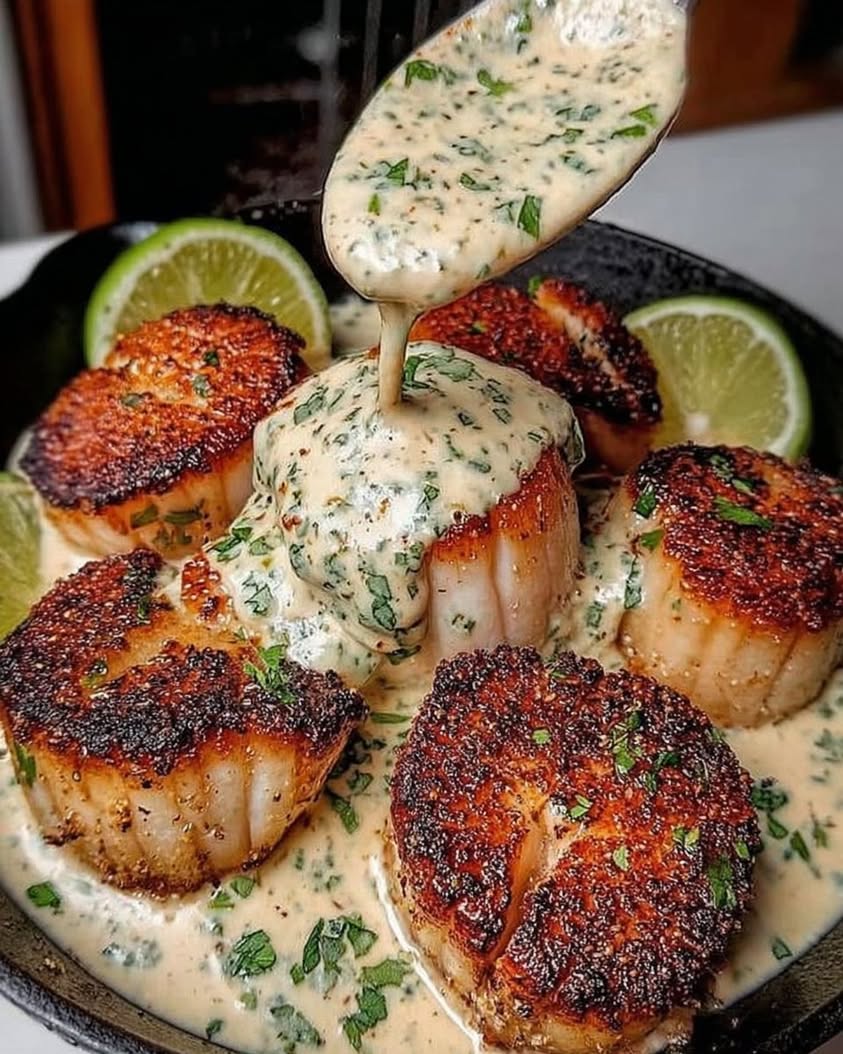
Sizzling Scallops with Lime Cilantro Sauce: A Restaurant-Quality Recipe
Imagine a dish that captures the essence of a seaside bistro and a vibrant Latin American kitchen all on one plate. This recipe for Sizzling Scallops with Lime Cilantro Sauce delivers exactly that experience. Moreover, it brings restaurant-level sophistication to your home kitchen in under twenty minutes. The secret lies in the stunning contrast between the sweet, caramelized scallops and the bright, herbaceous sauce.
Consequently, this dish feels both indulgent and refreshingly light. Each bite offers a perfect harmony of textures and flavors. You get the delicate, buttery sear on the scallop, followed immediately by the zesty punch of lime and the fresh, clean finish of cilantro. Ultimately, it is a culinary masterpiece that is surprisingly simple to execute. This guide will walk you through every step to ensure your Sizzling Scallops with Lime Cilantro Sauce turn out flawless every single time.
Furthermore, this recipe is incredibly versatile. You can serve it as an impressive appetizer for a dinner party or as a stunning main course for a special weeknight meal. The vibrant green sauce not only tastes incredible but also creates a beautiful visual presentation. Therefore, get ready to impress your family and friends with a dish that looks and tastes like it came from a five-star kitchen.
Quick Recipe Highlights
- Flavor Profile: This dish masterfully balances sweet, savory, and bright citrus notes. The natural sweetness of the perfectly seared scallops meets the tangy acidity of fresh lime juice. Simultaneously, the savory depth from the sear and the aromatic freshness from cilantro and garlic create a complex, restaurant-worthy taste.
- Texture: The texture is a key component of the experience. You achieve a crisp, golden-brown crust on the outside of each scallop, giving way to a tender, almost creamy interior. Meanwhile, the sauce is smooth and emulsified, coating each scallop without overwhelming its delicate flesh.
- Aroma: The cooking process releases an incredible aroma that will fill your kitchen. First, you smell the nutty scent of scallops searing in hot oil. Then, the bright, citrusy notes of lime and the fresh, grassy scent of chopped cilantro take over, creating an irresistible olfactory preview of the meal to come.
- Visual Appeal: This dish is a feast for the eyes. The pearly white scallops with their golden sear rest on a vibrant, emerald-green pool of sauce. A final garnish of whole cilantro leaves and a lime wedge adds a professional touch, making the plate look as beautiful as it tastes.
- Skill Level Needed: While the result is impressive, the skill level required is beginner-friendly. The most crucial technique is achieving a good sear on the scallops, which simply requires a hot pan and patience. Otherwise, the sauce comes together in a blender, making this an accessible recipe for cooks of all levels.
- Special Equipment: You need only a few key tools. A heavy-bottomed skillet, preferably cast iron or stainless steel, is essential for getting that perfect sear. Additionally, a blender or small food processor will help you create a perfectly smooth and emulsified Lime Cilantro Sauce.
Recipe Overview
- Difficulty Level: We rate this recipe as “Easy” for several important reasons. First, the ingredient list is short and composed of common items. Second, the active cooking time is remarkably brief, minimizing room for error. The techniques, primarily searing and blending, are fundamental. Finally, the recipe forgives minor mistakes, as the fresh flavors of the sauce can elevate the dish even if the sear isn’t picture-perfect.
- Category: This dish fits beautifully into multiple meal categories. It shines as an elegant appetizer or starter for a multi-course dinner. Alternatively, it serves as a light yet satisfying main course, especially when paired with a side like rice, quinoa, or a simple green salad. It also works wonderfully as part of a seafood-focused tasting menu.
- Cuisine: The recipe draws inspiration from coastal and Latin American culinary traditions. The technique of searing scallops is classic to French and American coastal cuisine. Meanwhile, the vibrant, citrus-herb sauce has clear roots in Mexican, Peruvian, and Southeast Asian cooking, where lime and cilantro are foundational flavors. The fusion creates a globally-inspired, modern dish.
- Cost: This is a moderately priced recipe that offers high perceived value. The primary cost comes from fresh, high-quality sea scallops. Fortunately, the supporting ingredients—lime, cilantro, garlic, oil—are very affordable. Consequently, you create a dish that feels luxurious and special without the exorbitant price tag of a restaurant.
- Season: This Sizzling Scallops with Lime Cilantro Sauce recipe is truly a year-round delight. It feels light and refreshing during the warm spring and summer months. Conversely, its bright flavors can counteract the heaviness of winter meals. The availability of fresh cilantro and limes is consistent, making it a reliable choice any time you crave something special.
- Occasion: This dish is perfect for numerous occasions. It is ideal for a romantic date night at home, as it feels indulgent and cooks quickly. It also makes a stunning first course for a dinner party where you want to impress. Furthermore, it is a fantastic choice for a solo treat when you deserve a restaurant-quality meal without leaving the house.
Why You’ll Love This Recipe
First and foremost, the taste and texture combination is utterly irresistible. The moment you take a bite, you experience a symphony of contrasts. The exterior of the scallop delivers a satisfying, slightly crisp sear that gives way to a tender, sweet, and succulent interior. Then, the zesty lime cilantro sauce cuts through the richness, adding a burst of freshness that cleanses the palate. Each component complements the other perfectly, creating a balanced and memorable flavor profile that will have you craving more.
Additionally, the convenience and speed of preparation are major benefits. From start to finish, you can have this elegant dish on the table in about twenty minutes. The prep work is minimal, involving mostly measuring and blending. The actual cooking time for the scallops is mere minutes. This makes it an ideal solution for busy weeknights when you want something special without spending hours in the kitchen. The recipe is straightforward, with clear steps that build confidence.
From a nutritional standpoint, this recipe offers significant advantages. Scallops are an excellent source of lean protein, vitamins, and minerals like B12 and magnesium. They are also low in calories and fat. The sauce, made from fresh lime juice, cilantro, and healthy oils, adds antioxidants and healthy fats without empty calories. This dish is naturally gluten-free and can be adapted for other dietary needs easily. It is a meal that satisfies your taste buds while also nourishing your body.
Furthermore, the social and entertaining value of this dish is exceptionally high. Serving Sizzling Scallops with Lime Cilantro Sauce immediately signals to your guests that you have made an effort for them. The dramatic sizzle from the pan, the vibrant colors on the plate, and the sophisticated flavors create a complete dining experience. It is a conversation starter and a surefire way to make any meal feel like a celebration. You will earn compliments and requests for the recipe every time you serve it.
Finally, the cost-effectiveness and accessibility make this a repeat-worthy recipe. While scallops can be a premium ingredient, making this dish at home costs a fraction of what you would pay at a restaurant for a similar offering. You control the quality of every component. The other ingredients are pantry staples or easy to find at any grocery store. This recipe proves that you do not need a chef’s budget or training to enjoy gourmet-quality seafood at home.
Historical Background and Cultural Significance
The story of scallops as a prized culinary ingredient stretches back centuries. Archaeological evidence shows that coastal communities worldwide have harvested and enjoyed scallops since prehistoric times. In many European cultures, particularly in France and the British Isles, scallops were a staple food for coastal villages. The scallop shell itself even became a powerful symbol, most famously associated with the Camino de Santiago pilgrimage. This long history underscores the scallop’s enduring appeal across cultures and eras as a valuable source of sustenance and flavor.
Culturally, the pairing of seafood with bright, acidic sauces has deep roots in numerous culinary traditions. In Latin America, particularly in Peru with its famous ceviche, citrus juice is used to “cook” and flavor seafood. In Southeast Asia, herbaceous sauces with lime and cilantro accompany grilled fish and shellfish. This recipe for Sizzling Scallops with Lime Cilantro Sauce sits at a delicious crossroads of these traditions. It takes a classic French or American technique—the pan sear—and marries it with a sauce inspired by these vibrant, flavor-forward cuisines, creating a modern fusion dish.
The evolution of this specific recipe reflects broader trends in home and restaurant cooking. As global travel and cuisine became more accessible, home cooks began experimenting with flavor combinations from around the world. The desire for meals that are both quick to prepare and visually impressive led to the popularity of seared scallop recipes. The lime cilantro sauce, often called a “mojo” or “chimichurri-style” sauce, gained fame for its ability to elevate simple proteins. This recipe represents the modern home cook’s toolkit: global inspiration, efficient techniques, and a focus on fresh, high-impact ingredients.
Regional variations of this concept abound, showcasing its adaptability. In the American South, you might find a similar dish with a butter and white wine pan sauce. In coastal Mexico, the sauce could include spicy chiles like serrano or jalapeño. A Thai-inspired version might incorporate fish sauce and lemongrass. Some chefs finish the dish with a drizzle of chili oil or a sprinkle of toasted nuts for added texture. This versatility is a testament to the foundational soundness of the pairing—sweet seafood and bright, herbal acidity are a match made in culinary heaven.
Ingredient Deep Dive
Sea Scallops: Sea scallops are the star of this show. Culturally, they have been harvested for millennia and are often associated with luxury and celebration. Nutritionally, they are a powerhouse of lean protein, rich in vitamin B12, magnesium, and potassium, while being very low in fat. When selecting scallops, look for “dry-packed” varieties, as “wet-packed” ones contain added water and phosphates that prevent a proper sear. They should smell fresh and sweet, like the ocean, not fishy. Store them in the coldest part of your refrigerator and use within a day of purchase for best results. If unavailable, large shrimp or firm white fish like halibut make good substitutes.
Fresh Lime Juice: Lime juice is the vibrant heart of the sauce. Limes have a rich history in tropical regions, from Southeast Asia to Central America, where they were used to preserve food and prevent scurvy. They are an excellent source of vitamin C and antioxidants. For the best flavor, always juice limes fresh; bottled juice lacks brightness and can have a bitter, cooked flavor. Choose limes that feel heavy for their size and have a bright, smooth skin. Store whole limes at room temperature for a week or in the fridge for up to a month. In a pinch, lemon juice can be used, though it will impart a different, slightly less tropical character.
Fresh Cilantro: Cilantro, also called coriander leaf, is one of the world’s most widely used herbs, with a history spanning ancient Egypt, China, and the Americas. It is rich in vitamins A, C, and K, and contains antioxidants. Note that for some people, cilantro has a soapy taste due to genetics. Select bunches with vibrant green leaves and firm stems, avoiding any that are wilted or yellowing. To store, treat it like a bouquet: trim the stems and place it in a glass of water in the fridge, loosely covered with a bag. If you dislike cilantro, flat-leaf parsley or a combination of mint and basil can provide a different but still fresh herbal note.
Garlic: Garlic adds essential savory depth to the sauce. Its use dates back thousands of years, both as food and medicine, across countless cultures. It offers allicin, a compound with noted health benefits. Use fresh garlic cloves for the most potent flavor. A single medium clove is typically enough for this sauce. Look for firm heads with tight, papery skin. Store garlic in a cool, dark, dry place with good air circulation. If you must substitute, a tiny pinch of garlic powder can work in the sauce, but the fresh flavor is irreplaceable.
Neutral Oil & Olive Oil: Oils serve dual purposes: searing and saucing. A neutral oil with a high smoke point, like avocado, grapeseed, or refined safflower oil, is crucial for getting a blistering sear on the scallops without burning. Extra virgin olive oil, used in the sauce, contributes fruity, peppery notes and healthy monounsaturated fats. Its history is intertwined with Mediterranean civilization. For the sauce, a good-quality, fresh-tasting extra virgin olive oil is best. Store all oils in a cool, dark cabinet away from the stove to prevent rancidity. For a different flavor profile, you could use a nut oil like walnut in the sauce, but avoid strong oils for searing.
Common Mistakes to Avoid
- Using Wet-Packed Scallops: This is the most critical error. Scallops treated with sodium tripolyphosphate (STP) release excess water. Consequently, they steam instead of sear, becoming rubbery and preventing the formation of a golden crust. Always insist on “dry-packed” or “diver” scallops from your fishmonger.
- Not Drying the Scallops Thoroughly: Even dry-packed scallops have surface moisture. Failing to pat them completely dry with paper towels guarantees a poor sear. The water creates a barrier between the scallop and the hot pan, leading to steaming and sticking. Take the time to dry them meticulously.
- Crowding the Pan: Adding too many scallops at once drops the pan temperature dramatically. Instead of searing, they will begin to stew in their own juices. Cook in batches if necessary, ensuring each scallop has ample space. This ensures each one gets direct, consistent heat for that perfect crust.
- Moving the Scallops Too Soon: Impatience is the enemy of a good sear. Placing a scallop in the pan and immediately poking or moving it will cause it to tear and stick. Allow it to cook undisturbed for 1.5-2 minutes. It will release naturally from the pan when a proper crust has formed.
- Overcooking the Scallops: Scallops cook very quickly and continue to carryover cook after removal from heat. Overcooking makes them tough and chewy. They are done when they are just opaque in the center. Remember, they should have the texture of firm butter, not rubber erasers.
- Blending the Sauce with Warm Ingredients: If you blend the lime juice, cilantro, and oil immediately after searing in the same blender, the residual heat can “cook” the herbs. This results in a dull, brownish sauce. Let the pan cool slightly or use a separate, cool container to blend for the brightest color and flavor.
- Seasoning Scallops Too Early: Salting scallops long before cooking draws out moisture, recreating the wet-surface problem. Season them with salt and pepper literally moments before they hit the hot pan. This way, the seasoning adheres and enhances the sear without compromising texture.
- Using a Cold Pan: Starting with a cold pan or insufficiently heated oil is a recipe for sticking and steaming. Always preheat your skillet over medium-high heat until it’s properly hot. You should see a slight shimmer in the oil before adding your protein.
- Neglecting to Rest the Scallops: Like most proteins, scallops benefit from a brief rest after cooking. Letting them sit for a minute allows the juices to redistribute throughout the meat. If you slice into them immediately, those precious juices will run out onto the plate, leaving the scallop drier.
- Overcomplicating the Sauce: The beauty of the Lime Cilantro Sauce is its fresh simplicity. Avoid the temptation to add too many other ingredients—like excessive garlic, vinegar, or sweeteners—which can overpower the delicate balance. Follow the recipe closely for your first attempt, then adjust to taste later.
Essential Techniques
The Perfect Sear: Achieving a golden-brown crust on your scallops is the most important technique in this recipe. It is important because it creates complex flavor through the Maillard reaction and provides delightful textural contrast. To master it, ensure your scallops are dry, your pan is very hot, and you do not overcrowd them. A common pitfall is moving the scallops before they naturally release from the pan. Wait patiently. Visual cues for success include a deep golden-brown color on the cooking surface and the scallop releasing easily when you gently nudge it with your tongs.
Pan Temperature Management: Controlling your pan’s heat is crucial for the entire cooking process. It is important because different stages require different temperatures: high heat for the sear, and then often a reduction for making a pan sauce (though not in this specific recipe). To master it, preheat your pan over medium-high heat until a drop of water sizzles and evaporates instantly. A common pitfall is turning the heat up too high and burning the oil or scallops. If the pan starts smoking excessively, reduce the heat slightly. The visual cue is oil that shimmers but does not smoke.
Emulsifying the Sauce: Creating a smooth, cohesive Lime Cilantro Sauce requires proper emulsification. This is important because it blends the water-based lime juice with the oil into a stable, creamy sauce that clings to the scallops. To master it, add the oil to the blender in a slow, steady stream while the blender is running. A common pitfall is dumping all the oil in at once, which can cause the sauce to separate or remain chunky. The visual cue for success is a uniformly pale green, slightly thickened sauce with no separate pools of oil.
Pro Tips for Perfect Sizzling Scallops with Lime Cilantro Sauce
First, remove the small, tough side muscle from each scallop before cooking. This little tab of tissue can become chewy. Simply pinch it between your fingers and pull it off; it detaches easily.
Second, for an extra-flavorful sear, use a combination of butter and oil in the pan. The oil raises the smoke point of the butter, allowing you to get the rich, nutty flavor of browned butter without burning it.
Third, let your scallops come to room temperature for about 10 minutes before cooking. This ensures they cook evenly from edge to center, preventing a raw middle or an overcooked exterior.
Fourth, after searing the first side, only flip the scallops once. Multiple flips interrupt the crust formation and can make the scallops tough. Trust the process and the timing.
Fifth, warm your serving plates slightly. Placing hot scallops on a cold plate causes them to cool down too quickly, affecting texture and enjoyment. A quick rinse under hot water and a dry does the trick.
Sixth, if your sauce seems too thick, thin it with a teaspoon of warm water at a time until it reaches a drizzling consistency. Conversely, if it’s too thin, blend in a few more cilantro leaves or a drop more oil.
Seventh, for a more complex sauce, consider toasting the garlic clove lightly in a dry pan before blending. This mellows the raw garlic bite and adds a subtle, sweet nuttiness to the background.
Eighth, garnish with more than just lime. A sprinkle of flaky sea salt, such as Maldon, and a few cracks of black pepper right before serving add final layers of texture and flavor that elevate the dish.
Variations and Adaptations
Regional Variations: You can easily take this recipe on a world tour. For a Mexican twist, add a roasted jalapeño or serrano pepper to the sauce. A Thai variation might include lemongrass, fish sauce, and a touch of brown sugar in the blend. For a Mediterranean feel, swap cilantro for parsley and add a spoonful of capers and chopped olives to the finished sauce.
Seasonal Adaptations: While the base recipe is seasonless, you can adapt the sauce to what’s fresh. In summer, add fresh basil or mint to the cilantro. In fall, a pinch of smoked paprika in the sauce adds warmth. For a winter version, a splash of orange juice alongside the lime brings a different citrus note.
Dietary Modifications: This dish is naturally gluten-free. For a Whole30 or paleo version, ensure your scallops are compliant (no STP) and use approved oils like avocado oil. To make it vegan, replace scallops with thick slices of king oyster mushroom or large cauliflower steaks, seared using the same method.
Flavor Variations: Experiment with the acid in the sauce. Substitute part of the lime juice with grapefruit juice for a bittersweet note, or use yuzu juice for a distinct Asian flair. You can also infuse the oil for the sauce with herbs like thyme or tarragon before blending for a more complex base flavor.
Texture Modifications: For added crunch, garnish the finished dish with toasted pine nuts, chopped peanuts, or crispy fried shallots. You could also add a textural element to the sauce itself by stirring in finely diced cucumber or avocado after blending for a chunkier, salsa-like consistency.
Presentation Alternatives: Instead of pooling the sauce on the plate, you can drizzle it in an artistic pattern. Serve the scallops on a bed of vibrant pea puree or black rice for dramatic color contrast. For appetizers, serve individual scallops on small spoons or Asian soup spoons with just a dot of sauce.
Serving and Presentation Guide
Plating Techniques: For a clean, modern look, use a white or neutral-colored plate. First, spoon a generous pool of the vibrant green Lime Cilantro Sauce onto the center of the plate. Then, artfully arrange the seared scallops on top of or slightly nestled into the sauce. Avoid overcrowding; give each scallop its own space to shine. Angle them so the beautifully seared side faces up. This method highlights the main components and makes the dish look professionally composed.
Garnishing Ideas: Garnishes should enhance, not overwhelm. A simple wedge of lime on the side is classic and functional. Scatter a few whole, small cilantro leaves over the scallops and sauce for a fresh, garden-like appearance. A final drizzle of high-quality extra virgin olive oil or a chili oil adds visual sheen and flavor. A light sprinkle of flaky sea salt just before serving provides a final textural sparkle.
Traditional Accompaniments: As a main course, this dish pairs beautifully with simple sides that don’t compete for attention. Steamed jasmine or basmati rice is perfect for soaking up the extra sauce. A light, citrusy quinoa salad or a simple arugula salad with a lemon vinaigrette complements the flavors well. For a low-carb option, serve with roasted asparagus, zucchini noodles, or a cauliflower puree.
Modern Serving Suggestions: For a trendy, shareable appetizer, serve the scallops on a long platter with the sauce drizzled underneath and small forks for guests. You can also deconstruct the dish for a salad: place seared scallops on a bed of mixed greens, avocado, and radish, then drizzle the sauce over everything as a dressing.
Temperature Considerations: Serve this dish immediately. Both the scallops and the sauce are at their peak when just prepared. The scallops should be hot from the pan, and the sauce should be cool or at room temperature, creating a pleasant temperature contrast. Avoid letting the plated dish sit for more than a minute or two before serving.
Portion Control Tips: As an appetizer, plan for 2-3 large scallops per person. For a main course, 4-6 scallops per person is standard, depending on their size and what sides you are serving. If scallops are particularly large (U10 size), 3-4 may suffice for an entree. Balance the plate with adequate sauce and side dishes to create a satisfying meal.
Wine and Beverage Pairing
Wine Pairings: The bright acidity and delicate sweetness of the scallops call for wines with similar attributes. A crisp, unoaked Chardonnay or a French Chablis provides a clean, mineral backbone that won’t overpower the dish. A Sauvignon Blanc, especially from New Zealand, echoes the lime and herbal notes in the sauce beautifully. For a more adventurous pairing, a dry Riesling or a Vinho Verde offers refreshing acidity and slight effervescence that cleanses the palate between bites.
Non-Alcoholic Alternatives: Sparkling water with a squeeze of lime and a few muddled cilantro leaves makes a sophisticated, thematic zero-proof drink. A high-quality ginger beer or a ginger ale provides a spicy-sweet contrast that stands up to the sauce’s zest. For something more complex, try a virgin mojito or a cucumber-mint cooler, which share the fresh, herbal profile of the dish.
Coffee/Tea Pairings: While not a traditional pairing for seafood, a light, citrusy herbal tea like lemongrass or verbena can be a lovely post-meal drink that continues the citrus theme. A delicate green tea, such as Sencha, served cool or at room temperature, can also complement the meal without adding heaviness.
Temperature Considerations: Serve white wines well-chilled, between 45-50°F (7-10°C). Non-alcoholic sparkling drinks should be ice-cold. This contrast between the cool beverage and the warm scallops is part of the dining pleasure. Avoid serving any beverage too warm, as it will clash with the dish’s refreshing qualities.
Serving Suggestions: Pour wine into appropriate stemware to enhance its aroma. For non-alcoholic options, use a tall Collins glass for sparkling drinks or a elegant highball glass. Adding a single, perfect ice cube or a frozen grape to white wine can keep it cool without excessive dilution, especially in warmer settings.
Storage and Shelf Life
Storage Methods: Store leftover cooked scallops and sauce in separate airtight containers. The scallops are best kept on a plate or container lined with a paper towel to absorb any excess moisture. The sauce should be in a jar or container with a tight-fitting lid. Do not store them combined, as the acidity in the sauce can further “cook” and toughen the scallops upon sitting.
Temperature Requirements: Both components must be refrigerated promptly. Place them in the refrigerator within two hours of cooking. The ideal refrigerator temperature is 40°F (4°C) or below. Do not leave this seafood dish at room temperature for extended periods.
Container Recommendations: Use shallow containers for both scallops and sauce. This allows for rapid, even cooling. Glass containers are ideal as they do not retain odors and allow you to see the contents. If using plastic, ensure it is BPA-free and designed for food storage.
Signs of Spoilage: Discard the scallops if they develop a strong, sour, or ammonia-like odor. Any slimy texture or significant discoloration is also a sign of spoilage. If the sauce separates irreversibly, develops an off smell, or shows any mold (especially around the herbs), it should be thrown out.
Reheating Instructions: Reheat scallops gently to avoid overcooking. The best method is to place them on a microwave-safe plate, cover with a damp paper towel, and heat at 50% power in short 15-second bursts until just warmed through. Alternatively, you can briefly warm them in a non-stick skillet over very low heat. Do not reheat the sauce; serve it cold or at room temperature alongside the reheated scallops.
Freezing Guidelines: Freezing is not recommended for this specific dish. Cooked scallops become very rubbery and lose their delicate texture upon thawing. The fresh herb sauce will separate, discolor, and lose its vibrant flavor when frozen. This is a recipe best enjoyed immediately or within a day of preparation.
Make Ahead Strategies
Prep Timeline: You can prepare several components up to a day in advance. The Lime Cilantro Sauce can be made 24 hours ahead and stored in the refrigerator. Prep your scallops by removing the side muscles and drying them, then store them between layers of paper towels in a sealed container in the fridge. Have your garnishes (lime wedges, extra cilantro) prepped and ready.
Storage Between Steps: Store the pre-made sauce in the coldest part of your refrigerator. Keep the prepped scallops on a plate, covered with a damp paper towel and then plastic wrap, to prevent them from drying out. Bring the sauce to room temperature for about 20 minutes before serving to allow the flavors to wake up.
Quality Impact Assessment: Making the sauce ahead often improves its flavor, as the ingredients have time to meld. The scallops, however, are best cooked just before serving. Prepping them (cleaning, drying) has no negative impact and actually improves the sear by ensuring they are thoroughly dry when you’re ready to cook.
Assembly Tips: When ready to serve, cook your scallops as directed. While they are searing, you can gently warm the plates. As soon as the scallops are done and resting, assemble the dish: sauce on plate, scallops on sauce, garnish. This workflow ensures everything comes together hot and fresh.
Reheating Guidelines: As noted, only the scallops need reheating if prepared ahead, and gentle methods are key. The sauce should never be reheated, as heat will dull its color and fresh flavor. If you must warm the sauce slightly, do so very gently in a saucepan over the lowest possible heat, stirring constantly, and only for a minute.
Fresh Element Additions: If you make the sauce ahead, give it a taste before serving. Sometimes a fresh squeeze of lime juice or a handful of newly chopped cilantro stirred in at the last minute can revive its brightness. Always add your final garnishes (like whole cilantro leaves) just before serving for maximum visual impact.
Scaling Instructions
Halving the Recipe: Halving this recipe is straightforward. Simply use half the quantity of each ingredient. The cooking technique remains identical. Use a smaller skillet to maintain the proper oil depth and heat distribution. The cook time may be slightly shorter since you are managing fewer scallops in the pan, so keep a close eye on them. The sauce can be blended in a small personal blender or even vigorously shaken in a mason jar if halving makes the volume too small for a standard blender.
Doubling or Tripling: For larger groups, doubling or tripling works well. Multiply all ingredients accordingly. The key adjustment is cooking the scallops in multiple batches to avoid overcrowding the pan; do not try to cook them all at once. You may need to wipe the pan clean and add fresh oil between batches to prevent burnt bits from affecting subsequent sears. For the sauce, you may need to blend it in batches as well, or use a larger-capacity blender.
Equipment Adjustments: When scaling up, ensure you have a large enough blender for the sauce volume. For cooking many batches of scallops, have a baking sheet lined with a wire rack ready in a warm oven (200°F/95°C) to hold cooked scallops while you finish the rest. This keeps them warm without continuing to cook. You may also need a second skillet to speed up the process.
Timing Modifications: While prep time scales linearly, active cooking time does not. Searing will take longer overall because you must cook in batches. Factor in an extra 5-10 minutes of active cooking time per additional batch of scallops. Plan your side dishes accordingly so everything is ready to serve together.
Storage Considerations: If you have leftovers from a scaled-up batch, the storage guidelines remain the same. However, with more food, it’s even more critical to divide it into smaller, shallow containers for rapid cooling to ensure food safety. Label containers with the date to keep track of freshness.
PrintSizzling Scallops with Zesty Lime Cilantro Sauce
- Total Time: 45 minutes
- Yield: 4
Description
Perfectly seared scallops served with a vibrant, tangy lime cilantro sauce for a quick and elegant meal.
Ingredients
- 1 lb large sea scallops, patted dry
- 2 tbsp olive oil
- Salt and black pepper to taste
- 1/4 cup fresh lime juice
- 1/4 cup chopped fresh cilantro
- 2 cloves garlic, minced
- 1 tbsp honey
- 1/4 tsp red pepper flakes
- 2 tbsp unsalted butter
Instructions
- Season scallops with salt and pepper on both sides.
- Heat olive oil in a large skillet over medium-high heat. Add scallops and sear for 2-3 minutes per side until golden brown. Remove from skillet and set aside.
- In the same skillet, reduce heat to medium. Add garlic and sauté for 30 seconds until fragrant.
- Stir in lime juice, honey, and red pepper flakes. Cook for 1-2 minutes, then whisk in butter until melted and sauce thickens slightly.
- Remove from heat, stir in cilantro, and pour sauce over scallops. Serve immediately.
Notes
You can customize the seasonings to taste.
- Prep Time: 15 minutes
- Cook Time: 30 minutes
- Method: Main
- Cuisine: American