Mediterranean Chicken Gyros with Creamy Feta Tzatziki: Your Ultimate Weeknight Feast
Imagine the vibrant flavors of a Greek taverna, all wrapped up in a warm, soft pita. This recipe for Mediterranean Chicken Gyros with Creamy Feta Tzatziki brings that sun-drenched experience straight to your kitchen. Moreover, it transforms simple ingredients into an extraordinary meal bursting with herbaceous, tangy, and savory notes. Consequently, your family will think you spent hours cooking, but this delicious dinner comes together in about thirty-five minutes.
The star of this dish is undoubtedly the homemade creamy feta tzatziki sauce. This cool, garlicky yogurt sauce perfectly balances the warmly spiced, juicy chicken. Additionally, the combination of fresh vegetables and warm pita creates a textural symphony in every bite. Ultimately, this recipe offers a healthier, homemade alternative to takeout that doesn’t compromise on authentic flavor or satisfaction.
Quick Recipe Highlights
- Flavor Profile: These Mediterranean Chicken Gyros deliver a powerful punch of garlic, lemon, and oregano. The creamy feta tzatziki sauce adds a tangy, salty counterpoint that makes the flavors pop.
- Texture: You get wonderfully tender, marinated chicken paired with the cool crunch of fresh vegetables. Meanwhile, the soft, warm pita bread brings everything together in a perfect handheld package.
- Aroma: As the chicken cooks, your kitchen will fill with the irresistible scent of garlic, lemon, and Mediterranean herbs. This aromatic promise is a sure sign a fantastic meal is moments away.
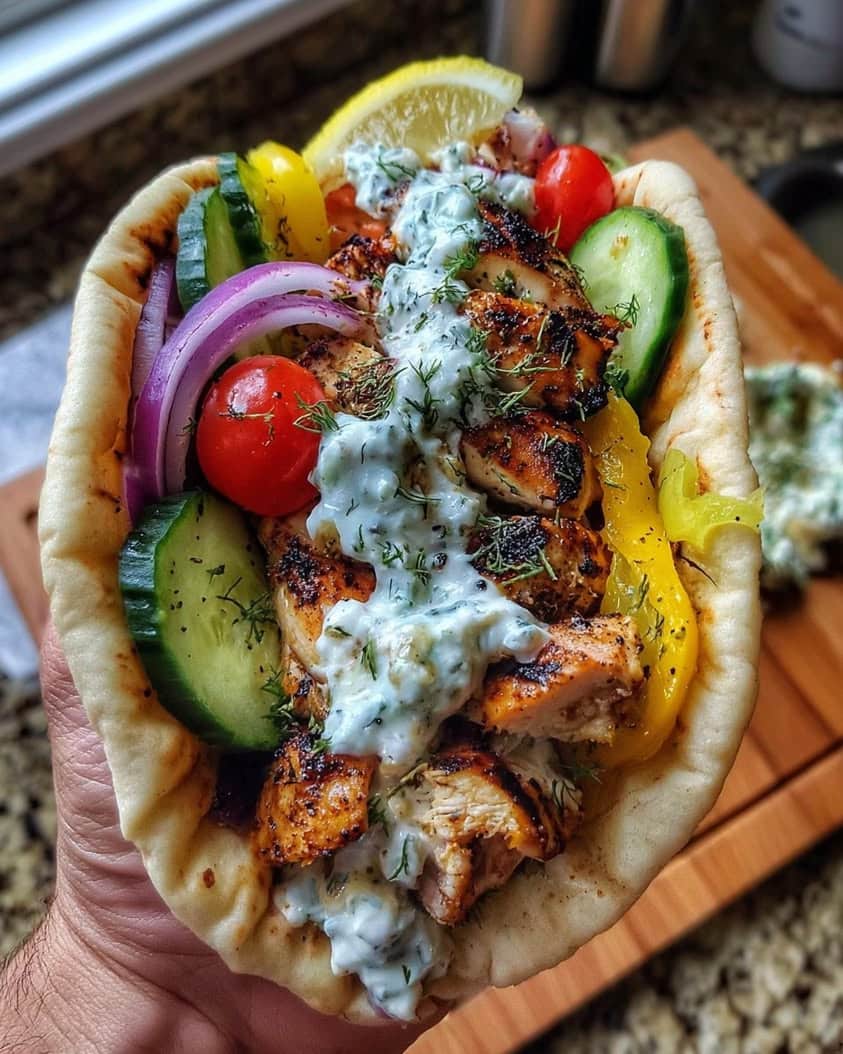
- Visual Appeal: The vibrant colors from the tomatoes, red onion, and green lettuce create a feast for the eyes. A generous drizzle of the white and crumbly feta tzatziki sauce makes the presentation truly Instagram-worthy.
- Skill Level Needed: This is a fantastic recipe for beginners. The steps are straightforward, involving simple marinating, cooking, and assembling. No advanced techniques are required for success.
- Special Equipment: You only need basic kitchen tools: a sharp knife, a mixing bowl, and a large skillet or grill pan. A box grater for the cucumber in the tzatziki is helpful but not mandatory.
Recipe Overview
- Difficulty Level: We rate this Mediterranean Chicken Gyros recipe as easy. The process involves basic knife skills for chopping vegetables and a simple marinade you can whisk together in minutes. Furthermore, cooking the chicken requires only standard pan-searing, making it accessible for cooks of all levels. The assembly is intuitive and fun, perfect for involving the whole family.
- Category: This dish fits beautifully into several categories: a quick and easy weeknight dinner, a meal prep superstar for lunches, and an impressive yet casual option for entertaining guests. It’s a complete, balanced meal with protein, vegetables, and carbohydrates all in one.
- Cuisine: This recipe is firmly rooted in Greek and broader Mediterranean cuisine. It draws inspiration from the classic Greek gyro, adapting it for the home kitchen with accessible ingredients and cooking methods. The flavor profile honors traditional combinations of lemon, oregano, garlic, and yogurt.
- Cost: Making these gyros at home is significantly more cost-effective than dining out. Chicken thighs are an affordable protein, and the vegetables and dairy components are pantry staples. Overall, you can expect to feed a family of four for a fraction of the cost of restaurant gyros.
- Season: This is truly a year-round recipe. It feels light and fresh for spring and summer meals but is hearty enough for fall and winter. The bright flavors are especially welcome during colder months when you crave a taste of sunshine.
- Occasion: These gyros are incredibly versatile for any occasion. They are perfect for a fast Tuesday night dinner, a casual weekend lunch, or a build-your-own gyro bar at a party. Their handheld nature also makes them excellent for picnics or packed lunches.
Why You’ll Love This Recipe
First and foremost, the taste is absolutely phenomenal. Each bite of these Mediterranean Chicken Gyros is a layered experience. You get the savory, herb-marinated chicken, the cool and crunchy vegetables, and the rich, tangy creaminess of the feta tzatziki sauce. This combination is universally appealing and guaranteed to satisfy even the pickiest eaters. The balance of flavors is restaurant-quality, yet you achieve it with simple, wholesome ingredients from your local grocery store.
From a practical standpoint, the convenience factor is a major win. The marinade comes together in minutes, and the chicken cooks quickly in a pan. Meanwhile, you can prepare the fresh toppings and the creamy feta tzatziki sauce. Consequently, you have a complete, impressive meal on the table in well under an hour. This efficiency makes it a reliable go-to recipe when time is short but you still want a delicious, home-cooked dinner.
Nutritionally, this recipe is a smart choice. Chicken thighs provide high-quality protein and beneficial fats, while the fresh vegetables add fiber, vitamins, and antioxidants. Using Greek yogurt as the base for the tzatziki sauce boosts the protein content even further. You control the sodium and fat levels, unlike with takeout. Therefore, you can enjoy a flavorful, satisfying meal that also supports your health goals.
For social gatherings, these gyros are a total crowd-pleaser. The interactive, build-your-own aspect makes them perfect for casual entertaining. Simply set out bowls of the warm chicken, sliced veggies, tzatziki sauce, and warm pitas, and let your guests assemble their own creations. This takes the pressure off the host and ensures everyone gets exactly what they want. It’s a fun, engaging way to serve a meal that sparks conversation.
Finally, the cost-effectiveness and accessibility cannot be overstated. Recreating the vibrant flavors of a Greek restaurant at home saves you a considerable amount of money. The ingredients are common and easy to find. Additionally, the recipe is highly adaptable; you can use chicken breasts, swap in different veggies, or adjust the spices to your liking. This flexibility ensures you can always make a version of this delicious meal with what you have on hand.
Historical Background and Cultural Significance
The gyro, a cornerstone of Greek street food, has a fascinating history that intertwines with the movement of people and cooking technologies. Its name comes from the Greek word “γύρος” (yee-ros), meaning “turn” or “revolution,” which refers to the vertical rotisserie on which the meat is traditionally cooked. Interestingly, this method of cooking stacked, seasoned meat on a vertical spit has roots in the Ottoman Empire’s doner kebab. The modern gyro, as known in Greece today, became popular in Athens following an influx of refugees from Asia Minor in the 1920s, who brought their rotisserie traditions with them.
Culturally, the gyro is more than just fast food in Greece; it is a symbol of conviviality and quick, satisfying nourishment. You find gyro shops (souvlatzidika) on nearly every corner in Greek cities, serving locals and tourists alike. It is commonly eaten as a late-night snack after an evening out or as a quick lunch. The combination of meat, tzatziki, tomatoes, onion, and fries wrapped in soft pita is a beloved national treasure. The dish represents Greek ingenuity in creating something incredibly delicious from humble, accessible ingredients.
The recipe has evolved significantly as it traveled the globe. In the United States, for instance, the meat is often not cooked on a vertical spit but rather as seasoned, grilled slices or chunks of chicken, pork, or beef. This adaptation makes the gyro accessible to home cooks without specialized equipment. The tzatziki sauce has also seen variations, with the addition of feta cheese, as in our creamy feta tzatziki, being a popular modern twist that adds extra richness and tang. These evolutions show how traditional dishes adapt to new environments while retaining their soul.
Regional variations within Greece and the Mediterranean are also noteworthy. In some areas, the gyro might include different herbs or a variation of the sauce. In other parts of the Mediterranean, similar wraps exist, like the Turkish döner or the Arab shawarma, each with its distinct spice profiles and accompaniments. Our Mediterranean Chicken Gyros recipe pays homage to this tradition while utilizing a simple pan-cooking method perfect for the home kitchen. It captures the essential spirit of the dish—robust, flavorful, and meant to be shared.
Ingredient Deep Dive
Let’s start with the chicken. We recommend boneless, skinless chicken thighs for their superior flavor and juiciness. Thighs have a slightly higher fat content than breasts, which keeps them moist during high-heat cooking and allows them to absorb the marinade beautifully. From a nutritional standpoint, they are an excellent source of protein, iron, and zinc. For the best results, trim any excess fat and pat the thighs dry before marinating to ensure the spices adhere properly. If you prefer white meat, chicken breasts can be substituted, but be vigilant not to overcook them.
Greek yogurt is the non-negotiable base for an authentic, creamy feta tzatziki sauce. Historically, strained yogurt has been a staple in Middle Eastern and Mediterranean diets for centuries. Its thick, tangy profile is perfect for sauces. Nutritionally, it’s a powerhouse, packed with protein, probiotics for gut health, and calcium. Always choose plain, full-fat Greek yogurt for the richest texture and flavor. Before using, you can strain it further through cheesecloth for an even thicker sauce. Do not use regular yogurt, as it will be too thin and watery.
Fresh dill and mint are the herbal soul of the tzatziki. Dill, with its delicate, feathery fronds, offers a sweet, grassy note, while mint provides a bright, cooling freshness. These herbs have been used medicinally and culinarily in the Mediterranean region for millennia. They are rich in antioxidants and add vibrant color. For the best flavor, always use fresh herbs, not dried. Chop them just before adding to the sauce to prevent bruising and browning. If you must substitute, fresh parsley can stand in for dill in a pinch, but the flavor profile will shift.
The cucumber in the tzatziki is crucial for its refreshing crunch and moisture. English or Persian cucumbers are ideal because they have fewer seeds and thinner skin. Historically, cucumbers originated in South Asia but were cultivated in the Mediterranean region as early as Roman times. They are hydrating and contain beneficial vitamins like K and C. The key step is to grate the cucumber and then squeeze out all the excess water thoroughly. This prevents your creamy feta tzatziki sauce from becoming diluted and ensures it stays thick and luscious.
Feta cheese is our star addition to the classic tzatziki. This brined curd cheese, made traditionally from sheep’s or goat’s milk, is a protected designation of origin (PDO) product in Greece. Its salty, tangy flavor elevates the sauce to a new level. Feta is a good source of calcium and protein. For the best results in your Mediterranean Chicken Gyros, buy a block of feta packed in brine, not pre-crumbled, as it will be creamier and more flavorful. Crumble it yourself just before mixing into the sauce for the perfect texture.
Common Mistakes to Avoid
- Not squeezing the cucumber. Adding grated cucumber with all its water to the tzatziki is the number one mistake. This will make your creamy feta tzatziki sauce runny and dilute the flavors. Always use a clean kitchen towel or your hands to wring out every last drop of moisture.
- Overcooking the chicken. Chicken thighs are forgiving, but they can still become dry and tough if cooked too long. Cook just until the internal temperature reaches 165°F and the juices run clear. The chicken will continue to cook slightly from residual heat after you remove it from the pan.
- Using low-fat yogurt. Fat carries flavor and creates a luxurious mouthfeel. Non-fat or low-fat Greek yogurt will make your tzatziki taste thin and overly tangy. For the richest, most authentic sauce, full-fat Greek yogurt is essential.
- Skipping the marinade time. While you can cook the chicken immediately, allowing it to marinate for even 30 minutes makes a dramatic difference. The flavors penetrate the meat, resulting in much more flavorful Mediterranean Chicken Gyros. For best results, marinate for 2-4 hours or overnight.
- Not warming the pitas. A cold, stiff pita bread can tear and makes the eating experience less enjoyable. Briefly warm your pitas in a dry skillet, in the oven, or in the microwave wrapped in a damp paper towel. This makes them soft, pliable, and ready to wrap.
- Overloading the wrap. It’s tempting to pack in all the delicious ingredients, but an overstuffed gyro is impossible to eat neatly. Use a moderate amount of chicken and toppings so you can fold and roll the pita without everything falling out the bottom.
- Using dried herbs in the tzatziki. Dried dill or mint will not reconstitute properly in the cold sauce and will have a dusty, muted flavor. The bright, fresh notes of the creamy feta tzatziki sauce depend entirely on using fresh herbs.
- Not seasoning the chicken adequately. Be generous with the salt in your marinade. Chicken needs proper seasoning to bring out its natural flavor and to stand up to the other components. Taste your marinade; it should be well-seasoned.
Essential Techniques
Mastering the marinade is your first step to incredible flavor. A marinade typically has three components: an acid (like lemon juice) to tenderize, oil to carry flavor and moisture, and seasonings. For these Mediterranean Chicken Gyros, whisk your olive oil, lemon juice, garlic, and dried herbs thoroughly before adding the chicken. Ensure each piece is fully coated. Marinating in a sealed bag allows the liquid to surround the meat evenly. Remember, even a short marinating time is beneficial, but longer periods (up to overnight) will deepen the flavors profoundly.
Properly searing the chicken is critical for texture and taste. Heat your skillet or grill pan over medium-high heat until it’s properly hot before adding the oil and chicken. This initial high heat creates a flavorful brown crust through the Maillard reaction. Do not overcrowd the pan; cook the chicken in batches if necessary. Overcrowding causes the meat to steam instead of sear, resulting in pale, soggy chicken. Let the chicken cook undisturbed for a few minutes to develop that beautiful crust before flipping.
The technique for perfect tzatziki hinges on moisture control. After grating the cucumber, the crucial step is to remove as much water as possible. Place the grated cucumber in the center of a clean, lint-free kitchen towel. Gather the edges and twist tightly over the sink, squeezing until no more liquid drips out. This might seem like a small step, but it is the difference between a creamy, dip-like sauce and a watery, disappointing one. Your creamy feta tzatziki sauce will hold its texture and cling to the chicken beautifully.
Allowing the tzatziki to rest, or “bloom,” is a subtle but important technique. After mixing all the ingredients, cover the sauce and refrigerate it for at least 30 minutes before serving. This resting time allows the flavors of the garlic, dill, mint, and feta to meld and intensify. The sauce will taste noticeably more cohesive and flavorful after this brief chill. For the best results, make your tzatziki first so it has time to rest while you prepare and cook the chicken and vegetables.
Pro Tips for Perfect Mediterranean Chicken Gyros
For an extra layer of flavor, add a pinch of sumac or smoked paprika to your chicken marinade. These spices add a subtle complexity that mimics the depth of traditional rotisserie cooking.
If you have time, let the chicken come to room temperature for 15-20 minutes before cooking. This promotes more even cooking, preventing the outside from overcooking before the inside is done.
To prevent soggy pitas, create a barrier. Spread a generous layer of the creamy feta tzatziki sauce directly on the warm pita first. This creates a protective layer between the bread and the juicy chicken and vegetables.
For optimal juiciness, let the cooked chicken rest for 5 minutes before slicing. This allows the juices, which have been driven to the center during cooking, to redistribute throughout the meat.
Toast your pitas in the same pan you used for the chicken. The residual oils and fond (browned bits) will impart an incredible flavor to the bread.
If your feta is very salty, you can soak it in cold water or milk for 10-15 minutes before crumbling. This will temper the saltiness without washing away all the flavor.
For a truly authentic touch, add a few thinly sliced fries inside your gyro. This is a common practice in Greece and adds a wonderful soft texture and savory element.
Use a microplane to grate the garlic for the tzatziki. This creates a fine paste that distributes evenly throughout the sauce without leaving harsh chunks of raw garlic.
Variations and Adaptations
For regional variations, consider a Turkish twist by using a yogurt sauce with more mint and a sprinkle of pul biber (Aleppo pepper). Alternatively, a Lebanese-style version might include toum, a powerful garlic sauce, instead of tzatziki. You could also swap the chicken for thinly sliced lamb or beef, marinated in similar spices for a more traditional gyro meat profile. These small changes can take your Mediterranean Chicken Gyros on a culinary tour of the Eastern Mediterranean.
Seasonal adaptations are easy and fun. In the summer, add grilled zucchini, eggplant, or bell peppers to the wrap. During cooler months, you might serve the components in a bowl over warm rice or quinoa instead of in a pita. For a heartier winter version, add a spoonful of warm, spiced lentils alongside the chicken. The basic recipe is a fantastic canvas for incorporating whatever fresh produce is at its peak.
Dietary modifications are straightforward. For a gluten-free version, use gluten-free pitas or serve the gyro as a salad bowl over greens. To make it dairy-free, omit the feta and use a dairy-free yogurt alternative for the tzatziki (coconut yogurt works, but note the flavor shift). For a lower-carb or keto option, wrap the fillings in large, sturdy lettuce leaves like romaine or butter lettuce instead of pita bread.
Flavor variations can keep this recipe exciting. Add a spoonful of harissa paste to the marinade for a spicy North African kick. Incorporate chopped sun-dried tomatoes or kalamata olives into the tzatziki for a briny, umami boost. You could also use different herb combinations in the marinade, such as rosemary and thyme, for a more Provençal flavor profile. Don’t be afraid to experiment with the spices you love.
Serving and Presentation Guide
Plating techniques can elevate this casual meal. For a family-style presentation, arrange all the components in separate, colorful bowls on the table: a bowl of warm chicken, a platter of sliced tomatoes and onions, a bowl of shredded lettuce, a dish of warm pitas wrapped in a cloth, and the creamy feta tzatziki sauce in a serving bowl with a spoon. This encourages interaction and lets everyone build their perfect gyro. For individual plates, you can pre-assemble the gyros, securing them with parchment paper or foil at the bottom for easy handling.
Garnishing adds the final touch of freshness and color. Sprinkle a little extra crumbled feta and chopped fresh dill over the top of the assembled gyro. A light drizzle of extra virgin olive oil and a squeeze of fresh lemon juice just before serving brightens all the flavors. A few whole mint leaves or a dusting of paprika also makes for a beautiful, restaurant-worthy presentation that signals care and attention to detail.
Traditional accompaniments are simple and effective. A classic Greek village salad (horiatiki) with tomatoes, cucumber, red onion, olives, and feta is the perfect side. Alternatively, a side of lemon-herb roasted potatoes or a simple rice pilaf complements the gyros beautifully. For a lighter meal, a simple plate of sliced cucumbers and tomatoes drizzled with olive oil and oregano is all you need.
Wine and Beverage Pairing
Wine pairings for these vibrant Mediterranean Chicken Gyros should complement the garlic, lemon, and herbal notes without overpowering them. A crisp, dry white wine like Assyrtiko from Santorini is a classic Greek pairing; its high acidity and citrus notes cut through the richness of the tzatziki. A Sauvignon Blanc or a Vermentino would also be excellent choices. If you prefer red, opt for a light-bodied, low-tannin red like a Beaujolais or a Greek Xinomavro rosé, which won’t clash with the garlic and yogurt.
For non-alcoholic alternatives, consider beverages that offer refreshment and balance. Sparkling water with a squeeze of lemon or lime is always perfect. A homemade lemonade, perhaps infused with a few sprigs of fresh mint or rosemary, mirrors the flavors in the dish beautifully. Iced herbal teas, like mint or chamomile, are also lovely, light choices that cleanse the palate between bites of the savory, creamy gyro.
If you enjoy beer, a crisp lager or pilsner is a fantastic match. The clean, effervescent quality of these beers refreshes the palate and complements the garlic and herbs. A wheat beer (hefeweizen) with its subtle citrus and clove notes can also pair wonderfully with the spices in the chicken and the creamy texture of the feta tzatziki sauce. Avoid overly hoppy or bitter beers, as they can amplify the garlic’s pungency.
Storage and Shelf Life
Proper storage is key to enjoying leftovers. Store all components separately for the best results. Place the cooked and sliced chicken in an airtight container in the refrigerator; it will keep for 3-4 days. The creamy feta tzatziki sauce should be stored in its own sealed container and is best consumed within 4-5 days. The fresh vegetable toppings (tomato, onion, lettuce) should be stored separately in containers or bags to prevent sogginess. Assembled gyros do not store well and will become soggy.
For freezing, the cooked chicken freezes exceptionally well. Allow it to cool completely, then place it in a freezer-safe bag or container, removing as much air as possible. It can be frozen for up to 3 months. The tzatziki sauce does not freeze well, as the yogurt and cucumber will separate and become watery upon thawing. Always thaw frozen chicken in the refrigerator overnight.
Reheating instructions are simple. Reheat the chicken gently in a skillet over medium heat with a tiny splash of water or chicken broth to prevent drying out. You can also reheat it in the microwave in 30-second intervals. The pitas are best rewarmed in a toaster oven or dry skillet to restore their softness. Always add fresh vegetables and cold tzatziki after reheating the chicken and pita for the best texture contrast.
Make Ahead Strategies
You can prepare nearly every component of these Mediterranean Chicken Gyros in advance, making them a meal prep superstar. Marinate the chicken up to 24 hours ahead and keep it sealed in the refrigerator. The creamy feta tzatziki sauce actually benefits from being made 1-2 days in advance, as the flavors have more time to meld. Chop your vegetables (except the lettuce, which may wilt) and store them in separate containers in the fridge. This advance prep means a weeknight dinner can be on the table in the time it takes to cook the chicken and warm the pitas.
For a party or gathering, this make-ahead approach is a lifesaver. Cook the chicken earlier in the day, let it cool, slice it, and store it covered. Gently reheat it just before serving. Have all your toppings prepped and in bowls. Your tzatziki will be perfectly chilled and flavorful. This allows you to be a present host rather than stuck in the kitchen while your guests arrive. Simply set everything out and let people assemble their own creations.
Scaling Instructions
Scaling this recipe up or down is very straightforward because it uses simple ratios. To halve the recipe, simply divide all ingredient quantities by two. Use a smaller skillet for cooking the chicken. To double or triple the recipe for a crowd, multiply all ingredients accordingly. The key consideration when scaling up is to avoid overcrowding the pan when cooking the chicken; cook in multiple batches to ensure proper searing. You may also need to use a larger bowl for mixing the tzatziki or make the sauce in two separate batches.
When scaling for meal prep, consider how you plan to use the leftovers. If you’re preparing lunches for the week, it’s easy to double the chicken and tzatziki recipe. Store individual portions in containers for grab-and-go meals. Remember that the marinating time does not need to be adjusted when scaling. However, if you are marinating a very large quantity of chicken, ensure it is in a large, non-reactive container or in several bags, with the marinade distributed evenly.
Nutritional Deep Dive
This Mediterranean Chicken Gyros recipe offers a well-balanced nutritional profile. A typical serving provides a substantial amount of high-quality protein from the chicken thighs and Greek yogurt, which is essential for muscle repair and satiety. The healthy fats come primarily from the olive oil in the marinade and the feta cheese, offering monounsaturated fats that support heart health. The carbohydrates are present in the pita bread and vegetables, providing energy and fiber. This balance makes it a sustaining meal that won’t lead to a rapid energy crash.
Micronutrient analysis reveals a wealth of vitamins and minerals. The vegetables contribute vitamin C from tomatoes, vitamin K from lettuce, and a variety of antioxidants. The garlic and herbs offer anti-inflammatory compounds. Greek yogurt and feta are excellent sources of calcium and probiotics. The lemon juice provides vitamin C and aids in iron absorption from the chicken. Overall, this meal supports immune function, bone health, and digestive wellness, aligning perfectly with the renowned health benefits of the Mediterranean diet.
Dietary Adaptations
For a gluten-free adaptation, the simplest switch is to use certified gluten-free pita bread, which is widely available. Alternatively, serve the gyro as a salad bowl over a bed of mixed greens or quinoa. Ensure all your spices and other packaged ingredients (like yogurt) are certified gluten-free to avoid cross-contamination. This adaptation allows those with celiac disease or gluten sensitivity to enjoy all the flavors of Mediterranean Chicken Gyros without concern.
To create a dairy-free version, you will need to modify the creamy feta tzatziki sauce. Use a plain, unsweetened dairy-free yogurt made from coconut, almond, or soy. The flavor will be different but can still be delicious. Omit the feta cheese, or use a dairy-free feta alternative if you can find one. For the marinade, the recipe is already dairy-free. This adaptation makes the meal accessible to those with lactose intolerance or a dairy allergy.
A low-carb or keto adaptation focuses on eliminating the pita bread. Serve the chicken, toppings, and sauce in a bowl, or use large, sturdy lettuce leaves as wraps (romaine or butter lettuce work well). Be mindful that the carbohydrate count in the vegetables is minimal, but onions and tomatoes do contain some carbs. For a strict keto approach, you can reduce the amount of onion and tomato used as toppings. The chicken and sauce are naturally low in carbs.
Troubleshooting Guide
If your tzatziki sauce is too runny, the issue is almost always excess moisture from the cucumber. Unfortunately, you cannot remove water once it’s mixed in. For future batches, squeeze the grated cucumber more thoroughly. For the current batch, you can try to thicken it by adding more strained Greek yogurt or a little extra crumbled feta. Alternatively, let it drain in a fine-mesh sieve lined with cheesecloth in the refrigerator for an hour to remove some liquid.
If the chicken is bland, the likely culprits are insufficient marinating time or not enough salt. For next time, marinate longer and be generous with seasoning. To rescue cooked but bland chicken, you can toss the sliced pieces in a small amount of the marinade (that has not touched raw chicken) or a quick drizzle of lemon juice and olive oil after cooking. A sprinkle of flaky sea salt just before serving can also wake up the flavors.
If your pitas are tearing, they are likely too cold or you are overfilling them. Always warm pitas until they are soft and pliable. When assembling, place the fillings in the center, leaving a border at the bottom. Fold the bottom edge up over the fillings, then fold the sides in, rolling from the bottom up to create a secure packet. Using a piece of parchment paper or foil to wrap the bottom half can provide extra support for eating.
Recipe Success Stories
We love hearing from our community about their experiences with this recipe. One reader, Sarah from Colorado, shared that this recipe has become her family’s “Friday Night Feast” tradition. Her kids love customizing their own gyros, and she appreciates how quickly it comes together after a busy week. She even started adding a pinch of cumin to the chicken marinade, which she says gives it an extra warmth her family adores. It’s stories like these that remind us why we love sharing accessible, flavorful recipes.
Another success story comes from Mark, who used this recipe for a casual summer party. He set up a full gyro bar with the chicken, tzatziki, and all the fixings, alongside a Greek salad and lemon potatoes. He reported that it was a massive hit, with guests going back for seconds and thirds. He particularly noted that making the creamy feta tzatziki sauce a day ahead was a game-changer for reducing day-of stress. His photos of the colorful spread were absolutely stunning!
Frequently Asked Questions
Can I use chicken breasts instead of thighs? Yes, you can. Chicken breasts are leaner, so be careful not to overcook them, as they can dry out quickly. Cook to an internal temperature of 165°F and consider slicing them before cooking for faster, more even results. The flavor will be slightly milder, but still delicious.
How long can I store the tzatziki sauce? Your homemade creamy feta tzatziki sauce will keep well in an airtight container in the refrigerator for 4-5 days. The flavors often improve after a day. You may see a little liquid separate on top after storage; simply stir it back in before serving.
Can I grill the chicken instead of cooking it in a skillet? Absolutely! Grilling adds wonderful smoky flavor. Preheat your grill to medium-high heat and cook the chicken for 5-7 minutes per side, or until cooked through. Grilling is a fantastic method for these Mediterranean Chicken Gyros, especially in the summer.
What can I use if I don’t have fresh dill? While fresh is best, in a pinch, you can substitute with 1 teaspoon of dried dill weed for every tablespoon of fresh called for. Note that the flavor will be less bright. Fresh parsley or chives could also provide a different but pleasant herbal note.
Is there a way to make this recipe spicier? For a spicy kick, add 1/2 to 1 teaspoon of red pepper flakes or a chopped fresh red chili to the chicken marinade. You can also stir a little harissa paste or sriracha into the tzatziki sauce just before serving.
Can I prepare the chicken in the oven? Yes. Arrange the marinated chicken on a baking sheet lined with parchment paper. Bake at 400°F (200°C) for 20-25 minutes, or until cooked through, flipping halfway. For more browning, you can broil for the last 2-3 minutes.
My tzatziki tastes too garlicky. How can I fix it? The garlic flavor will mellow slightly as it sits. To balance it immediately, you can add a bit more Greek yogurt and a squeeze of lemon juice. Next time, start with one clove of garlic and add more to taste after the sauce has rested.
What are the best pitas to use? Look for pocketless Greek or Mediterranean-style pitas. They are softer and more pliable than pocket pitas, making them ideal for wrapping. If you only have pocket pitas, you can slice them open to create a single layer for wrapping.
Can I make this recipe ahead for meal prep? It’s excellent for meal prep! Store the cooked sliced chicken, tzatziki sauce, and chopped vegetables in separate containers. Assemble your gyro just before eating to keep the pita from getting soggy. It makes for perfect lunches throughout the week.
Is this recipe kid-friendly? Very! The flavors are approachable, and kids often enjoy the hands-on aspect of building their own wrap. You can serve the components deconstructed for picky eaters. The creamy feta tzatziki sauce is usually a big hit with its cool, tangy flavor.
Mediterranean Chicken Gyros with Creamy Feta Tzatziki
- Total Time: 45 minutes
- Yield: 4
Description
Tender, marinated chicken cooked to perfection and wrapped in warm pita with a tangy, creamy feta tzatziki sauce, fresh veggies, and Mediterranean flavors.
Ingredients
- 1 lb boneless, skinless chicken thighs, sliced into strips
- 2 tbsp olive oil
- 1 tbsp lemon juice
- 2 cloves garlic, minced
- 1 tsp dried oregano
- 1 tsp paprika
- 1/2 tsp ground cumin
- Salt and black pepper to taste
- 4 large pita breads
- 1 cup shredded lettuce
- 1/2 cup diced tomatoes
- 1/4 cup sliced red onion
- 1/2 cup plain Greek yogurt
- 1/2 cup crumbled feta cheese
- 1/2 cup grated cucumber, squeezed dry
- 1 tbsp fresh dill, chopped
- 1 tsp lemon zest
Instructions
- In a bowl, combine olive oil, lemon juice, garlic, oregano, paprika, cumin, salt, and pepper. Add chicken strips, toss to coat, and marinate for at least 30 minutes.
- While chicken marinates, make the tzatziki: mix Greek yogurt, feta, grated cucumber, dill, and lemon zest in a bowl. Chill until ready to use.
- Heat a skillet over medium-high heat. Cook chicken strips for 6-8 minutes until browned and cooked through.
- Warm pita breads in the skillet or oven for 1-2 minutes.
- Assemble gyros: spread tzatziki on each pita, add lettuce, tomatoes, red onion, and cooked chicken. Fold or wrap and serve immediately.
Notes
You can customize the seasonings to taste.
- Prep Time: 15 minutes
- Cook Time: 30 minutes
- Method: Main
- Cuisine: Mediterranean