Greek Loaded Hummus: A Vibrant Mediterranean Appetizer Recipe
Imagine a creamy, dreamy canvas of hummus transformed into a stunning, edible landscape. This Greek loaded hummus recipe does exactly that. It takes the beloved chickpea dip and elevates it into a show-stopping centerpiece for any gathering. Moreover, it is a celebration of fresh, vibrant Mediterranean flavors that come together in minutes. This dish is not just food; it is an experience that delights the eyes before it even reaches your taste buds.
This Greek loaded hummus recipe is perfect for anyone seeking a healthy, impressive appetizer. The combination of textures and tastes is simply irresistible. You get the smooth, garlicky base of classic hummus, topped with a colorful array of crunchy vegetables, briny olives, and creamy feta. Consequently, every scoop delivers a perfect bite. It is an incredibly versatile dish that works for casual snacking, elegant parties, or a quick, protein-packed lunch.
Ultimately, this recipe proves that eating well does not have to be complicated. It relies on simple, wholesome ingredients you can find at any grocery store. The assembly is part of the fun, allowing for creativity and personal touch. Whether you are a seasoned cook or a kitchen novice, this Greek loaded hummus will become your new go-to. It is a guaranteed crowd-pleaser that brings the sunny flavors of the Mediterranean straight to your table.
Quick Recipe Highlights
- Flavor Profile: This Greek loaded hummus recipe bursts with classic Mediterranean tastes. You experience the earthy, nutty base of tahini and chickpeas first. Then, bright notes from lemon and fresh parsley cut through the richness. Finally, salty feta and briny Kalamata olives provide the perfect finishing savor.
- Texture: The texture journey is a key part of the appeal. It starts with an ultra-smooth and creamy hummus foundation. Subsequently, you encounter the satisfying crunch of diced cucumber and bell pepper. The creamy crumbles of feta cheese and whole chickpeas add further delightful contrasts in every mouthful.
- Aroma: The aroma is fresh and inviting, hinting at the flavors to come. Fresh lemon zest and juice provide a bright, citrusy top note. Meanwhile, the earthy scent of tahini and the sharp fragrance of fresh garlic form a robust base. Finally, the herbal note of fresh parsley ties the aromatic profile together beautifully.
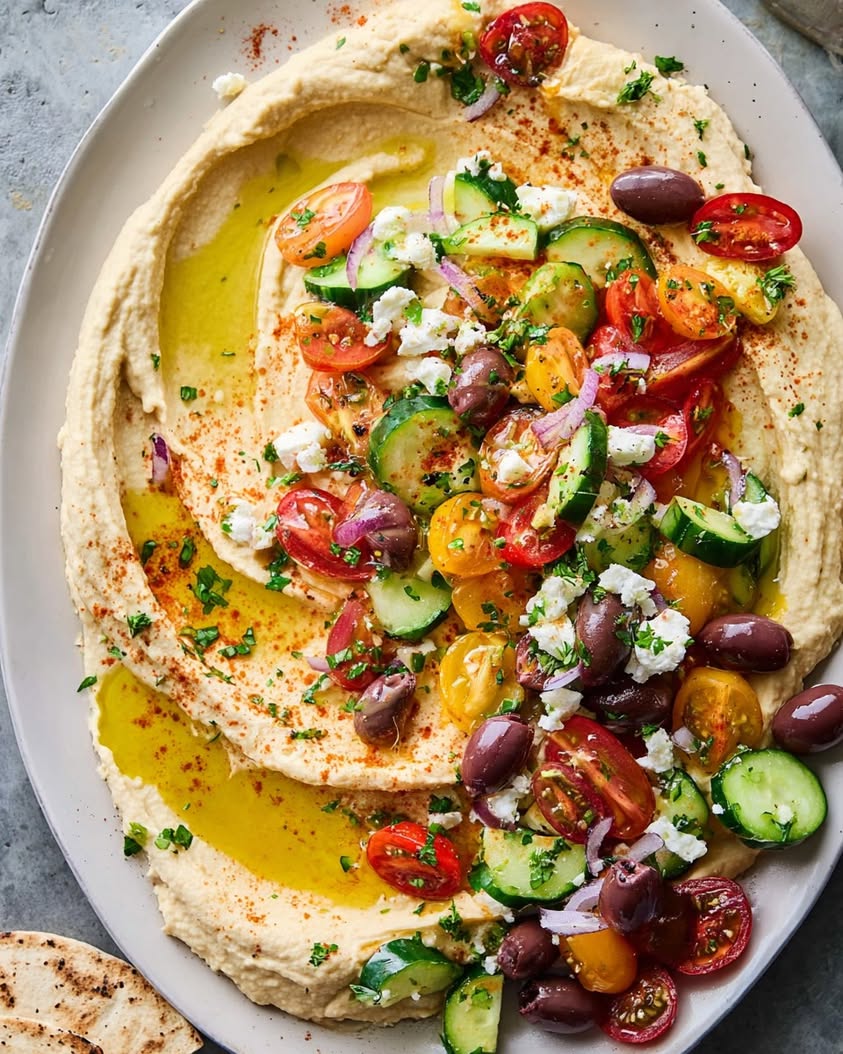
- Visual Appeal: Presentation is paramount for this Greek loaded hummus recipe. The dip becomes a colorful mosaic of red, green, black, and white. Vibrant cherry tomatoes, green cucumber, dark olives, and white feta create a feast for the eyes. This stunning presentation makes it the star of any appetizer spread.
- Skill Level Needed: This recipe requires absolutely no advanced cooking skills. It is an assembly-style dish that anyone can master. The most complex task is chopping vegetables. Therefore, it is perfect for beginners, busy weeknights, or when you need an impressive dish without stress.
- Special Equipment: You only need a food processor or high-speed blender to achieve the creamiest hummus base. A sharp knife and cutting board are essential for prepping the fresh toppings. Otherwise, no special tools are required, making this recipe accessible to all home cooks.
Recipe Overview
- Difficulty Level: This Greek loaded hummus recipe is classified as easy for several compelling reasons. First, it involves no actual cooking or heat application. Second, the steps are purely about preparation and assembly. The technique for making smooth hummus is straightforward with modern appliances. Finally, there is little room for error, ensuring success every single time.
- Category: This dish fits beautifully into multiple meal categories. Primarily, it serves as a spectacular appetizer or party dip. Additionally, it can be a light lunch or dinner when served with hearty bread and a salad. It also works wonderfully as a side dish alongside grilled meats or part of a mezze platter.
- Cuisine: This recipe is firmly rooted in Mediterranean and Greek culinary traditions. It draws inspiration from classic Greek flavors like lemon, oregano, feta, and olive oil. The concept of “loading” a dip is a modern twist on traditional meze, which are small plates meant for sharing. It celebrates the fresh, vegetable-forward philosophy of the region.
- Cost: Preparing this Greek loaded hummus recipe is very cost-effective. Canned chickpeas and basic pantry spices form the affordable base. Fresh vegetables like cucumber and tomato are inexpensive, especially in season. The priciest items, tahini and feta cheese, are used in moderate amounts and provide significant flavor impact for the investment.
- Season: This is a perfect year-round recipe, but it truly shines in spring and summer. During these seasons, the required vegetables like cucumber and tomatoes are at their peak freshness and flavor. Furthermore, its cool, refreshing nature makes it ideal for warm-weather entertaining. It is a fantastic way to enjoy bright, seasonal produce.
- Occasion: This versatile dish suits almost any occasion imaginable. It is ideal for casual game day gatherings, potlucks, and picnics. Simultaneously, its elegant presentation makes it suitable for holiday parties, bridal showers, and dinner parties. It is also a fantastic healthy snack for weekly meal prep.
Why You’ll Love This Recipe
You will adore the incredible taste and texture of this Greek loaded hummus recipe. Every bite is a harmonious symphony of flavors and sensations. The creamy, garlicky hummus base provides a rich and satisfying foundation. Then, the toppings add bursts of freshness, saltiness, and crunch. This combination is utterly addictive and far more exciting than plain hummus. It transforms a simple dip into a complete sensory experience that keeps you coming back for more.
The convenience factor of this dish is another major reason to love it. You can prepare a stunning, restaurant-quality appetizer in about fifteen minutes. There is no need to turn on the oven or stand over a hot stove. Simply blend, chop, and assemble. This makes it a lifesaver for unexpected guests or when you need a quick dish to contribute to an event. It is the epitome of effortless entertaining.
From a nutritional standpoint, this Greek loaded hummus recipe is a powerhouse. Chickpeas are an excellent source of plant-based protein and fiber, promoting fullness and digestive health. The fresh vegetables add a wealth of vitamins, minerals, and antioxidants. Olive oil provides heart-healthy monounsaturated fats. Consequently, you are indulging in a delicious dip that also fuels your body with wholesome, beneficial ingredients.
The social and entertaining value of this recipe cannot be overstated. It is designed for sharing and sparks conversation the moment you set it on the table. People are naturally drawn to its vibrant, colorful presentation. It encourages gathering around, dipping, and enjoying each other’s company. This Greek loaded hummus becomes more than food; it is a centerpiece that fosters connection and joy.
Finally, this recipe is remarkably cost-effective and accessible. You likely have many of the spices and oils in your pantry already. The fresh ingredients are common and affordable. Compared to buying a pre-made appetizer platter or going out for mezze, making this at home saves a significant amount of money. You get a larger quantity of a fresher, tastier product for a fraction of the cost.
Historical Background and Cultural Significance
The story of hummus is ancient and rich, spanning centuries and cultures. While its exact origin is hotly debated among several Middle Eastern countries, its basic form dates back to ancient Egypt. Chickpeas have been a staple crop in the region for over 7,000 years. Early versions likely involved mashing cooked chickpeas with sesame paste. The dish we recognize today evolved over millennia as trade routes spread ingredients like garlic, lemon, and olive oil.
Hummus holds deep cultural significance across the Levant and Eastern Mediterranean. Traditionally, it is a staple meze, or small shared plate, symbolizing hospitality and community. Serving hummus to guests is a sign of welcome and generosity. In Greek cuisine, similar dips like fava (yellow split pea puree) and tzatziki share this communal role. This Greek loaded hummus recipe modernizes that tradition by creating a more substantial, visually dramatic centerpiece for sharing.
The evolution of hummus from a simple puree to a “loaded” dish is a relatively recent, global phenomenon. It reflects modern dining trends that prioritize bold flavors, visual appeal, and customizable experiences. The concept of loading a dip with toppings allows for personalization and creativity. This Greek variation specifically draws on the globally beloved flavors of Greek salad, marrying two classic dishes into one unforgettable appetizer.
Regional variations of hummus are vast, from the ultra-smooth hummus of Lebanon to the chunkier, spicier versions found in other areas. The Greek twist introduced in this recipe is characterized by specific ingredients. Feta cheese, Kalamata olives, oregano, and a generous drizzle of olive oil are hallmarks of Greek flavor profiles. This fusion respects the roots of hummus while celebrating the distinct and vibrant ingredients of Greek culinary tradition.
Ingredient Deep Dive
Chickpeas (Garbanzo Beans): Chickpeas are the heart and soul of any hummus, including this Greek loaded hummus recipe. Cultivated since Neolithic times, they are one of the world’s oldest crops. Nutritionally, they are a superstar, packed with plant-based protein, fiber, iron, and folate. For the creamiest result, use canned chickpeas and reserve the aquafaba (bean liquid). Peeling the chickpeas, while tedious, creates an unbelievably smooth texture. You can substitute with home-cooked chickpeas for even better flavor control.
Tahini: Tahini is a paste made from toasted, ground sesame seeds and is essential for authentic flavor. It has been used in Middle Eastern and Mediterranean cooking for centuries. This ingredient adds a rich, nutty depth and helps emulsify the dip for creaminess. It is a good source of healthy fats, calcium, and phosphorus. Always stir your tahini well before using, as the oil separates. For a nut-free version, you could try sunflower seed butter, though the flavor will differ.
Extra Virgin Olive Oil: High-quality extra virgin olive oil is non-negotiable. It contributes fruity, peppery notes and a luxurious mouthfeel. Olive oil cultivation is central to Mediterranean culture and cuisine. It is rich in monounsaturated fats and antioxidants. Drizzle it both in the hummus base and generously on top before serving. Store your olive oil in a cool, dark place to prevent rancidity. A robust Greek olive oil will enhance the theme perfectly.
Feta Cheese: Feta cheese brings the essential Greek element to this loaded hummus recipe. Traditionally made from sheep’s milk or a sheep-goat blend, it has a protected designation of origin in Greece. Its tangy, salty flavor and crumbly texture provide a fantastic contrast. Feta is a good source of calcium and protein. For the best taste, buy a block of feta in brine rather than pre-crumbled. If you need a dairy-free version, a firm tofu crumbled with salt and lemon juice can mimic the texture.
Kalamata Olives: These dark, almond-shaped olives are a hallmark of Greek cuisine. Grown in the Peloponnese region, they are known for their rich, fruity, and slightly wine-like flavor. They add a punch of umami and brininess that balances the other components. Kalamata olives are a source of healthy fats and antioxidants. Always purchase them with the pits in for better flavor and texture, then pit them yourself. You can substitute with another briny olive like Gaeta if necessary.
Common Mistakes to Avoid
- Using Low-Quality Tahini: The tahini’s quality directly impacts your hummus flavor. A bitter or stale tahini will ruin the entire dip. Always taste your tahini before using it. Furthermore, ensure you stir the jar thoroughly to incorporate the separated oil.
- Skipping the Ice Water: Adding ice-cold water while processing is the secret to light, fluffy hummus. It helps the emulsification process and prevents the dip from becoming gummy or pasty. Do not use room temperature or warm water for this step.
- Overlooking the Garnish: The loaded toppings are what make this recipe special. Do not just dump them on haphazardly. Arrange them in distinct sections or a beautiful pattern for maximum visual impact. The presentation is a key part of the experience.
- Underseasoning the Base: Hummus needs aggressive seasoning to stand up to the bold toppings. Taste your base hummus and adjust the salt, lemon, and garlic before adding toppings. Remember, the cold vegetables will dilute the seasoning slightly.
- Using Warm Hummus: For the best texture and to prevent wilting the fresh toppings, let your hummus base chill for at least 30 minutes before assembling. Cold hummus provides a sturdier base and a more refreshing final bite.
- Not Draining Vegetables: Cucumbers and tomatoes contain a lot of water. If you do not drain your diced vegetables on a paper towel, their moisture will seep into the hummus, making it watery and diluting the flavor.
- Forgetting the Final Drizzle: That last generous drizzle of extra virgin olive oil over the assembled dish is crucial. It adds shine, richness, and a final layer of flavor. Do not skip this finishing touch.
- Using Pre-Crumbled Feta: Pre-crumbled feta is often coated in anti-caking agents and lacks the creamy, moist texture of a block feta in brine. For superior flavor and texture, always buy a block and crumble it yourself.
Essential Techniques
Processing to Ultra-Smooth Consistency: Achieving a perfectly smooth hummus base is the foundational technique. Start by processing your tahini and lemon juice first; this “whips” the tahini and creates a creamy foundation. Then, add the other ingredients gradually while the machine is running. The key is patience; process for a full three to five minutes, scraping down the sides as needed. The visual cue for success is a hummus that is completely uniform, with no graininess, and has a light, almost fluffy appearance.
The Ice Water Emulsification: Adding ice-cold water is not just for thinning; it is a critical emulsification step. With the food processor running, slowly stream in the ice water. The cold liquid helps the fats and solids bind together into an airy, cloud-like consistency. The common pitfall is adding too much water too quickly, which can break the emulsion. Add it one tablespoon at a time until you reach a smooth, spreadable texture that holds its shape.
Strategic Vegetable Prep: Preparing the toppings correctly ensures texture and prevents sogginess. Dice your cucumber and bell pepper into small, uniform pieces for easy scooping. Crucially, place the diced cucumber in a strainer or on paper towels to drain excess moisture for 10 minutes. Halve or quarter cherry tomatoes. Pit and slice Kalamata olives. This prep guarantees each topping retains its distinct character and crunch in the final Greek loaded hummus recipe.
Pro Tips for Perfect Greek Loaded Hummus
First, for the absolute smoothest hummus, take the time to peel your canned chickpeas. Simply rub them between your fingers or a clean kitchen towel; the skins will slip right off. This extra step eliminates any hint of graininess.
Second, always use fresh lemon juice, never bottled. The bright, vibrant acidity of fresh lemon is irreplaceable and makes all the difference in balancing the rich tahini and olive oil.
Third, let your hummus base rest. After blending, cover it and refrigerate for at least an hour. This allows the flavors to meld and deepen, resulting in a more complex and delicious base for your toppings.
Fourth, season in layers. Add salt to your hummus base, a pinch to your diced vegetables, and remember that the feta and olives are already salty. This layered approach creates a perfectly balanced final flavor.
Fifth, warm your pita or chips. Serving your Greek loaded hummus with warm, toasted pita bread transforms the experience. The contrast of warm bread and cool dip is sensational.
Sixth, use the aquafaba. The liquid from the chickpea can is a magical ingredient. Adding a few tablespoons to the food processor instead of plain water makes the hummus incredibly light and fluffy.
Seventh, garnish with fresh herbs just before serving. A final sprinkle of chopped fresh dill or oregano over the assembled dish adds a pop of color and a burst of fresh aroma.
Variations and Adaptations
For regional variations, consider a Turkish twist by adding a spoonful of spicy pepper paste (harissa or Aleppo pepper) to the base and topping with ground lamb cooked with spices. A Lebanese version might include more sumac in the base and be topped with fried ground beef and pine nuts (hummus bil lahme). An Israeli-inspired take could feature a swirl of zhug (a spicy cilantro sauce) and hard-boiled eggs.
Seasonal adaptations are easy and fun. In summer, use heirloom cherry tomatoes and fresh sweet corn. For fall, top with roasted cubes of butternut squash, pomegranate arils, and toasted pecans. A winter version could include roasted Brussels sprout leaves and a drizzle of truffle oil. Spring calls for fresh peas, radish slices, and mint.
Dietary modifications are straightforward. For a vegan Greek loaded hummus, simply omit the feta cheese or use a vegan feta alternative. To make it gluten-free, serve with gluten-free crackers or vegetable crudités. For a lower-carb option, increase the ratio of vegetable toppings and use endive leaves or cucumber rounds for dipping instead of pita.
Flavor variations can take this recipe in new directions. Add roasted red peppers or a handful of fresh basil to the hummus base itself. For a smoky flavor, blend in a chipotle pepper in adobo sauce. A sun-dried tomato pesto swirled into the base creates a rich, Italian-inspired version.
Texture modifications can cater to personal preference. If you enjoy more texture, pulse the chickpeas briefly instead of processing until completely smooth. You can also add a layer of whole, seasoned chickpeas on top of the smooth base before adding the other vegetables for a double-chickpea experience.
Presentation alternatives include serving individual portions in small jars or glasses for a party. You can create a “hummus bowl” by making a well in the center of the hummus and filling it with the toppings. Alternatively, arrange the toppings in concentric colorful circles for a stunning, target-like effect.
Serving and Presentation Guide
Plating techniques set the stage. Use a wide, shallow bowl or a lipped plate to contain the hummus and toppings. Spread the hummus base in an even layer, using the back of a spoon to create decorative swirls or waves. These textures will catch the olive oil and light beautifully. Ensure the hummus layer is thick enough to support the weight of the toppings without collapsing when scooped.
Garnishing ideas go beyond the basic recipe. Add a sprinkle of dried oregano or smoked paprika for color. Include a few whole chickpeas and Kalamata olives for visual interest. Thinly sliced red onion, pickled for a few minutes in lemon juice, adds a pink hue and tang. A final flourish of microgreens or edible flowers elevates the dish to gourmet status.
Traditional accompaniments are key. Warm, pillowy pita bread, cut into triangles, is the classic choice. Offer a variety of dippers like crisp cucumber rounds, bell pepper strips, carrot sticks, and sturdy crackers. For a full Greek meze experience, serve it alongside dolmades (stuffed grape leaves), spanakopita, and grilled octopus or lamb skewers.
Modern serving suggestions include using it as a lavish spread in wraps or sandwiches. Spoon it over a grain bowl with quinoa and grilled chicken. Thin it out with a little more lemon juice and olive oil to create a creamy salad dressing for a Greek chopped salad. The possibilities extend far beyond a simple dip.
Temperature considerations are important. The hummus base and all vegetable toppings should be cold. However, the pita or bread should be warm. This contrast in temperatures is delightful. Do not let the assembled dip sit out at room temperature for more than two hours for food safety, especially if it contains dairy.
Portion control tips are helpful for planning. This recipe yields about six servings as an appetizer. If serving as part of a larger spread with other meze, it can stretch to eight to ten people. For a main dish lunch portion, it comfortably serves two to three. Always provide plenty of dippers to ensure everyone can enjoy it fully.
Wine and Beverage Pairing
Wine pairings for this Greek loaded hummus recipe should complement its bright, salty, and creamy elements. A crisp, acidic white wine like Assyrtiko from Santorini is a perfect regional match; its citrus and mineral notes cut through the richness. A dry Rosé with strawberry and herbal notes also pairs wonderfully. For red wine lovers, a light-bodied, low-tannin red like a Greek Xinomavro or a Beaujolais Nouveau works well without overpowering the dish.
Non-alcoholic alternatives can be just as sophisticated. A sparkling lemonade or limeade mimics the citrus in the recipe. Iced herbal teas, like mint or verbena, are refreshing and palate-cleansing. For a more authentic touch, try a glass of chilled ayran, a savory yogurt drink popular in the Eastern Mediterranean. Simply blend yogurt, water, and a pinch of salt.
While not traditional coffee pairings, if serving this as part of a brunch or lunch, a medium-roast coffee with low acidity would be a fine accompaniment. More fitting would be a pot of hot or iced mint tea, which is commonly served after meals in Greece and the Middle East. Its clean, refreshing finish is ideal after the garlicky, rich flavors of the hummus.
Temperature considerations are straightforward: keep white and rosé wines well-chilled, around 45-50°F. Red wines should be served slightly cooler than room temperature, around 55-60°F. Non-alcoholic beverages should be icy cold to provide a refreshing counterpoint to the dip. Always have plenty of cold water available as well to cleanse the palate.
Serving suggestions include offering a variety of options to cater to all guests. Set up a small beverage station with a bottle of white wine, a pitcher of herbal iced tea, and sparkling water with lemon slices. Use attractive glassware to enhance the overall Mediterranean aesthetic of your meal. Labeling non-alcoholic options clearly is always a thoughtful touch.
Storage and Shelf Life
Storage methods are crucial for maintaining freshness and safety. Store any leftover assembled Greek loaded hummus in a single layer in a shallow, airtight container. Do not pile it high, as this will crush the toppings and make everything soggy. Alternatively, you can store the hummus base and the vegetable toppings separately in their own containers. This is the best method for preserving ideal texture.
Temperature requirements are strict for food safety. The assembled dip must be refrigerated at all times when not being served. The hummus base contains garlic and is considered a potentially hazardous food when left at room temperature. Never leave it out for more than two hours, or one hour if the ambient temperature is above 90°F.
Container recommendations include glass containers with tight-fitting lids. Glass is non-porous and will not absorb any garlic or onion odors. If using plastic, ensure it is BPA-free and designed for food storage. For the toppings, consider using a divided container or small individual jars to keep them crisp and separate from the hummus base.
Signs of spoilage are important to recognize. Discard the hummus if you notice any off smells, such as a sour or fermented odor. Visible mold, however slight, is an immediate discard signal. If the texture becomes excessively watery or slimy, it has likely gone bad. When in doubt, follow the golden rule: when in doubt, throw it out.
Reheating instructions are not applicable for this cold dish. However, if you have stored components separately and the hummus base has become too thick, you can let it sit at room temperature for 15-20 minutes to soften slightly. You can also stir in a teaspoon of warm water or olive oil to bring back a spreadable consistency before re-assembling.
Freezing guidelines apply only to the plain hummus base, not the assembled dip. Freeze the base in an airtight container for up to three months. Thaw overnight in the refrigerator. The texture may be slightly grainier after thawing; simply re-process it with a tablespoon of fresh lemon juice or olive oil to bring it back to life. The vegetable toppings cannot be frozen.
Make Ahead Strategies
Prep timeline for this Greek loaded hummus recipe is very flexible. You can make the hummus base up to three days in advance. In fact, its flavor improves with a day of rest in the fridge. Chop all your vegetable toppings (cucumber, bell pepper, tomatoes, onions) the day before. Store them separately in airtight containers with a paper towel at the bottom to absorb moisture. Crumble the feta and slice the olives up to two days ahead.
Storage between steps is simple with proper planning. Keep the hummus base in its own sealed container. Store each type of prepped vegetable in its own small container or bag. This “mise en place” approach not only saves time on the day of serving but also keeps every component at its peak freshness and crispness until assembly.
Quality impact assessment is positive when making ahead. The hummus base benefits greatly from resting, as the garlic flavor mellows and the ingredients fully integrate. The key is keeping the crunchy vegetables dry and separate. The only element that should be done at the last minute is the final assembly and the drizzle of olive oil to ensure the best presentation and texture.
Assembly tips for make-ahead success are straightforward. About 30 minutes before serving, take the hummus base out of the fridge to slightly soften for easy spreading. Drain your pre-chopped vegetables once more on a fresh paper towel to remove any accumulated moisture. Then, assemble the dish on your serving platter. This last-minute assembly guarantees a crisp, vibrant, and visually appealing final product.
Reheating guidelines are not needed, but “refreshing” guidelines are. If your pre-made hummus base has thickened too much, stir in a teaspoon of warm water or lemon juice to loosen it. If your pre-chopped vegetables look a little tired, you can revive them with a quick ice water bath for a few minutes, then drain and pat thoroughly dry.
Fresh element additions are the final touch. Even if you’ve prepped everything else, add any delicate fresh herbs like parsley or dill at the very end, just before serving. Also, always do the final generous drizzle of extra virgin olive oil after assembly, not before storage. This ensures the oil’s flavor is bright and its appearance is glossy.
Scaling Instructions
Halving the recipe is simple for smaller gatherings. Use one 15-ounce can of chickpeas and halve all other ingredients proportionally. The technique remains identical. A mini food processor works well for smaller batches. The assembly will fit perfectly on a medium plate or in a smaller serving bowl. Storage time remains the same, though a smaller quantity will likely be consumed faster.
Doubling or tripling the recipe is excellent for large parties. For the hummus base, you may need to process in batches if your food processor is small. Combine the batches in a large bowl and whisk to ensure uniform seasoning. For toppings, increase quantities proportionally. Presentation becomes even more dramatic on a very large platter or board. Consider setting up a “hummus bar” where guests can load their own portions with their preferred toppings.
Equipment adjustments may be necessary when scaling. A standard 7-cup food processor can handle a double batch of hummus base. For triple or more, use a high-powered blender or work in consistent batches. For serving, ensure you have a platter large enough to accommodate the scaled-up recipe without looking overcrowded. A rimmed baking sheet can serve as an ingenious large-format platter.
Timing modifications are minimal when scaling up. The hummus base will take slightly longer to process to smoothness in a crowded machine. Chopping a larger volume of vegetables will naturally take more time. Factor this into your party prep schedule. The assembly time for a very large platter will also increase as you carefully arrange the greater quantity of toppings.
Storage considerations change with scale. A large batch of assembled dip is more difficult to store if there are leftovers. It is often better to store the components separately after the event. If you must store a large amount assembled, divide it into several shallow containers rather than one deep one to maintain texture and ensure even, safe cooling in the refrigerator.
Nutritional Deep Dive
The macro breakdown of this Greek loaded hummus recipe is favorable for balanced eating. A serving provides a good balance of complex carbohydrates from the chickpeas and vegetables, healthy fats from the olive oil, tahini, and olives, and plant-based protein from the chickpeas. The fiber content is notably high, promoting satiety and digestive health. The fats are primarily unsaturated, supporting heart health.
A micronutrient analysis reveals a wealth of vitamins and minerals. Chickpeas contribute significant iron, folate, and manganese. The fresh vegetables, especially bell peppers and tomatoes, are loaded with Vitamins A, C, and K, as well as potassium. Tahini is a good source of calcium, copper, and phosphorus. Olive oil provides Vitamin E and potent antioxidants. Together, they create a nutrient-dense snack or meal component.
Health benefits are extensive. The combination of fiber and protein helps regulate blood sugar levels. The monounsaturated fats support healthy cholesterol levels. The antioxidants from the vegetables and olive oil combat inflammation. Garlic has been linked to immune-boosting and cardiovascular benefits. This dish is a clear example of how delicious food can also be powerfully good for you.
Dietary considerations are mostly positive. This recipe is naturally vegetarian and can be made vegan easily. It is also naturally gluten-free when served with appropriate dippers. For those on a low-sodium diet, you can reduce the added salt, use low-sodium chickpeas, and rinse the olives and feta thoroughly. The dish is not suitable for a strict keto diet due to the carb content of chickpeas, but the toppings themselves are keto-friendly.
Portion analysis shows that a standard serving as part of an appetizer spread is satisfying without being overly caloric. Because it is so flavorful and textured, a little goes a long way in terms of satisfaction. Using vegetable crudités for dipping instead of pita bread can further reduce the calorie and carb count per serving while increasing vitamin intake.
Weight management tips include using this Greek loaded hummus as a high-fiber, high-protein snack to curb hunger between meals. It can also serve as a light main course when paired with a large salad. Being mindful of the amount of pita bread or crackers used for dipping is the easiest way to control overall calorie intake while still enjoying this flavorful and healthy dish fully.
Dietary Adaptations
For a gluten-free version, this Greek loaded hummus recipe is already naturally gluten-free in its core components. The critical adaptation is in the serving accompaniments. Ensure you serve it with gluten-free crackers, gluten-free pita bread, or an array of fresh vegetable crudités. Always check labels on pre-made ingredients like tahini for any hidden gluten or cross-contamination warnings.
Creating a dairy-free or vegan version is simple and delicious. Omit the feta cheese entirely, or substitute it with a store-bought vegan feta made from tofu or almonds. Another excellent vegan topping is a sprinkle of nutritional yeast, which adds a cheesy, umami flavor. Ensure all other ingredients are plant-based. The resulting dish remains creamy, flavorful, and completely satisfying without any animal products.
For a low-carb or keto adaptation, the main issue is the chickpea base. You can create a convincing alternative base using steamed cauliflower pureed with tahini, lemon, and garlic. Top this “cauliflower hummus” with all the traditional Greek toppings. This drastically reduces the carbohydrate count while maintaining the creamy texture and vibrant flavor profile. Serve with cucumber rounds and bell pepper strips for dipping.
A Paleo version also requires a bean-free base. The cauliflower hummus substitute mentioned above works well, as cauliflower, tahini (made from sesame seeds), olive oil, and lemon are all Paleo-friendly. Omit the feta cheese or use a compliant alternative. Ensure all other toppings are fresh, whole foods. This adaptation allows those following a Paleo diet to enjoy the essence of this Mediterranean dish.
For a Low-FODMAP adaptation, the standard recipe is problematic due to the garlic and chickpeas. Modify the base by using canned chickpeas that have been thoroughly rinsed and drained, and use only a quarter cup per serving. Infuse olive oil with garlic for flavor, then remove the garlic solids. Use only the green tops of scallions instead of red onion. Lactose-free feta is usually well-tolerated in small amounts.
PrintGreek Style Loaded Hummus
- Total Time: 15 minutes
- Yield: 4
Description
A creamy hummus topped with fresh Greek-inspired vegetables, feta cheese, and herbs for a vibrant and flavorful appetizer or snack.
Ingredients
- 1 can (15 oz) chickpeas, drained and rinsed
- 1/4 cup tahini
- 3 tablespoons fresh lemon juice
- 2 cloves garlic, minced
- 3 tablespoons olive oil, plus extra for drizzling
- 1/4 cup water, or as needed for consistency
- 1/2 teaspoon salt
- 1/4 teaspoon black pepper
- 1/2 cup diced cucumber
- 1/2 cup diced tomato
- 1/4 cup diced red onion
- 1/4 cup crumbled feta cheese
- 2 tablespoons chopped fresh parsley
- 1 tablespoon chopped fresh dill
- Kalamata olives, for garnish (optional)
Instructions
- In a food processor, combine chickpeas, tahini, lemon juice, garlic, olive oil, salt, and pepper. Blend until smooth, adding water gradually until desired creamy consistency is reached.
- Spread the hummus evenly on a serving plate or shallow bowl.
- Top the hummus with diced cucumber, tomato, and red onion in an even layer.
- Sprinkle crumbled feta cheese, parsley, and dill over the vegetables.
- Drizzle with additional olive oil and garnish with Kalamata olives if using.
- Serve immediately with pita bread, crackers, or vegetable sticks.
Notes
You can customize the seasonings to taste.
- Prep Time: 15 minutes
- Cook Time: 0 minutes
- Method: Appetizer
- Cuisine: Greek