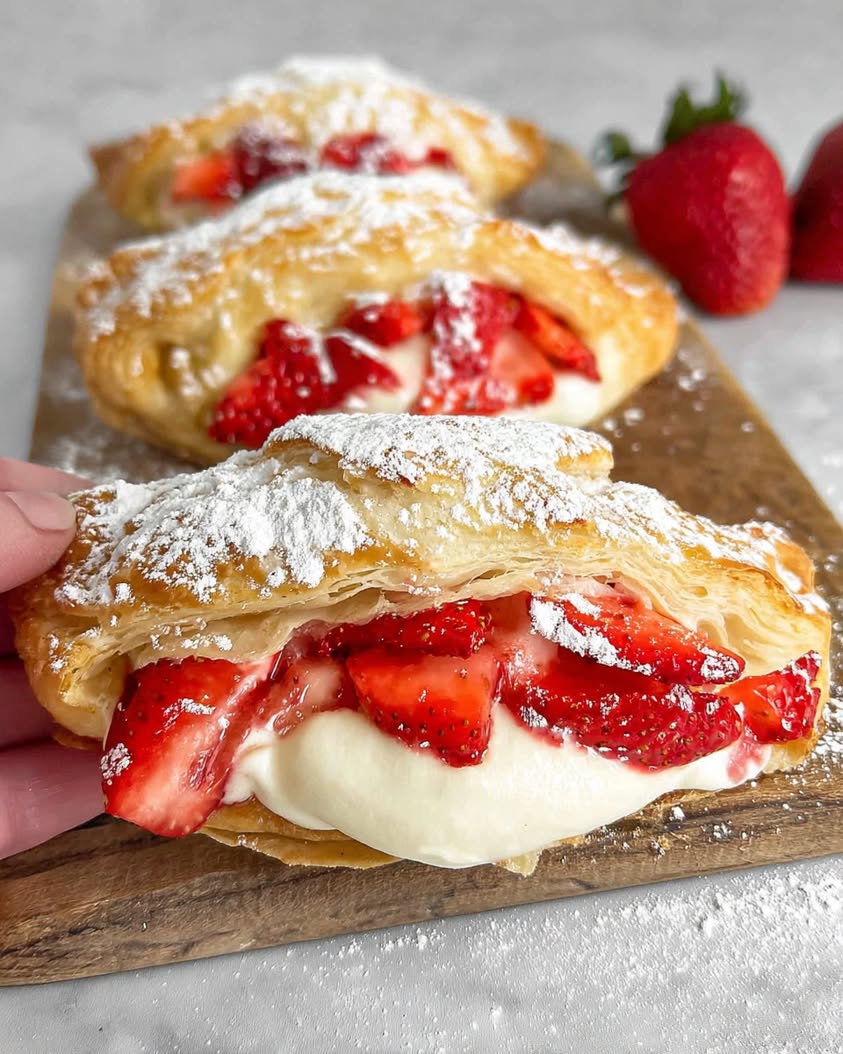
Easy Strawberry Cheesecake Turnovers Recipe with Puff Pastry: A Flaky, Creamy Delight
Imagine biting into a warm, flaky pastry that shatters delicately to reveal a luscious, creamy filling bursting with sweet strawberry flavor. This easy Strawberry Cheesecake Turnovers recipe with puff pastry delivers exactly that experience, transforming simple ingredients into an impressive dessert. Moreover, these handheld treats perfectly capture the essence of a classic cheesecake in a convenient, portable form. They are ideal for everything from a quick afternoon snack to an elegant addition to your brunch table.
Furthermore, the magic of this recipe lies in its beautiful simplicity. By using store-bought puff pastry, you skip the labor-intensive dough-making process while still achieving a professional, buttery result. Consequently, you can focus on creating the dreamy cheesecake filling, which comes together in minutes with just a few staples. Ultimately, these turnovers offer a fantastic way to enjoy the beloved combination of strawberries and cream cheese without any fuss. They are a guaranteed crowd-pleaser that looks and tastes like you spent hours in the kitchen.
Additionally, the visual appeal of these golden-brown parcels is undeniable. As they bake, the puff pastry puffs up into hundreds of delicate, crispy layers, while a sweet glaze adds the perfect finishing touch. The aroma that fills your kitchen is simply irresistible, blending the scent of baking pastry with notes of vanilla and sweet fruit. Therefore, this easy Strawberry Cheesecake Turnovers recipe with puff pastry is more than just a dessert; it’s a sensory experience. It promises a delightful result that is both satisfying to make and absolutely delicious to eat.
Quick Recipe Highlights
- Flavor Profile: These turnovers masterfully balance the rich, tangy cream cheese filling with the bright, sweet jammy flavor of strawberries. A hint of vanilla and lemon zest adds a beautiful aromatic depth that elevates the entire dessert. The buttery pastry provides a neutral, crisp backdrop that lets the creamy strawberry cheesecake center truly shine.
- Texture: You get a wonderful contrast between the shatteringly crisp, multi-layered puff pastry exterior and the luxuriously smooth, dense cheesecake filling. The strawberry preserves add a delightful, slightly gooey fruitiness, while an optional coarse sugar topping provides a satisfying crunch. Every bite is a perfect harmony of creamy and crisp textures.
- Aroma: As they bake, the kitchen fills with the warm, comforting scent of butter and toasted pastry. Notes of sweet vanilla and the bright, fresh aroma of strawberries mingle beautifully. It’s a fragrance that promises a delicious treat and creates an inviting, homey atmosphere.
- Visual Appeal: The baked turnovers are gorgeous, with deep golden-brown, puffed pastry that glistens under a simple vanilla glaze. A peek inside reveals the creamy white filling swirled with vibrant red strawberry jam. They look professionally made, with their neat triangular shape and flaky layers, making them perfect for serving to guests.
- Skill Level Needed: This is a beginner-friendly recipe designed for success. The most advanced technique required is properly sealing the pastry edges, which is straightforward. If you can use a spoon and a rolling pin, you can absolutely master this easy Strawberry Cheesecake Turnovers recipe with puff pastry.
- Special Equipment: You need only basic kitchen tools: a rolling pin, a baking sheet, parchment paper, and a mixing bowl. A pastry brush is helpful for applying the egg wash but not strictly necessary. No stand mixer or fancy gadgets are required, making this recipe highly accessible.
Recipe Overview
- Difficulty Level: This recipe earns its “Easy” rating because it utilizes a brilliant shortcut: pre-made puff pastry. Consequently, you bypass the most challenging part of pastry-making. The filling is a simple mix-and-stir operation, and the assembly involves basic folding and sealing. Even novice bakers can achieve impressive, bakery-quality results with minimal stress and time investment.
- Category: These delightful pastries straddle multiple categories beautifully. They are a perfect dessert, a show-stopping brunch item, a fancy afternoon tea treat, or even a special breakfast pastry. Their handheld nature also makes them excellent for parties, picnics, and potlucks where fork-and-plate desserts are less convenient.
- Cuisine: While the turnover format has roots in many global cuisines, this recipe is a modern American fusion. It takes the French technique of puff pastry (pâte feuilletée) and fills it with the iconic American flavor combination of strawberry cheesecake. The result is a delicious hybrid that feels both familiar and excitingly new.
- Cost: This is a very cost-effective dessert. A box of frozen puff pastry and a block of cream cheese form the base, both of which are affordable pantry staples. Strawberry preserves are inexpensive, and the other ingredients (egg, sugar, vanilla) are typically already on hand. You can create eight impressive pastries for a fraction of the cost of buying them from a bakery.
- Season: While wonderful year-round, these turnovers are especially perfect in late spring and summer when fresh strawberries are at their peak. You can easily adapt the recipe to use fresh macerated berries. However, using quality preserves makes this a fantastic treat even in the depths of winter, bringing a taste of sunshine to any day.
- Occasion: Their versatility is a major strength. They are ideal for holiday mornings like Mother’s Day or Christmas breakfast, elegant enough for a dinner party dessert, casual enough for a weekend family treat, and portable enough for a picnic basket. This easy Strawberry Cheesecake Turnovers recipe with puff pastry fits almost any event.
Why You’ll Love This Recipe
First and foremost, the taste and texture are utterly irresistible. The flaky, buttery layers of puff pastry provide a satisfying crunch that gives way to the rich, tangy cream cheese filling. Meanwhile, the sweet strawberry jam adds a fruity burst that cuts through the richness perfectly. Each component complements the others, creating a balanced and decadent flavor profile in every single bite. Furthermore, the contrast between the hot, crisp pastry and the cool, creamy filling (if served slightly warm) is a textural dream come true for any dessert lover.
From a convenience standpoint, this recipe is a true winner. Using store-bought puff pastry is the ultimate time-saver, eliminating hours of laborious dough folding and chilling. The filling comes together in one bowl with just a whisk or a spoon. Consequently, you can go from idea to finished dessert in well under an hour, with most of that time being hands-off baking. This makes it perfect for last-minute guests, spontaneous cravings, or when you need an impressive dessert but are short on time. The simplicity is genuinely liberating.
Interestingly, while indulgent, these turnovers offer some nutritional advantages compared to a full slice of traditional cheesecake. Because they are portion-controlled individual pastries, it’s easier to manage serving size. Additionally, you control the quality of ingredients, avoiding excessive additives sometimes found in store-bought versions. You can also make slight modifications, like using reduced-fat cream cheese or a sugar-free jam, to better align with your dietary goals without sacrificing the core delicious experience.
The social and entertaining value of this dessert cannot be overstated. Handheld desserts are always a hit at gatherings because they are easy to eat while mingling. These turnovers look professionally made and feel special, showing your guests you cared enough to make something homemade. They are a fantastic conversation starter and often become the highlight of the dessert table. Moreover, they are fun to make with kids or a partner, turning kitchen time into a joyful, shared activity.
Finally, the cost-effectiveness and accessibility seal the deal. As mentioned, the ingredient list is short and affordable. You don’t need any specialty equipment or obscure ingredients from a gourmet store. Everything can be found at a standard supermarket. This accessibility means anyone can recreate this delightful treat, regardless of their baking budget or experience level. You get a high-reward dessert for a very low investment of money, time, and effort, which is the hallmark of a truly great recipe.
Historical Background and Cultural Significance
The story of the turnover is a tale of practical, portable food evolving into a beloved treat. Essentially, its origins lie in the need for a durable, hand-held meal for travelers and workers. Early versions, often called “pasties” or “hand pies,” date back centuries across Europe, with savory fillings like meat and vegetables. The concept was simple: encase a filling in dough to preserve it and make it easy to eat without utensils. This practical beginning is the foundation for all modern handheld pies and pastries, including our sweet version today.
Culturally, the turnover format appears in countless cuisines under different names. For instance, in Latin America, you have empanadas. Meanwhile, in the United Kingdom, the Cornish pasty is a national icon. In the United States, fruit-filled hand pies became a staple at county fairs and roadside stands. The act of folding dough over a filling is a universal culinary technique, demonstrating how different cultures arrived at similar solutions for portable, satisfying food. Our Strawberry Cheesecake Turnovers recipe with puff pastry is a delicious, modern iteration of this ancient idea.
The evolution specifically to a cheesecake-filled pastry is a more recent, American innovation. It cleverly combines the popularity of New York-style cheesecake with the convenience of the handheld pie. This fusion likely gained traction in the late 20th century as dessert trends moved towards individual portions and flavor mash-ups. Using puff pastry instead of a traditional pie crust or pastry dough elevates it further, adding a French patisserie flair. This evolution shows how recipes adapt and borrow from different traditions to create something new and exciting.
Regional variations of the sweet turnover are endless. In the American South, you might find fried peach or apple hand pies. In France, a “chausson aux pommes” is a classic apple-filled puff pastry turnover. Our version, featuring cream cheese and strawberry, taps directly into the iconic American dessert duo. The beauty of this format is its incredible adaptability; you can fill it with almost any combination of fruit, cheese, or custard. This particular recipe stands out because it delivers the complex, beloved flavor of cheesecake in a simple, flaky package, making gourmet taste accessible to everyone.
Ingredient Deep Dive
Puff Pastry: This is the star that does the heavy lifting. Puff pastry, or “pâte feuilletée,” is a French invention involving hundreds of alternating layers of dough and butter. When baked, the water in the butter turns to steam, pushing the layers apart to create that iconic, airy flakiness. Using a high-quality, all-butter frozen puff pastry will yield the best flavor and texture. Thaw it slowly in the refrigerator overnight for best results; rushing the process can make the pastry sticky and difficult to work with. If you cannot find all-butter, standard puff pastry will still work wonderfully.
Cream Cheese: This provides the signature “cheesecake” tang and creamy body. For the best consistency and flavor, always use full-fat, brick-style cream cheese at room temperature. Softened cream cheese blends smoothly without lumps, ensuring a silky filling. Low-fat varieties contain more water and stabilizers, which can lead to a runny filling during baking. Historically, cream cheese is an American invention, with Philadelphia brand becoming synonymous with the product. Its mild tang and rich texture are irreplaceable in creating an authentic cheesecake flavor for your turnovers.
Strawberry Preserves: This ingredient adds the essential fruit flavor and a touch of sweetness. Opt for a high-quality preserve or jam with a high fruit content for the best strawberry flavor. Avoid using jelly, as it can be too firm and lack the delightful fruit pieces. The preserves also add moisture and help keep the filling from becoming too dry. For a more intense, fresh flavor in season, you can substitute with macerated and lightly crushed fresh strawberries mixed with a little sugar and cornstarch to thicken.
Granulated Sugar & Powdered Sugar: These two sugars play different roles. Granulated sugar sweetens the cream cheese filling, helping to balance its tang. Powdered sugar (confectioners’ sugar) is used in the glaze. Its fine texture dissolves instantly in liquid, creating a smooth, pourable icing that sets nicely on the warm pastry. You cannot substitute them directly for each other in these specific roles due to their different properties and moisture content.
Egg: The egg serves a dual purpose. The yolk enriches the cream cheese filling, adding richness and helping it set slightly. The whole egg, beaten, is used as an egg wash brushed on the pastry before baking. This wash is crucial for achieving that beautiful, deep golden-brown color and glossy finish. It acts as a glue for any decorative sugar topping and gives the pastry a professional, finished look.
Common Mistakes to Avoid
- Using Cold Cream Cheese: This is the number one cause of lumpy filling. Always ensure your cream cheese has softened at room temperature for at least 30-60 minutes. Cold cream cheese will not incorporate smoothly with the other ingredients, leaving you with an uneven mixture that won’t bake properly.
- Overfilling the Turnovers: It’s tempting to add more filling, but restraint is key. Overfilling causes the seams to burst open during baking, letting the creamy filling leak out and burn on the baking sheet. Stick to the recommended tablespoon or so per turnover to ensure a clean seal and perfect shape.
- Not Sealing the Edges Properly: After folding the pastry, you must press the edges firmly together. Then, take the extra step to crimp them with a fork. This double seal is your insurance policy against leaks. A weak seal will almost certainly fail in the oven’s heat.
- Skipping the Egg Wash: The egg wash is not just for color; it helps the pastry achieve maximum puff and flakiness. It also allows any sprinkling of sugar to adhere. Skipping it will result in paler, less glossy pastries that look underbaked and lack visual appeal.
- Not Letting the Pastry Thaw Correctly: Attempting to work with frozen or still-icy pastry will cause it to crack and tear. Conversely, letting it get too warm and soft on the counter makes it sticky and hard to handle. The perfect sweet spot is thawed but still cold to the touch, pliable but not soft.
- Baking on an Unlined Sheet: Always use parchment paper or a silicone baking mat. The sugary filling can bubble over slightly and caramelize on a bare pan, creating a sticky, burned mess that is difficult to clean and can smoke up your kitchen.
- Underbaking: Puff pastry needs to be baked until it is deeply golden brown all over. If you remove it when it’s just pale gold, the layers in the center may not be fully cooked, resulting in a doughy, greasy texture. Trust the color for the perfect crispness.
- Adding Glaze Too Early: Apply the simple glaze after the turnovers have cooled for at least 5-10 minutes. If you pour it on straight from the oven, the heat will cause the glaze to melt completely and soak in, making the pastry soggy instead of leaving a pretty, opaque drizzle.
Essential Techniques
Properly Sealing the Pastry: This is the most critical technique for success. After placing the filling on one half of the pastry square, use your finger or a pastry brush to lightly moisten the edges with water. This acts as a glue. Fold the other half over to create a triangle and press the edges firmly to seal. Then, use the tines of a fork to press down all around the sealed edge, creating a crimped pattern. This double action—pressing and crimping—ensures an airtight seal that will withstand the steam pressure inside during baking, preventing messy leaks.
Applying an Egg Wash: An egg wash is a simple mixture of beaten egg (sometimes with water or milk). Beating the egg thoroughly until uniform is key. Using a pastry brush, apply a thin, even coat over the top surface of each assembled turnover. Avoid letting it pool around the edges, as this can “glue” the layers together and inhibit rising. A proper egg wash promotes browning through the Maillard reaction, gives a professional shine, and helps any sprinkled sugar adhere for extra texture and sweetness.
Scoring the Pastry: Before baking, use a sharp paring knife to make 2-3 small slits on the top of each turnover. This step is not just decorative; it is functional. It creates designated vents for steam to escape from the filling and the interior layers of the pastry. Without these vents, steam builds up inside and can cause the turnovers to puff unevenly or, worse, burst open at a weak spot in the seam. Light, shallow cuts are all you need; don’t cut deep into the filling.
Pro Tips for Perfect Strawberry Cheesecake Turnovers
First, chill the assembled turnovers on the baking sheet for 10-15 minutes before baking. This re-firms the butter in the pastry, which leads to a higher, flakier rise in the oven. It’s a simple step with a dramatic impact on the final texture.
For an extra flavor boost, add a pinch of finely grated lemon zest to the cream cheese filling. The bright citrus note cuts through the richness and enhances the strawberry flavor beautifully, making the taste more complex and refreshing.
If your strawberry preserves are very chunky, give them a quick chop with a knife before mixing. This ensures an even distribution of fruit throughout the filling and prevents large pieces from poking holes in your delicate pastry seal.
Always preheat your oven fully. Puff pastry needs an initial blast of high heat to create the steam that lifts the layers. Putting pastries into a lukewarm oven will result in flat, greasy dough instead of light, flaky pastry.
Use a pizza cutter or sharp knife to trim and divide your puff pastry sheets. This gives you clean edges that seal together much more effectively than ragged, torn edges, which can create weak spots.
For a stunning presentation, sprinkle the egg-washed turnovers with coarse or sanding sugar before baking. It adds a delightful crunch and a sparkling, professional finish that makes them look store-bought in the best way.
Let the baked turnovers cool on the baking sheet for a few minutes before transferring them to a wire rack. They are very delicate when hot, and moving them too soon can cause them to collapse or break.
Experiment with different fruit preserves. While strawberry is classic, raspberry, blueberry, or cherry preserves work wonderfully with the cream cheese filling, allowing you to customize this easy recipe based on preference or season.
Variations and Adaptations
For regional variations, consider a Southern twist by adding a tablespoon of bourbon to the cream cheese filling and using peach preserves. A French-inspired version could use almond cream (frangipane) beneath the strawberry jam. For a tropical take, mix crushed pineapple into the cream cheese and use mango or passion fruit preserves.
Seasonal adaptations are easy and fun. In spring, fold a few fresh raspberries into the filling with the jam. For summer, use a mix of macerated fresh strawberries and basil. In fall, apple butter mixed with a dash of cinnamon in the filling is divine. Winter calls for a cranberry-orange preserve filling with orange zest in the cream cheese.
Dietary modifications are straightforward. Use gluten-free puff pastry for a gluten-free version. For dairy-free, employ a high-quality vegan cream cheese and a plant-based butter puff pastry. A sugar-free jam and a sugar substitute approved for baking can create a lower-sugar option, though texture may vary slightly.
Flavor variations are endless. Add a tablespoon of lemon curd to the cream cheese for a lemon-strawberry combo. Swirl in some chocolate hazelnut spread for a decadent twist. Incorporate spices like cardamom or nutmeg into the filling for warmth. A teaspoon of rose water or orange blossom water can add a beautiful floral note.
For texture modifications, add a tablespoon of finely chopped toasted nuts (like almonds or pecans) to the filling for crunch. You could also sprinkle the filling with a few white or dark chocolate chips before sealing. For a smoother texture, puree the strawberry preserves before mixing.
Presentation alternatives include making smaller, bite-sized turnovers for a party appetizer. Instead of a triangle, you can create rectangular “pockets” or use a round cutter to make half-moon shapes. Before baking, use cookie cutters to stamp out shapes from the top layer of pastry for a decorative window effect.
Serving and Presentation Guide
Plating techniques can elevate these simple pastries. For a casual feel, pile them high on a rustic wooden board or in a woven basket lined with a linen napkin. For a more elegant presentation, place a single turnover offset on a white plate and dust the surrounding area with a light snowfall of powdered sugar. You can also drizzle the plate with a zigzag of extra strawberry puree or melted chocolate before placing the pastry on top.
Garnishing ideas extend beyond the simple glaze. After glazing, immediately sprinkle with freeze-dried strawberry powder for intense color and flavor. A fresh mint leaf placed on the side adds a pop of green. A dollop of lightly sweetened whipped cream or a small scoop of vanilla ice cream alongside transforms it into a decadent dessert. A few fresh, whole strawberries on the plate complete the theme beautifully.
Traditional accompaniments include a hot cup of coffee or tea, which cuts the sweetness perfectly. For a brunch setting, serve alongside fresh fruit salad or crispy bacon to balance the meal. As a dessert, a glass of cold milk, a dessert wine, or a sparkling Moscato d’Asti pairs wonderfully.
Modern serving suggestions might include deconstructing the concept. Serve the baked, unfilled puff pastry triangles with the cheesecake filling and strawberry compote in separate bowls for a DIY dessert bar. Alternatively, bake the turnovers, let them cool completely, and then dip half of each one in melted white or dark chocolate for an extra-special treat.
Temperature considerations are personal. They are delicious warm from the oven when the pastry is at its crispiest and the filling is soft. However, they are also excellent at room temperature, which allows the cheesecake filling to firm up slightly. Avoid serving them cold from the refrigerator, as the pastry will lose its flakiness and become chewy.
Portion control is built-in, as each turnover is a single serving. For a lighter option, you can cut the pastry squares smaller to create mini turnovers. For a more substantial dessert, serve one whole turnover per person with the suggested accompaniments. They are rich, so one is usually satisfying, making them both indulgent and reasonably portioned.
Wine and Beverage Pairing
Wine pairings should complement the sweet, creamy, and fruity notes. A late-harvest Riesling or a Moscato d’Asti, with their inherent sweetness and bright acidity, are classic and excellent choices. They mirror the fruitiness and cut through the cream cheese richness. A light-bodied, fruity Rosé also works beautifully, especially one with strawberry notes. For a more decadent pairing, a glass of demi-sec Champagne or sparkling wine adds celebration and its bubbles cleanse the palate between bites.
Non-alcoholic alternatives are just as important. Sparkling water with a squeeze of lemon or a few muddled fresh strawberries is refreshing and elegant. A homemade strawberry lemonade echoes the main flavor. For a creamy counterpoint, a cold glass of whole milk or a vanilla chai latte pairs wonderfully, especially if the turnovers are served warm.
Coffee and tea pairings are a natural fit for a brunch or dessert setting. A medium-roast coffee with low acidity won’t compete with the pastry’s flavors. For tea, a classic Earl Grey’s bergamot notes are fantastic, or a fruity herbal tea like strawberry or wild berry hibiscus can enhance the experience. A creamy, frothy cappuccino also makes a delightful companion.
Temperature considerations for beverages depend on the serving temperature of the turnovers. Iced coffee or cold brew are superb with room-temperature pastries on a warm day. Conversely, a hot, freshly brewed pot of tea or coffee is essential if the turnovers are served warm from the oven. Match the beverage temperature to the pastry and the occasion for the most cohesive experience.
Serving suggestions include offering a small pairing flight. For a dinner party, you could serve a small glass of Moscato alongside a cup of herbal tea, allowing guests to choose their preference. Always ensure water is available to cleanse the palate. Presenting the beverage in beautiful glassware or a nice teapot elevates the entire serving experience, making it feel special and thoughtfully curated.
Storage and Shelf Life
Storage methods are straightforward but important for maintaining quality. Once completely cooled, store the turnovers in a single layer in an airtight container at room temperature for up to 1 day. This preserves the pastry’s crispness best. If you need to store them longer, place them in the refrigerator for up to 3 days. Be aware that refrigeration will inevitably soften the pastry, making it less flaky.
Temperature requirements vary by duration. Room temperature is ideal for short-term, next-day eating. The refrigerator is necessary for storage beyond 24 hours due to the dairy-based filling. Never leave cream cheese-filled pastries at room temperature for more than 2 hours to prevent spoilage. For long-term storage, freezing is your best option.
Container recommendations include a rigid, airtight container with a lid. If you must stack them, place a sheet of parchment paper between layers to prevent sticking and protect the glaze. Do not store them in a plastic bag, as this traps moisture and makes the pastry soggy very quickly. A cake carrier or large Tupperware-style container works perfectly.
Signs of spoilage include an off or sour smell, especially from the filling. Visible mold, which may appear as fuzzy spots, is a definite discard signal. If the pastry has become unpleasantly soggy or slimy to the touch, it has likely absorbed too much moisture and should not be consumed. When in doubt, it is safest to throw it out.
Reheating instructions can revive day-old turnovers. To recrisp the pastry, place them on a baking sheet in a 350°F (175°C) oven for 5-8 minutes until warm. Avoid using the microwave, as it will make the pastry very soft and chewy. The oven method will warm the filling and bring back some of the pastry’s original texture.
Freezing guidelines are excellent for make-ahead planning. Freeze the UNBAKED, assembled turnovers on a parchment-lined sheet until solid. Then transfer them to a freezer bag, squeezing out all air. They can be baked directly from frozen; just add 3-5 extra minutes to the baking time. You can also freeze baked turnovers. Thaw at room temperature and reheat in the oven as described above to restore crispness.
Make Ahead Strategies
Prep timeline can be stretched over two days for convenience. Day 1: Thaw the puff pastry in the refrigerator overnight. Day 2: Prepare the filling, assemble the turnovers, and bake. For even further ahead, you can assemble the turnovers completely, freeze them on a baking sheet, then bag them for frozen storage as mentioned. This means you can have homemade pastries ready to bake with zero prep on the day you need them.
Storage between steps is simple. The cream cheese filling can be made, covered tightly, and refrigerated up to 24 hours in advance. Let it sit at room temperature for 15-20 minutes before using to soften slightly for easy spreading. Assembled but unbaked turnovers can be refrigerated on the baking sheet, covered with plastic wrap, for up to 4 hours before baking. For longer, freeze them.
Quality impact assessment shows that make-ahead is highly successful. Freezing unbaked turnovers has minimal impact on final quality; they bake up nearly identically to fresh. Refrigerating the filling briefly is fine. The only potential downside is if the filled, unbaked pastries are refrigerated too long (more than 4-6 hours), the moisture from the filling can start to soften the pastry, potentially affecting rise. Freezing avoids this issue entirely.
Assembly tips for make-ahead: When preparing to freeze, do not apply the egg wash before freezing. Apply it just before baking, directly from the frozen state. Also, do not add the sugar topping before freezing, as it can dissolve. Add it after the egg wash, right before the frozen pastries go into the oven.
Reheating guidelines for pre-baked, frozen turnovers: Bake from frozen on a parchment-lined sheet at 375°F (190°C) for about 20-25 minutes, until deeply golden brown. This method yields a better texture than thawing and reheating a previously baked pastry. The pastry will puff and crisp as if it were fresh.
Fresh element additions should always be done just before serving. If you plan to garnish with whipped cream, fresh berries, or a dusting of powdered sugar, add these elements after the turnovers have been reheated (if applicable) and are on the plate. This keeps the garnishes looking and tasting their best.
Scaling Instructions
Halving the recipe is simple if you only want four turnovers. Use one sheet of puff pastry (most boxes contain two). Cut the filling ingredients in half. You may have a small amount of leftover egg for the wash; you can beat it and use just what you need, discarding the rest, or make a smaller wash with just an egg yolk. Baking time may be slightly reduced by 1-2 minutes, so watch for color.
Doubling or tripling the recipe is easy for a crowd. Simply multiply all ingredient quantities accordingly. The key is to work in batches when assembling. Keep the pastry sheets you are not currently working with in the refrigerator so they stay cold. You may need to bake in multiple batches or on multiple oven racks; rotate the sheets halfway through baking for even browning.
Equipment adjustments for larger batches are minimal. You will need more baking sheets. If you don’t have enough, remember you can bake in successive batches; just keep the unbaked, assembled turnovers chilled on their sheets in the fridge while the first batch bakes. Ensure your oven has good air circulation; don’t overcrowd the sheets or oven racks.
Timing modifications are small. When baking multiple sheets at once, it may take an extra minute or two for everything to achieve perfect color. Always rely on visual cues (deep golden brown) rather than strict timer adherence. For very small batches (like halved), check a minute or two early. The oven’s heat distribution can be slightly different with a fuller or emptier chamber.
Storage considerations remain similar but require more space. A large batch of baked turnovers will need a large container or multiple containers for proper storage. If freezing a large batch, use a vacuum sealer if available to prevent freezer burn, or use multiple freezer bags, labeling them with the date and contents. This ensures you can enjoy your efforts for weeks to come.
Nutritional Deep Dive
Macro breakdown for one turnover is approximately: 300-350 calories, with the majority coming from carbohydrates (from the pastry and sugar) and fats (from the butter in the pastry and the cream cheese). Protein content is modest, primarily from the cream cheese and egg. This is an energy-dense treat, fitting its role as a dessert or special breakfast item. The exact numbers will vary based on the specific brands of puff pastry and preserves you use.
Micronutrient analysis reveals some benefits amidst the indulgence. Strawberries provide vitamin C, manganese, and antioxidants like anthocyanins. Cream cheese offers a small amount of vitamin A and calcium. The egg contributes choline and selenium. While not a health food, it does provide more nutritional variety than a purely sugar-based confection. Using whole-fruit preserves increases the fruit-derived micronutrients compared to using a jelly.
Health benefits are linked primarily to the enjoyment and psychological satisfaction of eating a delicious, homemade treat. The antioxidants in strawberries have anti-inflammatory properties. Furthermore, preparing food at home allows you to control ingredients, avoiding high-fructose corn syrup or excessive additives that might be in commercial versions. Mindful enjoyment of such treats is part of a balanced approach to eating.
Dietary considerations are important for those with restrictions. This recipe contains gluten (wheat in pastry), dairy (cream cheese, butter in pastry), and eggs. It is not suitable for vegan, gluten-free, or dairy-free diets without significant modifications as outlined in the adaptations section. It is also relatively high in refined carbohydrates and saturated fat, so those monitoring these intakes should enjoy in moderation.
Portion analysis is favorable because each turnover is a pre-defined single serving. This built-in portion control can help prevent overindulgence compared to cutting a slice from a large pie or cake. You can easily track “one turnover” as a discrete unit. Making mini turnovers is an excellent strategy for even smaller, more controlled portions for a tasting or multi-course meal.
Weight management tips include enjoying this as an occasional treat within your overall calorie budget. Pairing one turnover with a source of protein (like Greek yogurt) and fiber (like a side of berries) can create a more balanced snack that keeps you fuller longer. Most importantly, savor it slowly and mindfully to maximize satisfaction from a single serving, rather than eating it quickly on the go.
Dietary Adaptations
For a gluten-free version, seek out a certified gluten-free puff pastry. Brands like Schär and GeeFree offer options in some markets, or you may find it in specialty stores. The filling is naturally gluten-free. Ensure all other ingredients, like powdered sugar, are certified gluten-free to avoid cross-contamination. The assembly and baking process remains identical.
For a dairy-free adaptation, use a high-quality vegan cream cheese (such as those from Kite Hill or Miyoko’s) and ensure your puff pastry is made with plant-based fats, not butter. Many standard supermarket puff pastries are actually made with vegetable shortening, so check labels carefully. The glaze can be made with a non-dairy milk like almond or oat milk.
A Print
Strawberry Cheesecake Turnovers
- Total Time: 45 minutes
- Yield: 4
Description
A delightful fusion of flaky puff pastry, creamy cheesecake filling, and sweet strawberry jam, baked to golden perfection for a handheld dessert treat.
Ingredients
- 1 sheet puff pastry, thawed
- 4 oz cream cheese, softened
- 1/4 cup granulated sugar
- 1/2 tsp vanilla extract
- 1/4 cup strawberry jam
- 1 egg, beaten (for egg wash)
- Powdered sugar for dusting
Instructions
- Preheat oven to 400°F (200°C) and line a baking sheet with parchment paper.
- In a bowl, mix cream cheese, sugar, and vanilla until smooth. Unfold puff pastry and cut into 4 equal squares.
- Spread 1 tbsp strawberry jam in the center of each square, then top with 1 tbsp cream cheese mixture. Fold each square diagonally into a triangle, sealing edges with a fork.
- Brush turnovers with beaten egg wash. Bake for 15-18 minutes until golden brown. Let cool slightly, then dust with powdered sugar before serving.
Notes
You can customize the seasonings to taste.
- Prep Time: 15 minutes
- Cook Time: 30 minutes
- Method: Dessert
- Cuisine: American