Classic Spinach and Feta Crustless Mushroom Quiche: A Mediterranean-Inspired Dish for Every Table
This Classic Spinach and Feta Crustless Mushroom Quiche brings the bright, sun-drenched flavors of the Mediterranean straight to your kitchen. Imagine a golden, tender egg custard studded with earthy sautéed mushrooms, vibrant ribbons of spinach, and creamy pockets of salty feta cheese. Because this quiche skips the crust entirely, every bite delivers pure, unadulterated filling with none of the fuss. Whether you serve it for a leisurely weekend brunch, a light weekday dinner, or a make-ahead meal prep solution, this crustless mushroom quiche earns a permanent spot in your rotation. The combination of spinach and feta is a time-honored pairing in Greek cooking, and when you fold in savory mushrooms, the result becomes something truly special.
The beauty of a crustless quiche lies in its simplicity and versatility. You need just one bowl, a whisk, and a skillet to create a dish that looks impressive enough for guests yet stays approachable for beginner cooks. This spinach and feta crustless mushroom quiche requires no rolling pin, no blind baking, and no chilling dough. Instead, you focus your energy on layering flavors through smart ingredient choices and proper technique. The mushrooms bring a deep, meaty umami quality that satisfies even dedicated carnivores, while the spinach adds freshness and a pop of vibrant green. Creamy feta melts slightly into the custard, creating little briny bursts that keep every forkful interesting.
Moreover, this recipe aligns beautifully with low-carb, keto-friendly, and gluten-free lifestyles without demanding any special substitutions. Since the crust disappears from the equation, the carbohydrate count drops dramatically, making this quiche a smart choice for anyone watching their sugar intake. Meanwhile, the eggs deliver high-quality protein, and the vegetables contribute fiber, vitamins, and minerals. In other words, this Classic Spinach and Feta Crustless Mushroom Quiche nourishes your body while delighting your palate. You get a dish that feels indulgent thanks to the rich custard and salty cheese yet stays remarkably wholesome. Home cooks across the United States have embraced crustless quiche recipes for exactly this reason: they deliver maximum flavor with minimum effort.
Quick Recipe Highlights
- Flavor Profile: This quiche balances savory, earthy, and tangy notes in perfect harmony. The mushrooms provide a robust, almost meaty depth, while the feta contributes a bright, salty kick that cuts through the richness of the custard. Fresh spinach rounds everything out with a subtle, grassy sweetness.
- Texture: Expect a silky, tender custard that yields gently to the fork. The vegetables add pleasant textural contrast, with softened mushrooms offering a slight chew and the spinach melting into the egg base. Small crumbles of feta create delightful creamy pockets throughout.
- Aroma: As this crustless spinach and feta quiche bakes, your kitchen fills with the warm, buttery scent of sautéed onions and mushrooms. A hint of garlic and the subtle tang of feta mingle in the air, signaling comfort food at its finest.
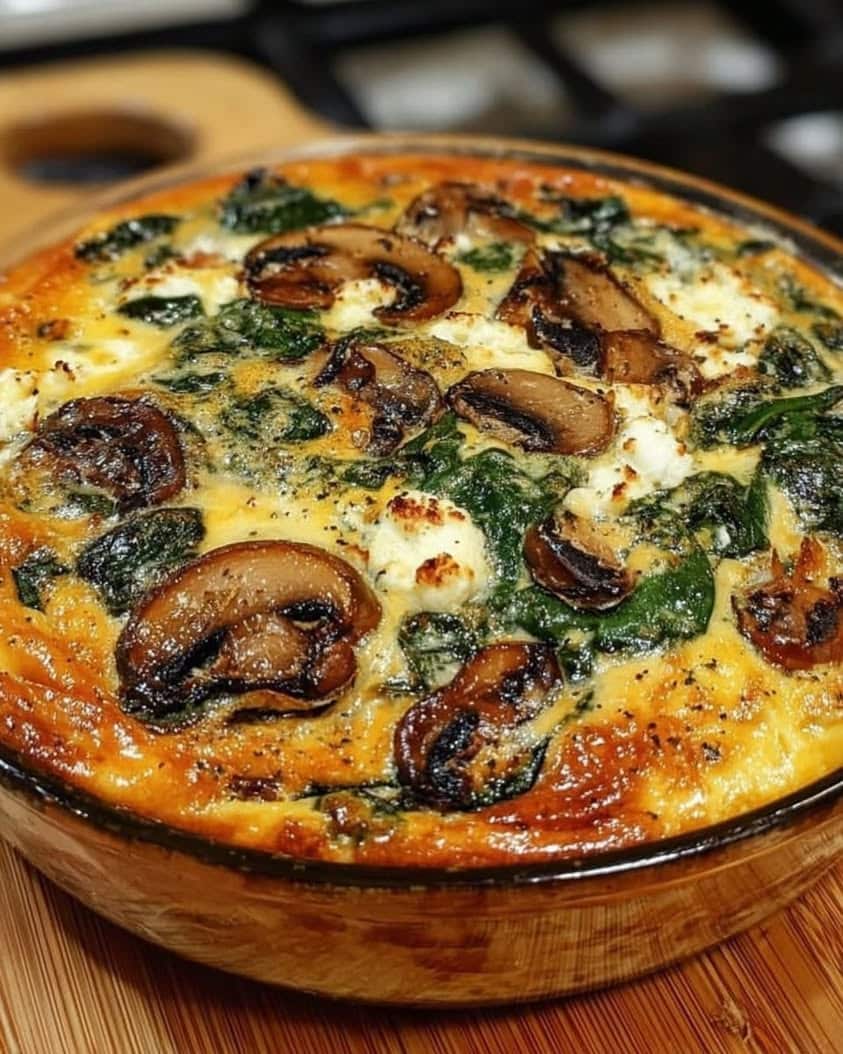
- Visual Appeal: The finished quiche presents a beautiful golden surface flecked with deep green spinach and browned mushroom slices. Crumbles of white feta dot the top, creating an inviting, rustic appearance that looks stunning on any table.
- Skill Level Needed: This recipe suits beginners and experienced cooks alike. If you can whisk eggs and sauté vegetables, you can master this dish. The absence of a crust removes the most challenging aspect of traditional quiche-making, leaving a straightforward, forgiving process.
- Special Equipment: You need a standard 9-inch pie dish or round baking dish, a large skillet, and a mixing bowl. A whisk and a spatula handle the rest. No food processor, stand mixer, or specialty bakeware is required, making this recipe accessible to any home kitchen.
Recipe Overview
- Difficulty Level: This recipe earns an easy rating because it involves simple, forgiving steps. You sauté vegetables, whisk eggs and dairy together, combine everything, and bake. The custard sets reliably, and even slight overcooking results in a still-delicious dish. Beginners gain confidence quickly with this crustless quiche recipe, and experienced cooks appreciate its hands-off nature.
- Category: This dish works as a breakfast, brunch, lunch, or light dinner option. It also functions beautifully as an appetizer cut into small squares or as a meal prep staple for busy weeks. Few recipes offer this level of flexibility across mealtimes.
- Cuisine: This recipe draws heavy inspiration from Mediterranean and Greek culinary traditions, where spinach and feta appear together in iconic dishes like spanakopita. The French technique of baking a savory egg custard informs the structure, while the crustless approach nods to modern health-conscious cooking. The result is a fusion that honors tradition while embracing contemporary preferences.
- Cost: This Classic Spinach and Feta Crustless Mushroom Quiche ranks as an economical choice for feeding a family. Eggs, frozen or fresh spinach, and mushrooms remain affordable staples. Feta costs slightly more but delivers big flavor in small quantities. Overall, you can feed six people for roughly eight to twelve dollars depending on regional prices and whether you use fresh or frozen spinach.
- Season: This quiche shines year-round thanks to widely available ingredients. Spring and summer highlight fresh spinach and earthy mushrooms, while fall and winter bring cozy, warming appeal. The dish suits holiday brunches and summer picnics equally well, proving its year-round versatility.
- Occasion: Serve this crustless mushroom quiche at Easter brunch, Mother’s Day gatherings, baby showers, potlucks, or casual family dinners. It travels well and holds up at room temperature, making it ideal for buffets and parties. Weeknight cooks love it as a quick dinner with a side salad.
Why You’ll Love This Recipe
The taste and texture of this Classic Spinach and Feta Crustless Mushroom Quiche deliver pure comfort with a sophisticated edge. Each bite offers a creamy, custardy base enriched with savory mushrooms and brightened by the salty tang of feta. Because the recipe skips the crust, the filling takes center stage, letting the flavors shine without distraction. You taste the earthiness of the mushrooms, the freshness of the spinach, and the briny pop of feta in every single forkful. The texture remains tender and moist thanks to the careful balance of eggs and dairy, never rubbery or dry. This is the kind of dish that makes people close their eyes and sigh with satisfaction.
Convenience and preparation benefits make this crustless spinach and feta quiche a weeknight hero. From start to finish, you need about fifty-five minutes, and most of that time is hands-off baking. You can prep the vegetables and custard in advance, store them separately, and assemble right before baking. The recipe requires no special techniques, no dough chilling, and no blind baking. Cleanup stays minimal since you use just a skillet, a bowl, and a baking dish. For busy families, meal preppers, and anyone who values efficiency without sacrificing quality, this dish delivers on every front.
Nutritional advantages give this quiche a well-deserved place in health-conscious kitchens. Eggs provide complete protein with all essential amino acids, supporting muscle maintenance and satiety. Spinach contributes iron, calcium, folate, and vitamins A and K, while mushrooms add B vitamins and antioxidants like selenium. Feta offers calcium and a satisfying richness that makes healthy eating feel indulgent rather than restrictive. Since there is no crust, the carbohydrate content stays low, making this recipe suitable for low-carb and keto diets. You get a nutrient-dense meal that fuels your body and keeps you full for hours.
Social and entertaining value elevates this spinach and feta crustless mushroom quiche to party status. Its elegant appearance and crowd-pleasing flavor make it a natural centerpiece for brunches, showers, and holiday gatherings. Guests always request the recipe, and hosts love that the dish can be made ahead and served warm, at room temperature, or even chilled. It pairs beautifully with mimosas, coffee, fresh fruit, and green salads. Because it looks impressive yet requires minimal effort, this quiche lets you entertain with confidence and ease. No one needs to know how simple it was to prepare.
Cost-effectiveness and accessibility complete the list of reasons to love this recipe. The ingredients are pantry and refrigerator staples that most households already keep on hand. Eggs, milk, cheese, frozen spinach, and mushrooms come together affordably. The recipe uses no expensive specialty items and can be adapted based on what you have available. You can swap in different cheeses, add leftover vegetables, or use fresh herbs from your garden. This flexibility means you can enjoy a restaurant-quality meal at home for a fraction of the cost, and you can feel good about serving wholesome, real food to your loved ones.
Historical Background and Cultural Significance
The story of quiche begins in the Lorraine region of France, where the classic quiche Lorraine emerged centuries ago. Originally, this savory open-faced tart featured bread dough, eggs, cream, and smoked bacon. Over time, the recipe evolved to use pastry crust and became a symbol of French home cooking. The crustless variation, however, represents a distinctly modern adaptation. As health-conscious eating gained momentum in the late twentieth century, home cooks began experimenting with quiche recipes that omitted the pastry while preserving the rich custard filling. This shift made quiche more accessible, lower in carbohydrates, and quicker to prepare.
Spinach and feta carry deep cultural significance in Greek and Mediterranean cuisine. The combination appears in spanakopita, the beloved spinach and feta pie wrapped in phyllo dough. Greek cooks have paired these ingredients for generations, celebrating the earthy flavors of spinach alongside the briny punch of feta. When cooks outside Greece discovered this pairing, they recognized its genius and began incorporating it into other dishes, including quiche. The spinach and feta crustless mushroom quiche represents a happy marriage of French technique and Mediterranean flavor philosophy. It honors both traditions while creating something wholly new and universally appealing.
Mushrooms have long held a place of honor in culinary traditions across cultures. Ancient Romans prized them, and French cuisine elevated them to haute status. In Eastern Europe, mushroom foraging remains a cherished seasonal activity. Adding sautéed mushrooms to a quiche deepens the flavor profile with umami and adds a satisfying, meaty texture. This ingredient choice connects the dish to earthy, forest-inspired flavors while keeping the recipe vegetarian-friendly. The mushrooms transform the quiche from a simple egg dish into something robust and deeply satisfying, capable of satisfying even hearty appetites.
Regional variations of crustless quiche exist across the United States and Europe. In the American South, cooks add collard greens and sharp cheddar. In California, you might find sun-dried tomatoes and goat cheese. In Provence, herbs and olives make frequent appearances. The crustless spinach and feta mushroom quiche sits comfortably within this tradition of adaptation and regional pride. Each cook makes the recipe their own by adjusting seasonings, cheese choices, and vegetable additions. This flexibility explains why the crustless quiche remains a beloved staple in home kitchens worldwide. The recipe evolves with the cook, responding to local ingredients and personal preferences while staying true to its essence.
Ingredient Deep Dive
Spinach holds a revered place in culinary history, originating in ancient Persia and traveling through India to China and eventually Europe. By the Middle Ages, spinach had become a staple in Mediterranean kitchens, prized for its versatility and nutritional value. Catherine de’ Medici famously adored spinach, and Italian cooks incorporated it into countless dishes. Today, spinach symbolizes health and vitality, appearing in salads, smoothies, and baked dishes alike. It brings iron, calcium, and vitamins to every meal. For this quiche recipe, spinach provides freshness, color, and a subtle earthy flavor that balances the richness of the custard and cheese.
When selecting spinach for this crustless mushroom quiche, choose vibrant, dark green leaves with no signs of yellowing or wilting. Fresh spinach offers superior texture and flavor, but frozen spinach works beautifully in a pinch. If using frozen spinach, thaw and drain it thoroughly to prevent excess moisture from compromising the custard. Squeeze the spinach in a clean kitchen towel until nearly dry. Store fresh spinach in the refrigerator crisper drawer in a sealed bag with a paper towel to absorb moisture. Use within a few days for peak freshness. For substitutions, kale or Swiss chard make excellent alternatives, though you should chop them finely and sauté them slightly longer.
Feta cheese originated in Greece and holds protected designation of origin status, meaning true feta must come from specific regions and follow traditional production methods. Historically, shepherds crafted feta by curdling sheep’s or goat’s milk and aging the cheese in brine. The result is a crumbly, tangy cheese with a distinct salty punch that cuts through richness and adds complexity to countless dishes. Feta appears in salads, pastries, and baked goods throughout the Mediterranean. Its briny character makes it a natural partner for spinach, creating the iconic flavor combination that defines this recipe.
Select feta that looks fresh and creamy in the package and has a clean, milky aroma. Avoid feta that appears dried out or has overly yellowed edges. Store feta submerged in its brine in the refrigerator, where it keeps for several weeks. If you buy block feta, crumble it yourself for the best texture and flavor distribution. Pre-crumbled feta often contains anti-caking agents that diminish its creaminess. For substitutions, goat cheese offers a tangy alternative with a softer texture, while ricotta salata provides a milder, less salty option. Halloumi also works, though it brings a firmer bite.
Mushrooms have nourished humans for thousands of years, appearing in the diets of ancient Egyptians, Romans, and Chinese cultures. France championed mushroom cultivation in the seventeenth century, developing techniques still used today. Mushrooms offer a unique savory quality known as umami, the fifth taste, which creates depth and satisfaction in dishes. Nutritionally, mushrooms provide B vitamins, selenium, and vitamin D when exposed to sunlight. They also contain antioxidants that support immune health. In this crustless spinach and feta quiche, mushrooms add meaty texture, earthy flavor, and visual interest.
Choose mushrooms that feel firm and dry, with no slimy spots or dark blemishes. Cremini mushrooms offer deeper flavor than white button mushrooms, while shiitake brings a more pronounced umami punch. Oyster mushrooms contribute a delicate, velvety texture. Wipe mushrooms clean with a damp cloth or brush away dirt, and avoid soaking them in water, which makes them soggy. Store mushrooms in a paper bag in the refrigerator, where they keep for about a week. For substitutions, you can use rehydrated dried mushrooms for concentrated flavor, or swap in roasted red peppers or artichoke hearts for a different but equally delicious result.
Eggs form the backbone of this Classic Spinach and Feta Crustless Mushroom Quiche, providing structure and richness. Use large eggs at room temperature for the smoothest custard. Fresh eggs bind the ingredients and create the tender, silky texture that defines a great quiche. Choose eggs from pasture-raised hens when possible for superior flavor and nutrition. Store eggs in the refrigerator and use within three to five weeks of purchase. For a fluffier texture, whisk the eggs thoroughly until no streaks remain, and avoid overbeating, which introduces too much air and can cause the custard to puff and crack.
Heavy cream or whole milk adds luxuriousness to the custard. Heavy cream delivers the richest, most velvety texture, while whole milk offers a lighter but still creamy result. For a dairy-free version, full-fat coconut milk works surprisingly well, though it adds a subtle coconut flavor. Half-and-half provides a middle ground between cream and milk. Use whatever dairy you have on hand, but avoid skim milk, which results in a watery, less satisfying custard. The fat content matters for texture as well as flavor, so embrace the richness for a truly memorable quiche.
Common Mistakes to Avoid
- Using wet spinach: Excess moisture from spinach or mushrooms creates a soggy quiche. Always drain spinach thoroughly and sauté mushrooms until their liquid evaporates. Squeeze frozen spinach in a kitchen towel until nearly dry.
- Skipping the sauté step: Raw vegetables release water during baking and lack flavor. Sautéing mushrooms, onions, and spinach first concentrates their flavors and removes excess moisture, ensuring a firm, flavorful custard.
- Overbeating the eggs: Aggressive whisking incorporates too much air into the custard. This air causes the quiche to puff dramatically in the oven and then collapse, resulting in cracks and an uneven texture. Whisk gently until just combined.
- Under-seasoning the custard: Eggs and dairy need generous seasoning to shine. Add salt and pepper to the custard mixture itself, and taste the sautéed vegetables before combining. Remember that feta adds saltiness, so balance accordingly.
- Overbaking the quiche: Overbaked quiche turns rubbery and dry. Remove the quiche from the oven when the center still jiggles slightly. Residual heat continues cooking the custard as it cools, resulting in a perfectly set but tender texture.
- Using a cold pan for sautéing: A properly preheated pan prevents vegetables from releasing excess moisture and sticking. Heat your skillet over medium-high heat before adding oil and vegetables, and cook until golden and tender.
- Not greasing the dish: Even nonstick pans benefit from a light coating of butter or oil. This ensures easy release and clean slices. For extra insurance, line the bottom of the dish with parchment paper.
- Cutting too soon: Allow the quiche to rest for at least ten minutes after baking. This resting period lets the custard finish setting, making slicing clean and easy. Cutting immediately results in a runny, messy presentation.
- Crowding the pan: Overloading the quiche with vegetables disrupts the custard-to-vegetable ratio. Stick to the recommended amounts to ensure the custard binds everything together properly.
- Using the wrong pan size: A 9-inch pie dish works best for this recipe. Using a smaller dish results in an overly thick quiche that takes too long to cook, while a larger dish creates a thin quiche that bakes too quickly and may dry out.
Essential Techniques
Sautéing mushrooms properly ranks as one of the most important techniques for this crustless spinach and feta quiche. When you add mushrooms to a hot pan, they release water. If you crowd the pan or use low heat, the mushrooms steam rather than brown, resulting in a bland, soggy texture. Instead, heat your skillet over medium-high heat, add a touch of oil, and arrange mushrooms in a single layer. Let them cook undisturbed for several minutes until they develop a golden-brown crust, then stir and continue cooking until tender. This browning process, known as the Maillard reaction, creates deep, savory flavor that elevates the entire dish. You will know the mushrooms are ready when they have shrunk significantly, look glossy, and taste rich and meaty.
Whisking the custard gently ensures a smooth, silky texture without unwanted air bubbles. Crack your eggs into a large bowl and add the dairy, salt, and pepper. Use a whisk to combine everything with a steady, circular motion, but stop as soon as the mixture looks uniform. Overwhisking introduces air, which causes the quiche to puff and crack during baking. A few small bubbles on the surface are fine, but avoid creating a thick foam. Some cooks prefer to whisk the eggs first and then gently stir in the dairy to minimize air incorporation. Either method works as long as you prioritize gentle, efficient mixing over vigorous beating.
Layering the ingredients properly prevents the vegetables from sinking to the bottom and ensures even distribution. Start by scattering the sautéed vegetables evenly across the bottom of the greased pie dish. Then pour the custard mixture slowly and evenly over the top. The vegetables will stay in place as the custard settles around them. Sprinkle crumbled feta over the surface for visual appeal and even distribution in every slice. If you add cheese directly to the custard, it tends to sink, so reserve some for the top. This simple layering technique guarantees a beautiful, well-balanced quiche every time.
Testing for doneness requires attention and a bit of practice. Insert a knife into the center of the quiche about two inches from the edge. If it comes out clean, the quiche is done. Additionally, give the pan a gentle nudge. The center should jiggle slightly like gelatin, while the edges remain firm. Avoid relying solely on baking time, as ovens vary. Start checking a few minutes before the recommended time. Overbaked quiche develops a rubbery, spongy texture, while underbaked quiche lacks structure and slices poorly. Trust your senses and adjust accordingly.
Pro Tips for Perfect Classic Spinach and Feta Crustless Mushroom Quiche
Use room-temperature ingredients for the custard to ensure smooth blending and even cooking. Cold eggs and dairy can cause the custard to curdle or bake unevenly. Remove eggs and dairy from the refrigerator about thirty minutes before you plan to start cooking. This small step makes a noticeable difference in texture and consistency.
Preheat your oven thoroughly and place the rack in the center position. A properly preheated oven ensures even baking and prevents the quiche from developing a soggy bottom. Invest in an oven thermometer to verify your oven temperature, as dial settings can be inaccurate. This simple tool makes all your baking more reliable.
Drain and pat dry all vegetables before combining them with the custard. Moisture is the enemy of a firm quiche. After sautéing mushrooms and spinach, transfer them to a plate lined with paper towels and blot gently. Let them cool slightly before adding to the baking dish. This extra step prevents a watery quiche and concentrates flavors.
Season the custard generously, but taste the vegetables first. Feta varies in saltiness, so you need to adjust accordingly. Add a quarter teaspoon of salt to the egg mixture initially, then taste a small amount of the sautéed vegetables. If they taste well-seasoned, proceed. If not, add more salt to the vegetables before layering.
Grease the baking dish thoroughly with butter or olive oil, paying attention to the corners and sides. Even nonstick surfaces can stick, especially if the quiche develops a golden crust. Run a thin spatula or knife around the edge immediately after removing the quiche from the oven to loosen any stuck bits, then let it cool. This ensures clean slices and easy serving.
Consider adding a pinch of nutmeg to the custard. Nutmeg enhances the flavor of spinach and dairy in a subtle, magical way. Just a small amount, perhaps an eighth of a teaspoon, elevates the dish without announcing itself. This classic pairing appears in many traditional quiche recipes for good reason.
Let the quiche rest before slicing. The ten to fifteen minutes after baking allow the custard to finish setting and the flavors to meld. If you try to slice immediately, the quiche will crumble and release liquid. Patience during this resting period pays off with clean, beautiful slices and superior flavor.
Serve the quiche slightly warm or at room temperature rather than piping hot. The flavors bloom as the quiche cools, and the texture becomes more firm and sliceable. This makes the dish ideal for entertaining since you can bake it in advance and serve without stress.
Variations and Adaptations
Regional variations of this Classic Spinach and Feta Crustless Mushroom Quiche abound, reflecting local ingredients and cultural preferences. In Greece, you might see the addition of dill and green onions for a more herbaceous flavor reminiscent of spanakopita. Italian cooks might incorporate sun-dried tomatoes, roasted red peppers, and mozzarella for a Mediterranean flair. Meanwhile, in the American Southwest, adding diced green chiles, pepper jack cheese, and cumin creates a spicy, southwestern-inspired version. Each variation honors the core recipe while embracing local tastes.
Seasonal adaptations let you enjoy this quiche year-round with the best produce available. In spring, fold in fresh peas, asparagus tips, or ramps for a bright, verdant flavor. Summer invites cherry tomatoes, zucchini, and fresh basil. During fall, roasted butternut squash, caramelized onions, and sage bring warmth and depth. Winter calls for hearty greens like kale, leeks, and a touch of thyme. Adjust cooking times slightly for vegetables with different moisture contents, and always sauté them first to concentrate flavors.
Dietary modifications transform this recipe to suit various eating styles. For a dairy-free version, substitute full-fat coconut milk for dairy and use a dairy-free cheese alternative, or omit the cheese entirely. To make it vegan, use a tofu-based custard with nutritional yeast and turmeric for color. For gluten-free needs, this recipe already qualifies since it contains no flour or crust. For keto and low-carb diets, the recipe works beautifully as written, since it skips the crust and relies on protein-rich eggs. Paleo followers can use coconut milk and omit the cheese for a compliant version.
Flavor variations bring exciting twists to the basic recipe. Add smoked paprika for a smoky undertone, or incorporate pesto for a basil-forward punch. Try a Mexican-inspired version with jalapeños, cumin, and pepper jack. For a French twist, add tarragon and Gruyère. Indian flavors like turmeric, cumin, and garam masala create a bold, spiced quiche. You can also add cooked bacon, sausage, or smoked salmon for meat-eaters. The possibilities are endless, and each variation remains easy to prepare.
Texture modifications let you customize the bite. For a fluffier quiche, add a half teaspoon of baking powder to the custard, which creates a lighter texture. For a denser, creamier result, use all heavy cream instead of milk. Adding grated Parmesan to the top creates a golden, crispy crust-like surface. A layer of softened cream cheese dolloped into the custard creates creamy, tangy pockets. Choose your preferred texture and adjust the dairy ratio or add-ins accordingly.
Presentation alternatives help this quiche shine in any setting. Bake the mixture in a muffin tin for individual quiche portions, reducing baking time by ten to fifteen minutes. Use a springform pan for a dramatic, tall presentation suitable for dinner parties. Bake in a cast-iron skillet for a rustic, family-style dish that goes from oven to table beautifully. For appetizers, cut the quiche into small squares or wedges and serve on a platter with toothpicks. Each presentation suits different occasions while delivering the same delicious flavor.
Serving and Presentation Guide
Plating techniques elevate this Classic Spinach and Feta Crustless Mushroom Quiche from home cooking to restaurant-quality presentation. Cut slices with a sharp knife, wiping the blade clean between cuts for pristine edges. Use a thin spatula to lift each slice gently onto individual plates. Place the slice slightly off-center and add a small side salad or fruit garnish. Drizzle a bit of olive oil or balsamic reduction around the plate for an elegant touch. Keep the presentation clean and simple, letting the natural beauty of the quiche stand out.
Garnishing ideas bring color, texture, and freshness to the presentation. Top slices with a sprinkle of fresh herbs such as dill, parsley, or chives. Add a few crumbles of reserved feta for visual interest. A dollop of sour cream or Greek yogurt adds creaminess and tang. Crumbled bacon or toasted almonds provide crunch. A handful of baby greens or a few cherry tomato halves add vibrant color. Choose garnishes that complement the flavors in the quiche and create visual balance.
Traditional accompaniments include a fresh green salad dressed with lemon vinaigrette, roasted potatoes, or crusty bread. For brunch, serve with fresh fruit salad, mimosas, or coffee. A side of roasted asparagus or green beans adds elegance to dinner. A bowl of soup makes a cozy pairing for lunch. In Mediterranean style, serve with olives, hummus, and warm pita. These classic pairings balance the richness of the quiche and create a complete, satisfying meal.
Modern serving suggestions reflect contemporary dining trends. Serve the quiche bowls for a grain-free meal, or pair with a cauliflower steak for a low-carb feast. Use the quiche as a filling for sandwiches layered with fresh greens and tomato. Add slices to a charcuterie board for a casual party spread. Cube the quiche and serve on skewers as a passed appetizer. These creative approaches keep the dish fresh and exciting for any occasion.
Temperature considerations affect flavor and texture significantly. This crustless spinach and feta mushroom quiche tastes best slightly warm or at room temperature. Freshly baked, right from the oven, the custard remains soft and may crumble when sliced. Letting it rest firms the texture and allows flavors to meld. Room temperature quiche offers the most concentrated flavor and cleanest slices, making it ideal for buffets and picnics. Refrigerate leftovers and enjoy chilled or gently reheated.
Portion control tips help you serve appropriate amounts depending on the occasion. A standard slice serves as a hearty breakfast or light lunch, while smaller wedges work for brunch buffets with multiple dishes. Cut the quiche into eight slices for larger portions or twelve slices for appetizer portions. Pair with sides that complement the portion size. A small slice with a generous salad makes a satisfying meal without overeating. For children, serve slightly smaller portions with familiar sides like fruit or toast.
Wine and Beverage Pairing
Wine pairings enhance the flavors of this Classic Spinach and Feta Crustless Mushroom Quiche beautifully. A crisp, dry white wine like Sauvignon Blanc offers bright acidity that balances the richness of the eggs and cheese. Its citrus and grassy notes pair well with spinach and feta. Alternatively, a Greek Assyrtiko provides a mineral, saline quality that mirrors the briny feta and complements the Mediterranean flavors. For red wine lovers, a light-bodied Pinot Noir or Beaujolais works without overpowering the delicate custard.
Sparkling wines bring festive elegance to any meal. A dry Prosecco or Champagne cuts through the richness with its effervescence and acidity. The bubbles cleanse the palate and refresh between bites. A dry rosé or Cava also pairs well with the earthy mushroom flavors and tangy feta. For brunch, a sparkling wine mixed with orange juice, known as a mimosa, complements the quiche wonderfully and adds a celebratory feel.
Non-alcoholic alternatives ensure everyone at the table can enjoy a thoughtful pairing. Sparkling water with lemon or lime offers refreshing acidity. Iced tea with a hint of mint provides a gentle tannin structure that pairs with eggs. Freshly squeezed grapefruit juice brings bright, bitter notes that balance the richness. A simple club soda with a splash of cranberry juice looks festive and tastes bright. For a savory option, a Bloody Mary mix without alcohol delivers bold flavor that stands up to the quiche.
Coffee and tea pairings round out the brunch experience beautifully. A medium-roast coffee, brewed smooth and not too dark, complements the custard flavors. Cold brew offers less acidity and works well with delicate egg dishes. For tea lovers, a green tea with jasmine or a black breakfast tea provides gentle tannins that cut richness. Herbal teas like chamomile or mint offer calming properties that suit a leisurely brunch. Offer a selection of beverages so guests can choose their favorite.
Temperature considerations for beverages impact the dining experience. Serve white wines and sparkling wines well-chilled, around forty-five to fifty degrees Fahrenheit. Red wines taste best slightly below room temperature, around sixty degrees Fahrenheit. Coffee and tea should be served hot, just below boiling, to preserve flavor and aroma. Non-alcoholic options taste best cold with plenty of ice. Thoughtful temperature control shows your guests you care about every detail of the meal.
Serving suggestions help you create a polished, enjoyable dining experience. Offer wine in appropriate glassware, white wine in smaller glasses and red wine in larger bowls. Place a pitcher of water with lemon slices on the table for easy access. Present the quiche on a warmed platter to keep it at the ideal temperature. Coordinate beverage service with the meal so glasses are fresh and filled. These small touches elevate the meal from ordinary to memorable.
Storage and Shelf Life
Storage methods determine how long your Classic Spinach and Feta Crustless Mushroom Quiche stays fresh and delicious. After the quiche cools completely, transfer leftovers to an airtight container or wrap the baking dish tightly with plastic wrap or foil. Store in the refrigerator for up to four days. For best quality, consume within three days, as the custard and vegetables gradually lose their vibrant flavor and texture over time.
Temperature requirements for safe storage are non-negotiable. Keep the quiche refrigerated at forty degrees Fahrenheit or below to prevent bacterial growth. Never leave the quiche at room temperature for more than two hours, as eggs and dairy are highly perishable. When refrigerating, place the quiche on a middle shelf away from raw meat to avoid cross-contamination. Label the container with the date so you know when to use it.
Container recommendations help maintain optimal quality. Glass storage containers with airtight lids work best because they do not retain odors or stains. Wrap individual slices in plastic wrap, then place in a larger container, for easy grab-and-go serving. If you store the quiche in the original baking dish, use a lid that fits securely or cover tightly with aluminum foil. Line the container with parchment paper to prevent sticking for easy removal.
Signs of spoilage indicate when to discard leftovers. Foul or sour odors, visible mold growth, sliminess, or changes in color signal that the quiche has gone bad. Even if only a small area shows spoilage, discard the entire quiche, as mold spores can spread invisibly. Trust your senses and do not risk foodborne illness. When in doubt, throw it out. This simple rule keeps you safe.
Reheating instructions ensure the quiche tastes almost as good as fresh. Reheat individual slices in the microwave for thirty to sixty seconds on medium power until warmed. For the whole quiche, cover loosely with foil and bake in a preheated three-hundred-and-fifty-degree oven for ten to fifteen minutes. To prevent drying, place a small dish of water in the oven to add moisture. Avoid reheating at high heat, Print
Classic Spinach & Feta Crustless Mushroom Quiche
- Total Time: 45 minutes
- Yield: 4
Description
A savory, low-carb quiche filled with spinach, feta, and mushrooms, baked without a crust for a lighter take on a classic.
Ingredients
- 1 tablespoon olive oil
- 1 small onion, diced
- 8 ounces mushrooms, sliced
- 6 large eggs
- 1 cup milk
- 1/2 teaspoon salt
- 1/4 teaspoon black pepper
- 1/4 teaspoon dried thyme
- 5 ounces fresh spinach, chopped
- 1 cup crumbled feta cheese
- 1/2 cup shredded mozzarella cheese
Instructions
- Preheat oven to 375°F (190°C). Grease a 9-inch pie dish.
- Heat olive oil in a skillet over medium heat. Add onion and mushrooms; cook until softened and liquid evaporates, about 5-7 minutes. Add spinach and cook until wilted, about 2 minutes. Remove from heat and let cool slightly.
- In a large bowl, whisk together eggs, milk, salt, pepper, and thyme. Stir in the cooked vegetables and feta cheese. Pour mixture into prepared pie dish. Sprinkle mozzarella on top.
- Bake for 30-35 minutes, until set and lightly golden. Let cool for 10 minutes before slicing.
Notes
You can customize the seasonings to taste.
- Prep Time: 15 minutes
- Cook Time: 30 minutes
- Method: Main
- Cuisine: American