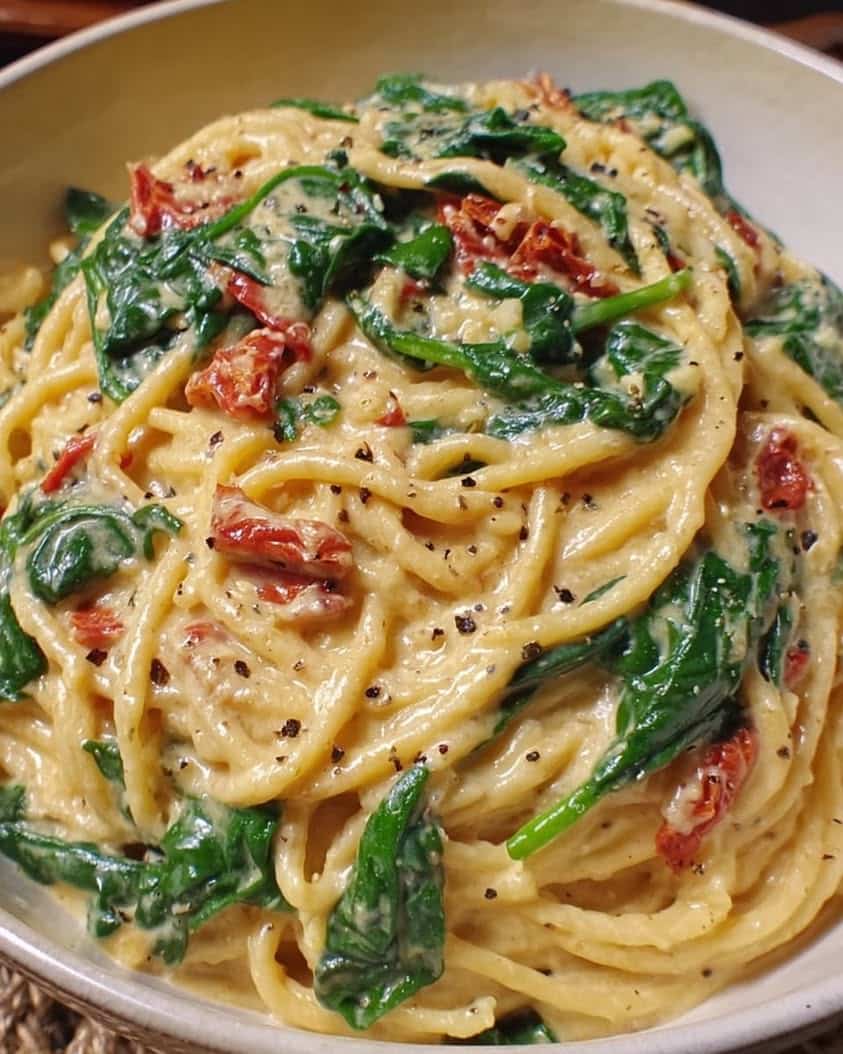
Spaghetti & Spinach with Sun-Dried Tomato Cream Sauce: A Luxuriously Easy Weeknight Dinner
Imagine a bowl of perfectly al dente spaghetti, generously coated in a velvety, blush-pink sauce that tastes like a sun-soaked Italian summer. This Spaghetti & Spinach with Sun-Dried Tomato Cream Sauce recipe delivers exactly that. Moreover, it transforms simple pantry staples into a restaurant-worthy meal in under thirty minutes. The secret lies in the magical combination of sweet, tangy sun-dried tomatoes and rich, smooth cream, creating a pasta sauce that is both deeply flavorful and incredibly luxurious.
Furthermore, this dish masterfully balances richness with freshness. The creamy sun-dried tomato pasta sauce clings to every strand of spaghetti, while handfuls of fresh spinach wilt into the heat, adding a vibrant green color and a welcome earthy note. Consequently, each forkful is a perfect harmony of textures and tastes. Ultimately, this recipe is your answer to busy weeknights when you crave something special without the fuss, or to impressing dinner guests with minimal effort. It’s a guaranteed crowd-pleaser that feels indulgent yet is straightforward to prepare.
Quick Recipe Highlights
- Flavor Profile: This creamy sun-dried tomato pasta boasts a complex taste. The sun-dried tomatoes provide a concentrated sweetness and tangy umami, perfectly balanced by the mellow richness of heavy cream and the sharp, salty punch of Parmesan cheese. Garlic and red pepper flakes add aromatic depth and a subtle warmth.
- Texture: The experience begins with the satisfying chew of al dente spaghetti. Then, you encounter the luxuriously smooth and velvety cream sauce that coats each strand. Finally, the wilted spinach offers a tender, almost silky contrast, while the sun-dried tomatoes provide delightful little bursts of chewy intensity.
- Aroma: As the garlic sizzles in the sun-dried tomato oil, your kitchen will fill with an irresistible, savory fragrance. The scent of simmering cream and tomatoes mingles with the nutty aroma of toasting Parmesan, creating an olfactory promise of the comfort to come.
- Visual Appeal: This dish is a feast for the eyes. The creamy sauce takes on a beautiful rosy hue from the tomatoes. Vivid green spinach flecks the pasta, and everything is finished with a snowy dusting of grated cheese. It’s rustic, colorful, and incredibly inviting on the plate.
- Skill Level Needed: This is a fantastic recipe for cooks of all levels. It requires only fundamental techniques like boiling pasta, sautéing garlic, and simmering a sauce. There are no complicated steps or specialized skills, making it an accessible path to a gourmet-tasting meal.
- Special Equipment: You need only standard kitchen gear: a large pot for boiling pasta, a large skillet or sauté pan for the sauce, a colander, and basic utensils like a wooden spoon and a chef’s knife. No fancy gadgets are required.
Recipe Overview
- Difficulty Level: We rate this Spaghetti & Spinach with Sun-Dried Tomato Cream Sauce as “Easy.” The process is linear and intuitive: cook pasta, build a simple pan sauce, and combine. There is no intricate timing or advanced culinary technique involved. Therefore, even a novice cook can achieve excellent results by following the clear steps.
- Category: This dish fits beautifully into several categories. Primarily, it is a perfect main course for a vegetarian dinner. Additionally, it serves as a stellar pasta primo piatto in an Italian-style multi-course meal. It’s also ideal for a quick family supper or a casual yet elegant date night at home.
- Cuisine: The recipe is rooted in Italian-American cuisine, drawing inspiration from the classic use of sun-dried tomatoes and cream in pasta sauces from Northern Italy. While not a strictly traditional regional dish, it uses iconic Italian ingredients in a harmonious, modern way that celebrates bold, simple flavors.
- Cost: This is a cost-effective meal, especially considering its impressive flavor. The most significant investments are the block of Parmesan cheese and the jar of sun-dried tomatoes, both of which are pantry staples with long shelf lives. The remaining ingredients—pasta, cream, spinach, garlic—are very affordable, making this a budget-friendly gourmet option.
- Season: While truly a year-round favorite, this creamy sun-dried tomato pasta feels particularly apt in the cooler months. Its rich, comforting nature is ideal for autumn and winter. Conversely, the bright, tangy flavor of the tomatoes can also evoke summer, making it a versatile choice for any season.
- Occasion: Its versatility shines here. It’s quick enough for a hectic Tuesday night, yet elegant enough for a weekend dinner party. You can easily double the recipe for a crowd. It also makes fantastic leftovers for lunch, as the flavors meld and deepen overnight.
Why You’ll Love This Recipe
First and foremost, the taste and texture are utterly irresistible. This creamy sun-dried tomato pasta sauce achieves a restaurant-quality depth with minimal effort. The sun-dried tomatoes, rehydrated in their own flavorful oil, release an intense sweetness and tang that permeates the velvety cream. Each bite delivers a satisfying contrast between the silky sauce, the tender pasta, and the slight chew of the tomatoes. Furthermore, the fresh spinach wilts perfectly into the mix, adding a pop of color and a mild, earthy flavor that cuts through the richness beautifully.
From a convenience standpoint, this recipe is a weeknight superhero. It comes together in one pot for the sauce and one for the pasta, meaning cleanup is a breeze. The entire process, from chopping garlic to serving, takes about thirty minutes. You likely have most ingredients already, or they are easy to find at any grocery store. Consequently, you can decide to make this luxurious meal on a whim without a special shopping trip. The process is also forgiving; a slightly longer simmer only improves the sauce.
Nutritionally, this Spaghetti & Spinach with Sun-Dried Tomato Cream Sauce offers more than just empty calories. Sun-dried tomatoes are packed with antioxidants like lycopene, which is enhanced through their drying process. Spinach contributes iron, vitamins A, C, and K, and fiber. Using a whole-grain or legume-based spaghetti can boost the fiber and protein content even further. While rich, the dish is balanced with these nutrient-dense components, making it a satisfying and wholesome meal.
For entertaining, this dish is a secret weapon. It feels special and indulgent, convincing guests you spent hours in the kitchen. However, you can socialize while it cooks. You can prepare the entire sauce ahead of time and simply toss it with hot pasta when ready to serve. It’s a universally appealing recipe that caters to vegetarians and pleases even the most ardent meat-eaters with its robust flavor. Serving it family-style in a large bowl creates a warm, communal dining experience.
Finally, it is remarkably cost-effective. Creating a sauce this flavorful at a restaurant would come with a premium price tag. At home, you can make four generous servings for a fraction of the cost. Ingredients like sun-dried tomatoes and Parmesan are used efficiently, providing big flavor from small quantities. This makes the creamy sun-dried tomato pasta an accessible luxury, perfect for regular rotation in your meal plan without straining your budget.
Historical Background and Cultural Significance
The story of sun-dried tomatoes is a tale of preservation and intensified flavor. In Southern Italy, particularly in regions like Puglia and Sicily, the abundant summer tomato harvest had to be preserved for winter. Traditionally, ripe plum tomatoes were halved, salted, and laid in the hot sun for days. This process concentrated their sugars and acids, creating a chewy, intensely flavorful ingredient that could be stored in oil. This method was a cornerstone of cucina povera, the “poor kitchen,” transforming a perishable summer bounty into a year-round treasure.
Culturally, sun-dried tomatoes became a global sensation in the late 20th century. They were emblematic of the “Mediterranean diet” craze and a staple in trendy Italian-American restaurants. Their bold, tangy-sweet flavor profile made them a favorite for adding instant depth to salads, sandwiches, and, crucially, pasta sauces. In pasta cookery, they bridged the gap between the fresh, bright sauces of summer and the richer, heartier meat sauces of winter. A creamy sun-dried tomato pasta sauce, therefore, represents a modern fusion, using this ancient preserved ingredient in a luxurious, contemporary way.
The evolution of the recipe follows the arc of modern home cooking. As heavy cream and Parmesan became standard refrigerator items in many households, cooks began experimenting beyond traditional tomato-based (marinara) or cheese-based (Alfredo) sauces. The sun-dried tomato cream sauce is a product of this experimentation—a decadent, pink-hued sauce that offers the best of both worlds. It’s less fussy than a true Alfredo, which requires precise emulsification, and richer than a simple marinara. The addition of fresh spinach is a more recent health-conscious twist, adding color, nutrients, and a flavor balance that makes the dish feel complete.
Regional variations of this concept abound. In Italy, one might find “Penne alla Vodka,” which uses tomato paste and cream for a similar color and richness. In American kitchens, the sun-dried tomato version became a popular alternative, offering a fruitier, more complex tomato flavor. Some variations include adding grilled chicken or shrimp for protein, using different greens like arugula or kale, or swapping the cream for mascarpone for an even richer texture. The basic formula, however, remains a beloved template for a quick, impressive, and deeply satisfying pasta dish.
Ingredient Deep Dive
Sun-Dried Tomatoes: These are the star, providing the dish’s signature flavor and color. Historically, they were a vital preservation method in Mediterranean cultures. Nutritionally, they are an excellent source of antioxidants, particularly lycopene, which is more bioavailable after the drying process. They also offer fiber, potassium, and vitamins C and K. For selection, choose tomatoes packed in oil for the best flavor and pliability; the oil itself is a fantastic cooking base. Store an opened jar in the refrigerator. For a substitution, you can use high-quality tomato paste (sautéed in oil) or oven-roasted cherry tomatoes, though the flavor profile will be different.
Heavy Cream: Cream creates the luxurious, velvety texture of the sauce. Dairy farming has ancient roots, but the use of cream in pasta sauces became more prominent in Northern Italian cuisine. It provides richness, balances acidity, and helps carry the flavors of the other ingredients. For best results, use fresh, high-fat heavy cream (or double cream) to prevent curdling when simmered. It should be stored in the coldest part of your refrigerator. For a lighter version, half-and-half can work but may not thicken as effectively. For a dairy-free alternative, full-fat coconut cream is the best substitute, though it will impart a coconut flavor.
Fresh Spinach: Spinach adds vital color, nutrients, and a fresh contrast. Its cultivation dates back to Persia, and it spread across the globe. It’s a nutritional powerhouse, loaded with iron, calcium, magnesium, and vitamins A, C, and K. When selecting, look for vibrant, dark green leaves without signs of wilting or yellowing. Store it unwashed in a plastic bag in the crisper drawer. For this recipe, baby spinach is ideal as it’s more tender and requires no stemming. If you need a substitute, other quick-wilting greens like arugula, Swiss chard, or kale (stems removed) work well, though cooking times may vary slightly.
Parmesan Cheese: Parmesan, or Parmigiano-Reggiano, is a hard, aged cheese with a history stretching back to the Middle Ages in Italy. It adds a salty, nutty, umami depth that is irreplaceable. Nutritionally, it’s a good source of protein and calcium. Always buy a block and grate it yourself; pre-grated cheese contains anti-caking agents that prevent it from melting smoothly. Store the wrapped block in the refrigerator. For a substitution, a similar hard, aged cheese like Pecorino Romano (which is saltier and sharper) can be used. For a vegan version, a sprinkle of nutritional yeast can provide some umami, though the texture will differ.
Spaghetti: Spaghetti is a long, thin, cylindrical pasta that originated in Italy. It provides the perfect vehicle for a clingy cream sauce. Opt for a high-quality brand made from 100% durum wheat semolina for the best al dente texture. Whole wheat or legume-based spaghetti are excellent choices for added fiber and protein. Store dried pasta in a cool, dry pantry. The key substitution here is the pasta shape; any long pasta like linguine, fettuccine, or bucatini works wonderfully. Short shapes like penne or rigatoni are also suitable, as their nooks hold the creamy sauce effectively.
Common Mistakes to Avoid
- Using Pre-Grated Parmesan Cheese: Pre-grated cheese contains cellulose to prevent clumping. This additive prevents the cheese from melting seamlessly into the warm sauce, resulting in a grainy or clumpy texture. Always grate your Parmesan from a block just before using it for the smoothest, creamiest integration.
- Overcooking the Garlic: Garlic burns quickly and becomes bitter. If you sauté the garlic in the sun-dried tomato oil over too high a heat or for too long, it will impart a harsh, acrid flavor to the entire sauce. Cook it only until fragrant, about 30-60 seconds, just before adding the liquid.
- Draining the Pasta Completely Dry: When you drain the spaghetti, do not shake out every last drop of water. Reserve about a cup of the starchy pasta water. This water is a magical tool for adjusting the sauce consistency. The starch helps the creamy sauce emulsify and cling perfectly to the pasta.
- Adding Cold Cream to a Hot Pan Too Quickly: While curdling is less likely with heavy cream, adding very cold cream to a searing hot pan can sometimes cause separation. To be safe, let the cream sit out for 10-15 minutes before cooking. Alternatively, lower the heat slightly before pouring it in and stir constantly.
- Overcrowding the Pan with Spinach: If you dump all the spinach in at once, it will steam and release a lot of water, potentially making your sauce watery. Add it in two or three batches, allowing the first batch to wilt down and make room for the next. This ensures even wilting without diluting the sauce.
- Not Seasoning in Layers: Seasoning only at the end results in a bland pasta and an overly salty sauce. Instead, season the pasta water generously with salt (it should taste like the sea). Then, taste and adjust the seasoning of the sauce after adding the cheese, and again after combining with the pasta.
- Skipping the Red Pepper Flakes: Even if you don’t like spicy food, a small pinch of red pepper flakes is crucial. It doesn’t make the dish hot; instead, it provides a subtle background warmth that enhances and lifts all the other flavors, cutting through the richness of the cream.
- Cooking the Pasta to Completion in the Water: For the best texture and sauce integration, cook the spaghetti until it is just shy of al dente (about 1-2 minutes less than the package suggests). Then, finish cooking it directly in the sauce. This allows the pasta to absorb the flavors and reach perfect doneness.
Essential Techniques
Sautéing Aromatics: This foundational technique builds the flavor base of your sauce. You are gently cooking the garlic (and red pepper flakes) in fat (the sun-dried tomato oil) to release their volatile oils and develop sweetness without browning. The key is to use medium heat and stir constantly. The visual cue for success is the garlic becoming fragrant and turning just translucent, not golden brown. A common pitfall is using heat that’s too high, which scorches the garlic in seconds, creating bitterness that permeates the entire dish.
Creating a Pan Sauce: This involves deglazing and reducing. After sautéing the aromatics, you add the sun-dried tomatoes and broth. Scraping up any browned bits (fond) from the pan incorporates extra flavor. Then, you simmer to reduce the liquid slightly, concentrating the flavors. The cream is added next and simmered gently to thicken. The sauce is ready when it coats the back of a spoon. The pitfall here is rushing the reduction; allow it to simmer for the full time to achieve a rich, cohesive sauce, not a thin, separated one.
Finishing Pasta in the Sauce: This is the professional chef’s secret for restaurant-quality pasta. Instead of fully cooking the pasta in water and then topping it with sauce, you transfer the nearly-cooked pasta directly into the simmering sauce with a bit of reserved pasta water. The pasta finishes cooking in the sauce, absorbing its flavors. The starch from the pasta water helps the sauce cling to every strand, creating a unified dish. The visual cue is the sauce thickening and clinging to the pasta as you toss it. The common mistake is adding the pasta too late, resulting in overcooked, mushy noodles.
Wilting Greens: Incorporating spinach requires a gentle touch. Add the fresh leaves to the hot sauce and pasta. The residual heat and steam will wilt them quickly. Use tongs to gently fold and toss, allowing the leaves to come into contact with the heat evenly. The goal is tender, vibrant green spinach, not cooked down to a dark, mushy state. The technique is complete when the spinach is just wilted and distributed throughout the dish, which usually takes less than a minute of tossing.
Pro Tips for Perfect Spaghetti & Spinach with Sun-Dried Tomato Cream Sauce
First, use the oil from the sun-dried tomato jar as your cooking fat. This oil is infused with incredible tomato flavor and will form the aromatic base of your entire sauce, adding depth from the very first step.
Second, reserve a full cup of pasta water before draining. You may not need it all, but having it on hand gives you complete control to loosen a sauce that has become too thick during the final toss.
Third, let your heavy cream come to room temperature for 10-15 minutes before using. This minimizes the risk of any temperature shock that could cause the fat to separate when it hits the hot pan.
Fourth, add the spinach in batches. Start with a large handful, let it wilt down to make room, then add the next. This prevents the pan from being overwhelmed and ensures every leaf gets perfectly tender.
Fifth, finish with a final drizzle of high-quality extra virgin olive oil. After plating, a small swirl of fresh, peppery olive oil on top adds a beautiful sheen and a layer of fresh, fruity flavor that complements the cooked sauce.
Sixth, toast your red pepper flakes. For an even deeper flavor, add the red pepper flakes to the oil for just 10-15 seconds before adding the garlic. This toasts the spices, releasing more of their essential oils and creating a more complex heat.
Seventh, use a microplane for the Parmesan. Grating the cheese very finely with a microplane allows it to melt instantly and seamlessly into the warm sauce, creating an ultra-smooth texture.
Eighth, warm your serving bowls. Place your empty pasta bowls in the oven on the lowest setting for a few minutes before serving. A warm bowl keeps your creamy sun-dried tomato pasta hot and enjoyable for longer.
Variations and Adaptations
For regional variations, look to Italy for inspiration. A Neapolitan twist might add capers and olives for a briny contrast. A Roman version could use guanciale (cured pork cheek) for a savory, salty depth, transforming it into a non-vegetarian delight. In the American South, you might find a version with added Cajun seasoning and sautéed shrimp for a Creole-Italian fusion.
Seasonal adaptations are simple and rewarding. In spring, add fresh peas and asparagus tips with the spinach. During summer, garnish with fresh, ripe cherry tomatoes and basil. For autumn, incorporate roasted mushrooms or cubes of butternut squash. In winter, a sprinkle of crispy breadcrumbs on top adds a comforting textural element.
Dietary modifications are straightforward. For a gluten-free version, use your favorite gluten-free spaghetti. To make it dairy-free, substitute the heavy cream with full-fat coconut cream and use a vegan Parmesan alternative or nutritional yeast. For a vegan dish, follow the dairy-free steps and ensure your pasta is egg-free.
Flavor variations can take this recipe in new directions. Stir in a tablespoon of tomato paste with the garlic for an even deeper tomato flavor. Add a splash of white wine when deglazing the pan for acidity. Incorporate herbs like fresh thyme, oregano, or basil at different stages—hardier herbs with the garlic, soft herbs as a garnish.
Texture modifications can cater to personal preference. For a chunkier sauce, chop the sun-dried tomatoes more roughly. For a completely smooth sauce, blend the sun-dried tomatoes with the broth before adding it to the pan. Add toasted pine nuts or walnuts for crunch, or mix in creamy goat cheese at the end for extra tang and richness.
Presentation alternatives can elevate the dish. Instead of mixing the spinach in, use it as a bed—plate a mound of wilted spinach first, then top with the sauced pasta. Serve the pasta in a hollowed-out Parmesan wheel for a dramatic tableside presentation. Or, for individual portions, use a ring mold to create a neat, vertical stack of pasta on the plate.
Serving and Presentation Guide
For plating, use a pair of tongs or a pasta fork to lift and twist a generous portion of the Spaghetti & Spinach with Sun-Dried Tomato Cream Sauce into the center of a warm, shallow bowl. This twisting motion creates height and visual appeal, allowing the sauce to cascade down the sides. Avoid simply dumping the pasta; the intentional arrangement makes the dish look restaurant-crafted.
Garnishing is the final touch. Beyond the essential snowdrift of freshly grated Parmesan, consider a few leaves of fresh basil or Italian parsley for a pop of green. A light drizzle of the sun-dried tomato oil or high-quality extra virgin olive oil adds shine. A final crack of black pepper not only adds flavor but also visual contrast against the creamy sauce.
Traditional accompaniments are simple. A crisp, green salad with a lemony vinaigrette provides a refreshing counterpoint to the rich pasta. A side of crusty, warmed bread like focaccia or a baguette is non-negotiable for sopping up every last bit of the delicious creamy sun-dried tomato pasta sauce left in the bowl.
Modern serving suggestions might include a charcuterie board to start, featuring olives, cheeses, and cured meats. For a more substantial meal, serve the pasta as a primo (first course) followed by a simple grilled fish or chicken. Family-style serving in a large, beautiful ceramic bowl encourages sharing and a convivial atmosphere.
Temperature considerations are critical. Pasta is best served immediately, piping hot. Ensure your serving bowls are warmed. If there is a delay between finishing the pasta and serving, keep it in the warm pan off the heat with a lid on, but for no more than a few minutes, as the pasta will continue to absorb the sauce.
Portion control is easier with pasta than many think. A standard serving is about 2 ounces of dry spaghetti per person. This recipe scales perfectly to that ratio. When serving, aim for a balanced plate where the pasta is the star, but not overwhelming, leaving room for a side salad or vegetable.
Wine and Beverage Pairing
For wine pairings, you want a bottle that can stand up to the richness and acidity of the sauce. A medium-bodied Italian white like Pinot Grigio or Vermentino works beautifully, offering crisp citrus notes that cut through the cream. Alternatively, a light-bodied red with low tannins, such as a Valpolicella or a Barbera, complements the tomato tang without overwhelming the dish. The key is to avoid overly oaky or heavily tannic wines, which can clash with the sauce’s creamy texture.
Non-alcoholic alternatives can be just as sophisticated. A sparkling water with a squeeze of lemon or lime provides cleansing bubbles. For a more crafted option, a virgin basil-ginger spritzer or a tart cherry and rosemary shrub mimics the complexity of wine. Iced herbal tea, like lemon verbena or mint, offers a refreshing counterpoint to the rich, creamy sun-dried tomato pasta.
While not traditional, certain coffee or tea pairings can work if serving the dish for lunch. A light roast coffee with bright acidity can mirror the tomatoes’ tang. A cup of earthy, savory green tea like Genmaicha (with roasted rice) can create an interesting umami synergy with the Parmesan and tomatoes. These are adventurous pairings but can be delightful.
Temperature considerations are universal. White wines should be chilled but not ice-cold, around 45-50°F, so their flavors aren’t muted. Light reds are best served slightly cool, at about 55°F. Non-alcoholic sparkling drinks should be well-chilled. The goal is for the beverage to refresh the palate between bites of the warm, rich pasta.
Serving suggestions enhance the experience. Pour wine into appropriate glassware to allow aromas to develop. For non-alcoholic options, use a nice tumbler or a wine glass to elevate the feel. Always offer water on the side. Encourage guests to take a sip of their beverage before the first bite to cleanse the palate and prepare it for the flavors of the dish.
Storage and Shelf Life
For storage, allow any leftovers of the Spaghetti & Spinach with Sun-Dried Tomato Cream Sauce to cool completely to room temperature. Do not leave it out for more than two hours. Transfer the pasta to an airtight container. It is best to store the pasta and sauce combined, as separating them can dry out the pasta. Properly stored in the refrigerator, leftovers will maintain good quality for 3-4 days.
Temperature requirements are strict for dairy-based sauces. The cream sauce makes this dish perishable. It must be refrigerated at 40°F or below. Do not attempt to store it at room temperature. If you need to keep it warm for a short period before serving, use a warming drawer or keep it in the pan over the absolute lowest possible heat, stirring occasionally.
Container recommendations are simple. Glass containers with tight-sealing lids are ideal because they don’t absorb odors and allow you to see the contents. Alternatively, BPA-free plastic containers work well. Ensure the container is the right size to minimize the amount of air inside, which can accelerate spoilage and cause the pasta to dry out.
Signs of spoilage are important to recognize. If the sauce appears separated or watery, or if an off, sour smell develops, the dish should be discarded. Visible mold is an obvious sign. The spinach will lose its vibrant green color and become a drab, dark green or brown when past its prime. When in doubt, it is safest to throw it out.
Reheating instructions are crucial for restoring texture. The best method is on the stovetop. Add the leftover pasta to a skillet with a splash of water, broth, or milk. Gently heat over medium-low, stirring frequently, until warmed through. The added liquid helps reconstitute the creamy sauce. Avoid the microwave if possible, as it can cook the pasta unevenly and cause the sauce to separate. If using a microwave, do so in short bursts, stirring between each.
Freezing is not generally recommended for this dish. Cream-based sauces tend to separate and become grainy when thawed and reheated. The pasta itself can become mushy. The spinach will turn to an unappealing texture. For best quality, enjoy this creamy sun-dried tomato pasta fresh or within a few days of refrigeration.
Make Ahead Strategies
You can implement an efficient prep timeline. The day before, you can grate the Parmesan cheese and store it in an airtight container in the fridge. Chop the sun-dried tomatoes and mince the garlic, storing them separately. Measure out your cream and broth. This “mise en place” reduces active cooking time to about 15 minutes on the day of serving.
For storage between steps, keep pre-chopped ingredients in small containers in the refrigerator. The garlic and tomatoes can be combined. The cream and broth should stay separate and cold until use. Having everything measured and ready allows you to cook the sauce in a continuous, smooth flow without pausing to prep.
The quality impact of making the full sauce ahead is minimal. You can prepare the entire sun-dried tomato cream sauce (through the simmering step) up to two days in advance. Cool it completely and store it in the refrigerator. The flavors will actually meld and improve. Gently reheat the sauce in a skillet before adding the nearly-cooked pasta and fresh spinach.
Assembly tips for make-ahead are key. Always cook the pasta fresh. Do not cook and refrigerate the spaghetti ahead of time, as it will become gummy and stale. The magic of “finishing the pasta in the sauce” requires freshly boiled, starchy pasta. The spinach should also be added fresh at the final stage to preserve its color and texture.
Reheating guidelines for a pre-made sauce are simple. Gently warm the refrigerated sauce in a large skillet over medium-low heat, stirring occasionally. If it has thickened too much, thin it with a small amount of broth, water, or cream. Once the sauce is hot and smooth, proceed with the recipe by adding your freshly cooked pasta and spinach.
For fresh element additions, remember that some components are best added at service. The fresh spinach should always be wilted at the last minute. The final garnish of freshly grated Parmesan and a drizzle of oil should also be done just before serving to maintain their vibrant flavors and textures.
Scaling Instructions
Halving the recipe is straightforward for a smaller meal. Simply divide all ingredient quantities by two. Use a medium skillet instead of a large one. The cook times will remain roughly the same, but keep a closer eye on the sauce reduction, as a smaller volume may reduce slightly faster. This is perfect for a romantic dinner for two.
Doubling or tripling the recipe for a crowd requires minor adjustments. Use your largest pot or Dutch oven for the sauce. You may need to simmer the sauce a few minutes longer to reach the proper thickened consistency due to the increased volume. When boiling the pasta, do so in batches or use two large pots to avoid overcrowding, which leads to uneven cooking.
Equipment adjustments are necessary when scaling up. A standard 12-inch skillet may not hold a doubled sauce recipe comfortably. Opt for a 5-qt Dutch oven or a large, wide braiser. Ensure you have a colander large enough to drain double the amount of spaghetti. Having a second set of tongs can also be helpful for tossing a large batch.
Timing modifications are minimal but important. The prep time will increase linearly as you have more ingredients to measure and chop. The active cooking time for the sauce may increase by a few minutes to account for bringing a larger volume to a simmer and reducing it. Start the pasta water early so it’s boiling when your sauce is nearly ready.
Storage considerations for large batches are crucial. If you have significant leftovers from a scaled-up recipe, divide them into smaller, meal-sized portions in separate airtight containers before refrigerating. This allows for quicker cooling and easier reheating of single servings without having to reheat the entire batch multiple times.
Nutritional Deep Dive
A macro breakdown of this Spaghetti & Spinach with Sun-Dried Tomato Cream Sauce reveals a balanced profile. The pasta provides complex carbohydrates for energy. The heavy cream and Parmesan contribute fats, which aid in the absorption of fat-soluble vitamins from the spinach and tomatoes. The cheese and, to a lesser extent, the spinach and pasta, provide protein. Using whole-grain pasta can significantly increase the fiber and protein content.
The micronutrient analysis is impressive. Sun-dried tomatoes are exceptionally high in lycopene, potassium, and vitamin K. Spinach adds a powerhouse of vitamins A, C, K, folate, iron, and magnesium. Parmesan cheese is an excellent source of calcium and phosphorus. Garlic provides allicin, a compound with noted health benefits. Together, they make this dish more nutrient-dense than a typical cream-based pasta.
Health benefits are tied to these nutrients. Lycopene from the tomatoes is linked to heart health and antioxidant protection. The vitamins in spinach support immune function, vision, and bone health. The calcium in Parmesan is vital for bone strength. The fiber from the whole grains and vegetables promotes digestive health. The dish, while indulgent, delivers substantial nutritional value.
Dietary considerations are important to note. This is a vegetarian dish. It contains gluten (from wheat pasta) and dairy. It is not suitable for a low-carb or keto diet in its standard form due to the pasta. For those monitoring sodium, be mindful of the salt in the pasta water, the Parmesan cheese, and the broth; using low-sodium broth and moderating added salt can help.
Portion analysis is key to enjoyment. A standard serving (one-quarter of this recipe) is satisfying and balanced. Pairing it with a large side salad increases the volume of the meal with low-calorie vegetables, promoting fullness. Being mindful of portion size allows you to enjoy the rich, creamy sun-dried tomato pasta as part of a healthy diet without overindulgence.
Weight management tips include using the strategies above: control portions, pair with a salad, and consider using a higher-fiber pasta. Print
Spaghetti & Spinach with Sun-Dried Tomato Cream Sauce
- Total Time: 45 minutes
- Yield: 4
Description
A creamy, savory pasta dish featuring sun-dried tomatoes, fresh spinach, and a rich garlic-infused sauce, perfect for a quick yet elegant dinner.
Ingredients
- 12 oz spaghetti
- 1 cup sun-dried tomatoes in oil, drained and chopped
- 3 cloves garlic, minced
- 4 cups fresh spinach
- 1 cup heavy cream
- 1/2 cup grated Parmesan cheese
- 2 tbsp olive oil
- Salt and black pepper to taste
- Fresh basil for garnish
Instructions
- Cook spaghetti according to package directions until al dente. Drain and set aside.
- In a large skillet, heat olive oil over medium heat. Add garlic and sun-dried tomatoes, sauté for 2-3 minutes until fragrant.
- Add spinach to the skillet and cook until wilted, about 2 minutes.
- Pour in heavy cream and bring to a simmer. Stir in Parmesan cheese until melted and sauce thickens slightly.
- Add cooked spaghetti to the skillet, tossing to coat evenly in the sauce. Season with salt and pepper.
- Serve hot, garnished with fresh basil.
Notes
You can customize the seasonings to taste.
- Prep Time: 15 minutes
- Cook Time: 30 minutes
- Method: Main
- Cuisine: Italian-American