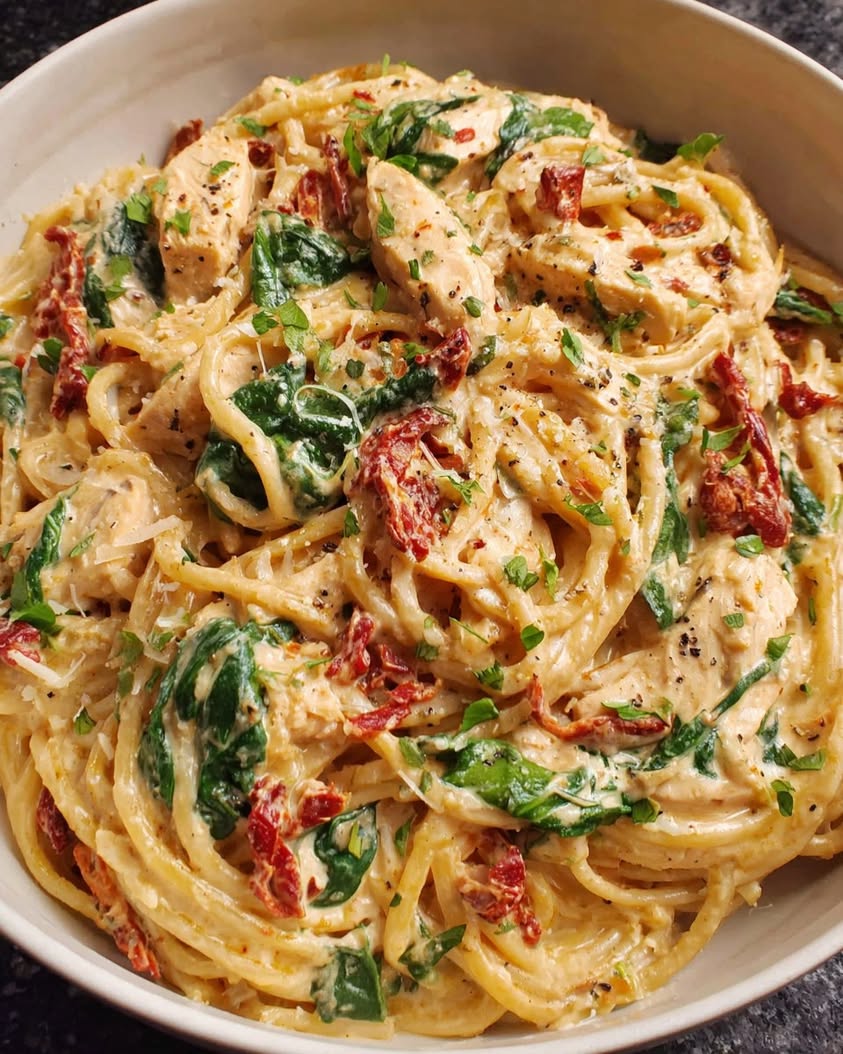
Creamy Sun-Dried Tomato Chicken Pasta with Spinach: A Restaurant-Quality Weeknight Wonder
Imagine a dish that delivers the rich, comforting satisfaction of a restaurant pasta without the fuss. This Creamy Sun-Dried Tomato Chicken Pasta with Spinach is exactly that. It transforms simple ingredients into a spectacular meal that feels both indulgent and wholesome. The sauce, a velvety blend of cream, Parmesan, and the intense tang of sun-dried tomatoes, clings perfectly to every strand of spaghetti. Meanwhile, tender chicken and fresh spinach add substance and a pop of vibrant color. Ultimately, this recipe proves that a truly memorable dinner doesn’t require hours in the kitchen.
The magic of this sun-dried tomato chicken pasta lies in its balance of flavors and textures. Each bite offers a symphony: the savory umami of seared chicken, the sweet-tart punch of the tomatoes, the gentle bitterness of wilted spinach, and the luxurious cream sauce that ties it all together. It’s a comforting hug in a bowl, yet sophisticated enough for company. Furthermore, the entire dish comes together in one pan while your pasta boils, making cleanup a breeze. If you’re seeking a reliable, crowd-pleasing recipe that looks and tastes like you spent all day cooking, this is your new go-to.
This creamy chicken pasta recipe is a masterclass in efficient, flavorful cooking. It leverages pantry staples and a few fresh components to create something extraordinary. The sun-dried tomatoes are the undeniable star, infusing the oil and cream with their concentrated Mediterranean essence. Consequently, every element from the garlic to the chicken absorbs that incredible flavor. Whether you’re cooking for a busy family Tuesday or a casual dinner with friends, this dish promises to impress. It’s hearty, satisfying, and delivers restaurant-quality results with straightforward, home-cooked ease.
Quick Recipe Highlights
- Flavor Profile: This dish boasts a complex, savory-sweet profile. The sun-dried tomatoes provide a tangy, intense fruitiness that beautifully cuts through the rich, creamy Parmesan sauce. Additionally, garlic and Italian seasoning build a fragrant, herbaceous base that complements the savory chicken perfectly.
- Texture: You’ll enjoy a wonderful contrast of textures in every forkful. The spaghetti offers a satisfying al dente bite, while the chicken is tender and juicy. The spinach wilts into silky ribbons, and the sun-dried tomatoes add a delightful, chewy contrast against the smooth, velvety sauce.
- Aroma: As this cooks, your kitchen will fill with an irresistible fragrance. First, the garlic and herbs sizzling in the sun-dried tomato oil create a mouthwatering base. Then, the scent of cream reducing and Parmesan melting weaves through, promising a deeply comforting and delicious meal.
- Visual Appeal: This pasta is a feast for the eyes with its stunning color palette. The creamy sauce has a blush-pink hue from the tomato oil, dotted with vibrant red tomato pieces and deep green spinach. Finally, a snowfall of fresh Parmesan and chopped parsley on top adds the perfect finishing touch.
- Skill Level Needed: This is a fantastic recipe for cooks of all levels. It requires fundamental skills like boiling pasta, sautéing chicken, and building a simple pan sauce. Importantly, the process is sequential and forgiving, making it an excellent choice for building confidence in the kitchen.
- Special Equipment: You need only standard kitchen tools. A large pot for boiling pasta and a large, deep skillet or sauté pan are essential. Otherwise, you’ll just need a chef’s knife, cutting board, and a grater for fresh Parmesan cheese. No special gadgets are required.
Recipe Overview
- Difficulty Level: We classify this creamy sun-dried tomato chicken pasta as “Easy.” The steps are linear and simple: cook pasta, brown chicken, build sauce. There are no advanced techniques like tempering eggs or making a roux. However, attention to timing and proper seasoning elevates the final dish from good to great. It’s accessible for beginners but satisfying for experienced cooks looking for a quick, flavorful meal.
- Category: This recipe fits multiple meal categories beautifully. It’s a complete, one-dish dinner perfect for busy weeknights. Simultaneously, it’s elegant enough for a casual weekend dinner party or date night in. You can also consider it a hearty pasta main course or a luxurious comfort food dish.
- Cuisine: While not strictly traditional, this dish is inspired by the flavors of Italian-American cuisine and the Mediterranean. The use of sun-dried tomatoes, garlic, Parmesan, and Italian herbs draws directly from those regions. It’s a modern, creamy interpretation that celebrates bold, sun-kissed flavors in a quick-cooking format.
- Cost: This is a cost-effective meal, especially when you consider its restaurant-quality appeal. Chicken breast and spaghetti are budget-friendly proteins and carbs. Sun-dried tomatoes and heavy cream are the “splurge” items, but a little goes a long way. Overall, you can feed a family of four a luxurious meal for far less than the cost of takeout.
- Season: This creamy chicken pasta is truly a year-round recipe. It’s cozy and comforting in the fall and winter. Conversely, the bright, tangy flavor of the sun-dried tomatoes feels wonderfully fresh in the spring and summer. It’s a versatile dish that works regardless of the weather outside.
- Occasion: This dish is incredibly versatile for different occasions. It’s a lifesaver on hectic weeknights when you need something fast and satisfying. Furthermore, it’s impressive enough for serving to guests for a casual dinner party. It also makes excellent leftovers for lunch the next day.
Why You’ll Love This Recipe
First and foremost, the taste and texture of this creamy sun-dried tomato chicken pasta are utterly irresistible. The sauce is the hero—rich and velvety without being overly heavy, thanks to the bright acidity of the tomatoes. Each component, from the al dente spaghetti to the juicy chicken, plays a perfect role. The spinach wilts into the sauce, adding nutrition and a pop of color without a strong flavor. Consequently, every bite is a harmonious blend of savory, tangy, creamy, and fresh notes that will have everyone at the table asking for seconds.
From a convenience standpoint, this recipe is a weeknight champion. It utilizes a simple one-pan method for the sauce while the pasta cooks separately. This parallel cooking saves significant time and minimizes cleanup. Moreover, the ingredient list is straightforward, with items you can find at any grocery store. You likely have many of them in your pantry right now. The process is also very forgiving; if your cream reduces a bit too much, a splash of pasta water fixes it instantly. Therefore, you get a stunning, complex-tasting dish with minimal stress and effort.
Nutritionally, this creamy chicken pasta offers a more balanced profile than many restaurant versions. By incorporating a full bag of fresh spinach, you add a hefty dose of vitamins A, C, K, and iron. Using a measured amount of cream and real Parmesan provides richness without going overboard. The chicken breast is a lean source of protein that helps keep you full. When you compare it to a heavy Alfredo, this dish feels indulgent but leaves you satisfied, not sluggish. It’s a meal you can feel good about serving to your family.
For social and entertaining value, this dish is a true gem. It looks incredibly impressive when plated, with its vibrant colors and creamy sauce. Guests will assume you spent far longer in the kitchen. Because it’s mostly hands-off once the components are cooking, you can spend time with your company instead of being chained to the stove. It pairs wonderfully with a simple salad and crusty bread for a complete, crowd-pleasing menu. Whether it’s a family gathering or a dinner with friends, this pasta creates a warm, welcoming, and delicious centerpiece for the meal.
Finally, the cost-effectiveness and accessibility of this recipe are major wins. As mentioned, the core ingredients are affordable. Sun-dried tomatoes are often sold in jars or bags in the dry goods aisle, and a single jar can be used for multiple recipes. You can easily adapt it based on what you have; for instance, using thigh meat instead of breast or a different pasta shape. This flexibility makes it a reliable staple in your cooking repertoire. You can create a luxurious, satisfying dinner without blowing your grocery budget, which is a victory in today’s world.
Historical Background and Cultural Significance
The story of sun-dried tomatoes is deeply rooted in Mediterranean culinary traditions, particularly in Southern Italy. Before modern refrigeration, drying tomatoes in the hot summer sun was a vital preservation method. This process concentrated their sugars and flavors, creating a potent, shelf-stable ingredient that could be used throughout the winter months. These tomatoes were often stored in oil, which further preserved them and infused the oil with their rich essence. This practical technique gave birth to an ingredient that is now cherished worldwide for its intense, sweet-tart flavor profile.
Culturally, pasta with chicken represents a more modern, fusion-style approach to Italian cooking. Traditional Italian pasta dishes rarely combine poultry and pasta in the same way American cuisine does. However, the combination has become immensely popular in Italian-American restaurants and home kitchens. It represents a adaptation where the hearty, protein-focused American meal structure meets the saucy, carb-centric Italian pasta tradition. This creamy sun-dried tomato chicken pasta is a delicious example of this fusion, using Italian-inspired flavors in a format that appeals to a broad audience.
The evolution of the cream sauce in this recipe is also interesting. Classic Italian sauces like Alfredo (originally just butter and Parmesan) and tomato-based sauces are distinct. The addition of sun-dried tomatoes to a cream sauce is a contemporary innovation that leverages the global availability of specialty ingredients. It creates a “pink sauce” or “rosa sauce” that offers the best of both worlds: the richness of cream and the tangy depth of tomatoes. This evolution speaks to how modern cooks freely blend traditions to create new, beloved dishes that fit today’s tastes and time constraints.
Regional variations of this concept abound. In different parts of Italy, you might find pasta with ‘stracciatella’ (cheese curds) and sun-dried tomatoes, or with olives and capers instead of cream. In American kitchens, variations might include adding artichoke hearts, using goat cheese instead of Parmesan, or swapping the spinach for kale. The basic formula—pasta + protein + sun-dried tomatoes + creamy element—is incredibly versatile. This adaptability is a key reason for the dish’s enduring popularity. It serves as a template that home cooks can make their own, reflecting personal taste and local ingredient availability.
Ingredient Deep Dive
Sun-Dried Tomatoes: These are the flavor powerhouse of the dish. Historically, they are a testament to Mediterranean ingenuity in food preservation. Nutritionally, they are packed with lycopene (even more concentrated than fresh tomatoes), vitamin C, and fiber. When selecting them, you can choose between dry-packed or oil-packed. For this recipe, oil-packed are ideal because the flavorful oil becomes the cooking base. Store an opened jar in the refrigerator. If you only have dry-packed, simply rehydrate them in warm water for 15 minutes before using, and use olive oil for sautéing.
Chicken Breast: A lean, versatile protein that acts as the substantial base of the meal. For best results, use boneless, skinless breasts and pound them to an even thickness before cooking. This ensures quick, even cooking and prevents dryness. To store, keep raw chicken in the coldest part of your refrigerator and use within 1-2 days, or freeze for longer storage. For a substitution, boneless chicken thighs are an excellent choice. They offer more fat and flavor, and are more forgiving if slightly overcooked. Simply adjust cooking time as needed.
Heavy Cream: This provides the luxurious, velvety texture of the sauce. It’s important to use heavy cream or heavy whipping cream (with at least 36% milk fat) for stability. Lower-fat alternatives like half-and-half may curdle when reduced. For storage, always check the expiration date and keep it refrigerated. If you need a dairy-free alternative, full-fat canned coconut cream is the best substitute. It provides a similar richness and body, though it will impart a slight coconut flavor that pairs surprisingly well with the sun-dried tomatoes.
Fresh Spinach: This leafy green adds color, nutrients, and a mild flavor. It wilts down dramatically, so using a full bag is perfect. Spinach is rich in iron, calcium, and vitamins A and K. Select bags of fresh, crisp leaves without sliminess or yellowing. Store it in the refrigerator and use it quickly for the best quality. If you need to substitute, baby kale or Swiss chard are great options. Just note that kale will take slightly longer to wilt and has a stronger flavor, while chard stems should be removed and chopped separately.
Parmesan Cheese: Freshly grated Parmesan is non-negotiable for the best flavor and meltability. Pre-grated cheese contains anti-caking agents that can make your sauce grainy. Parmigiano-Reggiano, while an investment, offers unparalleled depth. It’s a good source of protein and calcium. Store a wedge wrapped in parchment and then foil in the refrigerator. As a substitute, Pecorino Romano offers a sharper, saltier punch, while a high-quality Asiago can work in a pinch. Avoid using the shelf-stable powdered Parmesan for this sauce.
Common Mistakes to Avoid
- Using Pre-Grated Parmesan: This cheese contains cellulose to prevent clumping, which can prevent it from melting smoothly into your sauce. Consequently, you may end up with a grainy or separated texture. Always take the extra minute to grate a block of real Parmesan cheese for a silky, emulsified sauce.
- Overcooking the Chicken: Chicken breast cooks quickly and continues to carryover cook after removed from the pan. If you cook it until it’s no longer pink in the center in the pan, it will be dry by the time you serve it. Remove it when it’s just cooked through and let it rest before slicing.
- Not Using the Pasta Water: The starchy, salted water from boiling your spaghetti is liquid gold. It helps thin the sauce to the perfect consistency and helps the sauce cling to the pasta. Always reserve at least a cup before draining. Add it gradually until your sauce is lush and coats the noodles perfectly.
- Adding Cold Cream to a Hot Pan: If you pour cold heavy cream directly into a very hot pan, it can shock and potentially curdle. To prevent this, let the pan cool slightly after cooking the garlic, or have the cream at room temperature. Adding it gradually while stirring also helps.
- Using the Wrong Pan: A small skillet will crowd the chicken, causing it to steam instead of sear. It also won’t have enough space for the sauce and pasta later. Use a large, deep skillet or sauté pan to ensure everything has room to cook properly and combine easily at the end.
- Skipping the Seasoning Layers: Seasoning only at the end results in a bland dish. Instead, season the chicken before browning, salt your pasta water generously, and taste the sauce before finishing. Building seasoning in layers throughout the cooking process creates a deeply flavorful final product.
- Draining the Pasta and Letting It Sit: Pasta begins to stick together as soon as it’s drained. For the best integration, time your pasta to finish cooking just as your sauce is ready. Then, transfer the drained pasta directly into the sauce pan. The residual heat and moisture help everything come together.
- Overcooking the Garlic: Garlic burns in an instant and turns bitter. Add it to the oil only after removing the chicken, and cook it just for 30-60 seconds until fragrant. If it starts to brown, immediately proceed to the next step to stop the cooking process.
Essential Techniques
Properly Searing Chicken: Searing creates a flavorful brown crust via the Maillard reaction, which adds depth to the entire dish. To master it, ensure your pan is hot before adding the oil, and pat the chicken completely dry with paper towels. Furthermore, do not overcrowd the pan; cook in batches if necessary. The chicken should release easily from the pan when a good crust has formed. If it sticks, it’s not ready to flip. This technique ensures juicy meat with maximum flavor.
Building a Pan Sauce: This is the foundation of the creamy sun-dried tomato sauce. After searing the chicken, you use the flavorful fond (browned bits) left in the pan. Sauté garlic and herbs in the residual oil to bloom their flavors. Then, deglaze with the sun-dried tomato oil and juices, scraping up all the fond. Adding the cream and letting it reduce slightly concentrates the flavor and thickens the sauce naturally. The key is managing the heat to avoid burning the garlic or breaking the cream.
Wilt-Loading Greens: Adding a large volume of fresh spinach to a hot sauce seems daunting, but it wilts down remarkably. The technique is to add it in batches, stirring constantly. The first batch will wilt and make room for the next. This method ensures even wilting and prevents the sauce from cooling down too much. It’s a quick, efficient way to incorporate nutrients and color without pre-cooking the spinach in a separate pan.
Finishing Pasta in the Sauce: This crucial Italian technique, called “mantecatura,” is what makes restaurant pasta so good. Instead of topping plain pasta with sauce, you combine them in the pan over low heat. Add a splash of pasta water and toss vigorously. The starch in the water helps the sauce emulsify and cling to every noodle. The pasta also absorbs some of the sauce’s flavor. The result is a cohesive dish where the pasta and sauce are one unified entity.
Pro Tips for Perfect Creamy Sun-Dried Tomato Chicken Pasta
First, reserve more pasta water than you think you’ll need. Start by adding about half a cup to the sauce with the pasta, then toss and assess. You can always add more to loosen the sauce, but you can’t take it out. The starchy water is the secret to a glossy, restaurant-style finish.
Second, let your cream sit out for 15-20 minutes before cooking. Using cream that is closer to room temperature prevents it from curdling when it hits the hot pan. This simple step ensures a perfectly smooth sauce every single time.
Third, don’t discard the oil from the sun-dried tomato jar. This oil is infused with incredible tomato flavor and is perfect for sautéing the garlic and herbs. It adds an extra layer of depth that plain olive oil simply can’t match.
Fourth, use kitchen tongs to toss the pasta in the sauce. Tongs allow you to lift, twist, and coat the spaghetti thoroughly, ensuring every strand is enveloped in the creamy sauce. A spoon or spatula won’t achieve the same integration.
Fifth, finish with a final drizzle of high-quality extra virgin olive oil just before serving. This adds a fresh, fruity aroma and a luxurious mouthfeel. It’s a small touch that professional chefs use to elevate a finished dish.
Sixth, if your sauce seems too thin after combining everything, let it simmer on low for an extra minute or two. The pasta will continue to absorb liquid, and the sauce will naturally thicken. Be patient and avoid adding thickeners like flour.
Seventh, for the best flavor, use the sun-dried tomatoes that are packed in oil, not dry. The oil-packed tomatoes are softer, more flavorful, and ready to use. If you only have dry, remember to rehydrate them first to avoid a tough, chewy texture.
Eighth, always taste and adjust seasoning at the very end, after you’ve added the Parmesan. Parmesan is salty, so you may find you need less additional salt than expected. A final crack of black pepper and a pinch of red pepper flakes can work wonders.
Variations and Adaptations
For regional variations, you can take this dish in many directions. For a Southern Italian twist, add chopped olives and capers along with the sun-dried tomatoes. A French-inspired version might use herbes de Provence and finish with a touch of Dijon mustard stirred into the cream. For an American twist, stir in crispy cooked bacon or pancetta at the end for a salty, smoky crunch.
Seasonal adaptations are easy and fun. In the spring, add fresh peas or asparagus tips with the spinach. During summer, stir in fresh basil and halved cherry tomatoes after the sauce is off the heat. In the fall, roasted mushrooms or cubed butternut squash make wonderful additions. For winter, a sprinkle of nutmeg in the cream adds a warm, cozy note.
Dietary modifications are straightforward. For a gluten-free version, use your favorite gluten-free spaghetti. To make it dairy-free, substitute full-fat coconut cream for the heavy cream and use a vegan Parmesan alternative or nutritional yeast. For a lower-carb option, serve the sauce over spiralized zucchini noodles (zoodles) or shirataki noodles, adding them at the very end to just heat through.
Flavor variations can customize the dish to your palate. Love spice? Add red pepper flakes with the garlic. For a richer, umami boost, stir in a tablespoon of tomato paste after the garlic. If you enjoy herbs, fresh thyme or oregano can replace or complement the dried Italian seasoning. A splash of white wine to deglaze the pan before adding the cream adds wonderful acidity.
Texture modifications can change the eating experience. For a chunkier sauce, use chopped artichoke hearts or roasted red peppers. For extra creaminess, stir in a couple of tablespoons of mascarpone or cream cheese at the end. To add a crunchy element, top the finished pasta with toasted pine nuts, breadcrumbs, or chopped walnuts.
Presentation alternatives can make the dish feel new. Instead of mixing everything, serve the creamy sun-dried tomato sauce over a nest of plain spaghetti with the sliced chicken arranged on top. For individual portions, bake the combined pasta and sauce in ramekins with a breadcrumb topping for a pasta bake. You can also use a different pasta shape like penne, rigatoni, or fettuccine to change the way the sauce is held.
Serving and Presentation Guide
Plating this pasta beautifully enhances the dining experience. Use a pair of tongs to twist a portion of pasta into the center of a warm, shallow bowl. This creates height and visual interest. Arrange the sliced chicken artistically around or on top of the pasta nest. Ensure some vibrant pieces of sun-dried tomato and green spinach are visible on the surface, not buried underneath.
Garnishing is the final touch that makes the dish pop. A generous sprinkle of freshly grated Parmesan is essential. Then, add a scattering of finely chopped fresh parsley or basil for color and a fresh aroma. A light drizzle of high-quality extra virgin olive oil adds shine. For a bit of texture and color, a few reserved whole sun-dried tomato pieces or a twist of black pepper on top looks beautiful.
Traditional accompaniments keep the meal Italian-inspired. A simple side salad of mixed greens with a bright lemon vinaigrette cuts through the richness of the pasta. Warm, crusty bread like a baguette or ciabatta is perfect for mopping up every last bit of sauce. For a vegetable side, roasted broccoli or green beans with garlic complement the flavors well.
Modern serving suggestions can streamline your meal. Consider serving the pasta family-style in a large, beautiful serving bowl, allowing guests to help themselves. For a more composed plate, place a smaller portion of pasta alongside a larger, colorful salad. You can also deconstruct it for a lunch bowl: a base of spinach, topped with the creamy chicken and sauce, and a smaller side of pasta or quinoa.
Temperature considerations are key for enjoyment. Pasta is best served immediately, piping hot. Warm your serving bowls by rinsing them with hot water and drying them just before plating. If you must hold the dish for a few minutes, keep it covered in the pan on the lowest possible heat with a splash of pasta water to prevent drying. Avoid letting it sit for too long, as the pasta will continue to absorb the sauce.
Portion control is easy with a few visual cues. A standard serving of dry spaghetti is about 2 ounces per person, which looks like a dime-sized bundle. For a main course, plan for one chicken breast per two people when slicing and combining. The sauce, being rich, is satisfying in smaller amounts. A good rule is that the finished dish should fill your bowl but not mound over it, allowing room for the garnishes.
Wine and Beverage Pairing
Wine pairings for this creamy, tangy dish should balance richness and acidity. A white wine like Pinot Grigio or Sauvignon Blanc works beautifully. Their crisp acidity cuts through the cream and complements the sun-dried tomatoes. For a red option, choose a light to medium-bodied wine like a Chianti or a Pinot Noir. These have enough acidity to stand up to the sauce without overpowering the chicken. Avoid heavily oaked wines, as they can clash with the dish’s bright flavors.
Non-alcoholic alternatives can be just as thoughtful. Sparkling water with a squeeze of lemon or lime provides a refreshing palate cleanser. For a more substantial option, a virgin Bloody Mary mocktail echoes the tomato flavor. Iced herbal tea, like lemon verbena or mint, offers a refreshing counterpoint. Even a simple glass of chilled, high-quality grape juice can mirror the fruitiness of a wine pairing.
While not traditional, certain coffees or teas could work if serving this pasta for a late lunch. A light roast coffee with bright notes would be too acidic. Instead, opt for a medium-roast coffee or a black tea like Earl Grey, which has citrus notes that can complement the tomatoes. However, these are best enjoyed after the meal, not during, to avoid flavor competition.
Temperature considerations for beverages are straightforward. White wines and non-alcoholic sparklers should be served well-chilled. Red wines should be served slightly below room temperature, around 60-65°F. Water should always be available and served with ice if preferred. The goal is to have a refreshing drink that contrasts with the warm, rich pasta.
Serving suggestions for beverages are simple. Offer wine by the glass or carafe. For non-alcoholic options, present them in a nice pitcher with garnishes like citrus slices or herb sprigs. Always ensure water glasses are filled. The right beverage pairing elevates the meal from simple sustenance to a true dining experience, making the creamy sun-dried tomato chicken pasta feel even more special.
Storage and Shelf Life
Proper storage methods are essential for food safety and quality. Allow any leftovers to cool completely before storing. Do not leave the pasta at room temperature for more than two hours. Transfer it to an airtight container. It’s best to store the pasta and sauce together, as separating them can dry out the pasta. Press a piece of plastic wrap directly onto the surface of the pasta before sealing the lid to minimize exposure to air, which can cause oxidation and drying.
Temperature requirements are non-negotiable. Leftover creamy sun-dried tomato chicken pasta must be refrigerated promptly. Store it in the main body of your refrigerator, not in the door, where temperatures fluctuate. The ideal refrigerator temperature is 40°F or below. Properly stored, the pasta will keep for 3-4 days. Always use your senses—if it develops an off smell, unusual texture, or visible mold, discard it immediately.
Container recommendations can impact shelf life. Glass containers with tight-sealing lids are ideal because they don’t absorb odors and allow you to see the contents. Alternatively, BPA-free plastic containers work well. Ensure the container is the right size; too much empty space leads to faster drying and freezer burn if freezing. For single servings, portion the pasta into individual containers for easy grab-and-go lunches.
Signs of spoilage are usually apparent. Look for a sour or unpleasant odor. The sauce may separate or look curdled beyond the normal settling that occurs. The pasta may become mushy or slimy. If you see any fuzzy growth (mold), discard the entire container. When in doubt, remember the golden rule: when in doubt, throw it out. It’s not worth the risk of foodborne illness.
Reheating instructions are crucial for restoring texture. The best method is on the stovetop. Add the leftover pasta to a skillet with a splash of water, broth, or milk. Heat over medium-low, stirring gently, until warmed through. The added liquid will reconstitute the sauce. You can also use a microwave: place in a microwave-safe dish, sprinkle with water, cover loosely, and heat in 30-second intervals, stirring in between. Avoid high heat, which can make the chicken rubbery and the sauce separate.
Freezing guidelines come with a caveat. Cream-based sauces can sometimes separate or become grainy when frozen and thawed. However, if you wish to freeze, do so for up to 2 months for best quality. Cool completely, store in a freezer-safe airtight container, leaving some headspace for expansion. Thaw overnight in the refrigerator before reheating gently on the stovetop with added liquid. The texture of the pasta may be softer after freezing.
Make Ahead Strategies
A prep timeline can turn this into a 15-minute meal on a busy night. The day before, you can complete several steps. Cook and slice the chicken, storing it in an airtight container in the fridge. Measure out your sun-dried tomatoes, cream, and grate your Parmesan. Wash and dry the spinach. You can even mince the garlic and measure the dried herbs. Having everything prepped and ready means you just need to boil pasta and assemble the sauce quickly.
Storage between steps is simple with proper planning. Keep pre-cooked chicken in a sealed container. Keep pre-measured dry ingredients (herbs, Parmesan) together. Store the cream and any pre-minced garlic in separate containers in the fridge. The sun-dried tomatoes can stay in their jar. Organizing your mise en place not only saves time but also makes the cooking process more enjoyable and less chaotic.
Quality impact assessment is important. Pre-cooked chicken will be slightly less juicy than freshly cooked, but in a saucy dish like this, the difference is minimal. Pre-minced garlic is fine, though fresh is always more potent. Pre-grated Parmesan is not recommended due to anti-caking agents. The spinach should only be washed and dried, not pre-wilted. Overall, with these make-ahead steps, the final dish will still be delicious and 90% as good as made completely fresh.
Assembly tips for make-ahead meals are key. When ready to cook, start your pasta water. Reheat the pre-cooked chicken gently in the microwave or briefly in the sauce pan before setting aside. Then, proceed with building the sauce from the garlic step. Since your ingredients are measured, you can move quickly. Add the pre-cooked chicken at the very end, just to warm through, to prevent it from becoming tough.
Reheating guidelines for fully assembled make-ahead pasta are specific. If you’ve combined everything and refrigerated it, reheat gently on the stovetop with added liquid. The pasta will have absorbed much of the sauce. Adding a splash of broth, cream, or even milk will bring it back to life. Stir frequently over low heat to prevent sticking and ensure even warming. Avoid boiling, as this can further break down the pasta texture.
Fresh element additions can revive a make-ahead dish. Even if you’ve prepped everything, add a final garnish of freshly grated Parmesan and chopped herbs right before serving. A last-minute drizzle of good olive oil also adds a fresh aroma. These elements don’t take time but provide a bright, “just-made” quality that elevates the entire meal and makes it feel special, not like leftovers.
Scaling Instructions
Halving the recipe is simple for smaller households. Use one chicken breast, half a pound of spaghetti, and simply divide all other ingredients by two. Use a medium skillet instead of a large one. Cooking times will remain roughly the same, though the sauce may reduce a bit faster due to the smaller volume. Keep a close eye on it. This is a perfect way to enjoy this creamy sun-dried tomato chicken pasta without having leftovers, or to test the recipe before making it for a crowd.
Doubling or tripling the recipe for a crowd requires some adjustments. Use a very large pot for the pasta and consider boiling it in two batches to avoid sticking. For the sauce, you may need to use the largest Dutch oven you have or cook the chicken in multiple batches to ensure proper searing. Increase simmering time for the sauce slightly to allow it to reduce and thicken appropriately. Taste and season carefully, as scaling up spices can be tricky—season in layers and taste often.
Equipment adjustments are necessary when scaling. For a double batch, your standard large skillet might not hold everything comfortably. A 5-qt Dutch oven is ideal. You’ll also need a larger colander for draining more pasta. Ensure you have a pot large enough to boil 2 lbs of spaghetti with plenty of water (at least 6 quarts) to prevent sticking. Having the right tools prevents frustration and ensures even cooking.
Timing modifications are minimal but important. When doubling, the time to brown the chicken will increase if you’re cooking in batches. The sauce will take slightly longer to come to a simmer and reduce. However, the pasta cooking time remains the same. The key is to start the sauce first, then begin the pasta water. Aim to have the pasta finish just as the sauce is ready for combining, which may require a slight delay in starting the pasta compared to the single recipe.
Storage considerations change with scale. If you’ve made a large batch, cooling it quickly is important for food safety. Divide the hot pasta into several smaller, shallow containers instead of one deep one. This allows it to cool to a safe temperature faster before refrigerating. Clearly label containers with the date. A large batch is perfect for meal prep, but plan to consume it within 3-4 days for the best quality and safety.
Nutritional Deep Dive
Macro breakdown for a serving of this creamy sun-dried tomato chicken pasta provides a balance of all three macronutrients. You get Print
Spaghetti & Spinach with Sun-Dried Tomato Chicken Cream Sauce
- Total Time: 45 minutes
- Yield: 4
Description
A creamy and flavorful pasta dish featuring tender chicken, fresh spinach, and a rich sun-dried tomato cream sauce, all tossed with spaghetti for a comforting meal.
Ingredients
- 8 oz spaghetti
- 2 boneless, skinless chicken breasts, cut into bite-sized pieces
- 1 cup sun-dried tomatoes in oil, drained and chopped
- 3 cloves garlic, minced
- 1 cup fresh spinach
- 1 cup heavy cream
- 1/2 cup grated Parmesan cheese
- 2 tbsp olive oil
- 1 tsp dried oregano
- Salt and black pepper to taste
Instructions
- Cook spaghetti according to package instructions until al dente, then drain and set aside.
- In a large skillet, heat olive oil over medium-high heat. Add chicken pieces, season with salt, pepper, and oregano, and cook until browned and cooked through, about 6-8 minutes.
- Add minced garlic and sun-dried tomatoes to the skillet, sauté for 2 minutes until fragrant.
- Pour in heavy cream and bring to a simmer. Stir in Parmesan cheese until melted and the sauce thickens slightly.
- Add fresh spinach to the sauce, stirring until wilted, about 2 minutes.
- Toss the cooked spaghetti into the skillet with the sauce until evenly coated. Serve hot.
Notes
You can customize the seasonings to taste.
- Prep Time: 15 minutes
- Cook Time: 30 minutes
- Method: Main
- Cuisine: Italian-American