Creamy Sun-Dried Tomato Chicken Pasta: A Restaurant-Quality Weeknight Dinner
Imagine a pasta dish that feels both indulgent and fresh, a meal that delivers the comforting richness of a cream sauce balanced by the bright, tangy punch of sun-dried tomatoes. This Creamy Sun-Dried Tomato Chicken Pasta with Spinach is exactly that kind of magic. It transforms simple, accessible ingredients into a dinner that looks and tastes like it came from a cozy Italian trattoria. Moreover, it comes together in one pan in about thirty minutes, making it the ultimate solution for busy weeknights when you crave something special without the fuss.
The beauty of this recipe lies in its harmonious layers of flavor. First, tender chicken cooks in a fragrant base of garlic and sun-dried tomatoes, infusing the oil with deep savory notes. Next, a splash of chicken broth loosens those flavorful bits from the pan, creating the foundation for a luxurious, velvety cream sauce. Finally, fresh spinach wilts into the sauce at the end, adding a pop of color and a nutritious element. The result is a complete, satisfying meal that pleases both the eyes and the palate.
Quick Recipe Highlights
- Flavor Profile: This dish masterfully balances rich, savory, and tangy notes. The creamy Parmesan sauce provides a decadent base, while the sun-dried tomatoes contribute a concentrated sweetness and slight acidity. Garlic and Italian seasoning add aromatic depth, creating a complex and irresistible taste.
- Texture: You will enjoy a delightful contrast in every bite. The pasta offers a perfect al dente chew, the chicken remains juicy and tender, and the wilted spinach provides a soft, silky element. The sauce itself is luxuriously smooth and clings beautifully to each strand of spaghetti.
- Aroma: As this cooks, your kitchen will fill with an incredible fragrance. The initial sizzle of garlic and herbs gives way to the savory smell of browning chicken, finally melding into the rich, cheesy aroma of the simmering cream sauce. It is an olfactory promise of the delicious meal to come.
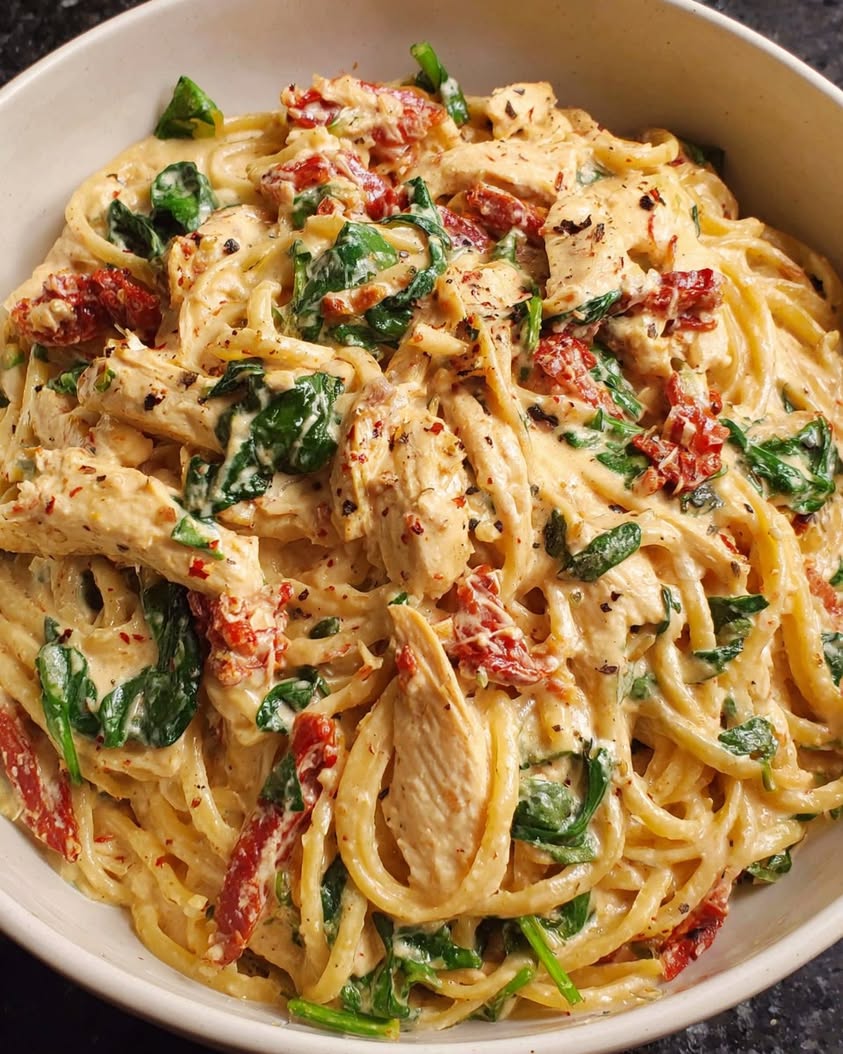
- Visual Appeal: This pasta is a feast for the eyes with its vibrant color palette. The creamy sauce has a pale orange hue from the tomato oil, studded with specks of green spinach and red sun-dried tomatoes. It is a rustic yet elegant presentation that looks fantastic on the dinner table.
- Skill Level Needed: This is a beginner-friendly recipe designed for home cooks of all levels. The steps are sequential and straightforward, involving basic techniques like sautéing, simmering, and tossing. If you can boil pasta and cook chicken, you can absolutely master this dish.
- Special Equipment: You need only standard kitchen tools. A large skillet or Dutch oven is essential for building the sauce and combining everything. Additionally, a pot for boiling the pasta and a few basic utensils like tongs and a wooden spoon are all you will require.
Recipe Overview
- Difficulty Level: We rate this recipe as “Easy” because it uses fundamental cooking techniques in a logical order. The process is forgiving; for instance, the sauce can simmer a little longer if needed, and the spinach wilts in seconds. There is no intricate timing or advanced skills required, making it highly approachable for novice cooks.
- Category: This dish falls squarely into the main course category, providing a complete protein, vegetable, and starch in one bowl. It is substantial enough for dinner but also elegant enough for a casual weekend lunch with guests. Furthermore, it fits the “one-pan meal” category, minimizing cleanup.
- Cuisine: The recipe draws strong inspiration from Italian-American cuisine, utilizing classic flavors like garlic, Parmesan, and sun-dried tomatoes. While not a traditional regional Italian pasta, it uses ingredients and combinations popular in modern home cooking, resulting in a familiar and beloved flavor profile.
- Cost: This is a cost-effective meal, especially when considering its restaurant-quality appeal. Chicken breast, spaghetti, and spinach are budget-friendly staples. The sun-dried tomatoes and heavy cream are the “splurge” items, but a little goes a long way in terms of flavor impact, making the overall cost per serving very reasonable.
- Season: This Creamy Sun-Dried Tomato Chicken Pasta is truly a year-round dish. It offers comfort during colder months but feels fresh and bright enough for spring and summer, especially with the addition of green spinach. The ingredients are commonly available in any season, providing reliable dinner planning.
- Occasion: It is perfect for a fast family weeknight dinner, a cozy date night at home, or even a small gathering with friends. The recipe doubles easily, and the impressive presentation makes it feel like a celebratory meal without requiring hours of effort in the kitchen.
Why You’ll Love This Recipe
You will adore the incredible taste and texture of this Creamy Sun-Dried Tomato Chicken Pasta. Each forkful delivers a symphony of flavors: the umami-rich Parmesan, the tangy-sweet burst of tomato, the savory garlic, and the subtle herbaceous notes from the seasoning. The texture is equally satisfying, featuring perfectly cooked pasta, succulent chicken, and silky spinach all enveloped in a velvety sauce that coats everything beautifully. It is a deeply comforting yet sophisticated dish that feels like a treat.
The convenience factor of this recipe is a major win. From start to finish, you can have a stunning dinner on the table in about thirty-five minutes. Crucially, the sauce comes together in one pan while the pasta boils separately, streamlining the cooking process. This means less time cleaning and more time enjoying your meal. Additionally, the ingredient list is simple, with no hard-to-find items, so you can likely make it without a special grocery trip.
Nutritionally, this dish offers a well-rounded balance. It provides lean protein from the chicken breast, complex carbohydrates from the whole wheat spaghetti option, and a healthy dose of vitamins A, C, and K from the fresh spinach. While the cream sauce is indulgent, you control the portion size, and the dish incorporates vegetables seamlessly. You can easily adapt it to be lighter by using half-and-half or a milk-and-cornstarch slurry.
This pasta has tremendous social and entertaining value. It is a crowd-pleaser that appeals to both adults and children. When you serve it to guests, it looks impressive and tastes like you spent far longer in the kitchen. The entire meal can be prepared in one large skillet and served family-style, fostering a warm, communal dining experience. It is a reliable recipe that will earn you compliments and requests for the recipe.
Finally, this Creamy Sun-Dried Tomato Chicken Pasta is wonderfully cost-effective and accessible. It demonstrates how a few quality ingredients can transform everyday staples into something extraordinary. You can feed a family of four for a fraction of the cost of a restaurant meal. The recipe is also highly adaptable to what you have on hand, allowing for various substitutions without compromising the delicious core flavor profile.
Historical Background and Cultural Significance
The story of sun-dried tomatoes is a tale of preservation and intensified flavor. Originating in Southern Italy, particularly in regions like Sicily and Puglia, the practice of drying tomatoes under the hot summer sun dates back centuries. This method was born out of necessity, allowing people to enjoy the taste of summer tomatoes throughout the barren winter months. The process concentrates the tomato’s natural sugars and acids, creating a chewy, intensely flavorful ingredient that is both sweet and tangy. Consequently, these tomatoes became a staple in the Italian pantry, often stored in oil with herbs.
Cream-based pasta sauces, or “salsa di panna,” have a more modern place in Italian culinary history, particularly in the northern regions where dairy is plentiful. While traditional Italian cooking often favors simple, oil-based or tomato-based sauces, the incorporation of cream gained popularity in the 20th century, both in Italy and abroad. Dishes like “Pasta alla Vodka” and various Alfredo adaptations showcased how cream could create a luxurious, smooth texture that carried other flavors beautifully. This recipe sits at the intersection of these traditions, using a modern, global pantry.
The evolution of this specific recipe is a classic example of fusion home cooking. It combines the Italian tradition of sun-dried tomatoes and pasta with the American preference for creamy, one-pan meals featuring protein and vegetables. The addition of chicken breast as the primary protein makes it a hearty main course, aligning with contemporary dinner plate expectations. This evolution reflects how home cooks adapt and blend culinary ideas to create convenient, satisfying, and flavorful family meals.
Regional variations of this concept abound. In Italy, you might find a similar dish using “straccetti” (thin strips of beef) or pancetta instead of chicken. Some versions use cherry tomatoes instead of sun-dried for a fresher profile. In other adaptations, cooks might add artichoke hearts, kalamata olives, or roasted red peppers. The cream base could be substituted with a ricotta or goat cheese blend for a tangier twist. This versatility is a testament to the strong foundational flavor combination of tomatoes, garlic, cream, and Parmesan.
Ingredient Deep Dive
Sun-dried tomatoes are the flavor powerhouse of this dish. Historically, they are a Mediterranean preservation technique, capturing summer’s bounty. Nutritionally, they are packed with lycopene, an antioxidant even more bioavailable than in fresh tomatoes. They also offer fiber, vitamin C, and potassium. When selecting, choose tomatoes packed in oil for the best flavor and plump texture; the oil itself becomes a seasoned cooking fat. Store an opened jar in the refrigerator. For a substitution, you can use high-quality tomato paste or slow-roasted cherry tomatoes, though the flavor will be different.
Boneless, skinless chicken breast is the lean protein anchor. It provides a blank canvas that readily absorbs the surrounding flavors of the sauce. From a nutritional standpoint, it is an excellent source of high-quality protein and essential B vitamins, particularly niacin and B6, which support metabolism. For the best results, choose uniformly sized breasts for even cooking and pat them thoroughly dry before seasoning. You can substitute with chicken thighs for a richer, more forgiving cut, or with large shrimp for a quicker-cooking alternative.
Fresh spinach is the vibrant green vegetable that adds nutrition and color. Popeye was onto something: spinach is a nutritional superstar, loaded with iron, calcium, magnesium, and vitamins A, C, and K. It wilts down dramatically, so using a large volume is key. Always choose crisp, dark green leaves without signs of yellowing or sliminess. Baby spinach is ideal as it is tender and requires no stemming. You can substitute with other quick-cooking greens like arugula (for a peppery kick) or Swiss chard, though tougher stems should be removed first.
Heavy cream creates the luxurious, velvety texture of the sauce. Its high fat content prevents curdling when heated and allows it to reduce into a thick, coating consistency. For a lighter version, half-and-half can work, but it will not thicken as much. A non-dairy alternative like full-fat coconut milk can provide richness for a dairy-free adaptation, though it will impart a slight coconut flavor. Always add cream to the pan off direct, high heat to prevent separation. Freshly grated Parmesan cheese is non-negotiable for its salty, nutty flavor and ability to thicken the sauce further.
Common Mistakes to Avoid
- Overcooking the Chicken: Cooking the chicken until it is tough and dry is a common error. Remember, it will continue to cook slightly when added back to the hot sauce. Therefore, remove it from the pan just as it reaches 165°F internally for maximum juiciness.
- Using Pre-Grated Parmesan: Pre-grated cheese contains anti-caking agents like cellulose, which prevent it from melting smoothly into the sauce. This can result in a grainy texture. Always take the extra minute to grate a block of Parmesan cheese yourself for a perfectly silky sauce.
- Not Reserving Pasta Water: The starchy pasta water is liquid gold for sauce consistency. Forgetting to save a cup before draining means you lose the best tool for thinning the sauce to a lush, clinging consistency. Always set a mug of water aside just before you drain the spaghetti.
- Adding Spinach Too Early: If you add the spinach at the beginning of the sauce simmering process, it will overcook, lose its vibrant color, and become slimy. Instead, stir it in at the very end, allowing the residual heat to wilt it perfectly while retaining its nutrients and bright green hue.
- Crowding the Pan with Chicken: Adding all the chicken pieces at once to a pan that is too small causes them to steam instead of sear. You will miss out on the flavorful browned bits (fond) that are essential for the sauce. Cook in batches if necessary to ensure each piece has contact with the hot surface.
- Using High Heat for the Cream Sauce: Bringing the cream to a rapid boil can cause it to separate or curdle, resulting in a broken, greasy sauce. After adding the cream and broth, maintain a gentle simmer. This allows the sauce to reduce and thicken gradually without risk.
- Underseasoning the Dish: Pasta and cream sauces require ample seasoning. Do not rely solely on the salt from the Parmesan and the chicken broth. Season the chicken well before cooking, and always taste the final sauce before serving, adding more salt and pepper as needed to make the flavors pop.
- Skipping the Garlic Sauté: It is tempting to rush this step, but sautéing the garlic just until fragrant (about 30 seconds) is crucial. Burning garlic makes it bitter and will ruin the entire sauce. Use medium heat and keep the garlic moving in the oil.
Essential Techniques
Properly Searing Chicken: Searing creates a flavorful brown crust through the Maillard reaction, which adds depth to the entire dish. To master it, ensure your chicken pieces are dry, your pan is hot, and you do not move them for the first few minutes. This allows a proper crust to form. A common pitfall is flipping too early; the chicken should release easily from the pan when ready. Look for a golden-brown color and reduced sticking as your visual cues for success.
Building a Pan Sauce: This technique leverages the flavorful browned bits left in the pan after searing. After removing the chicken, you typically add a little liquid (like broth or wine) to deglaze the pan, scraping up all those bits. This forms the flavor foundation. The key is to use a wooden spoon or spatula to thoroughly scrape the entire bottom of the pan. The sauce will not have the same depth if you skip this step. Success is visible when the liquid becomes cloudy and infused with color from the fond.
Wilting Leafy Greens: The goal is to cook greens just enough to make them tender while preserving color and nutrients. The technique here relies on residual heat rather than direct cooking. After turning off the heat, you simply stir the fresh spinach into the hot sauce. The stored heat in the pan and sauce is sufficient to wilt it perfectly. Overcooking is the main pitfall, leading to a dull, mushy texture. Perfectly wilted spinach should be uniformly bright green and just softened.
Emulsifying the Sauce: An emulsified sauce is smooth and unified, where the fat (cream, oil) and water-based liquids (broth) are seamlessly combined. Constant stirring or tossing as you add the pasta water and Parmesan helps create this stable emulsion. The starch from the pasta water acts as an emulsifier. The pitfall is adding cold ingredients too quickly or not stirring enough, which can cause separation. A successfully emulsified sauce will coat the back of a spoon evenly and cling to the pasta without being greasy.
Pro Tips for Perfect Creamy Sun-Dried Tomato Chicken Pasta
Use the oil from the sun-dried tomato jar to sauté the garlic and chicken. This oil is already infused with tomato and herb flavors, adding an incredible depth of taste to the entire dish right from the start. It is a fantastic way to maximize flavor from your ingredients.
Bring your heavy cream to room temperature before adding it to the pan. Adding cold cream to a hot pan can sometimes cause it to seize or curdle slightly. Letting it sit out for 15-20 minutes ensures it incorporates smoothly into the sauce.
Undercook your pasta by one minute. Since the spaghetti will finish cooking in the sauce, pulling it from the boiling water a minute early ensures it reaches perfect al dente texture after absorbing some of the creamy sauce. This prevents mushy pasta.
Let the cooked chicken rest before slicing. After removing the chicken from the skillet, let it sit on a cutting board for 5 minutes. This allows the juices to redistribute throughout the meat, ensuring every slice is moist and tender when you add it back to the pasta.
Add a pinch of red pepper flakes with the garlic. This introduces a subtle, warming heat that beautifully complements the sweetness of the tomatoes and the richness of the cream. It is an optional but highly recommended flavor enhancer.
Finish the dish with a fresh element. Just before serving, sprinkle with freshly chopped basil or parsley. The bright, herbal note from fresh herbs contrasts wonderfully with the rich sauce and elevates the overall presentation and taste.
Warm your serving bowls. For a truly restaurant-quality experience, run your serving bowls under hot water or place them in a warm oven for a few minutes. A warm bowl keeps the pasta hot longer, allowing everyone to enjoy it at the perfect temperature.
Variations and Adaptations
For regional variations, consider a Greek-inspired twist by using oregano, adding kalamata olives and feta cheese crumbles instead of Parmesan. A Spanish version might include smoked paprika and chorizo instead of chicken. In a French direction, you could use Herbes de Provence and finish with a touch of Dijon mustard stirred into the cream.
Seasonal adaptations are simple. In spring, add fresh peas or asparagus tips with the spinach. For summer, use fresh basil as a primary herb and top with halved cherry tomatoes. In autumn, incorporate sautéed mushrooms for an earthy flavor. During winter, a sprinkle of lemon zest can brighten the rich dish.
Dietary modifications are straightforward. For a gluten-free version, use your favorite gluten-free spaghetti. To make it dairy-free, substitute the heavy cream with full-fat canned coconut milk and use a nutritional yeast or vegan Parmesan alternative. For a lower-carb option, serve the chicken and sauce over spiralized zucchini noodles or shirataki noodles.
Flavor variations can personalize the dish. Add a tablespoon of tomato paste with the garlic for a deeper tomato flavor. Incorporate a splash of white wine when deglazing the pan for acidity. Stir in a couple of tablespoons of prepared pesto at the end for a herbal punch. For a smoky note, use sun-dried tomatoes packed with smoked herbs.
Texture modifications can cater to different preferences. Swap the spinach for kale, but remember to sauté it a bit longer to tenderize. Add toasted pine nuts or walnuts for a crunchy garnish. For a thicker, heartier sauce, stir in a few tablespoons of mascarpone cheese along with the Parmesan.
Presentation alternatives offer creative freedom. Instead of mixing everything, plate the pasta first, top with sliced chicken, and then spoon the sauce over everything. Serve it in a hollowed-out roasted pumpkin or acorn squash for a festive fall presentation. Alternatively, bake the assembled pasta with a mozzarella topping for a baked pasta casserole.
Serving and Presentation Guide
Plating techniques matter for visual appeal. Use tongs to twist a portion of pasta into a neat nest in the center of a shallow bowl. Artfully arrange the sliced chicken on and around the pasta. Spoon extra sauce over the top, allowing it to pool slightly. This method showcases all the components beautifully and looks intentional and elegant.
Garnishing adds the final touch of freshness and color. A sprinkle of chopped fresh parsley or basil is classic. For more texture, add a few extra sun-dried tomato slices on top or a light dusting of grated Parmesan. A small drizzle of high-quality extra virgin olive oil just before serving adds a lovely sheen and fruity note.
Traditional accompaniments are simple. A crisp green salad with a lemony vinaigrette provides a refreshing contrast to the rich pasta. Garlic bread or a crusty baguette is perfect for sopping up every last bit of the delicious sauce. For a vegetable side, roasted broccoli or green beans work wonderfully.
Modern serving suggestions might include family-style presentation. Bring the entire skillet to the table (if it is presentable) and let everyone serve themselves, creating a cozy, communal feel. For individual portions, consider using warm, colorful pasta bowls to make the meal feel special even on a weeknight.
Temperature considerations are key. Pasta is best served immediately, hot from the pan. Ensure your serving dishes are warm to prevent the sauce from cooling and congealing too quickly. If you must hold the dish, keep it covered in a warm oven or over a very low heat, adding a splash of reserved pasta water to loosen the sauce before serving.
Portion control is easy with this hearty dish. A standard serving is about one cup of cooked pasta with a quarter of the chicken and sauce. Since it is rich and filling, this portion is satisfying. For larger appetites, you can increase the pasta portion slightly, but the protein and sauce ratios are designed to be ample as written.
Wine and Beverage Pairing
Wine pairings should complement the dish’s creamy texture and tangy tomato notes. A medium-bodied white wine like Pinot Grigio or Sauvignon Blanc works beautifully, as their acidity cuts through the richness. For red wine lovers, a light, low-tannin red such as Pinot Noir is an excellent choice; its fruity notes harmonize with the sun-dried tomatoes without overpowering the dish. Avoid heavily oaked Chardonnays or bold, tannic reds like Cabernet Sauvignon, as they can clash with the sauce’s delicate balance.
Non-alcoholic alternatives can be just as sophisticated. Sparkling water with a twist of lemon or lime cleanses the palate between bites. For a more flavorful option, try a chilled herbal iced tea, such as basil or mint, which echoes the herbal notes in the dish. A tart cherry or pomegranate spritzer also provides a nice balance to the creamy sauce.
While not traditional with pasta, coffee and tea pairings can work after the meal. A medium-roast coffee with low acidity would be a pleasant follow-up. For tea, an Earl Grey with its citrusy bergamot notes can be a refreshing finish, or a simple peppermint tea can aid digestion after a rich meal.
Temperature considerations are standard: white wines and non-alcoholic sparklers should be served well-chilled, around 45-50°F. Red wines like Pinot Noir are best served slightly cooler than room temperature, around 55°F. Iced beverages should be cold but not watered down; use large ice cubes to prevent rapid dilution.
Serving suggestions include offering both a white and red wine option if serving guests, as preferences vary. Always pour water alongside any other beverage to keep guests hydrated. Present non-alcoholic options in attractive glassware to make them feel just as special as the alcoholic selections.
Storage and Shelf Life
Storage methods are straightforward for leftovers. Allow the pasta to cool completely to room temperature before storing, but do not leave it out for more than two hours. Transfer it to an airtight container. It is best to store the pasta and sauce together, as separating them can dry out the components. The chicken will remain more tender when stored immersed in the sauce.
Temperature requirements are crucial for food safety. Refrigerate leftovers promptly. The dish will keep safely in the refrigerator for 3 to 4 days. For longer storage, freezing is an option, though the texture of the cream sauce and pasta may change slightly upon thawing. The freezer shelf life is up to 2 months.
Container recommendations include glass containers with tight-sealing lids, which are ideal because they do not absorb odors and allow you to see the contents. If using plastic, ensure it is BPA-free and designed for food storage. For freezing, use heavy-duty freezer bags or containers specifically rated for freezer use to prevent freezer burn.
Signs of spoilage are easy to spot. Discard the pasta if you notice an off or sour smell, visible mold growth, or if the sauce has separated irreversibly with a curdled appearance. If the spinach has turned a very dark, slimy green, it is a sign of decay. When in doubt, always err on the side of caution and throw it out.
Reheating instructions are key to restoring texture. The best method is on the stovetop over low heat. Add a splash of milk, cream, or broth to loosen the sauce as it reheats. Stir frequently to prevent sticking and ensure even heating. You can also use a microwave, but heat in 30-second intervals, stirring between each, to avoid overheating and separation.
Freezing guidelines require a few steps. Cool the pasta completely. Portion it into freezer-safe containers, leaving about half an inch of headspace for expansion. Thaw overnight in the refrigerator before reheating. Note that the pasta may become softer upon reheating, and the spinach will lose its vibrant color, though the flavor will remain good.
Make Ahead Strategies
Prep timeline can significantly speed up dinner. The day before, you can slice the chicken, mince the garlic, grate the Parmesan, and measure out the dried spices. Store each component in separate containers in the refrigerator. You can even chop the sun-dried tomatoes ahead of time. This reduces active prep time to just boiling water and cooking.
Storage between steps is simple for prepped ingredients. Keep the raw chicken in a sealed container on the bottom shelf of the fridge. Store the garlic and grated cheese in small containers. The sun-dried tomatoes can stay in their jar. Having everything measured and ready turns the cooking process into a simple assembly line.
Quality impact assessment is positive for most make-ahead steps. Pre-grating cheese is fine if used within 24 hours. Pre-mincing garlic may lose a bit of its pungency but is still perfectly acceptable. The chicken should only be sliced and seasoned a few hours ahead to prevent texture changes. Overall, these steps have minimal negative impact on the final dish.
Assembly tips for a make-ahead approach: when ready to cook, simply pull your prepped containers from the fridge. Start your pasta water, then begin sautéing the chicken. The streamlined process means you can have the dish finished in the time it takes to boil and cook the spaghetti, making it a true 20-minute meal.
Reheating guidelines for a fully made-ahead dish: if you cook the entire recipe a day in advance, store it as directed. Reheat gently on the stovetop with added liquid. The pasta will absorb more sauce, so you will need extra broth or cream to restore the creamy consistency. Stir gently to avoid breaking the pasta.
Fresh element additions are vital when making ahead. If you prepare the full dish in advance, wait to add the fresh spinach until you are reheating it. Stir it in at the end, just as the pasta becomes hot, to wilt it perfectly. Also, add any fresh herb garnish just before serving to maintain their bright color and flavor.
Scaling Instructions
Halving the recipe is simple for one or two people. Use half of every ingredient. A standard large skillet will still work well. The cook times will remain roughly the same, though the sauce may reduce a bit faster due to the smaller volume. Keep a close eye on it and have a little extra broth on hand to adjust consistency if needed.
Doubling or tripling the recipe for a crowd requires some adjustments. Use the largest Dutch oven or pot you have. You may need to sear the chicken in more batches to avoid overcrowding. The sauce will take longer to come to a simmer and reduce. You might also need to boil the pasta in two separate pots to ensure it cooks evenly. Taste and season generously, as large batches often require more salt.
Equipment adjustments are necessary when scaling up. For a double batch, a 6-quart Dutch oven is ideal. For a triple batch, consider using a large stockpot for the sauce. Ensure you have a pot large enough to boil a significant amount of pasta without sticking. Having extra measuring cups and bowls prepped will make the process smoother.
Timing modifications are minimal when halving. For larger batches, the active cooking time increases slightly due to batching the chicken and the longer sauce reduction time. Start the sauce process first, and begin boiling the pasta water when you start cooking the chicken. This helps coordinate everything to finish at the same time.
Storage considerations for scaled recipes: if you make a large batch, cool it completely before dividing into smaller, meal-sized containers for refrigeration or freezing. This makes reheating easier and prevents you from repeatedly reheating the entire batch, which can affect quality and safety.
Nutritional Deep Dive
Macro breakdown per serving provides a balanced profile. You get approximately 35-40 grams of high-quality protein from the chicken and cheese, essential for muscle repair and satiety. Carbohydrates, primarily from the pasta, offer energy, coming in around 50-60 grams per serving. Fats, from the cream, olive oil, and Parmesan, contribute to the rich mouthfeel and help absorb fat-soluble vitamins, totaling about 25-30 grams. This balance makes it a fulfilling meal.
Micronutrient analysis reveals several benefits. Spinach delivers a powerhouse of vitamins A, C, and K, along with iron and magnesium. Sun-dried tomatoes are concentrated sources of lycopene and potassium. Chicken provides B vitamins, particularly B6 and niacin. Parmesan cheese adds calcium and phosphorus. Together, they contribute to a wide spectrum of essential nutrients supporting vision, immunity, bone health, and metabolism.
Health benefits extend beyond basic nutrition. The lycopene in tomatoes is linked to heart health. The lean protein supports metabolism and helps maintain muscle mass. The iron from spinach is crucial for oxygen transport in the blood. The dish, when consumed as part of a balanced diet, provides sustained energy and can help keep you full for hours, potentially aiding in weight management by preventing excessive snacking.
Dietary considerations are important to note. The dish contains gluten (from pasta), dairy (cream and cheese), and is not suitable for vegetarians. However, as discussed, it can be adapted for many dietary needs. For those monitoring sodium, be mindful of the salt in the broth and Parmesan; you can use low-sodium broth and reduce added salt.
Portion analysis shows that one serving as written is satisfying and substantial. It is designed to be a complete meal. If you are managing calorie intake, you can slightly reduce the portion of pasta and increase the spinach. Using a whole-grain pasta option increases the fiber content, which further enhances satiety and provides digestive benefits.
Weight management tips include being mindful of sauce portioning. The sauce is rich, so ensuring it coats the pasta rather than drowning it can help manage calorie density. Pairing the pasta with a large side salad filled with non-starchy vegetables can increase volume and fiber without adding many calories, helping you feel full and satisfied.
Dietary Adaptations
For a gluten-free version, simply substitute regular spaghetti with a high-quality gluten-free pasta made from brown rice, quinoa, or a legume blend. Cook it according to package directions, as gluten-free pasta often has a different cooking time and starchy water yield. Be sure to check that your sun-dried tomatoes and chicken broth are certified gluten-free, as some brands may contain hidden gluten.
To make it dairy-free, replace the heavy cream with full-fat canned coconut milk for a similar richness. Use a vegan Parmesan alternative or a sprinkle of nutritional yeast for the cheesy flavor. You can also create a creamy sauce base with blended raw cashews or a store-bought vegan cream cheese substitute. The result will be different but still deliciously creamy.
A vegan adaptation requires more changes. Omit the chicken and use chickpeas, white beans, or sautéed mushrooms as the protein. Use the dairy-free substitutions above for the cream and cheese. For a “chicken” flavor, you can add a teaspoon of poultry seasoning or use a vegan chicken substitute. Ensure your pasta is egg-free.
For a low-carb or keto version, replace the spaghetti with spiralized zucchini noodles (zoodles) or shirataki noodles. Be aware that zoodles release water, so cook the sauce until very thick and add the zoodles at the very end, just to heat through. You may need to increase the fat content slightly, perhaps with more cream or a knob of butter, to meet keto macros.
A Paleo adaptation focuses on whole foods. Use spaghetti squash or zucchini noodles as the base. Substitute the cream with coconut milk. Omit the cheese entirely or use a nut-based “Parmesan.” Ensure the sun-dried tomatoes and broth contain no sugar or non-Paleo additives. Ghee or avocado oil can be used for cooking instead of the tomato oil if preferred.
Troubleshooting Guide
If your sauce is too thin, the most likely cause is insufficient reduction. Simply continue to simmer the sauce over medium-low heat, stirring frequently, until it thickens to your liking. Alternatively, create a quick slurry by mixing one teaspoon of cornstarch with one tablespoon of cold water, then stir it into the simmering sauce. It will thicken within a minute. Avoid boiling vigorously after adding the slurry.
If your sauce is too thick, it has reduced too much. The fix is easy: gradually stir in reserved pasta water, a few tablespoons at a time, until the sauce reaches a silky, flowing consistency. If you have no pasta water, use additional chicken broth or even a little milk. The goal is a sauce that coats the pasta lightly but does not sit in a thick pool.
If the sauce breaks or looks greasy (the fat has separated), it may have gotten too hot. Remove it from the heat immediately. Add a splash of cold cream or broth and whisk vigorously. Sometimes, adding a tablespoon of the starchy pasta water and emulsifying again can bring it back together. If it remains separated, an immersion blender can rescue it quickly.
If the chicken is dry, it was likely overcooked. Unfortunately, you cannot undo this, but you can mitigate it. Print
Spaghetti & Spinach with Sun-Dried Tomato Chicken Cream Sauce
- Total Time: 45 minutes
- Yield: 4
Description
A creamy, savory pasta dish featuring tender chicken, sun-dried tomatoes, and fresh spinach in a rich garlic-infused sauce, served over spaghetti.
Ingredients
- 8 oz spaghetti
- 2 boneless, skinless chicken breasts, cubed
- 1/2 cup sun-dried tomatoes (in oil, drained and chopped)
- 2 cups fresh spinach
- 3 cloves garlic, minced
- 1 cup heavy cream
- 1/2 cup chicken broth
- 1/4 cup grated Parmesan cheese
- 2 tbsp olive oil
- 1 tsp dried oregano
- Salt and black pepper to taste
Instructions
- Cook spaghetti according to package directions until al dente. Drain and set aside.
- Heat olive oil in a large skillet over medium-high heat. Season chicken with salt, pepper, and oregano, then cook until browned and cooked through, about 6-8 minutes. Remove chicken and set aside.
- In the same skillet, add garlic and sun-dried tomatoes. Sauté for 1-2 minutes until fragrant.
- Pour in chicken broth and heavy cream, stirring to combine. Simmer for 5 minutes until slightly thickened.
- Stir in Parmesan cheese until melted, then add spinach and cooked chicken. Cook until spinach wilts, about 2 minutes.
- Toss the sauce with cooked spaghetti until well coated. Serve immediately.
Notes
You can customize the seasonings to taste.
- Prep Time: 15 minutes
- Cook Time: 30 minutes
- Method: Main
- Cuisine: Italian-American