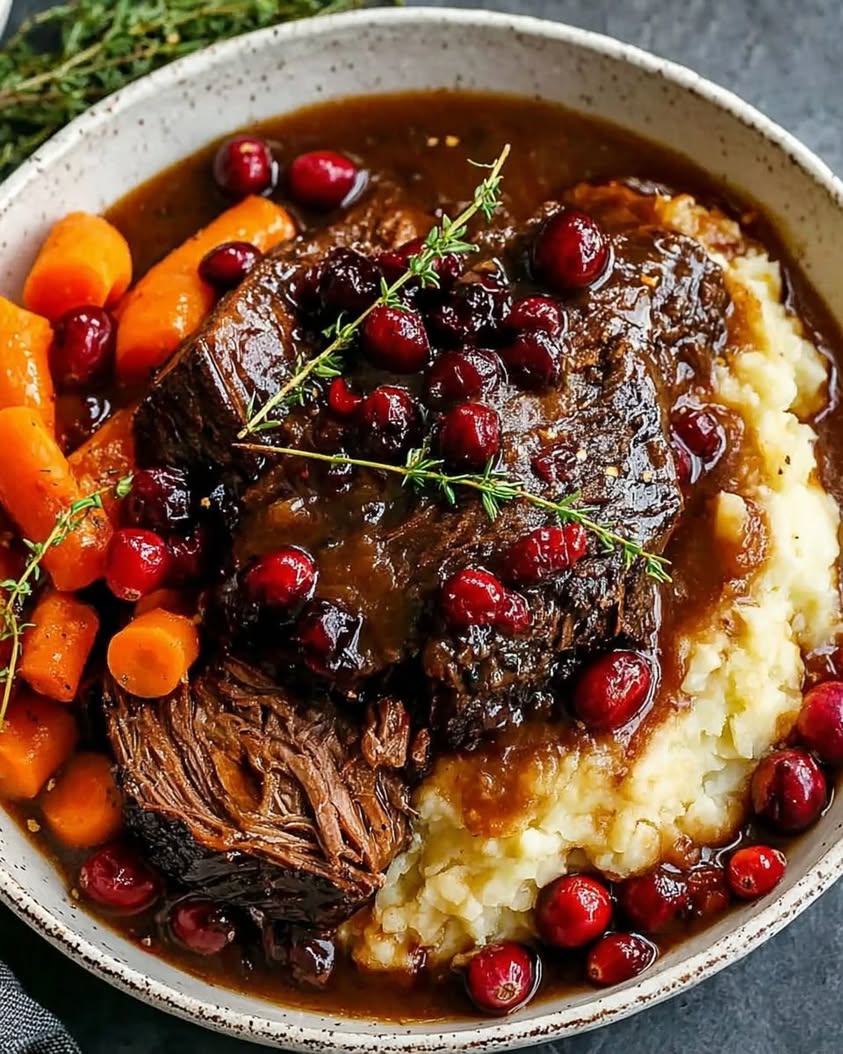
Slow-Braised Beef Roast with Cranberry Balsamic Glaze: A Holiday Masterpiece
Imagine the most tender, succulent beef roast you have ever tasted. Now, picture it enveloped in a glossy, sweet-tart glaze that perfectly balances richness with a festive spark. This Slow-Braised Beef Roast with Cranberry Balsamic Glaze is that dream made edible. It transforms a humble cut of beef into a centerpiece worthy of your most cherished gatherings. The magic happens in the oven, where low, slow heat coaxes out incredible flavor and a fall-apart texture. Meanwhile, the vibrant cranberry balsamic glaze reduces into a sticky, complex sauce that will have everyone asking for the recipe.
This dish is the ultimate solution for a stress-free yet impressive holiday meal. Essentially, you prepare it, then let the oven do the heavy lifting. Consequently, you are free to enjoy your company or prepare side dishes. The aroma that fills your kitchen is nothing short of intoxicating. It mingles the savory scent of roasting beef with the tangy sweetness of cranberries and the deep, caramelized notes of balsamic vinegar. Ultimately, this Slow-Braised Beef Roast with Cranberry Balsamic Glaze delivers restaurant-quality results with comforting, home-cooked simplicity.
Quick Recipe Highlights
- Flavor Profile: This dish masterfully combines savory, umami-rich beef with a sweet, tart, and slightly tangy glaze. The cranberry balsamic glaze adds a festive fruitiness that cuts through the meat’s richness perfectly. Additionally, aromatic herbs and garlic build a foundational flavor that is deeply satisfying.
- Texture: The slow braising process guarantees a melt-in-your-mouth, fork-tender beef roast. The exterior develops a beautiful caramelized crust, while the interior remains incredibly juicy. Meanwhile, the glaze reduces to a thick, syrupy consistency that clings beautifully to each slice.
- Aroma: As it cooks, your kitchen will fill with the warm, savory scent of roasting herbs and beef. The cranberry and balsamic elements introduce a bright, tangy, and slightly sweet note that is unmistakably festive. This aromatic promise builds incredible anticipation for the meal.
- Visual Appeal: The finished roast boasts a stunning, deep mahogany crust from the glaze. When sliced, it reveals perfectly cooked, pink-tinged meat. Served on a platter and garnished with fresh herbs and whole cranberries, it makes a breathtaking centerpiece.
- Skill Level Needed: This recipe is accessible to intermediate home cooks. It requires patience and attention to temperature but does not involve complicated techniques. Following the braising and glazing steps carefully will yield professional-looking results.
- Special Equipment: A heavy, oven-safe Dutch oven or braising pot with a tight-fitting lid is essential for even cooking and moisture retention. You will also need a fine-mesh strainer for the glaze and kitchen twine for tying the roast, if desired.
Recipe Overview
- Difficulty Level: We rate this recipe as medium difficulty. The techniques involved, like searing and braising, are fundamental but require some attention to detail. Managing the oven temperature and reducing the glaze to the perfect consistency are the key skills that elevate this dish from good to extraordinary.
- Category: This is a definitive main course, designed to be the star of the table. It fits perfectly into the categories of holiday dinners, Sunday suppers, and special occasion feasts. It is a hearty, protein-focused dish that demands complementary sides.
- Cuisine: While not tied to one specific tradition, this recipe draws inspiration from modern American holiday cooking and French braising techniques. The use of cranberries nods to North American harvest traditions, and the balsamic vinegar adds a touch of Italian sophistication.
- Cost: Using a chuck roast makes this a relatively economical centerpiece compared to prime rib or tenderloin. The other ingredients are pantry staples or seasonal items. Overall, it delivers incredible value and luxury for the price per serving.
- Season: This recipe shines brightest in the fall and winter months. Cranberries are at their peak, and the hearty, warming nature of a braised dish is most welcome. It is the quintessential centerpiece for Thanksgiving, Christmas, or any cold-weather celebration.
- Occasion: It is ideal for holidays, festive dinner parties, birthdays, and anniversary meals. Because it serves a crowd and can be mostly prepared ahead, it is perfect for hosting. It communicates effort and care, making guests feel truly special.
Why You’ll Love This Recipe
First and foremost, the taste and texture of this Slow-Braised Beef Roast with Cranberry Balsamic Glaze are utterly transformative. The long, slow cook time breaks down tough connective tissue, resulting in beef that is impossibly tender and infused with flavor. Every bite offers a harmonious balance: the savory, umami depth of the meat against the bright, tangy, and sweet notes of the glaze. This complex flavor profile feels gourmet and special, ensuring your meal is memorable. Furthermore, the contrast between the crispy, glazed exterior and the succulent interior creates a mouthfeel that is deeply satisfying.
From a convenience standpoint, this recipe is a host’s best friend. After the initial sear and brief stovetop work, the oven takes over for the majority of the cooking time. This hands-off approach means you can focus on other tasks, like preparing side dishes or setting the table. Moreover, the entire dish can be prepared several hours in advance and gently reheated, eliminating last-minute kitchen stress. The braising method is also very forgiving; a slightly longer cook time will only make the meat more tender. Therefore, it provides a reliable path to a stunning meal without constant vigilance.
Nutritionally, this dish offers a fantastic source of high-quality protein and essential nutrients like iron, zinc, and B vitamins from the beef. Using a leaner cut like chuck roast, and trimming visible fat, can make it a healthier choice. The cranberries in the glaze contribute antioxidants and vitamin C. When served with a variety of vegetable sides, it becomes a well-rounded meal. Importantly, you control the ingredients, avoiding the excessive sodium and preservatives often found in pre-made sauces or restaurant dishes.
For social and entertaining value, this Slow-Braised Beef Roast with Cranberry Balsamic Glaze is unparalleled. It creates a dramatic “wow” moment when brought to the table, sparking conversation and admiration. The act of serving a beautifully carved, family-style roast fosters a sense of warmth and sharing. It is a dish that feels generous and celebratory, setting the tone for a joyful gathering. Because it appeals to a wide range of palates, it is a safe yet impressive choice for a diverse group of guests.
Finally, this recipe is remarkably cost-effective and accessible. A chuck roast is an affordable cut that, when treated with the respect of slow braising, rivals more expensive options. The other ingredients are simple and often already in a well-stocked pantry. Consequently, you can create a luxurious-feeling feast without a luxurious budget. The recipe is also highly adaptable to what you have on hand, allowing for simple substitutions without compromising the core result.
Historical Background and Cultural Significance
The tradition of braising tough cuts of meat is ancient and global, born from necessity and ingenuity. Before modern butchery, cooks needed methods to tenderize the hard-working muscles of animals. Slow cooking in a sealed pot with liquid proved to be the perfect solution across cultures, from French “boeuf bourguignon” to Jewish “brisket.” This Slow-Braised Beef Roast with Cranberry Balsamic Glaze is a direct descendant of that timeless technique. It applies the universal principle of low-and-slow cooking to a New World ingredient combination, creating a modern classic.
Culturally, the roast has long held a place of honor on Western dining tables, symbolizing abundance, celebration, and communal eating. A whole roast presented at the table represents hospitality and prosperity. The incorporation of cranberries specifically ties this dish to North American harvest and holiday traditions, particularly Thanksgiving. Cranberries, native to the continent, were used by Indigenous peoples and later by colonists, becoming an indelible part of the festive culinary landscape. This recipe, therefore, merges an Old World cooking method with a New World flavor profile.
The evolution of this particular recipe reflects broader trends in 20th and 21st-century home cooking. As home cooks sought to move beyond basic roasts, they began experimenting with glazes and sauces to add complexity. The popularity of balsamic vinegar, once a specialty item, brought its sweet-and-sour depth into mainstream kitchens. Meanwhile, the year-round availability of cranberries, both fresh and dried, allowed their tart flavor to move beyond sauce and into braises and glazes. This dish is a product of that culinary experimentation and ingredient globalization.
Regional variations of a glazed braised beef are plentiful. In the American South, you might find a similar roast with a Coca-Cola or root beer glaze. In parts of Europe, red wine or beer would replace the cranberry juice, and juniper or prunes might be added. A Persian “khoresht” might use pomegranate molasses for a similar sweet-sour note. This adaptability is the hallmark of a great braise; it provides a framework that welcomes local ingredients and tastes. Our version with cranberry and balsamic is a distinctly modern, fusion-style take on that adaptable tradition.
Ingredient Deep Dive
Beef Chuck Roast: This cut comes from the shoulder of the cow, a muscle-rich area that develops incredible flavor and becomes exceptionally tender when braised. Historically, these “lesser” cuts were the domain of working-class families who mastered the art of slow cooking. Nutritionally, it is a great source of complete protein, iron for energy, zinc for immunity, and B vitamins for metabolism. When selecting a roast, look for one with good marbling (thin streaks of fat) throughout, as this will baste the meat from within during cooking. Store it in the coldest part of your refrigerator and use within 2-3 days of purchase. For a substitution, beef brisket or bottom round roast will work using the same method.
Fresh Cranberries: These vibrant red berries are one of only three fruits native to North America. They have a long history of use by Native American tribes for food, dye, and medicine. They are packed with vitamin C, fiber, and unique phytonutrients called proanthocyanidins, known for supporting urinary tract health. Their natural tartness and pectin content make them ideal for glazes and sauces. Choose berries that are firm, plump, and brightly colored; avoid any that are shriveled or soft. They can be refrigerated in their original bag for up to a month or frozen for a year. In a pinch, high-quality whole-berry cranberry sauce can be used, but reduce or omit any added sugar in the recipe.
Balsamic Vinegar: True traditional balsamic vinegar, “Aceto Balsamico Tradizionale,” is a centuries-old artisan product from Modena, Italy, aged like wine. The more common commercial balsamic is a flavorful vinegar sweetened and thickened with grape must. It adds a complex sweet-tartness and beautiful color to the glaze. While not a significant source of nutrients, it may contain antioxidants from the grapes. For cooking, a moderately priced, syrupy balsamic glaze or reduction works perfectly. Avoid extremely cheap, watery versions. Store in a cool, dark place. If you need a substitute, a combination of red wine vinegar and a teaspoon of honey or maple syrup can mimic some of its character.
Beef Broth: Broth forms the braising liquid, keeping the roast moist and creating the base for your gravy. A rich, homemade beef broth was a kitchen staple for generations, made by simmering bones and vegetables. It provides minerals like calcium and magnesium from bones, along with gelatin, which gives body to sauces. For the best flavor, choose a low-sodium beef broth or stock, allowing you to control the salt level. Alternatively, a high-quality beef bouillon paste dissolved in water is an excellent convenient option. Store unopened boxes in your pantry; once opened, refrigerate and use within 5 days. Vegetable broth can be used as a substitute, though the beefy flavor will be less pronounced.
Common Mistakes to Avoid
- Not Searing the Roast Properly: Skipping the sear or not getting a deep brown crust is a major misstep. This Maillard reaction creates foundational flavor compounds that enrich the entire dish. Always pat the roast dry thoroughly before searing, and do not move it until it releases easily from the pot.
- Using the Wrong Pot: A thin, flimsy pot will not distribute heat evenly and may cause the bottom to burn. Conversely, a pot that is too large will allow the braising liquid to evaporate too quickly. A heavy, enameled cast-iron Dutch oven is the ideal tool for this job.
- Braising at Too High a Temperature: A rolling boil will toughen the meat fibers and cause the liquid to evaporate rapidly. The key to tender braising is a gentle simmer, with just a few bubbles breaking the surface. Keep your oven temperature steady at 325°F.
- Overcrowding the Pot with Vegetables: While aromatics are essential, filling the pot with too many carrots or potatoes will steam them instead of braising the meat. They also release water, diluting your braising liquid. Use vegetables as a flavor base, not a side dish, in this step.
- Not Letting the Meat Rest: Slicing the roast immediately after cooking causes all the precious juices to run out onto the cutting board. Always tent the meat with foil and let it rest for at least 15-20 minutes. This allows the fibers to relax and reabsorb the juices.
- Rushing the Glaze Reduction: Simmering the glaze too quickly can cause it to burn or become bitter. A slow, steady reduction allows the flavors to meld and the sauce to thicken to a perfect, syrupy consistency. Patience here is rewarded with a balanced, glossy finish.
- Adding Salt Too Early in the Glaze: As the glaze reduces, flavors concentrate. If you salt it at the beginning, it can become overly salty by the end. Always season your reduced glaze with salt and pepper at the very end, tasting as you go.
- Using a Dull Knife for Slicing: A dull knife will tear and shred your beautifully tender meat, ruining the presentation. Use a long, sharp carving knife or chef’s knife, and slice against the grain of the meat for the most tender bite.
Essential Techniques
Searing (The Maillard Reaction): This is the non-negotiable first step for building deep, savory flavor. When proteins and sugars in the meat surface are exposed to high heat, they undergo the Maillard reaction, creating hundreds of new flavor compounds. To master it, ensure your pot is very hot and the roast is patted completely dry. Do not crowd the pot; sear in batches if necessary. A common pitfall is moving the meat too soon—it should release naturally when a proper crust has formed. Visual success is a uniform, deep brown crust on all sides.
Braising: Braising is a combined cooking method using both dry and moist heat. First, you sear (dry heat), then you simmer in liquid (moist heat) in a covered pot. This technique is essential for turning tough cuts tender. The key is maintaining a low, steady temperature—just below a simmer—so the collagen slowly melts into gelatin without the meat drying out. The pitfall is letting the liquid boil, which makes meat stringy. Success is evident when the meat is easily pierced with a fork and a thermometer reads 195-205°F for perfect shreddable tenderness.
Reducing a Glaze: Reduction concentrates flavor and thickens a liquid by simmering off water. For this cranberry balsamic glaze, you start with a relatively thin liquid that transforms into a thick, coating sauce. The technique requires a gentle simmer and occasional stirring to prevent sticking. A common mistake is cooking it over too high heat, which can cause burning or a bitter flavor. The visual cue for success is when the glaze coats the back of a spoon and leaves a clear trail when you run your finger through it.
Pro Tips for Perfect Slow-Braised Beef Roast with Cranberry Balsamic Glaze
For the deepest flavor, season your beef roast generously with salt and pepper the night before and let it rest uncovered on a rack in the fridge. This dry-brining process seasons the meat throughout and helps dry the surface for a better sear.
After searing, deglaze your pot with a splash of red wine or extra broth before adding the main braising liquid. Scrape up all the flavorful browned bits (fond) from the bottom; these are pure flavor gold for your sauce.
If your braising liquid seems too thin after cooking, you can thicken it into a gravy. Simply strain the liquid, skim off excess fat, and simmer it with a slurry of cornstarch and water until it reaches your desired consistency.
Let the cooked roast rest for a full 20 minutes before applying the final glaze and slicing. This pause allows the internal juices to redistribute, ensuring every slice is moist and flavorful.
For a stunning presentation, apply a first coat of glaze, return the roast to a hot oven for 5 minutes to set it, then brush on a second glossy coat just before serving.
If using dried herbs instead of fresh in the braise, use only one-third the amount, as dried herbs are more potent. Add them at the beginning so their flavor has time to infuse the liquid.
To prevent the bottom of the roast from becoming overcooked or sticking, create a “rack” of thickly sliced onions or carrots in the bottom of the pot before adding the seared meat.
Variations and Adaptations
Regional Variations: For a French-inspired twist, replace the cranberry juice with red wine and add a bouquet garni of thyme, parsley, and bay leaf. A German-style version might use dark beer and a touch of mustard in the braise, garnished with chopped parsley. For an Asian fusion take, substitute the balsamic with rice vinegar and hoisin sauce, and add star anise and ginger to the pot.
Seasonal Adaptations: In spring, try a glaze with fresh cherries and a splash of port wine. For summer, a blend of blueberries and balsamic offers a lighter, sweeter note. In autumn, apples and cider vinegar can replace the cranberries, complementing the beef with warm, spiced flavors.
Dietary Modifications: To make this recipe gluten-free, ensure your beef broth is certified gluten-free. For a Paleo or Whole30 version, use coconut aminos instead of balsamic vinegar (which often contains caramel color) and ensure all other ingredients are compliant. A low-sodium version is easily achieved by using no-salt-added broth and limiting added salt.
Flavor Variations: Incorporate different aromatics like sliced fennel, leeks, or mushrooms into the braising base. Add a tablespoon of tomato paste during the searing stage for a richer, umami-packed base flavor. For a spicy kick, add a pinch of red pepper flakes or a diced chipotle pepper in adobo to the glaze.
Texture Modifications: For an even more unctuous texture, add a few slices of chopped bacon to the pot when searing the aromatics. Alternatively, stir a tablespoon of cold butter into the finished, strained braising liquid to create a silky, rich sauce.
Presentation Alternatives: Instead of slicing, you can shred the entire roast with two forks and toss it with some of the reduced glaze for incredible sandwiches or tacos. For individual servings, use smaller chuck roast portions or even beef short ribs and adjust the cooking time accordingly.
Serving and Presentation Guide
Plating begins with a warm, large platter. Slice the rested roast against the grain into half-inch thick slices, fanning them out slightly. Spoon a small amount of the reduced braising liquid or gravy onto the platter first to prevent sticking. Drizzle some of the glossy cranberry balsamic glaze over the top of the sliced meat, allowing it to drip down the sides enticingly.
Garnishing adds color and freshness. Scatter a handful of fresh whole cranberries and sprigs of rosemary or thyme around the platter. For a touch of green, microgreens or finely chopped flat-leaf parsley work beautifully. A final sprinkle of flaky sea salt over the glazed meat just before serving enhances both flavor and visual appeal.
Traditional accompaniments include creamy mashed potatoes or parsnip puree to soak up the glorious sauce, along with a simple green vegetable like roasted Brussels sprouts, green beans almondine, or sautéed kale. A bright, acidic side, such as a crisp apple-fennel salad, helps cut through the richness of the dish.
For a modern family-style presentation, serve the sliced roast on a large wooden board alongside small bowls of the extra glaze, gravy, and garnishes. Let guests build their own plates. Alternatively, pre-plate individual servings with a swoosh of mashed potatoes, leaning the sliced beef against it, and artistically drizzling the glaze around the plate.
Temperature is crucial. Serve the roast hot, but not scalding. Ensure your platter and dinner plates are warmed. The glaze will have the best shine and consistency if applied just before serving. If you must hold the meat, tent it loosely with foil in a warm oven, but add the final glaze at the last minute.
Portion control is simple with a roast of this size. A 3-pound chuck roast typically yields six generous servings. When slicing, aim for uniform pieces to ensure everyone gets an equal share of the beautifully glazed exterior and tender interior. Remember, this is a rich dish, so a moderate portion paired with ample sides is satisfying.
Wine and Beverage Pairing
Wine pairings should complement the dish’s richness and sweet-tart glaze. A medium-bodied red with good acidity is ideal. Pinot Noir, with its red fruit notes and earthy undertones, is a classic and versatile match. A Spanish Rioja Reserva, offering flavors of dried cherry and vanilla, stands up beautifully to the beef and echoes the cranberry. For a bigger option, a Syrah/Shiraz with its peppery notes can work well, especially if the glaze has a hint of spice.
Non-alcoholic alternatives can be just as thoughtful. A tart cherry juice spritzer with a splash of soda water mirrors the fruit elements. For something warmer, a mulled cranberry-apple cider with cinnamon and cloves complements the festive, autumnal notes of the dish. High-quality sparkling water with a twist of orange peel also cleanses the palate between bites of the rich meat.
While not a traditional pairing for beef, certain teas can work wonderfully after the meal. A smoky Lapsang Souchong tea can be a surprising and delightful companion, its intense flavor holding its own against the robust glaze. A pot of peppermint tea aids digestion after a hearty feast.
Temperature considerations are key. Red wines should be served slightly below room temperature, around 60-65°F, to keep their acidity bright. Non-alcoholic spritzers should be well-chilled. Mulled cider should be served piping hot. Always offer water on the table to cleanse palates and keep guests hydrated.
Serving suggestions include setting out the chosen wine in decanters if possible, allowing it to breathe. For non-alcoholic options, present them in attractive pitchers or carafes. When hosting, it is considerate to have both alcoholic and non-alcoholic pairings available so all guests can enjoy a complementary beverage.
Storage and Shelf Life
Proper storage begins with cooling the roast completely. Do not leave it at room temperature for more than two hours. Separate the meat from any remaining braising liquid and glaze, storing each in airtight containers. This prevents the meat from becoming soggy and allows you to easily skim congealed fat from the liquids later.
Refrigerator storage is safe for up to 4 days. Keep the sliced or whole roast in its container. The braising liquid and glaze can be stored separately. When reheating, bring the liquids to a simmer first, then add the meat to warm through gently, preventing it from drying out.
Container recommendations include glass or BPA-free plastic containers with tight-fitting lids. For the glaze, a mason jar works perfectly. If storing large pieces, ensure the container is appropriately sized to minimize air exposure, which can lead to quicker spoilage and off-flavors.
Signs of spoilage include a sour or off odor, a slimy texture on the surface of the meat, or mold growth. If the stored liquid develops bubbles or appears fizzy, discard it immediately. When in doubt, always err on the side of caution and throw it out.
Reheating instructions are simple for best results. Place the meat and a few tablespoons of the braising liquid in a covered oven-safe dish. Reheat in a 300°F oven until warmed through, about 20-30 minutes. Alternatively, reheat slices gently in a covered skillet with a splash of broth over low heat. Microwave reheating is possible but often dries out the edges.
Freezing guidelines: This dish freezes exceptionally well. Portion the cooled meat and sauce into freezer-safe bags or containers, removing as much air as possible. Label with the date. It will maintain best quality for 2-3 months. Thaw overnight in the refrigerator before reheating using the methods above.
Make Ahead Strategies
A prep timeline makes holiday cooking seamless. You can sear the roast and prepare the braising vegetables up to two days in advance. Store them separately in the fridge. On cooking day, simply combine them with the cold broth and proceed with the oven braising. This saves significant active time when you need it most.
Storage between steps is safe if you follow food safety rules. After searing, let the meat cool before refrigerating. Keep aromatic vegetables chopped and ready in a bag. The cranberry balsamic glaze can be completely made 3 days ahead and gently reheated before using. This staged approach distributes the workload.
Assessing quality impact, making the glaze ahead actually improves its flavor as the ingredients meld. The seared crust on the meat will hold perfectly in the fridge. The only step best done day-of is the actual braising, as reheating a fully cooked braise twice can compromise texture.
Assembly tips for efficiency: Have all your pre-prepped ingredients measured and ready before you start the braising process. Use the same Dutch oven you seared in to build the braise, maximizing flavor. If you made the glaze ahead, gently warm it in a saucepan while the roast rests before glazing.
Reheating guidelines for a fully made-ahead roast: If you braise the roast completely a day ahead, let it cool in its liquid, then refrigerate the whole pot. The next day, the fat will have solidified on top for easy removal. Reheat the entire pot, covered, in a 325°F oven until bubbling, about 45-60 minutes, then proceed with resting and glazing.
Fresh element additions are key to brightening a make-ahead dish. Even if the meat and glaze are prepared in advance, always garnish with fresh herbs and a final sprinkle of salt just before serving. This adds a pop of color and a burst of fresh flavor that makes the dish taste newly made.
Scaling Instructions
Halving the recipe is straightforward for a smaller household. Use a 1.5 to 2-pound chuck roast. Halve all other ingredients precisely. The cook time may be slightly reduced, perhaps by 30-45 minutes, so start checking for tenderness around the 2-hour mark. Use a smaller Dutch oven to ensure the braising liquid comes about halfway up the side of the smaller roast.
Doubling or tripling for a crowd requires careful planning. You will need a very large roasting pan or multiple Dutch ovens. Brown the roasts in batches to avoid steaming. Ensure the braising liquid still comes only halfway up the sides of the meat; do not simply double the liquid volume. Cooking time may increase slightly, but more importantly, ensure there is enough space in your oven for heat to circulate around the larger pan(s).
Equipment adjustments are necessary when scaling. A single large roast needs a pot just big enough to hold it snugly. For multiple roasts, using separate pots is often easier than one gigantic one. If using a roasting pan instead of a Dutch oven, you may need to cover it tightly with a double layer of heavy-duty foil to mimic a lid.
Timing modifications are minimal when scaling up or down. The braising time is determined by the thickness and density of the meat, not strictly its total weight. A single large roast and two smaller ones of combined equal weight will take roughly the same time. Always rely on the fork-tender test or an internal temperature of 195-205°F as your true guide.
Storage considerations change with scale. A single large roast yields more leftovers, so plan your storage containers accordingly. When making multiple roasts, consider freezing one entire cooked roast with its sauce for a future effortless meal. Label everything clearly with contents and date.
Nutritional Deep Dive
A macro breakdown for a typical serving shows a balance favorable for a satisfying meal. It is high in quality protein from the beef, essential for muscle repair and satiety. The glaze and any added sauce contribute carbohydrates, primarily from the natural sugars in cranberries and juice. The fat content comes from the marbling in the chuck roast; much of this renders out during cooking and can be skimmed from the sauce, allowing you to control the final fat intake per serving.
The micronutrient analysis is impressive. Beef is an excellent source of heme iron, which is highly absorbable and crucial for oxygen transport in the blood. It also provides significant amounts of zinc for immune function and B vitamins, particularly B12, which supports nerve health and energy metabolism. Cranberries add vitamin C, vitamin K, and manganese, along with their unique antioxidant compounds.
Health benefits of this meal, when consumed as part of a balanced diet, include supporting muscle maintenance, boosting iron levels (especially important for those at risk of deficiency), and providing sustained energy. The antioxidants in cranberries have been linked to urinary tract health and may have anti-inflammatory properties. The slow-cooked nature of the dish also makes it easier to digest than quickly cooked, tougher meats.
Dietary considerations are important to note. The dish is naturally gluten-free if using certified broth, and can be dairy-free if no butter is added to the sauce. It is not suitable for vegetarians or vegans. For those on low-carb or keto diets, the sugar in the cranberry glaze may need to be modified or omitted, focusing instead on a pan sauce from the braising juices.
Portion analysis suggests one-sixth of a 3-pound roast is a generous and satisfying serving of protein, roughly 6-8 ounces cooked. Pairing it with non-starchy vegetables like roasted broccoli or a large salad creates a balanced plate. For those watching calorie intake, being mindful of the amount of glaze used and skimming all visible fat from the sauce can reduce the overall calorie count significantly.
Weight management tips include focusing on the lean protein of the beef and filling half your plate with low-calorie vegetable sides. Enjoy the glaze as a flavor accent rather than a sauce poured over everything. The high protein and fat content of the meal promotes fullness, which can help prevent overeating and snacking later. Leftovers can be repurposed into salads or vegetable bowls for a lighter follow-up meal.
Dietary Adaptations
Gluten-Free: This recipe is naturally gluten-free as written. The only potential source of gluten is in the beef broth or stock. To ensure it’s safe, always use a broth that is certified gluten-free. Many major brands now offer this. All other ingredients—beef, cranberries, balsamic vinegar, herbs—are inherently gluten-free.
Dairy-Free: The standard recipe contains no dairy. To keep it dairy-free, simply avoid adding a pat of butter to the finished sauce for richness. The dish is plenty rich and flavorful from the braising process and glaze. Use oil for searing instead of butter if that is your preference.
Vegan/Vegetarian: A direct plant-based substitute is challenging due to the central role of beef. However, you can apply the braising and glazing technique to a large, meaty mushroom cap like a portobello or a whole cauliflower. Use a rich vegetable broth and braise for a much shorter time, just until tender. The cranberry balsamic glaze will work beautifully over these alternatives.
Low-Carb/Keto: To reduce carbs, replace the cranberry juice in the glaze with a combination of beef broth, a splash of sugar-free cranberry juice (like Ocean Spray Diet), and a teaspoon of sugar-free sweetener like erythritol or allulose. Thicken the glaze with a tiny bit of xanthan gum instead of relying on reduction alone. Serve with cauliflower mash instead of potatoes.
Paleo/Whole30: Ensure your balsamic vinegar contains no caramel color or sulfites (many “glazes” do). Alternatively, use a splash of red wine vinegar. Use 100% cranberry juice with no added sugar. Omit any grain-based thickeners like cornstarch. Confirm that your beef broth is compliant, without soy, sugar, or MSG.
Low-FODMAP: The primary FODMAP concerns are garlic and onion. Replace the onion in the braise with the green tops of leeks or scallions (green parts only). Use garlic-infused oil instead of fresh garlic to impart the flavor without the fructans. Ensure your broth is onion- and garlic-free.
Low-Sodium: Use a no-salt-added Print
Slow-Braised Beef Roast with Cranberry Balsamic Glaze
- Total Time: 3 hours 45 minutes
- Yield: 6
Description
A tender, fall-apart beef roast braised low and slow, then finished with a tangy-sweet cranberry balsamic glaze.
Ingredients
- 3 lb beef chuck roast
- 1 tbsp olive oil
- 1 large onion, chopped
- 4 garlic cloves, minced
- 2 cups beef broth
- 1 cup fresh or frozen cranberries
- 1/4 cup balsamic vinegar
- 2 tbsp brown sugar
- 1 tsp dried thyme
- Salt and black pepper to taste
- Fresh rosemary sprigs for garnish
Instructions
- Season the beef roast generously with salt and pepper on all sides.
- Heat olive oil in a large Dutch oven over medium-high heat. Sear the roast until browned on all sides, about 4-5 minutes per side. Remove and set aside.
- In the same pot, add onion and garlic. Cook until softened, about 3-4 minutes.
- Pour in beef broth, cranberries, balsamic vinegar, brown sugar, and thyme. Stir to combine.
- Return the beef roast to the pot, cover, and transfer to a preheated 325°F oven. Braise for 3-3.5 hours, until fork-tender.
- Remove the roast and let it rest. Meanwhile, simmer the braising liquid on the stovetop until thickened into a glaze, about 10-15 minutes.
- Slice or shred the beef, drizzle with the cranberry balsamic glaze, and garnish with rosemary before serving.
Notes
You can customize the seasonings to taste.
- Prep Time: 15 minutes
- Cook Time: 3 hours 30 minutes
- Method: Main
- Cuisine: American