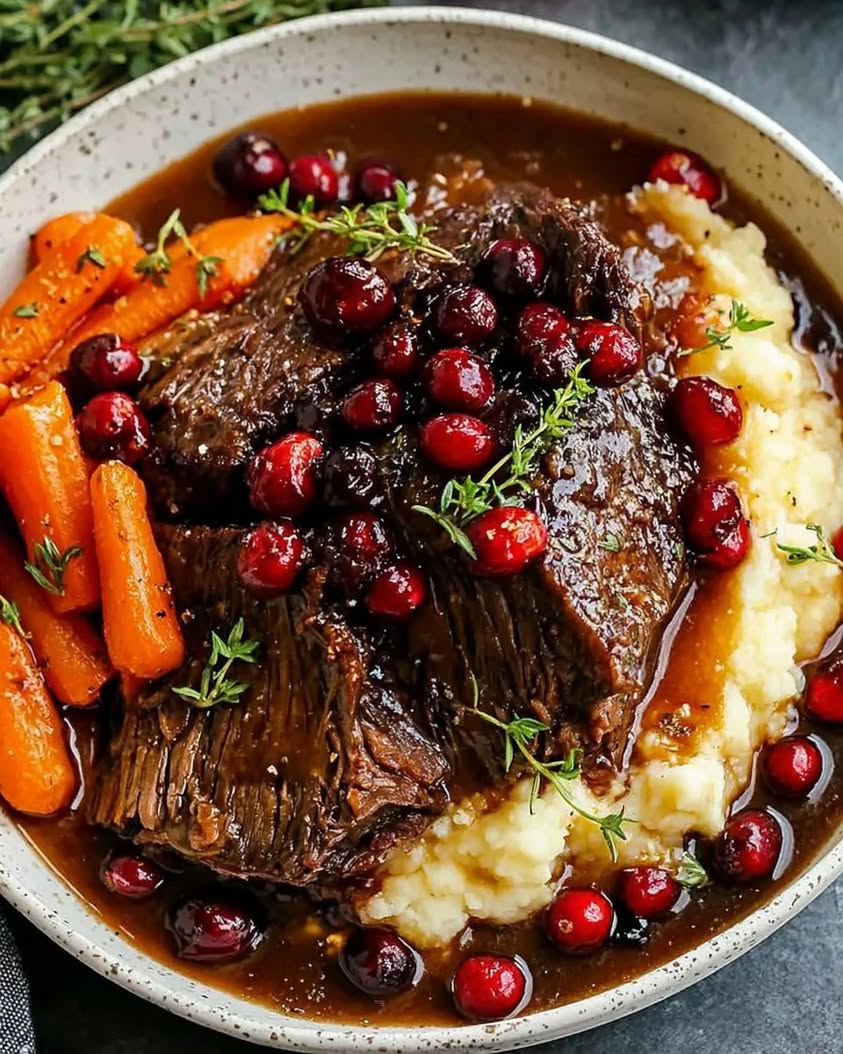
Slow-Braised Beef Roast with Cranberry Balsamic Glaze: A Festive Centerpiece for Any Occasion
Imagine a dish that fills your home with the most incredible, comforting aroma for hours. This slow-braised beef roast with cranberry balsamic glaze is exactly that kind of culinary experience. It transforms a simple chuck roast into a fork-tender masterpiece, bathed in a glossy, sweet-tart sauce that is simply unforgettable. This recipe is perfect for a special Sunday dinner or a holiday feast, offering restaurant-quality results with a surprisingly hands-off approach.
The magic of this slow-braised beef roast lies in the low-and-slow cooking method. Consequently, the tough connective tissues in the chuck roast melt away, leaving behind incredibly succulent, shreddable meat. Meanwhile, the cranberry balsamic glaze reduces into a rich, complex coating that beautifully balances the savory depth of the beef. Ultimately, you are left with a stunning centerpiece that promises to impress every single guest at your table.
Furthermore, this dish is a celebration of contrasting flavors and textures. The beef becomes impossibly tender, practically falling apart at the touch of a fork. In contrast, the glaze provides a vibrant, sticky-sweet counterpoint with a pleasant tang from the balsamic vinegar. Served over creamy mashed potatoes or polenta, this slow-braised beef roast with cranberry balsamic glaze creates a complete, soul-satisfying meal that feels both luxurious and deeply comforting.
Quick Recipe Highlights
- Flavor Profile: This dish masterfully balances rich, savory beef with a bright, sweet-tart cranberry balsamic glaze. The slow braise develops deep umami notes, while the glaze adds a festive, complex acidity and fruitiness that cuts through the richness perfectly.
- Texture: The beef achieves a legendary fork-tender, pull-apart texture from hours of gentle braising. Meanwhile, the reduced glaze becomes luxuriously thick and sticky, clinging to every nook and cranny of the meat for a perfect bite every time.
- Aroma: As it cooks, your kitchen will fill with an intoxicating scent of roasting beef, sweet cranberries, woody herbs like rosemary and thyme, and the sharp, caramelized notes of reducing balsamic vinegar. It is the ultimate comforting, festive fragrance.
- Visual Appeal: The finished roast boasts a gorgeous, deep mahogany crust from the glaze, making it a stunning centerpiece. Sliced or pulled, the dark, glossy meat against a white plate or beside green vegetables creates a beautiful, appetizing contrast.
- Skill Level Needed: This recipe is very approachable for intermediate home cooks. While it requires patience for the braising time, the active hands-on work is minimal and focuses on foundational techniques like searing and building a simple pan sauce.
- Special Equipment: A heavy-bottomed Dutch oven or oven-safe pot with a tight-fitting lid is essential for even heat distribution and moisture retention during the long braise. You will also need a fine-mesh strainer for achieving a smooth glaze.
Recipe Overview
- Difficulty Level: We rate this slow-braised beef roast as a medium-difficulty recipe. The techniques themselves—searing, deglazing, braising—are fundamental. However, the recipe requires planning due to the long, unattended cooking time and a careful eye when reducing the glaze to prevent burning. Success hinges more on patience than on advanced skill.
- Category: This dish squarely fits into the category of hearty main courses and celebratory centerpiece roasts. It is ideal for family dinners, holiday gatherings like Christmas or Thanksgiving, and any occasion where you want to serve something impressively delicious and comforting.
- Cuisine: While not strictly traditional to one region, this recipe draws inspiration from modern American comfort food and French braising techniques. The use of cranberries nods to North American ingredients, while the slow-braised method and red wine base are classic French approaches to transforming tougher cuts of meat.
- Cost: This is a very cost-effective way to feed a crowd. A chuck roast is an affordable cut, and the other ingredients are pantry staples or seasonal bargains. Compared to ordering a prime rib or tenderloin, this slow-braised beef roast delivers exceptional flavor and tenderness at a fraction of the price per serving.
- Season: This recipe shines brightest in the fall and winter months. Cranberries are at their peak, and the hearty, warming nature of a long-braised dish is perfect for cooler weather. That said, it is a glorious year-round comfort food, especially for a relaxed weekend dinner.
- Occasion: It is perfect for holidays, Sunday suppers, dinner parties, and potlucks. Because it can be made largely ahead of time and only gets better as it rests, this slow-braised beef roast with cranberry balsamic glaze is a stress-free choice for entertaining.
Why You’ll Love This Recipe
First and foremost, the taste and texture of this slow-braised beef roast are utterly divine. The long, slow cook in the oven transforms an economical chuck roast into something extraordinarily tender and flavorful. Each bite melts in your mouth, carrying the deep, savory notes of the braising liquid and the vibrant, sticky-sweet punch of the cranberry balsamic glaze. The combination is sophisticated yet deeply satisfying, making it a guaranteed crowd-pleaser for any palate.
From a convenience standpoint, this recipe is a dream for hosts. After the initial sear and assembly, the oven does nearly all the work for over three hours. This hands-off time allows you to prepare sides, set the table, or simply relax. Additionally, the dish reheats beautifully and often tastes even better the next day, making it an ideal make-ahead option for stress-free entertaining. You get incredible results without being chained to the stove.
Nutritionally, braising is a fantastic cooking method. It requires minimal added fat beyond the initial sear, as the meat cooks in its own juices and flavorful liquids. Chuck roast provides a good source of protein, iron, and B vitamins. Using whole cranberries and a quality balsamic vinegar also adds antioxidants and beneficial compounds, making this indulgent-tasting meal have some hidden health perks compared to other heavy, cream-based holiday dishes.
For social gatherings, this slow-braised beef roast with cranberry balsamic glaze is a true showstopper. Presenting a whole, glistening roast at the table creates a sense of occasion and warmth. It encourages sharing and conversation as you carve or pull the tender meat. The familiar, comforting aromas that fill your home make guests feel welcomed and cared for, setting the perfect tone for a memorable meal together.
Finally, this recipe is remarkably cost-effective and accessible. A chuck roast is one of the most affordable beef cuts, yet through the alchemy of braising, it rivals more expensive cuts in tenderness and flavor. The other ingredients are simple and often already in a well-stocked pantry. Therefore, you can create a luxurious, impressive feast without breaking the bank, which is a win for any home cook.
Historical Background and Cultural Significance
The technique of braising tough cuts of meat is ancient and global, born from necessity. Before modern butchery, people needed methods to tenderize the hard-working muscles of animals. Cultures worldwide developed slow-cooking in liquid, often in covered pots over low heat or buried in embers. Our modern slow-braised beef roast descends directly from these practical, resourceful traditions, turning less desirable cuts into celebratory food.
In European culinary history, braising became a cornerstone of classic French cuisine, formalized into dishes like “boeuf bourguignon.” The method migrated to America with settlers. Here, it evolved using New World ingredients. The addition of cranberries to a braise is a distinctly North American twist, marrying the Old World technique with a native fruit long used by Indigenous peoples for both food and medicine.
The recipe has evolved significantly with modern kitchen technology. While traditional braises might have simmered for an entire day in a hearth, the modern oven or slow cooker provides precise, consistent low heat. The creation of a reduced glaze, like our cranberry balsamic version, is also a more contemporary flourish, adding a restaurant-style finish and concentrated flavor that elevates the humble pot roast to dinner-party status.
Regional variations of this concept are endless. In France, you might find beef braised in red wine with pearl onions and mushrooms. In Italy, it could be “stracotto” with tomatoes and red wine. The German “sauerbraten” uses a vinegar marinade. Our version with cranberry balsamic glaze fits into this global tapestry, representing a modern, festive American take on the universal principle of low, slow cooking to achieve maximum flavor and tenderness.
Ingredient Deep Dive
Beef Chuck Roast: Chuck comes from the shoulder of the cow, a muscle-rich area that develops incredible flavor and becomes fork-tender when braised slowly. It is marbled with fat and connective tissue (collagen), which melts during cooking, basting the meat from within and creating a luxurious mouthfeel. For the best results, select a roast that is well-marbled with fat and has a uniform shape for even cooking. You can ask your butcher for a “chuck roast” or “chuck eye roast.” Store it in the coldest part of your refrigerator for up to 3 days before cooking, or freeze for longer storage.
Fresh Cranberries: These vibrant red berries are native to North America and are a staple of fall and winter cuisine. They are packed with vitamin C and antioxidants. Their natural tartness is a perfect counterbalance to rich, fatty meats. When cooked and reduced, they break down and release pectin, helping to thicken the glaze naturally. Look for plump, shiny berries that bounce when dropped. Avoid soft, shriveled, or discolored ones. Fresh cranberries freeze beautifully; just spread them on a tray to freeze solid before transferring to a bag, then use directly from frozen.
Balsamic Vinegar: Authentic tradizionale balsamic vinegar is aged for years, but a good-quality “condimento” grade works perfectly here. It adds a complex sweetness and acidity that enhances the cranberries and balances the beef’s richness. The sugars in the vinegar also caramelize, contributing to the glaze’s beautiful color and sticky texture. Choose a vinegar that lists “grape must” as the first ingredient. Store it in a cool, dark place. For a more affordable option, a decent supermarket balsamic will work, but avoid anything labeled “balsamic glaze,” as it is often pre-thickened and sweetened.
Red Wine: The wine serves multiple purposes: it deglazes the flavorful browned bits (fond) from the searing pan, adds acidity and fruitiness to the braising liquid, and helps tenderize the meat. Use a dry, drinkable red wine like Cabernet Sauvignon, Merlot, or Pinot Noir. The rule “don’t cook with wine you wouldn’t drink” applies here. If you prefer not to use alcohol, you can substitute with an equal amount of beef broth mixed with one tablespoon of red wine vinegar or additional balsamic vinegar to mimic the acidity.
Aromatics (Onion, Garlic, Herbs): These are the flavor foundation. Yellow onions provide a sweet, savory base. Garlic adds its unmistakable pungent aroma. Fresh herbs like rosemary and thyme contribute woody, earthy notes that are classic with beef. They infuse the braising liquid, which then permeates the meat. Always use fresh herbs for braises when possible, as their flavor holds up better to long cooking. If you must use dried, reduce the amount by half or two-thirds, as dried herbs are more concentrated.
Common Mistakes to Avoid
- Not Searing the Meat Properly: Skipping the sear or not getting a deep brown crust is a major misstep. This Maillard reaction creates foundational flavor compounds that enrich the entire braise. Pat your roast very dry with paper towels before searing, and do not move it until it releases easily from the pan.
- Crowding the Pan During the Sear: If you put the roast in a pan that is too small, it will steam instead of sear. Use a pot large enough that the meat has space around it. If necessary, sear in two batches for smaller pieces to ensure each piece gets proper contact with the hot surface.
- Using Boiling Liquid to Deglaze: When you add wine or broth to the hot pan to scrape up the fond, make sure the liquid is at least at room temperature. Adding cold liquid to a scorching-hot pan can cause thermal shock and make the fond stick harder, making it difficult to release those flavorful bits.
- Braising at Too High a Temperature: The key to braising is “low and slow.” If your oven is too hot, the meat will toughen and the liquid will evaporate too quickly. A steady 325°F is ideal. The liquid should be at a bare simmer, not a rolling boil.
- Not Braising with Enough Liquid: The liquid should come about one-third to halfway up the side of the meat. This ensures enough moisture to create steam and braise the meat properly without boiling it. Check halfway through cooking to ensure it hasn’t reduced too much; add a splash of broth if needed.
- Overcooking the Glaze: When reducing the braising liquid into the cranberry balsamic glaze, stay vigilant. It can go from perfectly thick and syrupy to burnt and bitter in moments. Remove it from the heat when it coats the back of a spoon and leave it to thicken further as it cools slightly.
- Slicing the Meat Immediately: Cutting into any roast right out of the oven causes the precious juices to run out everywhere. Always let your slow-braised beef roast rest, tented with foil, for at least 15-20 minutes. This allows the muscle fibers to relax and reabsorb the juices, ensuring a moist result.
- Using Pre-Minced Garlic from a Jar: For a long-cooked dish, the flavor difference is noticeable. Fresh garlic has a brighter, more complex flavor that mellows beautifully during braising. The jarred version often has a muted, sometimes bitter taste that can detract from the sauce’s clarity.
Essential Techniques
Searing for Flavor (The Maillard Reaction): This is the non-negotiable first step for building deep flavor. When proteins and sugars in the meat surface meet high heat, they undergo the Maillard reaction, creating hundreds of new flavor compounds. This creates a flavorful crust and, more importantly, leaves behind “fond”—the browned bits stuck to the pan. These bits are liquid gold for your sauce. To master it, ensure your pot is very hot before adding the oil, and the meat is thoroughly patted dry. Do not disturb the meat for several minutes to allow a proper crust to form.
Deglazing the Pan: After searing and removing the meat, you will have a layer of fond. Deglazing is the process of adding liquid (wine, in this case) to the hot pan and using a wooden spoon to scrape all those browned bits loose. This dissolves them into the liquid, creating the flavor base for your entire braising liquid. The key is to use a liquid that will not evaporate instantly, and to scrape thoroughly over medium heat until the bottom of the pan is clean.
The Braising Process: Braising is a combination cooking method: it starts with dry heat (searing) and finishes with moist heat (cooking in liquid). The magic happens when the covered pot goes into the oven. The trapped steam and gentle heat slowly break down tough collagen into gelatin. This process takes time and patience. The visual cue for success is meat that yields easily when pierced with a fork and can be pulled apart with little resistance. The liquid should be at a gentle simmer, not a violent boil.
Reducing a Glaze: Transforming the braising liquid into a glossy glaze requires reduction. After straining, you simmer the liquid to evaporate water, concentrating the flavors and thickening the consistency. As it reduces, the sugars from the cranberries and balsamic caramelize. The pitfall is walking away; it needs constant attention near the end. It is done when it coats the back of a spoon and leaves a clear trail when you run your finger through it. Remember, it will thicken more as it cools.
Pro Tips for Perfect Slow-Braised Beef Roast
For the deepest flavor, season your beef chuck roast generously with salt and pepper the night before cooking. Wrap it loosely and let it rest in the refrigerator. This dry-brining process allows the salt to penetrate deeply, seasoning the meat throughout and helping it retain moisture during the long cook.
When searing, resist the urge to move the roast around. Let it develop a deep, dark brown crust on each side. This crust is pure flavor. A good test is to gently try to lift a corner; if it sticks, it is not ready. When it releases easily, it is properly seared.
After braising, let the roast rest in its liquid for a bit before removing it to make the glaze. This allows the meat to relax and absorb some of the surrounding juices, making it even more succulent. It also makes the meat easier to handle without falling apart.
Strain your braising liquid thoroughly through a fine-mesh sieve when making the glaze. This removes all the spent herbs, vegetable pieces, and any loose meat fibers, resulting in a silky-smooth, restaurant-quality sauce that will beautifully coat the meat.
If your glaze reduces too quickly or becomes too thick before serving, you can always thin it with a tablespoon or two of warm beef broth or water. Conversely, if it is too thin, a cornstarch slurry (equal parts cornstarch and cold water mixed) can be whisked in over low heat to tighten it up.
For an extra layer of flavor, add a tablespoon of tomato paste to the pot after searing the aromatics. Let it cook for a minute until it darkens slightly. This adds a touch of sweetness and umami that complements the cranberries and beef beautifully.
If you have time, prepare the entire dish a day ahead. Braised dishes famously taste better the next day as the flavors continue to meld. Simply refrigerate the whole pot, then gently reheat the meat in the sauce in a low oven before reducing the sauce into your glaze.
Variations and Adaptations
For regional variations, consider a Provençal twist by adding olives, orange zest, and herbes de Provence instead of rosemary and thyme. For a more Germanic flavor, use a dark beer instead of red wine and add a couple of crushed gingersnaps to the braising liquid to thicken and sweeten the sauce in a traditional sauerbraten style.
Seasonal adaptations are easy. In spring, try using a rhubarb and red wine glaze instead of cranberry. In summer, a cherry and port wine reduction would be magnificent. The braising method remains constant; simply swap the tart fruit component for what is fresh and in season.
Dietary modifications are straightforward. For a gluten-free version, ensure your broth is certified gluten-free. To make it dairy-free, simply omit the butter often used to finish a sauce; the glaze is rich enough on its own. For a lower-carb or keto adaptation, you can reduce the amount of cranberries slightly and use a sugar-free sweetener, though the natural tartness will be more pronounced.
Flavor variations can take this dish in new directions. Add a couple of star anise or a cinnamon stick to the braise for a warm, spiced note. For a smoky element, use a chipotle pepper in adobo sauce (minced) in the braising liquid. You could also substitute pomegranate juice and seeds for the cranberries for a different, equally festive tart-sweet profile.
Texture modifications can cater to preference. If you prefer a chunkier sauce, only partially puree the strained cranberries before adding them back to the reduced liquid. For an ultra-smooth, refined glaze, strain it a second time through cheesecloth after reducing to remove any remaining tiny particles.
Presentation alternatives include shredding the entire roast and tossing it in the glaze for a “pulled beef” style perfect for sandwiches or sliders. Alternatively, slice it neatly against the grain and fan the slices on a platter, drizzling the glaze over the top for a more formal presentation.
Serving and Presentation Guide
For elegant plating, slice the rested roast against the grain into ½-inch thick slices. Arrange the slices slightly overlapping on a warm platter or individual plates. Using a spoon, drizzle the warm cranberry balsamic glaze generously over the meat, allowing some to pool on the plate. This method showcases the beautiful interior of the tender meat and the glossy sauce.
Garnishing adds color and freshness. A simple sprinkle of finely chopped fresh rosemary or thyme leaves provides a green contrast. For a festive touch, a few whole fresh cranberries or a twist of orange zest scattered over the top looks beautiful. A small bunch of fresh watercress or microgreens adds a peppery note and vibrant color.
Traditional accompaniments include creamy, buttery mashed potatoes, which are perfect for soaking up the glorious sauce. Other excellent options are soft polenta, wide egg noodles (pappardelle), or roasted root vegetables like carrots, parsnips, and potatoes cooked alongside the roast in the last hour of braising.
Modern serving suggestions might include a cauliflower puree for a lighter, low-carb base, or a farro or wild rice pilaf for added texture and whole grains. A simple arugula salad with a sharp vinaigrette served on the side helps cut the richness of the dish beautifully.
Temperature is crucial. Serve the meat and plates warm, not hot. If the meat is too hot, it will still be releasing juices. The glaze should be warm and fluid enough to drizzle. If your sides are ready before the meat has rested, keep them warm in a low oven or covered with foil.
Portion control is easy with this rich dish. A 3-4 ounce portion of meat per person is typically sufficient, especially when served with hearty sides. A 3-pound roast easily serves 6-8 people. Remember, you can always serve seconds, but a perfectly plated, moderate portion looks more refined and prevents waste.
Wine and Beverage Pairing
Wine pairings for this dish should complement its rich, savory depth and sweet-tart glaze. A medium-to-full-bodied red wine with good acidity is ideal. A classic Cabernet Sauvignon or Merlot from California or Bordeaux has the structure to stand up to the beef. A Syrah/Shiraz, with its peppery notes, also pairs wonderfully. For a more elegant option, try a Pinot Noir; its red fruit flavors and acidity will harmonize with the cranberry in the glaze without overpowering the meal.
Non-alcoholic alternatives can be just as thoughtful. A tart cherry or pomegranate sparkling juice mirrors the fruit notes in the glaze. For a warmer option, a savory mushroom or beef broth-based sipping broth can complement the umami of the dish. A high-quality, non-alcoholic red wine alternative is also a great choice for those avoiding alcohol but wanting the full tasting experience.
While not a classic pairing for beef, the cranberry element opens the door for certain teas. A lightly sweetened hibiscus tea offers a tart, floral counterpoint that can cleanse the palate. After the meal, a pot of strong black tea, like an Assam or English Breakfast, can be a comforting finish, especially if served with a touch of milk and sugar.
Temperature considerations are key for beverages. Red wine should be served at a cool room temperature, around 60-65°F. Sparkling non-alcoholic juices are best well-chilled. Teas should be served hot. Having a variety of temperatures available allows guests to choose what feels right alongside the warm, rich main course.
Serving suggestions include offering both a red wine and a non-alcoholic option clearly. You can also create a simple signature drink, like a cranberry and rosemary spritzer (cranberry juice, soda water, and a rosemary sprig), which ties directly into the flavors on the plate and is refreshing alongside the rich beef.
Storage and Shelf Life
For storage, let the braised beef and its glaze cool completely to room temperature before refrigerating. Store them together in a single airtight container, or keep the meat whole and the glaze separate. Properly stored, the slow-braised beef roast will keep in the refrigerator for 3 to 4 days. The fat in the sauce will solidify on top, which actually helps preserve it; simply skim it off or re-melt it when reheating.
Freezing is an excellent option for longer storage. Portion the meat and sauce into freezer-safe bags or containers, leaving some headspace for expansion. It will maintain best quality for 2 to 3 months. Thaw overnight in the refrigerator before reheating. Note that the texture of the meat may become slightly more fibrous after freezing, but the flavor will remain excellent.
Signs of spoilage include an off or sour smell, a significant change in the color of the meat or sauce, or the presence of mold. If the sauce develops bubbles or appears fizzy, it has likely fermented and should be discarded. Always reheat leftovers to an internal temperature of 165°F as measured by a food thermometer.
Reheating instructions are simple for best results. For the microwave, place a portion in a covered dish with a splash of water or broth and heat on medium power in short intervals, stirring in between. For the stove, place the meat and sauce in a saucepan with a little added liquid, cover, and warm gently over low heat until steaming. For the oven, place in a covered dish at 300°F until heated through. Avoid boiling, as this can toughen the meat.
Make Ahead Strategies
You can prep this dish fully 1-2 days in advance, which often improves the flavor. Complete the entire recipe through the braising step. After the meat is fork-tender, let the whole pot cool, then cover and refrigerate. The next day, the fat will have solidified on top, making it easy to remove for a leaner sauce. Gently reheat the meat in the liquid in a 300°F oven until warm, then proceed with making the glaze from the strained liquid.
For a component-based prep, you can sear the roast and prepare the aromatics a day ahead. Store the seared roast and the chopped vegetables separately in the refrigerator. The next day, simply proceed from the deglazing step. You can also make the cranberry balsamic glaze a day ahead; gently reheat it, thinning with a bit of broth if necessary, before serving.
Assembling for a party is easy. Reheat the glazed roast in a low oven (250°F) covered with foil. If the glaze thickens too much in the fridge, warm it in a saucepan with a tablespoon or two of broth until it returns to a drizzling consistency. Keep the meat and sauce warm in separate serving dishes, combining them just before presenting at the table for the best visual appeal.
For fresh element additions, if you make the glaze ahead, consider stirring in a teaspoon of fresh lemon juice or orange zest just before serving to brighten the flavors. Garnishes like fresh herbs should always be added at the last minute to maintain their color and vibrant flavor, preventing them from wilting on the hot meat.
Scaling Instructions
Halving the recipe is simple for a smaller household. Use a 1.5 to 2-pound chuck roast and halve all other ingredients. Use a smaller Dutch oven or heavy pot. The cooking time may be reduced by 30-45 minutes, so start checking for tenderness around the 2-hour mark. The glaze will also reduce much faster, so watch it closely.
Doubling or tripling for a crowd works well, but requires equipment adjustments. You will need a very large roasting pan or multiple Dutch ovens. Do not overcrowd the meat in the pan during searing; sear in batches. In the oven, ensure the pans are not touching each other or the oven walls for proper air circulation. The braising time may increase slightly, so rely on the fork-tender test rather than a strict timer.
Timing modifications are minimal when scaling. The active prep time increases slightly with more meat to sear. The oven braising time remains relatively consistent per pound, but a larger, thicker single roast may take marginally longer than two smaller ones. Always use the meat’s tenderness, not the clock, as your primary guide for doneness.
Storage considerations change with scale. If you make a large batch, consider dividing it into meal-sized portions before refrigerating or freezing. This makes reheating easier and prevents you from having to thaw and re-freeze the entire batch. Label containers with the date and contents clearly.
Nutritional Deep Dive
A typical serving of this slow-braised beef roast provides a substantial amount of high-quality protein, essential for muscle repair and satiety. The chuck roast contributes iron, zinc, and B vitamins, particularly B12. The slow cooking method helps render some of the marbled fat, which can be skimmed off from the cooled braising liquid, reducing the overall saturated fat content in the final dish compared to other roasting methods.
The cranberries are a micronutrient powerhouse, offering vitamin C, fiber, and unique antioxidants like proanthocyanidins, which are linked to urinary tract health. The balsamic vinegar contains polyphenols and acetic acid, which may have benefits for blood sugar control. The aromatic vegetables add vitamins and phytonutrients. Together, they create a sauce that is not just flavorful but also contributes beneficial compounds.
For dietary considerations, this dish is naturally gluten-free if you use a certified gluten-free broth. It is also dairy-free as written. The main considerations are its relatively high sodium content (from broth and seasoning) and the natural sugars from the cranberries and balsamic. Those monitoring sodium can use low-sodium broth and limit added salt. Those watching sugars can reduce the amount of cranberries slightly.
Portion analysis is key for weight management. A 4-ounce serving of the braised beef with a moderate amount of glaze, paired with a large portion of non-starchy vegetables (like roasted Brussels sprouts or a green salad), creates a balanced, satisfying meal that is rich in protein and fiber. The high protein and fat content promote fullness, which can help prevent overeating.
Dietary Adaptations
For a gluten-free version, the recipe is already nearly compliant. Simply ensure the beef broth you use is certified gluten-free, as some brands use wheat-based additives. All other core ingredients—beef, cranberries, balsamic vinegar, wine, vegetables—are naturally gluten-free. Serve with gluten-free sides like mashed potatoes, polenta, or rice.
A dairy-free adaptation requires no changes to the core recipe, as it contains no dairy products. The richness comes from the rendered beef fat and the reduced glaze. If a recipe variation suggests finishing the sauce with butter, simply omit it or use a plant-based butter alternative for a similar effect.
Creating a vegan version is a significant but possible challenge. Substitute the beef roast with a large, meaty mushroom cap (like portobello) or a whole cauliflower. Use vegetable broth instead of beef broth. The braising time will be drastically reduced to just 30-45 minutes. The cranberry balsamic glaze remains the same, creating a stunning, flavorful centerpiece for a plant-based feast.
For a low-carb or keto adaptation, reduce the amount of cranberries by half to lower the natural sugar content. You can supplement the tartness with a splash of red wine vinegar. Use a keto-friendly sweetener like erythritol or allulose to balance the tartness if needed. Thicken the glaze with a xanthan gum slurry instead of relying on reduction alone, and serve with cauliflower mash instead of potatoes.
A Paleo adaptation focuses on whole, unprocessed ingredients. Use a high-quality, grass-fed beef roast. Ensure your balsamic vinegar contains only grape must and no added sugars or caramel color. Use coconut aminos instead of any soy-based ingredient if added. Serve with mashed sweet potatoes or roasted vegetables for a compliant and delicious meal.
PrintSlow-Braised Beef Roast with Cranberry Balsamic Glaze
- Total Time: 3 hours 45 minutes
- Yield: 6
Description
A tender, fall-apart beef roast braised in a rich, tangy-sweet cranberry and balsamic sauce, perfect for a cozy dinner.
Ingredients
- 3 lbs beef chuck roast
- 1 tbsp olive oil
- 1 onion, chopped
- 3 garlic cloves, minced
- 1 cup fresh or frozen cranberries
- 1/2 cup balsamic vinegar
- 1 cup beef broth
- 2 tbsp brown sugar
- 1 tsp dried thyme
- Salt and black pepper to taste
- Fresh parsley for garnish
Instructions
- Season the beef roast generously with salt and pepper on all sides.
- Heat olive oil in a large Dutch oven over medium-high heat. Sear the roast until browned on all sides, about 3-4 minutes per side. Remove and set aside.
- In the same pot, add onion and garlic, sautéing until softened, about 3 minutes.
- Stir in cranberries, balsamic vinegar, beef broth, brown sugar, and thyme. Bring to a simmer.
- Return the beef roast to the pot, spooning some sauce over it. Cover and reduce heat to low. Braise for 3-4 hours, until the beef is fork-tender.
- Remove the roast and let it rest. Meanwhile, simmer the sauce uncovered for 10-15 minutes until thickened into a glaze.
- Slice or shred the beef, drizzle with the cranberry balsamic glaze, and garnish with fresh parsley before serving.
Notes
You can customize the seasonings to taste.
- Prep Time: 15 minutes
- Cook Time: 3 hours 30 minutes
- Method: Main
- Cuisine: American