Ultimate Slow-Braised Beef Brisket with Creamy Herb Grits: A Comfort Food Masterpiece
Imagine a dish where the beef is so tender it practically melts at the touch of a fork, and the grits are so creamy they provide the perfect comforting base. This Ultimate Slow-Braised Beef Brisket with Creamy Herb Grits is exactly that kind of soul-satisfying meal. Moreover, it transforms a humble cut of meat into a luxurious centerpiece through the magic of low and slow cooking. The rich, savory gravy that develops is a flavor bomb waiting to be sopped up with every bite.
This recipe is perfect for a special weekend dinner or a holiday gathering where you want to impress without constant kitchen stress. The process is straightforward, but the results are undeniably spectacular. Consequently, you will create a memorable meal that feels both rustic and elegant. The combination of the deeply flavorful, fall-apart brisket with the bright, herby grits creates a beautiful balance on the plate and the palate.
Ultimately, this dish celebrates patience and technique. The long braising time allows the connective tissues in the brisket to break down completely, resulting in that legendary tenderness. Meanwhile, the grits offer a canvas for fresh herbs and cheese, making them anything but ordinary. Together, they form a complete, comforting experience that is well worth the wait.
Quick Recipe Highlights
- Flavor Profile: This dish delivers a profound savory depth from the slow-braised beef, balanced by the aromatic freshness of thyme and rosemary in the grits. The tomato paste and red wine in the braising liquid add a subtle sweetness and acidity that cuts through the richness perfectly.
- Texture: You will achieve incredibly tender, pull-apart beef that contrasts beautifully with the ultra-creamy, smooth consistency of the stone-ground grits. The vegetables in the braise soften into the sauce, creating a luxurious, velvety gravy.
- Aroma: As it cooks, your kitchen will fill with the mouthwatering scents of roasting garlic, caramelizing onions, woody herbs, and rich, simmering beef. This aromatic promise builds anticipation for the incredible meal to come.
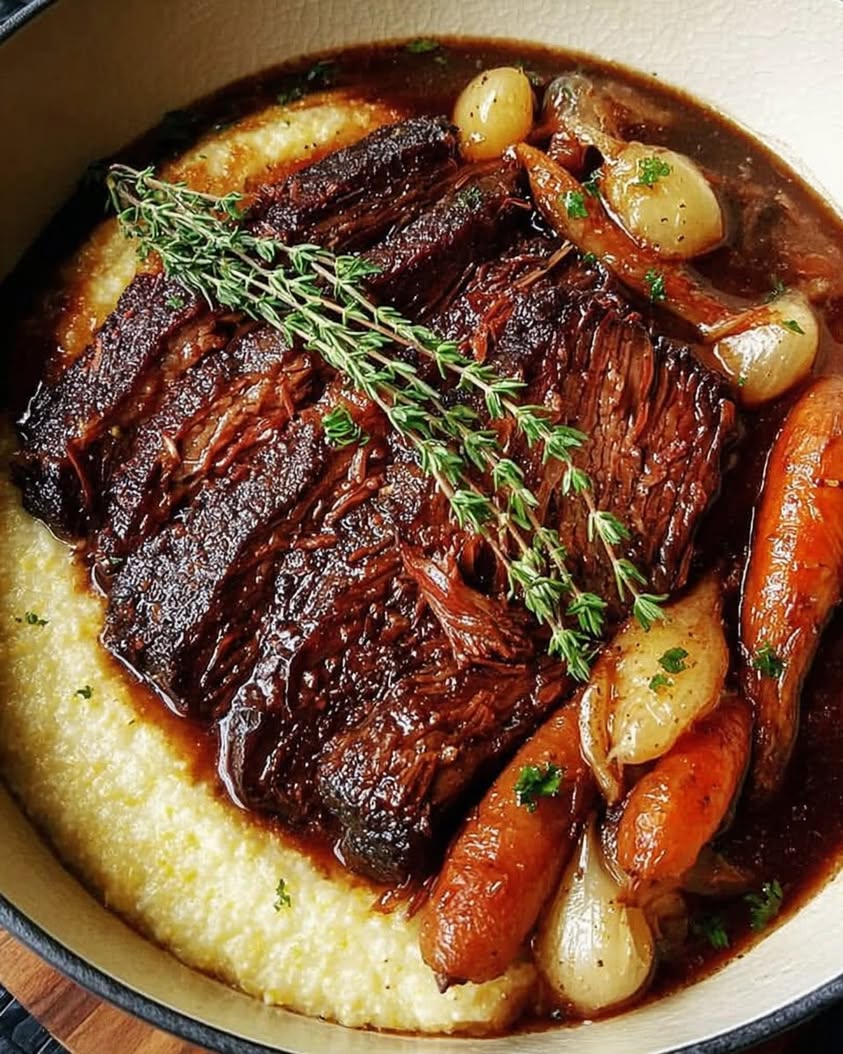
- Visual Appeal: The presentation is stunning, with the dark, glossy brisket and gravy draped over a mound of pale, creamy grits speckled with green herbs. A final sprinkle of fresh parsley adds a vibrant pop of color for a restaurant-worthy plate.
- Skill Level Needed: This recipe is accessible to confident home cooks. It requires basic searing and sautéing skills, but the oven does most of the work. Success hinges more on patience and timing than on advanced culinary techniques.
- Special Equipment: You will need a large, heavy-bottomed Dutch oven or oven-safe pot with a tight-fitting lid for braising. A reliable instant-read thermometer is also highly recommended to check the brisket’s internal temperature for perfect doneness.
Recipe Overview
- Difficulty Level: We rate this recipe as intermediate. While the steps are simple, the long cooking time and need for proper searing and temperature monitoring require a bit of cooking confidence. However, the process is very forgiving, and the detailed instructions guide you to success, making it a fantastic project for cooks looking to level up their skills.
- Category: This dish squarely fits into the category of hearty main courses and comfort food classics. It is a complete meal featuring a protein and a starch, ideal for a dinner party centerpiece or a family-style Sunday supper that everyone gathers around.
- Cuisine: The recipe draws inspiration from Southern American and rustic European cooking traditions. The technique of braising tough cuts is universal, while the use of stone-ground grits roots it firmly in Southern U.S. cuisine, creating a delicious fusion that feels both familiar and special.
- Cost: Brisket is a relatively economical cut, especially when considering the impressive yield and rich flavor it provides. The vegetables and pantry staples are inexpensive. Overall, you can create a restaurant-quality feast for six at a fraction of the cost of dining out, making it a brilliant choice for entertaining.
- Season: This is the ultimate cold-weather dish, perfect for fall and winter when you crave hearty, warming meals. That said, its crowd-pleasing nature makes it a great choice for any festive occasion, regardless of the season, especially if you have climate control.
- Occasion: It is ideal for relaxed weekend cooking, holiday dinners like Easter or Christmas, potlucks where you want to be the star, or any gathering where you desire a “wow factor” meal that can be prepared largely in advance.
Why You’ll Love This Recipe
First and foremost, the taste and texture are simply unbeatable. The slow-braised beef brisket achieves a level of succulence that is hard to find outside of a professional kitchen. Each forkful of meat is infused with the deep, complex flavors of the braising liquid—a harmony of savory beef stock, aromatic vegetables, and a hint of wine. Paired with the creamy, cheesy herb grits, every bite is a perfect balance of rich and fresh, hearty and smooth. This combination creates a deeply satisfying eating experience that comforts and delights in equal measure.
Furthermore, the convenience factor is a major win. Once you complete the initial searing and sautéing steps, the oven takes over for the long braise. This hands-off time means you can relax, attend to other tasks, or entertain guests without being chained to the stove. The recipe is also incredibly forgiving; the low, slow heat ensures the brisket stays moist and tender even if it cooks a little longer than planned. Therefore, it reduces mealtime stress and allows you to enjoy the process.
From a nutritional perspective, this meal offers substantial benefits. Beef brisket is an excellent source of high-quality protein, iron, zinc, and B vitamins, which are crucial for energy and metabolism. When prepared with a variety of vegetables like onions, carrots, and garlic, the dish gains fiber and essential micronutrients. Using stone-ground grits provides a whole-grain option rich in complex carbohydrates for sustained energy. Altogether, it is a wholesome, balanced plate.
Additionally, the social and entertaining value of this dish is immense. Serving a whole, beautifully braised brisket is dramatic and impressive, sparking conversation and creating a sense of occasion. It is inherently a sharing dish, encouraging a communal dining experience. Because it can be made ahead and reheats beautifully, you can be a present host rather than a frantic cook, which elevates any gathering from a simple meal to a memorable event.
Finally, it is remarkably cost-effective and accessible. Brisket is a budget-friendly cut that, when cooked properly, rivals expensive steaks in flavor and tenderness. The other ingredients are pantry staples or affordable fresh produce. This recipe demonstrates how simple techniques can transform humble ingredients into a spectacular feast, making gourmet-level comfort food achievable for any home cook on any budget.
Historical Background and Cultural Significance
The practice of braising tough cuts of meat like brisket is ancient and global, born from necessity. Before modern butchery, cooks needed methods to tenderize the hard-working muscles of the animal. Slow cooking in liquid with aromatics proved to be the perfect solution across cultures, from French “boeuf bourguignon” to Jewish “braised brisket” for holidays. This particular recipe’s origin story is a fusion tale, marrying the European technique of braising with the quintessential Southern American staple: grits. Consequently, it represents a beautiful blend of immigrant cooking traditions adapting to New World ingredients.
Culturally, brisket holds significant importance in many communities. In Jewish cuisine, it is a celebrated centerpiece for Passover and other high holidays, often braised with onions and sometimes a sweet element like prunes. In Texas and the American South, brisket is synonymous with barbecue, smoked low and slow over wood for hours. This braised version offers a home-kitchen-friendly alternative that captures the same spirit of patience and transformation, honoring the cultural weight of the cut while being accessible to anyone with an oven.
The evolution of this specific recipe likely stems from home cooks seeking to create a complete, comforting meal. Pairing braised meat with a porridge or mash is a classic combination worldwide—think stew and mashed potatoes. The innovation here was using stone-ground grits, a cornerstone of Southern sustenance, as that creamy base. Over time, additions like fresh herbs, garlic, and cheese elevated the grits from a simple side to a co-star, creating the modern, refined dish we know today. It is a testament to culinary creativity and regional pride.
Regional variations of this concept abound. In the American South, you might find the braise made with Coca-Cola or beer, and the grits could include sharp cheddar or pimento cheese. A Kentucky version might use bourbon in the braising liquid. In other parts of the country, polenta might stand in for grits. These adaptations show the recipe’s flexibility and how it has been embraced and personalized across different kitchens and family traditions, each adding a local twist to the foundational technique.
Ingredient Deep Dive
Beef Brisket: Brisket comes from the lower chest of the cow, a muscle that works hard, making it dense with connective tissue (collagen). This very quality is what makes it ideal for braising; the long, slow, moist heat breaks that collagen down into gelatin, resulting in incredible tenderness and rich mouthfeel. When selecting brisket, look for a cut with good marbling (thin streaks of fat running through the meat), as this intramuscular fat will baste the meat from within as it cooks. A flat cut is leaner and slices neatly, while a point cut has more fat and is incredibly flavorful. Store raw brisket in the coldest part of your refrigerator for up to 3 days, or freeze for several months.
Stone-Ground Grits: True stone-ground grits are made from dried corn (hominy) that is ground between millstones, preserving the germ and bran. This process gives them a superior, complex corn flavor and a slightly coarser texture compared to quick or instant grits. They are a whole grain, offering more fiber and nutrients. The key to perfect grits is patience—they require slow simmering and frequent stirring to achieve their signature creamy consistency without lumps. For the best results, seek out authentic stone-ground grits from Southern producers. Store them in an airtight container in a cool, dark place to prevent the oils in the germ from going rancid.
Fresh Herbs (Thyme & Rosemary): These woody herbs are the aromatic backbone of both the braise and the grits. Thyme offers a subtle, earthy, slightly minty flavor that mellows beautifully during long cooking. Rosemary provides a potent, pine-like fragrance that stands up to robust meats. Using them fresh is crucial for the grits, where their bright, pungent oils are released directly into the cream and butter. To select the best bunches, look for herbs with vibrant color and firm leaves, avoiding any that are wilted or blackened. Store them loosely wrapped in a damp paper towel in your refrigerator’s crisper drawer. For a substitution in the braise, dried herbs can work in a pinch (use 1/3 the amount), but for the grits, fresh is non-negotiable.
Common Mistakes to Avoid
- Not Searing the Meat Properly: Skipping or rushing the searing step is a critical error. Searing creates a flavorful fond (the browned bits on the bottom of the pot) and develops a rich, caramelized crust on the brisket through the Maillard reaction. This step is essential for building the deep, complex flavor base of your entire dish. Always pat the brisket very dry with paper towels before searing, and do not move it until a good crust has formed.
- Using the Wrong Pot: Braising requires a heavy-bottomed, oven-safe pot with a tight-fitting lid, like a Dutch oven. A thin pot will cause the bottom to scorch, while a lid that does not fit well will allow too much steam to escape, potentially drying out the meat. Investing in good cookware is key for this technique.
- Braising with Boiling Liquid: After adding your stock and wine, the liquid should just simmer gently when it goes into the oven. A rolling boil will make the meat tough and stringy. The goal is a low, steady heat that coaxes the collagen to melt slowly.
- Overcrowding the Pot with Vegetables: While the mirepoix (onions, carrots, celery) is important, adding too many vegetables can create excess moisture and dilute the intensity of your braising liquid. Stick to the recipe amounts to ensure a sauce that is flavorful and concentrated, not watery.
- Undercooking the Brisket: Brisket is done when it is fork-tender, not necessarily when it reaches a specific internal temperature. A thermometer is a good guide (around 200-205°F), but the true test is if a fork slides in and out with little resistance. Rushing this process will leave you with tough, chewy meat.
- Neglecting to Rest the Meat: Slicing the brisket immediately after it comes out of the oven will cause all the precious juices to run out onto the cutting board. Let it rest, tented with foil, for at least 20-30 minutes. This allows the muscle fibers to relax and reabsorb the juices, ensuring every slice is moist.
- Rushing the Grits: Stone-ground grits cannot be hurried. Adding them to boiling liquid and not stirring frequently will guarantee lumps. Follow the package directions for the liquid-to-grit ratio and cook time, and stir often to release the starch and achieve maximum creaminess.
- Adding Cheese to Grits Too Early: If you stir cheese into grits while they are at a rolling boil or over very high heat, the dairy can break, causing the grits to become grainy or oily. Always remove the grits from the heat first, then stir in the butter, herbs, and cheese until smoothly incorporated.
Essential Techniques
Patting the Brisket Dry: This simple step is profoundly important. Surface moisture is the enemy of a good sear because it causes the meat to steam instead of brown. By thoroughly drying the brisket with paper towels, you ensure direct contact between the meat and the hot oil, leading to efficient Maillard browning. This creates a flavorful crust and those coveted browned bits in the pot that will form the foundation of your sauce. Always take the extra minute to dry your protein before searing.
Building a Fond: The fond refers to the layer of caramelized bits left on the bottom of the pot after searing the meat and sautéing the vegetables. This layer is packed with concentrated, savory flavor. The technique of deglazing—pouring in wine or stock and using a wooden spoon to scrape up these bits—is what dissolves the fond back into the liquid. This process is essential for creating a rich, deeply flavored braising liquid rather than a bland broth. Do not let this valuable resource go to waste; scrape diligently!
Low and Slow Braising: This is the heart of the recipe. Braising is a combination cooking method: first dry heat (searing), then moist heat (simmering in liquid). The “low and slow” principle means maintaining a very gentle simmer, either on the stovetop or in a low oven (typically 300-325°F). This gentle heat slowly melts the tough collagen in the brisket into soft, luxurious gelatin without toughening the muscle fibers. The visual cue for success is meat that pulls apart easily with forks and a sauce that has reduced to a glossy, coating consistency.
Perfecting Creamy Grits: The technique for flawless grits involves patience and attention. First, you must whisk the grits slowly into simmering, salted liquid to prevent clumping. Then, maintain a low, steady simmer, stirring frequently to prevent sticking and to encourage starch release. The grits are done when they are tender, have lost their gritty texture, and have thickened to a creamy, porridge-like consistency. The final stir of cold butter and cheese off the heat (called “mounting” with butter) adds shine, richness, and smoothness, elevating them from simple porridge to a gourmet side.
Pro Tips for Perfect Ultimate Slow-Braised Beef Brisket with Creamy Herb Grits
For an even deeper flavor, season the brisket generously with salt and pepper up to 24 hours in advance and let it rest uncovered on a rack in the fridge. This dry-brining process seasons the meat throughout and helps dry the surface for a better sear.
After braising, strain the cooking liquid and vegetables. Separately, skim the fat from the surface of the liquid, then puree the softened vegetables back into it for an incredibly rich, thick, and velvety gravy without needing any flour or cornstarch.
Let the fully cooked brisket cool in its braising liquid overnight in the refrigerator. The next day, the fat will have solidified on top for easy removal, and the meat will have reabsorbed even more flavor. Simply reheat gently in the oven before serving.
For the grits, use a combination of whole milk and chicken or vegetable stock instead of all water. The dairy adds creaminess and the stock adds a savory depth that makes the grits a standout component, not just a bland base.
When slicing the rested brisket, always cut against the grain. Identify the direction of the long muscle fibers and slice perpendicular to them. This shortens the fibers, making each piece much more tender and easier to chew.
If your braising liquid seems too thin after the cook, simply transfer the meat to a platter, then simmer the liquid on the stovetop until it reduces to your desired sauciness. This allows you to control the final consistency without risking overcooking the meat.
Toast your dry grits in a bit of melted butter for a minute before adding the liquid. This nutty, toasty step adds a wonderful layer of flavor that makes your grits taste truly special and homemade.
Add a splash of acid at the end—a teaspoon of red wine vinegar or fresh lemon juice stirred into the finished grits or the gravy. This brightens all the rich, fatty flavors and makes the entire dish taste more balanced and vibrant.
Variations and Adaptations
Regional Variations: Explore different flavor profiles by changing your braising liquid. For a Southern twist, use a dark beer or a cup of strong coffee with a tablespoon of molasses. For a French-inspired version, use all red wine and add a bundle of fresh herbs (bouquet garni). A Texas-style adaptation might include a few canned chipotle peppers in adobo sauce for a smoky heat.
Seasonal Adaptations: In the spring, stir fresh peas, asparagus tips, or morel mushrooms into the finished grits. For summer, make the dish lighter by serving the brisket over grits made with fresh corn cut off the cob. In fall, incorporate roasted squash or wild mushrooms into the braise during the last hour of cooking.
Dietary Modifications: For a gluten-free meal, ensure your beef stock is certified gluten-free. To make it dairy-free, prepare the grits with stock and olive oil or vegan butter, and omit the cheese or use a vegan alternative. The brisket itself is naturally dairy and gluten-free, making adaptations easy.
Flavor Variations: Introduce global spices to the brisket rub, such as smoked paprika, cumin, or coriander. For the grits, swap the thyme and rosemary for other herbs like chives, tarragon, or sage. You can also stir in sun-dried tomatoes, caramelized onions, or roasted garlic for a different savory punch.
Texture Modifications: If you prefer a more rustic texture, use coarse-ground polenta instead of grits. For an even creamier brisket sauce, blend it with an immersion blender after removing the meat and vegetables. To add a textural contrast, sprinkle the plated dish with crispy fried shallots or toasted breadcrumbs.
Presentation Alternatives: Instead of plating individually, present the whole brisket on a large board or platter with the grits in a separate bowl for a family-style feast. For an elegant appetizer, serve smaller portions of shredded brisket on top of crispy polenta cakes. You can also use the leftovers to make incredible tacos or sandwiches the next day.
Serving and Presentation Guide
For beautiful plating, start with a generous scoop of the creamy herb grits in the center of a wide, shallow bowl. Use the back of a spoon to create a slight well in the middle. Then, arrange 2-3 slices of the rested brisket, slightly overlapping, over the grits. Spoon the rich, glossy gravy generously over the meat and let it cascade down onto the grits. This method ensures every bite includes both components.
Garnishing adds the final touch of freshness and color. A simple sprinkle of finely chopped fresh parsley or chives is classic. For more complexity, add a few leaves of microgreens or a light dusting of freshly cracked black pepper. A very thin slice of lemon zest on top can provide a fragrant aroma that complements the rich meat.
Traditional accompaniments keep the focus on the main event. Simple roasted or steamed green vegetables like haricots verts, broccoli rabe, or glazed carrots work perfectly. A crisp, acidic salad with a vinaigrette dressing helps cut through the richness of the dish and cleanses the palate between bites.
For modern serving suggestions, consider deconstructing the elements. Serve the shredded brisket in a small cast-iron skillet with the grits in another, allowing guests to build their own plates. Alternatively, for a casual gathering, set up a “brisket and grits” bar with various toppings like pickled red onions, hot sauce, and extra cheese.
Temperature is crucial. Serve the brisket and gravy piping hot. The grits should also be served hot and freshly made, as they thicken and form a skin as they cool. Warm your serving bowls or plates beforehand to keep everything at the ideal temperature longer during the meal.
Portion control is easy with this hearty dish. A typical serving is about 6-8 ounces of cooked brisket per person and about 3/4 cup of cooked grits. Since the dish is rich, these portions are satisfying without being overwhelming. Remember, it is always better to have seconds available than to overload the first plate.
Wine and Beverage Pairing
Wine pairings should complement the rich, savory, and slightly sweet notes of the braised brisket. A medium to full-bodied red wine with good acidity is ideal. An Australian Shiraz or a California Zinfandel offers ripe fruit flavors that stand up to the meat’s richness, while their peppery notes echo the herbs. Alternatively, a classic Cabernet Sauvignon with its structured tannins cuts through the fat beautifully. For a more old-world choice, a Châteauneuf-du-Pape or a Rioja Reserva provides earthy complexity that matches the depth of the braise.
Non-alcoholic alternatives can be just as thoughtful. A tart cherry juice or pomegranate juice spritzer provides a fruity, acidic counterpoint to the fat. For something warmer, a rich, savory tomato-based beverage or a non-alcoholic craft beer with malty, toasted notes can mirror the dish’s flavors. Iced tea, especially a slightly sweetened black tea or an herbal tea like hibiscus, is a classic Southern pairing that works wonderfully.
While not traditional, coffee and tea pairings can be delightful. A cup of strong, black coffee after the meal complements the savory notes and aids digestion. For a tea pairing, consider a smoky Lapsang Souchong, whose intense character can hold its own against the brisket, or a soothing cup of peppermint tea to finish on a refreshing note.
Temperature considerations are key for beverages. Red wines should be served at a cool room temperature (60-65°F), not warm. Chill your non-alcoholic juices and spritzers. Iced tea should be very cold, while coffee and after-dinner tea should be served hot. Proper temperatures ensure the drinks refresh and balance the meal rather than fighting against it.
General serving suggestions include offering a variety of options to cater to different preferences. Always provide plenty of cold water on the table to cleanse palates. If serving wine, consider decanting it an hour before the meal to allow it to open up and soften, which will make it even more harmonious with the food.
Storage and Shelf Life
For storage, first allow the brisket and grits to cool to room temperature within two hours of cooking to prevent bacterial growth. Do not leave them out on the counter for extended periods. Store the brisket and its gravy together in an airtight container. Store the grits separately in their own container, as they will absorb liquid and become stiff.
Temperature requirements are strict for food safety. Both components must be refrigerated at 40°F or below. The brisket and gravy will keep for 3 to 4 days in the refrigerator. The grits are best consumed within 2 to 3 days, as they continue to thicken and lose their creamy texture over time.
Container recommendations include using shallow containers rather than deep ones. This allows the food to cool more quickly and evenly. Glass containers with tight-sealing lids are excellent because they do not absorb odors and allow you to see the contents. For the gravy-rich brisket, ensure the container is leak-proof.
Signs of spoilage to watch for include an off or sour smell, a slimy texture on the surface of the meat or grits, or any visible mold. If the gravy appears bubbly or fizzy, it may be fermenting. When in doubt, always err on the side of caution and discard the food. Properly stored food should still smell and look appetizing.
Reheating instructions are crucial for quality. For the brisket, reheat it gently in a covered dish in the oven at 300°F with a splash of broth or water to keep it moist, or on the stovetop over low heat. Microwave reheating can make the meat rubbery. Reheat grits in a saucepan over low heat with a splash of milk or water, stirring constantly until creamy again.
Freezing guidelines are excellent for longer storage. The brisket and gravy freeze exceptionally well for up to 3 months. Portion it into meal-sized amounts in freezer bags, pressing out all the air. Thaw in the refrigerator overnight before reheating. Grits can be frozen, but their texture may become slightly grainy upon reheating; they are best enjoyed fresh or refrigerated.
Make Ahead Strategies
An ideal prep timeline starts 1-2 days before serving. Day 1: Complete the entire braising process—sear, braise, and cool the brisket in its liquid. Day 2: Remove the chilled fat layer, slice the cold meat neatly (it slices beautifully when cold), and reheat gently in the defatted sauce. Cook the grits fresh just before serving for the best texture.
For storage between steps, after the initial braise and cool-down, store the whole pot (with the brisket still submerged in liquid) in the refrigerator overnight. This not only makes fat removal easy but also allows flavors to marry intensely. Keep the sliced, sauced brisket in its reheating dish covered in the fridge for up to 24 hours before the final warm-through.
The quality impact of making ahead is overwhelmingly positive for the brisket. The flavor improves dramatically as it sits. The only potential downside is for the grits, which are always best made fresh. However, you can measure out all your grits ingredients and prep your herbs in advance to streamline the final hour of cooking.
Assembly tips for serving day are simple. Reheat the brisket and gravy in a covered dish in a 300°F oven until hot throughout, about 45 minutes to an hour depending on the amount. Start your grits about 30 minutes before you plan to eat. This way, both components finish at the same time, hot and ready for plating.
Reheating guidelines are key to preserving texture. Always reheat the brisket in a moist environment (with its gravy or added liquid) and covered to prevent drying out. Use gentle, low heat whether in the oven or on the stove. Avoid the microwave for large pieces, as it can overcook the edges and leave the center cold.
For fresh element additions, even with a make-ahead brisket, always finish the grits with fresh herbs and cheese right before serving. You can also garnish the final plated dish with a new sprinkle of freshly chopped herbs or a drizzle of high-quality olive oil to add a burst of freshness that contrasts the deep, developed flavors of the braise.
Scaling Instructions
Halving the recipe is straightforward for a smaller household. Use a 3-4 pound brisket half and reduce all other ingredients by half. Use a smaller Dutch oven to maintain the proper depth of braising liquid around the meat. The cooking time may be slightly reduced, so start checking for fork-tenderness around the 3-hour mark.
Doubling or tripling the recipe is perfect for a crowd. You will need a very large roasting pan or multiple Dutch ovens. Brown the briskets in batches to avoid steaming. Ensure the braising liquid still comes about halfway up the sides of the meat in the pan; you may not need to double the liquid exactly. Cooking time may increase slightly, so rely on the fork-tenderness test.
Equipment adjustments are necessary when scaling. For a larger brisket, ensure your oven rack is positioned low to accommodate a tall pan. You may need to use heavy-duty aluminum foil secured tightly over a roasting pan if you lack a lid large enough. For grits, a larger, heavier-bottomed pot is essential to prevent scorching when making a big batch.
Timing modifications are minimal but important. While braising time is largely consistent per pound, a very large single piece may require extra time. Conversely, smaller pieces will cook faster. The best practice is to follow the visual and textural cues (fork-tenderness) rather than the clock alone when you deviate from the standard recipe size.
Storage considerations change with scale. A large batch means more leftovers. Portion them into family-sized amounts before refrigerating or freezing for easier future meals. Label containers with the date. Remember that a large pot of food will take longer to cool down to a safe refrigeration temperature; divide it into smaller, shallow containers to speed up this process.
Nutritional Deep Dive
A macro breakdown for a typical serving reveals a balanced profile. The brisket provides a high amount of quality protein (approximately 40-50g per serving) and fats, including both saturated and monounsaturated fats. The grits contribute complex carbohydrates and fiber, especially if using stone-ground varieties. Together, they create a meal with sustained energy release, making you feel full and satisfied for hours.
The micronutrient analysis is impressive. Beef brisket is an excellent source of heme iron (highly absorbable), zinc for immune function, and B vitamins like B12 and Niacin for energy metabolism. The carrots, onions, and garlic in the braise add vitamins A and C, along with antioxidants. Using whole milk and cheese in the grits adds calcium and vitamin D.
Health benefits include supporting muscle maintenance and repair from the high protein content. The iron helps prevent anemia, and the zinc supports a healthy immune system. The fiber from the vegetables and whole-grain grits promotes digestive health. The collagen from the broken-down connective tissue may support joint and skin health.
Dietary considerations are important to note. This dish is naturally gluten-free if using certified gluten-free stock. It is high in protein and can fit into many balanced diets. However, it is also relatively high in saturated fat and sodium, so those monitoring these intakes should be mindful of portion size and adjust salt usage in the recipe.
Portion analysis shows that a single serving is quite substantial and nutrient-dense. It is a complete meal, reducing the need for multiple side dishes. To manage calories, you can control the amount of gravy used or slightly reduce the butter and cheese in the grits without sacrificing core flavor.
Weight management tips include focusing on the recommended portion size, as the dish is very satisfying and can prevent overeating later. Pair it with a large side of non-starchy vegetables like a green salad to increase volume and fiber without adding many calories. The high protein content also increases satiety, helping to regulate appetite.
PrintSlow-Braised Beef Brisket with Herb Grits
- Total Time: 45 minutes
- Yield: 4
Description
Tender, fall-apart beef brisket slow-cooked in a rich broth, served over creamy herb-infused grits for a comforting Southern-inspired meal.
Ingredients
- 3 lbs beef brisket, trimmed
- 2 tbsp olive oil
- 1 large onion, chopped
- 4 cloves garlic, minced
- 2 carrots, chopped
- 2 celery stalks, chopped
- 4 cups beef broth
- 1 cup red wine
- 2 tbsp tomato paste
- 2 sprigs fresh rosemary
- 3 sprigs fresh thyme
- Salt and black pepper to taste
- 1 cup stone-ground grits
- 4 cups water or milk
- 1/2 cup grated Parmesan cheese
- 2 tbsp butter
- 2 tbsp chopped fresh parsley
Instructions
- Season the brisket generously with salt and pepper. Heat olive oil in a large Dutch oven over medium-high heat and sear the brisket on all sides until browned, about 4-5 minutes per side. Remove and set aside.
- Add onion, garlic, carrots, and celery to the pot. Cook until softened, about 5 minutes. Stir in tomato paste and cook for 1 minute. Pour in red wine to deglaze, scraping up browned bits.
- Return brisket to the pot. Add beef broth, rosemary, and thyme. Bring to a simmer, then cover and transfer to a preheated 325°F oven. Braise for 3-4 hours until fork-tender.
- About 30 minutes before brisket is done, prepare grits. Bring water or milk to a boil in a saucepan. Whisk in grits, reduce heat to low, and simmer for 20-25 minutes, stirring occasionally, until thickened.
- Stir butter, Parmesan cheese, and parsley into the grits. Season with salt and pepper. Slice or shred the brisket. Serve over herb grits, spooning braising liquid over the top.
Notes
You can customize the seasonings to taste.
- Prep Time: 15 minutes
- Cook Time: 30 minutes
- Method: Main
- Cuisine: American