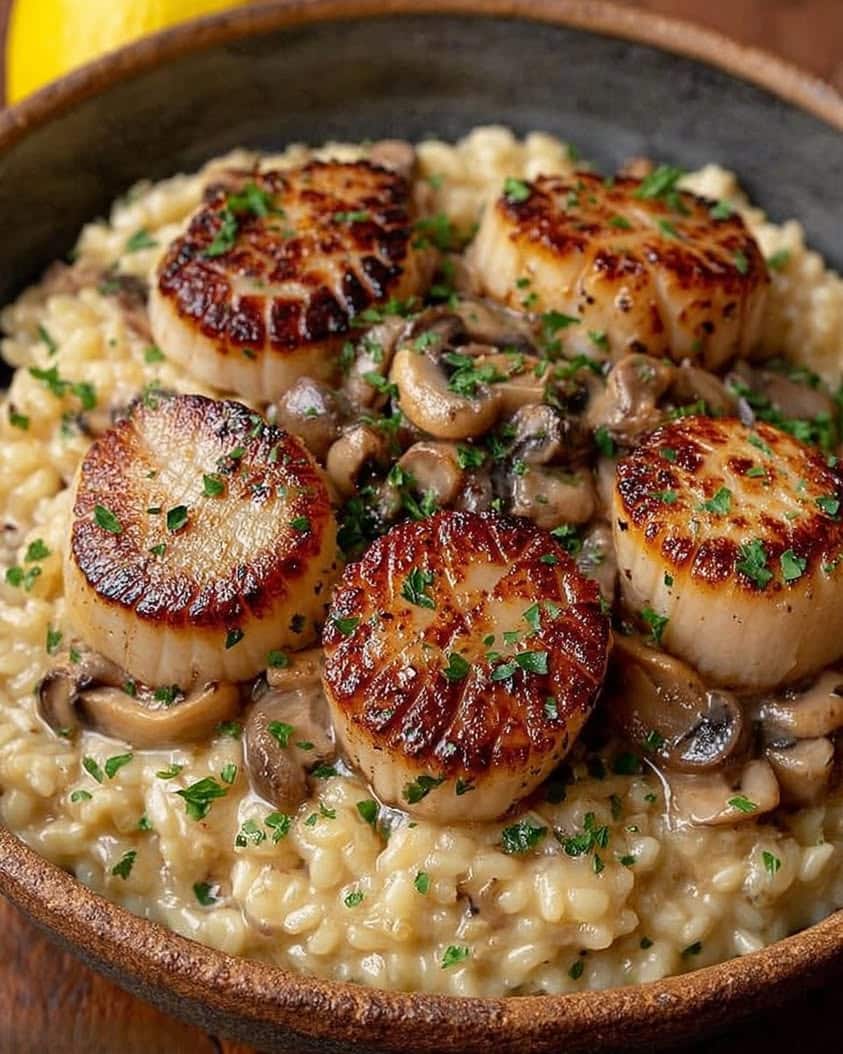
Scallops and Mushroom Risotto: A Luxurious Weeknight Feast
Imagine a dish that feels like a special occasion but is entirely achievable in your own kitchen. This creamy scallop and mushroom risotto recipe delivers exactly that experience. It combines the sweet, delicate flavor of perfectly seared scallops with the earthy depth of mushrooms and the luxurious creaminess of a classic Italian risotto. The result is a restaurant-quality meal that is both comforting and sophisticated. Moreover, this recipe guides you through each step to ensure success, even if you are new to cooking seafood or risotto.
Creating a perfect scallop and mushroom risotto is an art that balances texture and flavor. The key lies in the technique of slowly adding broth to the rice, which coaxes out its natural starches for a creamy consistency without needing excessive cream. Meanwhile, searing the scallops creates a beautiful caramelized crust that contrasts wonderfully with the tender interior. This dish is a fantastic way to impress guests or simply treat yourself to a gourmet dinner. Ultimately, it transforms simple ingredients into an extraordinary culinary experience.
The harmony of land and sea in this dish is truly remarkable. Earthy mushrooms provide a robust base, while sweet scallops offer a light, briny counterpoint. Aromatic shallots, garlic, and white wine build layers of flavor that permeate every grain of rice. Finishing with Parmesan cheese and fresh herbs adds a final touch of richness and brightness. This scallop and mushroom risotto is not just a meal; it is a celebration of texture and taste that will leave everyone at the table asking for seconds.
Quick Recipe Highlights
- Flavor Profile: This creamy scallop and mushroom risotto recipe offers a sophisticated blend of sweet, briny scallops and deeply savory, earthy mushrooms. Aromatic shallots and garlic form the foundation, while a splash of dry white wine adds a bright acidity. Finally, the richness of Parmesan cheese ties all the flavors together into a harmonious and luxurious dish.
- Texture: The hallmark of a great risotto is its creamy, almost porridge-like consistency, which comes from the rice’s starches. In contrast, the seared scallops provide a firm, meaty bite with a delightfully caramelized crust. Additionally, the sautéed mushrooms retain a slight chewiness, creating a wonderful textural interplay in every spoonful of this seafood risotto.
- Aroma: As you cook, the kitchen fills with an irresistible fragrance. First, you will smell the nutty aroma of toasting Arborio rice. Then, the savory scent of sautéing mushrooms and garlic takes over. Finally, the sweet, oceanic aroma of the searing scallops completes the sensory experience, making this creamy scallop and mushroom risotto as pleasing to the nose as it is to the palate.
- Visual Appeal: This dish is a feast for the eyes with its beautiful contrast of colors and textures. The creamy, pale yellow risotto acts as a canvas for the golden-brown scallops and richly colored mushrooms. A sprinkle of vibrant green fresh parsley or chives adds the perfect finishing touch, making your homemade seafood risotto look professionally plated.
- Skill Level Needed: This creamy scallop and mushroom risotto recipe is ideal for a confident home cook. It requires managing two components—the risotto and the scallops—simultaneously. Consequently, you need a good understanding of timing and the ability to pay close attention to the rice’s cooking process to achieve the perfect creamy texture.
- Special Equipment: You will need a heavy-bottomed pot or Dutch oven for the risotto, as it distributes heat evenly and prevents scorching. Additionally, a large skillet is essential for searing the scallops properly. A ladle for adding broth and a wooden spoon for stirring are also key tools for mastering this restaurant-quality meal.
Recipe Overview
- Difficulty Level: We rate this creamy scallop and mushroom risotto recipe as intermediate. The process demands constant attention to stir the risotto and add broth gradually. Simultaneously, you must perfectly time the searing of the scallops, which requires a hot pan and not moving them too soon. Therefore, some multitasking and prior cooking experience are beneficial for the best results.
- Category: This dish is a stellar main course that stands confidently on its own. It is perfect for a date night, a dinner party centerpiece, or a luxurious weekend family meal. Furthermore, you can serve smaller portions as an impressive first course for a multi-course Italian-inspired dinner.
- Cuisine: The dish is rooted in Italian culinary tradition, specifically from the northern regions where risotto is a staple. However, the addition of seared scallops introduces a coastal or modern fusion element. Ultimately, it respects the classic technique of risotto making while embracing a popular seafood pairing for a contemporary twist.
- Cost: This is a moderately priced meal for a special occasion. Sea scallops are the primary cost driver, but a little goes a long way as they are the star. Arborio rice, mushrooms, broth, and Parmesan are relatively affordable pantry staples. As a result, you can create a restaurant-quality meal at home for a fraction of the dining-out price.
- Season: While excellent year-round, this creamy scallop and mushroom risotto recipe shines in the cooler months. Earthy mushrooms are at their peak in fall and winter, providing robust flavor. Conversely, it also makes a wonderful spring dish when you crave something elegant yet comforting, bridging the gap between seasons beautifully.
- Occasion: This dish is incredibly versatile for special events. It is romantic enough for an anniversary dinner, impressive enough for entertaining guests, and comforting enough for a holiday meal. Moreover, it turns an ordinary weeknight into a celebrated occasion when you want to treat yourself without leaving home.
Why You’ll Love This Recipe
First and foremost, the taste and texture of this creamy scallop and mushroom risotto are utterly divine. Each bite delivers a complex symphony of flavors: the sweet, clean taste of the sea from the scallops, the umami richness of the mushrooms, and the savory, cheesy depth of the risotto. The contrast between the creamy rice and the seared, caramelized crust on the scallops creates a mouthfeel that is both luxurious and satisfying. This dish proves that simple, quality ingredients can create an unforgettable gourmet experience in your own dining room.
From a convenience standpoint, this recipe is designed for efficiency despite its elegant outcome. All the ingredients are easy to find at most grocery stores. The prep work is straightforward, involving mostly chopping and measuring. Furthermore, the cooking process, while requiring attention, is methodical and rewarding. You will find the rhythmic addition of broth to the rice almost meditative. Ultimately, this creamy scallop and mushroom risotto demystifies a classic restaurant technique, making it accessible for a memorable weeknight dinner.
Nutritionally, this dish offers a well-rounded profile. Scallops are an excellent source of lean protein, vitamin B12, and minerals like magnesium and potassium. Mushrooms provide fiber, antioxidants, and essential B vitamins. Using a high-quality broth and controlling the amount of butter and cheese allows you to manage the fat content. Therefore, this seafood risotto can be part of a balanced diet, offering sustenance and sophistication in one bowl.
For social and entertaining value, this recipe is a true winner. It is visually stunning and feels inherently special, guaranteeing compliments from your guests. The act of stirring risotto is conversational; you can prepare it while interacting with company in the kitchen. Additionally, the entire meal comes together in one pot and one pan, minimizing cleanup. This makes hosting less stressful and more enjoyable, allowing you to focus on your guests rather than a mountain of dishes.
Finally, consider the cost-effectiveness and accessibility of this restaurant-quality meal. Dining out on a dish of this caliber would cost a significant amount per person. By cooking at home, you control the quality of every ingredient, from the scallops to the Parmesan. You can also easily double the recipe to feed a crowd economically. This creamy scallop and mushroom risotto empowers you to create a luxury dining experience that is both accessible and affordable anytime the craving strikes.
Historical Background and Cultural Significance
The story of risotto begins in Northern Italy, specifically in the regions of Lombardy and Piedmont, where rice paddies have existed since the 14th century. The humid climate around the Po River Valley proved ideal for growing short-grain rice varieties. Initially, rice was used in soups and simple preparations. However, the technique of toasting rice and slowly adding liquid to release its starches likely developed in the 19th century as a way to create a richer, more substantial dish. This method transformed humble rice into the creamy, elegant risotto we know today, setting the stage for endless variations, including our seafood risotto with mushrooms.
Risotto holds deep cultural significance in Italy, representing regional pride and culinary ingenuity. Each area boasts its own signature version: Milan has saffron-infused Risotto alla Milanese, while Venice offers Risotto al Nero di Seppia with cuttlefish ink. The addition of seafood, or “risotto di mare,” is particularly common in coastal regions. Our creamy scallop and mushroom risotto recipe is a modern fusion that combines the land (mushrooms) and sea (scallops), reflecting both the country’s agricultural heartland and its extensive coastline. It is a celebration of local, seasonal ingredients prepared with time-honored technique.
The evolution of the scallop and mushroom risotto recipe is a tale of global influence and modern palates. While traditional Italian cookbooks may not have paired scallops and mushrooms specifically, the principles are authentically Italian. The rise of “surf and turf” concepts in international cuisine inspired such combinations. Today, this pairing is celebrated in restaurants worldwide for its perfect balance of sweet and earthy flavors. The recipe continues to evolve with dietary trends, inspiring gluten-free, dairy-light, and vegan adaptations while staying true to its creamy, comforting core.
Regional variations of this concept are fascinating. In France, a similar dish might use a richer fish stock and cream, leaning toward a “risotto-style” plate. In Asian fusion kitchens, you might find the risotto made with dashi broth and shiitake mushrooms, garnished with sesame. Even within Italy, the choice of mushroom varies—porcini in the fall, wild chanterelles in summer, or cultivated cremini year-round. This adaptability is the beauty of the creamy scallop and mushroom risotto framework; it provides a classic technique that welcomes regional ingredients and personal creativity, making it a timeless dish for home cooks everywhere.
Ingredient Deep Dive
Sea Scallops: Scallops are bivalve mollusks prized for their sweet, mild flavor and tender texture. Culturally, the scallop shell is a historic symbol of pilgrimage. Nutritionally, they are a powerhouse of lean protein, low in fat, and rich in vitamin B12, phosphorus, and potassium. For the best results in your creamy scallop and mushroom risotto, seek out “dry-packed” scallops, which haven’t been treated with preservatives that cause them to steam rather than sear. Store them in the coldest part of your fridge and use within a day of purchase. If unavailable, large shrimp or chunks of firm white fish like halibut make good substitutes.
Arborio Rice: This short-grain rice is the undisputed star of any authentic risotto. Grown in the Po Valley, its high starch content (amylopectin) is what creates the characteristic creamy sauce when stirred slowly with hot broth. It is a good source of carbohydrates for energy. When selecting Arborio, look for plump, pearly grains. Store it in an airtight container in a cool, dark pantry. Carnaroli or Vialone Nano are excellent premium substitutes with a slightly firmer texture. Importantly, do not rinse the rice before cooking, as you need those surface starches for the creamiest scallop and mushroom risotto.
Wild Mushrooms (like Cremini or Shiitake): Mushrooms have been foraged and cherished for millennia across cultures for their deep, savory umami flavor. They are low in calories but high in fiber, B vitamins, selenium, and antioxidants. For this recipe, choose mushrooms that feel firm and dry, not slimy. Cremini (baby bellas) offer a robust earthiness, while shiitake add a more intense, smoky note. Store them in a paper bag in the refrigerator. You can use a mix for complexity. Dried porcini mushrooms, reconstituted, will add an incredible depth of flavor to your seafood risotto.
Parmesan Cheese (Parmigiano-Reggiano): This hard, aged cheese from Italy is a crucial flavor agent and finishing touch. Its history dates back nearly 1,000 years. It contributes savory, nutty, and salty notes that elevate the entire dish. Parmesan is rich in protein, calcium, and probiotics. Always buy a block and grate it fresh for the best melting quality and flavor; pre-grated cheese contains anti-caking agents that can make your creamy scallop and mushroom risotto grainy. For a dairy-free version, a sprinkle of nutritional yeast can provide a similar savory quality, though the flavor profile will differ.
Common Mistakes to Avoid
- Using the Wrong Rice: Long-grain rice like jasmine or basmati will not release enough starch to create a creamy sauce. You must use a short-grain risotto rice like Arborio, Carnaroli, or Vialone Nano. These varieties have the perfect starch composition to achieve the luxurious texture essential for a perfect creamy scallop and mushroom risotto.
- Rinsing the Rice: Washing Arborio rice before cooking removes the precious surface starches needed for creaminess. Always add the rice to the pot dry and untoasted. This simple step is fundamental to achieving the classic, velvety consistency that defines a great seafood risotto.
- Adding All the Broth at Once: Dumping all the liquid into the pot will result in a soupy, starchy rice porridge, not a risotto. The key technique is to add warm broth one ladleful at a time, allowing the rice to absorb it slowly. This gradual process coaxes out the starches and cooks the rice evenly.
- Using Cold Broth: Adding cold stock from the fridge shocks the rice and stops the cooking process, leading to uneven texture. Always keep your broth at a gentle simmer in a separate saucepan. Consequently, each addition integrates seamlessly, maintaining a constant temperature for perfect cooking.
- Overcrowding the Pan When Searing Scallops: If the scallops are touching in the pan, they will steam instead of sear. You need space for moisture to evaporate so they can develop a golden-brown crust. Cook them in batches if necessary to ensure each scallop gets proper contact with the hot surface for that restaurant-quality finish.
- Moving Scallops Too Soon: The urge to poke or move scallops immediately after placing them in the pan is strong. Resist it. Let them sear undisturbed for 1.5-2 minutes to form a proper crust. If they stick, they are not ready to release. A good sear is crucial for flavor and texture in your scallop and mushroom risotto.
- Overcooking the Scallops: Scallops cook very quickly and become tough and rubbery when overdone. They are best when just opaque in the center. Remove them from the pan as soon as they are seared. Remember, they will be added back to the warm risotto at the end, where they will gently finish cooking.
- Stirring Risotto Constantly vs. Never Stirring: Both extremes are problematic. Constant stirring can break the grains and make the risotto gluey. Never stirring can cause it to stick and cook unevenly. The ideal method is frequent, gentle stirring, especially after each broth addition. This encourages starch release without damaging the rice.
- Skipping the Wine or Using the Wrong Kind: The white wine is not optional; its acidity cuts through the richness and adds a vital layer of flavor. Use a dry white wine you would enjoy drinking, like Sauvignon Blanc or Pinot Grigio. Avoid “cooking wine” as it is often salted and of poor quality, which will negatively affect your creamy scallop and mushroom risotto.
- Adding Cheese While the Heat is Too High: Adding Parmesan cheese to a violently bubbling risotto can cause it to seize and become stringy. Always remove the pot from the heat before stirring in the cheese and final butter. The residual heat is sufficient to melt them smoothly into the creamy seafood risotto.
Essential Techniques
Toasting the Rice (Soffritto): After sautéing your aromatics, you add the dry Arborio rice to the fat and toast it for a minute or two. This technique, called “tostatura,” is crucial because it coats each grain in a thin layer of fat, which helps the rice absorb liquid slowly and evenly later. It also imparts a subtle nutty flavor to the base of your creamy scallop and mushroom risotto. The visual cue for success is the rice becoming slightly translucent at the edges while remaining opaque in the center. Avoid toasting until the rice browns, as this will give it an unpleasant burnt taste.
Deglazing with Wine: Once the rice is toasted, you immediately add the white wine. This step serves multiple purposes. First, the wine’s acidity balances the richness of the dish. Second, it stops the rice from toasting further. Third, as the wine bubbles and reduces, it lifts any flavorful browned bits (fond) from the bottom of the pan, incorporating them into the sauce. The technique is complete when the sharp smell of alcohol has cooked off and the mixture looks thick and syrupy. This builds a complex flavor foundation for your seafood risotto.
The Gradual Broth Addition (Mantecatura): This is the heart of risotto making. Adding warm broth one ladle at a time allows the rice to release its starches slowly, creating a creamy emulsion. Wait until each addition is almost fully absorbed before adding the next. This constant cycle of absorption and addition cooks the rice evenly from the outside in, preventing a hard center. The technique requires patience and attention. You know you are doing it right when the risotto moves in a slow, lava-like flow when you stir it, a stage Italians call “all’onda” (wavy).
Finishing with Cold Butter and Cheese (Mantecare): The final stir-in of cold butter and grated Parmesan off the heat is called “mantecare.” This technique enriches, glosses, and brings the risotto together into its ultimate creamy state. The cold butter emulsifies into the hot liquid, creating a velvety sauce that clings to the rice. Adding the cheese off-heat prevents it from clumping or becoming oily. Stir vigorously to incorporate air, which lightens the texture. This is the transformative step that turns cooked rice into a luxurious, restaurant-quality meal for your creamy scallop and mushroom risotto.
Pro Tips for Perfect Scallops and Mushroom Risotto
First, pat your scallops extremely dry with paper towels. Moisture is the enemy of a good sear; wet scallops will steam. For the best crust, ensure they are as dry as possible before they hit the hot pan. This simple prep step is the single most important factor for achieving beautifully caramelized scallops for your seafood risotto.
Use homemade or high-quality store-bought broth. Since the rice absorbs so much liquid, the broth’s flavor becomes the risotto’s flavor. A bland broth makes a bland dish. If using boxed broth, consider simmering it with the mushroom stems and a bay leaf for 15 minutes to infuse more depth before you begin your creamy scallop and mushroom risotto.
Have all your ingredients prepped and measured before you start cooking. Risotto requires constant attention once you begin, so you will not have time to chop shallots or grate cheese midway through. This “mise en place” is essential for a smooth, stress-free cooking process and a perfect restaurant-quality meal.
Let your finished risotto rest for two minutes off the heat before serving. This brief pause allows the flavors to meld and the texture to settle into its final creamy perfection. It also gives you time to plate the scallops and garnish. Rushing to serve straight from the pot can result in a looser texture than desired.
Season in layers. Do not wait until the end to add all your salt. Season the mushrooms as they cook, season the broth lightly, and then finish seasoning the risotto at the end after adding the Parmesan, which is salty. This builds a more balanced and nuanced flavor profile throughout your scallop and mushroom risotto.
If your risotto seems too thick at the end, loosen it with a small splash of warm broth or water. Conversely, if it seems too runny, cook it for another minute or two over low heat while stirring. The ideal consistency should slowly spread on the plate but not hold a stiff peak.
For an extra layer of flavor, sear the scallops in the same pan you used for the mushrooms after removing them. The fond (browned bits) from the mushrooms will add incredible savory depth to the scallops, further tying the land and sea components of your creamy scallop and mushroom risotto together.
Variations and Adaptations
For regional variations, consider a French-inspired version using a mix of wild mushrooms, tarragon, and a splash of cream at the end. An Asian twist could involve using shiitake mushrooms, ginger, and dashi broth instead of chicken stock, finishing with a drizzle of sesame oil. A Spanish “risotto” might use bomba rice, saffron, and add chorizo with the mushrooms for a smoky, spicy kick alongside the scallops.
Seasonal adaptations are easy with this framework. In spring, use fresh peas and asparagus tips along with morels. Summer calls for a lighter touch with sweet corn and cherry tomatoes. Fall is perfect for hearty wild mushrooms like chanterelles or porcini. In winter, stick with robust cremini and add a hint of truffle oil for indulgence. This keeps your creamy scallop and mushroom risotto exciting all year.
Dietary modifications are straightforward. For a gluten-free meal, ensure your broth is certified gluten-free. For dairy-free, omit the Parmesan and butter at the end, finishing instead with a drizzle of high-quality olive oil and a sprinkle of nutritional yeast for cheesiness. For a pescatarian dish, use vegetable broth. To make a vegan version, replace scallops with king oyster mushroom “scallops” and use a rich mushroom broth.
Flavor variations can personalize your dish. Add a pinch of saffron threads to the broth for color and a distinct aroma. Stir in a tablespoon of pesto at the end for a herbal punch. For a citrus note, add lemon zest with the parsley. A teaspoon of white miso paste stirred in at the end will amplify the umami in your seafood risotto dramatically.
Texture modifications can cater to preference. For a more brothy, soup-like risotto (all’onda), use a bit more liquid. For a firmer, denser texture (all’onda asciutta), reduce the final liquid slightly. You can also blend a portion of the sautéed mushrooms into a paste and stir it back in for an intensely creamy and flavorful mushroom base throughout the risotto.
Presentation alternatives offer creative flair. Instead of mixing scallops in, serve the creamy risotto in bowls with the seared scallops arranged artfully on top. For individual portions, use a ring mold to create a neat risotto tower, leaning the scallops against it. Serve in a hollowed-out roasted acorn squash for a stunning fall presentation. These touches elevate your restaurant-quality meal to new visual heights.
Serving and Presentation Guide
For plating, shallow, wide bowls are ideal as they allow the risotto to spread slightly, showcasing its creamy texture. Use a large spoon to place a generous portion of the creamy scallop and mushroom risotto in the center of the bowl. Then, strategically arrange the seared scallops on top, showing off their beautiful caramelized crust. Drizzle any remaining pan juices from the scallops over the dish for added flavor and gloss.
Garnishing is the final touch of artistry. A sprinkle of finely chopped fresh parsley, chives, or tarragon adds color and a fresh flavor note. A microplaning of lemon zest over the top brightens the rich dish. For a restaurant-quality meal finish, a few delicate edible flowers or a single small basil leaf adds elegance. A final grind of black pepper is both visual and flavorful.
Traditional accompaniments are often simple to let the risotto shine. A light, crisp green salad with a lemon vinaigrette balances the richness. For a more substantial meal, serve with grilled asparagus or roasted broccolini. Crusty bread is essential for mopping up every last bit of the creamy seafood risotto from the bowl. Avoid heavy side dishes that compete with the main event.
Modern serving suggestions might include deconstructed elements. Serve the mushroom risotto in a small cast-iron skillet with the scallops on a separate slate board. For a tasting menu, offer a small “amuse-bouche” portion in an espresso cup topped with one tiny seared scallop. These approaches make the meal interactive and memorable for guests.
Temperature considerations are critical. Risotto waits for no one; serve it immediately after the mantecatura stage. The bowls should be warm to keep the dish hot longer. Have your diners seated and ready. The scallops should be added to the hot risotto just before serving so they warm through without continuing to cook. This timing ensures the perfect texture for your scallop and mushroom risotto.
Portion control is easier than it seems. As a main course, this recipe serves four generously. Risotto is rich and filling. For a multi-course meal, you can stretch it to six appetizer portions. Use a standard ladle or measuring cup to ensure even plating. Remember, it is better to offer a perfect, modest portion that leaves guests wanting more than an overwhelming one.
Wine and Beverage Pairing
For wine pairings, you want a bottle that complements both the richness of the risotto and the sweetness of the scallops. A crisp, high-acid white wine like a French Chablis, Italian Vermentino, or New Zealand Sauvignon Blanc cuts through the creaminess beautifully. Alternatively, a light-bodied Pinot Noir with low tannins can work wonderfully if you prefer red, especially if the mushrooms are very earthy. The key is balance; avoid overly oaky or buttery Chardonnays that can make the dish feel heavy.
Non-alcoholic alternatives should provide a similar cleansing effect. Sparkling water with a twist of lemon is always classic. For more flavor, try a ginger beer or a non-alcoholic sparkling wine. An iced herbal tea, like lemongrass or mint, can be refreshing. A tart cherry or pomegranate spritzer also offers the acidity needed to balance the rich, creamy scallop and mushroom risotto.
While not traditional, certain teas can pair exquisitely with this meal if served after dinner. A light, floral green tea like jasmine can cleanse the palate. For a more robust option, a white tea with subtle notes can complement without overpowering. Coffee is generally too strong as a direct pairing but is perfect as a post-meal digestif alongside a simple biscotti.
Temperature is paramount for beverages. White wines and sparkling waters should be well-chilled but not ice-cold, as extreme cold numbs the palate. Red wines should be served slightly below room temperature. Non-alcoholic options are best served cold. The goal is for the drink to refresh the mouth between bites of the warm, rich seafood risotto without causing a temperature shock.
Serving suggestions include offering a choice. When entertaining, you might pour a different white wine with the salad course and another with the risotto to highlight the pairing. Always provide water on the table. If serving non-alcoholic options, present them in elegant glassware to make the experience feel just as special. Proper pairing elevates your restaurant-quality meal from great to unforgettable.
Storage and Shelf Life
Storage methods for leftovers must be prompt. Transfer any unused creamy scallop and mushroom risotto to an airtight container and refrigerate within two hours of cooking. Store the scallops separately if possible, as they can become rubbery when reheated with the rice. The risotto will thicken significantly as it cools, which is normal. Properly stored, it will last in the refrigerator for up to 3 days.
Temperature requirements are strict for food safety. Keep your refrigerator at or below 40°F (4°C). Do not leave the finished dish at room temperature for extended periods. When reheating, ensure the risotto reaches an internal temperature of 165°F (74°C) to kill any potential bacteria. This is especially important for a dish containing seafood and dairy.
Container recommendations include glass or BPA-free plastic containers with tight-fitting lids. Avoid storing in the pot you cooked in. For best results, portion the risotto into single-serving containers for easy reheating. If storing scallops separately, place them on a paper towel in a container to absorb excess moisture and maintain better texture for your leftover seafood risotto.
Signs of spoilage are easy to spot. Discard the risotto if you notice an off or sour smell, visible mold, or significant discoloration. If the scallops develop a slimy texture or a strong, ammonia-like odor, they have spoiled. When in doubt, throw it out. It is not worth the risk of foodborne illness from a compromised restaurant-quality meal.
Reheating instructions are crucial for texture. The best method is on the stovetop. Place the risotto in a saucepan with a small splash of broth, milk, or water. Heat over medium-low, stirring frequently, until steaming hot. The added liquid will help reconstitute the creamy texture. Avoid the microwave if possible, as it tends to cook unevenly and can make the rice gummy or the scallops tough.
Freezing guidelines are not generally recommended for this dish. The dairy and rice can separate and become grainy upon thawing and reheating. Scallops also do not freeze well after cooking, becoming very tough. For the best quality, enjoy your creamy scallop and mushroom risotto fresh or within a few days of refrigeration. Plan portions accordingly to avoid waste.
Make Ahead Strategies
Your prep timeline can save stress. The day before, you can clean and slice the mushrooms, chop the shallots and garlic, grate the Parmesan, and measure out the rice and wine. Store each component in separate containers in the fridge. You can also prepare the broth and keep it covered in the pot. This advance work cuts your active cooking time in half, making weeknight preparation of this seafood risotto a breeze.
Storage between steps is simple with organization. Keep prepped vegetables in airtight containers. Keep grated cheese wrapped tightly in plastic to prevent drying. Have your broth ready to go. Do not pre-sear the scallops, as they are best cooked just before serving. This staged approach allows you to enjoy the cooking process without the pressure of last-minute chopping for your creamy scallop and mushroom risotto.
Assessing the quality impact of make-ahead steps is important. Pre-chopped aromatics will retain their flavor perfectly. Grated cheese may dry out slightly at the edges, but it will still melt fine. The rice must remain uncooked until you are ready to start. The key is to protect the freshness of each component, ensuring your final restaurant-quality meal tastes as vibrant as if you started from scratch.
Assembly tips for a smooth dinner service involve having your station ready. Before you turn on the heat, arrange your prepped ingredients in order of use near the stove. Have your ladle and stirring spoon handy. Warm your serving bowls in a low oven. This military-like precision makes the actual 30-minute cooking window feel calm and controlled, even when entertaining.
Reheating guidelines for partially prepped components are straightforward. If you made the risotto base ahead (to the point before adding broth), let it come to room temperature before starting. Then, proceed with adding warm broth as usual. This method is less ideal but can work in a pinch. The texture may be slightly less perfect than a fully fresh batch, but the flavor will still be excellent.
Fresh element additions are non-negotiable. Always cook the scallops fresh, just before serving. Also, add the final butter, cheese, and herbs fresh. These last-minute components provide the brightness, richness, and texture contrast that define the dish. No make-ahead strategy should compromise these final steps if you want to achieve a truly spectacular creamy scallop and mushroom risotto.
PrintScallops and Mushroom Risotto
- Total Time: 45 minutes
- Yield: 4
Description
A creamy, savory risotto with seared scallops and earthy mushrooms, perfect for a special dinner.
Ingredients
- 1 lb fresh scallops, patted dry
- 1 cup Arborio rice
- 4 cups chicken or vegetable broth, warmed
- 8 oz mixed mushrooms (e.g., cremini, shiitake), sliced
- 1 small onion, finely chopped
- 2 cloves garlic, minced
- 1/2 cup dry white wine
- 1/2 cup grated Parmesan cheese
- 2 tbsp butter
- 2 tbsp olive oil
- Salt and black pepper to taste
- Fresh parsley, chopped for garnish
Instructions
- Heat 1 tbsp olive oil in a large pan over medium-high heat. Season scallops with salt and pepper, then sear for 2-3 minutes per side until golden. Set aside.
- In the same pan, add remaining olive oil and butter. Sauté onion and garlic until soft, about 3 minutes. Add mushrooms and cook until browned.
- Stir in Arborio rice and toast for 1-2 minutes. Pour in white wine and cook until absorbed.
- Gradually add warm broth, one ladle at a time, stirring constantly until absorbed before adding more, until rice is creamy and al dente (about 20 minutes).
- Remove from heat, stir in Parmesan cheese, and season with salt and pepper. Top with seared scallops and garnish with parsley before serving.
Notes
You can customize the seasonings to taste.
- Prep Time: 15 minutes
- Cook Time: 30 minutes
- Method: Main
- Cuisine: Italian