Roasted Tomato Caprese Towers: An Elegant Summer Appetizer Recipe
Elevate your next gathering with these stunning Roasted Tomato Caprese Towers. This recipe transforms the classic Italian salad into a sophisticated, vertical presentation that is as impressive to look at as it is delicious to eat. Moreover, the simple act of roasting the tomatoes intensifies their natural sweetness, creating a beautiful contrast with the creamy, cool mozzarella and the sharp, aromatic basil. Consequently, each bite delivers a perfect harmony of warm and cool, sweet and savory, making it an unforgettable starter.
These towers are the ultimate summer appetizer recipe, showcasing the season’s best produce at its peak. Imagine serving these at a garden party or a casual dinner on the patio; they instantly communicate care and culinary flair. The process is surprisingly straightforward, yet the final result looks like it came from a professional kitchen. Ultimately, this dish proves that with a few quality ingredients and a simple technique, you can create restaurant-worthy food at home.
This elegant summer appetizer is incredibly versatile. For instance, you can serve it as a light lunch with a crusty baguette or as the opening act for a larger Italian feast. The roasted tomato caprese towers are also a fantastic make-ahead option, allowing you to enjoy your own party. Whether you are a seasoned cook or a beginner looking to impress, this recipe provides a foolproof path to a beautiful and flavorful dish.
Quick Recipe Highlights
- Flavor Profile: These towers offer a symphony of sweet, savory, and tangy notes. The roasted tomatoes become deeply caramelized and sweet, which perfectly balances the mild, milky flavor of fresh mozzarella. Finally, a drizzle of aged balsamic glaze and fresh basil adds a bright, aromatic finish that ties everything together.
- Texture: You experience a wonderful play of textures in every layer. The roasted tomatoes are tender and almost jammy, while the fresh mozzarella provides a soft, creamy contrast. Additionally, the crisp fresh basil leaf adds a subtle crunch, creating a satisfying and multi-dimensional mouthfeel.
- Aroma: The aroma is simply intoxicating. As the tomatoes roast, their sweet, earthy scent fills the kitchen. When combined with the fresh, peppery fragrance of torn basil and the rich, tangy scent of balsamic reduction, it creates an irresistible olfactory preview of the delicious appetizer to come.
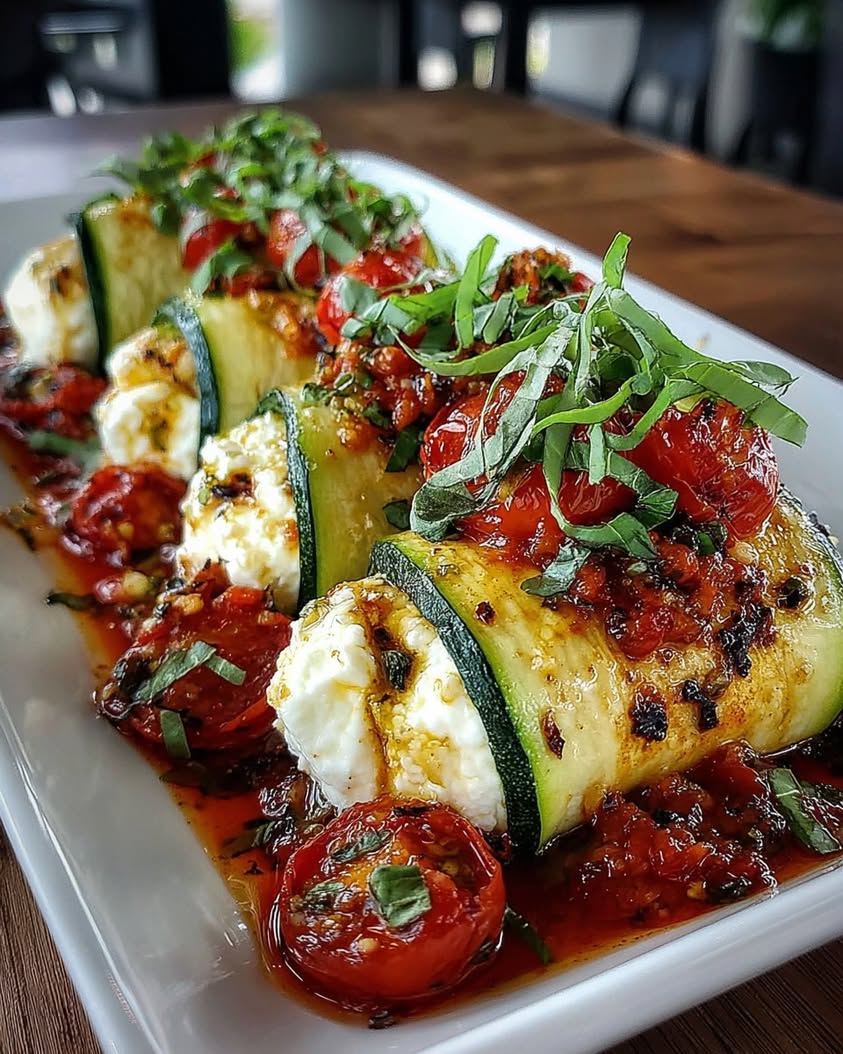
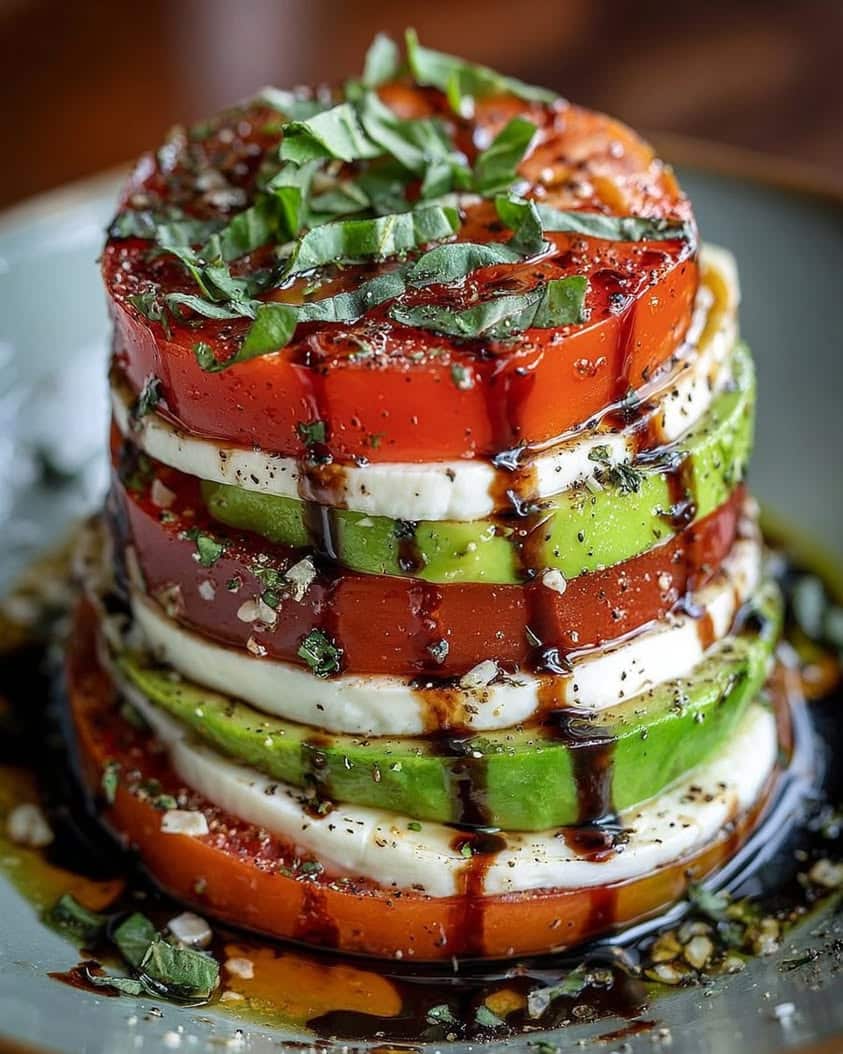
- Visual Appeal: Presentation is key for this elegant summer appetizer. The stacked layers of red tomato, white cheese, and green basil create a stunning visual reminiscent of the Italian flag. Served on individual plates with a artistic drizzle of glaze, these towers are a true centerpiece.
- Skill Level Needed: This is an accessible recipe for all skill levels. Basically, it involves simple slicing, easy roasting, and straightforward assembly. No advanced knife skills or special culinary techniques are required, making it a perfect project for a confident beginner or a busy home cook.
- Special Equipment: You only need very basic kitchen tools. A sharp knife, a cutting board, a baking sheet, and a skewer or toothpick for assembly are the main requirements. A pastry brush for oil and a small saucepan for reducing balsamic vinegar are helpful but not strictly necessary.
Recipe Overview
- Difficulty Level: We classify this roasted tomato caprese towers recipe as “Easy” for several reasons. First, the ingredient list is short and familiar. Second, the techniques—slicing, roasting, and stacking—are fundamental. There is no complex timing or finicky steps involved. Therefore, even a novice cook can achieve beautiful, delicious results with minimal stress.
- Category: This dish fits perfectly into multiple categories. Primarily, it is an elegant summer appetizer or starter course. However, it can also serve as a light vegetarian main course, a stunning side dish for grilled meats, or a standout component on a buffet or antipasto platter. Its flexibility is a major asset.
- Cuisine: This recipe is firmly rooted in Italian cuisine, specifically drawing from the classic Insalata Caprese from the island of Capri. The combination of tomato, mozzarella, and basil is iconic. Our twist, roasting the tomatoes, adds a deeper flavor dimension while still honoring the traditional flavor profile.
- Cost: This is a moderately priced appetizer, with cost largely dependent on the quality of mozzarella. Vine-ripened tomatoes and fresh basil are affordable in summer. Buffalo mozzarella will increase the cost, while a high-quality cow’s milk mozzarella is a great mid-range option. Overall, it delivers high perceived value for a reasonable investment.
- Season: This recipe is absolutely best in late summer. That is when tomatoes are at their sweet, juicy peak and basil is plentiful and aromatic. Making these roasted tomato caprese towers with off-season, bland tomatoes will not yield the same spectacular results. It is a celebration of seasonal produce.
- Occasion: These towers are ideal for special occasions that call for an elegant summer appetizer. Think dinner parties, bridal or baby showers, holiday gatherings, or anniversary dinners. They also work beautifully for a romantic date night at home or as a fancy starter for a weekend family meal.
Why You’ll Love This Recipe
You will adore the incredible taste and texture of these roasted tomato caprese towers. The roasting process transforms ordinary tomatoes into something extraordinary, concentrating their sugars and creating a rich, umami depth. Paired with the cool, creamy fresh mozzarella, each bite is a perfect balance. The fresh basil adds a peppery, aromatic punch that cuts through the richness. Furthermore, the drizzle of syrupy balsamic glaze provides a sweet-tangy finish that makes the entire flavor profile sing. It is a familiar combination made new and exciting through a simple cooking technique.
The convenience and preparation benefits are significant. Despite its elegant appearance, this appetizer recipe comes together in under 40 minutes with mostly hands-off time. You can roast the tomatoes ahead of time, and assembly takes just minutes before serving. This makes it a lifesaver for entertaining, as you are not stuck in the kitchen while guests arrive. Moreover, the recipe scales up or down easily, allowing you to make a single serving for a special lunch or a large batch for a crowd. It is designed to make you look like a culinary rockstar with minimal effort.
Nutritionally, this dish is a winner. Tomatoes are packed with lycopene, an antioxidant that becomes more bioavailable when cooked. They are also a good source of vitamins C and K. Fresh mozzarella provides protein and calcium, while basil offers vitamin K and anti-inflammatory compounds. Using a high-quality olive oil adds heart-healthy monounsaturated fats. This elegant summer appetizer is naturally gluten-free and can be adapted for other dietary needs. It is a celebration of whole, fresh ingredients that nourish the body as well as delight the senses.
The social and entertaining value of this dish cannot be overstated. These roasted tomato caprese towers are a guaranteed conversation starter. Their vertical presentation is dramatic and Instagram-worthy, immediately setting a tone of care and sophistication. Serving individual towers makes guests feel specially catered to. It is a dish that shows you went the extra mile, making any occasion feel more celebratory. Whether served on fine china or rustic slate, it elevates the entire dining experience.
Finally, this recipe is cost-effective and accessible. You do not need expensive equipment or rare ingredients. The core components are simple and readily available. By focusing on a few high-quality ingredients, you create maximum impact. Choosing seasonal, local tomatoes and growing your own basil can reduce the cost even further. Compared to ordering a similar appetizer at a restaurant, making these towers at home saves money while allowing you to control the quality. It is gourmet cooking made achievable for any home cook.
Historical Background and Cultural Significance
The story of Caprese salad is deeply intertwined with Italian history and national identity. Most food historians agree that the salad originated on the island of Capri in the Campania region of Italy sometime in the early to mid-20th century. Interestingly, some accounts suggest it was created as a patriotic dish for a visiting politician, with its red (tomato), white (mozzarella), and green (basil) colors mirroring the Italian flag. This simple, fresh combination was a celebration of local ingredients from the sun-drenched Mediterranean coast, showcasing the perfection that can be achieved with minimal intervention.
The cultural importance of Caprese extends far beyond its ingredients. It embodies the Italian culinary philosophy of “less is more” – where the quality of a few fresh components is paramount. The dish is a staple of “cucina povera” or “poor kitchen,” which focuses on transforming humble, accessible ingredients into something sublime. Consequently, it represents a way of eating that is connected to the land and the seasons. For Italians, and now for people worldwide, a Caprese salad tastes like summer, simplicity, and the vibrant flavors of the Mediterranean.
The evolution of the recipe from a simple salad to these roasted tomato caprese towers is a modern twist on a classic. While the traditional version uses raw, sliced tomatoes, contemporary chefs and home cooks began experimenting with techniques to enhance flavor. Roasting tomatoes is a natural progression, as it intensifies their sweetness and adds a new textural dimension. This variation maintains the soul of the original dish while offering a warmer, richer flavor profile suitable for different presentations. It is an example of how classic recipes can adapt and remain relevant in modern kitchens.
Regional variations of Caprese exist throughout Italy and beyond. In some areas, oregano is used alongside or instead of basil. Different types of mozzarella, from fior di latte (cow’s milk) to the prized mozzarella di bufala (buffalo milk), change the character of the dish. Some versions include a drizzle of olive oil, while others add a splash of vinegar. Our elegant summer appetizer recipe, with its roasted tomatoes and balsamic glaze, is a delicious contemporary interpretation that honors the original’s spirit. It shows the versatility of this iconic flavor combination.
Ingredient Deep Dive
Tomatoes: The tomato’s journey from the Americas to becoming the heart of Italian cuisine is a fascinating tale. Initially feared as poisonous in Europe, it was embraced in Italy by the 18th century. Nutritionally, tomatoes are rich in lycopene, vitamin C, potassium, and folate. For the best roasted tomato caprese towers, select ripe but firm vine-ripened tomatoes or Roma (plum) tomatoes, which have less water and more flesh. Store them at room temperature until fully ripe, then use promptly. Never refrigerate tomatoes, as cold temperatures degrade their texture and flavor. If you must substitute, use the best-quality canned whole San Marzano tomatoes, drained and patted dry.
Fresh Mozzarella: Authentic mozzarella has a history dating back to the 12th century in Italy, traditionally made from the milk of water buffaloes. It is a “pasta filata” cheese, meaning the curds are stretched and kneaded in hot water. This process gives it a uniquely soft, moist texture. Nutritionally, it provides protein, calcium, and phosphorus. Look for mozzarella stored in water (mozzarella fresca) for the creamiest texture. For this elegant summer appetizer, use “ciliegine” (cherry-sized) or “bocconcini” (mouthful-sized) balls to match the tomato size. Store it in its liquid in the refrigerator and use within a few days of opening. For a dairy-free version, use a high-quality vegan mozzarella-style cheese.
Fresh Basil: Basil, from the Greek word for “king,” has been cultivated for over 5,000 years and is revered in many cultures. In Italy, it is a symbol of love. It contains antioxidants, vitamin K, and essential oils like eugenol, which have anti-inflammatory properties. Choose vibrant green bunches with no black spots or wilting. To store, treat it like a bouquet: trim the stems and place in a glass of water on the counter, loosely covered with a bag. For the best flavor in your roasted tomato caprese towers, add basil just before serving. If you must substitute, fresh oregano or arugula can provide a different but pleasant peppery note.
Balsamic Glaze: True traditional balsamic vinegar (Aceto Balsamico Tradizionale) is a centuries-old, artisanal product from Modena and Reggio Emilia, aged for years in wooden casks. The commercial glaze used here is a more accessible reduction of vinegar and sweetener. It adds a concentrated sweet-tangy flavor and visual appeal. You can make your own by simmering balsamic vinegar until it thickens and reduces by half. Store purchased glaze at room temperature. For a substitute in this appetizer recipe, a reduction of red wine vinegar with a touch of honey or a high-quality, aged balsamic vinegar can work, though the consistency will be thinner.
Extra Virgin Olive Oil: Olive oil is central to Mediterranean history, cuisine, and culture. Using a good-quality extra virgin olive oil (EVOO) is non-negotiable for flavor. EVOO is the first cold pressing of olives, retaining more antioxidants and polyphenols. It contains healthy monounsaturated fats. Select an EVOO with a harvest date on the bottle and store it in a cool, dark place to prevent rancidity. For drizzling on these towers, a fruity, peppery oil is ideal. While other neutral oils can be used for roasting, only EVOO should be used for finishing. Its distinct flavor is a key component of the final dish.
Common Mistakes to Avoid
- Using Underripe or Refrigerated Tomatoes: This is the most critical error. Underripe tomatoes lack sweetness, and refrigeration makes them mealy. Always use ripe, room-temperature tomatoes for the best flavor and texture in your roasted tomato caprese towers. Their natural sugars are essential for proper caramelization during roasting.
- Overcrowding the Baking Sheet: When roasting, give the tomato slices space. If they are too close together, they will steam instead of roast, resulting in soggy, not caramelized, tomatoes. Use two sheets if necessary to ensure proper air circulation and even browning.
- Skipping the Pat-Dry Step for Mozzarella: Fresh mozzarella holds a lot of water. If you do not gently pat the balls dry with a paper towel, that excess moisture will make your towers slide apart and dilute the flavors. Take a moment to ensure the cheese is dry before assembly.
- Assembling While Tomatoes Are Too Hot: If you stack the cheese and basil on piping hot tomatoes, the mozzarella will melt and lose its shape, creating a messy tower. Let the roasted tomato slices cool for at least 10-15 minutes so they are warm but not hot enough to melt the cheese.
- Using Dried Basil: The flavor of dried basil is completely different and lacks the bright, aromatic quality of fresh. This elegant summer appetizer relies on the fresh, peppery punch of just-torn basil leaves. There is no acceptable substitute for fresh basil in this recipe.
- Applying Balsamic Glaze Too Early: If you drizzle the glaze over the assembled towers too far in advance, it will soak into the tomatoes and cheese, making them soggy and altering the visual appeal. Always add the balsamic glaze just before serving for maximum impact.
- Cutting Basil with a Knife: Slicing basil bruises it and leads to blackened edges. Instead, gently tear the leaves with your hands. This preserves the vibrant green color and releases the aromatic oils more effectively, enhancing the flavor of your appetizer.
- Not Seasoning Each Layer: Seasoning only the top of the tower means the interior layers will be bland. Lightly sprinkle a tiny pinch of salt and pepper on each tomato slice and each layer of mozzarella as you build. This ensures every bite is perfectly seasoned.
- Choosing the Wrong Mozzarella: Using low-moisture, pre-shredded, or block mozzarella will result in a rubbery, dry texture. For authentic roasted tomato caprese towers, you must use fresh mozzarella stored in water for its characteristic soft, creamy texture.
- Rushing the Roasting Process: Roasting at too high a temperature will burn the tomatoes before they soften and caramelize properly. A moderate oven (around 400°F) allows the tomatoes to slowly release moisture and concentrate in flavor, which is the goal.
Essential Techniques
Even Slicing: Creating uniform tomato slices is fundamental for stable, visually appealing towers. Use a sharp chef’s knife and slice perpendicular to the core. Aim for slices about 1/2-inch thick. Thinner slices may break, while thicker ones make the tower unwieldy. Consistent thickness ensures even roasting and a balanced stack. A common pitfall is using a dull knife, which crushes the tomato rather than slicing it cleanly.
Roasting for Concentration: Roasting is not just about cooking; it is about concentrating flavor. The dry heat of the oven evaporates the tomatoes’ water content, intensifying their natural sugars and umami. The goal is tender slices with slightly caramelized, darkened edges. The visual cue for success is a shrunken, slightly wrinkled appearance with a deeper red color and sticky juices on the pan. Avoid removing them before they have visibly reduced in size.
Patting Dry: This simple technique is crucial for structural integrity. Fresh mozzarella balls are packed in water to maintain moisture. Gently rolling them on a double layer of paper towels removes surface moisture without crushing the delicate cheese. A dry surface allows the cheese to grip the tomato, preventing slippage. The pitfall is being too vigorous, which can misshape the cheese. A light, thorough pat is all that’s needed.
Strategic Stacking: Assembly is a building process. Start with the largest, sturdiest roasted tomato slice as your base. Center a mozzarella ball on top, then add a basil leaf. Repeat, tapering slightly as you go. The key is to keep each component centered to maintain balance. Use a skewer or toothpick inserted down through the center to stabilize if needed, especially for taller towers. Remove it just before serving.
Pro Tips for Perfect Roasted Tomato Caprese Towers
First, select tomatoes that are similar in diameter to your mozzarella balls. This creates symmetrical, professional-looking layers that are easier to stack and more visually pleasing.
For an extra flavor boost, sprinkle a tiny amount of dried oregano or thyme over the tomatoes before they go into the oven. These herbs complement the sweetness of the roasted tomatoes beautifully.
If your fresh mozzarella balls are too large, you can carefully slice them in half horizontally to create discs that match the tomato size. This often works better than using whole balls that are oversized.
Let the assembled towers rest for 5 minutes before serving. This allows the flavors to meld slightly and the warmth of the tomato to gently take the chill off the cheese, creating a perfect temperature contrast.
Use a squeeze bottle for the balsamic glaze. This gives you precise control to create elegant dots, lines, or swirls on the plate around the tower, elevating the presentation from home-cooked to restaurant-quality.
For a gourmet touch, use a mix of heirloom tomato varieties in different colors. Yellow, orange, and purple tomatoes will create a stunning, multi-hued tower that is even more impressive.
If serving outdoors, insert a short skewer through the center of each tower to prevent it from toppling in a breeze. You can decorate the top of the skewer with a small additional basil leaf.
Season with flaky sea salt, like Maldon, just before serving. The large, crunchy flakes provide a delightful textural contrast and a more nuanced saltiness than fine table salt.
Variations and Adaptations
Regional Variations: Across Italy, you will find delightful twists on Caprese. In Sicily, they might add capers or olives for a briny note. In the north, a sprinkle of toasted pine nuts adds crunch. For a Greek-inspired version, substitute the mozzarella with creamy feta cheese and add a Kalamata olive on top. These adaptations show how the core concept travels and adapts to local pantries.
Seasonal Adaptations: While summer is prime time, you can make a version in cooler months. Use slow-roasted cherry tomatoes or high-quality canned San Marzano tomatoes, well-drained and patted dry. For the basil, a small-leaf variety like Greek basil or even microgreens can stand in when large basil leaves are scarce or expensive.
Dietary Modifications: For a vegan roasted tomato caprese tower, use an excellent vegan mozzarella (like those made from cashews or coconut oil) and ensure your balsamic glaze is vegan-friendly. For a lower-fat version, choose a part-skim fresh mozzarella or use thicker slices of avocado in place of some cheese layers.
Flavor Variations: Infuse your olive oil before drizzling. Warm the oil gently with a crushed garlic clove, red pepper flakes, or lemon zest, then let it cool. This adds a subtle background flavor. Alternatively, add a thin slice of prosciutto between the tomato and cheese for a salty, savory twist.
Texture Modifications: For added crunch, sprinkle toasted breadcrumbs (pangrattato) or crushed pistachios between the layers. You can also use a grilled tomato slice instead of roasted for a smokier flavor and firmer texture. Another idea is to include a thin slice of grilled zucchini or eggplant as an additional layer.
Presentation Alternatives: Instead of free-standing towers, create a deconstructed “napoleon” laid flat on a plate. Or, skip stacking altogether and serve the components in a jar as a Caprese salad parfait. For a passed appetizer, make mini versions on thick crostini or in phyllo cups.
Serving and Presentation Guide
Plating Techniques: Choose a neutral-colored plate to let the vibrant red, white, and green of the towers pop. Place the tower slightly off-center for a more dynamic look. Wipe any stray drips of oil or glaze from the plate rim for a clean presentation. For a family-style approach, arrange multiple towers on a large platter lined with basil leaves.
Garnishing Ideas: Beyond the basil within the tower, garnish the plate with small, whole basil leaves or tiny basil sprouts (micro basil). A few grains of coarse sea salt scattered around the base adds visual texture. Edible flowers, such as nasturtiums or borage, introduce a beautiful, elegant touch of color.
Traditional Accompaniments: In Italy, a simple crusty bread is the classic side. It is perfect for soaking up the delicious juices and glaze left on the plate. Offer a small basket of grilled ciabatta or baguette slices. A light, crisp white wine is the traditional beverage pairing.
Modern Serving Suggestions: Serve each tower on a small pool of basil oil or a vibrant tomato coulis. For a more substantial appetizer, place the tower atop a small bed of peppery arugula dressed lightly with lemon juice. This adds another layer of flavor and makes the dish more filling.
Temperature Considerations: The magic of this elegant summer appetizer is the contrast between the warm, roasted tomatoes and the cool, fresh cheese. Assemble just before serving so the cheese does not become too warm and lose its shape. The tomatoes should be warm, not hot, to the touch.
Portion Control Tips: This recipe makes four substantial towers as an appetizer. For a larger crowd where many dishes are served, you can make smaller, two-layer towers. Conversely, for a light main course, consider serving two towers per person alongside a larger salad.
Wine and Beverage Pairing
Wine Pairings: The sweet acidity of the roasted tomatoes and the creamy fat of the mozzarella create a perfect canvas for wine. A crisp, high-acid Italian white like Vermentino, Pinot Grigio, or Falanghina cuts through the richness beautifully. For a red option, choose a light, low-tannin wine such as a chilled Beaujolais or a Bardolino. The key is to avoid heavily oaked or high-tannin wines that would clash with the tomatoes’ acidity.
Non-Alcoholic Alternatives: Sparkling water with a twist of lemon or a cucumber ribbon is a classic, refreshing choice. For something more special, try a basil-infused lemonade or an iced herbal tea like hibiscus, which complements the sweet-tart profile of the dish. A non-alcoholic sparkling grape juice also mirrors the celebratory feel of prosecco.
Coffee/Tea Pairings: While not a typical pairing for this appetizer, if serving for a brunch or lunch, a light roast coffee with bright acidity can work well. For tea, consider a green tea like Sencha, which has vegetal notes that harmonize with the basil and tomato, or a floral white tea.
Temperature Considerations: White and rosé wines should be served well-chilled, around 45-50°F. Light reds can be served slightly chilled, at about 55°F. Non-alcoholic sparkling drinks should be ice-cold. This ensures the beverages provide a refreshing counterpoint to the dish.
Serving Suggestions: Always serve wine in appropriate glassware to enhance the aroma and taste. For a casual outdoor gathering, stemless wine glasses are practical. Offer water alongside any other beverage to cleanse the palate. When serving multiple drinks, start with the lightest (like water or sparkling wine) and progress from there.
Storage and Shelf Life
Storage Methods: These roasted tomato caprese towers are best served immediately. However, you can store components separately for up to 24 hours. Keep the cooled roasted tomatoes in an airtight container in the refrigerator. Store the fresh mozzarella in its liquid in the fridge. Keep basil stems in a glass of water at room temperature.
Temperature Requirements: All components except basil require refrigeration if not being used within 2 hours. The ideal serving temperature contrast is achieved when tomatoes are brought to just cool room temperature and cheese is cold from the fridge. Do not leave assembled towers at room temperature for more than an hour for food safety.
Container Recommendations: Use shallow containers for roasted tomatoes to prevent stacking and crushing. For mozzarella, keep it submerged in its original brine or a light saltwater solution in a sealed container. This prevents it from drying out and developing off-flavors.
Signs of Spoilage: Discard tomatoes if they become slimy, develop an off odor, or show mold. Mozzarella is spoiled if it smells sour, becomes excessively soft or discolored, or if the liquid becomes cloudy. Basil will wilt and blacken when past its prime.
Reheating Instructions: Only reheat the tomato component if necessary. Warm them gently in a 300°F oven for 5-10 minutes or in a skillet over low heat until just warmed through. Do not microwave, as this will make them rubbery. Never reheat the assembled tower or the cheese.
Freezing Guidelines: Freezing is not recommended for this dish. Tomatoes become watery and mushy upon thawing, and fresh mozzarella’s texture is completely destroyed by freezing. The basil will turn black. This is a fresh dish meant to be enjoyed in the moment.
Make Ahead Strategies
Prep Timeline: You can fully prepare this elegant summer appetizer up to 4 hours in advance with great success. Roast the tomatoes up to a day ahead and store them refrigerated. Pat the mozzarella dry and store it separately in the fridge. Wash and dry the basil leaves. Assemble the towers up to 4 hours before serving, cover loosely with plastic wrap, and refrigerate.
Storage Between Steps: The key is keeping components separate until final assembly. Roasted tomatoes can be layered between parchment paper in a container. Mozzarella should stay in its brine until you are ready to pat it dry. Basil should be the last thing you handle before stacking.
Quality Impact Assessment: Making the tomatoes ahead actually improves their flavor as the ingredients meld. The cheese and basil, however, are best when freshest. Assembling a few hours ahead is fine, but the basil may wilt slightly and the tomatoes will cool completely, changing the intended warm/cold contrast.
Assembly Tips: If assembling ahead, do not add the balsamic glaze or final drizzle of oil. Add these literally as you carry the plates to the table. This keeps the presentation crisp and prevents sogginess. You can also insert a toothpick for stability if making ahead, remembering to remove it before serving.
Reheating Guidelines: If you made the tomatoes ahead and they are cold, let them sit out for 30 minutes to take the chill off. Alternatively, warm them very gently in a low oven (250°F) for 5-7 minutes just until they are no longer cold. Do not overheat.
Fresh Element Additions: Always add the final garnish of whole basil leaves and any flaky salt at the last possible moment. This ensures the basil is perky and vibrant and the salt retains its crunchy texture, providing the best sensory experience.
Scaling Instructions
Halving the Recipe: Halving is straightforward for an intimate dinner for two. Use two medium tomatoes, 4-6 small mozzarella balls, and a small handful of basil. The roasting time may be slightly less, so check at the 20-minute mark. All other steps remain identical. This is a perfect way to enjoy this elegant summer appetizer as a romantic starter.
Doubling or Tripling: For a party, you can easily double or triple the quantities. The main consideration is oven space; use multiple baking sheets and rotate them halfway through roasting. You may need to roast in batches. Assemble in batches as well to keep the basil fresh. Consider setting up an assembly line for efficiency.
Equipment Adjustments: When scaling up, ensure you have enough baking sheets and rack space. You may need to use a larger platter for presentation. For very large batches, consider serving the components deconstructed on a buffet, allowing guests to build their own “towers” or salads.
Timing Modifications: Roasting time may increase slightly if the oven is very full, as it affects air circulation. Add 5-10 minutes and rely on visual cues (caramelized edges, shrunken appearance) rather than strict timer. Assembly time will increase linearly with the number of towers.
Storage Considerations: Scaling up means you will have more components to store if making ahead. Ensure you have enough refrigerator space for containers of roasted tomatoes and mozzarella. Label containers clearly if making multiple batches for different events.
Nutritional Deep Dive
Macro Breakdown: One serving of these roasted tomato caprese towers provides a balanced mix of macronutrients. The fresh mozzarella is the primary source of protein and fat, specifically saturated fat. The olive oil adds healthy monounsaturated fats. Tomatoes contribute minimal carbohydrates, mostly in the form of natural sugars and fiber. The balsamic glaze adds a small amount of additional sugar. This makes the dish relatively low in carbohydrates and a good source of protein and fat.
Micronutrient Analysis: This dish is rich in several key micronutrients. Tomatoes are an excellent source of vitamin C, vitamin K1, potassium, and the antioxidant lycopene. Mozzarella provides calcium and phosphorus for bone health. Basil contributes vitamin K, vitamin A, and antioxidants like beta-carotene. Extra virgin olive oil adds vitamin E and polyphenols. Together, they create a nutrient-dense appetizer.
Health Benefits: The combination of ingredients offers multiple health benefits. Lycopene from cooked tomatoes is linked to reduced risk of heart disease and certain cancers. The monounsaturated fats in olive oil support heart health. Calcium from cheese promotes bone strength. The antioxidants in basil and olive oil have anti-inflammatory properties. This dish is a testament to the health benefits of the Mediterranean diet.
Dietary Considerations: This recipe is naturally gluten-free. It is vegetarian but not vegan due to the cheese. For those monitoring sodium, be mindful of the salt added during seasoning and the natural sodium in cheese. The dish is not suitable for a strict dairy-free or vegan diet without modifications. It is generally low in carbohydrates, aligning with lower-carb eating styles.
Portion Analysis: As written, one tower is a satisfying appetizer portion. It is designed to whet the appetite without being overly filling. The portion provides a good balance of satiating protein and fat from the cheese with the volume and fiber from the tomatoes. It is a calorie-conscious starter choice compared to many fried or pastry-based appetizers.
Weight Management Tips: For those watching calories, you can lightly brush tomatoes with oil instead of drizzling. You can also use part-skim mozzarella, which is lower in fat. Be judicious with the balsamic glaze, as it is concentrated sugar. The high water and fiber content of tomatoes promotes feelings of fullness, helping to control overall meal intake.
Dietary Adaptations
Gluten-free: This roasted tomato caprese towers recipe is naturally gluten-free, as none of the core ingredients contain gluten. Always double-check your balsamic glaze label, as some commercial brands may use additives or thickeners that contain gluten. When serving with bread, ensure you offer a certified gluten-free option.
Dairy-free: To make a dairy-free version, substitute the fresh mozzarella with Print
Roasted Tomato Caprese Towers
- Total Time: 45 minutes
- Yield: 4
Description
A stunning twist on the classic Caprese salad, featuring roasted cherry tomatoes layered with fresh mozzarella and basil, drizzled with balsamic glaze.
Ingredients
- 1 pint cherry tomatoes
- 8 oz fresh mozzarella cheese, sliced into rounds
- 1/4 cup fresh basil leaves
- 2 tbsp extra virgin olive oil
- 1 tsp dried oregano
- Salt and black pepper to taste
- 2 tbsp balsamic glaze
Instructions
- Preheat oven to 400°F (200°C). Toss cherry tomatoes with olive oil, oregano, salt, and pepper, then roast for 15-20 minutes until softened.
- Let tomatoes cool slightly. On a serving plate, layer a mozzarella round, a few roasted tomatoes, and a basil leaf. Repeat to form 4 towers.
- Drizzle towers with balsamic glaze and any remaining roasting juices. Serve immediately.
Notes
You can customize the seasonings to taste.
- Prep Time: 15 minutes
- Cook Time: 30 minutes
- Method: Appetizer
- Cuisine: Italian