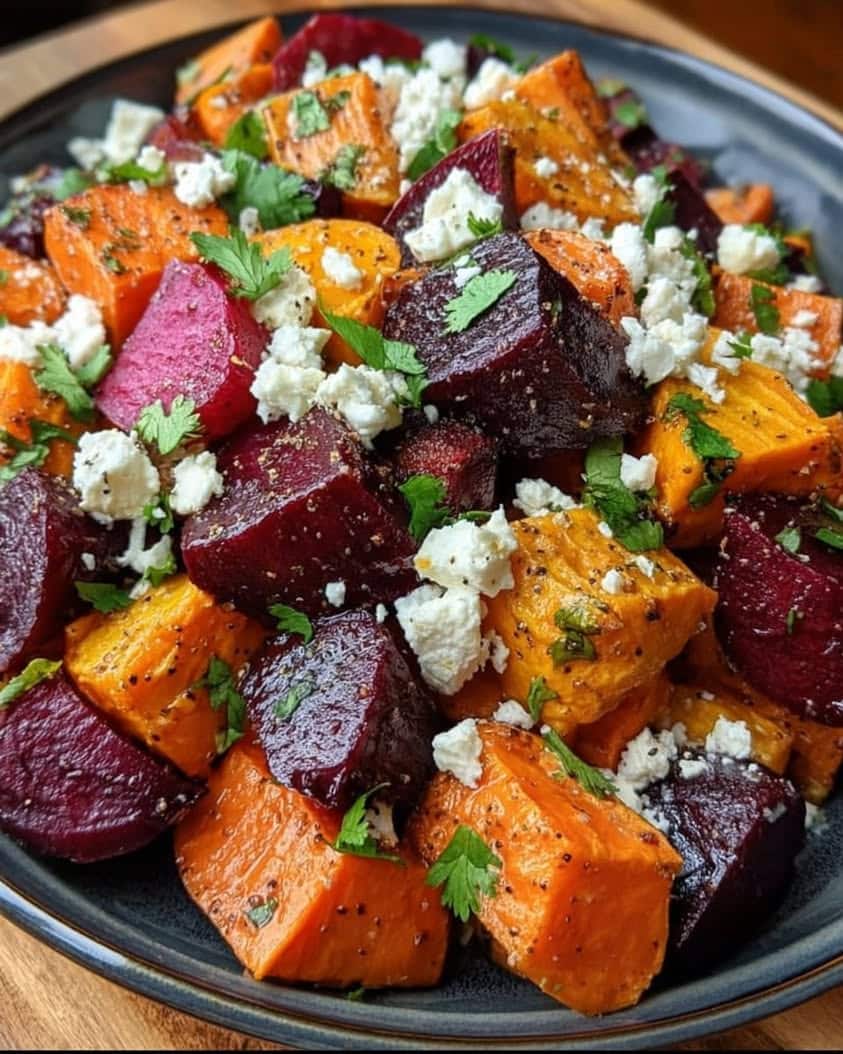
Roasted Beets and Sweet Potatoes with Feta and Cilantro: A Vibrant, Flavor-Packed Side Dish
This recipe for Roasted Beets and Sweet Potatoes with Feta and Cilantro is a celebration of color and flavor on a single sheet pan. Imagine the earthy sweetness of roasted root vegetables, perfectly caramelized and tender, tossed with a bright, zesty dressing and finished with creamy, salty feta and fresh cilantro. This dish is not just a side; it is a vibrant centerpiece that brings a burst of nutrition and joy to your table. Moreover, it transforms humble ingredients into something truly spectacular with minimal effort.
Furthermore, the combination of textures and tastes in this Roasted Beets and Sweet Potatoes with Feta and Cilantro recipe is simply magical. The natural sugars in the beets and sweet potatoes concentrate during roasting, creating a deep, caramelized flavor that pairs beautifully with the tangy lime dressing. The cool, crumbly feta cheese provides a creamy counterpoint, while the fresh cilantro adds a final pop of herbal brightness. Consequently, every bite is a harmonious blend of sweet, savory, tangy, and fresh. This dish is a guaranteed crowd-pleaser, whether you are serving it for a casual weeknight dinner or a festive holiday gathering.
Quick Recipe Highlights
- Flavor Profile: This dish masterfully balances earthy sweetness from the roasted root vegetables with a bright, tangy lime dressing. The salty, creamy feta cheese adds a rich umami note, while fresh cilantro provides a clean, herbal finish. Ultimately, the flavor is complex yet incredibly approachable.
- Texture: You will enjoy a wonderful contrast of textures. The roasted beets and sweet potatoes become tender and almost creamy on the inside while developing crispy, caramelized edges. The crumbled feta adds a soft, crumbly element, and the cilantro contributes a delicate, leafy freshness.
- Aroma: As the vegetables roast, your kitchen will fill with the warm, sweet scent of caramelizing roots. The aroma of the lime dressing and fresh cilantro added at the end introduces a bright, citrusy, and herbal fragrance that is incredibly inviting.
- Visual Appeal: This dish is a feast for the eyes with its stunning jewel-toned colors. The deep ruby red of the beets contrasts beautifully with the vibrant orange sweet potatoes, the white feta, and the green cilantro. It looks as spectacular as it tastes.
- Skill Level Needed: This is a beginner-friendly recipe that requires only basic knife skills for chopping and the ability to toss ingredients on a pan. The oven does most of the work, making it perfect for cooks of all levels.
- Special Equipment: You only need a good baking sheet, a sharp knife, and a mixing bowl. Parchment paper or a silicone baking mat is highly recommended for easy cleanup and to prevent sticking.
Recipe Overview
- Difficulty Level: We rate this Roasted Beets and Sweet Potatoes with Feta and Cilantro recipe as easy. The steps are straightforward: chop, toss, roast, and assemble. There is no complicated technique involved. The primary skill is achieving an even roast on the vegetables, which is easily managed by cutting them to a uniform size.
- Category: This versatile dish fits into multiple categories. It is a perfect warm or room-temperature side dish for proteins like grilled chicken, fish, or steak. Additionally, it can be served as a hearty vegetarian main course over a bed of greens or grains like quinoa or farro.
- Cuisine: While not tied to one specific tradition, this recipe draws inspiration from Mediterranean and modern American cuisines. The use of feta cheese and olive oil is classically Mediterranean, while the combination with sweet potatoes and a lime-cilantro dressing reflects a more contemporary, fusion approach to vegetable dishes.
- Cost: This is a very budget-friendly recipe. Beets and sweet potatoes are inexpensive, especially in season. Feta cheese, olive oil, and fresh herbs are pantry staples for many. You can create an impressive, restaurant-quality side dish for a fraction of the cost of eating out.
- Season: This recipe shines in the fall and winter when root vegetables are at their peak sweetness and most abundant. However, it is truly a year-round delight because the ingredients are readily available in most grocery stores any time of year.
- Occasion: It is incredibly versatile for any occasion. Serve it for a simple family dinner, take it to a potluck where its colors will stand out, or feature it as part of a festive holiday spread. It is equally suitable for casual and formal gatherings.
Why You’ll Love This Recipe
First and foremost, the taste and texture appeal of this Roasted Beets and Sweet Potatoes with Feta and Cilantro is undeniable. The roasting process unlocks a profound, natural sweetness in the vegetables that is both comforting and sophisticated. When you toss the warm, caramelized cubes with the zesty lime dressing, the flavors meld beautifully. The final additions of cool, salty feta and sharp, fresh cilantro create a symphony in your mouth. Every component has a purpose, resulting in a dish that is far greater than the sum of its parts.
Next, consider the sheer convenience and preparation benefits. This is a quintessential sheet pan recipe, meaning cleanup is a breeze. You simply chop your vegetables, toss them with oil and seasonings on the pan, and let the oven work its magic. There is no need for constant stirring or complicated steps. Furthermore, the hands-off cooking time allows you to prepare the rest of your meal or simply relax. This Roasted Beets and Sweet Potatoes with Feta and Cilantro recipe is a practical solution for busy weeknights without sacrificing an ounce of flavor or presentation.
Additionally, the nutritional advantages are significant. Beets and sweet potatoes are nutritional powerhouses, packed with fiber, vitamins, and antioxidants. Beets are famous for their nitrate content, which can support heart health and stamina. Sweet potatoes provide a huge dose of vitamin A in the form of beta-carotene, essential for eye health and immunity. Using olive oil as the roasting fat adds heart-healthy monounsaturated fats. This dish is a delicious way to nourish your body with whole, plant-based foods.
Moreover, the social and entertaining value of this dish is high. Its stunning visual presentation makes it an automatic conversation starter at any dinner party or potluck. People are always impressed by the vibrant colors and complex flavors, often assuming it required much more effort than it did. It is a reliable recipe that you can count on to receive compliments. Serving this Roasted Beets and Sweet Potatoes with Feta and Cilantro shows your guests that you care about both taste and aesthetics.
Finally, the cost-effectiveness and accessibility of the ingredients make this a staple-worthy recipe. Root vegetables are among the most affordable produce items, offering great volume and nutrition for your dollar. Feta cheese, while a splurge compared to the vegetables, is used sparingly as a flavorful accent, so one block goes a long way. You likely already have olive oil, salt, and pepper in your pantry. This recipe demonstrates how to create an elegant, satisfying dish without a trip to a specialty store or a hefty grocery bill.
Historical Background and Cultural Significance
The story of roasting vegetables is as old as fire itself, but the specific combination in this Roasted Beets and Sweet Potatoes with Feta and Cilantro recipe is a modern invention. Historically, beets have been cultivated since ancient times in the Mediterranean region, prized for their edible roots and greens. Sweet potatoes, conversely, have a distinct origin in Central or South America and were not introduced to Europe and the rest of the Old World until after Columbus’s voyages. Therefore, their culinary marriage is a relatively recent development in the long history of food.
Cultural importance for the individual ingredients, however, runs deep. Beets hold a significant place in Eastern European cuisines, appearing in iconic dishes like borscht. They symbolize warmth and sustenance through long winters. Sweet potatoes are a cornerstone of cuisine in the American South and are deeply woven into African American food traditions, especially around holidays. Feta cheese is protected by designation of origin in Greece, representing centuries of pastoral and cheesemaking heritage. This recipe, in a way, brings these diverse culinary threads together on one plate.
The evolution of this recipe follows broader food trends of the late 20th and early 21st centuries. As home cooks and chefs began prioritizing vegetable-forward dishes, the simple technique of high-heat roasting gained immense popularity for its ability to concentrate flavors. The addition of a fresh herb and cheese garnish to roasted vegetables became a standard method to add brightness and complexity. This Roasted Beets and Sweet Potatoes with Feta and Cilantro recipe is a direct product of that movement, emphasizing whole foods, bold colors, and global flavor combinations.
Regional variations of roasted root vegetable salads are endless. In the Middle East, you might find roasted beets with yogurt and dill. In Latin America, sweet potatoes could be paired with black beans and a chili-lime dressing. The specific combination with feta and cilantro leans into a Californian or modern fusion sensibility, where fresh, high-quality ingredients are combined without strict adherence to one culinary tradition. This flexibility is its strength, allowing it to adapt and feel at home in many different culinary settings.
Ingredient Deep Dive
Beets: Beets have a history dating back to ancient Rome, where they were cultivated primarily for their leafy greens. The root gained popularity later. Nutritionally, they are a fantastic source of folate, manganese, and dietary nitrates, which can improve blood flow and lower blood pressure. When selecting beets, look for firm, smooth bulbs with vibrant greens still attached if possible, a sign of freshness. Store them unwashed in the refrigerator for up to two weeks. For a substitution, try carrots or parsnips, though the color and earthy flavor will differ.
Sweet Potatoes: Contrary to their name, sweet potatoes are only distantly related to white potatoes. They originated in the Americas and were a staple for indigenous peoples long before European contact. They are incredibly rich in beta-carotene, which the body converts to vitamin A, crucial for vision and immune function. Choose firm sweet potatoes with smooth, unbruised skin. Avoid refrigeration, as cold temperatures can alter their texture and taste; store them in a cool, dark, well-ventilated place. As a substitute, butternut squash or regular potatoes will work, but will offer a different sweetness profile.
Feta Cheese: Authentic Greek feta is a brined curd cheese made from at least 70% sheep’s milk, often blended with goat’s milk. Its tangy, salty flavor and crumbly texture are iconic. It provides protein, calcium, and beneficial fats. For the best flavor in this Roasted Beets and Sweet Potatoes with Feta and Cilantro recipe, buy a block of feta packed in brine rather than pre-crumbled cheese, which often contains anti-caking agents. Store leftover feta submerged in its brine in the refrigerator. For a dairy-free version, try crumbled vegan feta or salty, marinated tofu.
Fresh Cilantro: Also known as coriander leaf, cilantro is an herb with a long history in Asian, Latin American, and Middle Eastern cuisines. It is polarizing due to a genetic trait that makes it taste soapy to some people. For those who love it, it adds a bright, citrusy, and fresh flavor. It contains antioxidants and may help with detoxification. Choose bunches with vibrant green leaves and avoid any that are wilted or yellowing. Store it like a bouquet in a jar of water in the fridge. If you dislike cilantro, flat-leaf parsley or fresh dill are excellent alternatives.
Lime Juice & Olive Oil: The dressing is simplicity itself. Fresh lime juice provides crucial acidity to cut through the richness of the roasted vegetables and cheese. Always use freshly squeezed juice for the brightest flavor. Extra virgin olive oil is the gold standard for dressings and roasting, contributing fruity, peppery notes and healthy fats. Its quality directly impacts the final dish. A good, cold-pressed oil is worth the investment. For a substitution, lemon juice can replace lime, and another neutral oil like avocado oil can be used for roasting if necessary.
Common Mistakes to Avoid
- Cutting Vegetables Unevenly: Inconsistent sizes lead to uneven cooking. Smaller pieces will burn before larger ones are tender. Take the time to chop your beets and sweet potatoes into uniform ¾-inch cubes for perfect, simultaneous roasting.
- Overcrowding the Pan: Piling all the vegetables onto one small pan steams them instead of roasting them. They need space for hot air to circulate and create caramelization. Use a large sheet pan or roast in batches if necessary.
- Using Pre-Crumbled Feta: Pre-crumbled feta is often drier and contains additives to prevent clumping. For superior creaminess and flavor in your Roasted Beets and Sweet Potatoes with Feta and Cilantro, always buy a block of feta in brine and crumble it yourself just before serving.
- Adding Dressing Too Early: Pouring the lime dressing over the vegetables while they are piping hot on the pan can cause it to evaporate and lose its bright flavor. Let the vegetables cool for a few minutes after roasting before tossing them with the dressing.
- Neglecting to Toss Midway: For even browning and cooking, you must toss and turn the vegetables about halfway through the roasting time. This ensures all sides get exposure to the hot pan and air for uniform color and texture.
- Forgetting the Salt: Root vegetables need ample seasoning to enhance their natural sweetness. Do not be shy with salt before roasting. Seasoning in layers—before roasting and again lightly before serving—builds a more complex flavor profile.
- Roasting at Too Low a Temperature: A high oven temperature (400°F or above) is crucial for caramelization. A lower temperature will simply bake the vegetables, making them soft but not developing those delicious, crispy, browned edges that add so much flavor.
- Using Dried Herbs Instead of Fresh: The fresh cilantro is a key finishing element that provides a burst of color and aroma. Dried cilantro cannot replicate this effect and will taste dusty. If you must substitute, use a different fresh herb like parsley.
Essential Techniques
Uniform Chopping: This is the most critical technique for success. Consistent size ensures even cooking. Use a sharp chef’s knife for control. First, trim the ends of the beets and sweet potatoes. Then, slice them into planks, then batons, and finally cubes. Aim for ¾-inch pieces. This size is large enough to hold its shape but small enough to cook through and caramelize in the given time.
High-Heat Roasting: Roasting at 400°F or higher is non-negotiable. The high heat rapidly caramelizes the natural sugars on the surface of the vegetables, creating a complex, sweet, and savory flavor through the Maillard reaction. It also drives off moisture, concentrating the taste and creating a desirable contrast between a tender interior and a slightly crisp exterior. The key visual cue is golden-brown, slightly shrunken edges on the vegetable cubes.
Tossing for Even Cooking: Halfway through the roasting time, use a spatula to flip and stir the vegetables. This technique prevents the pieces on the bottom from burning and exposes new surfaces to the hot pan and air. It is the difference between a pan of spotty, unevenly cooked vegetables and a perfectly roasted batch. Listen for a sizzle when you return the pan to the oven; that is the sound of success.
Pro Tips for Perfect Roasted Beets and Sweet Potatoes with Feta and Cilantro
Wear gloves when peeling and chopping beets to prevent temporary but vivid pink-stained hands. The pigments are strong and can linger for a day.
For extra-crispy edges, preheat your baking sheet in the oven for 5-10 minutes before adding the oiled vegetables. The hot pan gives them an immediate sear.
If your beets are significantly larger than your sweet potatoes, consider roasting them on separate pans or adding the sweet potatoes to the oven 10 minutes later to prevent overcooking.
Add a teaspoon of honey or maple syrup to the lime dressing for a touch of extra sweetness that beautifully bridges the vegetables and the tangy cheese.
For a warm dish, add the feta immediately after tossing with the dressing so it slightly softens. For a more distinct cool contrast, add the feta just before serving.
Toast any nuts you might add, like walnuts or pecans, in a dry skillet for a few minutes to enhance their flavor and crunch before sprinkling over the top.
Let the roasted vegetables sit for 5 minutes after coming out of the oven before adding the dressing. This allows their structure to set slightly so they do not turn to mush when tossed.
Variations and Adaptations
Regional Variations: Give this Roasted Beets and Sweet Potatoes with Feta and Cilantro recipe a Middle Eastern twist by swapping the lime for lemon, the cilantro for mint, and adding a sprinkle of za’atar. For a Mexican-inspired version, use cotija cheese instead of feta, add a pinch of chili powder to the vegetables before roasting, and garnish with toasted pepitas.
Seasonal Adaptations: In spring, incorporate asparagus tips or fresh peas added in the last 5 minutes of roasting. During summer, toss in cherry tomatoes that will burst and create a juicy sauce. In the heart of winter, add hardy chunks of parsnip or turnip to the mix for deeper, earthier notes.
Dietary Modifications: For a vegan Roasted Beets and Sweet Potatoes dish, omit the feta and use a dairy-free alternative or a handful of toasted, salted sunflower seeds for crunch and saltiness. Ensure the dressing is made with a vegan sweetener if using one.
Flavor Variations: Infuse the olive oil with a crushed garlic clove or rosemary sprig before tossing with the vegetables. Add a pinch of smoked paprika or ground cumin to the seasoning mix for a warm, smoky depth. A dash of balsamic glaze drizzled at the end can add a sweet-and-sour complexity.
Texture Modifications: For more textural contrast, add elements after roasting. Try toasted nuts like walnuts or almonds, seeds like pumpkin or sesame, or even crispy fried shallots or garlic chips for a savory crunch.
Presentation Alternatives: Instead of a free-form salad, layer the roasted vegetables over a bed of creamy hummus or whipped goat cheese. Alternatively, stuff the mixture into warm pita bread with a drizzle of tahini sauce for a hearty handheld meal.
Serving and Presentation Guide
Plating Techniques: For an elegant presentation, use a ring mold to create a neat, vertical stack of the Roasted Beets and Sweet Potatoes in the center of the plate. Gently remove the mold and scatter the feta and cilantro around the base. Alternatively, for a family-style look, pile the mixture generously into a wide, shallow bowl or on a large platter, allowing the colors to mingle naturally.
Garnishing Ideas: Beyond cilantro, consider microgreens, edible flowers, or delicate sprigs of dill for garnish. A final drizzle of high-quality extra virgin olive oil or a zigzag of balsamic reduction adds visual polish and flavor. A light dusting of flaky sea salt, like Maldon, just before serving enhances both taste and texture.
Traditional Accompaniments: This dish pairs classically with simply grilled or roasted meats like chicken thighs, pork tenderloin, or salmon. It also complements grain-based mains like a hearty lentil loaf or a mushroom risotto, where its brightness can cut through richer flavors.
Modern Serving Suggestions: Serve it warm atop a bowl of peppery arugula for a hearty salad—the heat will slightly wilt the greens. Spoon it over a base of creamy polenta or coconut rice for a stunning vegetarian bowl. It also makes a fantastic filling for grain bowls alongside quinoa and avocado.
Temperature Considerations: This dish is incredibly versatile. It is excellent served warm straight from the oven, at room temperature (making it perfect for picnics and potlucks), or even slightly chilled. The flavors meld and develop as it sits, so leftovers are a treat.
Portion Control Tips: As a substantial side dish, plan for about 1 to 1.5 cups per person. If serving as a vegetarian main course, aim for 2 cups per person, perhaps with the addition of a protein like chickpeas or a serving of whole grains on the side.
Wine and Beverage Pairing
Wine Pairings: The earthy sweetness of the beets and sweet potatoes, combined with the tangy feta and lime, calls for wines with good acidity and some fruitiness. A dry Rosé from Provence is a fantastic all-around choice, bridging the vegetable’s earthiness and the dressing’s zest. A crisp, unoaked Sauvignon Blanc with its herbal and citrus notes mirrors the cilantro and lime beautifully. For red wine lovers, a light-bodied, low-tannin Pinot Noir can complement the earthiness without overwhelming the dish.
Non-Alcoholic Alternatives: Sparkling water with a squeeze of lime and a few fresh cilantro leaves is a refreshing and thematic choice. For something sweeter, a ginger beer or a tart cherry juice spritzer can stand up to the robust flavors. Iced herbal tea, like mint or lemongrass, also provides a lovely, cleansing counterpoint to the rich, roasted vegetables.
Coffee/Tea Pairing: While not a typical pairing for this dish, if serving for a brunch or lunch, a medium-roast coffee with low acidity would not clash. A lightly smoked tea, like Lapsang Souchong, could create an interesting echo of the caramelized, roasted notes in the vegetables, though this is an adventurous pairing.
Temperature Considerations: Chilled beverages are generally best to contrast the warmth and richness of the roasted dish. Whether it is a cold white wine, a sparkling spritzer, or iced tea, the cool temperature helps refresh the palate between bites.
Serving Suggestions: Always serve wine slightly cooler than room temperature for whites and Rosés, and lightly chilled for reds like Pinot Noir. For non-alcoholic options, present them in tall glasses with plenty of ice and a garnish that echoes the dish, such as a lime wheel or a cilantro sprig.
Storage and Shelf Life
Storage Methods: Store leftover Roasted Beets and Sweet Potatoes with Feta and Cilantro in an airtight container in the refrigerator. For best results, store the components separately if possible: the roasted vegetables in one container, and the feta and cilantro in another. Combine just before serving to maintain the best textures.
Temperature Requirements: Refrigeration is essential. Keep the dish at or below 40°F. Do not leave it at room temperature for more than two hours, as the dairy and moist vegetables can become a breeding ground for bacteria.
Container Recommendations: Glass containers with tight-sealing lids are ideal. They do not absorb stains from the beet juice and allow you to see the contents. If storing the dressed vegetables together, place a piece of parchment paper directly on the surface before sealing the lid to minimize oxidation.
Signs of Spoilage: Discard the dish if you notice an off or sour smell, significant sliminess on the vegetables, or visible mold (often white or green fuzz). The feta may continue to release moisture, but any liquid should not be overly cloudy or foul-smelling.
Reheating Instructions: Reheat only the roasted vegetable portion without the feta and cilantro. Spread them on a baking sheet and warm in a 350°F oven for 10-15 minutes, or microwave in 30-second intervals until warmed through. Stir in the fresh feta and cilantro after reheating.
Freezing Guidelines: Freezing is not recommended for this complete dish. The texture of the roasted vegetables becomes mushy and watery upon thawing, and the feta and cilantro will not survive the process. It is best enjoyed fresh or refrigerated for a few days.
Make Ahead Strategies
Prep Timeline: You can prep this Roasted Beets and Sweet Potatoes with Feta and Cilantro recipe up to 24 hours in advance. Peel and chop the beets and sweet potatoes, then store them submerged in cold water in separate containers in the refrigerator. This prevents oxidation and keeps them fresh. Make the lime dressing and store it in a jar in the fridge. Crumble the feta and chop the cilantro, keeping them in separate bags or containers.
Storage Between Steps: Keep the chopped, water-submerged vegetables in the fridge. The dressing can sit at room temperature if used within a few hours, or refrigerated. Keep the feta and cilantro cold. This staged prep turns the final assembly into a simple 40-minute roasting process and a quick toss.
Quality Impact Assessment: Pre-chopping the vegetables has minimal impact on quality, especially when stored in water. The dressing may mellow slightly but remains flavorful. The key is to add the fresh herbs and cheese just before serving to preserve their texture and vibrant flavor.
Assembly Tips: On the day of serving, drain and thoroughly pat the chopped vegetables dry—this is crucial for good roasting. Toss them with oil and roast as directed. While they roast, take your pre-made dressing, feta, and cilantro out of the fridge to come to room temperature slightly.
Reheating Guidelines: If you roast the vegetables ahead and refrigerate them, reheat them on a sheet pan in a 375°F oven until hot, about 10-15 minutes, before tossing with the room-temperature dressing and fresh garnishes. Do not microwave, as it will steam them.
Fresh Element Additions: Always add the fresh cilantro and feta cheese after the roasted vegetables have been dressed and have cooled for a few minutes. This ensures the cilantro stays bright and the feta maintains its distinct crumbly texture and cool temperature contrast.
Scaling Instructions
Halving the Recipe: Halving this Roasted Beets and Sweet Potatoes with Feta and Cilantro recipe is straightforward. Simply use half of each ingredient. Use a standard quarter sheet pan or a smaller baking dish to maintain the proper single-layer spacing for the vegetables. The roasting time may be reduced by 5-10 minutes, so start checking for doneness at the 25-minute mark.
Doubling or Tripling: For a crowd, doubling or tripling works well. The key is to use multiple sheet pans and rotate them between oven racks halfway through cooking to ensure even heat distribution. Do not pile the vegetables higher on one pan; they must be in a single layer. You may need to roast in batches depending on your oven size.
Equipment Adjustments: When scaling up, ensure you have enough large, rimmed baking sheets. If roasting in batches, have a large bowl ready to hold the first batch of roasted vegetables while the second batch cooks. You can cover the bowl loosely with foil to keep them warm.
Timing Modifications: When using multiple pans, the total roasting time may increase slightly due to the oven’s workload. Conversely, a single halved batch on a small pan may cook faster. Always rely on visual and textural cues—tender insides, caramelized edges—rather than strictly on the clock.
Storage Considerations: Scaling up means more potential leftovers. Store in multiple smaller containers rather than one giant one. This makes reheating easier and prevents you from repeatedly temperature-cycling a large batch, which can degrade quality and safety.
Nutritional Deep Dive
Macro Breakdown: A serving of this Roasted Beets and Sweet Potatoes with Feta and Cilantro provides a balanced mix of macronutrients. The complex carbohydrates from the vegetables offer sustained energy and fiber. The olive oil and feta contribute healthy fats, which aid in the absorption of fat-soluble vitamins from the vegetables. The feta also adds a modest amount of protein to help keep you full.
Micronutrient Analysis: This dish is a micronutrient powerhouse. Sweet potatoes deliver over 400% of your daily Vitamin A needs (as beta-carotene). Beets are rich in folate, essential for cell function and tissue growth, and manganese, important for bone health and metabolism. The fresh lime juice provides a boost of Vitamin C, and the olive oil offers Vitamin E.
Health Benefits: Regularly consuming dishes like this supports heart health through the nitrates in beets and the monounsaturated fats in olive oil. The high fiber content promotes digestive health and stable blood sugar levels. The antioxidants (beta-carotene, betalains in beets) combat oxidative stress and inflammation in the body.
Dietary Considerations: This recipe is naturally gluten-free. It is vegetarian but not vegan due to the feta cheese. For those monitoring sodium, you can reduce the salt before roasting and use a lighter hand with the feta, as it is already quite salty.
Portion Analysis: A standard serving (approximately 1.5 cups) is satisfying without being overly heavy. It makes an excellent side dish portion. As a main, consider increasing the portion slightly and adding a protein source like chickpeas or grilled tofu to create a more complete meal.
Weight Management Tips: This dish is volumetrically large, meaning you get a big, satisfying portion for a moderate number of calories, primarily from nutrient-dense foods. The high fiber and water content of the vegetables promote satiety. To further reduce calories, you can slightly reduce the amount of olive oil used for roasting.
Dietary Adaptations
Gluten-free: This Roasted Beets and Sweet Potatoes with Feta and Cilantro recipe is naturally gluten-free, as all ingredients—fresh vegetables, cheese, oil, herbs, and citrus—contain no gluten. Always check labels on pre-crumbled feta if using, as anti-caking agents can sometimes contain gluten, though it is rare.
Dairy-free/Vegan: For a dairy-free or vegan version, omit the feta cheese. Replace it with a vegan feta alternative made from tofu or almonds, or simply use a handful of toasted nuts or seeds (like walnuts or pumpkin seeds) for fat and crunch. Ensure any sweetener in the dressing is vegan, such as maple syrup.
Low-carb/Keto: This recipe is not inherently low-carb due to the starchy vegetables. For a keto adaptation, replace the sweet potatoes with lower-carb vegetables like cauliflower florets, broccoli, or zucchini. Beets are moderately high in carbs, so use them sparingly or omit them. Increase the fat by using more olive oil or adding avocado.
Paleo: To make this Paleo-compliant, omit the feta cheese (dairy is excluded). You can add olives for a salty, briny flavor instead. Ensure all ingredients are whole and unprocessed. The base of roasted vegetables with olive oil, lime, and herbs is perfectly Paleo.
Low-FODMAP: For a Low-FODMAP version, you must limit the sweet potato portion to a ½ cup serving per person, as they contain moderate FODMAPs (mannitol) in larger servings. Beets are low-FODMAP in 2-inch cube servings. Omit the garlic if infused in the oil. The feta and cilantro are low-FODMAP in typical serving sizes.
Troubleshooting Guide
Vegetables Are Soggy, Not Crisp: This is usually caused by overcrowding the pan or roasting at too low a temperature. The vegetables steam in their own moisture. Solution: Next time, ensure pieces are in a single layer with space between them and that your oven is fully preheated to at least 400°F. For now, you can spread the leftovers on a pan and broil for a few minutes to re-crisp the edges.
Beets Are Undercooked but Sweet Potatoes Are Burnt: This happens when the vegetables are cut unevenly or have different densities. Solution: Always cut beets slightly smaller than sweet potatoes, as they are denser and take longer to cook. You can also start the beets roasting alone for 10-15 minutes before adding the sweet potatoes to the same pan.
Dish Tastes Bland: Underseasoning is the culprit. Roasted root vegetables need ample salt to enhance their natural sweetness. Solution: Season generously with salt and pepper before roasting. After dressing, taste and adjust seasoning again. A final sprinkle of flaky sea salt can make a big difference.
Feta Melts and Disappears: Adding the feta while the vegetables are too hot will cause it to melt into a greasy mess. Solution: Always let the roasted and dressed vegetables cool for 5-10 minutes before gently folding in the crumbled feta. This preserves its distinct texture and cool temperature.
Cilantro Wilts Immediately: Adding fresh herbs to piping hot food causes them to wilt and lose their vibrant color and flavor. Solution: Ensure the dressed vegetable mixture has cooled slightly to warm or room temperature before stirring in the fresh cilantro just before serving.
Everything Sticks to the Pan: This can ruin your beautiful Print
Roasted Beets and Sweet Potatoes with Feta and Cilantro
- Total Time: 45 minutes
- Yield: 4
Description
A vibrant and healthy side dish featuring roasted beets and sweet potatoes, topped with crumbled feta and fresh cilantro for a burst of flavor.
Ingredients
- 2 medium beets, peeled and cubed
- 2 medium sweet potatoes, peeled and cubed
- 2 tablespoons olive oil
- 1 teaspoon garlic powder
- 1 teaspoon smoked paprika
- Salt and black pepper to taste
- 1/2 cup crumbled feta cheese
- 1/4 cup fresh cilantro, chopped
- 1 tablespoon lemon juice
Instructions
- Preheat oven to 400°F (200°C). Line a baking sheet with parchment paper.
- In a large bowl, toss the cubed beets and sweet potatoes with olive oil, garlic powder, smoked paprika, salt, and black pepper until evenly coated.
- Spread the vegetables in a single layer on the prepared baking sheet. Roast for 25-30 minutes, stirring halfway, until tender and slightly caramelized.
- Transfer the roasted vegetables to a serving dish. Drizzle with lemon juice and top with crumbled feta and chopped cilantro. Serve warm.
Notes
You can customize the seasonings to taste.
- Prep Time: 15 minutes
- Cook Time: 30 minutes
- Method: Side
- Cuisine: American