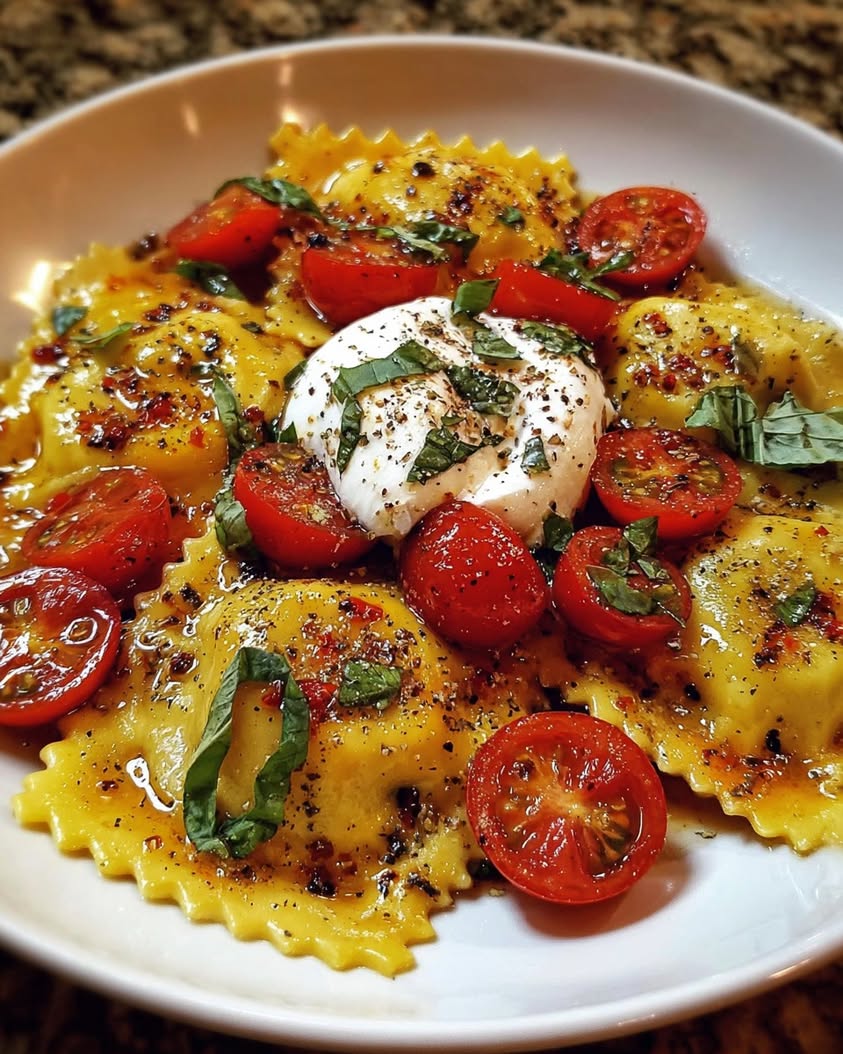
Ricotta Lemon Ravioli with Burst Tomatoes and Creamy Burrata: A Taste of Italian Sunshine
Imagine a dish that captures the very essence of a sun-drenched Italian garden. This Ricotta Lemon Ravioli with Burst Tomatoes and Creamy Burrata does exactly that. It is a celebration of fresh, vibrant flavors that come together in a surprisingly elegant yet comforting meal. Furthermore, each component sings with brightness, from the zesty lemon-kissed ricotta filling to the sweet, jammy burst cherry tomatoes.
This homemade pasta recipe is a true labor of love, but the results are undeniably worth the effort. The process of making fresh ravioli is incredibly rewarding. Consequently, you end up with delicate pasta pockets that are tender and perfectly al dente. Meanwhile, the sauce is a study in simplicity, allowing the quality of your ingredients to truly shine. Finally, the crowning glory is a luscious ball of burrata, its creamy center spilling out to create a luxurious sauce.
Ultimately, this dish is perfect for a special date night or a weekend project where you want to impress. The combination of textures and flavors is sophisticated yet approachable. Moreover, the visual presentation is stunning, with vibrant red tomatoes, pale green pasta, and snowy white cheese. It is a restaurant-quality meal that you can proudly create in your own kitchen.
Quick Recipe Highlights
- Flavor Profile: This dish offers a beautiful balance of bright, tangy lemon zest against the rich, milky creaminess of fresh ricotta and burrata. The burst tomatoes add a concentrated sweetness and subtle acidity that ties everything together harmoniously.
- Texture: You experience a wonderful contrast between the tender, slightly chewy homemade pasta, the fluffy ricotta filling, the juicy pop of tomatoes, and the decadent, creamy pull of the burrata cheese. It is a truly satisfying mouthfeel.
- Aroma: As it cooks, your kitchen will fill with the irresistible scent of garlic sizzling in olive oil, the sweet perfume of tomatoes breaking down, and the fresh, citrusy notes of lemon zest. It is an aromatic promise of the delicious meal to come.
- Visual Appeal: The presentation is gorgeous, featuring vibrant red tomatoes nestled against pale green spinach pasta parcels, all draped with the creamy white burrata. A final drizzle of golden olive oil and a sprinkle of fresh basil makes it picture-perfect.
- Skill Level Needed: This recipe requires basic pasta-making skills, including kneading dough and using a pasta roller. While it is an intermediate project, clear instructions make it achievable for a confident home cook willing to take their time.
- Special Equipment: You will need a pasta roller and cutter, either manual or attachment for a stand mixer. Additionally, a food processor simplifies the dough, and a spider strainer or slotted spoon is ideal for gently lifting the delicate ravioli from the water.
Recipe Overview
- Difficulty Level: We rate this Ricotta Lemon Ravioli as intermediate due to the hands-on process of making fresh pasta dough from scratch. The techniques of rolling, filling, and sealing the ravioli require a bit of practice and patience. However, each step is broken down clearly, making success very attainable for a cook familiar with foundational kitchen skills.
- Category: This dish fits beautifully into several categories. Primarily, it is a stunning main course for a special dinner. Alternatively, you can serve smaller portions as an impressive primo piatto, or first course, in an Italian-style multi-course meal. It is also a fantastic project for a weekend cooking enthusiast.
- Cuisine: The recipe is firmly rooted in Italian cuisine, drawing inspiration from the fresh, regional flavors of places like Lombardy for the ricotta and Puglia for the burrata. It is a modern, celebratory take on classic stuffed pasta, emphasizing high-quality, simple ingredients prepared with care.
- Cost: The cost is moderate, largely dependent on the quality of cheese you purchase. Fresh, high-quality ricotta and burrata are investments that pay off in flavor. Conversely, basic pantry staples like flour, eggs, and tomatoes keep other costs down. Overall, it is far more affordable than ordering a similar dish at a restaurant.
- Season: This Ricotta Lemon Ravioli shines brightest in late spring and summer when fresh basil is plentiful and cherry tomatoes are at their sweetest peak. Nevertheless, it serves as a wonderful taste of sunshine during colder months, especially since high-quality canned cherry tomatoes can work well off-season.
- Occasion: It is ideal for romantic dinners, anniversary celebrations, or when you want to show someone you care through the effort of a homemade meal. Additionally, it makes a spectacular centerpiece for a small dinner party where you can prepare components ahead of time.
Why You’ll Love This Ricotta Lemon Ravioli with Burst Tomatoes and Creamy Burrata
First and foremost, the taste is an unforgettable symphony of fresh flavors. The filling is incredibly light and fluffy, with the ricotta providing a mild, creamy base that lets the bright pop of lemon zest take center stage. Meanwhile, the burst tomatoes collapse into a sweet, savory jam that coats each ravioli perfectly. Then, the burrata adds an element of pure indulgence, its cool, rich center creating a luxurious sauce that mingles with the tomato oil. Every single bite offers a complex and satisfying balance that is both refreshing and deeply comforting.
Beyond the incredible flavor, this recipe offers a deeply rewarding cooking experience. Making pasta from scratch is a tactile and meditative process. As a result, you gain a true appreciation for the craft of Italian cooking. Furthermore, the recipe is designed to be manageable; you can prepare the filling and even shape the ravioli ahead of time. Consequently, when it is time to serve, you only need to cook the pasta and quickly prepare the sauce. This make-ahead strategy transforms what seems like a complex dish into a feasible weeknight triumph for special occasions.
From a nutritional perspective, this dish packs a wholesome punch when made with quality ingredients. Fresh eggs and semolina flour in the pasta dough provide protein and complex carbohydrates. Similarly, ricotta is an excellent source of calcium and protein. Moreover, the olive oil and tomatoes are rich in antioxidants and healthy fats. By controlling the ingredients, you avoid the excessive sodium and preservatives often found in restaurant or packaged versions. Therefore, you can feel good about serving this beautiful meal to your family and friends.
This Ricotta Lemon Ravioli also holds tremendous social and entertaining value. Presenting a platter of homemade ravioli is a guaranteed showstopper. It demonstrates care, effort, and culinary skill, making your guests feel truly special. Additionally, the recipe is easily scalable for a small group, and the assembly can become a fun, collaborative activity. Imagine setting up a ravioli-making station with friends or family; it turns meal preparation into a memorable event itself. Ultimately, the shared experience of creating and enjoying this food fosters connection and joy.
Finally, consider the cost-effectiveness and accessibility of this recipe. While burrata and fresh ricotta are premium items, creating a restaurant-quality dish at home is significantly cheaper than dining out. Importantly, the core technique of pasta-making requires only flour, eggs, and salt—ingredients most kitchens already have. Once you master the basic dough, a world of homemade pasta possibilities opens up. Thus, this recipe is not just a single meal; it is an investment in a lifelong culinary skill that will bring delicious returns for years to come.
Historical Background and Cultural Significance
The story of ravioli is deeply woven into the fabric of Italian culinary history. While its exact origin is debated, early references to a stuffed pasta similar to ravioli appear in manuscripts from the Middle Ages, particularly in the regions of Lombardy and Emilia-Romagna. Initially, these parcels were likely a practical solution for stretching expensive or scarce ingredients, wrapping bits of meat, cheese, or herbs in a simple pasta dough. Consequently, ravioli evolved as a food of ingenuity and resourcefulness, reflecting the regional produce and traditions of different areas across Italy. Over centuries, it transformed from humble peasant food to a celebrated dish fit for nobility and festive tables.
Culturally, ravioli is more than just a meal; it is often a centerpiece for celebration and family gathering. In many Italian families, making ravioli is a cherished ritual, especially during holidays like Christmas or Easter. Traditionally, the process involves multiple generations gathered around a large table, each person assigned a task in the assembly line. This practice reinforces family bonds and passes down culinary heritage. Therefore, a dish like Ricotta Lemon Ravioli connects you to this rich tradition of shared labor and love, transforming simple ingredients into a symbol of community and care.
The evolution of the ravioli recipe is a tale of regional adaptation. The ricotta-filled version, known as “ravioli di ricotta,” is classic to central and southern Italy, including Lazio and Sicily. The addition of lemon zest, however, is a more modern, chef-driven twist that highlights the contemporary trend of using citrus to brighten rich dishes. Meanwhile, the use of burrata is a relatively recent innovation. Burrata itself was invented in the 20th century in Puglia as a way to use up mozzarella scraps. Its pairing with ravioli showcases how Italian cuisine continuously evolves, embracing new ingredients while respecting foundational techniques.
Exploring regional variations further illuminates the dish’s adaptability. In some areas, ravioli are served in a simple broth (“in brodo”). In others, they are dressed with a meat ragù, a walnut sauce, or, as in this recipe, a fresh tomato preparation. The “burst tomato” technique is a quick, modern sauce that maximizes flavor from ripe cherry tomatoes. This particular version, with its green spinach pasta, creamy cheeses, and vibrant sauce, represents a fusion of traditions—the ricotta from the south, the pasta-making art from the north, and a contemporary, visually-focused presentation. It stands as a testament to the dynamic and living nature of Italian food culture.
Ingredient Deep Dive
Let us start with the star of the filling: fresh ricotta. This soft, white cheese has been a staple in Italian cooking for centuries, originally made as a way to utilize the whey byproduct from pecorino or mozzarella production. Traditionally, it is made from sheep, cow, goat, or water buffalo milk. Nutritionally, it is a great source of protein and calcium while being lower in fat and sodium than many other cheeses. For the best results in your Ricotta Lemon Ravioli, seek out whole-milk ricotta from the dairy section, avoiding the tubs often found in the dry grocery aisle. Look for a brand with a short ingredient list: just milk, acid, and salt. If your ricotta seems wet, drain it in a fine-mesh strainer for 30 minutes to prevent soggy ravioli.
Next, consider the humble lemon zest. The outer, colored part of the lemon peel is packed with essential oils, carrying the fruit’s most potent aromatic flavor without the sharp acidity of the juice. Historically, citrus has been used in Mediterranean cooking for millennia, both for preservation and flavor. The zest adds a vibrant, floral note that cuts through the richness of the cheese. From a health perspective, lemon zest contains antioxidants and vitamin C. Always use organic lemons if you are zesting, as conventional peels can harbor pesticides. Employ a fine microplane grater to get just the zest, avoiding the bitter white pith beneath. For a stronger flavor, you can rub the zest into the sugar called for in the filling, which helps release even more oils.
The pasta dough itself is a cornerstone. Our version incorporates fresh spinach for color and a subtle earthy flavor, a variation common in the Emilia-Romagna region of Italy, known as “pasta verde.” Semolina flour, made from durum wheat, is key for its high gluten content and granular texture, which gives the pasta a delightful chew and helps it hold its shape when boiled. The eggs bind the dough and add richness and color. For optimal results, use “00” flour for a tender bite, or a blend with semolina for strength. Fresh, vibrant spinach is blanched, squeezed completely dry, and finely chopped or puréed before being kneaded into the dough. This step is crucial; any excess moisture will make the dough sticky and difficult to work with.
Finally, examine the supporting cast: cherry tomatoes and burrata. Cherry tomatoes are prized for their intense, sweet flavor, especially when cooked quickly over high heat until they burst, concentrating their sugars. This cooking method creates a instant, chunky sauce. Burrata, meaning “buttered” in Italian, is a fresh cheese consisting of a mozzarella pouch filled with stracciatella (shreds of mozzarella) and cream. Invented in Puglia in the 1920s, it is the epitome of luxury in fresh cheese. For the best experience, buy burrata the day you plan to use it and let it come to room temperature before serving. Its cool, creamy interior provides a stunning contrast to the warm pasta and tomatoes, making this Ricotta Lemon Ravioli with Burst Tomatoes and Creamy Burrata truly unforgettable.
Common Mistakes to Avoid
- Using Wet Ricotta: Excess moisture in the ricotta filling is the primary cause of ravioli bursting during cooking. Always drain wet ricotta in a fine-mesh strainer for at least 30 minutes before mixing your filling. Additionally, overfilling the ravioli puts pressure on the seams, making this problem worse.
- Not Sealing the Pasta Properly: Inadequate sealing leads to filling leaking into the cooking water. After placing the filling, use your finger to brush a light film of water around the edges of the pasta sheet before placing the top sheet. Press firmly around each mound of filling, working from the center outward to push out air pockets, which can cause ravioli to float and cook unevenly.
- Overworking the Dough: Kneading the pasta dough develops gluten, which is good for structure, but excessive kneading can make the dough tough and elastic, causing it to shrink back when you try to roll it thin. Knead just until the dough is smooth and elastic, then let it rest, covered, for the full 30 minutes. This rest period relaxes the gluten, making the dough much easier to roll.
- Rolling the Dough Too Thick or Too Thin: Pasta that is too thick will be doughy and stodgy, while pasta that is too thin may tear during filling or cooking. Aim for a setting just before the thinnest on your pasta roller, usually a 6 or 7 on most machines. The sheet should be slightly translucent but still sturdy enough to handle.
- Crowding the Pot: Boiling too many ravioli at once lowers the water temperature significantly, causing them to stick together and cook unevenly. Cook in batches in a large, wide pot of generously salted, rapidly boiling water. Give them plenty of room to float and move freely.
- Overcooking the Ravioli: Fresh pasta cooks in just 2-4 minutes. Overcooking results in mushy, disintegrating ravioli. They are done when they float to the surface and look slightly puffed. Taste one to check for the perfect al dente texture—tender but with a slight bite.
- Using Cold Burrata: Serving burrata straight from the refrigerator mutes its creamy texture and flavor. Always let it sit at room temperature for at least 30 minutes before serving. The contrast between the warm pasta and the cool, soft cheese is a key textural element of the dish.
- Burning the Garlic: Burnt garlic becomes bitter and will ruin the delicate tomato sauce. Cook the garlic only until it becomes fragrant, about 30-60 seconds, over medium heat. Then immediately add the tomatoes to stop the cooking process and prevent burning.
Essential Techniques
Kneading and Resting Pasta Dough: This is the foundational technique for successful homemade ravioli. Proper kneading develops the gluten network, giving the pasta its essential structure and chew. Knead by hand for a full 8-10 minutes until the dough is completely smooth, elastic, and no longer sticky. The subsequent rest period is non-negotiable. Cover the dough tightly with plastic wrap and let it rest at room temperature. During this time, the gluten relaxes, making the dough infinitely easier to roll out thinly without springing back. Skipping the rest leads to a frustrating, tough dough that fights you every step of the way.
Rolling Pasta Sheets: Consistency is king when rolling pasta for ravioli. Start with a small piece of dough, keeping the rest covered. Flatten it slightly and begin on the widest setting of your machine. Dust lightly with flour only if it sticks. Fold and pass the dough through the same setting several times until it is smooth. Then, progressively move to thinner settings, passing the sheet through once at each number. Do not skip settings, as this can tear the dough. You want a long, even sheet that is slightly translucent but still strong. Roll out more sheets than you think you need, as some may tear during the filling process.
Filling and Sealing Ravioli: This technique ensures your beautiful parcels stay intact during cooking. First, place teaspoon-sized mounds of filling on one half of your pasta sheet, spacing them evenly. Then, use a pastry brush or your finger to lightly moisten the dough around each filling mound with water. Carefully fold the other half of the sheet over the fillings. Starting from the center, gently press down around each mound, pushing out any trapped air pockets towards the edges. Air bubbles expand during boiling and can cause ravioli to burst. Finally, use a ravioli cutter, pastry wheel, or sharp knife to cut and seal the individual ravioli, pressing firmly around all edges.
Bursting Tomatoes: This quick sauce technique extracts maximum flavor from cherry tomatoes with minimal effort. The key is high heat and patience. Heat your olive oil until it shimmers, then add the tomatoes. Do not stir them immediately; let them sit for a minute to blister and char slightly on one side. Then, shake the pan or stir occasionally. As they heat, the skins will split, and the tomatoes will collapse, releasing their juices. Crushing a few with the back of a spoon helps create a saucier consistency. Season well with salt at this stage, as it draws out more moisture and enhances the tomatoes’ natural sweetness, creating the perfect sauce for your Ricotta Lemon Ravioli.
Pro Tips for Perfect Ricotta Lemon Ravioli with Burst Tomatoes and Creamy Burrata
First, for an extra-flavorful filling, mix the lemon zest with the ricotta and a pinch of salt at least an hour before assembling. This allows the citrus oils to fully permeate the cheese. Second, when rolling pasta, if a sheet becomes too long to manage, simply cut it in half. Working with manageable lengths prevents tearing and frustration. Third, after cutting your ravioli, let them air-dry on a floured baking sheet for 15-30 minutes before boiling. This helps the seals set and prevents sticking.
Fourth, salt your pasta water aggressively—it should taste like the sea. This is your only chance to season the pasta itself from the inside out. Fifth, reserve about a cup of the starchy pasta water before draining. You can use a splash of it to loosen the tomato sauce if it seems too thick, helping it cling to the ravioli. Sixth, tear, rather than cut, the burrata over the hot pasta. This creates beautiful, rustic pieces and allows more of the creamy center to spill out.
Seventh, finish the plated dish with your highest-quality extra-virgin olive oil. A final drizzle adds a fruity, peppery note and gorgeous sheen. Eighth, if you are making ravioli ahead, freeze them in a single layer on a baking sheet before transferring to a bag. Cook them directly from frozen, adding a minute or two to the boiling time.
Variations and Adaptations
Explore regional variations by changing the filling. For a Roman touch, add a tablespoon of finely chopped fresh mint to the ricotta. For a Sicilian influence, incorporate a tablespoon of toasted pine nuts and a few chopped raisins. You could also substitute the ricotta with an equal amount of fresh goat cheese for a tangier profile or with a blend of ricotta and grated pecorino for a sharper, saltier flavor. The possibilities within the framework of stuffed pasta are nearly endless, allowing you to customize your Ricotta Lemon Ravioli to your taste.
Consider seasonal adaptations to keep the dish exciting year-round. In summer, use a mix of heirloom cherry tomatoes in different colors. In autumn, replace the tomato sauce with a sage brown butter sauce and garnish with roasted squash cubes. For a winter version, a simple truffle butter sauce or a light cream sauce with sautéed mushrooms would be sublime. In spring, a sauce of fresh peas, lemon zest, and a touch of cream complements the lemon filling beautifully. This adaptability makes the ravioli base a versatile canvas.
For dietary modifications, several paths are available. To make gluten-free ravioli, use a trusted brand of gluten-free all-purpose flour blend with xanthan gum, or make a dough from a mix of rice flour and tapioca starch. For a dairy-free version, substitute the ricotta with a firm, well-drained tofu blended with nutritional yeast and lemon zest, and use a vegan mozzarella-style cheese instead of burrata. To add protein, mix finely chopped, cooked spinach or Swiss chard into the ricotta filling. These adaptations ensure everyone can enjoy a version of this stunning dish.
Serving and Presentation Guide
Plating is key to showcasing your hard work. For a family-style presentation, arrange the cooked ravioli on a large, warm platter. Spoon the burst tomatoes and their juices over the top, allowing some ravioli to peek through. Then, place the whole ball of room-temperature burrata in the center and let guests tear into it themselves. For individual plates, use a shallow bowl. Place a portion of ravioli, top with sauce, and then tear a quarter of the burrata ball over each serving, ensuring some creamy interior lands on the hot pasta.
Garnishing adds the final touch of freshness and color. A scattering of whole or torn fresh basil leaves is classic. Alternatively, use micro basil, fresh oregano leaves, or a sprinkle of edible flowers for a special occasion. A final flourish of flaky sea salt, a crack of black pepper, and that high-quality extra-virgin olive oil drizzle are essential. For texture contrast, a light sprinkle of toasted breadcrumbs or pine nuts adds a delightful crunch against the creamy components.
Consider traditional accompaniments to round out the meal. A simple, crisp arugula salad with a lemon vinaigrette served on the side cuts through the richness perfectly. For a more substantial feast, serve the ravioli as a primo (first course) followed by a simply grilled fish or chicken. Offer a basket of crusty, warm bread to mop up every last bit of the tomato and burrata sauce left on the plate. Remember, the ravioli is the star, so keep sides simple and elegant.
Wine and Beverage Pairing
Choosing the right wine elevates your Ricotta Lemon Ravioli experience. The dish’s acidity from the lemon and tomatoes, richness from the cheese, and herbal notes call for a wine with good acidity and medium body. A classic Italian white like Vermentino from Sardinia or a Falanghina from Campania is an excellent match. Their citrus and mineral notes mirror the lemon zest, while their crispness cleanses the palate. Alternatively, a dry rosé from Provence, with its bright red fruit and herbal qualities, bridges the gap between the tomatoes and the herbs beautifully.
If you prefer red wine, opt for a light-bodied, low-tannin option that will not overpower the delicate ravioli. A chilled Beaujolais (Gamay) or a Frappato from Sicily works wonderfully. Their bright red fruit and subtle earthiness complement the tomatoes without clashing with the lemon. For a truly special pairing, a glass of Prosecco or other dry sparkling wine is fantastic. The bubbles and acidity act as a palate cleanser, making each bite of the rich, creamy pasta taste fresh and new.
For non-alcoholic alternatives, consider sophisticated options that match the meal’s complexity. A sparkling water with a twist of lemon or a dash of bitters mimics the citrus notes. A homemade basil or rosemary-infused lemonade provides a herbal, refreshing counterpoint. For a warmer option, a light, floral herbal tea like chamomile or lemon verbena served after the meal can be a lovely digestif. The goal is to choose beverages that refresh the palate and complement, rather than compete with, the intricate flavors of the ravioli.
Storage and Shelf Life
Fresh, uncooked ravioli have a short shelf life. If cooking within a few hours, leave them on a floured baking sheet at room temperature, covered loosely with a kitchen towel. For storage up to 24 hours, arrange them in a single layer on a floured sheet, cover tightly with plastic wrap, and refrigerate. Be aware that they may absorb moisture and become stickier over time. For longer storage, freezing is the best option. Freeze them in a single layer until solid, then transfer to a freezer bag, squeezing out all air. They can be frozen for up to 2 months. Cook directly from frozen, adding 1-2 minutes to the boiling time.
Cooked ravioli are best enjoyed immediately. However, if you have leftovers, store them in an airtight container in the refrigerator for up to 2 days. Note that the pasta will continue to absorb moisture and soften. To reheat, avoid the microwave, which can make them rubbery. Instead, gently warm them in a skillet with a splash of water, broth, or leftover tomato sauce over low heat until just heated through. The burrata does not store well once opened and should be consumed immediately. Unfortunately, this dish does not freeze well after cooking, as the textures of the pasta and cheese will degrade significantly upon thawing and reheating.
Make Ahead Strategies
A smart make-ahead plan turns this project into a manageable weeknight dinner. You can prepare the ricotta lemon filling up to 2 days in advance. Simply mix the ingredients, store in an airtight container in the fridge, and drain off any accumulated liquid before using. The pasta dough can also be made 1 day ahead. Wrap it tightly in plastic wrap and refrigerate. Let it come to room temperature for about an hour before rolling, as cold dough will be stiff and difficult to work with.
The most effective strategy is to assemble the ravioli completely a day before you need them. After cutting and sealing, place them on a parchment-lined, floured baking sheet. Do not let them touch. Cover the entire sheet tightly with plastic wrap and refrigerate for up to 24 hours. You can also freeze them at this stage for future use. On the day of serving, all that remains is to cook the pasta and whip up the quick burst tomato sauce in the time it takes for the water to boil. This approach spreads the work over two days, making the final meal feel effortless and relaxing.
Scaling Instructions
This recipe scales beautifully for different group sizes. To halve the recipe, simply divide all ingredient quantities by two. The pasta dough may be trickier to roll in a very small batch in a machine, so you may prefer to knead and roll it by hand. Cooking time remains the same, but you will need a smaller pot for boiling. To double or triple the recipe for a crowd, multiply all ingredients accordingly. The key consideration is workspace: you will need multiple baking sheets for the assembled ravioli and should cook them in more batches to avoid crowding the pot. The burst tomato sauce can be made in a large skillet or in batches.
When scaling up, do not try to roll one massive piece of dough. Instead, keep dividing your dough into the recommended 4-6 portions, regardless of the total batch size, and work with one portion at a time. This maintains control and consistency. If making a very large quantity for freezing, organize an assembly line: one person rolls, one fills, one cuts and seals. Label your freezer bags with the date and filling type. Remember, the sauce is quick to prepare, so focus your advance work on the ravioli themselves for a stress-free entertaining experience.
Nutritional Deep Dive
A serving of this Ricotta Lemon Ravioli provides a balanced mix of macronutrients. The pasta dough offers complex carbohydrates for sustained energy, while the ricotta and eggs contribute high-quality protein essential for muscle repair and satiety. The olive oil and burrata provide healthy fats, including monounsaturated fats from the oil, which are beneficial for heart health. The dish is also a source of dietary fiber from the spinach in the pasta and the tomatoes, aiding in digestion.
Micronutrient-wise, this meal is a powerhouse. The spinach pasta adds iron, vitamin K, and folate. Ricotta and burrata are excellent sources of calcium and phosphorus for bone health. Tomatoes are rich in lycopene, a potent antioxidant, especially when cooked. Lemon zest provides vitamin C and flavonoids. Using whole, fresh ingredients minimizes added sodium and eliminates processed additives. For those monitoring intake, the dish is moderately calorie-dense due to the cheese and olive oil, so portion awareness is key. Pairing it with a large green salad can create a more volumetrically satisfying and nutritionally rounded meal.
Dietary Adaptations
Gluten-Free: Replace the all-purpose and semolina flour with a quality gluten-free flour blend that contains xanthan gum, which mimics gluten’s binding properties. Look for a blend meant for pasta or bread. You may need to add an extra egg yolk or a touch more water to achieve the right dough consistency. Roll the dough between two sheets of parchment paper instead of using a machine, as it will be more fragile.
Dairy-Free/Vegan: For the filling, blend firm, pressed tofu with nutritional yeast, lemon zest, and a pinch of white miso for umami. For the “burrata,” seek out a high-quality vegan mozzarella that melts well. For the pasta dough, substitute each egg with a “flax egg” (1 tbsp ground flaxseed mixed with 2.5 tbsp water, per egg). The dough will be more delicate, so handle it gently and use plenty of flour when rolling.
Low-Carb/Keto: The traditional pasta dough is high in carbs. For a keto adaptation, consider using the ricotta lemon filling as a topping for grilled chicken or zucchini noodles (“zoodles”). Alternatively, you can make a keto-friendly pasta dough using a blend of almond flour, coconut flour, and psyllium husk powder, though the texture will differ significantly from wheat pasta. The burst tomato and burrata components are naturally low in carbs and fit well within a keto framework when served over a suitable base.
Troubleshooting Guide
Dough is too sticky: This usually means it needs more flour or less moisture. While kneading, add flour one tablespoon at a time until the dough just loses its stickiness. Remember, the spinach can vary in water content. If the dough is already made, wrap it tightly and refrigerate for 30 minutes; this will firm it up and make it easier to handle with additional flour during rolling.
Ravioli are bursting during cooking: This is typically due to air pockets, overfilling, or weak seals. Ensure you press out all air when sealing. Use less filling than you think you need—a teaspoon is often plenty. Make sure your sealing edges are moistened with water and pressed firmly. Also, ensure your water is at a vigorous boil but not at a violent, rolling boil that can batter the ravioli and cause them to split.
Pasta is tough and chewy: This results from over-kneading the dough, not letting it rest, or rolling it too thin and then overcooking it. Next time, knead just until smooth, rest for the full 30 minutes, and cook for a shorter time. Fresh pasta cooks very quickly. Taste one at the 2-minute mark to gauge doneness.
Sauce is too watery: If your burst tomato sauce hasn’t reduced enough, simply continue cooking over medium-high heat until the excess liquid evaporates and the sauce thickens. You can also crush more of the tomatoes with your spoon to release their natural pectin, which helps thicken the sauce. If you are in a hurry, a small slurry of cornstarch and water can be stirred in, but this is not traditional.
Recipe Success Stories
We love hearing from our community of home cooks who have tried this Ricotta Lemon Ravioli. Many report that it has become their go-to “special occasion” dish, impressing in-laws and celebrating anniversaries. One reader shared how she made it with her teenage daughter, turning the process into a fun weekend bonding activity. They even experimented with different shaped cutters for the ravioli. Another cook successfully adapted it for a gluten-free guest using our suggested flour blend, reporting that the guest was thrilled to be included in such a beautiful meal.
Photography enthusiasts have had great success capturing this dish. The key tips are to use natural light and to garnish just before shooting. A dark, rustic plate or a white marble slab makes the colors of the tomatoes, green pasta, and white cheese truly pop. Drizzling the olive oil and placing a few basil leaves at the last second keeps everything looking fresh. Many have found that an overhead shot or a close-up of a cut ravioli with the creamy filling and burrata is especially appealing. Sharing these photos online has inspired their own friends to try the recipe, spreading the joy of homemade pasta.
Frequently Asked Questions
Q: Can I make the pasta dough without a machine?
A: Absolutely. While a machine makes it easier, you can roll the dough by hand with a rolling pin. Divide the dough into small portions and roll each one as thinly and evenly as possible. It requires more effort, but it is absolutely doable and a great arm workout.
Q: My ricotta seems very wet. What should I do?
A: Draining is crucial. Place the ricotta in a fine-mesh strainer set over a bowl for at least 30 minutes, or up to a few
Print
Ricotta and Lemon Zest Ravioli with Burst Tomatoes and Burrata
- Total Time: 45 minutes
- Yield: 4
Description
A fresh and vibrant pasta dish featuring homemade ravioli filled with creamy ricotta and zesty lemon, served with sweet burst cherry tomatoes and topped with creamy burrata cheese.
Ingredients
- 1 cup whole milk ricotta cheese
- 1 teaspoon lemon zest, plus extra for garnish
- 1/4 cup grated Parmesan cheese
- 1 large egg, beaten
- Salt and black pepper to taste
- 24 round wonton wrappers
- 2 tablespoons olive oil
- 2 cups cherry tomatoes
- 2 cloves garlic, minced
- 1 ball burrata cheese
- Fresh basil leaves for garnish
Instructions
- In a bowl, mix ricotta, lemon zest, Parmesan, egg, salt, and pepper until smooth.
- Place a wonton wrapper on a surface, add 1 tablespoon of filling in the center, brush edges with water, top with another wrapper, and press to seal. Repeat with remaining wrappers and filling.
- Heat olive oil in a skillet over medium heat. Add cherry tomatoes and cook until they burst, about 5-7 minutes. Add garlic and cook for 1 minute more.
- Bring a pot of salted water to a boil. Cook ravioli for 2-3 minutes until they float. Drain gently.
- Divide ravioli among plates, top with burst tomatoes, tear burrata over each serving, and garnish with basil and extra lemon zest.
Notes
You can customize the seasonings to taste.
- Prep Time: 15 minutes
- Cook Time: 30 minutes
- Method: Main
- Cuisine: Italian