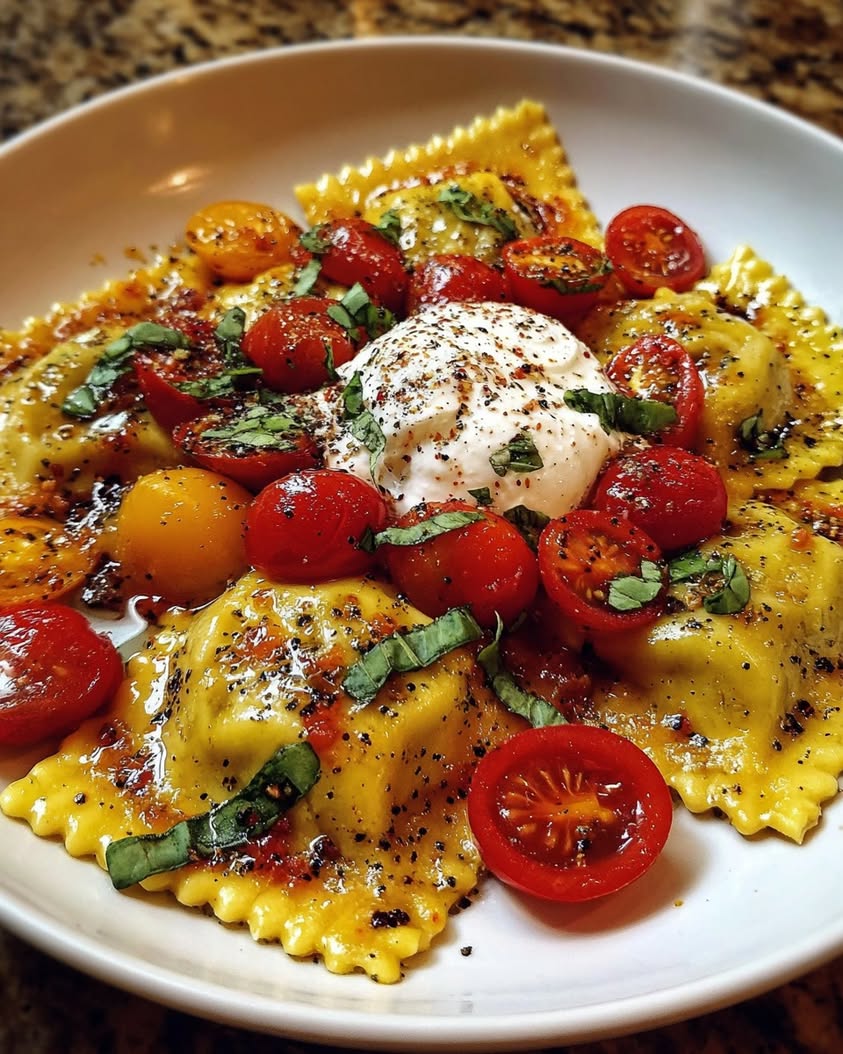
Ricotta and Lemon Zest Ravioli with Burst Tomatoes and Burrata: A Taste of Italian Sunshine
Imagine a plate that captures the essence of a perfect Italian summer. This Ricotta and Lemon Zest Ravioli with Burst Tomatoes and Burrata does exactly that. Each delicate pasta pocket is filled with a cloud of creamy ricotta brightened by fragrant lemon zest. Consequently, the filling offers a beautiful contrast to the sweet, jammy burst cherry tomatoes. Finally, a crown of luscious, fresh burrata cheese melts over the top, creating a sauce that is both rich and incredibly fresh.
This homemade ravioli recipe is a true celebration of fresh, high-quality ingredients. While it requires a bit of hands-on time, the process is incredibly rewarding. Moreover, the result is a restaurant-quality dish that will impress any dinner guest. The combination of textures and flavors—from the tender pasta to the creamy filling and the bright, acidic sauce—creates a harmonious and unforgettable meal. Ultimately, this dish proves that simple ingredients, when treated with care, can create pure magic.
Furthermore, this recipe is versatile enough for a special date night yet approachable for a weekend cooking project. The aroma of lemon zest and garlic filling your kitchen is simply irresistible. Additionally, the visual presentation, with vibrant red tomatoes and white burrata against the golden pasta, is stunning. This Ricotta and Lemon Zest Ravioli with Burst Tomatoes and Burrata is more than just dinner; it’s an experience that brings the warmth of Italy to your table.
Quick Recipe Highlights
- Flavor Profile: This dish balances creamy, tangy, and sweet notes perfectly. The lemon zest cuts through the richness of the cheese, while the burst tomatoes add a natural sweetness. Finally, fresh basil brings an herbal finish that ties everything together.
- Texture: You experience a wonderful contrast in every bite. The tender pasta gives way to a smooth ricotta filling, while the tomatoes provide a juicy pop. Meanwhile, the creamy burrata adds a luxurious, melting quality that coats the ravioli beautifully.
- Aroma: The scent of fresh lemon zest and garlic sautéing is immediately inviting. As the tomatoes cook, their sweet fragrance develops, complemented by the earthy note of fresh basil. Consequently, your kitchen will smell like an Italian trattoria.
- Visual Appeal: The presentation is vibrant and elegant. The bright red tomatoes create a stunning sauce, while the white burrata and green basil offer beautiful color contrast. Therefore, this dish looks as incredible as it tastes.
- Skill Level Needed: This is an intermediate recipe due to the fresh pasta work. However, with patience and clear instructions, even novice cooks can achieve great results. The key is taking your time during the ravioli assembly.
- Special Equipment: A pasta roller or machine is highly recommended for consistent dough. Additionally, you will need a ravioli stamp or a simple glass to cut the pasta shapes. Otherwise, standard kitchen tools like a skillet and mixing bowls are sufficient.
Recipe Overview
- Difficulty Level: We rate this Ricotta and Lemon Zest Ravioli as intermediate. The process of making fresh pasta dough and forming ravioli requires a bit of practice and patience. However, the steps are broken down clearly, and the filling is very simple to prepare. Ultimately, the reward of homemade pasta justifies the effort.
- Category: This dish fits perfectly as a luxurious main course for a special dinner. It is substantial enough to stand alone but can also be part of a multi-course Italian feast. Furthermore, it works beautifully for celebratory meals and romantic occasions.
- Cuisine: This recipe is firmly rooted in Italian culinary traditions, specifically from regions known for fresh pasta and cheese. The use of high-quality, simple ingredients like ricotta, tomatoes, and basil is classic. Meanwhile, the addition of burrata adds a modern, indulgent twist to a traditional format.
- Cost: The cost is moderate, primarily driven by the quality of cheese you choose. Fresh burrata and good ricotta are worthwhile investments. Fortunately, ingredients like flour, eggs, and cherry tomatoes are very affordable, balancing the overall expense.
- Season: This Ricotta and Lemon Zest Ravioli shines in late spring and summer. This is when cherry tomatoes are at their sweetest and basil is most fragrant. Conversely, you can make it year-round with great results, as it brings sunshine to any table.
- Occasion: It is ideal for date nights, anniversary dinners, or when you want to impress guests. It also makes a wonderful project for a leisurely weekend cooking session. Moreover, it’s a fantastic dish for celebrating seasonal produce at its peak.
Why You’ll Love This Recipe
First and foremost, the taste and texture of this Ricotta and Lemon Zest Ravioli are utterly divine. Each bite delivers a symphony of creamy, tangy, and sweet flavors that dance on your palate. The delicate pasta encases a light, lemony filling that feels both rich and refreshing. Meanwhile, the burst tomatoes create a sauce that is vibrant and naturally sweet without needing long simmering. Finally, the burrata adds an unmatched layer of decadent creaminess that makes the dish feel incredibly special and restaurant-worthy.
From a convenience standpoint, this recipe is designed for success even if you’re new to pasta making. The instructions break down the process into manageable, clear steps. Furthermore, many components can be prepared in advance, reducing last-minute stress. For instance, you can make the filling and even shape the ravioli ahead of time. Consequently, you can enjoy the cooking process without feeling rushed, turning meal preparation into a joyful and creative activity.
Nutritionally, this dish offers a good balance of macronutrients from the eggs, flour, and cheese. Ricotta is an excellent source of protein and calcium, supporting muscle and bone health. Additionally, the lycopene in cooked tomatoes is more readily absorbed by the body, offering antioxidant benefits. Using whole, unprocessed ingredients means you control exactly what goes into your meal. Therefore, you can enjoy a decadent-tasting dish that is made from real, wholesome foods.
For social and entertaining value, this Ricotta and Lemon Zest Ravioli is a true showstopper. Serving homemade pasta instantly elevates any gathering and shows your guests you care. Moreover, the act of making pasta can be a fun, collaborative activity if you have help in the kitchen. The stunning presentation guarantees compliments and makes for beautiful photos. Ultimately, it creates a memorable dining experience that people will talk about long after the meal is over.
Finally, considering cost-effectiveness, making ravioli at home is significantly cheaper than ordering it at a restaurant. While specialty cheeses are an investment, a single batch yields four generous restaurant-quality portions. Compared to a night out, the cost per person is very reasonable. Additionally, you likely have many pantry staples like flour and eggs already on hand. So, you can create a luxurious dining experience at home without the luxurious price tag.
Historical Background and Cultural Significance
The origin of ravioli is deeply rooted in Italian peasant cuisine, designed as a clever way to use leftovers. Historically, cooks would encase small amounts of cheese, meat, or vegetables in thin pasta dough to stretch precious ingredients. This practice dates back to the Middle Ages in various regions across Italy. Consequently, ravioli became a symbol of resourcefulness and culinary ingenuity, transforming simple components into a satisfying and special meal.
Cultural importance of ravioli varies by region, with each area boasting its own traditional fillings and shapes. In Liguria, ravioli are often filled with greens and ricotta, while in Emilia-Romagna, meat fillings are more common. The concept of pairing fresh pasta with a simple, fresh sauce—like burst tomatoes—honors the Italian culinary principle of “cucina povera” or “poor cooking.” This philosophy emphasizes the quality of a few ingredients over complexity, which is central to this recipe’s appeal.
The evolution of the ravioli recipe has seen it move from humble home kitchens to the heights of gourmet dining. Initially a family meal, it now appears on menus of fine restaurants worldwide. The introduction of ingredients like burrata, a relatively modern cheese invention from the 20th century, shows how traditional dishes continue to evolve. This particular recipe represents a contemporary take that respects tradition while embracing modern luxury and available ingredients.
Regarding regional variations, the use of lemon and ricotta is particularly associated with Southern Italy and Sicily, where citrus is abundant. The addition of burst tomatoes is a quick-cooking technique that captures summer’s essence, common in recipes where produce is fresh and flavorful. Our Ricotta and Lemon Zest Ravioli with Burst Tomatoes and Burrata is a fusion that draws inspiration from these sunny coastal regions. It celebrates the bright, fresh flavors that define much of Italian cooking, especially in the warmer months.
Ingredient Deep Dive
Ricotta Cheese: Ricotta, meaning “recooked” in Italian, is a fresh whey cheese with a history of minimizing waste in dairy production. It’s light, slightly grainy, and incredibly versatile. Nutritionally, it provides a good source of protein, calcium, and phosphorus with lower fat content than many other cheeses. For the best results in your ravioli, seek out whole-milk ricotta from the dairy section, not the shelf-stable tubs. It should be drained in a fine-mesh sieve if it seems watery to ensure your filling isn’t runny.
Lemon Zest: The zest is the outermost, colorful part of the lemon peel, packed with essential oils and intense citrus flavor. It has been used for centuries to brighten dishes without adding excess liquid. The oils in zest contain antioxidants and compounds that may aid digestion. Always use organic lemons if possible, as you are eating the outer skin. Grate only the yellow part, avoiding the bitter white pith beneath, using a fine microplane for the fluffiest, most aromatic zest.
00 Flour or All-Purpose Flour: 00 flour is a finely milled Italian wheat flour with a lower protein content than standard American all-purpose, resulting in a more tender, delicate pasta. Its use is traditional in many Italian pasta recipes. All-purpose flour works perfectly well as a accessible substitute, yielding a slightly chewier texture. The flour forms the structure of your pasta dough, so measuring by weight with a kitchen scale is the most accurate method for consistent results.
Burrata Cheese: Burrata is a fresh Italian cheese made from mozzarella and cream. Its name comes from the Italian word “burro,” meaning butter, which hints at its rich, creamy interior. It originated in the Puglia region in the early 1900s. It is best served at room temperature to allow its creamy center to soften fully. Always add burrata at the very end of preparation; its delicate nature means it should not be cooked, only gently warmed by the hot pasta and sauce.
Cherry Tomatoes: Cherry tomatoes are known for their intense sweetness and high juice content, making them ideal for quick-cooking sauces. They burst beautifully when heated, creating a instant, vibrant sauce. They are rich in vitamins A and C, and lycopene, an antioxidant enhanced by cooking. For the best flavor, choose tomatoes that are deeply colored and firm, with a sweet smell. Off-season, grape tomatoes are a reliable substitute as they tend to be sweeter year-round.
Common Mistakes to Avoid
- Overworking the Pasta Dough: Kneading the dough too much develops excess gluten, leading to tough, chewy ravioli. Mix until it just comes together, then knead gently until smooth. The dough should be supple and elastic, not hard.
- Using Wet Ricotta: Not draining ricotta is a common error that causes a runny filling and soggy pasta. Always drain ricotta in a sieve for at least 15-30 minutes if it appears watery. This step ensures your ravioli hold their shape during cooking.
- Rolling the Dough Too Thick: Pasta sheets that are too thick result in doughy, heavy ravioli. Aim for a thickness similar to a dime or the second-to-last setting on a pasta machine. The pasta should be thin enough to see a faint shadow of your hand through it.
- Overfilling the Ravioli: Placing too much filling prevents a proper seal and causes ravioli to burst open in boiling water. Use about a teaspoon of filling per ravioli, leaving a generous border of empty dough around it. Less is more in this case.
- Not Sealing Edges Properly: Inadequate sealing is the primary cause of ravioli falling apart. After placing the filling, brush the dough edges lightly with water or egg wash. Then, press firmly around the filling to remove any air pockets before cutting.
- Crowding the Cooking Pot: Boiling too many ravioli at once lowers the water temperature and makes them stick together. Cook in batches in a large pot of generously salted, rapidly boiling water. This ensures they cook evenly and maintain their shape.
- Skipping the Salt in Pasta Water: Pasta water should taste like the sea to season the pasta from within. Under-salting the water is a missed opportunity for flavor. Use about 1-2 tablespoons of kosher salt for a large pot of water.
- Cooking the Burrata: Adding burrata to the heat too early or cooking it will cause it to break and become stringy. Always tear the burrata and place it on the hot pasta and sauce at the very end, allowing residual heat to warm it gently.
Essential Techniques
Making a Pasta Dough Well: The “well” method is traditional for mixing pasta dough. You mound flour on a surface and create a large crater in the center for the eggs. This technique contains the liquid initially, allowing you to gradually incorporate flour from the walls. It provides excellent control over the dough’s hydration. The key is to break the eggs carefully and use a fork to slowly pull in flour until a shaggy dough forms, preventing a runaway egg mess across your counter.
Kneading and Resting Pasta Dough: Kneading develops the gluten network that gives pasta its structure and chew. However, you must avoid over-kneading. Use the heel of your hand to push the dough away, fold it over, and rotate. Continue for about 8-10 minutes until smooth and elastic. The crucial follow-up step is resting the dough, wrapped in plastic, for at least 30 minutes. This relaxes the gluten, making the dough much easier to roll out thinly without springing back.
Rolling Pasta Sheets: Consistency is paramount when rolling pasta for ravioli. Whether using a machine or a rolling pin, start with a small, flattened piece of dough. Roll from the center outward, frequently rotating the sheet to maintain an even shape and prevent thinning in just one spot. The goal is a uniform sheet that is thin but not translucent. If the dough sticks, dust very lightly with flour, but excess flour can dry out the dough and prevent proper sealing.
Forming and Sealing Ravioli: This technique ensures your filled pasta stays intact. Place small mounds of filling on one half of the sheet, leaving ample space between them. Brush the dough around the filling with water to activate the starch for a glue-like seal. Then, carefully fold the other half of the sheet over the filling. Press down firmly around each mound, pushing out any trapped air pockets which can cause ravioli to explode during cooking. Finally, use a stamp or knife to cut individual ravioli.
Bursting Tomatoes: This quick-cooking method intensifies tomato flavor rapidly. Use high heat and a good-quality olive oil. Add the tomatoes and let them sit undisturbed for a minute to blister and char slightly. Then, press gently with a spoon or spatula until they just split and release their juices. Immediately reduce the heat to prevent burning. The goal is a saucy consistency with some whole tomato pieces remaining for texture, creating a fresh sauce in minutes.
Pro Tips for Perfect Ricotta and Lemon Zest Ravioli
First, ensure all your ingredients, especially the eggs and ricotta, are at room temperature before starting. This helps the pasta dough come together smoothly and the filling to blend evenly without lumps. Cold ingredients can make the dough tough and the filling grainy.
Second, when zesting the lemon, do it directly over the ricotta bowl so the precious citrus oils fall right into the cheese. This captures the maximum aroma and flavor. Always zest before juicing the lemon, as it’s much harder to zest a juiced fruit.
Third, after cutting your ravioli, let them rest on a floured baking sheet for 15-20 minutes before cooking. This brief rest allows the pasta to dry slightly, which helps the seal set and can prevent them from opening in the boiling water.
Fourth, use a slotted spoon to gently transfer the cooked ravioli directly from the boiling water into the skillet with the tomato sauce. A little starchy pasta water clinging to them will help emulsify and thicken the sauce, making it cling beautifully to the pasta.
Fifth, to achieve the creamiest burrata experience, tear the cheese with your hands instead of cutting it with a knife. This creates rustic, textured pieces with more surface area for the creamy interior to spill out onto the hot ravioli.
Sixth, finish the dish with your best quality extra virgin olive oil and flaky sea salt. A final drizzle of oil adds a fruity note and glossy sheen, while a pinch of flaky salt on top provides a delightful crunch and enhances all the flavors.
Variations and Adaptations
Regional Variations: To explore different Italian regions, modify the filling. For a Roman twist, add a tablespoon of finely chopped fresh mint to the ricotta. For a Sicilian touch, incorporate a tablespoon of toasted pine nuts and a few chopped raisins. In the North, a sprinkle of nutmeg in the ricotta is classic. You could also substitute the tomato sauce for a simple butter and sage sauce, a staple in Lombardy and Emilia-Romagna.
Seasonal Adaptations: In autumn, replace the burst tomatoes with a sauce of sautéed wild mushrooms and a splash of cream. For winter, a rich, slow-cooked pork ragu makes a hearty companion to the lemon ricotta ravioli. In spring, a sauce of fresh peas, leeks, and a light cream would be delightful. The lemony ravioli itself is a versatile base that pairs well with many seasonal sauces.
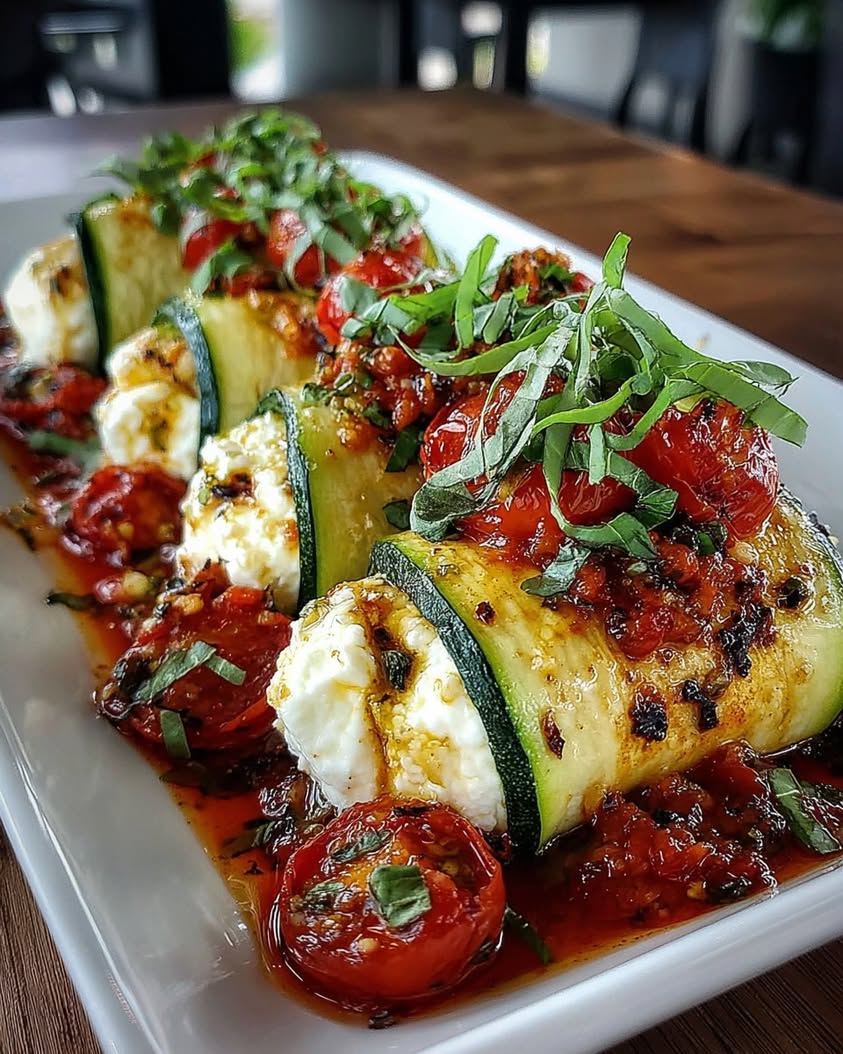
Dietary Modifications: For a gluten-free version, use a high-quality 1:1 gluten-free flour blend designed for pasta. Note that the dough may be more fragile, so handle gently. To make it vegetarian, ensure your cheeses use vegetarian rennet. For a lower-carb option, you can use wonton wrappers (which are thinner) or even large slices of roasted zucchini as “pasta” wrappers for the filling.
Flavor Variations: Enhance the ricotta filling with different herbs like chives, tarragon, or dill. For a richer flavor, mix in a tablespoon of grated Parmigiano-Reggiano. A pinch of red pepper flakes in the filling adds a subtle heat. You could also infuse the ricotta with roasted garlic instead of, or in addition to, the lemon zest for a deeper, sweeter note.
Texture Modifications: For added crunch in the filling, mix in a tablespoon of toasted breadcrumbs. To make the ravioli even lighter, use part-skim ricotta. If you prefer a silkier sauce, crush half of the burst tomatoes into a smoother consistency before adding the pasta. For a more substantial dish, add sautéed spinach or Swiss chard to the ricotta mixture.
Presentation Alternatives: Instead of round ravioli, cut them into squares or half-moons (mezzalune). For a dramatic family-style presentation, layer the cooked ravioli and sauce in a baking dish, top with torn burrata and broil for a minute until bubbly. You can also serve the components deconstructed: a bowl of ricotta filling, pasta sheets, and sauce for guests to assemble at the table.
Serving and Presentation Guide
Plating Techniques: For elegant individual plating, use a pair of tongs to twist a portion of ravioli into the center of a warm, shallow bowl. Spoon the burst tomatoes and their juices around and over the pasta, allowing some ravioli edges to peek through. Place the torn burrata strategically on top or to the side. The goal is a composition that looks abundant but not messy, showcasing each beautiful component.
Garnishing Ideas: Fresh basil is the classic and perfect garnish—use whole small leaves or a chiffonade (thin ribbons). A final drizzle of high-quality extra virgin olive oil adds shine and flavor. Microgreens, such as basil or pea shoots, offer a delicate, modern touch. A sprinkle of lemon zest or a few cracks of black pepper provide visual contrast and flavor bursts.
Traditional Accompaniments: In Italy, a primo piatto (first course) like this is often followed by a simple protein. However, it can stand alone as a main. Traditionally, it might be served after an antipasto of cured meats and olives. A simple, bitter green salad dressed with lemon vinaigrette served on the side helps cut the richness and cleanse the palate.
Modern Serving Suggestions: For a casual yet chic dinner party, serve the ravioli family-style in a large, beautiful platter. This encourages sharing and feels welcoming. Pair it with a crusty, grilled bread to soak up every bit of the tomato and burrata sauce. A glass of chilled Prosecco or a crisp white wine served alongside completes the modern Italian experience.
Temperature Considerations: Serve the Ricotta and Lemon Zest Ravioli immediately after assembling. The pasta should be piping hot, which will gently warm the burrata without melting it completely. Ensure your serving bowls are warmed to prevent the dish from cooling too quickly. The tomatoes should be warm but not scalding, preserving their fresh, bright flavor.
Portion Control Tips: This recipe yields about 24-30 ravioli, serving 4 as a main course (6-7 ravioli per person). As a primo (first course) in a multi-course meal, plan for 3-4 ravioli per person. The dish is rich, so portions don’t need to be enormous. If serving with sides like a salad or bread, the main portion can be slightly smaller.
Wine and Beverage Pairing
Wine Pairings: The bright acidity of the lemon and tomatoes calls for a wine with good acidity to match. A crisp Italian white like Vermentino, Pinot Grigio from Alto Adige, or a Falanghina would be perfect. These wines have citrus notes that complement the lemon zest and enough body to stand up to the ricotta. For a red option, choose a light, low-tannin red like a Bardolino or a Frappato served slightly chilled, which won’t overwhelm the delicate flavors.
Non-Alcoholic Alternatives: A sparkling water with a twist of lemon or a splash of blood orange juice keeps things refreshing. For a more crafted option, a basil-infused lemonade mirrors the herbal and citrus notes in the dish. An iced hibiscus tea offers a tart, cranberry-like flavor that pairs wonderfully with the tomatoes and cheese, providing a sophisticated alcohol-free pairing.
Coffee/Tea Pairings: After the meal, an espresso is the classic Italian finish. Its bitterness cuts through the residual richness. For tea, a light, floral white tea or a peppermint tea would be soothing and aid digestion. Avoid heavy, tannic black teas immediately after, as they can clash with the dish’s delicate flavors.
Temperature Considerations: White wines should be served well-chilled, around 45-50°F (7-10°C). Light reds served chilled should be around 55°F (13°C). Non-alcoholic sparkling drinks should be very cold. This contrast of cool beverage and warm pasta is incredibly refreshing and helps balance the meal’s richness.
Serving Suggestions: Always serve wine in appropriate glassware to enhance aroma and taste. Pour water throughout the meal to cleanse the palate. If offering multiple beverages, consider a progression: start with a sparkling apéritif, pair the meal with the chosen wine, and finish with coffee or digestif. This structure creates a complete and thoughtful dining experience.
Storage and Shelf Life
Storage Methods: Fresh, uncooked ravioli are best used immediately but can be stored short-term. Place them in a single layer on a floured baking sheet, not touching, and freeze until solid (about 1 hour). Then, transfer them to a freezer bag, pressing out all air. They can be frozen for up to 1 month. Cooked ravioli do not store well and are best eaten immediately after preparation.
Temperature Requirements: Uncooked, fresh ravioli must be refrigerated if not cooking within an hour. Store them on a floured tray, covered with plastic wrap, for up to 24 hours. For longer storage, freezing is required. Never refrigerate cooked ravioli in sauce for more than a day, as the pasta will become mushy and absorb too much liquid.
Container Recommendations: For freezing, use airtight freezer bags or rigid containers with parchment paper between layers to prevent sticking. Label with the date. For refrigerating uncooked ravioli, a tray covered tightly with plastic wrap is sufficient. Avoid stacking them before they are frozen solid to prevent deformation.
Signs of Spoilage: Fresh pasta can develop mold, which appears as fuzzy spots. Discard if you see any discoloration or smell anything sour or off. Frozen ravioli that have developed freezer burn (shown by white, dried-out patches) are safe to eat but will have impaired texture and flavor.
Reheating Instructions: Do not reheat cooked ravioli, as they will become overcooked and gummy. Frozen uncooked ravioli can go directly from freezer into boiling water; just add 1-2 minutes to the cooking time. Do not thaw first, as they may become sticky and tear.
Freezing Guidelines: Freezing is the only effective long-term storage for homemade ravioli. Ensure they are completely dry on the surface before freezing to prevent ice crystals. Use within 1 month for best quality. To cook, boil directly from frozen in ample salted water.
Make Ahead Strategies
Prep Timeline: You can prepare the entire dish over two days. Day 1: Make the pasta dough, wrap tightly, and refrigerate. Prepare the ricotta filling, store covered in the fridge. Day 2 (up to 4 hours before serving): Roll pasta, fill, and shape ravioli. Arrange on floured trays. Cook the tomatoes and assemble the dish just before serving. This split makes the process manageable for a dinner party.
Storage Between Steps: Pasta dough can rest in the refrigerator, tightly wrapped in plastic, for up to 24 hours. Let it come to room temperature for 30 minutes before rolling. The ricotta filling can be made and stored in an airtight container in the fridge for 2 days. Formed, uncooked ravioli can be held on a floured tray in the fridge for several hours before cooking.
Quality Impact Assessment: Making the dough a day ahead often improves its texture, allowing gluten to relax fully. The filled ravioli are best shaped the day of cooking to prevent the moisture from the filling seeping into the pasta. The burst tomato sauce should always be made fresh, just before serving, to preserve its bright, vibrant flavor and texture.
Assembly Tips: If assembling ravioli ahead, ensure your work surface and trays are well-floured. Do not let the ravioli touch each other, or they will stick. Cover the trays loosely with plastic wrap or a clean kitchen towel to prevent drying out. If holding for more than an hour in the fridge, consider a very light mist of water over the towel to maintain humidity.
Reheating Guidelines: This dish does not reheat well once assembled. The strategy is to prepare components ahead and cook/finish just before serving. The ravioli take only 2-3 minutes to cook, and the tomato sauce takes 5 minutes. Therefore, the final assembly is quick, allowing you to enjoy the perfect texture of freshly cooked pasta.
Fresh Element Additions: Components like tearing the burrata, adding fresh basil, and the final drizzle of olive oil must always be done at the last moment. These fresh elements provide brightness, texture, and aroma that are lost if added early. Have them pre-measured and ready to go for instant finishing.
Scaling Instructions
Halving the Recipe: Halving is straightforward for a smaller batch. Use 1 whole egg and 1 egg yolk for the pasta dough to maintain the right liquid ratio. Halve all other ingredients precisely. The process remains the same, but your rolling and filling time will be quicker. This is perfect for a romantic dinner for two.
Doubling or Tripling: For larger groups, double or triple the ingredients. Mix the pasta dough in batches to avoid overworking a huge mass of dough. You may need to roll and fill in shifts. Ensure you have enough floured baking sheets to hold all the uncooked ravioli without crowding. Cooking should still be done in batches to keep the water at a rolling boil.
Equipment Adjustments: When scaling up, ensure you have a pot large enough to boil pasta in batches without a significant temperature drop. A very wide skillet or Dutch oven is needed to sauce a large batch of ravioli at once. For rolling large quantities of dough, having two people—one to roll, one to fill—can streamline the process dramatically.
Timing Modifications: The prep time increases linearly when scaling up. However, cooking time per batch remains the same (2-3 minutes). Factor in time between batches to bring the water back to a full boil. Sauce the first batch and keep it warm in a low oven while cooking subsequent batches, adding a splash of pasta water to keep it moist.
Storage Considerations: If making a large batch with plans to freeze, ensure you have adequate freezer space with baking sheets that can lay flat. Freeze the ravioli in a single layer first before consolidating into bags. Label bags with the count and date. Cooking from frozen may require an extra minute or two in the boiling water.
Nutritional Deep Dive
Macro Breakdown: A serving of this Ricotta and Lemon Zest Ravioli provides a balance of carbohydrates from the pasta, protein from the eggs and cheeses, and fats from the olive oil, egg yolks, and burrata. The ricotta offers a lighter protein source compared to meat fillings. The dish is energy-dense, making it a satisfying main course. The exact values depend on specific ingredients used, but it’s a well-rounded meal.
Micronutrient Analysis: This dish delivers calcium and phosphorus from the dairy for bone health. Eggs provide choline for brain function and lutein for eye health. Tomatoes are rich in vitamin C, potassium, and the antioxidant lycopene, which is enhanced by cooking. Lemon zest adds a burst of vitamin C and flavonoids. Olive oil contributes vitamin E and heart-healthy monounsaturated fats.
Health Benefits: The combination of protein and fiber (from the tomatoes) promotes satiety, helping with portion control. Lycopene from cooked tomatoes is linked to reduced risk of certain cancers and heart disease. The use of fresh, whole ingredients minimizes processed food intake. The healthy fats from olive oil support nutrient absorption of fat-soluble vitamins present in the dish.
Dietary Considerations: This dish contains gluten (from wheat flour), dairy (multiple cheeses), and eggs. It is vegetarian as written. It is not suitable for vegan, dairy-free, or gluten-free diets without significant modifications. The sodium content can be managed by controlling the salt added during cooking and at the table.
Portion Analysis: A serving of 6-7 ravioli with sauce and burrata is substantial. The richness of the cheese means you likely won’t need a second helping. Pairing it with a large side salad adds volume and fiber, creating a more filling meal without significantly increasing the calorie density of the main plate.
Weight Management Tips: To lighten the dish, use part-skim ricotta and reduce the amount of burrata by half, supplementing with extra tomatoes. You can also increase the ratio of tomato sauce to pasta on your plate. Ensuring vigorous physical activity on a day you enjoy this richer meal helps balance energy intake. Most importantly, savor it mindfully.
Dietary Adaptations
Gluten-Free: Substitute the all-purpose flour with a gluten-free flour blend specifically formulated for pasta, such as those containing rice flour, tapioca starch, and xanthan gum. The dough may be more delicate and require careful handling. Alternatively, use pre-made gluten-free wonton wrappers if you can find them, though the flavor will differ slightly.
Dairy-Free: This is challenging due to the cheese-centric nature of the dish. For the filling, use a high-quality, firm dairy-free ricotta alternative made from almonds or tofu, blended with lemon zest. For the burrata, a creamy vegan mozzarella or a cashew-based “cheese” can provide visual similarity, though the texture will not replicate the original. Use nutritional yeast to add a cheesy flavor note.
Vegan: Follow the dairy-free adaptations for the cheeses. For the pasta dough, replace the eggs with a “flax egg” (1 tbsp ground flaxseed mixed with 2.5 tbsp water per egg) or a commercial egg replacer. The dough will be more fragile. For the sauce, Print
Ricotta and Lemon Zest Ravioli with Burst Tomatoes and Burrata
- Total Time: 45 minutes
- Yield: 4
Description
Delicate homemade ravioli filled with creamy ricotta and bright lemon zest, served with sweet burst cherry tomatoes and topped with fresh burrata for a luxurious Italian-inspired meal.
Ingredients
- 1 cup whole milk ricotta cheese
- 1 teaspoon lemon zest
- 1/4 cup grated Parmesan cheese
- 1 large egg
- Salt and black pepper to taste
- 24 square wonton wrappers
- 2 cups cherry tomatoes
- 2 tablespoons olive oil
- 2 cloves garlic, minced
- 1 ball burrata cheese
- Fresh basil leaves for garnish
Instructions
- In a bowl, mix ricotta, lemon zest, Parmesan, egg, salt, and pepper until smooth.
- Place a teaspoon of filling in the center of a wonton wrapper, brush edges with water, and top with another wrapper, pressing to seal. Repeat with remaining wrappers.
- Heat olive oil in a skillet over medium heat. Add cherry tomatoes and cook until they burst, about 5-7 minutes. Stir in garlic and cook for 1 minute.
- Bring a pot of salted water to a boil. Cook ravioli for 2-3 minutes until they float, then drain.
- Divide ravioli among plates, top with burst tomatoes, tear burrata over each serving, and garnish with basil.
Notes
You can customize the seasonings to taste.
- Prep Time: 15 minutes
- Cook Time: 30 minutes
- Method: Main
- Cuisine: Italian