Creamy Ravioli with Spinach, Sun-Dried Tomatoes, and Artichokes: A Restaurant-Quality Vegetarian Feast
Imagine a dish that delivers the luxurious comfort of a restaurant pasta without the fuss. This Creamy Ravioli with Spinach, Sun-Dried Tomatoes, and Artichokes is precisely that kind of culinary magic. It transforms simple, store-bought cheese ravioli into a vibrant, elegant meal bursting with Mediterranean flavors. Moreover, the creamy sauce clings perfectly to every pasta pocket, creating a harmonious bite in every forkful. Ultimately, this recipe proves that impressive dinners can be both accessible and incredibly delicious.
The beauty of this dish lies in its symphony of textures and tastes. You get the tender, cheesy pillows of ravioli, the earthy depth of wilted spinach, the tangy punch of sun-dried tomatoes, and the delicate, briny heart of artichokes. Consequently, each component plays a crucial role, resulting in a balanced and satisfying vegetarian pasta. Furthermore, the entire meal comes together in one pan, meaning cleanup is as effortless as the cooking process. This Creamy Ravioli with Spinach, Sun-Dried Tomatoes, and Artichokes is your new secret weapon for busy weeknights and impressive date nights alike.
Quick Recipe Highlights
- Flavor Profile: This dish offers a beautiful balance of rich, creamy, tangy, and savory notes. The sun-dried tomatoes provide a sweet-tart intensity, while the artichokes add a subtle brininess that complements the mild cheese filling.
- Texture: Expect a delightful contrast between the soft, pillowy ravioli, the silky cream sauce, the tender spinach leaves, and the slight chew from the sun-dried tomatoes. The artichoke hearts remain pleasantly firm, adding a satisfying bite.
- Aroma: As it cooks, your kitchen will fill with the inviting scent of garlic sautéing in butter, followed by the herbal notes of basil and the savory aroma of Parmesan cheese melting into the sauce.
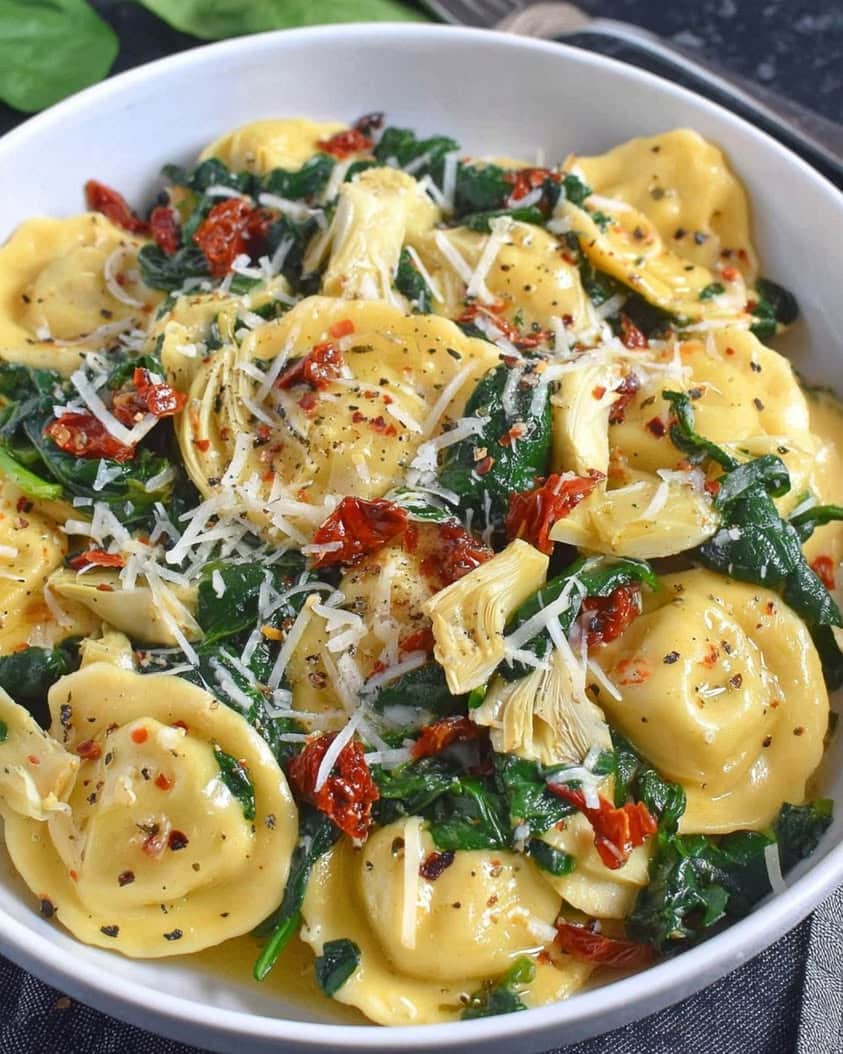
- Visual Appeal: The dish is a feast for the eyes with its vibrant colors—the deep green spinach, the bright red sun-dried tomatoes, the pale green artichokes, and the golden ravioli all coated in a luscious cream sauce.
- Skill Level Needed: This is a beginner-friendly recipe. The techniques involve basic sautéing and simmering. If you can boil pasta and stir a sauce, you can absolutely master this creamy ravioli dish.
- Special Equipment: No special tools are required. A large skillet or sauté pan and a pot for boiling the ravioli are all you need. A good chef’s knife for mincing garlic is helpful but not mandatory.
Recipe Overview
- Difficulty Level: We rate this recipe as “Easy” because it utilizes pre-made cheese ravioli as a fantastic shortcut. The sauce is a simple reduction of cream, broth, and cheese, requiring no complex roux or techniques. Most steps involve simple combining and simmering, making it perfect for cooks of all levels.
- Category: This dish fits perfectly into several categories: Main Course, Vegetarian Pasta, Quick Dinners, and Comfort Food. It’s substantial enough to stand alone but can also be part of a larger Italian-inspired feast.
- Cuisine: The recipe draws heavily from Italian-American and Mediterranean culinary traditions. The use of ravioli, Parmesan, basil, and sun-dried tomatoes is classically Italian, while the creamy, pan-based sauce is a popular modern adaptation.
- Cost: This is a moderately priced meal. Store-bought ravioli, frozen spinach, and jarred artichokes are affordable staples. The most significant cost comes from the heavy cream and Parmesan cheese. Overall, it’s far more economical than dining out for a similar dish.
- Season: This creamy ravioli is excellent year-round. It’s comforting and hearty for fall and winter, yet the bright, tangy flavors from the sun-dried tomatoes and artichokes feel fresh and appropriate for spring and summer evenings.
- Occasion: It’s incredibly versatile. Serve it for a fast family weeknight dinner, a casual dinner party with friends, or a romantic at-home date night. Its elegant appearance belies its simple preparation.
Why You’ll Love This Recipe
First and foremost, the taste and texture are utterly irresistible. The creamy sauce, made with vegetable broth and Parmesan, is luxuriously rich without being overly heavy. Meanwhile, the sun-dried tomatoes cut through that richness with their concentrated tang, and the artichokes offer a sophisticated, savory flavor. Every forkful delivers a perfect mix of creamy, cheesy, tangy, and tender elements. Consequently, this dish satisfies cravings for both comfort food and something gourmet, all in one pan.
From a convenience standpoint, this recipe is a true weeknight hero. It leverages smart shortcuts like pre-made ravioli and jarred vegetables without sacrificing an ounce of flavor. Furthermore, the entire cooking process is streamlined and efficient. You can have the sauce simmering while the ravioli boils, leading to a complete meal in well under an hour. Therefore, it eliminates the stress of complicated cooking after a long day while still delivering a meal that feels special and homemade.
Nutritionally, this creamy ravioli packs a surprising punch. Spinach is a powerhouse of iron, vitamins A, C, and K. Artichokes are excellent sources of fiber and antioxidants. Using a vegetable broth base and loading the sauce with vegetables increases the dish’s overall nutrient density compared to a plain cream sauce. For a more balanced meal, you can easily add a side salad or steamed vegetables.
For entertaining, this dish is a guaranteed crowd-pleaser. Its vibrant, colorful presentation looks like you spent hours in the kitchen. Additionally, it’s naturally vegetarian, making it suitable for a wide range of guests. You can easily double or triple the recipe in a larger pot to feed a group. Serving this creamy ravioli with a simple salad and some crusty bread creates a complete, impressive menu with minimal effort on your part.
Finally, it’s cost-effective and accessible. The ingredients are readily available at any standard grocery store. You don’t need expensive, hard-to-find items. By making this restaurant-style pasta at home, you save a significant amount of money. You also gain complete control over the quality of ingredients, allowing you to choose organic vegetables or a higher-quality Parmesan if you wish.
Historical Background and Cultural Significance
Ravioli, of course, has a long and storied history in Italian cuisine. Its exact origins are debated, with some theories tracing it back to the Middle Ages in the regions of Lombardy and Emilia-Romagna. Traditionally, ravioli was a way to use up leftover meats and cheeses, encasing them in simple pasta dough. The concept of cheese-filled ravioli, like the ones used in this recipe, became a staple, particularly with fillings like ricotta and Parmesan. This practice of creating a luxurious meal from humble ingredients is at the very heart of Italian home cooking.
The cultural significance of pasta dishes like this one lies in their role as a centerpiece for family gathering and celebration. In Italy, pasta is rarely just a quick meal; it’s a course meant to be savored. The addition of a creamy sauce, while perhaps more modern and American-influenced, follows the Italian principle of “la cucina povera” or “poor kitchen”—making the most of what you have. Here, a rich, satisfying sauce is built from a few pantry staples to elevate a simple pasta.
The evolution of this specific recipe is a testament to global ingredient exchange. Sun-dried tomatoes, a method of preservation from Southern Italy, became a worldwide pantry staple. Artichokes, cultivated for centuries in the Mediterranean, are now commonly found jarred or canned. The fusion of these preserved, flavor-intense ingredients with fresh cream and cheese represents a modern, global approach to Italian cooking. It’s a dish that respects tradition while embracing convenience.
Regional variations of ravioli dishes are endless. In Rome, you might find ravioli with a simple butter and sage sauce. In the North, a cream-based sauce is more common. This recipe, with its spinach, sun-dried tomatoes, and artichokes, leans into the flavors of the Mediterranean coast. You could easily adapt it with regional touches: add olives and capers for a Sicilian twist, or use wild mushrooms and truffle oil for a Northern Italian feel. The basic formula is wonderfully adaptable.
Ingredient Deep Dive
Cheese Ravioli: The foundation of the dish. Using a high-quality store-bought fresh or frozen cheese ravioli is the ultimate time-saver. Look for ravioli with a ricotta and Parmesan blend for the best flavor and texture. For a homemade touch, you can certainly use your own pasta dough and filling. From a nutritional standpoint, ravioli provides carbohydrates for energy and protein from the cheese filling. Store uncooked ravioli in the refrigerator or freezer according to package directions until ready to use.
Sun-Dried Tomatoes: These are flavor bombs. Traditionally, tomatoes were dried in the hot sun of Southern Italy as a preservation method, concentrating their sugars and acids. They add a powerful tangy-sweet umami punch to the sauce. Nutritionally, they are high in lycopene, an antioxidant. You can use either oil-packed or dry-packed; if using dry-packed, rehydrate them in hot water first. Their intense flavor means a little goes a long way, making them a cost-effective ingredient.
Artichoke Hearts: Typically used are the tender hearts from jarred or canned artichokes. The artichoke is a thistle, and its heart is the prized, meaty base of the flower bud. They have a mild, slightly sweet, and nutty flavor with a hint of brine. They are an excellent source of fiber, vitamin C, and folate. Be sure to drain and rinse them well to remove any overly salty or metallic taste from the preserving liquid. Quartered hearts are ideal for even distribution in the sauce.
Spinach: We use frozen chopped spinach for convenience and consistency. It’s pre-washed, pre-chopped, and available year-round. Spinach is famously rich in iron, calcium, and vitamins A and K. Thawing and thoroughly draining it is crucial to prevent a watery sauce. Squeeze the spinach in a clean kitchen towel or with your hands to remove as much liquid as possible. This step ensures your creamy sauce stays luxuriously thick and clings to the pasta.
The Cream Sauce Base: The trio of butter, garlic, and vegetable broth creates the flavor foundation. The butter adds richness, the garlic provides aromatic depth, and the vegetable broth builds a savory backbone without meat. Heavy cream is reduced to thicken the sauce naturally, and grated Parmesan cheese melts in to add saltiness, umami, and further thickening power. Using freshly grated Parmesan from a block is highly recommended over pre-grated, which often contains anti-caking agents that can make the sauce grainy.
Common Mistakes to Avoid
- Not Draining Spinach Enough: Frozen spinach holds a lot of water. If you don’t thoroughly squeeze it dry, that water will release into your beautiful cream sauce, diluting the flavor and making it thin and runny. Take the extra minute to wring it out completely.
- Overcooking the Ravioli: Cook the ravioli just to al dente according to package directions. They will continue to cook slightly when added to the hot sauce. Overcooked ravioli can become mushy and may even burst open, losing their delicate structure and filling.
- Using Pre-Grated Parmesan: Pre-grated cheese often contains cellulose to prevent clumping. This additive can prevent the cheese from melting smoothly into the sauce, resulting in a grainy or slightly gritty texture. Always grate your Parmesan fresh from a block for the creamiest result.
- Adding Cheese to Boiling Liquid: When adding the Parmesan to the sauce, ensure the heat is low. If the sauce is boiling vigorously, the cheese can “break,” causing the fats to separate and creating a greasy, curdled-looking sauce. Remove the pan from heat or turn it down before stirring in the cheese.
- Not Seasoning in Layers: Season the sauce as you build it. A pinch of salt when sautéing the garlic, then season again after adding the broth and cream, and finally taste after adding the Parmesan. This builds a deep, well-rounded flavor instead of a salty top note.
- Crowding the Pan: When initially sautéing the garlic, make sure you have enough space in your skillet. If the pan is too small, the garlic can steam and burn unevenly. Use a large, wide skillet to give all ingredients room to cook properly.
- Skipping the Fresh Basil Garnish: The fresh basil added at the end is not just for looks. Its bright, peppery, anise-like flavor cuts through the richness of the cream and adds a vital layer of fresh aroma. Dried basil cannot replicate this effect.
- Using Artichoke Marinate: Avoid pouring the liquid from the jar of artichokes into the sauce. This liquid is often very salty and vinegary and can overpower the delicate balance of the dish. Always drain and rinse artichoke hearts before using.
Essential Techniques
Sautéing Aromatics: This is the first building block of flavor. Melting butter and gently cooking minced garlic until fragrant (about 30-60 seconds) unlocks their essential oils without burning them. Burnt garlic turns bitter and will ruin the sauce. The key is medium-low heat and constant attention. The moment you smell that sweet, nutty aroma, it’s time to add the next ingredient.
Reducing a Cream Sauce: After adding the vegetable broth and heavy cream, you bring the mixture to a simmer. Simmering, not boiling, allows the liquid to evaporate slowly, concentrating the flavors and naturally thickening the sauce. This process can take 5-10 minutes. You’ll know it’s ready when the sauce coats the back of a spoon. This technique creates a luxurious texture without needing flour or cornstarch.
Finishing with Cheese Off Heat: This is a critical step for a smooth, emulsified sauce. Once your sauce has reduced, turn the heat to low or remove the pan from the burner entirely. Then, gradually stir in the grated Parmesan. The residual heat is enough to melt the cheese smoothly. Adding cheese to a violently bubbling sauce will cause it to “seize” and become oily and grainy.
Combining Pasta and Sauce: Always add the cooked, drained ravioli directly to the skillet with the sauce. Gently toss or fold them together for a minute or two over low heat. This allows the pasta to absorb some of the sauce and become one cohesive dish, rather than having sauce merely sit on top. It’s the difference between a integrated meal and separate components on a plate.
Pro Tips for Perfect Creamy Ravioli
- Reserve a half cup of the starchy ravioli cooking water before draining. If your sauce thickens too much upon standing, you can add a splash of this water to loosen it to the perfect consistency. The starch helps the water bind with the sauce.
- For a deeper flavor, use the oil from the jar of sun-dried tomatoes to sauté the garlic instead of plain butter. This infuses the entire sauce with a beautiful tomato-herb essence from the very beginning.
- Let the frozen spinach thaw in a colander in the sink. Then, use your hands to squeeze out liquid in fistfuls, or place it in a clean kitchen towel, gather the corners, and twist tightly over the sink to extract maximum moisture.
- If using fresh ravioli, reduce the cooking time significantly—often just 2-4 minutes. Fresh pasta cooks much faster than frozen or dried varieties, so adjust accordingly to avoid overcooking.
- For an extra flavor boost, add a pinch of red pepper flakes to the garlic as it sautés. This adds a subtle, warming heat that complements the creamy, tangy elements beautifully.
- Garnish with toasted pine nuts or chopped walnuts for added crunch and a nutty flavor that pairs wonderfully with the spinach and artichokes.
- Serve immediately. Cream-based pasta dishes are at their best when fresh and hot. The sauce will continue to thicken as it sits, and the ravioli can become soft.
Variations and Adaptations
Regional Variations: For a Tuscan twist, replace the artichokes with cannellini beans and add a handful of chopped fresh rosemary. For a Southern Italian flair, add chopped Kalamata olives, capers, and a squeeze of lemon juice at the end. To mimic a Northern Italian style, use wild mushrooms in place of artichokes and finish with a drizzle of white truffle oil.
Seasonal Adaptations: In spring, use fresh asparagus tips and peas instead of artichokes and spinach. In summer, incorporate fresh basil pesto swirled into the cream sauce and use fresh cherry tomatoes. For autumn, roasted butternut squash cubes and sage make a wonderful seasonal combination. In winter, hearty kale can stand in for spinach.
Dietary Modifications: For a gluten-free version, use certified gluten-free cheese ravioli. To make it dairy-free, use a plant-based butter alternative, unsweetened coconut cream or cashew cream, and a nutritional yeast or vegan Parmesan substitute. For a protein boost, add shredded rotisserie chicken or cooked shrimp in the final minutes of cooking.
Flavor Variations: Swap the sun-dried tomatoes for roasted red peppers for a sweeter, smokier note. Use a different cheese filling in your ravioli, such as mushroom or butternut squash. Incorporate different herbs: try thyme with mushrooms or oregano for a more robust Greek-inspired profile.
Texture Modifications: For a chunkier sauce, use whole baby spinach leaves (fresh or frozen) and larger pieces of artichoke. For a smoother, more uniform sauce, you can puree the sun-dried tomatoes and artichokes with a bit of the cream before adding them to the pan.
Presentation Alternatives: Serve the ravioli and sauce in a large, shallow bowl for a rustic family-style presentation. For individual plating, use a pair of tongs to twirl a portion of ravioli into the center of a plate, then spoon extra sauce and vegetables around. Garnish with a whole basil leaf and a sprinkle of microgreens for a restaurant-worthy look.
Serving and Presentation Guide
Plating is key to making this home-cooked meal feel special. Use a wide, shallow pasta bowl or plate. With tongs, gently place a serving of ravioli in the center. Spoon the creamy sauce with plenty of spinach, tomatoes, and artichokes over the top, allowing some to spill onto the plate. Avoid piling it high; a flatter presentation shows off the beautiful ingredients. Wipe any drips from the rim of the plate for a clean look.
Garnishing adds the final touch of freshness and color. A generous sprinkle of freshly chopped basil is non-negotiable. You can also add a light dusting of extra grated Parmesan cheese. For texture contrast, a small handful of toasted pine nuts, walnuts, or breadcrumbs adds a delightful crunch. A final grind of black pepper over the top adds visual speckles and flavor.
Traditional accompaniments keep the meal Italian-focused. A simple side salad of mixed greens with a light lemon vinaigrette cuts through the richness of the pasta. Warm, crusty bread like a baguette or ciabatta is essential for soaking up every last drop of the delicious sauce. For a beverage, a glass of chilled white wine completes the experience.
Modern serving suggestions might include pairing it with roasted broccolini or garlic sautéed green beans for a vegetable-forward meal. You could also serve smaller portions as a primo (first course) before a main of grilled fish or chicken. For a casual gathering, serve it directly from the skillet at the table for a cozy, family-style feel.
Temperature considerations are crucial. Serve the dish immediately after combining the ravioli and sauce. The pasta should be piping hot, and the plates should be warm (you can warm them in the oven for a minute). If the dish sits, the sauce will thicken and the ravioli may stick together. Have your diners ready to eat as soon as it’s plated.
Portion control is easy with this rich dish. A standard serving is about 6-8 ravioli per person, depending on their size and the appetites of your guests. Because it’s so flavorful and satisfying, people often need less than they think. Start with a moderate portion and offer seconds, as it’s easy to reheat a bit more sauce and ravioli if needed.
Wine and Beverage Pairing
Wine pairings should complement the creamy, tangy, and savory notes. A crisp, acidic white wine like Pinot Grigio or Sauvignon Blanc cuts through the richness of the sauce beautifully. For a more rounded option, an unoaked Chardonnay has the body to match the cream without overpowering the vegetables. If you prefer red, choose a light-bodied, low-tannin red like a Pinot Noir served slightly chilled, which won’t clash with the tomatoes and artichokes.
Non-alcoholic alternatives can be just as sophisticated. Sparkling water with a twist of lemon or lime cleanses the palate. A tart cherry or pomegranate juice spritzer (mixed with club soda) mirrors the tangy notes of the sun-dried tomatoes. Iced herbal tea, such as lemon verbena or mint, offers a refreshing counterpoint to the creamy dish.
While not traditional, certain coffees or teas can work if serving this as a lunch. A light roast coffee with bright acidity can be a surprising complement. After dinner, an herbal digestif tea like chamomile or peppermint would be a soothing finish, aiding digestion after the rich meal.
Temperature is paramount for beverages. White wines and non-alcoholic spritzers should be well-chilled, around 45-50°F. Red wine, if used, should be served at a cool cellar temperature, around 55°F, not room temperature. Iced drinks should have plenty of ice to stay cold throughout the meal.
Serving suggestions include always offering water alongside any other beverage. Pour wine into appropriate glasses to enhance the aroma and experience. For a dinner party, you might offer a choice between a white and a non-alcoholic option to cater to all guests. Present drinks before the food arrives to allow guests to settle in.
Storage and Shelf Life
Storage methods for leftovers are straightforward but time-sensitive. Allow the dish to cool completely at room temperature for no more than two hours to prevent bacterial growth. Then, transfer it to an airtight container. You can store the ravioli and sauce together, but be aware the pasta will continue to absorb liquid, making the sauce thicker and the ravioli softer.
Temperature requirements are strict for food safety. Refrigerate leftovers immediately and keep them at or below 40°F. The creamy ravioli will keep in the refrigerator for 3-4 days. Do not leave it out on the counter for extended periods after serving.
Container recommendations include glass or BPA-free plastic containers with tight-fitting lids. Avoid storing in the skillet you cooked in. For best results, portion leftovers into single-serving containers for easy reheating. This minimizes the number of times you reheat the entire batch, preserving texture and flavor.
Signs of spoilage are important to recognize. Discard the pasta if you notice an off or sour smell, visible mold, or significant discoloration. If the sauce has separated irreversibly into a greasy, watery mess, it’s best not to consume it. When in doubt, throw it out.
Reheating instructions are gentle to prevent further breakdown. The best method is on the stovetop. Place the ravioli and sauce in a skillet with a splash of water, broth, or milk. Heat over low-medium heat, stirring gently, until warmed through. You can also use a microwave: place in a microwave-safe dish, cover loosely, and heat in 30-second intervals, stirring in between, to avoid overheating and exploding ravioli.
Freezing guidelines are not generally recommended for this dish. The cream sauce is likely to separate and become grainy upon thawing and reheating. The ravioli pasta can become mushy. The vegetables, especially the spinach, will lose their texture and become watery. It’s best enjoyed fresh or refrigerated for a few days.
Make Ahead Strategies
Prep timeline can save you valuable minutes during the dinner rush. The day before or the morning of, you can prep all your ingredients: mince the garlic, drain and chop the artichokes, drain and squeeze the spinach, and grate the Parmesan cheese. Store each component in separate containers in the refrigerator. This “mise en place” turns the active cooking time into a simple assembly process.
Storage between steps is simple with prepped ingredients. Keep chopped garlic in a small bowl covered with plastic wrap. Store squeezed spinach in a container lined with a paper towel to absorb any residual moisture. Keep grated cheese in a sealed bag or container. Having everything ready means you can start cooking the sauce the moment the ravioli water comes to a boil.
Quality impact assessment is important. Pre-minced garlic from a jar can be used in a pinch but lacks the fresh, bright flavor of freshly minced. Pre-grated cheese saves time but may affect sauce smoothness. Prepping vegetables ahead has virtually no negative impact, making it the most valuable make-ahead step.
Assembly tips for a streamlined process: Start boiling your water for the ravioli first, as it takes the longest. While it heats, begin sautéing the garlic for the sauce. Time it so the sauce is nearly finished reducing just as the ravioli reaches al dente. This synchronous timing ensures everything is hot and fresh when combined.
Reheating guidelines for a fully made-ahead dish are not ideal, but if you must, follow the gentle stovetop method with added liquid. The texture of the ravioli will be softer than if served immediately. The sauce may thicken significantly, requiring more liquid to loosen.
Fresh element additions are key if you do make parts ahead. Always add the fresh basil garnish right before serving, even if you reheated the dish. The heat will wilt it perfectly. You might also consider saving a few pieces of sun-dried tomato or artichoke to sprinkle on top after reheating for a fresher visual appeal.
Scaling Instructions
Halving the recipe is simple for smaller households. Use a medium skillet instead of a large one. Precisely halve all ingredient quantities. The cook times will remain roughly the same, though the sauce may reduce a minute or two faster due to the smaller volume. Keep a close eye on it to prevent over-thickening.
Doubling or tripling the recipe for a crowd requires some adjustments. Use a very large, wide pot or Dutch oven to ensure even cooking and reduction of the sauce. You may need to increase the sauce reduction time by a few minutes. Cook the ravioli in batches to avoid overcrowding the pot, which leads to uneven cooking and sticking. Keep the first batch warm by tossing it with a bit of olive oil.
Equipment adjustments are necessary when scaling. A standard 10-12 inch skillet works for the original or halved recipe. For doubled recipes, a 5-quart Dutch oven or a large sauté pan with high sides is essential. Ensure you have a pot large enough to boil a larger quantity of ravioli without them sticking together.
Timing modifications are minimal when scaling up. The sauce will take longer to come to a simmer and reduce due to greater volume. Factor in an extra 5-10 minutes for the sauce when doubling. Ravioli cooking time remains per package instructions, but boiling the large volume of water may take longer initially.
Storage considerations for large batches are important. If you don’t plan to serve all the food immediately, consider combining only the portion you will eat right away. Store the extra cooked ravioli and sauce separately in the refrigerator. Combine them gently when reheating to preserve the best texture. This prevents the pasta from absorbing all the sauce overnight.
Nutritional Deep Dive
Macro breakdown per serving will vary based on specific brands of ravioli and cream used. Generally, a serving provides a balance of carbohydrates from the pasta, a moderate amount of protein from the cheese filling and Parmesan, and a significant amount of fat from the cream, butter, and cheese. It’s an energy-dense meal, perfect for an active day or a satisfying dinner.
Micronutrient analysis reveals strengths from the vegetables. Spinach contributes iron, magnesium, and vitamins A, C, and K. Artichokes are a great source of fiber, vitamin C, folate, and magnesium. Sun-dried tomatoes provide lycopene and potassium. The dairy components offer calcium and vitamin B12. This makes the dish more nutrient-rich than a plain pasta with cream sauce.
Health benefits include support for bone health from calcium and vitamin K, antioxidant protection from lycopene and vitamin C, and digestive support from the fiber in artichokes and spinach. The fats from dairy can aid in the absorption of fat-soluble vitamins (A, D, E, K) present in the vegetables.
Dietary considerations are important to note. This is a vegetarian dish but not vegan or dairy-free. It contains gluten unless gluten-free ravioli are used. It is high in saturated fat due to the cream and cheese. Those with lactose intolerance may need to modify the recipe or use lactase supplements.
Portion analysis shows that a standard serving is satisfying due to its richness. It’s easy to overeat because it’s delicious, but being mindful of portion size can help manage calorie intake. Using a smaller plate can create a visual cue of a full portion without over-serving.
Weight management tips include serving the creamy ravioli with a large side salad dressed with vinegar or lemon juice to increase volume and fiber without many calories. You can also use half-and-half instead of heavy cream for a lighter sauce, though it will be less thick. Increasing the ratio of spinach and artichokes to pasta adds nutrients and fullness for fewer calories per bite.
Dietary Adaptations
Gluten-Free: This adaptation is very simple. Use a certified gluten-free cheese ravioli, which are now widely available in the frozen or refrigerated section of most grocery stores. Ensure your vegetable broth is also certified gluten-free, as some brands may contain gluten-derived ingredients. All other components are naturally gluten-free.
Dairy-Free/Vegan: Replace butter with olive oil or vegan butter. For the cream, use a full-fat, unsweetened canned coconut milk or a plain, unsweetened plant-based cream alternative (soy, oat, or cashew cream work well). Substitute the Parmesan cheese with a generous amount of nutritional yeast for a cheesy, umami flavor, or use a store-bought vegan Parmesan. Ensure the ravioli themselves are vegan, made without egg in the pasta and with a plant-based cheese filling.
Low-Carb/Keto: The main challenge is the ravioli pasta. Look for specialty low-carb ravioli options made with almond flour or cheese wraps, or consider making your own with keto-friendly dough. For the sauce, ensure you use full-fat heavy cream and check that the vegetable broth has no added sugars. Sun-dried tomatoes and artichokes are moderately higher in carbs, so use them sparingly to fit your macros, focusing more on the spinach and sauce.
Paleo: This requires significant modification, as traditional pasta and dairy are not Paleo-compliant. You could serve the creamy vegetable sauce (made with coconut milk and nutritional yeast) over spiralized zucchini noodles (zoodles) or spaghetti squash. Omit the Parmesan cheese or use a Paleo-friendly substitute. Ensure all ingredients are whole, unprocessed foods.
Low-FODMAP: Garlic is high in FODMAPs. Use garlic-infused olive oil instead of sautéing fresh garlic to get the flavor without the fructans. Sun-dried tomatoes and artichoke hearts can be problematic in large quantities; stick to a small serving size per person (e.g., 1-2 pieces of each). Use lactose-free cream or a suitable plant-based alternative if lactose is an issue. Always consult the Monash University FODMAP app for current serving size guidelines.
Troubleshooting Guide
Sauce is Too Thin: If your sauce hasn’t thickened enough, let it simmer uncovered for a few more minutes to allow further reduction. Alternatively, create a quick slurry by mixing 1 teaspoon of cornstarch with 1 tablespoon of cold water. Whisk this into the simmering sauce and cook for another minute until thickened. Avoid adding flour directly to the hot sauce, as it will clump.
Sauce is Too Thick: A sauce that becomes pasty or gloppy is easily fixed. Simply thin it with a splash of the reserved pasta cooking water, additional vegetable broth, or even a little milk or cream. Add the liquid a tablespoon at a time, stirring over low heat, until you reach the desired consistency. The starchy pasta water is ideal as it helps the liquid emulsify back into the sauce.
Sauce Broke or Looks Grainy: This usually happens if the cheese was added to boiling liquid or if pre-grated cheese was used. To try to save it, remove the sauce from heat and vigorously whisk in a tablespoon of cold butter or cream. This can sometimes re-emulsify the fats. If it’s beyond repair, the flavor will still be good, though the texture will be less smooth.
Ravioli Stuck Together or Tearing: Prevent this by using a large pot of well-salted boiling water and stirring gently after adding the ravioli. Cook them in batches if necessary. If they do stick, don’t force them apart in the water. Instead, remove them carefully with a slotted spoon. To prevent cooked ravioli from sticking while you finish the sauce, toss them with a tiny bit of olive oil after draining.
Dish Tastes Bland: This is almost always a seasoning Print
Ravioli with Spinach, Sun-Dried Tomatoes and Artichokes
- Total Time: 45 minutes
- Yield: 4
Description
A vibrant and flavorful pasta dish featuring cheese ravioli tossed with fresh spinach, tangy sun-dried tomatoes, and tender artichoke hearts in a light garlic-infused olive oil sauce.
Ingredients
- 1 pound cheese ravioli (fresh or frozen)
- 2 tablespoons olive oil
- 3 cloves garlic, minced
- 1 cup sun-dried tomatoes (packed in oil, drained and sliced)
- 1 (14-ounce) can artichoke hearts, drained and quartered
- 4 cups fresh spinach leaves
- 1/4 cup grated Parmesan cheese
- Salt and black pepper to taste
- Fresh basil leaves for garnish (optional)
Instructions
- Bring a large pot of salted water to a boil. Cook the ravioli according to package directions until al dente. Drain and set aside.
- While the ravioli cooks, heat olive oil in a large skillet over medium heat. Add minced garlic and sauté for 1 minute until fragrant.
- Add sun-dried tomatoes and artichoke hearts to the skillet. Cook for 3-4 minutes, stirring occasionally, until heated through.
- Stir in fresh spinach and cook until wilted, about 2 minutes. Season with salt and pepper.
- Add the cooked ravioli to the skillet and gently toss to combine with the vegetable mixture. Sprinkle with Parmesan cheese and toss again.
- Serve immediately, garnished with fresh basil if desired.
Notes
You can customize the seasonings to taste.
- Prep Time: 15 minutes
- Cook Time: 30 minutes
- Method: Main
- Cuisine: Italian