Creamy Ravioli with Spinach, Sun-Dried Tomatoes, and Artichokes: A Restaurant-Quality Pasta in Minutes
Imagine a dish that feels both decadent and wholesome, a vibrant pasta creation that comes together in the time it takes to boil water. This recipe for Creamy Ravioli with Spinach, Sun-Dried Tomatoes, and Artichokes is exactly that. It transforms simple, store-bought cheese ravioli into a spectacular meal with a luxurious, velvety sauce and a colorful medley of Mediterranean-inspired vegetables. The result is a plate that looks and tastes like it came from a fine Italian bistro, yet it requires minimal effort and basic kitchen skills. Consequently, it is perfect for busy weeknights when you crave something special without the fuss.
The magic of this dish lies in its brilliant combination of textures and flavors. Plump, tender ravioli are enveloped in a rich, garlic-infused cream sauce. Simultaneously, sweet and tangy sun-dried tomatoes, earthy artichoke hearts, and fresh spinach create a symphony of taste in every bite. This Creamy Ravioli with Spinach, Sun-Dried Tomatoes, and Artichokes is a guaranteed crowd-pleaser. It is elegant enough for a dinner party yet simple enough for a comforting family meal. Ultimately, it proves that incredible food does not need to be complicated.
Furthermore, this recipe is incredibly versatile. You can easily adapt it based on what you have in your pantry or to suit different dietary needs. The base of creamy sauce and pasta provides a perfect canvas for experimentation. Whether you are a seasoned cook or just starting out, this dish will become a reliable favorite in your rotation. Let us dive into the details of how to create this stunning and satisfying pasta masterpiece.
Quick Recipe Highlights
- Flavor Profile: This dish offers a beautiful balance of rich, tangy, and savory notes. The creamy Parmesan sauce provides a luxurious base, while the sun-dried tomatoes add a punch of sweet acidity. The artichokes contribute a subtle, earthy flavor that grounds the entire dish.
- Texture: You will enjoy a wonderful contrast of textures. The pasta is soft and pillowy, the artichokes are tender yet firm, and the sun-dried tomatoes offer a delightful chew. The wilted spinach melts into the sauce, adding body without bulk.
- Aroma: As it cooks, your kitchen will fill with the irresistible scent of sautéed garlic and onions, followed by the nutty aroma of toasting Parmesan cheese melding with cream. The herbal notes of basil complete the fragrant experience.
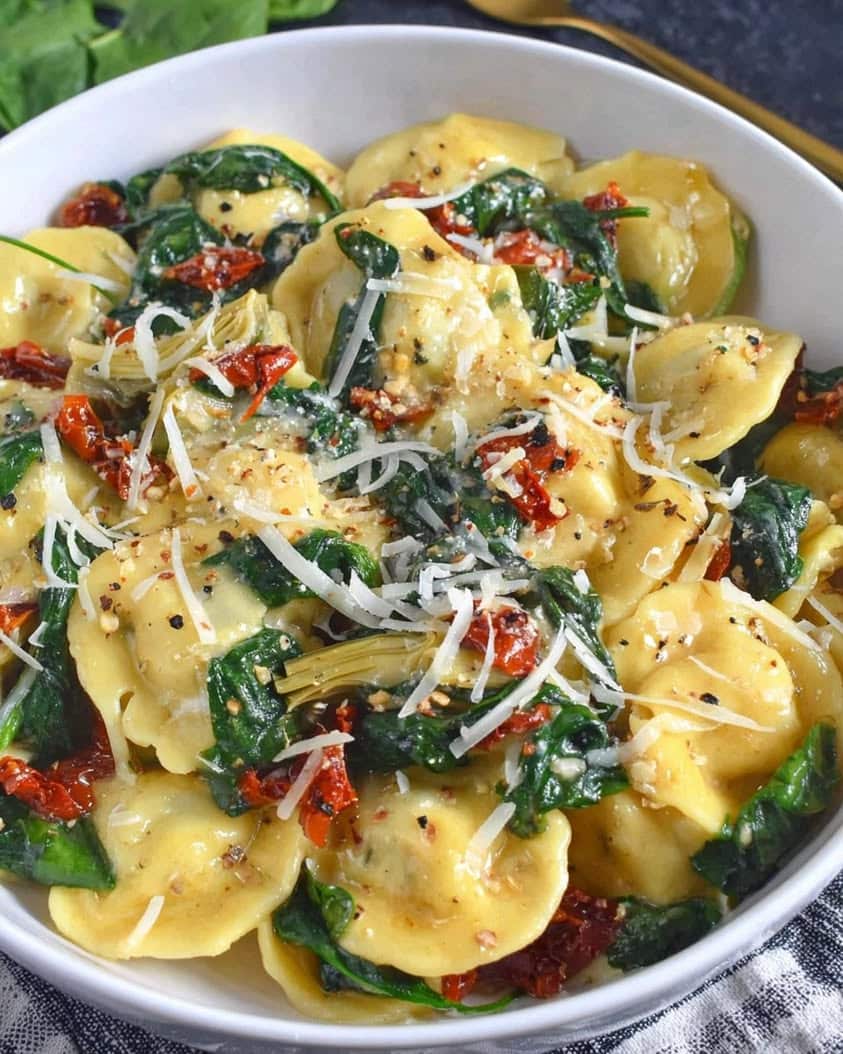
- Visual Appeal: This is a visually stunning dish. The vibrant red of the sun-dried tomatoes, the deep green of the spinach, and the pale green of the artichokes create a colorful mosaic against the creamy white sauce and golden ravioli.
- Skill Level Needed: This is a beginner-friendly recipe. The techniques involve simple sautéing, simmering, and combining ingredients. If you can boil pasta and stir a sauce, you can absolutely master this creamy ravioli dish.
- Special Equipment: No special tools are required. You just need a large pot for boiling the ravioli, a large skillet or sauté pan for the sauce, and basic kitchen utensils like a wooden spoon, knife, and cutting board.
Recipe Overview
- Difficulty Level: We rate this recipe as “Easy” because it uses pre-made cheese ravioli as a fantastic shortcut. The sauce comes together in one pan while the pasta cooks, and the vegetable prep is minimal. There are no advanced techniques like making pasta from scratch or preparing a roux, making it accessible for cooks of all levels.
- Category: This dish falls squarely into the main course category. It is a hearty and complete meal on its own. Additionally, it can be classified as a pasta dish, a vegetarian entrée, and a comfort food recipe, showcasing its wonderful versatility.
- Cuisine: The recipe is firmly rooted in Italian-American cuisine. It draws inspiration from the flavors of the Mediterranean—garlic, Parmesan, sun-dried tomatoes, and artichokes—but presents them in a quick, creamy format that is popular in modern home cooking.
- Cost: This is a moderately priced meal. The most significant cost is the package of fresh or frozen cheese ravioli. Sun-dried tomatoes and artichoke hearts, often purchased jarred or canned, are pantry staples that provide multiple servings. Fresh spinach, cream, and Parmesan are relatively low-cost ingredients that deliver high flavor impact.
- Season: This creamy ravioli is truly a dish for all seasons. It is comforting and rich in the cooler fall and winter months. Conversely, the bright, tangy flavors from the sun-dried tomatoes and artichokes also make it feel fresh and appropriate for spring and summer evenings.
- Occasion: It is perfect for a quick weeknight dinner, a casual weekend lunch, or a last-minute dinner party. The impressive presentation and complex flavor make it seem like you spent far more time than you actually did, which is ideal for entertaining.
Why You’ll Love This Recipe
First and foremost, the taste and texture are absolutely divine. Each forkful delivers a perfect harmony. The creamy sauce coats every nook and cranny of the ravioli, ensuring maximum flavor in every bite. The sun-dried tomatoes burst with concentrated sweetness, the artichokes offer a tender heartiness, and the spinach wilts into silky ribbons. This combination creates a restaurant-quality experience in your own home. Moreover, the use of cheese-filled ravioli means you get a delightful surprise of molten cheese inside each pasta pouch, adding another layer of delicious complexity.
Secondly, the convenience factor is unbeatable. This entire meal comes together in about thirty minutes from start to finish. Since the ravioli is pre-made, you skip the most labor-intensive part of pasta making. The sauce is a simple dump-and-simmer affair. Essentially, you can have a gourmet-tasting dinner on the table faster than you could get takeout. This makes it a lifesaver on those hectic evenings when cooking feels like a chore but you still want a wholesome, homemade meal.
From a nutritional perspective, this dish packs a good vegetable punch. Spinach is a powerhouse of vitamins A, C, and K, as well as iron. Artichokes are an excellent source of fiber and antioxidants. By incorporating these vegetables into a creamy pasta, you make eating your greens an absolute pleasure. You can easily feel good about serving this to your family, knowing they are getting a dose of valuable nutrients alongside their comforting carbs.
For social and entertaining value, this creamy ravioli is a star. It is a one-pan wonder that does not leave you with a mountain of dishes. You can prepare it largely ahead of time, simply reheating the sauce and cooking the ravioli fresh when guests arrive. The colorful, elegant presentation always garners compliments. It is a universally appealing dish that caters to vegetarians and impresses meat-eaters alike, making menu planning for mixed groups much simpler.
Finally, it is cost-effective and accessible. You do not need any rare or expensive ingredients. Most components are pantry staples or easily found at any standard grocery store. By using a few strategic, flavor-packed ingredients like sun-dried tomatoes and artichokes, you create a dish that tastes far more luxurious than its price tag suggests. This recipe demonstrates how to eat well on a budget without sacrificing an ounce of flavor or satisfaction.
Historical Background and Cultural Significance
The story of ravioli itself stretches back centuries in Italian culinary history. References to a pasta envelope filled with cheese or other ingredients appear in manuscripts from as early as the 14th century in Venice and Genoa. Originally, ravioli was often a food for special occasions and festivals, a way to encase precious fillings like ricotta cheese, herbs, and sometimes even sweet mixtures. The concept of pairing filled pasta with a simple sauce is deeply traditional. However, the specific combination in this Creamy Ravioli with Spinach, Sun-Dried Tomatoes, and Artichokes is a more modern, fusion-inspired creation.
Culturally, this dish represents the beautiful evolution of Italian cuisine as it traveled and adapted. The use of sun-dried tomatoes is a practice born from necessity in Southern Italy, where summer tomatoes were preserved in oil to last through the winter. Artichokes have been a staple in Roman and Sicilian cooking for generations. Combining these preserved and fresh vegetables with a rich cream sauce reflects a contemporary, global approach to cooking where convenience and bold flavor are paramount. It honors Italian ingredients while embracing modern, time-saving techniques.
The evolution of this recipe is directly tied to the availability of pre-made fresh pasta in supermarkets. A generation ago, making ravioli was a lengthy, family-centered activity. Today, high-quality fresh or frozen ravioli allows home cooks to create impressive pasta dishes on a weekday schedule. The creamy sauce with spinach and artichokes has parallels in dishes like pasta alla Norcina or creamy artichoke dips, but its assembly as a quick ravioli topping is a testament to the innovation of weeknight cooking. It is a recipe born from the desire for both authenticity and efficiency.
Regional variations of this concept are endless. In Northern Italy, one might find ravioli served in a butter and sage sauce. In coastal regions, seafood might be incorporated. This particular version, with its Mediterranean vegetable profile and creamy sauce, has strong ties to Italian-American cuisine, which often features richer, saucier preparations. You could easily imagine a version from California adding olives and fresh basil, or a version from the Midwest incorporating mushrooms. This adaptability is what keeps pasta dishes eternally popular and relevant.
Ingredient Deep Dive
Cheese Ravioli: The foundation of the dish, cheese ravioli provides the satisfying carbs and protein. Traditionally filled with ricotta, Parmesan, and sometimes mozzarella, these little parcels offer a creamy interior that complements the external sauce. Look for fresh ravioli in the refrigerated section for the best texture and flavor; frozen works perfectly well too. For a nutritional boost, some brands offer whole-wheat or spinach-infused pasta. If you cannot find ravioli, cheese tortellini is an excellent substitute, offering a similar flavor and texture profile.
Sun-Dried Tomatoes: These are tomatoes that have been dried to remove most of their water content, concentrating their sweetness and tangy flavor. Historically, sun-drying was a crucial preservation method in sunny climates. They are packed with lycopene, an antioxidant. You can find them dry-packed or jarred in oil; for this recipe, the oil-packed variety is ideal as the oil can be used to sauté the garlic, adding extra flavor. If you only have dry-packed, simply rehydrate them in warm water for 10 minutes before using. Their intense flavor means a little goes a long way.
Artichoke Hearts: Typically used here are the tender, canned or jarred hearts, not the whole globe artichoke. Artichokes have been cultivated for food for thousands of years and are native to the Mediterranean. They are a fantastic source of fiber, vitamin C, and folate. When selecting them, choose marinated artichoke hearts for added herb flavor, or plain ones in water for a more neutral taste. Be sure to drain and rinse them to remove any overly briny liquid. Their unique, slightly nutty flavor and meaty texture make them a standout in vegetarian pasta dishes.
Fresh Spinach: This leafy green wilts down dramatically, allowing you to incorporate a large volume of nutrients into the sauce. Spinach is rich in iron, calcium, and vitamins A and K. For this recipe, baby spinach is preferred for its tenderness and mild flavor. Always give it a good wash, even if the bag says “pre-washed,” to remove any grit. As a storage tip, keep it in the original bag with a dry paper towel to absorb moisture and extend its crisp life. It adds vibrant color and a nutritional boost without overpowering the other ingredients.
Heavy Cream & Parmesan: This duo creates the luxurious, velvety sauce. Heavy cream (or whipping cream) provides the rich base and body. Parmesan cheese, specifically freshly grated Parmigiano-Reggiano, melts smoothly into the cream, adding a salty, nutty, umami depth that is irreplaceable. Pre-grated cheese often contains anti-caking agents that can make sauces grainy, so grating your own is a small step with a big payoff. Together, they create a sauce that clings beautifully to the pasta. For a lighter version, half-and-half can be used, but the sauce will be thinner and less rich.
Common Mistakes to Avoid
- Overcooking the Ravioli: This is the most common pitfall. Fresh ravioli cooks very quickly, often in just 3-4 minutes. Follow the package instructions carefully and taste for doneness. Overcooked ravioli becomes mushy and can burst open, losing its filling into the water.
- Using Pre-Grated Parmesan Cheese: As mentioned, the cellulose in pre-grated cheese prevents it from melting smoothly. It can lead to a clumpy or grainy sauce texture. Always take the extra minute to grate a block of real Parmesan cheese for a perfectly silky sauce.
- Not Reserving Pasta Water: Before you drain the ravioli, scoop out at least a cup of the starchy cooking water. This liquid is gold for adjusting your sauce. It helps thin the cream to the perfect consistency and helps the sauce emulsify and cling to the pasta.
- Crowding the Sauté Pan: When you add the ravioli to the sauce at the end, ensure your pan is large enough. If the pan is too crowded, you will not be able to toss the ravioli gently to coat them, leading to broken pasta and uneven saucing.
- Adding Spinach Too Early: Spinach wilts in seconds. If you add it at the beginning of making the sauce, it will overcook, lose its vibrant color, and become slimy. Always stir it in at the very end, just until it wilts.
- Underseasoning the Sauce: Cream-based sauces need ample seasoning. Do not rely solely on the salt from the Parmesan. Season the sauce in layers: salt the onion/garlic sauté, then taste and adjust again after adding the cream and cheese. Remember, the ravioli itself is seasoned, but the sauce must stand on its own.
- Using High Heat for the Cream Sauce: After adding the cream, you must reduce the heat to a gentle simmer. Boiling heavy cream can cause it to separate or become oily. A low, steady heat allows it to reduce and thicken gracefully.
- Skipping the Garlic Sauté: Do not rush the step of cooking the garlic. It should become fragrant but not browned. Browned garlic turns bitter and can ruin the delicate flavor balance of the entire dish. Cook it gently over medium heat for about one minute.
Essential Techniques
Sautéing Aromatics: This foundational technique builds the flavor base of your sauce. Start by heating oil in your pan over medium heat. Then add the onion, cooking until it becomes soft and translucent, which usually takes about 5 minutes. This process, called sweating, releases the onion’s natural sugars. Next, add the minced garlic and cook for just about 60 seconds until fragrant. The key is to avoid browning the garlic, as it becomes bitter. This gentle cooking unlocks the essential oils and flavors that will infuse the entire cream sauce, creating a deep, savory foundation.
Simmering a Cream Sauce: Mastering a cream sauce is about patience and low heat. After adding the heavy cream to your sautéed aromatics, bring it just to a simmer. You will see small bubbles forming around the edges of the pan. Immediately reduce the heat to low. Let it bubble gently, stirring occasionally, for 3-5 minutes. This allows the cream to reduce slightly, thickening it and concentrating its flavor. Crucially, never let it reach a rolling boil, as high heat can cause the cream to separate or scorch on the bottom of the pan. A steady, gentle simmer is your goal.
Incorporating Cheese into Sauce: For a smooth, lump-free sauce, temperature and technique matter. First, remove the simmering cream sauce from the heat. Let it cool for about a minute; adding cheese to a boiling liquid can cause it to seize. Then, sprinkle in your freshly grated Parmesan cheese. Stir constantly with a wooden spoon or whisk until the cheese is fully melted and incorporated. The residual heat is sufficient to melt the cheese perfectly. If the sauce needs more heat, return it to the lowest possible flame, stirring continuously until smooth.
Wilting Leafy Greens: Adding spinach at the end is a quick-cook technique that preserves color and nutrients. Once your sauce is ready and off the heat, simply add the fresh spinach leaves in batches. Using tongs or a spoon, gently fold the spinach into the warm sauce. The residual heat will cause the leaves to wilt within 60-90 seconds. Continue folding until all the spinach is uniformly wilted and bright green. This method prevents overcooking, ensuring the spinach retains a pleasant texture and does not release excess water that would thin your sauce.
Pro Tips for Perfect Creamy Ravioli
First, for an extra flavor boost, use the oil from the jar of sun-dried tomatoes to sauté your garlic and onion. This infused oil carries the concentrated tomato essence throughout the entire dish.
Second, if your sauce seems too thick after adding the cheese, do not add more cream. Instead, use the reserved starchy pasta water, a tablespoon at a time, to thin it to a luxurious, coating consistency.
Third, for a more complex flavor, add a pinch of red pepper flakes to the garlic as it sautés. This introduces a subtle, warming heat that balances the richness of the cream.
Fourth, to prevent ravioli from sticking together after draining, toss them very lightly with a teaspoon of olive oil if you are not adding them to the sauce immediately.
Fifth, garnish just before serving. A final sprinkle of fresh basil, extra Parmesan, and a crack of black pepper right on the plate elevates the visual appeal and adds a burst of fresh flavor.
Sixth, if using frozen ravioli, do not thaw it first. Add it directly to the boiling water; this prevents it from becoming soggy and helps it hold its shape during cooking.
Seventh, taste your sauce for seasoning after adding the Parmesan, but before adding the ravioli. The cheese is salty, so you can adjust with salt and pepper accurately at this stage.
Eighth, for the best texture, serve the dish immediately after combining the ravioli and sauce. Pasta continues to absorb liquid, so waiting too long can make the dish dry.
Variations and Adaptations
Regional Variations: To give this dish a different regional twist, consider these ideas. For a Tuscan flair, add cannellini beans and chopped fresh rosemary. For a Provençal touch, incorporate sliced black olives and herbes de Provence. An American-Italian spin might include cooked Italian sausage or crispy pancetta for a meaty addition. The basic framework of creamy sauce and ravioli is wonderfully adaptable to local flavors and ingredients.
Seasonal Adaptations: Make the most of seasonal produce. In spring, add fresh peas and asparagus tips with the spinach. During summer, use fresh cherry tomatoes instead of sun-dried, adding them at the end to just warm through. In autumn, roasted butternut squash cubes or sautéed mushrooms would be a fantastic addition. This keeps the recipe exciting and aligned with what is fresh and available at the market.
Dietary Modifications: This recipe is easily modified for various diets. For a gluten-free version, use certified gluten-free cheese ravioli. To make it dairy-free, substitute the heavy cream with full-fat coconut milk and use a vegan Parmesan alternative. For a vegan dish, combine dairy-free ravioli with these substitutions. For a lower-carb option, serve the creamy vegetable sauce over zucchini noodles or roasted spaghetti squash instead of ravioli.
Flavor Variations: Experiment with different cheese profiles. Substitute the Parmesan with Pecorino Romano for a sharper, saltier kick. Add a tablespoon of pesto to the cream sauce for a herbal basil punch. For a smoky note, include a teaspoon of smoked paprika. A splash of white wine added after the garlic and before the cream will add acidity and depth.
Texture Modifications: If you prefer more texture, try toasting pine nuts or walnuts and sprinkling them on top for crunch. For a heartier feel, add sautéed sliced mushrooms or diced roasted eggplant. You can also chop the artichoke hearts more finely for a more integrated texture, or leave them quartered for distinct, meaty bites.
Presentation Alternatives: Instead of mixing everything in the pan, you can plate the ravioli first and spoon the creamy vegetable sauce over the top for a more refined restaurant-style presentation. Alternatively, bake the combined dish in a casserole with a breadcrumb and cheese topping for a baked pasta experience.
Serving and Presentation Guide
Plating Techniques: For an elegant presentation, use a pair of tongs to twist a portion of ravioli into the center of a shallow bowl or plate. Then, spoon the creamy vegetable sauce over and around the pasta, allowing some of the ravioli edges to peek through. This creates height and visual interest. Avoid piling everything into a mound, which can look messy and cause the ravioli on bottom to become soggy.
Garnishing Ideas: Garnishes add the final touch of color and flavor. A scattering of fresh torn basil leaves or chopped flat-leaf parsley is classic. Microgreens add a delicate, modern touch. A light dusting of freshly grated Parmesan cheese is essential. A drizzle of high-quality extra virgin olive oil or even a balsamic glaze around the plate rim adds sophistication. Finally, always finish with a crack of fresh black pepper.
Traditional Accompaniments: In a traditional Italian meal, this rich pasta would be served as a “primo” or first course. It could be followed by a simple “secondo” like a grilled chicken breast or fish fillet with lemon. A crisp, green salad with a sharp vinaigrette is the perfect accompaniment to cut through the richness of the cream sauce. Crusty bread for soaking up every last drop of sauce is non-negotiable.
Modern Serving Suggestions: For a modern, complete meal, serve the creamy ravioli as the main event alongside roasted vegetables like broccoli or broccolini. A glass of dry white wine completes the experience. For a family-style dinner, present the entire skillet at the table with serving utensils, allowing everyone to help themselves, which creates a warm, communal atmosphere.
Temperature Considerations: Pasta is best served immediately, piping hot. Warm your serving bowls by rinsing them with hot water and drying them just before plating. This small step ensures the dish stays hot from the stove to the table. If you must hold the dish for a few minutes, keep it covered in the pan over the absolute lowest heat, but be aware the sauce will continue to thicken.
Portion Control Tips: A standard serving is about 6-8 large ravioli per person. Because the dish is rich with cream and cheese, a little goes a long way. If serving as part of a multi-course meal, reduce the portion to 4-5 ravioli per person. Listening to your body’s cues is important, as the richness is very satisfying.
Wine and Beverage Pairing
Wine Pairings: The rich, creamy sauce and tangy vegetables call for wines with good acidity to cleanse the palate. A crisp Italian Pinot Grigio or Vermentino is a classic choice. A Sauvignon Blanc, particularly from New Zealand, offers vibrant citrus notes that contrast beautifully with the richness. If you prefer red wine, opt for a light-bodied, low-tannin red like a Pinot Noir or a Chianti Classico, which will not overpower the dish. The key is to avoid overly oaky or buttery whites, as they can compete with the sauce’s creaminess.
Non-Alcoholic Alternatives: Sparkling water with a squeeze of lemon or lime is always refreshing. For a more crafted option, try a virgin basil lemonade, where the herbal notes of basil complement the dish. Iced herbal teas, like mint or chamomile, can be soothing. A tart pomegranate spritzer made with pomegranate juice and club soda also provides a nice acidic counterpoint to the creamy pasta.
Coffee/Tea Pairings: After the meal, a cup of espresso is a traditional Italian way to finish. The strong, bitter coffee helps digest the rich meal. For tea drinkers, a cup of peppermint tea is excellent for settling the stomach, or a light green tea can be a refreshing, palate-cleansing end to the dining experience.
Temperature Considerations: White wines should be served well-chilled, between 45-50°F. Light reds like Pinot Noir are best served slightly cooler than room temperature, around 55°F. Non-alcoholic sparkling drinks should be served ice-cold to maximize refreshment. Proper temperature ensures the beverage performs its role in balancing the meal’s flavors.
Serving Suggestions: Always serve wine in appropriate glassware to enhance its aroma and taste. Pour water throughout the meal to keep guests hydrated. When offering non-alcoholic options, present them in attractive glasses with garnishes like citrus slices or herb sprigs to make them feel special and considered.
Storage and Shelf Life
Storage Methods: Store any leftovers in an airtight container in the refrigerator. It is best to store the ravioli and sauce combined, as separating them can dry out the pasta. The dish will keep for up to 3 days. For best results, press a piece of plastic wrap directly onto the surface of the pasta before sealing the container lid; this prevents a skin from forming on the sauce.
Temperature Requirements: Refrigerate leftovers within two hours of cooking. The cream-based sauce is perishable and must be kept at a consistent temperature of 40°F or below. Do not leave the dish out at room temperature for extended periods, as this can allow harmful bacteria to grow.
Container Recommendations: Use glass or BPA-free plastic containers with tight-fitting lids. Shallow containers are better than deep ones, as they allow the pasta to cool more quickly and evenly, which is important for food safety. Avoid storing in the pan you cooked in, unless it is fully covered and placed directly in the fridge.
Signs of Spoilage: Before eating leftovers, check for any off odors, such as a sour or cheesy smell beyond normal Parmesan. Look for visible mold, which can appear as fuzzy spots. If the sauce has separated irreversibly into oily and solid parts, it is best to discard it. When in doubt, throw it out.
Reheating Instructions: Reheat gently to prevent the sauce from breaking. The best method is on the stovetop over low heat, adding a splash of milk, cream, or water to loosen the sauce as it warms. Stir frequently. You can also use a microwave: place in a microwave-safe dish, cover loosely, and heat in 30-second intervals, stirring between each, until hot.
Freezing Guidelines: Freezing is not generally recommended for this dish. The cream sauce is likely to separate and become grainy upon thawing. The ravioli pasta can become mushy. The vegetables, especially the spinach, will lose their texture and become watery. For best quality, enjoy this meal fresh or refrigerated for a short period.
Make Ahead Strategies
Prep Timeline: You can prep components up to a day in advance to streamline dinner. Chop the onion and mince the garlic, storing them together in a small container. Drain and chop the sun-dried tomatoes and artichoke hearts, storing them in another container. Grate the Parmesan cheese and keep it refrigerated. Wash and dry the spinach. Having everything measured and ready turns the actual cooking into a simple 15-minute assembly process.
Storage Between Steps: Keep pre-chopped vegetables in separate airtight containers in the refrigerator. The grated cheese should also be stored in the fridge. The cream should remain in its original carton until ready to use. This organization prevents cross-contamination and flavor transfer, ensuring each ingredient tastes its best when combined.
Quality Impact Assessment: Pre-chopping onions and garlic may lead to a slight loss of pungency, but the impact is minimal for a cooked dish like this. Pre-grating Parmesan is fine if stored properly. The key is to cook the ravioli fresh. Pre-cooked and refrigerated ravioli becomes gummy and is not recommended. The sauce can be made ahead, but may thicken significantly; you will need to thin it with pasta water or milk when reheating.
Assembly Tips: When ready to cook, simply boil the water for the ravioli and start the sauce. Because your ingredients are prepped, the sauce will come together in the time it takes the water to boil and the pasta to cook. This synchronized timing is the secret to a stress-free, quick meal.
Reheating Guidelines: If you made the sauce ahead, reheat it gently in a saucepan over low heat, stirring frequently. Add a little liquid to bring it back to a saucelike consistency before combining with the freshly cooked ravioli. Never boil a reheated cream sauce, as it increases the chance of separation.
Fresh Element Additions: Even with advance prep, always add the spinach at the last minute when you reheat the sauce to preserve its color and texture. Also, garnish with fresh basil or parsley just before serving to maintain their vibrant appearance and aroma.
Scaling Instructions
Halving the Recipe: To serve two, simply divide all ingredient quantities by two. Use a medium skillet instead of a large one. The cook times will remain roughly the same, but you may need slightly less time to reduce the cream sauce due to the smaller volume. Keep a close eye on it to prevent over-thickening.
Doubling or Tripling: For a crowd, double or triple the ingredients. You will need a very large skillet or a wide Dutch oven to accommodate the sauce. You may need to cook the ravioli in batches to avoid overcrowding the pot, which lowers the water temperature and leads to sticky pasta. The sauce may take a few extra minutes to come to a simmer and reduce properly.
Equipment Adjustments: Scaling up requires larger equipment. Ensure your pot for boiling pasta is big enough—at least 8 quarts for a doubled recipe. Your sauté pan should have high sides to prevent splatter. If you do not have a pan large enough, you can make the sauce in batches or transfer everything to a large pot after the initial sauté to finish.
Timing Modifications: When doubling, the vegetable sauté step may take a minute or two longer. The cream sauce will also take longer to reach a simmer and reduce. Start the sauce first, then begin boiling water for the pasta. This staggered start helps ensure both components finish at the same time.
Storage Considerations: Leftovers from a scaled-up batch will be more plentiful. Have enough appropriately sized storage containers ready. Remember that a large pot of hot food will take longer to cool to a safe refrigeration temperature. To speed cooling, you can divide the leftovers into several shallow containers before placing them in the fridge.
Nutritional Deep Dive
Macro Breakdown: A serving of this creamy ravioli provides a balance of carbohydrates, protein, and fat. The ravioli contributes complex carbs and protein from the pasta and cheese filling. The heavy cream and Parmesan are the primary sources of fat, including saturated fat. The vegetables add minimal calories but significant micronutrients and fiber. This is a energy-dense meal, so portion awareness is helpful for those monitoring caloric intake.
Micronutrient Analysis: This dish is a notable source of several vitamins and minerals. Spinach delivers high amounts of Vitamin K, Vitamin A, and folate. Artichokes contribute fiber, Vitamin C, and magnesium. Sun-dried tomatoes are rich in lycopene and potassium. Dairy components provide calcium and Vitamin B12. Together, they create a nutrient profile that supports bone health, immune function, and antioxidant protection.
Health Benefits: The combination of ingredients offers several health benefits. The lycopene in tomatoes is linked to heart health. The fiber from artichokes and spinach aids digestion. Calcium from dairy supports strong bones. The dish’s satisfying nature can help prevent overeating later. Using whole ingredients without processed sauces also means you avoid unnecessary additives and preservatives.
Dietary Considerations: This is a vegetarian dish but not vegan due to the dairy and pasta containing eggs. It contains gluten from the wheat pasta. It is high in saturated fat from the cream and cheese. For those with lactose intolerance, the aged Parmesan cheese contains very little lactose, but the cream may cause issues. Always check labels on ravioli for specific allergens.
Portion Analysis: A standard serving is satisfying due to the fat and protein content, which promote satiety. Because it is rich, you may find yourself full on a smaller volume than with a lighter pasta dish. Listening to your hunger cues is key. Pairing it with a large side salad can help increase vegetable intake and provide more volume with fewer calories from the main dish.
Weight Management Tips: To enjoy this dish as part of a balanced diet, be mindful of portion size. Use a smaller plate to serve yourself. Increase the ratio of vegetables to pasta by adding extra spinach or artichokes. You can use half-and-half instead of heavy cream for a moderate reduction in fat and calories. Finally, ensure the rest of your day’s meals are lighter and full of lean proteins and vegetables.
Dietary
PrintRavioli with Spinach, Sun-Dried Tomatoes and Artichokes
-
Total Time: 45 minutes
-
Yield: 4
Description
A vibrant and flavorful pasta dish featuring cheese-filled ravioli tossed with sautéed spinach, sun-dried tomatoes, and artichoke hearts in a light garlic-infused olive oil sauce.
Ingredients
- 1 pound cheese ravioli (fresh or frozen)
- 2 tablespoons olive oil
- 3 cloves garlic, minced
- 1/2 cup sun-dried tomatoes (oil-packed, sliced)
- 1 can (14 ounces) artichoke hearts, drained and quartered
- 4 cups fresh spinach
- 1/4 cup grated Parmesan cheese
- Salt and black pepper to taste
- Fresh basil leaves for garnish (optional)
Instructions
- Bring a large pot of salted water to a boil. Cook the ravioli according to package directions until al dente. Drain and set aside.
- While the ravioli cooks, heat olive oil in a large skillet over medium heat. Add minced garlic and sauté for 1 minute until fragrant.
- Add sun-dried tomatoes and artichoke hearts to the skillet. Cook for 3-4 minutes, stirring occasionally, until heated through.
- Stir in fresh spinach and cook until wilted, about 2 minutes. Season with salt and pepper.
- Add the cooked ravioli to the skillet and toss gently to combine with the vegetables. Sprinkle with Parmesan cheese and toss again.
- Serve immediately, garnished with fresh basil if desired.
Notes
You can customize the seasonings to taste.
- Prep Time: 15 minutes
- Cook Time: 30 minutes
- Method: Main
- Cuisine: Italian-American
Ravioli with Spinach, Sun-Dried Tomatoes and Artichokes
- Total Time: 45 minutes
- Yield: 4
Description
A vibrant and flavorful pasta dish featuring cheese-filled ravioli tossed with sautéed spinach, sun-dried tomatoes, and artichoke hearts in a light garlic-infused olive oil sauce.
Ingredients
- 1 pound cheese ravioli (fresh or frozen)
- 2 tablespoons olive oil
- 3 cloves garlic, minced
- 1/2 cup sun-dried tomatoes (oil-packed, sliced)
- 1 can (14 ounces) artichoke hearts, drained and quartered
- 4 cups fresh spinach
- 1/4 cup grated Parmesan cheese
- Salt and black pepper to taste
- Fresh basil leaves for garnish (optional)
Instructions
- Bring a large pot of salted water to a boil. Cook the ravioli according to package directions until al dente. Drain and set aside.
- While the ravioli cooks, heat olive oil in a large skillet over medium heat. Add minced garlic and sauté for 1 minute until fragrant.
- Add sun-dried tomatoes and artichoke hearts to the skillet. Cook for 3-4 minutes, stirring occasionally, until heated through.
- Stir in fresh spinach and cook until wilted, about 2 minutes. Season with salt and pepper.
- Add the cooked ravioli to the skillet and toss gently to combine with the vegetables. Sprinkle with Parmesan cheese and toss again.
- Serve immediately, garnished with fresh basil if desired.
Notes
You can customize the seasonings to taste.
- Prep Time: 15 minutes
- Cook Time: 30 minutes
- Method: Main
- Cuisine: Italian-American