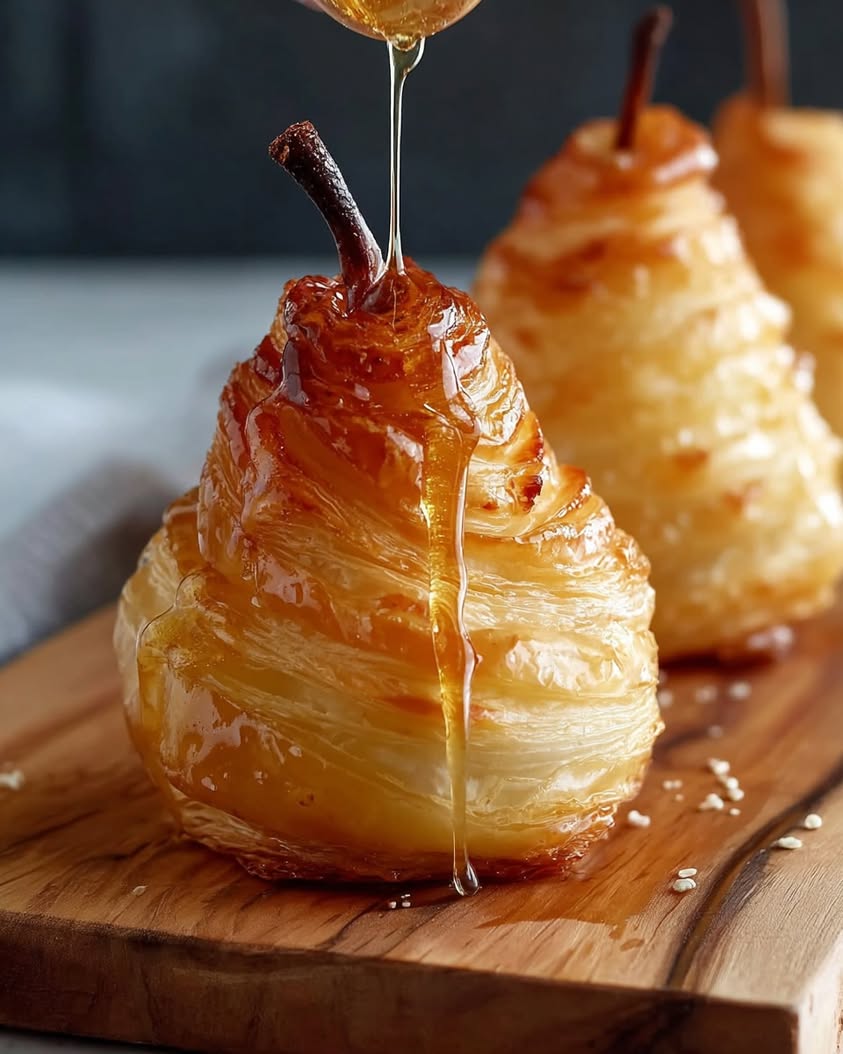
Pears in Puff Pastry with Brie & Honey: An Elegant, Effortless Dessert
Imagine a dessert that whispers of autumn orchards and cozy evenings, yet looks like it came from a professional pastry kitchen. This recipe for Baked Pears in Puff Pastry with Brie and Honey is exactly that kind of magical creation. It masterfully combines sweet, juicy pears with creamy, melted brie, all wrapped in a golden, flaky pastry shell and finished with a luxurious drizzle of honey. Consequently, each bite delivers a perfect symphony of textures and flavors that feels both rustic and incredibly refined.
Furthermore, this stunning dish is deceptively simple to prepare. By using store-bought puff pastry, you harness the power of a professional baker’s secret weapon without any of the fuss. The process is straightforward, involving just a few key steps: wrapping, baking, and drizzling. As a result, you can focus on enjoying the company of your guests rather than stressing over complicated techniques. Ultimately, this recipe proves that impressive, restaurant-quality desserts can absolutely be achieved in your own kitchen with minimal effort.
Moreover, the visual appeal of these individual pastry parcels is undeniable. When they emerge from the oven, the puff pastry is beautifully puffed and golden brown, often revealing a glimpse of the soft pear and oozing cheese within. Finally, a generous swirl of honey adds the final touch of shine and sweetness, making this dish as gorgeous on the plate as it is delicious. This Baked Pears in Puff Pastry with Brie and Honey recipe is your ticket to effortless elegance.
Quick Recipe Highlights
- Flavor Profile: This dish offers a sophisticated balance. The natural sweetness of the ripe pear melds beautifully with the rich, tangy creaminess of the brie. Meanwhile, the honey adds a floral, caramelized sweetness that ties all the elements together perfectly.
- Texture: You experience a delightful contrast in every mouthful. First, the exterior is shatteringly crisp and flaky from the baked puff pastry. Then, you encounter the soft, yielding flesh of the warm pear, followed by the luxurious, melt-in-your-mouth creaminess of the brie cheese.
- Aroma: As these parcels bake, your kitchen will fill with an irresistible fragrance. The scent of buttery pastry browning combines with the sweet, caramelizing notes of pear and the warm, earthy aroma of melting cheese. It’s a truly inviting olfactory experience.
- Visual Appeal: These individual servings are a feast for the eyes. Each golden-brown pastry package looks artfully rustic, often with the pear stem peeking out as a charming handle. The final drizzle of honey adds a beautiful glossy finish that makes the dish look professionally crafted.
- Skill Level Needed: This recipe is ideal for bakers of all levels, especially beginners looking to impress. The technique primarily involves simple assembly. Therefore, if you can slice a pear and wrap it in pastry, you can absolutely master this elegant dessert.
- Special Equipment: You need very little beyond standard kitchen tools. A baking sheet, parchment paper, a sharp knife, and a pastry brush are the main essentials. A rolling pin can be helpful for gently thinning the pastry, but it’s not strictly necessary.
Recipe Overview
- Difficulty Level: We classify this recipe as “Easy” for several compelling reasons. First, it utilizes pre-made puff pastry, which eliminates the most challenging aspect of pastry work. Second, the assembly process is intuitive and forgiving. Third, the baking time is short and the visual cues for doneness are very clear. Consequently, even novice cooks can achieve fantastic results on their first attempt.
- Category: This versatile dish comfortably fits into multiple categories. Primarily, it serves as a spectacular dessert, perfect for ending a special meal. Alternatively, it can be presented as a luxurious brunch item or a decadent appetizer for a holiday gathering. Its flexibility is one of its greatest strengths.
- Cuisine: While not tied to one specific tradition, this recipe draws inspiration from French bistro cuisine and modern American entertaining. The use of puff pastry and brie is classically French, while the straightforward, assembly-friendly approach is very much in line with contemporary American home cooking trends.
- Cost: This is a moderately priced dish that delivers high-end appeal. A package of puff pastry and a wheel of brie are the main investments, while pears and honey are typically pantry staples. Overall, you can create this impressive dessert for a fraction of the cost of a similar item in a restaurant.
- Season: This recipe shines brightest in the fall and winter months. That’s when pears are at their peak of flavor and sweetness. Furthermore, the warm, baked nature of the dish is especially comforting during cooler weather. However, with proper pear selection, it can be enjoyed year-round.
- Occasion: It is perfect for intimate dinner parties, holiday celebrations like Thanksgiving or Christmas, romantic date nights at home, or even as a special weekend treat. Its elegant presentation makes any meal feel like an event, while its simplicity keeps stress at bay.
Why You’ll Love This Recipe
First and foremost, the taste and texture combination is utterly divine. Each component brings something unique to the table, creating a harmonious bite. The flaky, buttery pastry provides a crisp contrast to the soft, warm pear. Simultaneously, the brie melts into a velvety sauce that coats the fruit, and the honey cuts through the richness with its floral sweetness. This interplay of sweet, savory, creamy, and crisp is what makes Baked Pears in Puff Pastry with Brie and Honey so memorable and crave-worthy. You will find yourself thinking about this dessert long after the plate is clean.
Secondly, the convenience factor cannot be overstated. By starting with quality store-bought puff pastry, you save hours of laborious dough preparation. The assembly is quick and fun, almost like a culinary craft project. Moreover, the parcels can be assembled slightly ahead of time and refrigerated before baking, which is a huge advantage when entertaining. This recipe truly delivers maximum impact with minimal kitchen time, allowing you to be a guest at your own party.
Additionally, while this is an indulgent treat, it offers some nutritional advantages over heavier desserts. Pears are a great source of dietary fiber and vitamin C. Choosing a ripe, in-season pear means you’re using nature’s candy, reducing the need for excessive added sugars. The honey provides natural sweetness along with antioxidants. While brie is rich, a little goes a long way in terms of flavor and satisfaction. Consequently, you can enjoy a decadent-feeling dessert that still incorporates wholesome ingredients.
From a social perspective, this recipe has immense entertaining value. The individual servings make guests feel special, and the dramatic presentation always sparks conversation. It’s a dish that says you cared enough to create something beautiful, yet you were relaxed enough to enjoy the process. Serving Baked Pears in Puff Pastry with Brie and Honey instantly elevates a simple meal into a celebratory occasion. It’s a guaranteed crowd-pleaser that will have everyone asking for the recipe.
Finally, it is remarkably cost-effective and accessible. The ingredients are easy to find at any standard grocery store. You don’t need any specialty equipment or obscure, expensive components. Compared to the cost of dining out or ordering a complex dessert from a bakery, making this at home is incredibly economical. This accessibility means you can enjoy a taste of luxury anytime the mood strikes, without breaking the bank or embarking on a complicated culinary mission.
Historical Background and Cultural Significance
The concept of baking fruit in pastry is an ancient one, with roots in many European culinary traditions. Early cooks wrapped foraged fruits in simple doughs to create portable, preserved meals. The specific combination of pear and cheese, however, has a more defined history. In France, serving fruit with cheese at the end of a meal is a long-standing custom, often seen as a digestive aid and a palate cleanser. This recipe for Baked Pears in Puff Pastry with Brie and Honey elegantly bridges that tradition by baking the two classic elements together inside a pastry crust.
Puff pastry itself has a storied past, often credited to the French chef Claude Lorrain in the 17th century, though some food historians trace similar techniques back further. Its labor-intensive creation of hundreds of delicate layers made it a symbol of haute cuisine and aristocratic tables. The invention of reliable commercial puff pastry in the 20th century democratized this ingredient, bringing it into home kitchens worldwide. This accessibility is what makes our modern version of this dessert possible for everyday cooks to prepare with confidence.
The evolution of this specific recipe is a testament to modern fusion cooking. It takes the French foundation of puff pastry and brie, combines it with the universally loved baked fruit dessert, and simplifies the technique for contemporary home bakers. The addition of honey as a finishing touch is a nod to both ancient sweetening methods and modern gourmet sensibility. This evolution reflects a broader trend in home cooking: seeking out impressive, flavor-forward dishes that respect tradition but prioritize achievable methods and easily sourced ingredients.
Regional variations of this concept abound, showcasing its adaptability. In some versions, apples replace pears, and cheddar or camembert stand in for brie. Some recipes add a sprinkle of nuts like walnuts or pecans for crunch, or a dash of cinnamon or nutmeg for warmth. A savory twist might include a slice of ham or a sprinkle of fresh thyme. This versatility confirms the recipe’s core strength: the magical template of fruit, cheese, and pastry is endlessly customizable to local tastes and seasonal ingredients, making Baked Pears in Puff Pastry a truly global idea.
Ingredient Deep Dive
Pears: Choosing the right pear is crucial for success. You want a variety that holds its shape when baked, such as Bosc or Anjou. These pears have a denser flesh that softens beautifully without turning to mush. They should be ripe but still firm to the touch; if they’re too soft, they’ll collapse during baking. Pears are a fantastic source of fiber and vitamin C. To select the best ones, check the neck: if it yields slightly to gentle pressure near the stem, it’s ready. Store unripe pears at room temperature and refrigerate ripe ones to slow further ripening.
Puff Pastry: This is the architectural wonder of the dessert. Quality store-bought all-butter puff pastry will yield the flakiest, most flavorful results. The frozen sheets are perfectly convenient; just ensure you thaw them slowly in the refrigerator overnight for the best texture. Puff pastry works by having hundreds of layers of butter and dough that steam apart in the oven’s heat, creating that iconic lift. For a shortcut, you can use pre-rolled sheets. For dietary needs, several brands offer excellent gluten-free puff pastry options that work wonderfully in this application.
Brie Cheese: Brie is a soft-ripened cow’s milk cheese from France, known for its edible white rind and creamy interior. When baked, it transforms into a luxurious, flowing sauce. For this recipe, a ripe brie that feels soft under its rind is ideal. You can use a wedge from a larger wheel or individual mini-brie rounds. The rind is entirely edible and helps contain the cheese as it melts. If you’re not a fan of the rind’s texture, you can carefully slice it off the top before placing the cheese on the pear. For substitutions, camembert is nearly identical, or a soft goat cheese would offer a tangier profile.
Honey: Honey is far more than just a sweetener here; it’s a flavor enhancer and a beautiful finishing glaze. The type of honey you choose will influence the final taste. A wildflower honey offers complex floral notes, while a clover honey is mild and sweet. For a deeper, almost caramel-like flavor, try a buckwheat honey. Honey also contains antioxidants and has natural preservative qualities. For a vegan adaptation, you could use maple syrup or agave nectar, though the flavor profile will shift slightly. Always add the honey after baking to preserve its delicate flavor and beneficial properties.
Common Mistakes to Avoid
- Using Overripe Pears: This is the most common pitfall. An overly soft pear will break down into mush during baking, creating a soggy, watery mess inside your pastry. Always select pears that are firm-ripe. They should yield only slightly at the stem when pressed.
- Not Thawing Puff Pastry Properly: Attempting to unfold or roll frozen or partially frozen pastry will cause it to crack and tear. Plan ahead and thaw it in the refrigerator for several hours or overnight. If you’re in a pinch, you can thaw it at room temperature for about 30-40 minutes, but watch it closely.
- Overfilling with Cheese: While it’s tempting to add a large amount of brie, too much will cause excessive leakage during baking. The melted cheese can spill out, burn on the baking sheet, and prevent the pastry from sealing properly. A thin slice or a few small pieces is sufficient.
- Neglecting the Egg Wash: Skipping the egg wash (a beaten egg brushed on the pastry) will result in a pale, dull-looking crust instead of a deep, glossy golden brown. The egg wash is essential for both color and a slight extra crispness on the exterior.
- Under-baking the Pastry: Removing the parcels too early because the tops look brown can leave the bottom pastry layer soggy and undercooked. Ensure the bottom is firm and golden by carefully lifting one with a spatula to check. The total bake time is critical for texture.
- Drizzling Honey Before Baking: Adding the honey before the parcels go into the oven will cause it to caramelize and potentially burn in the high heat. More importantly, you’ll lose its fresh, floral aroma. Always add honey as a finishing touch after the pastries have baked and cooled slightly.
- Not Scoring or Venting the Pastry: If you completely enclose the pear without any steam vents, the pressure from the expanding pear and cheese can cause the pastry to burst open unpredictably. Making a few small slits or a decorative score on top allows steam to escape in a controlled way.
- Using a Cold Baking Sheet: Placing your assembled pastries on a room-temperature baking sheet can result in less bottom crispness. For the best lift, preheat your baking sheet in the oven for a few minutes before placing the parchment-lined parcels on it. This gives the pastry an immediate blast of heat from below.
Essential Techniques
Properly Wrapping the Pear: This technique is about creating a snug but not tight package. First, roll your pastry sheet to an even thickness. Then, place the pear in the center and gently bring the corners up to meet at the top. The key is to lightly press the seams together without stretching the dough, as stretched dough will shrink back during baking. You want the pastry to hug the pear’s shape, leaving a little room for the cheese to melt. Finally, use a bit of water on your fingertips to seal the seams securely. This ensures the package stays intact and the filling remains inside.
Applying an Egg Wash: An egg wash is a simple mixture (often just a beaten egg, sometimes with a teaspoon of water or milk) brushed onto unbaked pastry. Its primary function is to promote browning by facilitating the Maillard reaction. Additionally, it acts as a glue for any decorative toppings like coarse sugar. To master it, use a soft-bristled pastry brush and apply a thin, even coat. Be careful not to let it pool in the seams, as this can glue layers together and inhibit puffing. A proper egg wash is the difference between a professional-looking golden crust and a pale, homemade-looking one.
Knowing When It’s Done: Visual and tactile cues are your best guides. The pastry should be a deep, uniform golden brown color all over, including on the bottom (check by carefully lifting one edge). The pastry will feel firm and crisp to the touch, not soft or doughy. You might also see some melted cheese just beginning to peek out or bubble at the top. If you insert a thin skewer or knife tip into the pear through a vent, it should meet little resistance, indicating the pear has softened. Rely on these signs more than a rigid timer, as oven temperatures can vary.
Pro Tips for Perfect Pears in Puff Pastry
First, chill your assembled parcels for 10-15 minutes before baking. This solidifies the butter in the pastry, which leads to a higher rise and flakier layers in the oven. It’s a simple step with a dramatic impact on texture.
Second, for extra flavor, toss your pear slices in a tiny pinch of cinnamon or a drizzle of vanilla extract before adding the cheese. These warm spices complement the pear and honey beautifully without overpowering the other ingredients.
Third, if your brie is very cold and firm, let it sit at room temperature for 10 minutes before slicing. This prevents it from crumbling and makes it easier to place neatly on the pear half.
Fourth, always bake on parchment paper. This prevents any cheese leakage from sticking to your pan and makes cleanup effortless. It also promotes even browning on the pastry’s bottom.
Fifth, for a stunning presentation, reserve a small amount of the egg wash. Before baking, use a sharp knife to score a simple decorative pattern on the top of the pastry. Then, brush with the egg wash, avoiding the scored lines. The pattern will open up beautifully as it bakes.
Sixth, let the baked parcels rest for 5-10 minutes before serving. This allows the molten cheese to set slightly, making them easier to eat without burning your mouth. It also gives the pear time to finish cooking in its own residual heat.
Variations and Adaptations
For regional variations, consider the ingredients at hand. In the American South, you might add a sprinkle of pecans and use a bourbon-infused honey. A Mediterranean twist could include a dollop of fig jam under the cheese and a garnish of chopped rosemary. The basic formula is wonderfully adaptable to local flavors and traditions.
Seasonal adaptations are easy and encouraged. In fall, use apples instead of pears and add a pinch of pumpkin pie spice. For a winter holiday version, incorporate a cranberry compote alongside the brie. In spring, try with ripe peaches or nectarines and a lavender honey. Summer might call for apricots and an almond slice garnish.
Dietary modifications are straightforward. Use gluten-free puff pastry for a celiac-friendly version. For a dairy-free adaptation, substitute the brie with a high-quality vegan cream cheese or a soft, meltable vegan cheese alternative. A nut-based “cheese” can also work beautifully here.
Flavor variations can take this dessert in new directions. Add a thin slice of prosciutto for a sweet-salty profile. Incorporate a teaspoon of whole-grain mustard into the egg wash for a subtle tang. Swap the honey for a balsamic glaze reduction for a more sophisticated, less sweet finish.
Texture modifications can add interest. Sprinkle chopped walnuts or sliced almonds on top of the cheese before wrapping for a crunchy element. A sprinkle of coarse sugar on the egg-washed pastry before baking adds a delightful sweet crunch to the crust.
Presentation alternatives offer creative freedom. Instead of wrapping whole pear halves, slice the pear thinly and fan the slices on a rectangle of pastry, top with cheese, and fold over to create a turnover or a galette shape. You can also make mini versions using small Seckel pears for a charming appetizer.
Serving and Presentation Guide
Plating techniques should highlight the individual beauty of each parcel. Place one warm pastry in the center of a dessert plate. Drizzle the honey in an artful zigzag or circular pattern around it, not just on top. This creates a sauce on the plate for dipping. You can also add a small scoop of vanilla ice cream or a dollop of lightly sweetened whipped cream to the side for a classic à la mode presentation.
Garnishing ideas should be simple and complementary. A fresh mint leaf adds a pop of color and a refreshing aroma. A light dusting of powdered sugar just before serving looks elegant, especially on a dark plate. A few toasted almond slivers or pistachio crumbs sprinkled around the plate add texture and visual interest.
Traditional accompaniments keep the focus on the main event. A simple side of lightly sweetened crème fraîche or mascarpone cheese is divine. For a beverage, a glass of dessert wine like Sauternes or a late-harvest Riesling is a perfect pairing. A pot of herbal tea, such as chamomile or peppermint, also complements the flavors beautifully.
Modern serving suggestions might deconstruct the elements. For a dinner party, consider serving a platter of these pastries family-style in the center of the table, allowing guests to help themselves. Alternatively, prepare them as a shareable dessert for two, placing two parcels on a board with additional fruit, nuts, and honey for dipping.
Temperature considerations are key. These are best served warm, when the cheese is gooey and the pastry is crisp. However, they are also delicious at room temperature, making them suitable for a buffet. Avoid serving them cold from the refrigerator, as the pastry will lose its flakiness and the cheese will harden.
Portion control is naturally built in, as each person typically receives one parcel. For a lighter option, you can use smaller pear varieties or cut large pears into quarters. For a more substantial dessert, particularly after a light meal, serving two per person is perfectly acceptable, especially if you forgo other heavy sides.
Wine and Beverage Pairing
Wine pairings for this dessert should balance sweetness and acidity. A classic Sauternes from France, with its honeyed apricot notes, is a sublime match. Alternatively, a late-harvest Gewürztraminer or Riesling from Germany or Alsace offers bright acidity to cut through the richness. For red wine lovers, a lighter-bodied, low-tannin red like a Beaujolais or a Pinot Noir with bright red fruit flavors can work surprisingly well, especially if the dish has a hint of spice.
Non-alcoholic alternatives can be just as sophisticated. Sparkling apple cider provides festive bubbles and a complementary fruit flavor. A honey-ginger lemonade echoes the sweet and tangy notes of the dish. For a warm option, a cinnamon-spiced chai tea or a rooibos tea with natural vanilla notes makes a cozy pairing that enhances the dessert’s warmth.
Coffee and tea pairings should avoid overpowering the delicate flavors. A medium-roast coffee with low acidity and notes of caramel or nut is ideal. For tea, opt for a black tea like Darjeeling (often called the “champagne of teas”) for its muscatel notes, or a white tea for its subtle, honey-like sweetness. Avoid very bitter or smoky varieties that could clash.
Temperature considerations for beverages depend on the season. In cooler months, serve with the suggested warm tea or coffee. In warmer weather, a chilled dessert wine or sparkling cider is refreshing. Always consider the temperature of the dessert itself—a warm pastry pairs wonderfully with both warm and cold drinks, offering a pleasing contrast or harmony.
Serving suggestions for beverages are part of the experience. Pour dessert wine into smaller glasses to encourage sipping. Present non-alcoholic options in elegant glassware to make them feel special. If serving coffee, offer a side of whipped cream or a cinnamon stick for stirring, allowing guests to customize their drink to match the dessert’s flavor profile.
Storage and Shelf Life
Storage methods for leftovers are simple but important. Once completely cooled to room temperature, place the pastries in a single layer in an airtight container. You can separate layers with parchment paper if stacking is necessary. Store them in the refrigerator for up to 2 days. Do not store them at room temperature, as the dairy and moisture from the pear can cause spoilage.
Temperature requirements are strict for food safety. The filled pastries must be refrigerated if not consumed within 2 hours of baking. The ideal refrigerator temperature is below 40°F (4°C). When you are ready to enjoy them again, reheating is essential to restore texture, as described below.
Container recommendations focus on preserving crispness. A shallow, wide container is better than a deep one, as it minimizes condensation. If using a container with a snap lid, you can leave it slightly ajar for the first 30 minutes in the fridge to let any residual heat and steam escape, preventing sogginess.
Signs of spoilage are easy to spot. Discard the pastry if you notice any off smells, especially a sour or ammonia-like odor from the dairy. Visible mold, an excessively soggy or slimy texture on the pear, or a drastic change in the cheese’s appearance are all clear indicators that the item should not be consumed.
Reheating instructions are crucial for quality. To recrisp the pastry, preheat your oven or toaster oven to 350°F (175°C). Place the pastry directly on the oven rack or on a baking sheet for 5-8 minutes, until warm and crisp. Avoid the microwave, as it will turn the pastry rubbery and soggy. The oven method will bring it closest to its freshly baked state.
Freezing guidelines are possible but with caveats. It’s best to freeze the unbaked, assembled parcels. Place them on a baking sheet until solid, then transfer to a freezer bag. Bake directly from frozen, adding 5-10 minutes to the baking time. Freezing after baking is not recommended, as the pear texture becomes mushy and the pastry loses its delicate flakiness upon thawing and reheating.
Make Ahead Strategies
Prep timeline for entertaining is very forgiving. You can fully assemble the pear parcels up to 24 hours in advance. After wrapping them, place them on the parchment-lined baking sheet, cover tightly with plastic wrap, and refrigerate. This chill time actually benefits the pastry, firming up the butter for a better bake. Simply remove them from the fridge, brush with egg wash, and bake when ready. This is a huge time-saver for dinner parties.
Storage between steps is straightforward. If preparing components separately, you can peel and halve the pears, then submerge them in a bowl of water with a squeeze of lemon juice to prevent browning. Store them this way in the fridge for several hours. Keep the cheese wrapped and cold until assembly. Have your thawed pastry ready on a floured surface in the fridge.
Quality impact assessment shows that make-ahead assembly has minimal negative effect. In fact, as mentioned, chilling the shaped pastry improves lift. The only potential issue is if the pears are very juicy; they might release a little moisture while sitting. To counter this, you can pat the pear halves very dry before assembling and ensure your cheese is cold, not sweaty.
Assembly tips for make-ahead include working efficiently to keep the pastry cool. If your kitchen is warm, work in batches, keeping unused pastry in the fridge. After sealing each parcel, place it immediately on the parchment-lined sheet in the fridge. This prevents the butter from softening too much, which would compromise the flaky layers.
Reheating guidelines don’t apply to the make-ahead unbaked version, as you’ll be baking them fresh. For any leftovers, follow the oven-reheating method described in the storage section. The key for make-ahead is that you are delaying the baking step, not reheating a fully cooked product, which guarantees the best possible texture upon serving.
Fresh element additions are what you add after baking. Regardless of when you assembled the parcels, the honey drizzle, any powdered sugar dusting, and fresh herb garnishes should always be added just before serving. This ensures the honey’s flavor is bright, the sugar doesn’t dissolve, and the herbs look vibrant and fresh on the plate.
Scaling Instructions
Halving the recipe is simple for smaller households. Use one sheet of puff pastry (most packages contain two), one pear, and a quarter of a small brie wheel. All other ingredients (egg, honey) can be halved intuitively. The baking time may reduce by 2-3 minutes, so start checking for doneness a little earlier. The process and technique remain exactly the same, making it an easy adjustment.
Doubling or tripling the recipe for a crowd is very manageable. The main consideration is oven space. Bake in batches on the center rack, or use two oven racks and rotate the baking sheets halfway through cooking to ensure even browning. You may need to add 2-4 minutes to the bake time if the oven is very full, as it can lower the ambient temperature. Ensure your pears are uniformly sized for even cooking.
Equipment adjustments for scaling are minimal. You will need more baking sheets, preferably heavy-duty ones that won’t warp. If making a large batch, a pastry brush with a wider head can speed up the egg wash process. Having a large, clean workspace for assembly is also helpful to keep your production line organized.
Timing modifications are mostly about prep work. Scaling up the prep will take linearly more time. For a double batch, allocate about 25 minutes for assembly instead of 15. For baking, if doing multiple sheets, the total active kitchen time will be longer. However, you can stagger the assembly: prepare one tray, put it in the oven, and then assemble the next tray while the first one bakes.
Storage considerations for large batches are important. If not serving all at once, you can bake in waves to ensure everyone gets a warm pastry. Alternatively, you can refrigerate the unbaked, assembled parcels on multiple trays and bake them just before needed. Leftovers should be stored as previously instructed, but note that a large quantity cooling on a single plate can create steam and sogginess; cool them spaced apart on a rack if possible.
Nutritional Deep Dive
Macro breakdown for one serving is approximately: 350-400 calories, with about 20g of fat (from the pastry butter and cheese), 35g of carbohydrates (from the pear, pastry flour, and honey), and 8g of protein (from the cheese and egg wash). The fat content is primarily saturated due to the butter and brie, making this an indulgent treat best enjoyed in moderation as part of a balanced diet.
Micronutrient analysis reveals some benefits. Pears contribute a good amount of vitamin C and potassium, along with about 5-6 grams of dietary fiber, which aids digestion. Brie provides calcium for bone health and some B vitamins. Honey contains small amounts of antioxidants and minerals like iron and zinc. While not a health food, the dish does offer more nutritional complexity than a purely sugar-based dessert.
Health benefits are tied to its whole-food ingredients. The fiber from the pear promotes satiety and gut health. The calcium from the cheese supports bone density. The antioxidants in honey and the pear’s skin (if left on) combat oxidative stress. Enjoying a satisfying, flavorful dessert like this can also contribute to mental well-being and a positive relationship with food, which is an important aspect of holistic health.
Dietary considerations are important to note. This recipe contains gluten (pastry), dairy (cheese, egg wash), and is not suitable for vegans. However, as outlined in the adaptations section, modifications can be made for many dietary needs. For those monitoring sodium, note that cheese and prepared puff pastry can contain significant amounts, so checking labels is advisable.
Portion analysis shows that one parcel is a satisfying single serving for dessert. The combination of fat, protein, and fiber helps prevent the blood sugar spike and crash associated with more refined desserts. The visual and sensory satisfaction of eating a whole, beautifully presented item can also help with mindful eating and portion control, as it feels like a complete and special experience.
Weight management tips include enjoying this as an occasional treat rather than a daily indulgence. You can slightly reduce the fat content by using a lighter “puff pastry” alternative if available, though texture will differ. Ensuring you use a ripe, sweet pear means you might need less honey for drizzling. Pairing it with a cup of unsweetened tea or coffee instead of a sugary drink also balances the overall meal.
Dietary Adaptations
For a gluten-free version, seek out a high-quality gluten-free puff pastry. Brands like Schär or GeeFree offer good options, or you can find recipes for homemade gluten-free rough puff pastry. Ensure all other ingredients, like pre-shredded cheese if using, are certified gluten-free. The method remains identical, and the result can be just as flaky and delicious.
A dairy-free adaptation requires replacing the brie and the egg wash. For the cheese, use a soft, meltable vegan cheese alternative; brands like Miyoko’s or Violife make good options. For the egg wash, use a mixture of non-dairy milk (like almond or oat) with a teaspoon of maple syrup or agave to promote browning. A nut-based “cheese” spread can also work wonderfully as a filling.
Creating a vegan version combines the dairy-free adjustments with an egg-free wash. Use the non-dairy milk wash mentioned above. Ensure your puff pastry is made with vegetable fats instead of butter (many store-bought brands are accidentally vegan—check the label). Fill with vegan cheese and drizzle with agave nectar or maple syrup instead of honey.
For a low-carb or keto adaptation, the main challenge is the pastry. You can use a keto-friendly pastry dough made with almond and coconut flour, though it won’t puff traditionally. Alternatively, wrap the pear half in a thin slice of prosciutto or bacon instead of pastry. Use a full-fat cheese and drizzle with a sugar-free honey substitute or a monk fruit syrup.
A Paleo adaptation also focuses on the pastry. Use a grain-free pastry recipe made with almond flour, tapioca flour, and coconut oil or ghee. Ensure the cheese is omitted or substituted with a Paleo-approved alternative (though dairy is generally excluded, some versions allow ghee). Use raw honey for drizzling. The pear is a perfect Paleo-friendly fruit.
For a Low-FODMAP version, the pear and honey are problematic. Substitute the pear with a low-F Print
Pears in Puff Pastry with Brie & Honey
- Total Time: 45 minutes
- Yield: 4
Description
A simple yet elegant dessert featuring ripe pears wrapped in flaky puff pastry with creamy Brie and a drizzle of honey, baked until golden.
Ingredients
- 2 ripe but firm pears, peeled, cored, and sliced into wedges
- 1 sheet puff pastry, thawed
- 4 oz Brie cheese, sliced
- 3 tbsp honey, plus extra for drizzling
- 1 egg, beaten (for egg wash)
- 1 tbsp powdered sugar (optional, for dusting)
- 1 tsp cinnamon
Instructions
- Preheat oven to 400°F (200°C). Line a baking sheet with parchment paper.
- Roll out puff pastry on a lightly floured surface. Cut into squares large enough to wrap each pear wedge.
- Place a slice of Brie and a pear wedge on each pastry square. Drizzle with honey and sprinkle with cinnamon.
- Fold pastry over filling, sealing edges with a fork. Brush tops with egg wash.
- Bake for 20-25 minutes until pastry is puffed and golden. Let cool slightly, then drizzle with more honey and dust with powdered sugar if desired.
Notes
You can customize the seasonings to taste.
- Prep Time: 15 minutes
- Cook Time: 30 minutes
- Method: Dessert
- Cuisine: American