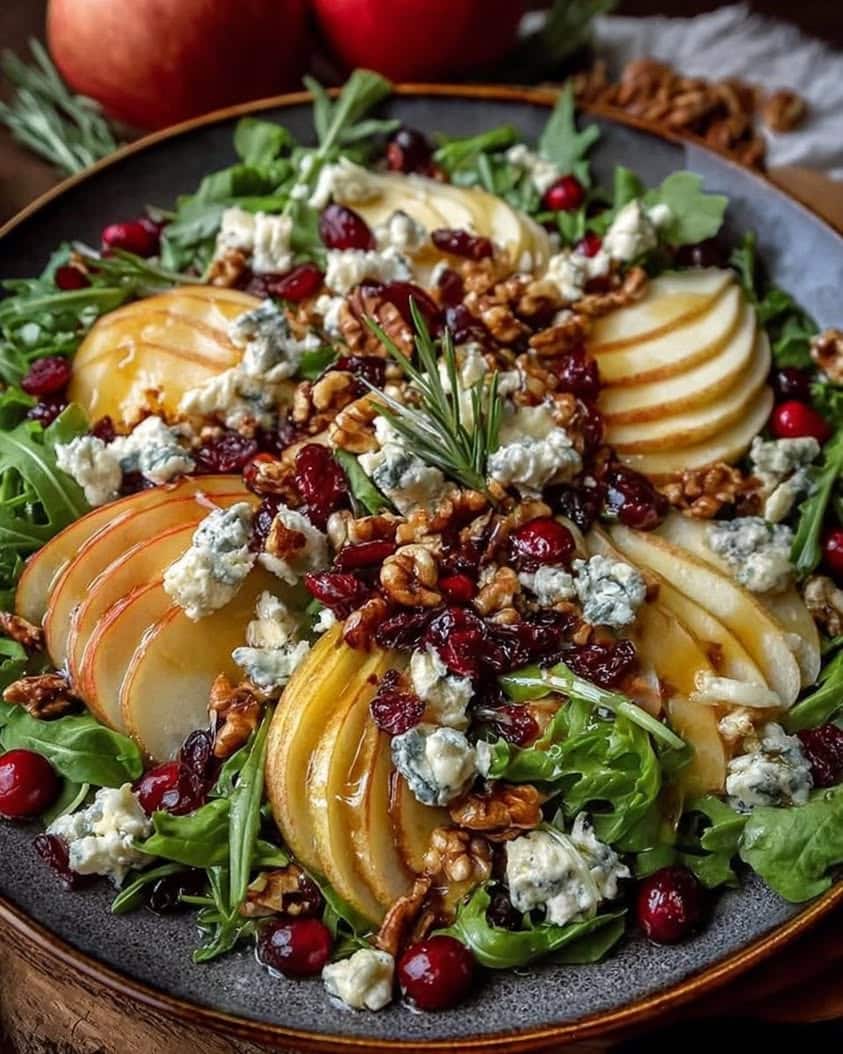
Pear, Apple & Cranberry Winter Salad with Goat Cheese Snowflakes: A Festive Holiday Masterpiece
Welcome the holiday season with a stunning and delicious winter salad that looks as beautiful as it tastes. This Pear, Apple & Cranberry Winter Salad with Goat Cheese Snowflakes is the perfect centerpiece for your festive table. Moreover, it combines crisp seasonal fruits, tangy cheese, and crunchy nuts in a symphony of flavor and texture. Consequently, this dish elevates the simple salad into a celebratory experience.
Imagine the sweet crunch of fresh pear and apple mingling with the tart pop of dried cranberries. Next, picture creamy goat cheese shaped into delicate snowflakes resting on a bed of vibrant greens. Finally, a simple maple vinaigrette ties everything together with a touch of warmth. This winter salad is not just food; it is a celebration of the season’s best produce.
Furthermore, this recipe is incredibly versatile. You can serve it as a refreshing starter before a rich holiday meal. Alternatively, add some grilled chicken or roasted nuts to transform it into a satisfying main course. Ultimately, this Pear, Apple & Cranberry Winter Salad with Goat Cheese Snowflakes promises to become a new holiday tradition in your home.
Quick Recipe Highlights
- Flavor Profile: This winter salad masterfully balances sweet, tart, creamy, and savory notes. The natural sweetness of pear and apple contrasts beautifully with the tangy dried cranberries and the rich, earthy goat cheese. Meanwhile, the maple vinaigrette adds a warm, autumnal sweetness that complements every ingredient.
- Texture: Experience a delightful crunch from the fresh apples, pecans, and crisp greens. Then, enjoy the juicy softness of the ripe pear. The creamy goat cheese snowflakes provide a smooth, luxurious mouthfeel that melts in your mouth, creating a perfect textural harmony.
- Aroma: The salad fills the air with the fresh, clean scent of sliced apples and pears. Additionally, toasting the pecans releases a warm, nutty fragrance. The goat cheese adds a subtle tangy aroma, while the maple dressing contributes a hint of cozy, caramel-like sweetness.
- Visual Appeal: This dish is a feast for the eyes with its stunning red, green, and white color palette. The vibrant greens form a lush base, dotted with ruby-red cranberries and golden pecans. Most importantly, the elegant goat cheese snowflakes create a whimsical, festive presentation that will impress your guests.
- Skill Level Needed: This is an accessible recipe perfect for cooks of all levels. No advanced techniques are required; the focus is on fresh ingredients and simple assembly. The most intricate part is shaping the goat cheese, which is a fun and easy process.
- Special Equipment: You only need basic kitchen tools: a good chef’s knife, a cutting board, a small skillet for toasting nuts, and a small bowl for whisking the dressing. For the goat cheese snowflakes, a small cookie cutter or a steady hand with a knife works perfectly.
Recipe Overview
- Difficulty Level: We rate this winter salad as “Easy” because it involves no cooking, just assembly and simple preparation. The steps are straightforward: wash, chop, whisk, and arrange. Shaping the goat cheese is simple and forgiving, making it a great recipe for beginners or a stress-free dish for entertaining.
- Category: This recipe falls squarely into the salad category, specifically a hearty winter fruit salad. It functions perfectly as an appetizer or a light lunch. With added protein like chicken or chickpeas, it easily becomes a satisfying main course salad.
- Cuisine: This dish is inspired by modern American seasonal cooking, which emphasizes fresh, local produce. It draws on traditions of holiday fruit salads and incorporates elements like maple syrup, a classic North American ingredient. The presentation is contemporary and elegant.
- Cost: This is a moderately priced dish, as it uses fresh, high-quality ingredients. Pears, apples, and greens are affordable, especially in season. Goat cheese and pecans are the premium components, but a little goes a long way. Overall, it delivers restaurant-quality presentation at a fraction of the cost.
- Season: This salad is quintessentially a winter and holiday recipe. Pears and apples are at their peak in late fall and winter. The ingredients and flavors—cranberries, maple, nuts—evoke the warmth and celebration of the holiday season, making it a perfect festive dish.
- Occasion: It is ideal for holiday gatherings like Thanksgiving, Christmas Eve dinners, or New Year’s celebrations. Furthermore, it’s excellent for potlucks, bridal or baby showers, and any winter dinner party where you want to serve a beautiful, refreshing starter.
Why You’ll Love This Recipe
First and foremost, the taste and texture of this winter salad are utterly captivating. Each forkful delivers a complex yet harmonious blend of flavors. You get the initial crisp sweetness of apple, followed by the softer, floral note of pear. Then, the tart cranberries cut through, balanced by the rich, tangy creaminess of the goat cheese snowflake. Finally, the toasted pecans provide a savory crunch and depth that ties the entire dish together. This interplay makes every bite interesting and deeply satisfying.
Secondly, the convenience and preparation benefits are significant. This Pear, Apple & Cranberry Winter Salad requires zero cooking, which is a huge advantage during busy holidays. You can prepare almost every component ahead of time. Toast the nuts, make the dressing, and even shape the goat cheese snowflakes hours in advance. Then, simply assemble the greens and fruits just before serving. This make-ahead flexibility reduces last-minute stress and allows you to enjoy your own party.
Nutritionally, this salad is a powerhouse. It is packed with vitamins, fiber, and healthy fats. The apples and pears provide dietary fiber and vitamin C. The cranberries are famous for their antioxidants. Goat cheese offers protein and calcium, and it is often easier to digest than cow’s milk cheese for some people. The pecans contribute heart-healthy monounsaturated fats. Consequently, this beautiful dish is as good for your body as it is for your festive table.
From a social and entertaining perspective, this salad is a guaranteed showstopper. The visual appeal of the goat cheese snowflakes instantly elevates the presentation. Guests will be delighted by the whimsical and thoughtful touch. It demonstrates care and creativity, making people feel special. This dish sparks conversation and sets a celebratory tone for the meal. It proves that healthy, fresh food can be the most impressive part of a holiday feast.
Finally, this recipe is cost-effective and accessible. While it looks luxurious, the ingredients are readily available at any well-stocked grocery store. You can often find sales on winter fruits and nuts during the holiday season. The recipe is also highly adaptable; you can swap pecans for walnuts or almonds, use a different soft cheese, or try a balsamic vinaigrette. This flexibility allows you to work with what you have, making it a practical and stunning choice for any budget.
Historical Background and Cultural Significance
The tradition of fruit-based salads stretches back centuries, often appearing as a refreshing counterpoint to rich, heavy meals. In Europe, composed salads with cheese and nuts were common among the upper classes. Meanwhile, in America, the concept of the “fruit salad” gained popularity in the early 20th century with the advent of home refrigeration. The combination of sweet and savory elements, like fruit with cheese, is a classic pairing found in many cultures, from Italian figs with prosciutto to French pear and Roquefort.
Culturally, this winter salad taps directly into the symbolism of the holiday season. The cranberry is a native North American fruit long associated with Thanksgiving. The apple and pear represent the autumn harvest and abundance. The “snowflake” motif is a direct nod to winter celebrations like Christmas and Hanukkah. Using maple syrup, a uniquely North American product, grounds the dish in a sense of place and season. Therefore, this recipe is more than a meal; it is a edible representation of winter holiday traditions.
The evolution of this specific recipe follows modern culinary trends toward composed, restaurant-style salads. Home cooks now seek dishes that are visually stunning and layer complex flavors and textures. The idea of shaping cheese into decorative forms is a playful, modern twist on classic plating. This recipe represents a shift from the simple, mixed green salad to a purposeful, artistic assembly where each ingredient is chosen and placed for maximum impact and beauty.
Regional variations of this concept are endless. In the Pacific Northwest, you might find hazelnuts instead of pecans and a blackberry vinaigrette. A Southern version could include candied pecans and a bourbon-spiked dressing. For a Mediterranean twist, one could use feta cheese, mint, and a lemon-olive oil dressing with pomegranate seeds instead of cranberries. This adaptability is the recipe’s strength, allowing it to reflect local ingredients and tastes while maintaining its core identity as a festive winter salad.
Ingredient Deep Dive
Let’s start with the pears. Choosing a ripe but firm variety like Bosc or Anjou is crucial for this winter salad. They hold their shape when sliced and offer a subtle, floral sweetness. Pears are an excellent source of dietary fiber and vitamin C. To select a perfect pear, check the neck: apply gentle pressure near the stem; if it yields slightly, it’s ripe. Store unripe pears at room temperature and move them to the refrigerator once ripe to slow further softening. If pears are unavailable, firm peaches or nectarines in summer, or even sliced Fuyu persimmons in fall, make interesting substitutions.
Next, consider the apples. A crisp, slightly tart variety like Honeycrisp, Pink Lady, or Granny Smith provides the necessary crunch and flavor contrast. Apples bring pectin, antioxidants, and more fiber to the dish. For the best texture and to prevent browning, slice your apples just before assembling the salad. You can also toss the slices in a tiny bit of lemon juice from the vinaigrette ingredients. If you prefer a sweeter profile, try a Gala or Fuji apple. The apple is non-negotiable for texture, but a firm Asian pear could also work in a pinch.
The dried cranberries are the tart backbone. Originally called “craneberries” by early American settlers, they are a true native fruit. They are packed with proanthocyanidins, antioxidants known for supporting urinary tract health. When purchasing, look for unsweetened or fruit-juice-sweetened dried cranberries to avoid excessive added sugar. For a more complex flavor, try using dried cherries or chopped dried apricots. If you have access to fresh cranberries, you can quickly cook them down with a touch of orange juice and maple syrup to make a vibrant, homemade cranberry sauce to dot through the salad.
Finally, the goat cheese is the star of the show. Also known as chèvre, goat cheese has been produced for thousands of years, particularly in Mediterranean regions. It is typically lower in lactose and calories than many cow’s milk cheeses and contains beneficial fatty acids. For the snowflakes, you need a log of soft, creamy goat cheese that is cold for easy slicing and shaping. A plain, unflavored variety works best. If goat cheese isn’t to your taste, a cold log of creamy feta or even a firm blue cheese can be crumbled or shaped for a different but equally delicious effect.
Common Mistakes to Avoid
- Using Overripe Pears: Overripe pears become mushy and watery, diluting the dressing and making the salad soggy. Always choose pears that are firm yet yield slightly to pressure at the stem for the perfect texture in your winter salad.
- Slicing Apples Too Early: Apples oxidize and turn brown quickly, which affects both appearance and flavor. To prevent this, prepare your apple just before assembling the entire dish, or toss the slices immediately in a bit of the lemon juice from your vinaigrette.
- Not Toasting the Nuts: Raw pecans lack the deep, rich flavor that toasted nuts provide. Taking the extra five minutes to toast them in a dry skillet unlocks their oils and maximizes their nutty aroma, adding essential depth to the salad.
- Warm Goat Cheese: Trying to shape soft, room-temperature goat cheese is messy. Always ensure your goat cheese log is well-chilled from the refrigerator. This makes slicing and cutting with cookie cutters clean and simple for perfect snowflakes.
- A Dressing that’s Too Acidic: An unbalanced vinaigrette with too much lemon juice or vinegar will overpower the delicate fruits. The key is a harmonious balance where the maple syrup’s sweetness mellows the acidity, complementing rather than dominating the ingredients.
- Over-dressing the Greens: A soggy salad is an unappetizing salad. Dress the greens lightly and toss thoroughly just before serving. You can always serve extra dressing on the side for guests who prefer more.
- Using Bitter Greens: Strong, bitter greens like dandelion or escarole can clash with the sweet fruits. Stick with milder, tender greens like spring mix, butter lettuce, or baby spinach as the base for your winter salad to ensure harmony.
- Forgetting to Season: Even a fruit salad needs seasoning. A small pinch of flaky sea salt sprinkled over the assembled dish just before serving will elevate all the flavors, making the sweet fruits taste sweeter and the cheese more pronounced.
Essential Techniques
Toasting nuts is a fundamental technique for unlocking flavor. Simply place raw pecans in a single layer in a dry skillet over medium heat. Shake the pan frequently for 3-5 minutes until they become fragrant and lightly browned. Why is this important? Heat breaks down the raw, sometimes bitter compounds in nuts and encourages the release of their natural oils, resulting in a richer, deeper taste and a crispier texture. The common pitfall is walking away, as they can burn in seconds. The visual cue for success is a golden-brown color and a strong, toasty aroma.
Creating an emulsified vinaigrette is key to a cohesive dressing. Start by combining the acid (lemon juice) and seasoning in your bowl. Then, whisk vigorously while slowly streaming in the oil (olive oil). This technique, called emulsification, temporarily binds the oil and water-based ingredients together for a smooth, non-separated dressing. It’s important because it ensures every bite of your winter salad gets a balanced taste of all dressing components. The pitfall is adding the oil too quickly, which causes separation. Success is marked by a slightly thickened, homogenous mixture.
Shaping the goat cheese snowflakes requires a cold log and a sharp tool. Use a thin-bladed knife to slice cold goat cheese into rounds. Then, use a small, intricate cookie cutter (like a snowflake or star) to press shapes from each round. If you don’t have a cutter, you can carefully carve simple snowflake shapes with the tip of your knife. This technique is important for the whimsical presentation that defines this dish. The common mistake is using cheese that’s too soft. The visual cue for readiness is a clean cut that holds its shape without sticking.
Pro Tips for Perfect Pear, Apple & Cranberry Winter Salad with Goat Cheese Snowflakes
Chill your salad plates before serving. This simple step keeps the greens crisp and refreshing from the first bite to the last, especially important for a no-cook winter salad.
Use a mandoline slicer for uniformly thin apple and pear slices. This ensures elegant presentation and even distribution of fruit throughout the salad.
If your dried cranberries are very hard, plump them up by soaking in warm water or orange juice for 10 minutes before draining. This makes them juicier and more flavorful.
Add a teaspoon of Dijon mustard to your vinaigrette. It acts as an extra emulsifier for a creamier dressing and adds a subtle, sophisticated sharpness.
For an extra festive touch, drizzle the finished plated salad with a very small amount of reduced balsamic glaze in a zigzag pattern over the goat cheese snowflakes.
To make the salad a complete meal, add shredded rotisserie chicken, roasted chickpeas, or sliced grilled flank steak on top just before serving.
If you need to assemble parts ahead, keep the dressed greens, the sliced fruits, and the cheese snowflakes in separate containers in the fridge. Combine them on individual plates at the last moment.
Variations and Adaptations
For regional variations, consider your local bounty. In the South, use candied pecans and a brown sugar vinaigrette. A California version might include avocado slices and citrus segments with a lemon-poppy seed dressing. In New England, incorporate roasted cubed butternut squash and swap the pecans for toasted pumpkin seeds.
Seasonal adaptations are easy. In spring, use strawberries and sliced almonds with a honey-lemon dressing. For summer, try peaches, blueberries, and basil with a white balsamic vinaigrette. The snowflake motif can become a flower shape in warmer months using herbed goat cheese.
Dietary modifications are straightforward. For a vegan winter salad, replace the goat cheese with a chilled, firm vegan cheese block or creamy avocado slices. Make the dressing with agave instead of honey. For a nut-free version, use toasted sunflower or pumpkin seeds. A gluten-free diet requires no changes, as all ingredients are naturally gluten-free.
Flavor variations can personalize the dish. Add a pinch of cinnamon or a dash of apple cider to the vinaigrette. Incorporate fresh herbs like chopped rosemary or thyme into the goat cheese before shaping. For a savory twist, add crispy prosciutto or pancetta bits on top.
Texture modifications can cater to preferences. For more crunch, add celery slices or radish matchsticks. For creaminess, include segments of ripe avocado. Softer textures can be achieved by using roasted pear instead of fresh.
Presentation alternatives are fun. Instead of one large platter, assemble individual salads in wide, shallow bowls for a restaurant-style feel. You can also deconstruct the salad, presenting each component separately on a board and letting guests build their own.
Serving and Presentation Guide
Plating techniques matter. For a family-style presentation, use a large, wide platter or a shallow bowl. Start with a fluffy bed of greens. Artfully arrange the overlapping pear and apple slices in sections. Scatter the cranberries and pecans evenly. Finally, strategically place the goat cheese snowflakes on top so every serving gets one. The goal is an organized yet abundant look.
Garnishing adds the final touch. A light sprinkle of fresh pomegranate arils adds brilliant red color and a juicy burst. Microgreens or edible flowers lend a delicate, gourmet finish. A final dusting of freshly cracked black pepper over the cheese provides visual contrast and a flavor pop.
Traditional accompaniments for this winter salad include crusty bread or warm, soft dinner rolls to soak up extra dressing. It pairs beautifully as a starter before classic holiday mains like roast turkey, glazed ham, or beef tenderloin. The salad’s brightness cuts through the richness of these dishes.
Modern serving suggestions lean towards making it a main event. Serve it alongside a hearty soup like butternut squash or lentil soup for a light winter lunch. For a brunch spread, pair it with quiche or savory scones. It also works wonderfully on a holiday grazing board with other cheeses and charcuterie.
Temperature considerations are crucial. All components should be cold. Chill your serving platter or bowls. Keep the dressed greens, fruits, and cheese refrigerated until the moment of assembly. A cold salad is refreshing and highlights the crisp textures.
Portion control is simple. This recipe yields four generous side-dish servings or two main-course servings. When serving as a starter among many rich courses, you can stretch it to six smaller, elegant portions. For a potluck, assume it will serve 6-8 as part of a larger spread.
Wine and Beverage Pairing
Wine pairings should complement the salad’s sweet and tangy profile. A slightly off-dry Riesling or Gewürztraminer is a classic choice, as their stone fruit notes and hint of sweetness mirror the pear and apple. A crisp Sauvignon Blanc, especially from New Zealand, offers vibrant acidity that matches the lemon vinaigrette and cuts through the creamy cheese. For red wine lovers, a light-bodied, low-tannin Pinot Noir with its red fruit flavors can work beautifully without overwhelming the dish.
Non-alcoholic alternatives are just as important. Sparkling apple cider or pear nectar served in a flute feels celebratory. A homemade cranberry spritzer made with chilled cranberry juice, sparkling water, and a lime wedge echoes the salad’s flavors. For a warm option, a lightly sweetened ginger tea or hot mulled cider complements the winter theme perfectly.
Coffee and tea pairings work well if serving this salad for a brunch or lunch. A medium-roast coffee with notes of caramel or nut pairs nicely with the toasted pecans and maple. For tea, choose a white tea with natural fruity notes or an Earl Grey, whose bergamot citrus highlights the lemon in the dressing.
Temperature considerations for beverages are straightforward. White wines and sparkling drinks should be well-chilled. Red wines should be served slightly cooler than room temperature. Non-alcoholic sparklers are best ice-cold, while warm teas and ciders should be served piping hot for contrast against the cool salad.
Serving suggestions include offering a choice of two beverages to cater to different preferences. Always have a sparkling water option on the table to cleanse the palate. If serving wine, pour a small taste for guests to try with the salad first, as the pairing is personal and the vinaigrette’s acidity can affect wine perception.
Storage and Shelf Life
Storage methods for leftovers require separation. The dressed greens will wilt quickly, so it’s best to store any undressed components separately. Place leftover sliced fruits, nuts, and cheese snowflakes in airtight containers in the refrigerator. Store any remaining vinaigrette in a small jar with a lid.
Temperature requirements are simple: the refrigerator is essential. All components, including the dressing, must be kept cold at or below 40°F (4°C) to ensure food safety and preserve freshness. Do not leave the assembled salad at room temperature for more than two hours.
Container recommendations include glass or BPA-free plastic with tight-fitting lids. For the goat cheese snowflakes, place them in a single layer on parchment paper in a shallow container to prevent them from sticking together or losing their shape.
Signs of spoilage include a sour smell, excessively wilted or slimy greens, and discolored or mushy fruits. The goat cheese may develop an off-putting ammonia odor if it’s past its prime. When in doubt, it’s safest to discard the item.
Reheating instructions are not applicable, as this is a cold salad. The goal is to keep everything crisp and cool. If the fruits have been in the fridge and are too cold, you can let them sit at room temperature for 5-10 minutes before assembling to take the chill off.
Freezing guidelines are not recommended for this winter salad. Freezing will completely destroy the texture of the greens, fruits, and cheese, resulting in a watery, mushy mess upon thawing. This is a fresh dish meant to be enjoyed immediately or within a day.
Make Ahead Strategies
Your prep timeline can span a full day. The day before, toast the pecans and let them cool completely before storing at room temperature. Make the vinaigrette and store it in the refrigerator. Wash and thoroughly dry your greens, then store them in a salad spinner or a bowl lined with paper towels in the fridge. Slice the goat cheese log into rounds and cut out the snowflakes; store them layered with parchment in a container in the fridge.
Storage between steps is key to freshness. Keep all prepped ingredients in their separate, sealed containers. The nuts stay crisp at room temperature. The dressing, cheese, and greens must stay cold. The fruits, however, should be sliced no more than an hour before serving to prevent browning and sogginess.
Assessing quality impact is important. Pre-toasting nuts enhances flavor. A made-ahead vinaigrette often tastes better as the flavors meld. Pre-washed greens are a huge time-saver. The only element that suffers from advanced prep is the sliced apple and pear, which is why they are the last-minute task.
Assembly tips for last-minute ease: Have all your chilled components lined up. In a large bowl, toss the greens with just enough dressing to coat lightly. Transfer to your serving platter. Quickly slice the pear and apple, arranging them over the greens. Scatter the cranberries and pecans, then artfully place the goat cheese snowflakes. This final assembly takes less than 5 minutes.
Fresh element additions are your secret weapon. Even if you prepped everything else, adding a last-minute garnish like a sprinkle of fresh herbs or pomegranate seeds makes the salad look freshly made and adds a burst of new flavor and texture.
Scaling Instructions
Halving the recipe is simple for a smaller gathering. Use half of each ingredient. The technique remains the same. You may not need a full batch of dressing; start with half and add to taste. A small skillet is still fine for toasting the reduced amount of pecans. Assembly on a medium plate or in a bowl works perfectly.
Doubling or tripling the recipe for a crowd requires slight adjustments. Use a very large bowl for tossing the greens, or toss in batches. Toast the nuts in multiple batches to ensure even cooking; do not overcrowd the pan. When making a larger quantity of vinaigrette, consider using a blender or a jar with a lid for easy emulsification. For presentation, you may want to create two separate platters to maintain the beautiful, uncrowded arrangement.
Equipment adjustments for scaling up are minimal. You’ll need a larger serving platter or multiple platters. Ensure you have enough refrigerator space for all prepped components. A large baking sheet can be useful for toasting a triple batch of nuts in the oven at 350°F for 8-10 minutes, shaking halfway.
Timing modifications are mostly about prep time, which increases linearly. Slicing double the fruits will take a few more minutes. Allow extra time for assembling a larger, more elaborate platter. The active cook time remains zero, but the hands-on prep time will scale accordingly.
Storage considerations become more important with larger batches. You will need more containers with tight-fitting lids. Label containers if making multiple salads for an event. Ensure your refrigerator is organized to accommodate the volume without crushing delicate ingredients like the greens and cheese snowflakes.
Nutritional Deep Dive
The macro breakdown of this winter salad is favorable. It provides a balance of complex carbohydrates from the fruits and greens, healthy fats from the olive oil, pecans, and goat cheese, and a moderate amount of protein from the cheese and nuts. The dressing, made with heart-healthy olive oil and natural maple syrup, avoids refined sugars and unhealthy fats. This makes it a sustaining choice that provides energy without a heavy calorie load.
Micronutrient analysis reveals a wealth of vitamins and minerals. The apples and pears are excellent sources of vitamin C and potassium. The dark leafy greens provide vitamin K, folate, and iron. Goat cheese contributes calcium and phosphorus. Pecans offer manganese and copper. The cranberries bring their famous array of antioxidants, including vitamin C and E. Together, they create a nutrient-dense dish.
Health benefits are numerous. The high fiber content from fruits and greens supports digestive health and promotes satiety. The monounsaturated fats in the nuts and olive oil are beneficial for heart health. The antioxidants combat oxidative stress. The combination of fiber, healthy fats, and protein helps regulate blood sugar levels, preventing the spikes and crashes associated with less balanced meals.
Dietary considerations are mostly positive. The salad is naturally gluten-free. It is vegetarian. For those monitoring sodium, the primary source is the goat cheese and added salt, which can be controlled. The dish contains natural sugars from fruit and maple syrup, so those monitoring sugar intake should be mindful of portion size, though these are unrefined sources.
Portion analysis shows that one serving as a side dish is a nutritionally complete addition to a meal. As a main course, it provides a light but satisfying meal. The calorie content is moderate and comes primarily from nutrient-rich sources, making it an excellent choice for weight-conscious individuals who don’t want to sacrifice flavor or satisfaction.
Weight management tips include using this salad as a volume-eating strategy. The large volume of greens and fruits fills the plate and the stomach with relatively few calories. The protein and fat from cheese and nuts increase satiety, helping to prevent overeating later. To further reduce calories, you can lightly spray the greens with dressing instead of tossing, or reduce the amount of oil and maple syrup in the vinaigrette.
Dietary Adaptations
For a gluten-free version, no changes are needed. All ingredients in the base recipe—fresh fruits, nuts, cheese, oil, maple syrup—are naturally gluten-free. Always double-check labels on pre-packaged items like dried cranberries to ensure no gluten-containing additives were used.
A dairy-free or vegan adaptation replaces the goat cheese. Use a firm, sliceable vegan cheese alternative made from nuts or coconut oil. Another beautiful option is to use thick slices of ripe avocado or a dollop of vegan “cheese” spread. Ensure the maple syrup is certified vegan, as some processing methods use animal-derived filters.
For a low-carb or keto adaptation, reduce or omit the pear and apple. Replace them with low-carb fruits like a few blackberries or raspberries, or use non-starchy vegetables like cucumber ribbons and radish slices. Omit the maple syrup in the dressing and use a keto-friendly sweetener like monk fruit or stevia to taste. Increase the portion of pecans and goat cheese for fat and protein.
A Paleo adaptation requires omitting the cheese and ensuring the dried cranberries have no added sugar. Replace the goat cheese with sliced avocado or compliant prosciutto. Use only olive oil, lemon juice, and a touch of raw honey (if acceptable) for the dressing. All other base ingredients are Paleo-friendly.
For a Low-FODMAP version, this salad requires careful modification. Use only one type of fruit in a small serving (e.g., 1/2 cup of either pear or orange segments, but not both). Omit the apple, as it is high in FODMAPs. Ensure the maple syrup is pure and use only a teaspoon per serving. Goat cheese is typically low-FODMAP in servings of 40g or less, which aligns with this recipe. Omit the pecans or use walnuts instead.
Troubleshooting Guide
If your salad becomes soggy, the issue is likely over-dressing or dressing too early. Solution: Always dress the greens at the very last minute. If preparing components ahead, keep the dressing separate and toss just before serving. For leftovers, store undressed components separately. If greens are already wilted, they cannot be revived, so it’s a lesson for next time.
If the flavors taste flat or unbalanced, you may need more seasoning or acid. Solution: Taste your vinaigrette before dressing the salad. It should have a bright balance of sweet and tart. Adjust with a pinch more salt, a squeeze of lemon, or a drizzle of maple syrup as needed. A final sprinkle of flaky salt over the assembled salad can also wake up all the flavors.
If the goat cheese snowflakes are crumbling or won’t hold shape, the cheese is either too cold and hard or too warm and soft. Solution: Let a very cold log sit at room temperature for 5 minutes. If it’s too soft, briefly freeze the log for 15-20 minutes to firm it up. Use a very sharp, thin knife and a clean cookie cutter for best results.
If the apples or pears turn brown before serving, oxidation has occurred. Solution: For advance prep, you can hold sliced fruits in a bowl of cold water with a squeeze of lemon juice for up to an hour, then drain and pat dry. The acid in the lemon water slows browning. Ideally, slice them as close to serving time as possible.
If the vinaigrette separates, it hasn’t been properly emulsified. Solution: Whisk it vigorously again just before using. For a more stable emulsion, add a tiny bit of Dijon mustard or mayonnaise to the initial mix; these contain emulsifiers that help bind the oil and vinegar. You can also shake it in a sealed jar.
Recipe Success Stories
Community feedback on this winter salad has been overwhelmingly positive. Many readers report it becoming the “most requested recipe” during the holidays. One home cook shared that her children, who typically avoid salads, were fascinated by the goat cheese snowflakes and ate every bite. Another mentioned that the presentation alone earned compliments from her mother-in-law, a former professional chef. These stories highlight how a simple, beautiful dish can create memorable moments.
Variation successes are fun to hear about. A reader from Vermont substituted the pecans with locally harvested black walnuts and added a touch of cayenne to the pecans when toasting for a sweet-spicy kick. Another used a star-shaped cookie cutter for a Hanukkah celebration. A creative cook without a cutter used a small knife to etch snowflake designs onto thicker goat cheese rounds, proving that the concept is adaptable to any tool.
Reader suggestions have improved the recipe over time. One excellent tip was to add a teaspoon of orange zest to the vinaigrette for a brighter citrus note. Another suggested serving the salad with warm, spiced cider for a fully immersive winter experience. A professional photographer reader advised plating the salad on a dark slate or wooden board for stunning visual contrast in photos, making the red cranberries and white cheese pop.
Pear, Apple & Cranberry Winter Salad with Goat Cheese Snowflakes
- Total Time: 15 minutes
- Yield: 4
Description
A festive winter salad featuring crisp pears, apples, dried cranberries, and toasted pecans, topped with elegant goat cheese snowflakes and a tangy maple-balsamic vinaigrette.
Ingredients
- 2 ripe but firm pears, thinly sliced
- 1 large apple, thinly sliced
- 1/2 cup dried cranberries
- 1/2 cup pecans, toasted
- 4 cups mixed winter greens (e.g., kale, arugula, radicchio)
- 4 oz goat cheese, chilled
- 1/4 cup olive oil
- 2 tbsp balsamic vinegar
- 1 tbsp maple syrup
- 1 tsp Dijon mustard
- Salt and black pepper to taste
Instructions
- In a small bowl, whisk together olive oil, balsamic vinegar, maple syrup, Dijon mustard, salt, and pepper to make the vinaigrette. Set aside.
- In a large salad bowl, combine mixed winter greens, sliced pears, sliced apples, dried cranberries, and toasted pecans.
- Drizzle the vinaigrette over the salad and toss gently to coat all ingredients evenly.
- Using a small spoon or cheese shaper, form goat cheese into small snowflake-like shapes and arrange them on top of the salad.
- Serve immediately, garnished with an extra sprinkle of cranberries and pecans if desired.
Notes
You can customize the seasonings to taste.
- Prep Time: 15 minutes
- Cook Time: 0 minutes
- Method: Side
- Cuisine: American