Parmesan Spinach Mushroom Pasta Skillet: A One-Pan Creamy Delight
Imagine a comforting, restaurant-quality pasta dish that comes together in a single pan with minimal fuss. That is the magic of this Parmesan Spinach Mushroom Pasta Skillet. This recipe transforms simple, wholesome ingredients into a creamy, savory masterpiece that feels indulgent yet is surprisingly straightforward to prepare. Moreover, it delivers a complete meal with protein, vegetables, and carbs all cooked together, which means less time cleaning and more time enjoying a delicious dinner.
The beauty of this Parmesan Spinach Mushroom Pasta Skillet lies in its harmonious flavors. Earthy mushrooms and fresh spinach meld with a rich, garlic-infused cream sauce, all brought together by the salty, nutty punch of Parmesan cheese. Consequently, every bite offers a perfect balance of textures and tastes. Ultimately, this dish is a testament to how a few quality ingredients can create something truly special for any weeknight or casual gathering.
Furthermore, this recipe is incredibly adaptable. You can easily swap ingredients based on what you have on hand, making it a reliable staple in your cooking repertoire. Whether you are cooking for a busy family or impressing last-minute guests, this one-pan wonder delivers consistent results. In short, it is a foolproof path to a satisfying and elegant meal.
Quick Recipe Highlights
- Flavor Profile: This dish boasts a deeply savory and umami-rich taste. The earthiness of the mushrooms pairs perfectly with the sharp, salty notes of the Parmesan cheese. Additionally, a hint of garlic and black pepper adds a warm, aromatic backbone that ties everything together.
- Texture: You will enjoy a delightful contrast of textures. The pasta offers a satisfying chew, while the mushrooms become tender and meaty. Meanwhile, the spinach wilts into silky ribbons, and the creamy sauce coats every element luxuriously.
- Aroma: As it cooks, your kitchen will fill with the irresistible scent of sautéing garlic and mushrooms. Subsequently, the aroma of simmering cream and melting Parmesan creates a mouthwatering anticipation that is simply unforgettable.
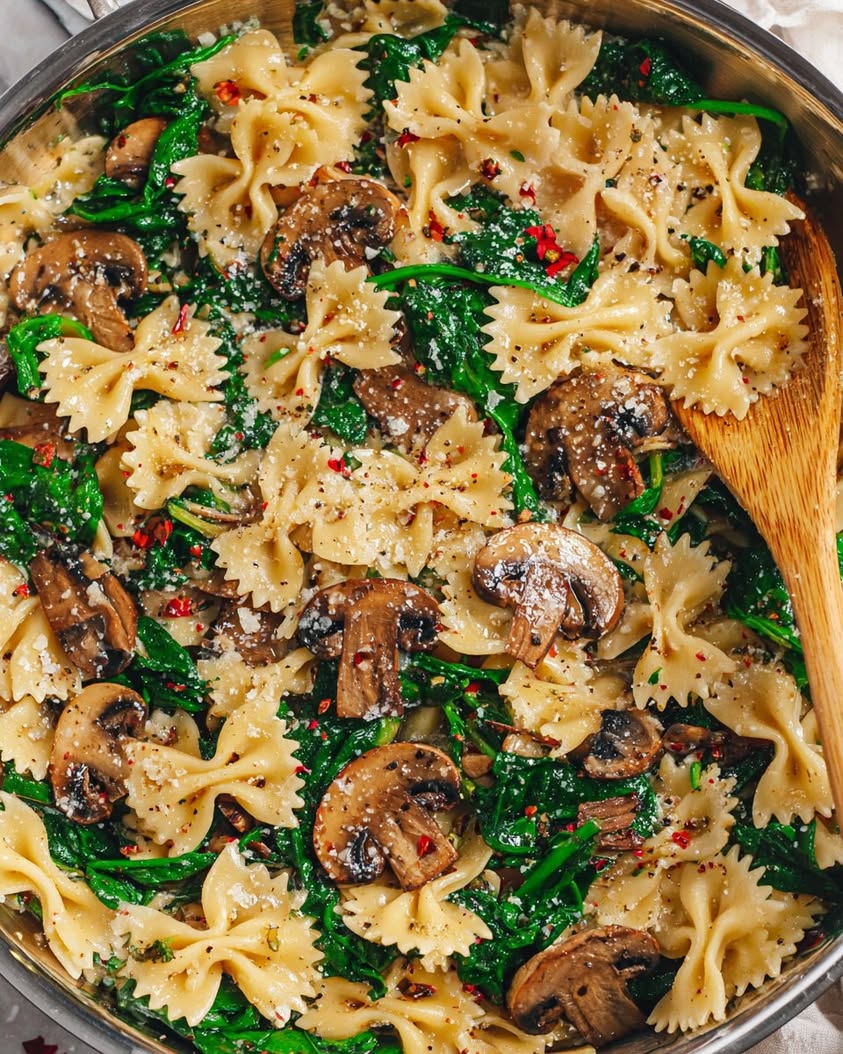
- Visual Appeal: This skillet pasta presents beautifully with vibrant green spinach flecks against a creamy white sauce and golden-brown mushrooms. Finally, a fresh sprinkle of Parmesan and herbs on top adds a professional, finished look.
- Skill Level Needed: This is a beginner-friendly recipe. The techniques involve basic sautéing and simmering. Therefore, even novice cooks can achieve fantastic results by following the simple steps outlined below.
- Special Equipment: You only need one large, deep skillet or braiser with a lid. A standard 12-inch skillet is ideal for ensuring everything cooks evenly and the sauce has room to reduce properly.
Recipe Overview
- Difficulty Level: We rate this Parmesan Spinach Mushroom Pasta Skillet as easy. The steps are sequential and simple, involving no complex techniques like roux-making or elaborate knife work. Primarily, success comes from managing heat and timing, which are clearly guided. Consequently, it is an excellent recipe for building kitchen confidence.
- Category: This dish fits perfectly into the categories of main course, vegetarian dinner, and weeknight meal. It is substantial enough to stand alone but also pairs well with a simple side salad or crusty bread. Essentially, it is a versatile centerpiece for any table.
- Cuisine: While inspired by Italian-American pasta traditions, this is a modern, fusion-style skillet meal. It borrows the classic combination of pasta, cream, and Parmesan but utilizes the efficient one-pan cooking method popular in contemporary home cooking. Thus, it respects tradition while embracing convenience.
- Cost: This is a very cost-effective meal. Ingredients like pasta, spinach, and mushrooms are typically affordable year-round. Parmesan is the splurge item, but a little goes a long way in flavor. Overall, you can create a restaurant-style dish for a fraction of the price.
- Season: This Parmesan Spinach Mushroom Pasta Skillet is truly a year-round recipe. However, it feels particularly comforting in fall and winter. Conversely, using fresh summer spinach and herbs can lighten it up for warmer months, showcasing its incredible adaptability.
- Occasion: It is ideal for busy weeknights, casual weekend dinners, or even a low-stress dinner party. The one-pan nature makes it great for minimizing cleanup, which is always a win. Furthermore, its crowd-pleasing flavor profile appeals to both adults and children.
Why You’ll Love This Recipe
First and foremost, the taste and texture of this Parmesan Spinach Mushroom Pasta Skillet are utterly irresistible. The savory depth from the browned mushrooms, the slight bitterness of the spinach, and the rich, cheesy sauce create a complex flavor profile that feels gourmet. Every forkful is creamy, satisfying, and deeply comforting. Additionally, the textures from al dente pasta to tender vegetables provide a delightful eating experience that never feels monotonous or boring.
From a convenience standpoint, this recipe is a game-changer. Cooking everything in one skillet means you have minimal dishes to wash afterward. The process is also remarkably streamlined; you build layers of flavor in the same pan. Therefore, you go from prep to plate in about thirty minutes, making it a perfect solution for hectic evenings when time is precious but you still crave a homemade meal.
Nutritionally, this skillet meal packs a beneficial punch. Spinach is loaded with iron, vitamins A, C, and K, while mushrooms provide B vitamins and antioxidants. Using a moderate amount of cream and focusing on Parmesan for flavor creates a sauce that feels indulgent without being overly heavy. You are serving a balanced meal with carbohydrates, vegetables, and protein all in one dish, which simplifies healthy eating.
For social and entertaining value, this dish is a star. It is easy to double for a crowd and can be kept warm in the skillet for serving. The presentation is rustic and inviting, encouraging people to gather around. Moreover, because it is a familiar yet elevated dish, it appeals to a wide range of palates, ensuring your guests leave satisfied and impressed by your culinary skills.
Finally, the cost-effectiveness and accessibility of this Parmesan Spinach Mushroom Pasta Skillet cannot be overstated. The ingredients are common and often already in your pantry or easily found at any grocery store. You create a meal that tastes expensive without the hefty price tag. This makes it a sustainable choice for regular rotation in your meal planning, proving that eating well does not have to be complicated or costly.
Historical Background and Cultural Significance
The origin of creamy pasta dishes stretches back to Italian culinary traditions, particularly from the northern regions like Emilia-Romagna and Lombardy, where dairy is plentiful. Dishes like “Pasta alla Panna” (pasta with cream) form the historical foundation. The addition of mushrooms and greens is a natural progression, reflecting the Italian ethos of “cucina povera” or “poor kitchen,” which emphasizes transforming humble, local ingredients into extraordinary meals. This Parmesan Spinach Mushroom Pasta Skillet is a modern, globalized interpretation of those timeless principles.
Culturally, pasta with cream sauce holds a specific place as a “comfort food” staple in many Italian-American households. It represents a touch of luxury and celebration, often reserved for Sunday dinners or special occasions. The skillet method, however, is a distinctly American innovation born from the desire for efficiency and fewer dishes. Consequently, this recipe sits at a fascinating crossroads, blending old-world flavor with new-world convenience in a way that resonates with today’s home cooks.
The evolution of this specific recipe is tied to the rise of “one-pan” and “weeknight dinner” cooking trends popularized by food media and blogs. As home cooks sought faster ways to get dinner on the table without sacrificing flavor, the technique of cooking pasta directly in its sauce gained massive popularity. This method not only saves time but also allows the pasta starch to thicken the sauce naturally, creating a superior, cohesive dish. Therefore, this skillet pasta is a product of culinary adaptation and innovation.
Regional variations of this concept are endless. In Italy, one might find “Pasta ai Funghi e Spinaci” using a béchamel base rather than straight cream. In other parts of the world, cooks might add chicken, use different cheeses like Gruyère, or substitute the spinach for kale or Swiss chard. The core idea of pasta, mushrooms, greens, and a creamy sauce is a versatile template. This particular Parmesan Spinach Mushroom Pasta Skillet recipe represents a highly accessible and successful version of that global template.
Ingredient Deep Dive
Pasta (Fettuccine or Similar): Pasta is a cornerstone of Italian cuisine, with a history dating back centuries. Fettuccine, a ribbon pasta from Rome, is ideal for clinging to creamy sauces. Nutritionally, pasta provides essential carbohydrates for energy, and whole-wheat versions offer added fiber. When selecting pasta, look for brands made from 100% durum wheat semolina for the best texture and flavor. Store it in a cool, dry pantry in an airtight container. For substitutions, any sturdy long pasta like linguine or tagliatelle works well, or you can use short pasta like penne or rigatoni.
Cremini Mushrooms: Often called “baby bellas,” cremini mushrooms are a more mature version of the white button mushroom, offering a deeper, earthier flavor. They have been foraged and cultivated for thousands of years across many cultures. They are a great source of B vitamins, selenium, and antioxidants. Select mushrooms that are firm, dry, and smooth, avoiding any that are slimy or wrinkled. Store them unwashed in a paper bag in the refrigerator. For a stronger flavor, use portobello mushrooms (sliced), or for a delicate taste, use white buttons.
Fresh Spinach: Spinach is believed to have originated in ancient Persia and spread globally. It is a nutritional powerhouse, packed with iron, calcium, magnesium, and vitamins A, C, and K. For this recipe, fresh, flat-leaf spinach is preferred for its tender texture. Choose vibrant green leaves without yellowing or wilting. Store it loosely in a plastic bag with a paper towel to absorb moisture. While frozen chopped spinach can be used in a pinch (thawed and squeezed dry), fresh provides better texture and color.
Parmesan Cheese: Authentic Parmigiano-Reggiano, from specific regions of Italy, is a cheese with protected designation of origin (PDO) and is aged for over 12 months. It adds a complex, nutty, salty umami that is irreplaceable. It is rich in calcium and protein. Always buy a block and grate it yourself; pre-grated cheese contains anti-caking agents that prevent it from melting smoothly. Store the block tightly wrapped in the refrigerator. For a similar punch, you can substitute Pecorino Romano (saltier) or a high-quality Grana Padano.
Heavy Cream: Heavy cream, or heavy whipping cream, has a high butterfat content (36% or more) which allows it to simmer and reduce without curdling, creating a luxuriously smooth sauce. It provides richness and body. For the best results, use fresh, high-quality cream. If you need a lighter option, half-and-half can be used, but the sauce will be thinner and more prone to breaking; you may need to thicken it with a cornstarch slurry. For storage, always keep cream refrigerated and check the expiration date.
Common Mistakes to Avoid
- Overcrowding the Skillet with Mushrooms: If you add all the mushrooms at once, they will steam instead of sauté. This results in soggy, rubbery mushrooms that lack flavor. Instead, cook them in batches if necessary to ensure they have space to brown properly, which concentrates their taste.
- Using Pre-Grated Parmesan Cheese: Pre-grated cheese contains cellulose to prevent clumping. Consequently, it will not melt smoothly into your sauce and can leave a grainy texture. Always grate a block of high-quality Parmesan yourself for the creamiest, most integrated sauce.
- Adding Spinach Too Early: If you add the spinach before the sauce has simmered, it will overcook and become slimy, losing its vibrant color and fresh taste. Instead, stir it in at the very end, allowing the residual heat to wilt it perfectly.
- Not Seasoning in Layers: Seasoning only at the end leads to a bland dish. Remember to season the mushrooms as they cook and taste the sauce before adding the pasta. This builds a foundation of flavor in every component.
- Using the Wrong Pan Size: A skillet that is too small will cause the ingredients to steam and the sauce to overflow. Conversely, a pan that is too large will cause the sauce to evaporate too quickly. A 12-inch deep skillet or braiser is the ideal vessel for this recipe.
- Overcooking the Pasta: Since the pasta continues to cook in the hot sauce, you must boil it to just shy of al dente. If you add fully cooked pasta, it will become mushy and soft by the time the skillet dish is ready to serve.
- Bringing the Cream to a Boil: Once you add the cream, you should only bring it to a gentle simmer. Allowing it to boil vigorously can cause the fat to separate, resulting in a greasy, broken sauce. Maintain medium-low heat for this step.
- Skipping the Pasta Water: The starchy pasta water is a magical ingredient that helps emulsify the sauce, making it silky and helping it cling to the noodles. Always reserve at least a cup before draining your pasta, as you will likely need it to adjust the sauce consistency.
Essential Techniques
Sautéing Mushrooms to Golden Perfection: This technique is crucial for developing deep, savory flavor. First, ensure your pan is hot before adding oil. Then, add the mushrooms in a single layer without stirring immediately; let them sear and brown on one side. This process, called the Maillard reaction, creates complex flavors. A common pitfall is moving them too much, which prevents browning. You will know they are ready when they have shrunk in size, released their moisture, and have a rich golden-brown color on the edges.
Building a Cream Sauce: After sautéing aromatics, you deglaze the pan with a bit of liquid (like broth or wine) to lift the flavorful browned bits. Then, you add the cream and bring it to a gentle simmer, allowing it to reduce and thicken slightly. The key is to avoid boiling, which can cause separation. Mastering this means controlling the heat to medium-low and stirring occasionally. Success is visible when the sauce coats the back of a spoon and leaves a clear trail when you run your finger through it.
Finishing Pasta in the Sauce (The “Risottare” Method): This Italian technique involves transferring undercooked pasta into the simmering sauce to finish cooking. The pasta absorbs the sauce’s flavor while releasing its starch, which naturally thickens and binds everything together. It is important to have reserved pasta water on hand to adjust consistency. The visual cue for success is a glossy, cohesive sauce that clings to each piece of pasta, rather than a pool of liquid at the bottom of the skillet.
Pro Tips for Perfect Parmesan Spinach Mushroom Pasta Skillet
First, use a mix of mushroom varieties like cremini and shiitake for a more complex, woodsy flavor profile. This simple upgrade makes the dish taste more gourmet.
Second, add a splash of dry white wine or sherry to the pan after sautéing the mushrooms. Let it reduce almost completely before adding the broth and cream; this adds a wonderful depth of acidity and flavor.
Third, for an extra layer of savoriness, stir a tablespoon of white miso paste into the cream sauce. It will dissolve completely and boost the umami without being identifiable.
Fourth, finish the dish with a squeeze of fresh lemon juice just before serving. The bright acidity cuts through the richness and makes all the other flavors pop.
Fifth, let the skillet sit off the heat for 2-3 minutes after adding the spinach and Parmesan. This allows the sauce to thicken slightly and the cheese to integrate fully without overheating.
Sixth, garnish with something crunchy for texture contrast. Toasted pine nuts, breadcrumbs, or even crispy fried shallots add a wonderful final element.
Variations and Adaptations
Regional Variations: For a Tuscan twist, use cannellini beans and torn kale instead of spinach, and finish with a drizzle of high-quality olive oil. For a French-inspired version, use a blend of wild mushrooms, fresh thyme, and swap half the cream for crème fraîche.
Seasonal Adaptations: In spring, use fresh peas and asparagus tips along with the spinach. In summer, add fresh cherry tomatoes and basil. For autumn, incorporate roasted butternut squash cubes and sage. In winter, use hearty kale and a pinch of nutmeg for warmth.
Dietary Modifications: For a gluten-free version, use your favorite gluten-free pasta and ensure your broth is certified GF. To make it dairy-free, use full-fat coconut milk and nutritional yeast or vegan Parmesan. For a protein boost, add shredded rotisserie chicken or cooked Italian sausage with the mushrooms.
Flavor Variations: Infuse the cream with sun-dried tomatoes and red pepper flakes for a spicy kick. Alternatively, stir in pesto at the end for a herby, green sauce. For a smoky note, use smoked paprika or add diced cooked bacon.
Texture Modifications: For a thicker, cheesier sauce, stir in a handful of shredded mozzarella or fontina with the Parmesan. For a lighter sauce, use half broth and half cream, and thicken it with a cornstarch slurry if needed.
Presentation Alternatives: Serve the pasta family-style in the skillet for a rustic feel. Alternatively, plate it individually, twirling the pasta with tongs for a restaurant-style look. You can also bake it with a breadcrumb topping for a gratinated finish.
Serving and Presentation Guide
Plating Techniques: For a casual family meal, serve directly from the skillet at the table. For individual plating, use tongs to twist a nest of pasta into the center of a shallow bowl. Then, spoon extra mushrooms and sauce over the top, ensuring each portion gets an even distribution of all components.
Garnishing Ideas: A final flourish makes the dish photo-ready. Sprinkle with extra grated Parmesan, freshly cracked black pepper, and a pinch of red pepper flakes for color. Fresh herbs like chopped Italian parsley, chives, or basil add a bright green contrast and fresh aroma.
Traditional Accompaniments: A simple side salad with a sharp vinaigrette (like lemon or balsamic) balances the richness of the pasta. Warm, crusty bread or garlic bread is essential for sopping up every last bit of the delicious creamy sauce.
Modern Serving Suggestions: Consider serving smaller portions as a primo (first course) before a light protein like grilled fish or chicken. For a party, set up a pasta bar with this skillet dish as the main option, alongside bowls of additional toppings like extra veggies, proteins, and cheeses.
Temperature Considerations: This Parmesan Spinach Mushroom Pasta Skillet is best served immediately while hot and creamy. The sauce will continue to thicken as it sits. If you must hold it, keep it on the warmest part of the stove with the lid on, and have extra warm broth or cream handy to loosen it before serving.
Portion Control Tips: This recipe generously serves four as a main course. To stretch it to six servings, increase the pasta by 2 ounces and add an extra cup of spinach. You can also serve it alongside a large, protein-rich salad to make the meal more substantial without increasing the pasta portion size.
Wine and Beverage Pairing
Wine Pairings: The earthy mushrooms and rich cream sauce call for wines with good acidity to cut through the fat. A classic Italian white like Pinot Grigio or a lightly oaked Chardonnay works beautifully. For red wine lovers, a lighter-bodied, low-tannin red like Pinot Noir or a Barbera complements the dish without overpowering it. The key is to avoid heavily oaked or high-alcohol wines that will clash with the cream.
Non-Alcoholic Alternatives: Sparkling water with a twist of lemon or lime provides a refreshing palate cleanser. For a more complex option, try a chilled, non-alcoholic ginger beer, as the spice pairs wonderfully with the savory notes. An herbal iced tea, like lemon verbena or mint, also makes a lovely, refreshing companion.
Coffee/Tea Pairings: After the meal, a medium-roast coffee with low acidity can be a pleasant finish. For tea, consider a cup of Earl Grey; the bergamot citrus notes contrast nicely with the creamy, savory flavors of the pasta, creating a balanced end to the dining experience.
Temperature Considerations: White wines and non-alcoholic sparklers should be served well-chilled, around 45-50°F. Light reds like Pinot Noir are best served slightly cooler than room temperature, around 55°F. This ensures the beverages refresh the palate rather than adding warmth to the rich dish.
Serving Suggestions: Always offer water alongside any other beverage. For a dinner party, you might set out both a white and a red wine option to cater to different preferences. Place glasses and bottles within easy reach to encourage guests to help themselves, fostering a relaxed, communal atmosphere.
Storage and Shelf Life
Storage Methods: Allow the leftover Parmesan Spinach Mushroom Pasta Skillet to cool completely to room temperature, but do not leave it out for more than two hours. Transfer it to an airtight container. You can store the entire dish combined, though the pasta will continue to absorb sauce.
Temperature Requirements: Refrigerate leftovers promptly. The dish will keep safely in the refrigerator for 3 to 4 days. For longer storage, freezing is an option, though the texture of the cream sauce and pasta may change upon thawing.
Container Recommendations: Use shallow, airtight containers to promote rapid, even cooling. Glass containers are ideal as they do not retain odors and allow you to see the contents. If using plastic, ensure it is BPA-free and designed for food storage.
Signs of Spoilage: Discard the pasta if you notice an off or sour smell, significant discoloration (especially in the spinach), or visible mold. If the sauce has separated irreversibly into a greasy pool, it is also best to err on the side of caution and not consume it.
Reheating Instructions: Reheat gently to prevent the sauce from breaking. Add a splash of milk, broth, or water to a skillet or microwave-safe dish with the leftovers. Warm over medium-low heat on the stove, stirring frequently, or in the microwave at 50% power in 60-second intervals, stirring between each.
Freezing Guidelines: Freezing is possible but not ideal for cream-based pasta. If you must freeze, do so for no longer than one month. Thaw overnight in the refrigerator before reheating. Be prepared for the pasta to be softer and the sauce potentially grainy; vigorous stirring during reheating can help re-emulsify it.
Make Ahead Strategies
Prep Timeline: You can prep components 1-2 days in advance. Slice the mushrooms and store them in a paper towel-lined container in the fridge. Wash and dry the spinach. Grate the Parmesan cheese and keep it sealed. Measure out your dry ingredients and broth. This reduces active cooking time to just 20 minutes.
Storage Between Steps: Keep prepped ingredients in separate containers. Do not mix them until you are ready to cook. The mushrooms should stay dry, and the spinach should be kept dry and cold to prevent wilting and spoilage.
Quality Impact Assessment: Prepping the mushrooms and cheese ahead has no negative impact. However, cooking the entire dish and reheating it will result in softer pasta and a thicker sauce. For the best texture, the final assembly is best done just before serving.
Assembly Tips: For a dinner party, you can sauté the mushrooms and make the sauce base (through adding the broth and cream) up to an hour ahead. Keep it warm on the lowest heat. Then, cook the pasta, combine everything, and add the fresh spinach and cheese at the last moment.
Reheating Guidelines: If you have fully assembled the dish ahead, reheat it as described in the storage section, adding liquid to loosen the sauce. Stir in the Parmesan and spinach during the final minute of reheating to preserve their texture and freshness.
Fresh Element Additions: Always plan to add the fresh spinach and the final garnish of herbs and extra cheese just before serving. This ensures vibrant color, fresh flavor, and the best possible texture in your finished Parmesan Spinach Mushroom Pasta Skillet.
Scaling Instructions
Halving the Recipe: To serve two, simply divide all ingredient quantities by two. Use a 10-inch skillet to maintain the correct depth for sautéing and simmering. Cooking times will be slightly shorter, so watch the mushrooms and sauce reduction closely, as they will happen faster in a smaller volume.
Doubling or Tripling: For a crowd, double or triple the ingredients. You will likely need to cook the mushrooms in multiple batches to avoid steaming. Use the largest Dutch oven or stockpot you have. You may also need to increase the simmering time for the sauce to reduce and thicken properly with the larger volume of liquid.
Equipment Adjustments: Scaling up requires larger equipment. Do not attempt to double the recipe in a standard 12-inch skillet; it will overflow. Conversely, halving the recipe in a very large pan can cause the sauce to evaporate too quickly. Match your pan size to your ingredient volume.
Timing Modifications: When scaling up, the time to brown the mushrooms will increase due to batch cooking. The sauce will also take longer to come to a simmer and reduce. When scaling down, all times will decrease slightly, so rely on visual and textural cues rather than the clock.
Storage Considerations: A larger batch means more potential leftovers. Plan your storage containers in advance. Remember that a large, hot pot of pasta will take a long time to cool, which can be a food safety hazard. Consider dividing it into several shallow containers for faster, safer cooling.
Nutritional Deep Dive
Macro Breakdown: A serving of this Parmesan Spinach Mushroom Pasta Skillet provides a balance of macronutrients. The pasta offers complex carbohydrates for sustained energy. The cream and cheese contribute healthy fats and protein, while the mushrooms and spinach add minimal calories but significant volume and micronutrients. It is a satisfying meal that combines energy sources effectively.
Micronutrient Analysis: This dish is particularly rich in several key micronutrients. Spinach delivers high levels of Vitamin K for bone health, Vitamin A for vision, and folate. Mushrooms provide B vitamins like riboflavin and niacin, which support energy metabolism. Parmesan cheese is an excellent source of calcium and phosphorus.
Health Benefits: The combination of ingredients supports overall wellness. The fiber from the vegetables and whole-grain pasta options aids digestion. The antioxidants in spinach and mushrooms help combat oxidative stress. Furthermore, the protein and fat content promotes satiety, which can help with portion control and stable blood sugar levels.
Dietary Considerations: As written, this recipe contains gluten and dairy. It is vegetarian. For those monitoring sodium, be mindful of the salt in the broth and Parmesan cheese; you can use low-sodium broth and reduce added salt. The dish is not suitable for vegan, dairy-free, or gluten-free diets without modifications.
Portion Analysis: One serving is a generous, satisfying portion that constitutes a complete meal. If you are managing calorie intake, you can slightly reduce the pasta quantity and increase the volume of mushrooms and spinach. This tweak lowers the carbohydrate density while boosting fiber and nutrients per bite.
Weight Management Tips: To enjoy this dish as part of a weight-conscious plan, focus on portion size and accompaniments. Serve it with a large green salad first to help fill up on low-calorie volume. Use a measuring cup to serve one cup of the pasta mixture as a single portion, ensuring you do not unintentionally over-serve.
Dietary Adaptations
Gluten-Free: Use your favorite gluten-free pasta, such as those made from brown rice, quinoa, or chickpeas. Ensure your vegetable broth is certified gluten-free. The cooking method remains identical. Be cautious when simmering, as some GF pastas can become mushy faster, so check for doneness a minute or two earlier than package directions suggest.
Dairy-Free: Replace the heavy cream with full-fat canned coconut milk for the best richness and texture. For the Parmesan, use a high-quality store-bought vegan Parmesan or make your own from blended nuts, nutritional yeast, and salt. The flavor profile will be different but still deliciously savory and creamy.
Vegan: Follow the dairy-free adaptations above. Also, ensure your pasta does not contain egg (most dried pasta is vegan, but fresh pasta often contains egg). Use a rich, unflavored plant-based cream alternative. For added depth, include a teaspoon of white miso paste or a splash of soy sauce when building the sauce.
Low-Carb/Keto: Substitute the pasta with spiralized zucchini noodles (zoodles) or shirataki noodles. Sauté the zoodles briefly at the end just to warm them, avoiding overcooking. Increase the amount of mushrooms and consider adding a protein like chicken. Use full-fat cream and cheese, and be mindful of the carb count in any added broth.
Paleo: This is a challenging adaptation as pasta and dairy are not Paleo-compliant. Use spiralized vegetable noodles (like sweet potato or butternut squash). For the sauce, create a “cream” from blended cashews and water or use a compliant coconut milk. Nutritional yeast can mimic some cheesy flavor, though it is debated in Paleo circles.
Low-FODMAP: Use gluten-free pasta. Replace garlic with garlic-infused oil (discard the solids). Use oyster mushrooms instead of cremini, as they are low-FODMAP in larger servings. Replace the onion with the green tops of spring onions (scallions). Use lactose-free cream or a suitable alternative, and omit the Parmesan or use a hard cheese like aged cheddar, which is typically low in lactose.
Troubleshooting Guide
Texture Issues (Sauce is Too Thin): If your sauce hasn’t thickened, let it simmer uncovered for a few more minutes to reduce. Alternatively, create a quick slurry by mixing one teaspoon of cornstarch with one tablespoon of cold water, then stir it into the simmering sauce. It will thicken within a minute. Remember, the sauce will also thicken as it cools and the pasta absorbs it.
Flavor Balance (Dish Tastes Bland): Blandness usually indicates underseasoning. Season in layers: salt the mushrooms as they cook, season the sauce well before adding pasta, and always do a final taste at the end. A splash of lemon juice or a pinch of red pepper flakes can also brighten and enhance existing flavors instantly.
Temperature Problems (Sauce Breaks or Separates): A broken, greasy sauce means the cream was overheated. To fix it, remove the skillet from heat. Vigorously whisk in a tablespoon of cold broth or cream. If that fails, you can use an immersion blender to re-emulsify it briefly. Prevention is key: always simmer cream gently, never boil.
Equipment Challenges (Not Enough Space): If your skillet is too full when you add the pasta, transfer everything to a large pot or Dutch oven to finish. There should be enough room to stir comfortably. For future attempts, use the recommended 12-inch deep skillet to avoid this issue.
Ingredient Substitutions (Out of an Ingredient): Out of fresh spinach? Use frozen chopped spinach, thawed and thoroughly squeezed dry. Out of heavy cream? Use half-and-half mixed with a tablespoon of butter for added fat. No vegetable broth? Use chicken broth or even water seasoned with an extra pinch of salt and a bay leaf.
Timing Concerns (Pasta is Done Before Sauce): If your pasta is ready early, drain it and toss it with a tiny bit of olive oil to prevent sticking. Then, proceed with making the sauce. Once the sauce is ready, add the cooked pasta and a splash of the reserved pasta water to help it integrate and warm through.
Recipe Success Stories
Community feedback on this Parmesan Spinach Mushroom Pasta Skillet has been overwhelmingly positive. Many home cooks report it has become a weekly staple in their homes. One reader mentioned, “My kids, who usually pick out mushrooms, devoured this without a complaint!” Another common theme is its reliability for dinner parties, with several people noting they have received recipe requests after serving it to guests. It is consistently praised for being both impressive and unintimidating to make.
Variation successes are abundant. A reader from the Pacific Northwest shared her version using foraged chanterelle and morel Print
Parmesan Spinach Mushroom Pasta Skillet
- Total Time: 45 minutes
- Yield: 4
Description
A creamy, one-pan pasta dish with sautéed mushrooms, fresh spinach, and Parmesan cheese, perfect for a quick and comforting dinner.
Ingredients
- 8 oz pasta (such as penne or fusilli)
- 2 tbsp olive oil
- 8 oz cremini mushrooms, sliced
- 3 cloves garlic, minced
- 4 cups fresh spinach
- 1 cup heavy cream
- 1 cup grated Parmesan cheese
- 1/2 tsp salt
- 1/4 tsp black pepper
- 1/4 tsp red pepper flakes (optional)
Instructions
- Cook the pasta according to package instructions until al dente, then drain and set aside.
- In a large skillet, heat olive oil over medium heat. Add mushrooms and sauté until browned and tender, about 5-7 minutes.
- Add minced garlic to the skillet and cook for 1 minute until fragrant. Stir in spinach and cook until wilted, about 2 minutes.
- Pour in heavy cream and bring to a simmer. Stir in grated Parmesan cheese until melted and smooth.
- Add the cooked pasta to the skillet, tossing to coat in the sauce. Season with salt, black pepper, and red pepper flakes if using. Serve hot.
Notes
You can customize the seasonings to taste.
- Prep Time: 15 minutes
- Cook Time: 30 minutes
- Method: Main
- Cuisine: American